
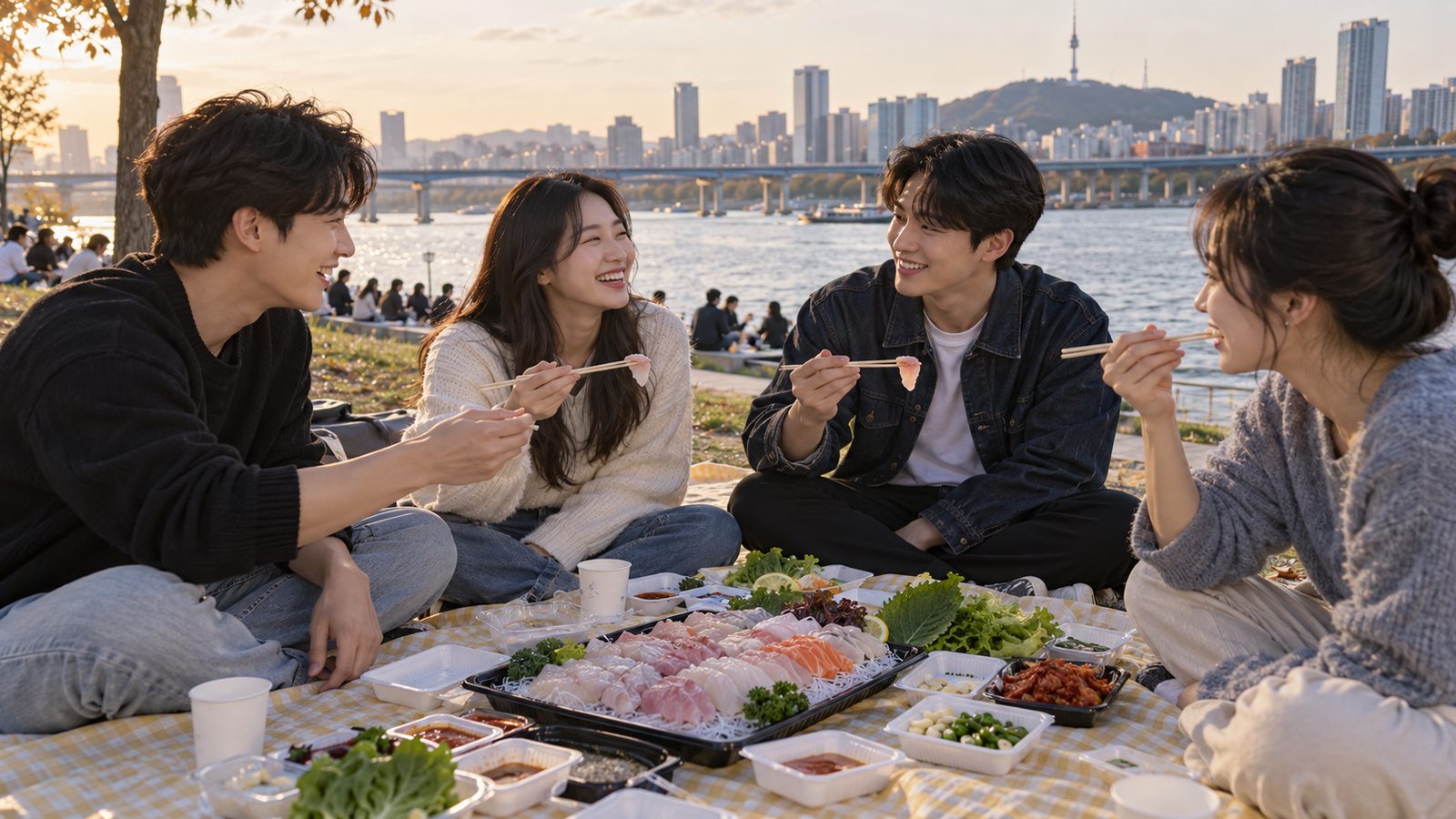
For years, the classic Seoul picnic formula was easy to recognize: fried chicken, beer and perhaps a bowl of ramyeon beside the Han River.
Now there is a new addition to the picnic mat.
Young Koreans are picking up freshly sliced raw fish from seafood markets — especially Noryangjin Fisheries Wholesale Market — and taking it to riverside parks for what social media has dubbed a “hoe-cnic.”
The name combines hoe (회), the Korean word commonly used for sliced raw fish, with picnic.
It sounds like another short-lived food meme. But the trend says something more interesting about how younger Koreans are using Seoul: traditional markets, inexpensive outdoor leisure, social-media aesthetics and familiar Korean foods are being combined into new urban experiences.
Here is what hoe-cnic means, why it suddenly became popular, and what travelers should know before trying one.
What Exactly Is a Hoe-cnic?
A hoe-cnic is essentially a Korean sashimi picnic.
Instead of sitting down at a seafood restaurant, people order sliced raw fish for takeout and eat it outdoors, usually with sauces, vegetables, drinks and other picnic foods.
The trend is especially associated with a simple Seoul route:
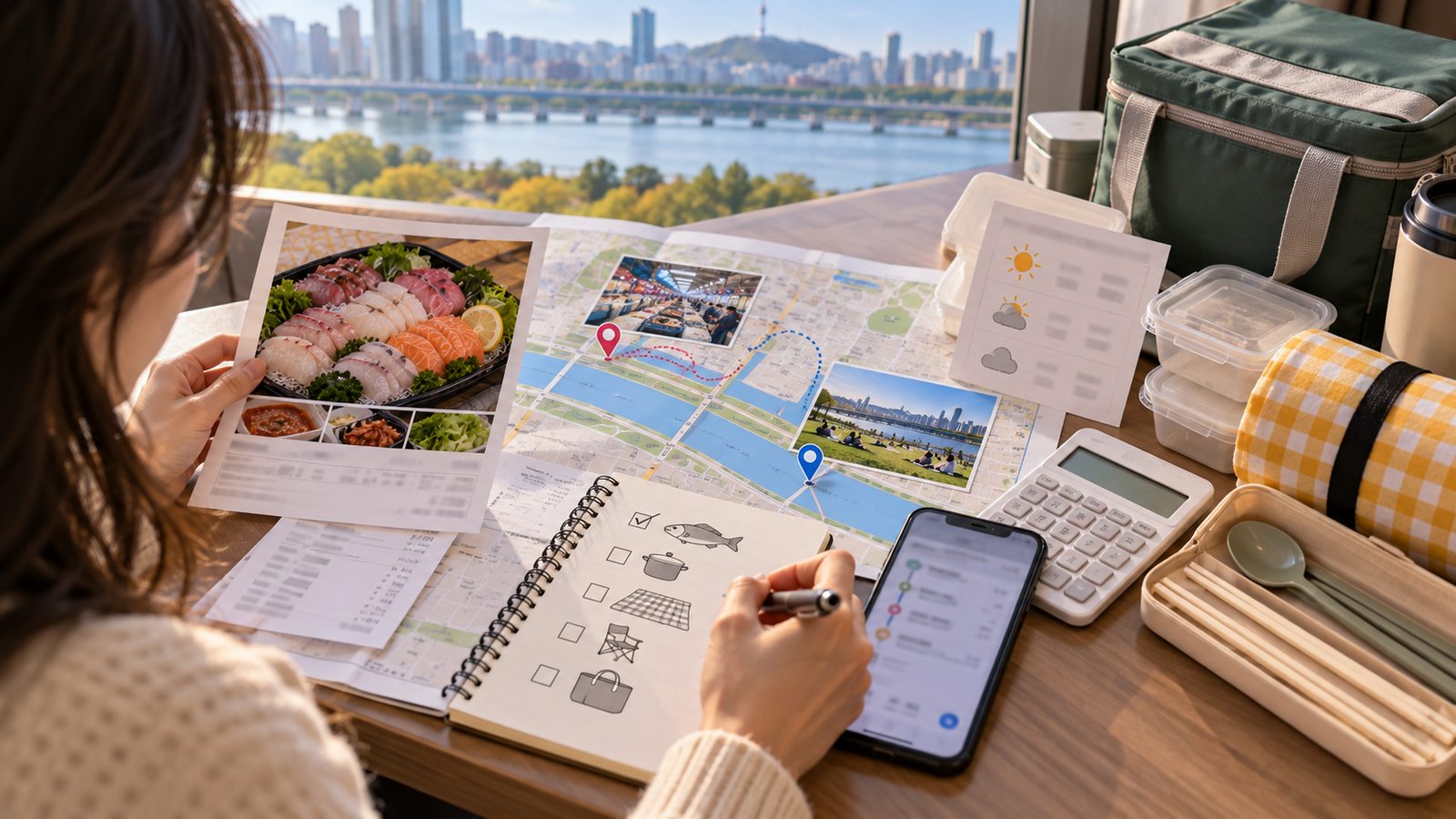
Noryangjin Fisheries Wholesale Market → pick up hoe → move to the Han River → set up a picnic.
Yeouido Hangang Park and Nodeulseom Island are among the places frequently associated with the trend.
The food itself is not new. Koreans have eaten hoe for generations, and Noryangjin has long been one of Seoul’s best-known places to buy seafood.
What is new is the way the pieces are being combined.
A traditional seafood market becomes the starting point for a young urban picnic, while a plate of raw fish becomes something designed to be carried across the city and eaten against the Seoul skyline.
Why Did Hoe-cnic Suddenly Become Popular?
The trend accelerated in autumn 2026 as photos and videos of riverside sashimi picnics spread across Korean social media.
Korean media reported growing interest among people in their 20s and 30s, with some Noryangjin vendors responding by offering pickup options and picnic-oriented seafood sets.
Search interest in the Korean term “회크닉” also rose sharply during the early autumn picnic season.
But weather and social media alone do not fully explain the appeal.
Hoe-cnic fits several changes happening in Korean leisure culture at the same time.
1. It Turns an Ordinary Meal Into an Experience
Eating raw fish in Korea is normal.
Eating it on a picnic mat with the Han River, bridges and Seoul skyline behind you feels different.
The appeal is therefore not necessarily discovering a new food. It is putting a familiar Korean food in a new setting.
That makes the outing easy to photograph and share, but it also gives people a reason to turn dinner into an activity.
2. Noryangjin Becomes Part of the Outing
A hoe-cnic does not necessarily begin when the picnic mat is opened.
For many people, walking through Noryangjin, looking at the seafood and choosing what to eat is part of the experience.
Noryangjin Fisheries Wholesale Market is one of Korea’s major seafood markets, handling both wholesale and retail trade.
Prices can change according to species, season and daily supply, which makes shopping there very different from choosing a fixed-price restaurant meal.
For younger visitors, that market experience can become part of the entertainment rather than simply a place to buy dinner.
3. It Fits Seoul’s Existing Han River Picnic Culture
The Hangang is one of Seoul’s largest everyday leisure spaces.
People run, cycle, date, meet friends, read, order food and stay for sunset.
Food has always been part of that culture.
Fried chicken is perhaps the most famous picnic order, while Han River ramyeon has become an experience of its own.
Hoe-cnic does not replace those traditions. It adds another option to them.
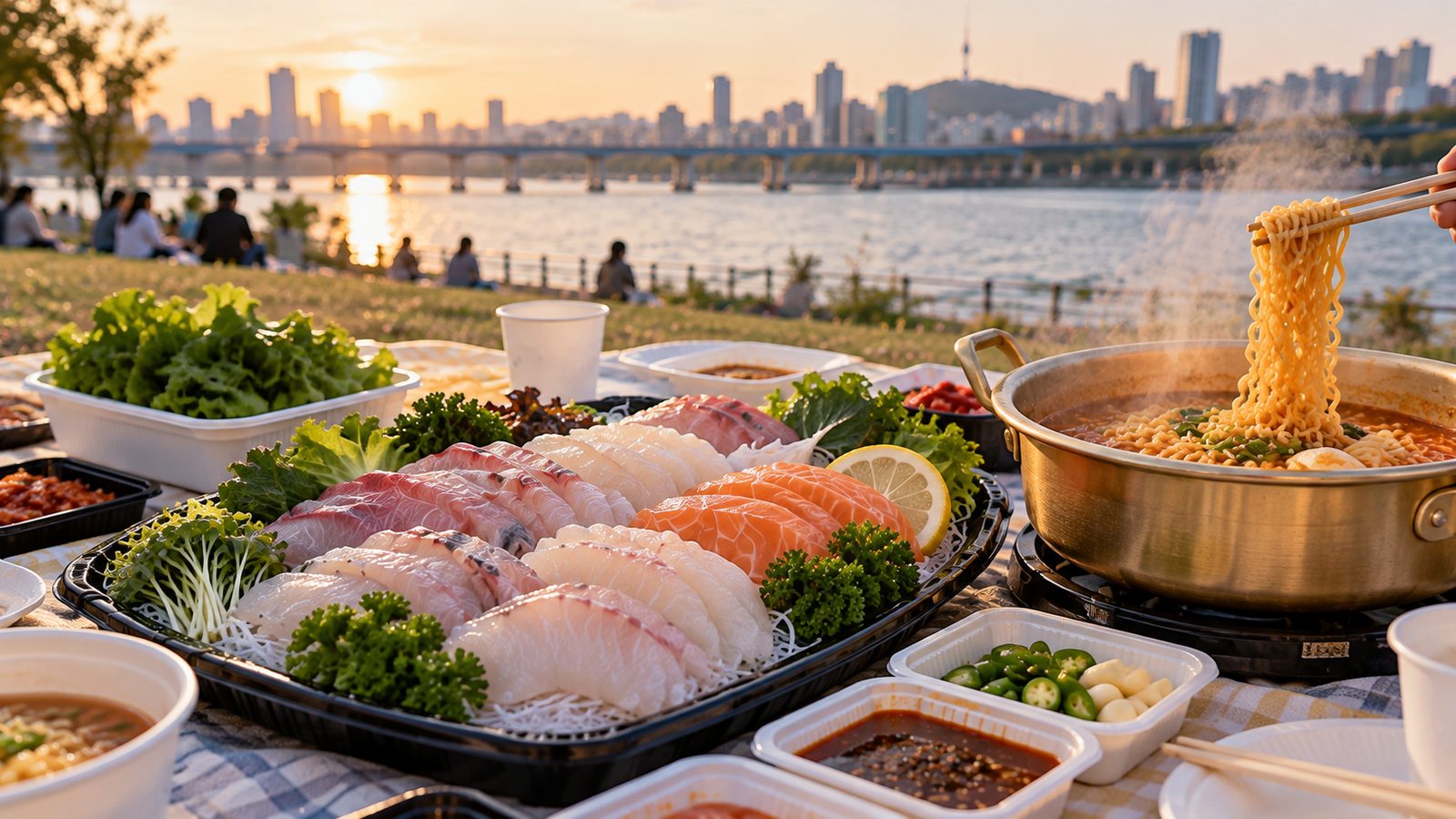
In fact, some people combine the two by eating sashimi with freshly cooked riverside ramyeon.
The Classic Hoe-cnic Route: Noryangjin to the Han River
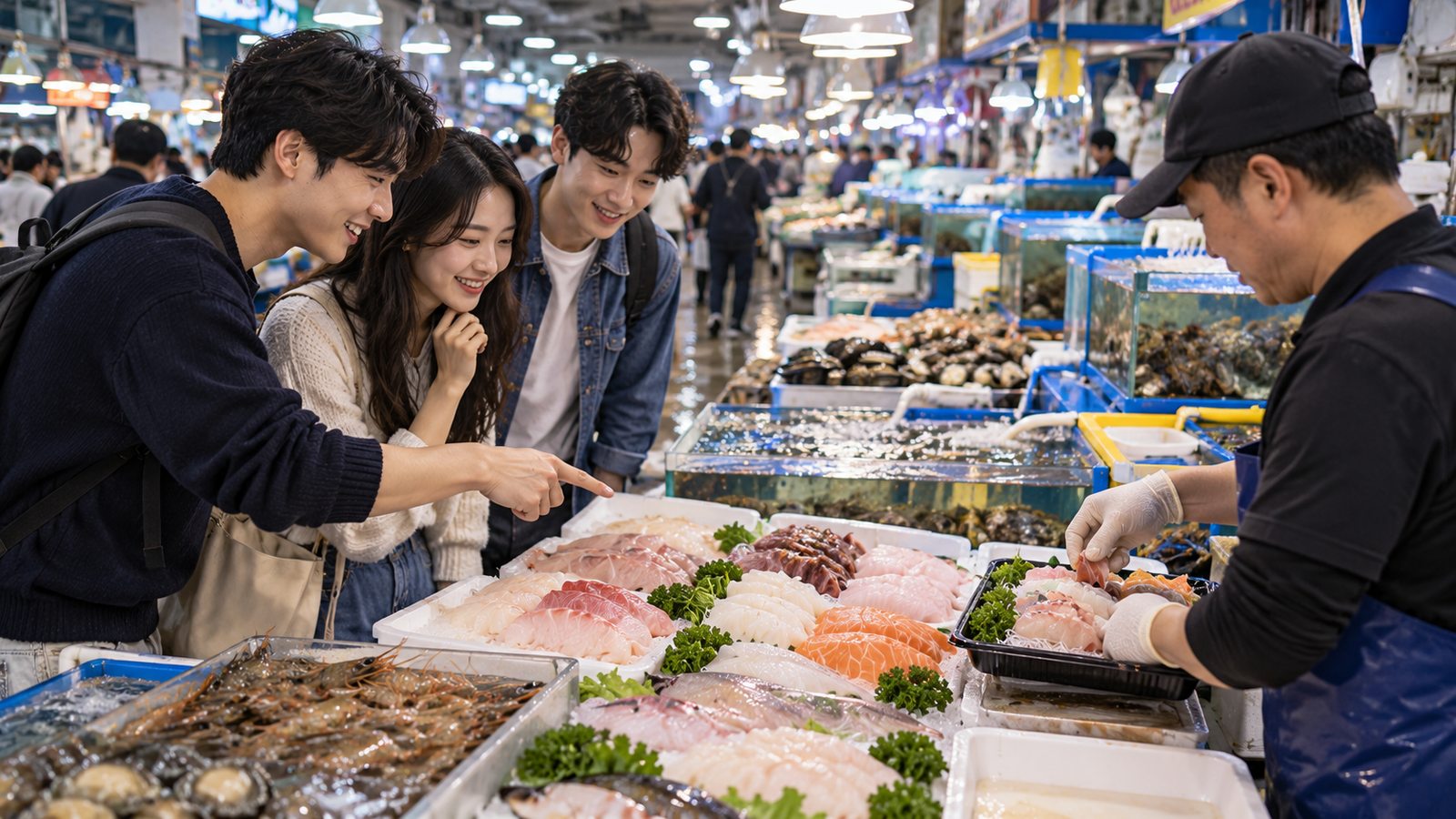
For an international visitor, the easiest way to understand the trend is to think of it as a short food itinerary rather than just a meal.
Step 1: Go to Noryangjin Fisheries Wholesale Market
Noryangjin Fisheries Wholesale Market is located at 674 Nodeul-ro, Dongjak-gu, Seoul and is accessible from Noryangjin Station on Subway Lines 1 and 9.
The market contains numerous independent seafood sellers, so there is no single standard “hoe-cnic menu.”
Look around before buying.
Prices vary according to the fish, weight, season and daily market conditions.
If you do not speak much Korean, keep the order simple. You can indicate the number of people eating and ask whether the fish can be prepared for takeout.
Do not assume every vendor offers the same combination of fish, sauces or side items.
Step 2: Order the Fish for Takeout
Ask for the fish to be prepared as hoe and packed to go.
Before leaving, check what is actually included.
Depending on the seller or package, items such as soy sauce, cho-gochujang, wasabi, vegetables or other accompaniments may or may not be included.
The important point is to compare the final package, not only the displayed price of the fish.
For travelers, this is a much better buying question:
“What will I actually receive for this price, ready to take to the park?”
Step 3: Keep the Transfer Short
Raw seafood is not the ideal food for a long sightseeing detour.
Once you have picked up your hoe, head toward your picnic destination rather than carrying it around Seoul for hours.
That is one reason the Noryangjin-to-Hangang combination works so well: the market and riverside picnic areas can be combined into one compact itinerary.
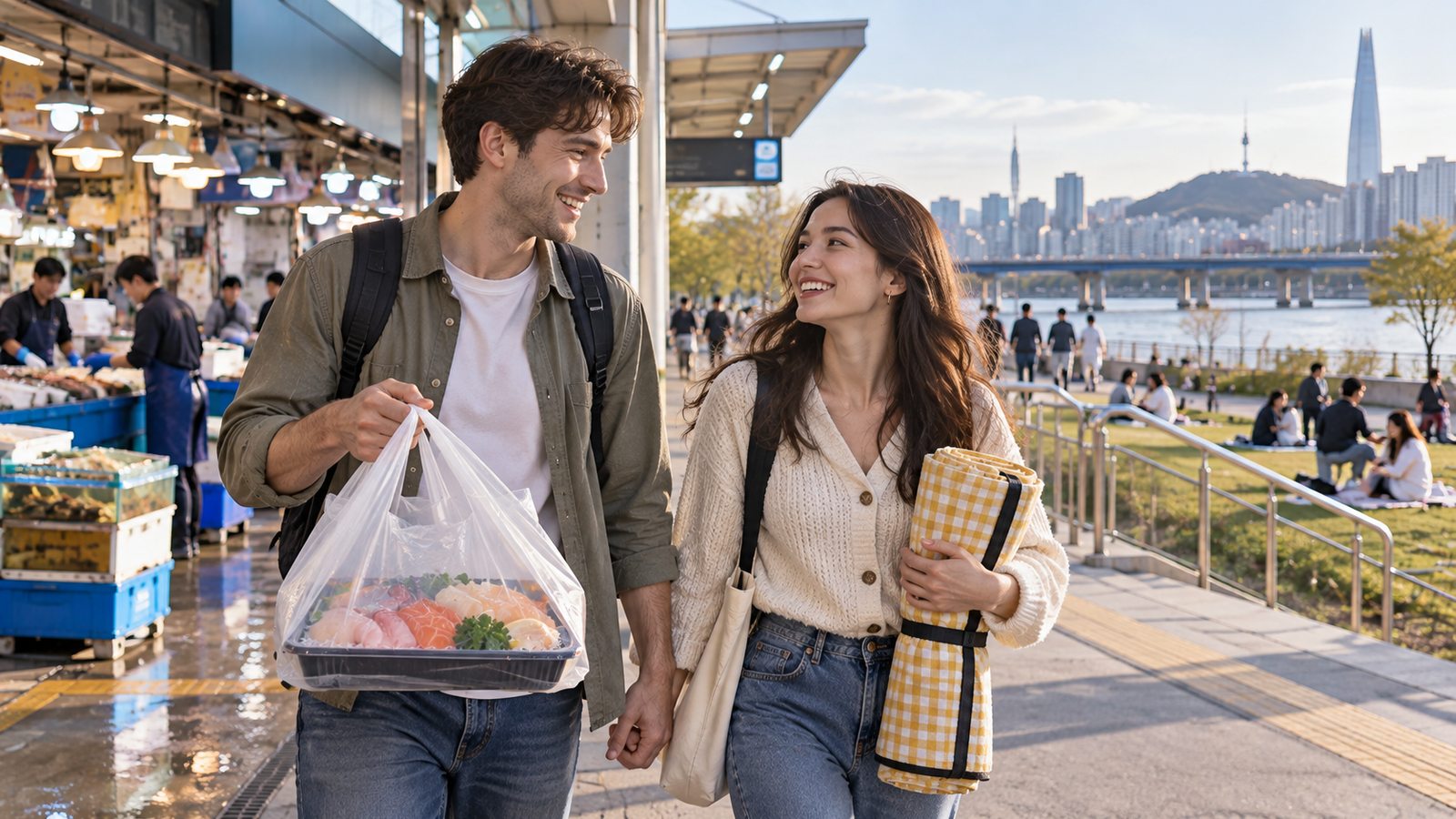
Step 4: Choose Your Picnic Spot
Yeouido Hangang Park is the easiest choice for many first-time visitors because it offers the classic open-lawn Han River atmosphere and good public-transport access.
Nodeulseom offers a different riverside setting and is also frequently mentioned in Korean hoe-cnic content.
The best choice depends on where you are staying, the weather and what you want to do after eating.
Do not feel that you need to reproduce a particular social-media route exactly. The basic idea is simply fresh takeout hoe plus a comfortable riverside picnic.
How Much Does a Hoe-cnic Cost?
There is no meaningful single “hoe-cnic price.”
That is because seafood prices at Noryangjin can vary according to daily supply, fish species, weight and market conditions.
Instead of asking only how much the fish costs, calculate the outing this way:
Seafood + preparation/side items + drinks or extra food + picnic supplies + transportation = real hoe-cnic cost
For example, a cheap-looking fish order may not be the cheapest final option if preparation or accompaniments are charged separately.
Likewise, a larger mixed platter may make more sense for a group than ordering several individual items.
KFR Hoe-cnic Cost Check
Before paying, check four things:
- How many people will eat?
- Which fish and how much are included?
- Are sauces or vegetables included?
- Is this the final takeout price?
This is more useful than relying on a viral post showing one person’s price on one particular day.
What Should You Eat With the Sashimi?
A hoe-cnic can be as simple or elaborate as you want.
Common Korean accompaniments for hoe include soy sauce, wasabi and cho-gochujang, a sweet-spicy vinegar-based red pepper sauce.
Some people add lettuce or perilla leaves for wraps.
For a distinctly Han River combination, add ramyeon.
Our guide to Han River ramyeon explains how the self-service cooking experience works at Seoul’s riverside parks.
The contrast is part of the fun: cool slices of fresh fish beside a hot bowl of spicy noodles.
You do not need to recreate every elaborate picnic spread seen online. For two people, fresh hoe, sauces, one additional dish and drinks can already make a complete picnic.
Is Hoe-cnic Safe for Travelers?
The main issue is not that hoe-cnic is uniquely dangerous.
The issue is that raw seafood needs more careful handling than fried chicken, sandwiches or packaged snacks.
A good rule is simple: minimize the time between pickup and eating.
Avoid leaving raw fish sitting in direct sunlight or carrying it through a long afternoon of sightseeing before your picnic.
Weather matters too.
A mild spring or autumn afternoon is very different from a hot, humid summer day.
If conditions are not suitable for keeping raw seafood cold, eating at the market or choosing another meal is the better decision.
Travelers who are pregnant, immunocompromised or otherwise advised to avoid raw seafood should follow their medical guidance rather than treating hoe-cnic as a must-do Seoul experience.
When Is the Best Time for a Hoe-cnic?
The trend became particularly visible during Korea’s mild autumn picnic season for a reason.
Spring and autumn generally make the most sense for an outdoor seafood picnic.
The weather is usually more comfortable, and sitting beside the river for an hour or two is much more appealing than during the hottest or coldest parts of the year.
Summer creates a bigger food-handling problem because raw seafood should not remain warm outdoors.
Winter presents the opposite problem: the food may be fine, but you may not enjoy sitting beside a windy river.
So hoe-cnic is better understood as a seasonal Seoul experience, not something travelers need to force into every itinerary.
Hoe-cnic vs Han River Chicken vs Ramyeon
Which picnic should you choose?
| Experience | Best for | Main advantage | Main drawback |
|---|---|---|---|
| Hoe-cnic | Food-focused travelers, couples, small groups | Combines Noryangjin market + Han River | Requires more attention to freshness and timing |
| Fried chicken picnic | Groups wanting an easy meal | Simple and familiar | Less connected to a market experience |
| Han River ramyeon | First-time visitors, budget travelers | Cheap, easy and distinctly associated with the river | More snack/quick-meal than full picnic |
| Convenience-store picnic | Flexible or solo travelers | Easy to customize | Less of a destination food experience |
There is no need to choose only one.
For a first Seoul trip, hoe plus Han River ramyeon may actually be the most interesting combination because it connects two very different sides of Korean food culture: the traditional seafood market and the hyper-convenient riverside convenience store.
The Part Social Media Does Not Show: Trash
Hoe-cnic creates more waste than the perfect picnic photo suggests.
Takeout seafood can involve plastic trays, sauce containers, plastic bags, napkins and leftover food.
Seoul asks Hangang Park visitors to clean up after themselves and recycle properly, and littering can result in penalties.
Do not leave leftover seafood or sauces beside an overflowing bin.
Separate waste according to the facilities provided at the park and take responsibility for anything you bring in.
This matters particularly with seafood because discarded leftovers can quickly create odor and hygiene problems.
A trend only works as shared urban culture if the public space remains usable after everyone goes home.
Is Hoe-cnic Just a Social-Media Fad?
Possibly — at least the word itself may be.
Korean trend vocabulary changes quickly.
But the behavior behind hoe-cnic is more durable.
Young Koreans are repeatedly finding new ways to combine older parts of Korean culture with contemporary leisure: traditional markets become date destinations, convenience-store food becomes a travel experience, and familiar foods are repackaged around parks, neighborhoods and social media.
Hoe-cnic fits that pattern.
The interesting story is therefore not simply that sashimi became trendy.
It is that a seafood market and a public riverfront — neither of them new — can suddenly be recombined into something that feels new.
That is what makes hoe-cnic a particularly Korean urban trend worth watching.
Should You Try a Hoe-cnic in Seoul?
Try it if:
- you already enjoy raw fish;
- visiting Noryangjin sounds interesting;
- the weather is comfortable;
- you want a slower afternoon rather than a packed sightseeing schedule;
- and you can eat the seafood soon after pickup.
Skip it if:
- you do not enjoy raw seafood;
- the weather is very hot;
- you plan to carry the food around for hours;
- you want a predictable fixed-price meal;
- or outdoor picnics do not interest you.
For the right traveler, however, hoe-cnic offers something many famous Seoul attractions cannot.
It connects a working seafood market, everyday Korean food, the Han River and contemporary youth culture in a single afternoon.
And that is a much better reason to try it than simply because it happens to be trending.
Frequently Asked Questions
What does “hoe-cnic” mean in Korea?
Hoe-cnic combines the Korean word hoe (회), meaning sliced raw fish, with “picnic.” It refers to buying takeout sashimi and eating it outdoors, especially at Seoul’s Han River parks.
Where do people buy fish for a Han River hoe-cnic?
Noryangjin Fisheries Wholesale Market is the location most strongly associated with the current trend. It offers a large selection of seafood and is conveniently located for continuing toward riverside areas.
Which Han River park is best for a hoe-cnic?
Yeouido Hangang Park is a practical option for first-time visitors because of its public-transport access and classic riverside picnic atmosphere. Nodeulseom is another location frequently associated with the trend.
How much does a hoe-cnic cost?
There is no fixed price. Seafood prices vary according to species, weight, season and daily supply. Compare the final takeout package, including preparation and side items, rather than relying on one social-media price.
Can I combine hoe-cnic with Han River ramyeon?
Yes. Sashimi and hot ramyeon are sometimes combined as part of a larger Han River picnic. It is also a useful way for travelers to experience both Noryangjin seafood culture and Seoul’s well-known riverside ramyeon tradition.
Is hoe-cnic available year-round?
You can buy seafood throughout the year, but hoe-cnic is best treated as a weather-dependent outdoor activity. Mild spring and autumn conditions are generally more suitable than hot summer afternoons or cold, windy winter days.
Sources & Further Reading
- Noryangjin Fisheries Wholesale Market — Official Market Information
- Seoul Metropolitan Government — Life Platform Hangang: Park Rules and Visitor Information
- VISITKOREA — Noryangjin Fisheries Wholesale Market
- Visit Seoul — Noryangjin Fisheries Wholesale Market
- Yonhap News Agency — Reporting on the 2026 Hoe-cnic Trend
- The Korea Times — Raw Fish Replaces Fried Chicken as Seoul’s New Han River Picnic Craze
- SBS News — Reporting on the Han River “Hoecnic” Trend