
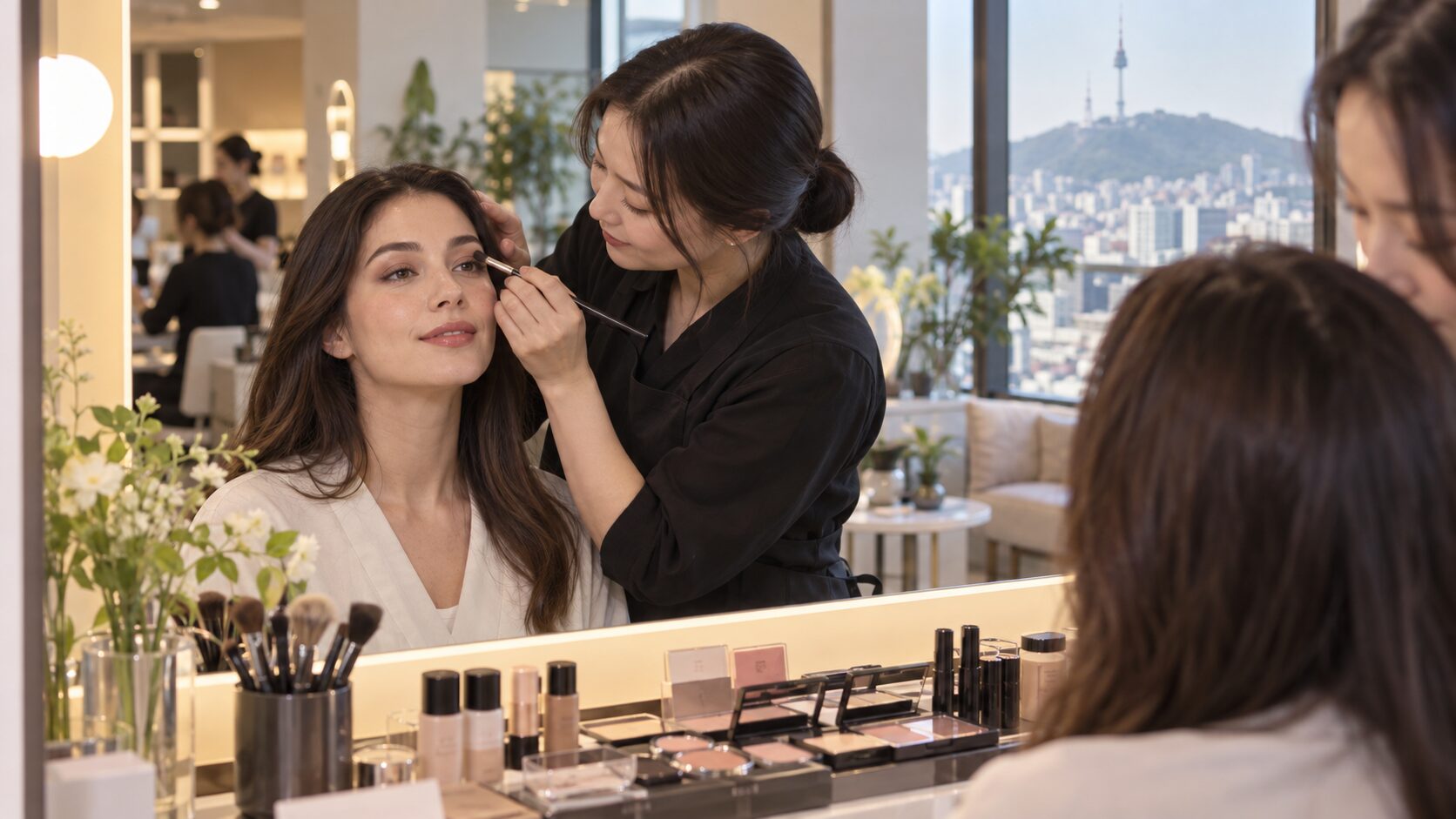
K-beauty travel is becoming increasingly hands-on.
Instead of simply browsing shelves of Korean cosmetics, visitors to Seoul can now build beauty experiences into their itineraries — from personal color consultations and head spas to hair styling and professional makeup.
One experience that fits naturally into this shift is the Korean makeup experience.
For some travelers, that means having their makeup professionally done in a contemporary Korean style. For others, it means taking a lesson and learning techniques they can use again after returning home.
So what actually happens during a Korean makeup session in Seoul? And what should you check before booking one?
Here is what travelers should know.
What Is a Korean Makeup Experience?
There is no single standardized service called a Korean makeup experience.
Depending on the studio, salon or program, you may be booking a professional makeup application, a one-on-one makeup lesson, a personal color and makeup package, or a beauty experience inspired by current Korean styling trends.
That distinction matters.
If you simply want to look polished for photos or a special day in Seoul, a makeup session may be enough.
If you want to understand why certain products, colors or techniques are being used — and learn how to recreate the look yourself — a makeup lesson may make more sense.
Korea’s growing beauty-tourism industry now includes both kinds of experiences.
At the 2026 Korea Beauty Festival, international visitors could experience idol-style makeup, point makeup demonstrations and one-on-one beauty classes as part of official K-beauty tourism programming.
Makeup Session vs. Makeup Lesson: What Is the Difference?
These two experiences can look similar when you see them online, but their goals are different.
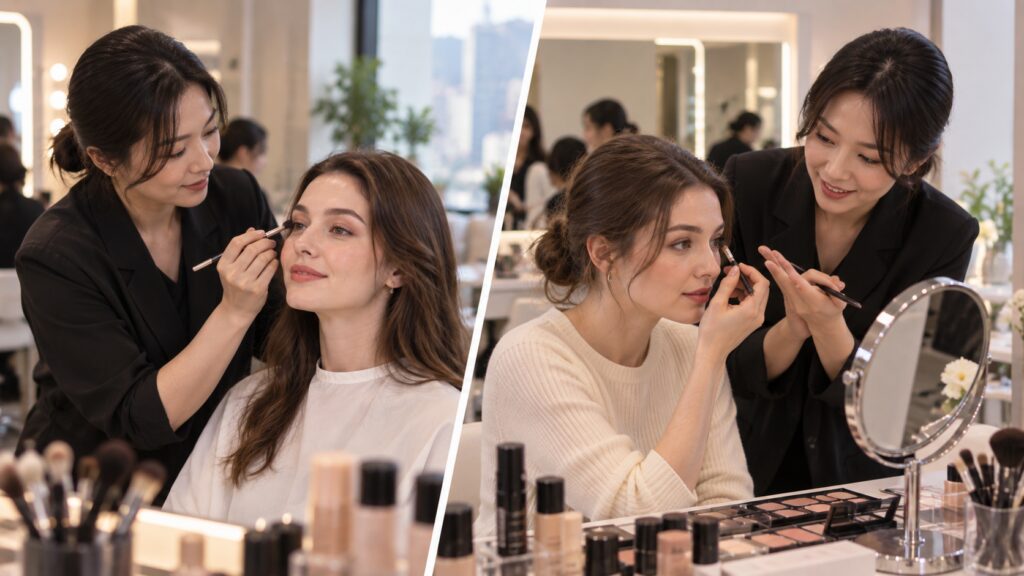
A Professional Makeup Session
During a makeup session, the main goal is usually the finished look.
A makeup artist applies the products and creates a style based on the service you booked, your preferences and the consultation provided by the studio.
This can work well if you have plans afterward — perhaps photos, dinner, shopping or another activity in Seoul.
A Makeup Lesson
A lesson is more educational.
Instead of simply receiving the finished makeup, you may learn how products are applied, where color is placed and how particular techniques can be adapted to your own features.
Depending on the program, you might practice parts of the application yourself or receive product and color recommendations to use later.
Before booking, check which of these experiences you are actually paying for.
A beautifully photographed listing does not necessarily mean the service includes instruction.
Is Every Korean Makeup Experience “K-Pop Idol Makeup”?
K-pop has clearly helped introduce Korean makeup and styling to international audiences, and some Seoul experiences explicitly offer idol-inspired makeup.
But Korean makeup is not one fixed look.
Styles change with trends, age groups, personal preferences, fashion and the purpose of the makeup.
A traveler asking for a subtle everyday look may want something very different from someone booking makeup specifically for photos or hoping to experiment with an idol-inspired style.
Instead of assuming that “Korean makeup” automatically means a particular combination of skin finish, eye makeup and lip color, it is better to communicate the overall result you want.
Reference photos can help.
What Happens During a Korean Makeup Session?
The exact process depends on the provider, but a session will generally begin with some form of consultation.
The artist may ask what type of look you prefer, whether you normally wear makeup, what you are doing afterward and whether there are particular colors or styles you want to avoid.
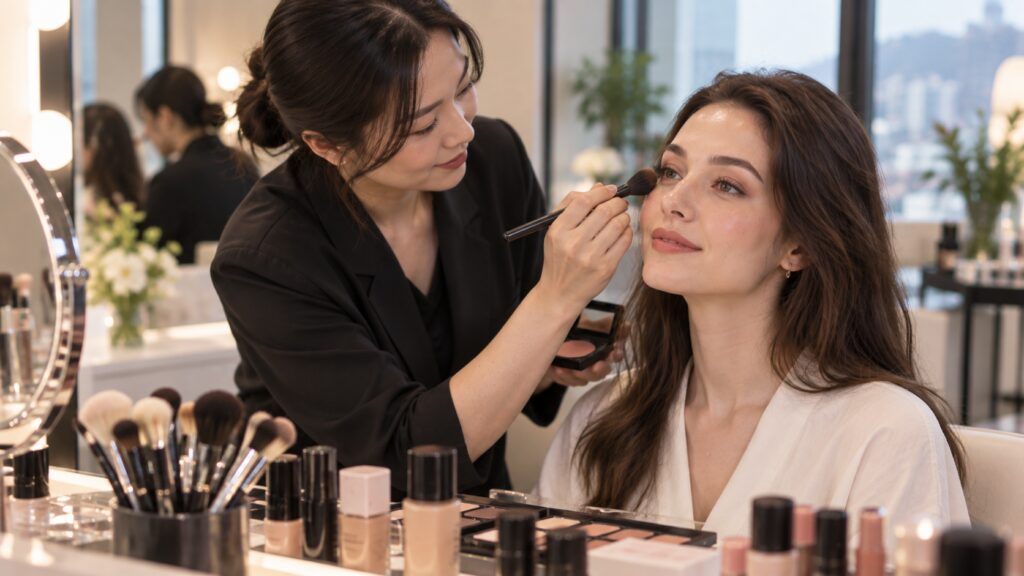
Then comes the makeup itself.
Depending on the program, the process may include base makeup, brows, eye makeup, blush, lip color and other finishing details.
Some providers may also discuss which colors suit you or explain why certain products are being selected.
The important point is that packages vary.
Do not assume that lashes, hairstyling, personal color analysis, product recommendations or a full lesson are automatically included unless the booking description specifically says so.
How Does Personal Color Analysis Fit In?
This is where two Korean beauty experiences can work particularly well together.
Personal color analysis focuses on how different colors interact visually with your natural coloring. A makeup session focuses on turning color, texture and technique into an actual finished look.
A traveler who has already received a Korean personal color analysis may therefore use the results as a reference when discussing lip, blush or eye colors with a makeup artist.
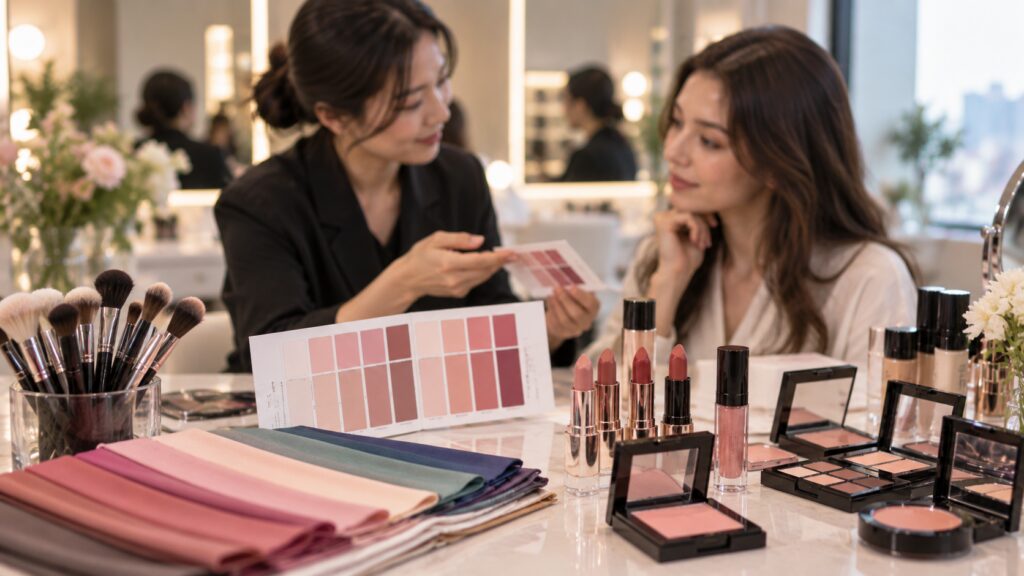
Some beauty programs combine the two experiences.
Others keep them completely separate.
You do not need a personal color analysis before getting Korean makeup, but if both experiences interest you, doing the color consultation first can make the sequence more practical.
Why Are Travelers Booking Makeup Experiences in Seoul?
The answer is partly about K-beauty itself.
International interest in Korean beauty was built largely through products — cushions, lip tints, sunscreens, serums and other cosmetics that traveled far beyond Korea.
Beauty tourism adds another layer.
Instead of only buying the products, travelers can experience how beauty services are delivered in Korea and see how professionals approach styling in person.
The 2026 Korea Beauty Festival reflected this shift by offering international visitors makeup, hair, personal color, skincare and wellness experiences, alongside hundreds of bookable K-beauty tourism programs.
Seoul has also incorporated makeup experiences into tourism events aimed at international visitors.
That makes a makeup appointment increasingly easy to imagine as part of a Seoul itinerary rather than something reserved only for local customers.
This broader shift is part of K-beauty tourism in Korea, where beauty is becoming an activity travelers participate in as well as a category of products they purchase.
When Should You Book a Makeup Session During Your Seoul Trip?
Think about what you want to do afterward.
If the main attraction is seeing the finished look, it makes sense to schedule the session before something where you will actually enjoy wearing the makeup.
That might mean sightseeing, taking photos, meeting friends, going to dinner or simply spending the rest of the day exploring Seoul.
Avoid placing the appointment immediately before an activity likely to undo the result.
A long hike on a humid summer afternoon is probably not the ideal follow-up to a makeup appointment.
If you are combining personal color analysis and makeup, doing the color consultation first can also make sense because its recommendations may help guide the makeup choices that follow.
What Should You Check Before Booking?
Start with the service description.
Ask yourself whether you want makeup applied professionally, a lesson, or both.
Then check the practical details:
- how long the appointment lasts
- what is included in the price
- whether hairstyling is separate
- whether false lashes or other additions cost extra
- whether the provider offers English or another language you can use comfortably
- whether you should arrive without makeup
- whether personal color analysis is included or separate
- whether you can bring reference photos
- what the cancellation and late-arrival policies are
Language support is particularly important for a lesson.
If you are paying to understand techniques rather than simply receive makeup, being able to communicate clearly with the instructor becomes part of the value of the experience.
Should You Bring Makeup Reference Photos?
Yes, if you have a particular direction in mind.
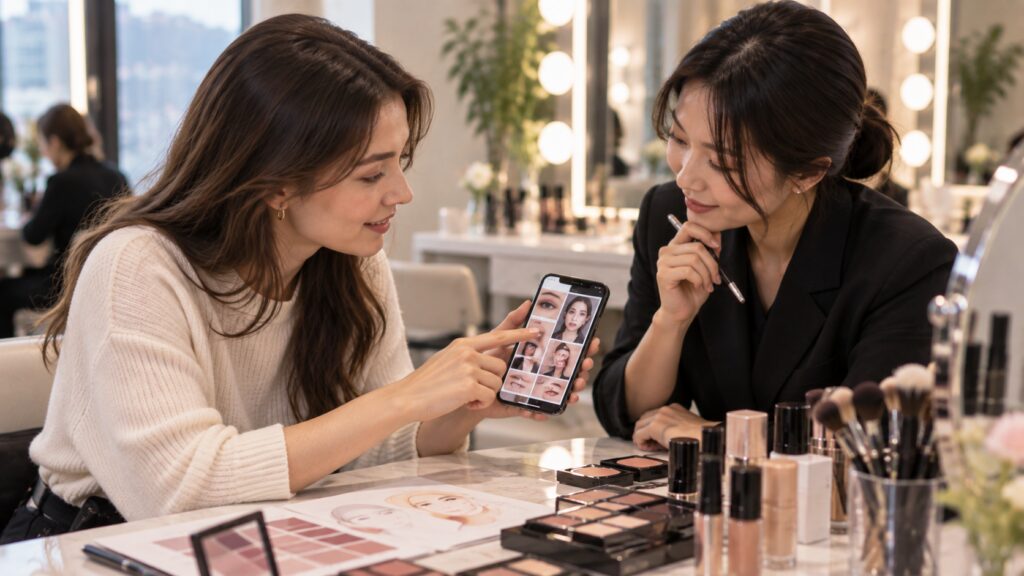
Terms such as “natural,” “glowy,” “soft” or even “idol makeup” can mean different things to different people.
A few reference images can make your preferences easier to communicate.
But reference photos should be treated as inspiration rather than a guarantee that the exact same look will appear identical on another person.
Face shape, features, skin, coloring and personal preference all influence the final result.
A useful consultation should adapt the idea to the person sitting in the chair rather than simply copy a photograph.
What If You Have Sensitive Skin?
If you know that certain cosmetics or ingredients irritate your skin, tell the provider before products are applied.
Do not assume that a professional makeup service automatically means every product will suit every person.
Travelers with significant allergies or known sensitivities may also want to ask in advance whether they can bring specific products of their own.
And if you are dealing with an active or concerning skin condition, remember that a makeup studio is not a dermatology clinic.
A beauty appointment and medical care serve different purposes.
How Does a Makeup Experience Fit With Other K-Beauty Activities?
This is where Seoul’s emerging beauty-tourism scene becomes interesting.
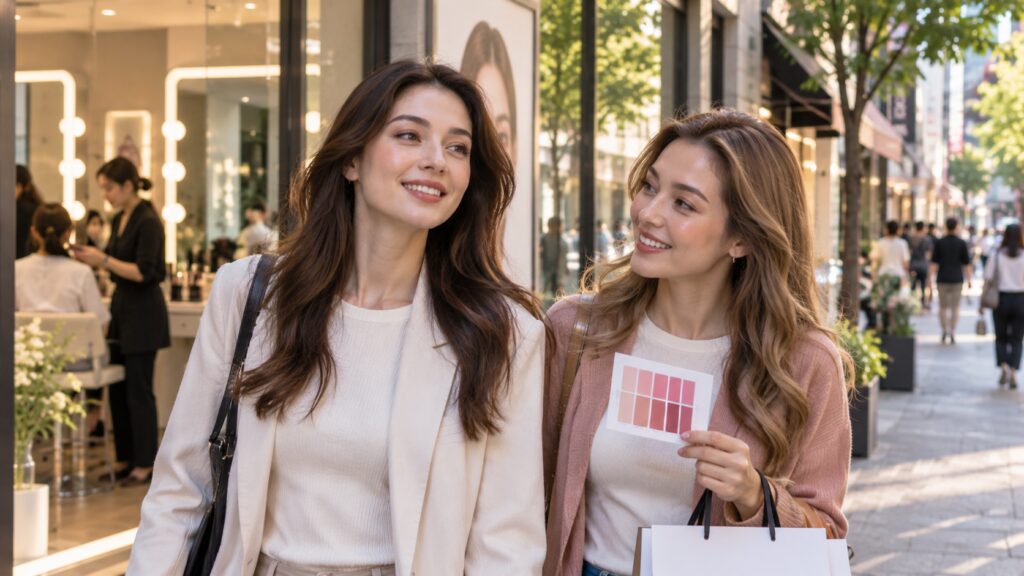
A traveler could begin with personal color analysis, use the results during a makeup session, browse Korean cosmetics afterward and book a Korean head spa on another day.
Each experience focuses on a different part of contemporary Korean beauty culture.
Personal color is about understanding color.
Makeup turns color and technique into a finished look.
A Korean head spa shifts the focus toward scalp care, hair care and relaxation.
Together, they show why K-beauty travel is becoming broader than shopping alone.
Is a Korean Makeup Experience Worth Adding to a Seoul Trip?
That depends on what you want from the appointment.
If you are already interested in Korean makeup, beauty trends or personal styling, having your makeup done in Seoul can be a memorable way to experience that interest beyond buying products.
A lesson may be more useful if your goal is to take techniques home with you.
A professional session may make more sense if you mainly want to enjoy the finished look while you are in Korea.
Neither needs to be treated as an essential Seoul activity.
But for travelers who already consider beauty part of the reason they are interested in contemporary Korea, a makeup experience can fit naturally into the trip.
That is also the larger story behind K-beauty tourism.
Korean beauty is no longer traveling only through products.
Increasingly, travelers are coming to Korea to experience the culture, services and techniques surrounding those products for themselves.
FAQ
What is a Korean makeup experience?
A Korean makeup experience can range from having professional makeup applied to taking a lesson where you learn techniques yourself. Services vary, so check exactly what your booking includes.
How long does a Korean makeup session take in Seoul?
There is no standard duration. A straightforward makeup application and a detailed lesson can take very different amounts of time, so check the provider’s stated appointment length before booking.
Can foreigners book Korean makeup sessions in Seoul?
Yes. Beauty programs for international travelers are increasingly available in Seoul, but language support varies by provider. Confirm the languages available before booking.
Is Korean makeup the same as K-pop idol makeup?
No. Some services specifically offer idol-inspired styling, but Korean makeup includes many different looks and trends. Reference photos can help communicate the style you want.
Should I get personal color analysis before Korean makeup?
It is not required, but travelers interested in both may find it practical to do personal color analysis first so the results can inform makeup color choices.
Should I arrive without makeup?
That depends on the provider. Some studios may ask you to arrive with a clean face, while others can remove existing makeup. Follow the instructions given with your booking.
Sources & Further Reading
VISITKOREA — 2026 Korea Beauty Festival: From Makeover to Personal Color Tests!
VISITKOREA — Korea Beauty Festival Beauty House