
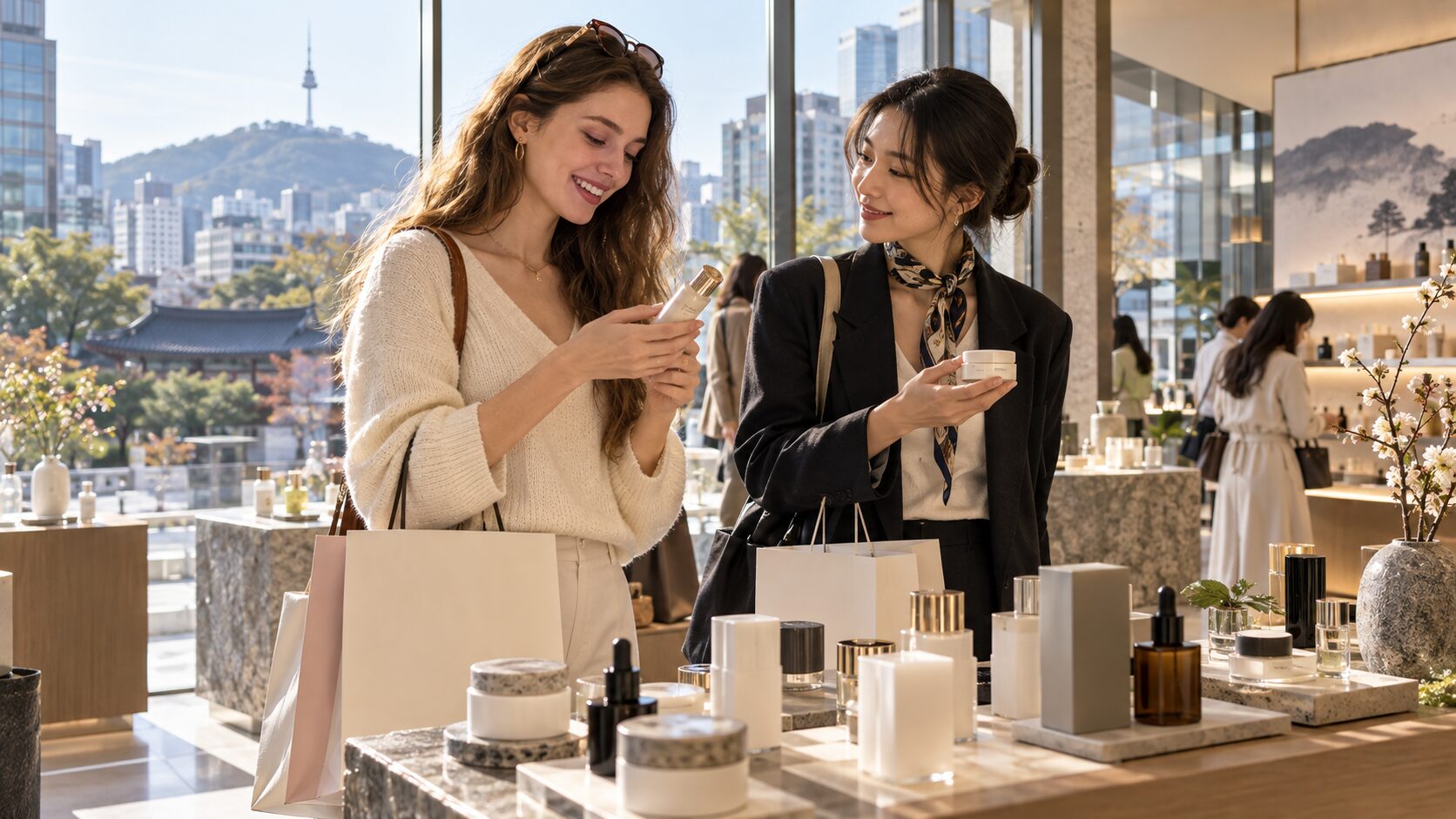
For years, K-beauty traveled the world in bottles, jars and sheet-mask packets.
Now, beauty fans are increasingly traveling in the opposite direction — to Korea.
A trip to Seoul can include much more than stocking up on skincare. Travelers can book personal color consultations, try Korean makeup and hairstyling, explore beauty-focused pharmacies, visit fragrance concept stores, discover emerging brands and, for those who choose to do so, seek professional consultations at dermatology clinics.
There is even a catchy new word for this kind of trip: a “glowcation.”
But behind the playful name is a bigger shift in Korean tourism. K-beauty is becoming something travelers don’t just buy. It is becoming something they come to Korea to experience.
What Is a “Glowcation”?
A glowcation is essentially a vacation built partly around beauty, skincare and wellness experiences.
The term has recently appeared in international beauty coverage to describe travelers coming to Korea not only to shop for Korean cosmetics but also to experience the beauty ecosystem behind them.
That distinction matters.
A traditional beauty shopping trip might mean filling a suitcase with sunscreen, serums and sheet masks. A K-beauty-focused trip today can involve everything from a personal color consultation and Korean-style makeup session to visiting a fragrance concept store or learning more about skincare directly in Korea.
The word “glowcation” may be new, but the broader idea of K-beauty tourism is already becoming much more concrete.

K-Beauty Tourism Is Moving Beyond Shopping
Korean beauty has long been part of the shopping experience for international visitors, particularly in neighborhoods such as Myeongdong.
What is changing is the emphasis on participation.
The 2026 Korea Beauty Festival, organized by Korea’s Ministry of Culture, Sports and Tourism and the Korea Tourism Organization, brought beauty and tourism together through makeup, hairstyling, personal color, skincare, wellness and other experiences designed for international visitors.
During the festival period, travelers could also browse more than 800 K-beauty experience programs available through participating global online travel platforms.
That makes it easier to build beauty into an actual Korea itinerary rather than treating it as an afternoon of shopping.
And Seoul’s tourism data suggests that visitors are spending accordingly. In the first half of 2026, international tourist spending in the city’s beauty sector increased sharply year over year, while medical and wellness spending also recorded strong growth.
K-beauty, in other words, is increasingly connected to the experience of traveling in Korea itself.
What Can a K-Beauty Trip to Seoul Actually Look Like?
There is no single glowcation itinerary.
That is part of the appeal.
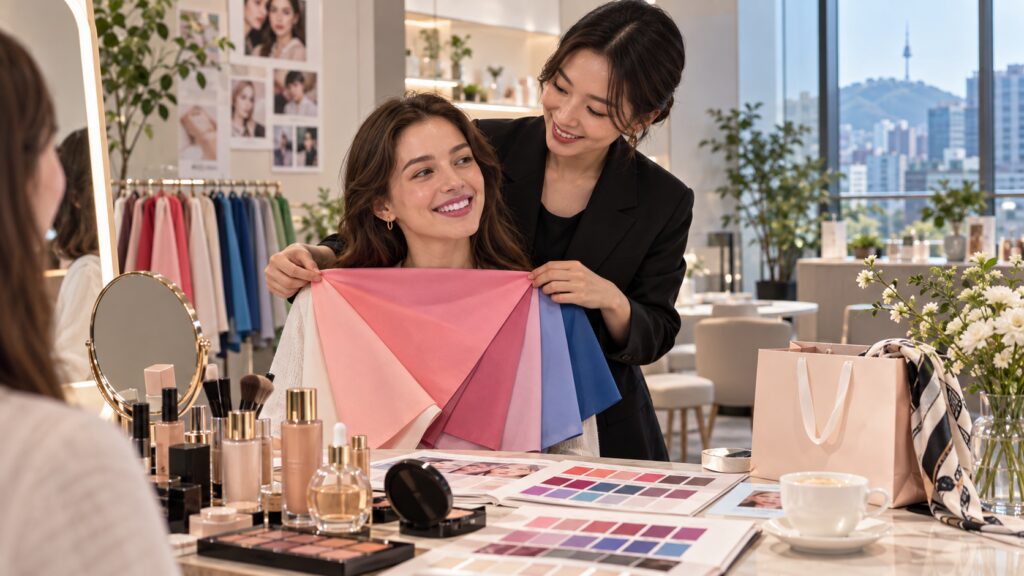
One traveler might spend the morning having a personal color analysis, then explore Korean makeup products in the afternoon. Another might be more interested in skincare ingredients, pharmacies and beauty stores. Someone else may be drawn to fragrance, design and the concept-store culture of neighborhoods such as Seongsu.
For travelers curious about the experience, our guide to Korean personal color analysis explains how color draping works, what happens during a session, and what to expect when booking one in Seoul.
Travelers interested in professional styling can also book a Korean makeup experience in Seoul, ranging from a finished makeup session to a more hands-on lesson focused on techniques and color choices.
A beauty-focused day in Seoul could include:
- a personal color consultation
- Korean hair or makeup styling
- browsing Korean skincare stores
- exploring a Korean pharmacy for skincare-related products
- visiting fragrance and beauty concept stores
- trying nail, scalp or wellness experiences
- learning about Korean skincare ingredients and routines
If beauty shopping is part of your itinerary, our Olive Young Korea guide explains how first-time visitors can approach Korea’s best-known health and beauty retailer without relying only on viral product lists.
Some travelers may also consider visiting a dermatology clinic, but that belongs in a different category and requires additional planning.
Why Seongsu Has Become Part of the Beauty Experience
If Myeongdong represents the classic image of K-beauty shopping, Seongsu shows where the experience is heading.
The neighborhood has become known for pop-ups, concept stores, fashion, cafés, fragrance and emerging Korean brands. For international visitors, that makes beauty shopping feel less like walking through a conventional cosmetics district and more like exploring contemporary Korean lifestyle culture.
If you want to explore the area beyond beauty, our Seongsu-dong Seoul guide covers the neighborhood’s cafés, pop-ups, shopping, creative spaces and nearby Seoul Forest.
Another experience gaining attention is the Korean head spa, which combines scalp and hair care with the relaxation-focused side of Seoul’s beauty culture.
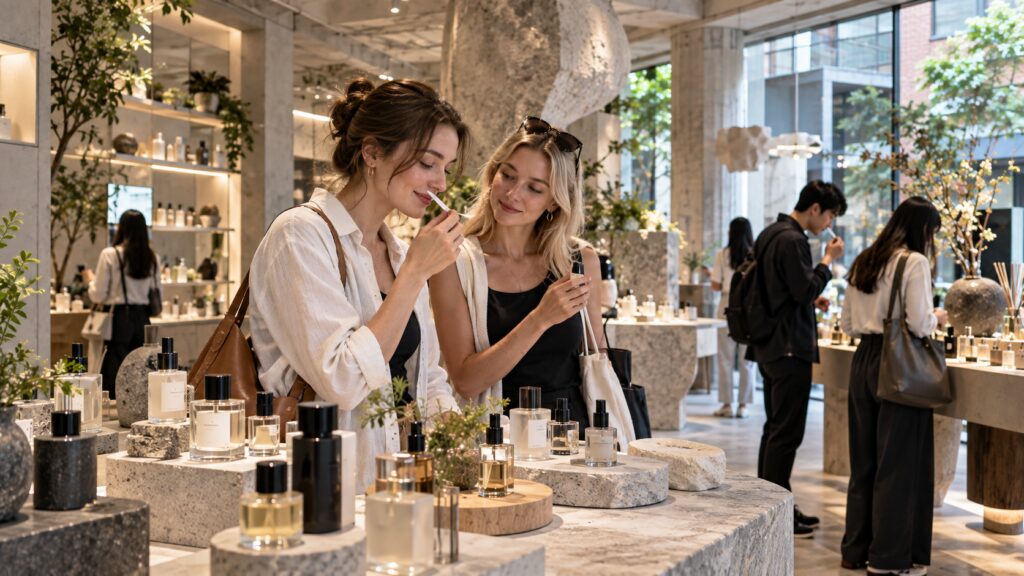
Fragrance is particularly interesting here.
The rise of K-fragrance shows how Korean beauty culture is expanding beyond skincare and makeup. Perfume stores can function as immersive spaces built around scent, architecture, design and storytelling rather than simply shelves of products.
For a traveler, this means a K-beauty itinerary can overlap naturally with fashion, food, design and neighborhood exploration.
Korean Pharmacy Skincare Is Another Part of the Journey
Another increasingly interesting stop is the Korean pharmacy.
For international beauty shoppers accustomed to department stores and major beauty retailers, seeing skincare-related products inside a Korean pharmacy can feel unfamiliar.
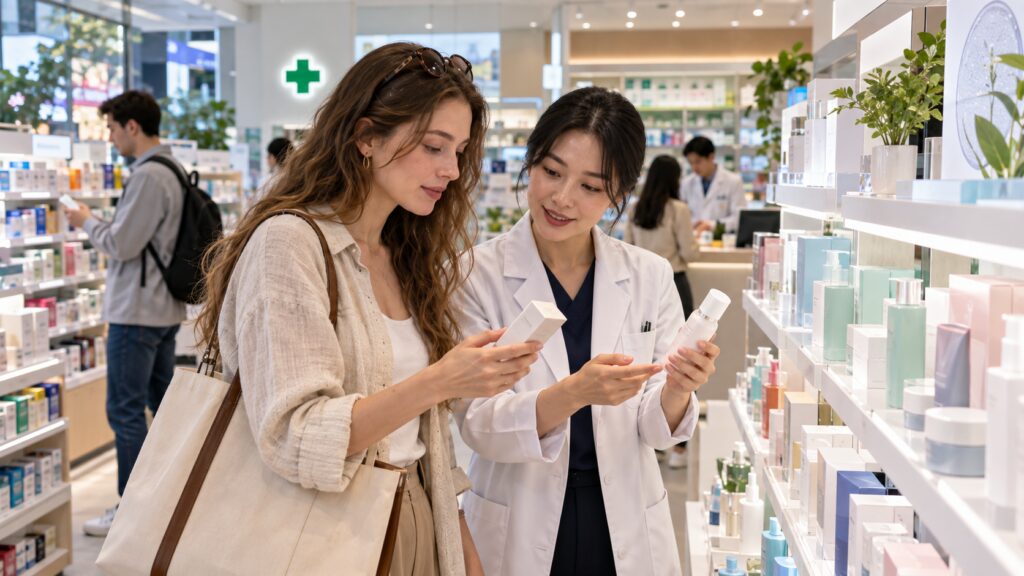
Some Korean pharmacies carry dermocosmetics, skincare products and other beauty-adjacent items alongside their conventional pharmacy business.
But there is an important distinction: a product being sold in a pharmacy does not automatically make it a medicine.
Cosmetics, over-the-counter medicines and prescription medicines are different categories, and travelers should not treat them as interchangeable.
That distinction becomes especially important when online beauty trends turn ingredients or products into viral recommendations.
From PDRN to Spicules: Why Travelers Want to See K-Beauty at the Source
Part of the attraction of visiting Korea is speed.
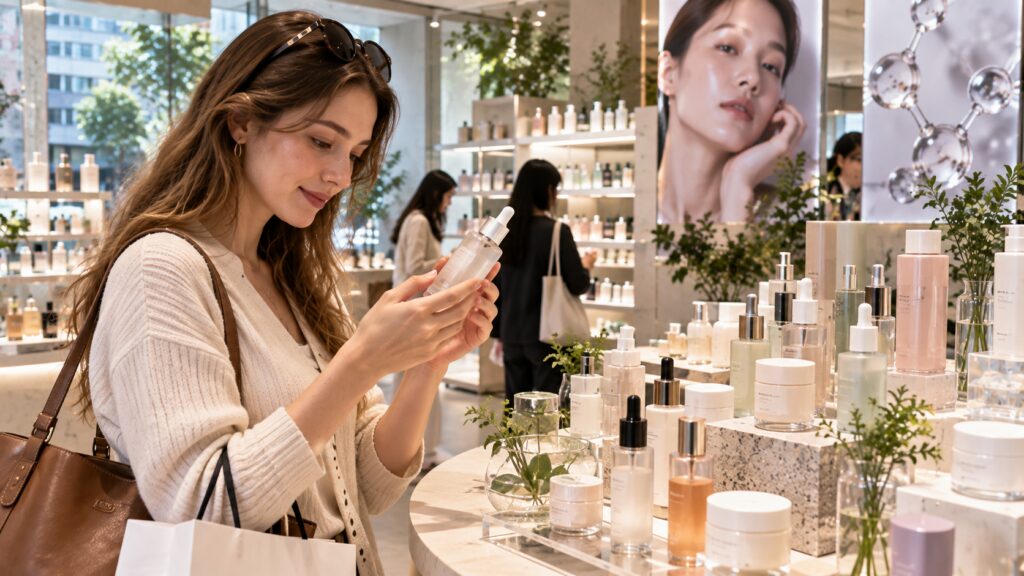
New ingredients, formats and beauty vocabulary can spread quickly through Korean stores and social media before international consumers fully understand what they are seeing.
PDRN skincare is one example. Spicule skincare — sometimes marketed online with phrases such as “liquid microneedling” — is another.
Experiencing K-beauty in Korea can help travelers see how these trends actually appear in stores and how Korean consumers encounter them.
But being physically in Korea does not eliminate the need for skepticism.
A cosmetic containing a trendy ingredient is still a cosmetic. A topical spicule product is not the same thing as professional microneedling. And consumer skincare should not be confused with injectable or other medical treatments simply because similar terminology appears online.
Beauty Tourism and Medical Tourism Are Not the Same Thing
This is the most important distinction for anyone planning a glowcation.
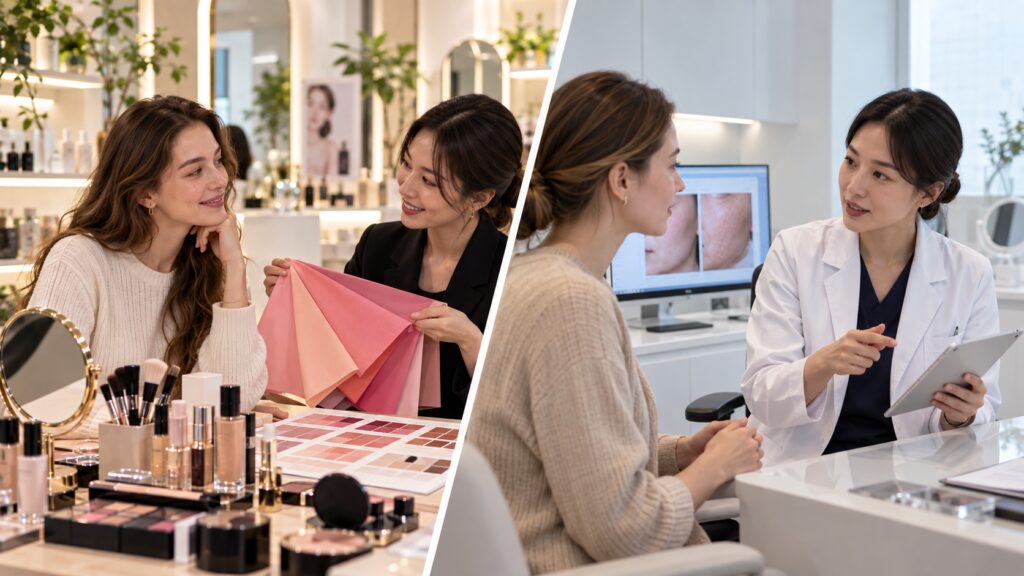
Shopping for skincare, receiving a personal color analysis or booking a makeup session is not the same as receiving medical care.
Dermatology consultations, lasers, injectables and other medical procedures fall into a different category.
South Korea — and Seoul in particular — has a substantial medical tourism sector, and the city has been expanding services for international patients. But travelers considering medical treatment should evaluate a clinic as a healthcare provider, not simply as another stop on a beauty itinerary.
Before undergoing a medical procedure, consider the practitioner’s qualifications, communication support, the exact treatment being offered, possible side effects, recovery time and what happens if follow-up care is needed after returning home.
A vacation schedule should never replace informed medical decision-making.
Why Korea Is Well Positioned for the Glowcation Trend
Korea has an unusual combination of factors working in its favor.
There is a globally recognized cosmetics industry, a fast-moving retail environment, highly visible beauty culture, sophisticated beauty services and a tourism infrastructure increasingly designed to make those experiences accessible to international visitors.
And the experience does not exist in isolation.
A traveler can explore skincare in Myeongdong, contemporary fragrance and design in Seongsu, cafés and fashion in nearby neighborhoods, Korean food in the evening and conventional sightseeing in between.
That combination may be the real strength of K-beauty tourism.
Beauty becomes part of experiencing modern Korea rather than the sole reason for being there.
How to Plan a K-Beauty Day in Seoul
A sensible beauty itinerary does not need to be packed with appointments.
Start by deciding what you actually want from the experience.
If you are interested in discovering products, leave time for stores and neighborhoods rather than scheduling every hour. If personal color, hair or makeup services are priorities, check whether advance reservations and English-language assistance are available.
For treatments, find out exactly whether you are booking a beauty service, wellness experience or medical procedure.
It is also worth leaving room in your suitcase.
Anyone who has walked into a Korean beauty store planning to buy “just one thing” will understand why.
Is the Glowcation Just a Trend?
The word might be.
The behavior behind it probably has more staying power.
“Glowcation” is a memorable label for 2026, but the larger development is the transformation of K-beauty from an export category into a travel experience.
International consumers can already buy Korean skincare around the world. What they cannot easily import is the surrounding environment: the stores, consultations, services, rapidly changing trends and neighborhoods where Korean beauty culture is evolving.
That is what makes K-beauty tourism interesting.
The next phase of the Korean beauty boom may not be about another product traveling overseas.
It may be about more people traveling to Korea to understand where those products — and the culture around them — come from.
Frequently Asked Questions
What is a K-beauty glowcation?
A glowcation is a beauty-focused vacation that can include skincare shopping, personal color consultations, makeup, hairstyling, fragrance, wellness and other beauty experiences. In Korea, the idea is increasingly associated with travelers who want to experience K-beauty at its source rather than simply buy Korean products overseas.
Is Korea good for beauty tourism?
Korea has a large cosmetics industry and a wide range of beauty-related experiences, particularly in Seoul. International travelers can find everything from skincare shopping and personal color analysis to hair, makeup, fragrance and wellness experiences.
Where should I go for K-beauty in Seoul?
The best area depends on what you want to experience. Myeongdong is closely associated with beauty shopping, while Seongsu is known for contemporary concept stores, pop-ups, fragrance, fashion and design. Other areas of Seoul offer specialized beauty services and medical facilities.
Do I need reservations for K-beauty experiences in Korea?
For regular shopping, usually not. Personal color consultations, hair and makeup services, wellness programs and other specialized experiences may require reservations, especially if you need service in English or another language.
Is K-beauty tourism the same as medical tourism?
No. Shopping for cosmetics, receiving a personal color consultation or booking makeup services is different from receiving medical treatment. Dermatology procedures, lasers and injectables should be treated as healthcare decisions and require appropriate professional consultation.
What should I buy on a K-beauty trip to Korea?
There is no universal must-buy product. Rather than purchasing something simply because it is viral, consider your skin type, existing routine and how you plan to use the product. Korea can also be a useful place to discover emerging skincare formats, fragrances and beauty trends before they become widely available overseas.
Sources & Further Reading
Vogue — Would You Go on a Glowcation? K-Beauty Is Betting So
VISITKOREA — 2026 Korea Beauty Festival Overview
VISITKOREA — 2026 Korea Beauty Festival: From Makeover to Personal Color Tests!