
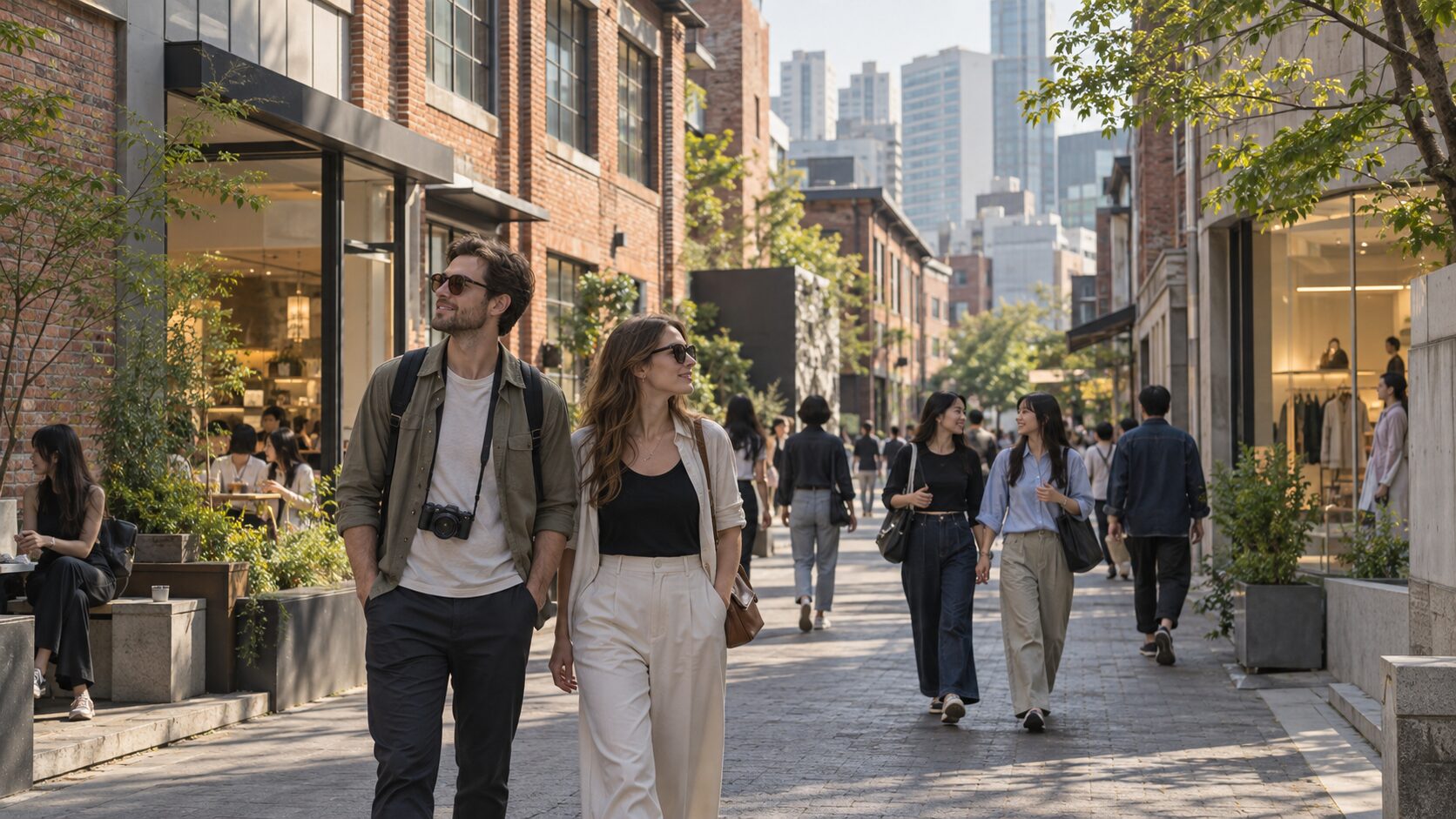
Seongsu-dong is one of those Seoul neighborhoods that can be difficult to understand from a list of attractions.
There is no single palace, tower or monument that explains why so many people go there. Instead, visitors find converted industrial buildings, carefully designed cafés, constantly changing pop-ups, Korean fashion and lifestyle stores, interactive beauty spaces and quiet streets that still reveal traces of the neighborhood’s manufacturing past.
That mix has turned Seongsu into one of Seoul’s most talked-about creative districts.
But if you are visiting for the first time, where should you start — and what is actually worth doing?
Here is how to understand Seongsu before you go.
What Is Seongsu-dong?
Seongsu-dong is a neighborhood in Seongdong-gu, on the eastern side of central Seoul.
Long before it became associated with cafés and pop-up stores, the area was known for factories, auto repair shops, printing businesses and handmade shoe workshops.
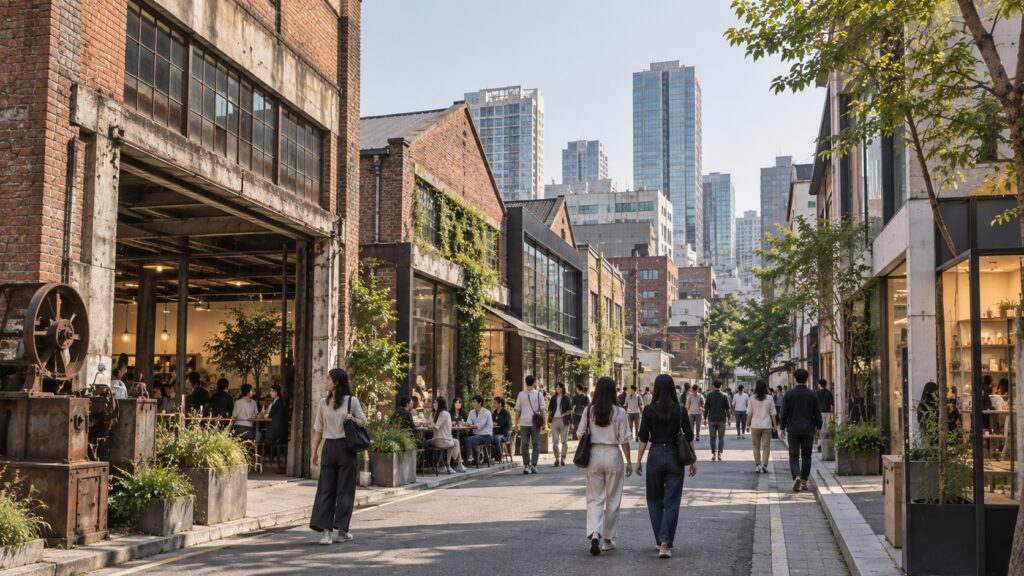
Rather than disappearing completely, parts of that industrial landscape have been reused.
Old brick buildings and warehouses now sit beside cafés, restaurants, fashion stores, beauty spaces and galleries. That contrast is one of the reasons Seongsu looks different from Seoul shopping districts built around large department stores or conventional commercial streets.
The Korea Tourism Organization describes the area around Yeonmujang-gil as a place where the energy of factories and the handmade shoe industry still coexists with newer cafés, restaurants and cultural spaces.
Seongsu’s industrial past is therefore not simply background history. It remains part of the neighborhood’s visual identity.
Why Did Seongsu Become So Popular?
Seongsu is often compared with Brooklyn, but that shorthand only tells part of the story.
Its popularity grew as old industrial spaces were converted into places where people actually wanted to spend time.
Warehouse cafés helped establish the neighborhood’s new identity, followed by independent shops, designer showrooms, restaurants and cultural spaces.
Brands also discovered that Seongsu worked particularly well for temporary experiences.
Instead of opening only conventional stores, companies could create pop-ups, exhibitions and elaborate flagship spaces designed to be explored as much as shopped.
That helped turn Seongsu into a neighborhood where visitors often arrive without one fixed destination.
You walk, see what has opened, stop somewhere unexpected and continue.
That unpredictability is now part of the attraction.
Start With Seongsu’s Warehouse Cafés
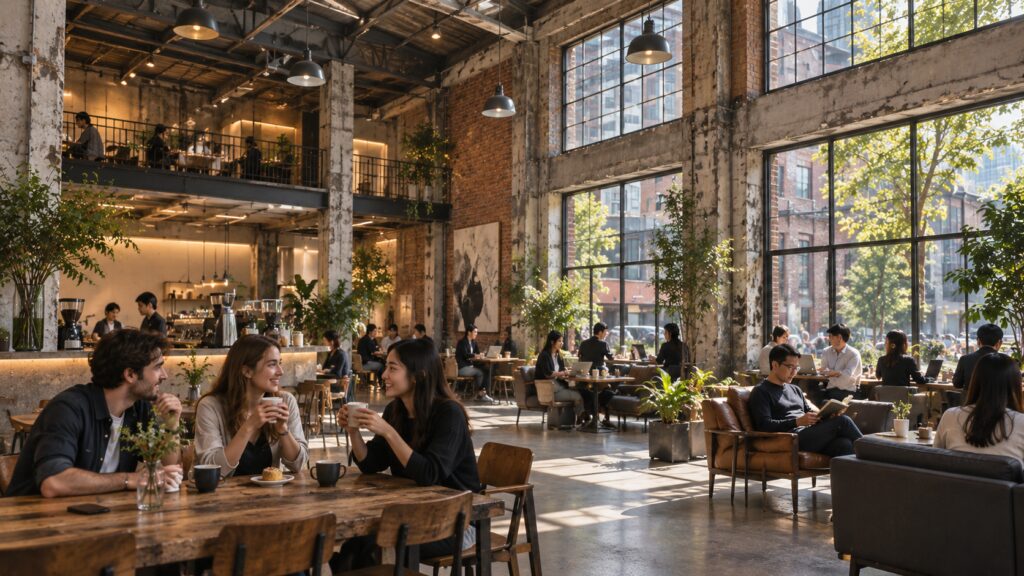
Coffee is one of the easiest ways to understand the neighborhood.
Seongsu is also one expression of a much broader Korean cafe culture, where coffee shops can function as social spaces, design destinations and places to spend time rather than simply grab a drink.
Some of Seongsu’s best-known café spaces occupy buildings that once served industrial purposes. Rather than hiding concrete walls, exposed structures or warehouse proportions, many businesses incorporated those elements into their designs.
The result helped establish the warehouse-café aesthetic now strongly associated with the area.
But visitors should not interpret “Seongsu cafe street” as one perfectly defined pedestrian street lined only with cafés.
The neighborhood spreads across multiple blocks, with cafés, workshops, stores and restaurants mixed together.
That is why Seongsu works better as a walking neighborhood than as a single attraction to check off a list.
Choose a café that appeals to you, but leave room in your schedule to discover another one you did not plan to visit.
Pop-Ups Are Part of the Seongsu Experience
One reason online recommendations for Seongsu become outdated so quickly is simple: temporary spaces are part of the neighborhood.
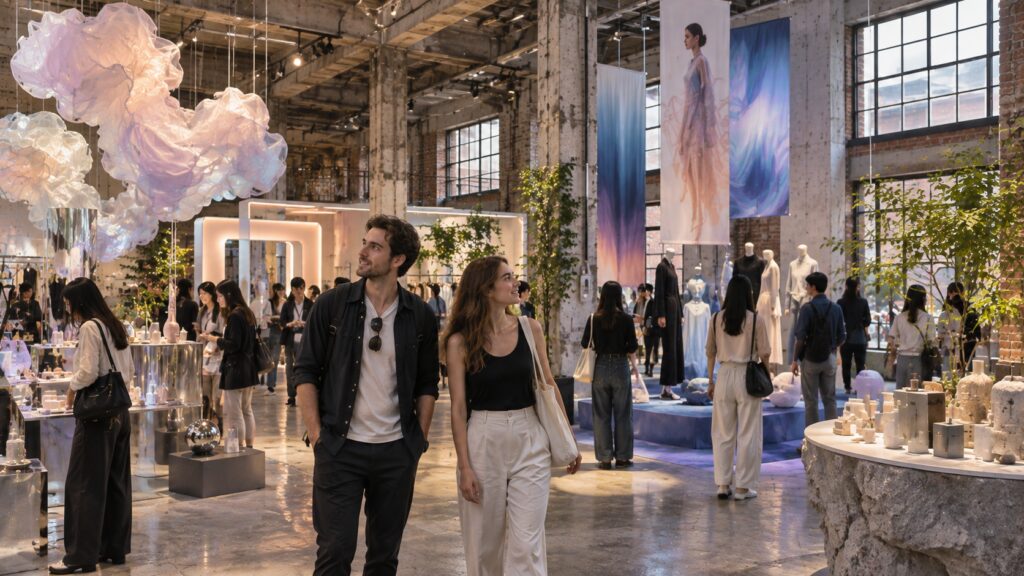
Fashion, beauty, food and lifestyle brands regularly use Seongsu for pop-ups and limited-time experiences.
Some are essentially temporary shops. Others are closer to exhibitions, with installations, photo areas, interactive elements or product-testing experiences.
This means the exact Seongsu you visit may not be the Seongsu someone saw several months earlier.
For travelers, that can actually be an advantage.
Instead of building an itinerary around a long list of specific pop-ups, treat them as discoveries along the way.
If there is one temporary event you especially want to see, check its official dates and admission or reservation requirements shortly before visiting.
Seongsu is also a good place to encounter another part of contemporary Korean youth culture: self-photo booths. Our guide to Korean photo booth culture explains how four-cut photos work and why they have become such a familiar part of everyday outings in Korea.
K-Beauty Has Become Part of Seongsu Too
Seongsu is increasingly relevant to travelers interested in Korean beauty.
Beauty brands have opened interactive flagships and experience-focused spaces where visitors can test products, explore new launches or encounter the brand in a more immersive environment than a standard cosmetics store.
That reflects a broader shift in Korean beauty tourism.
For some international visitors, shopping for skincare is no longer the entire experience. Personal color consultations, makeup sessions, beauty flagships and other hands-on experiences can become part of a Seoul itinerary.
If that side of Seoul interests you, our guide to K-beauty tourism in Korea explains how beauty shopping and experiences are increasingly becoming part of travel itself.
For travelers who want to combine that experience with mainstream Korean beauty shopping, our Olive Young Korea guide explains what to look for, how larger Seoul stores differ, and what first-time visitors should know before shopping.
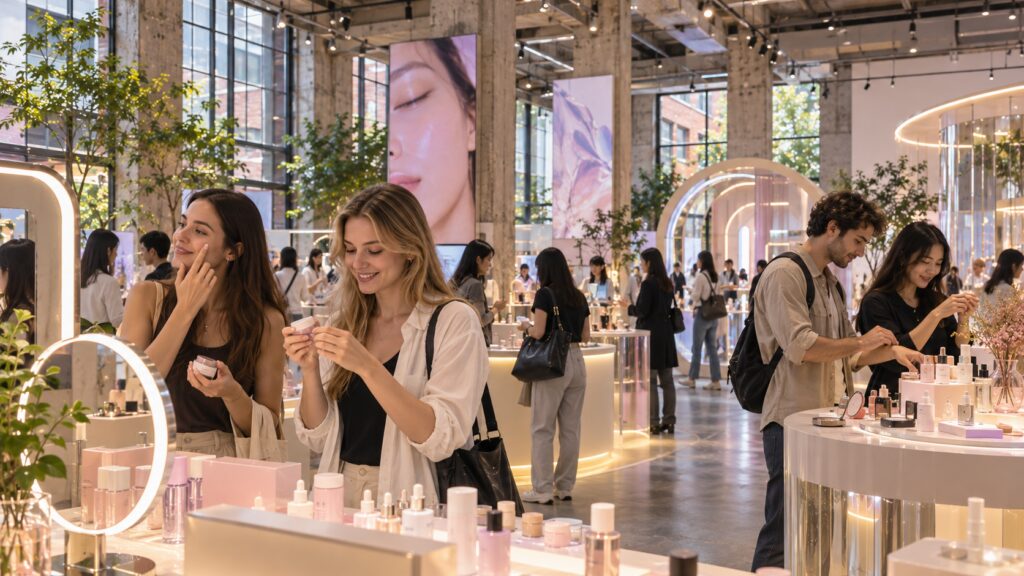
Seongsu is a particularly useful place to see that change happening at street level.
Look Beyond Beauty: Fashion, Fragrance and Design
Beauty is only one part of Seongsu’s retail scene.
The neighborhood has also become a showcase for Korean fashion, eyewear, fragrance, accessories and lifestyle design.
Some stores operate like conventional shops. Others blur the line between retail and exhibition, using unusual architecture, installations or themed interiors to turn browsing into an experience.
That is why even travelers who do not plan to buy much can still enjoy exploring Seongsu.
Fragrance is another interesting part of this landscape. Korea’s growing fragrance scene increasingly treats perfume as part of a broader lifestyle culture rather than an isolated luxury purchase.
For more background, our guide to K-Fragrance explains how Korean perfume and scent culture are developing alongside K-beauty.
In Seongsu, those worlds often appear on the same streets.
Walk Through Yeonmujang-gil
If you want to see the transition between old and new Seongsu, spend some time around Yeonmujang-gil.
This area retains traces of the neighborhood’s manufacturing history while also containing cafés, shops and rotating pop-ups.
Do not rush through it while staring only at a map.
Look at the buildings themselves.
Old brick walls, workshop-like structures and industrial architecture help explain why brands and creative businesses were drawn to Seongsu in the first place.
The neighborhood’s appeal comes partly from reuse rather than complete redevelopment.
That makes walking between destinations as important as the destinations themselves.
Add Seoul Forest to Your Visit
Seongsu does not have to be an entire day of shopping and cafés.
Nearby Seoul Forest provides a very different environment.
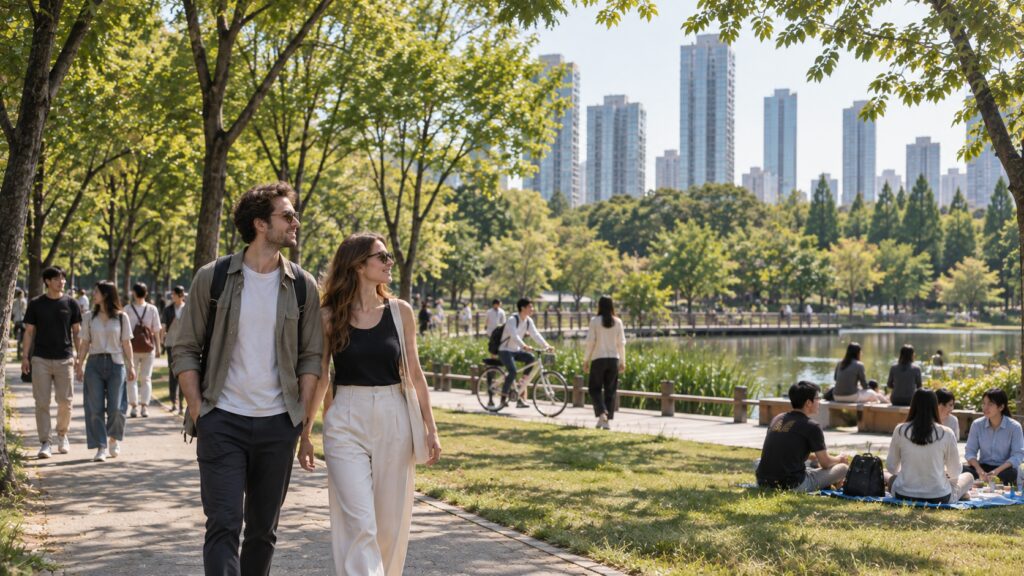
Opened in 2005, the large urban park includes green spaces, walking areas and ecological facilities and is free to enter.
This makes it useful as either the beginning or end of a Seongsu itinerary.
One approach is to explore the busier streets around Seongsu first and finish at Seoul Forest in the late afternoon.
Another is to start around Seoul Forest, walk through the surrounding streets and gradually move toward the café and shopping areas closer to Seongsu Station.
The better direction depends on what you want to prioritize.
How Do You Get to Seongsu?
For the café, shopping and pop-up areas, Seongsu Station on Subway Line 2 is a practical starting point.
The official Seoul tourism guide’s 2026 Seongsu walking route, for example, places several creative spaces within walking distance of Seongsu Station.
If Seoul Forest is your priority, Seoul Forest Station on the Suin-Bundang Line is more convenient. Seoul’s official tourism information lists the park about 242 meters from Seoul Forest Station Exits 3 and 4. Ttukseom Station on Line 2 is another option.
You do not need to use the same station to arrive and leave.
In fact, entering from one side of the neighborhood and departing from another can make more sense than backtracking.
If you are still getting familiar with Seoul’s transit system, our Seoul subway guide explains T-money, the Climate Card, transfers and ticket options for international travelers.
How Much Time Do You Need in Seongsu?
For a first visit, allow at least a few hours.
A quick café visit and short walk can be done in two or three hours, but that misses much of what makes the neighborhood interesting.
A more relaxed half-day gives you time for a café, several stores or pop-ups, lunch or a snack and some unplanned wandering.
Add Seoul Forest and you can easily turn Seongsu into a longer afternoon.
The key is not to schedule every 20 minutes.
Unlike a museum itinerary, Seongsu works best when you have enough flexibility to stop somewhere you did not know existed.
When Is the Best Time to Visit Seongsu?
There is no single best season for Seongsu because much of the neighborhood experience is built around cafés, shops and indoor spaces.
Weather still matters if you plan to walk extensively or combine the neighborhood with Seoul Forest.
Spring and autumn are particularly comfortable for spending time outdoors, while summer can be hot and humid and winter can become very cold.
Time of day matters too.
Arriving earlier gives you more room to explore before popular streets become busier. Later in the day, the area can feel more energetic as cafés, restaurants and shops fill up.
Individual stores and pop-ups keep their own schedules, so check any must-visit destination before leaving.
A Simple First-Timer’s Seongsu Route
Do not try to visit every famous place you have saved on social media.
A better first visit might look like this:
Start around Seongsu Station and walk toward the streets around Yeonmujang-gil.
Choose one warehouse-style café rather than trying to visit several.
Spend time walking through the surrounding streets and explore any pop-ups, fashion, beauty or lifestyle spaces that genuinely interest you.
Stop for lunch or a snack.
Then gradually continue toward the Seoul Forest side of the neighborhood.
Finish with a walk through Seoul Forest if the weather is good.
This is deliberately not a minute-by-minute itinerary.
The point of Seongsu is that the neighborhood changes too quickly for a permanent checklist to capture it.
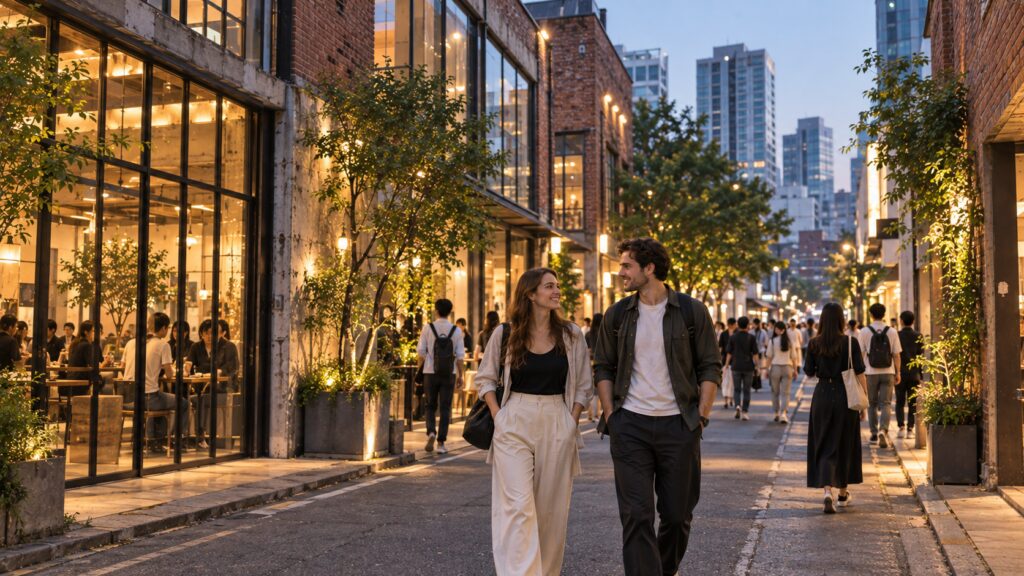
Is Seongsu Worth Visiting?
If your idea of sightseeing requires a famous landmark at every stop, Seongsu may initially seem confusing.
But that is also what makes it useful for understanding contemporary Seoul.
The neighborhood shows how the city reuses older industrial spaces, how Korean brands turn shopping into an experience, how café culture shapes social spaces and how beauty, fashion, fragrance and design increasingly overlap.
You may visit for one famous café or a pop-up you saw online.
The more interesting part is often everything you encounter between them.
That is why Seongsu is best approached not as one attraction, but as a neighborhood to explore.
Frequently Asked Questions
Why is Seongsu-dong famous?
Seongsu is known for its mix of former industrial buildings, warehouse-style cafés, fashion and lifestyle stores, rotating pop-ups, K-beauty spaces and creative culture. Its older factory and workshop architecture remains part of the neighborhood’s character.
What should I do in Seongsu?
A first visit can combine a warehouse-style café, walking around Yeonmujang-gil, browsing pop-ups and Korean fashion or beauty spaces, eating in the neighborhood and visiting nearby Seoul Forest.
Which subway station is best for Seongsu?
Seongsu Station on Line 2 is useful for the main café, shopping and pop-up area. If Seoul Forest is your main destination, Seoul Forest Station on the Suin-Bundang Line is convenient; the park is also accessible from Ttukseom Station on Line 2.
How long should I spend in Seongsu?
A few hours is enough for a café and some shopping, but a half-day is more comfortable if you want to explore the streets, visit pop-ups and add Seoul Forest.
Is Seongsu only for shopping?
No. Shopping is a major part of contemporary Seongsu, but the neighborhood is also interesting for its industrial architecture, café culture, beauty experiences, design spaces and proximity to Seoul Forest.
Is Seoul Forest close to Seongsu?
Yes. Seoul Forest is in Seongdong-gu and can easily be combined with a Seongsu itinerary. Official Seoul tourism information lists Seoul Forest Station and Ttukseom Station as convenient access points.
Sources & Further Reading
Visit Seoul — Exploring Seongsu: Seoul’s Creative Playground
VISITKOREA — Seongsu-dong Cafe Street