

If your skincare suddenly feels a little prickly, it may not be an accident.
One of the K-beauty trends gaining international attention in 2026 is spicule skincare — products formulated with microscopic, needle-like structures that can create a distinctive tingling or prickling sensation when applied to the skin.
You may have seen these products described online as “liquid microneedling” or “microneedling in a bottle.”
But that nickname can be misleading.
Spicule skincare is not the same thing as professional microneedling, and the tiny structures used in cosmetic formulas are not conventional metal needles.
So what exactly are spicules, why did they become part of Korean skincare, and what should you know before putting them on your face?
Here is the trend explained from Korea.
What Are Spicules in Skincare?
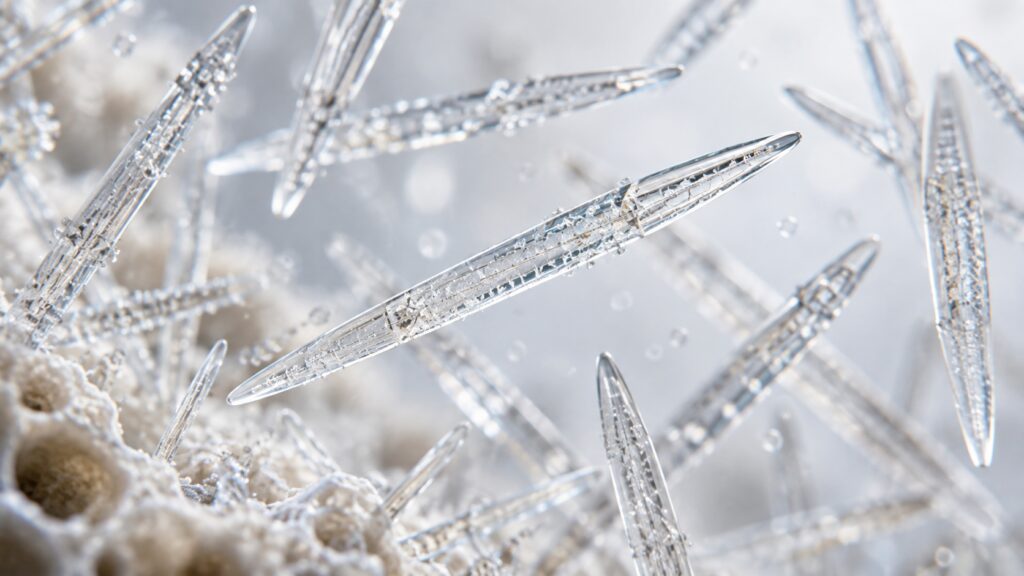
Spicules are extremely small, needle-like structures. In skincare, they are commonly associated with sponge-derived materials, including microscopic structures originating from marine or freshwater sponges.
Unlike familiar skincare ingredients such as niacinamide or hyaluronic acid, spicules are interesting partly because of their physical interaction with the skin’s outer surface.
That is also why applying some spicule products can feel unusual.
Depending on the formulation and strength, users may notice a mild prickling or tingling sensation during or after application.
For someone trying Korean spicule skincare for the first time, that sensation can be surprising.
But it is an intentional part of how many of these products are designed.
Why Is It Called “Liquid Microneedling”?
This is where things can get confusing.
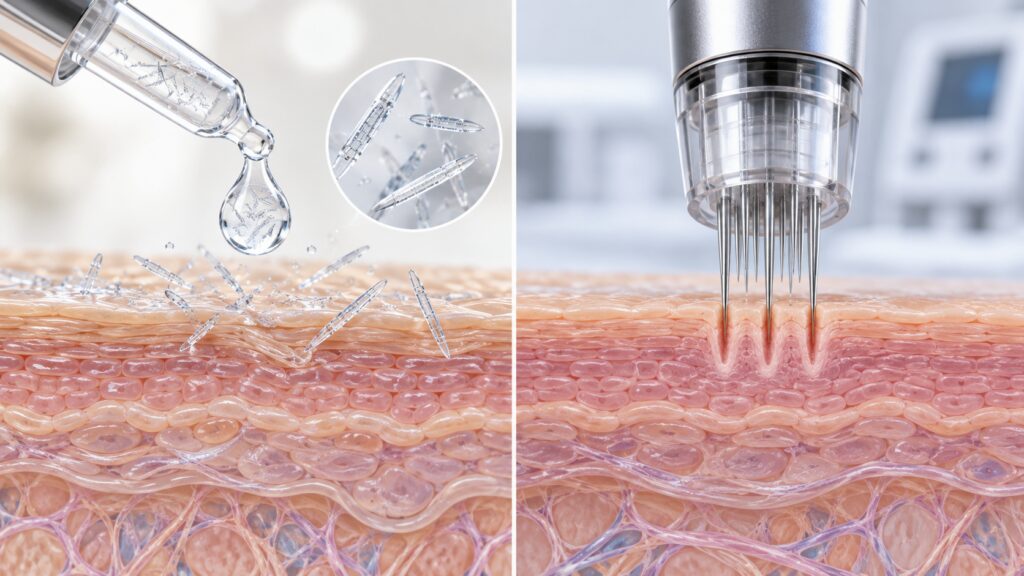
Beauty brands, retailers and social media users sometimes describe spicule skincare as “liquid microneedling.”
It is an easy phrase to understand: instead of seeing physical needles, you apply a serum or cream containing microscopic needle-like structures.
But spicule skincare should not be considered the same treatment as professional microneedling.
Professional microneedling uses a device with controlled needles to create micro-injuries in the skin under specific treatment conditions.
Spicule cosmetics are topical skincare products.
The mechanisms, depths, procedures and evidence behind the two are different.
So “liquid microneedling” is better understood as a beauty-industry nickname than a literal description of an equivalent dermatological procedure.
What Does the Research Say About Spicule Skincare?
Research suggests that certain sponge-derived spicules can help deliver selected substances through the skin. Laboratory and animal studies have investigated how these microscopic structures interact with the skin barrier and affect the penetration of experimental ingredients.
A 2022 study also examined a delivery system that loaded a model ingredient onto natural spicules and tested its penetration using pig skin.
These findings are promising for skin-delivery research, but they have important limits. They do not establish that every commercially available spicule serum or cream improves wrinkles, stimulates collagen production or delivers the same results as professional microneedling.
The type and size of the spicules, the complete formulation and the ingredient being delivered all matter. Consumers should evaluate claims about a specific finished product rather than assuming that results from experimental delivery systems apply to every spicule cosmetic.
Why Did Spicule Skincare Become Popular in Korea?

To understand the trend, it helps to understand how the Korean beauty market has been changing.
K-beauty is still famous internationally for gentle hydration, sheet masks, essences and the pursuit of “glass skin.”
But Korean skincare innovation has increasingly expanded into products that feel more treatment-oriented and results-focused.
Consumers are encountering products built around ingredients and delivery concepts such as PDRN, exosomes, peptides and spicules.
Spicule products fit neatly into that shift.
Instead of simply applying another hydrating serum, consumers get a noticeably different sensory experience — the tiny prickling sensation makes the product feel unlike traditional skincare.
And that experience is highly shareable.
A product that makes someone say, “Why does my face feel prickly?” naturally generates curiosity on TikTok, YouTube and beauty communities.
That has helped turn a relatively unfamiliar skincare technology into an international K-beauty talking point.
Why Is Spicule Skincare Trending Outside Korea?
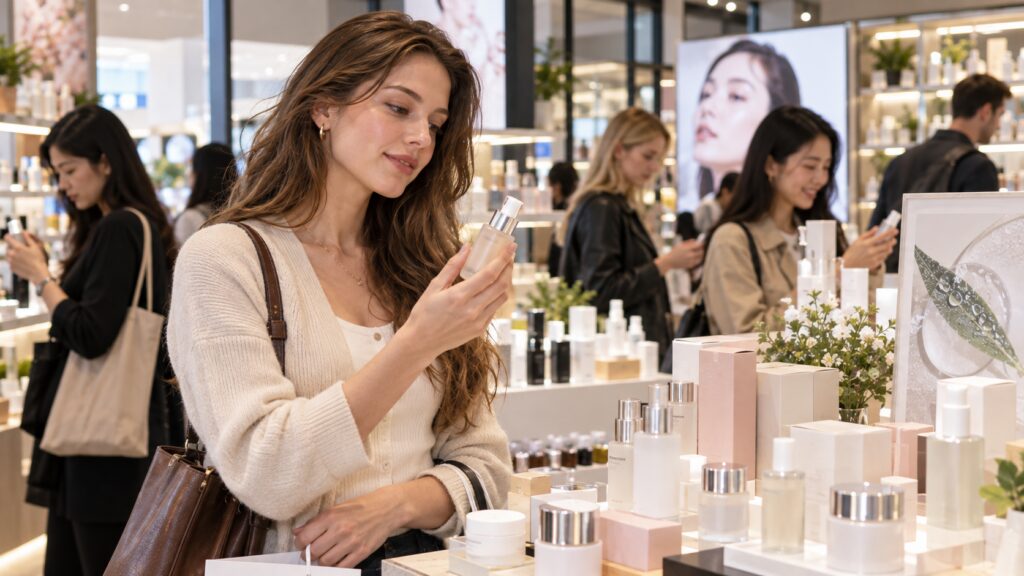
Spicules are no longer only a Korean beauty insider topic.
Major beauty publications in the United States and United Kingdom have begun explaining the technology to mainstream audiences, while Korean skincare itself continues to become more accessible through global retailers.
International interest is also changing where visitors shop for beauty products in Korea, with Korean pharmacy skincare becoming another part of the Seoul beauty-shopping experience.
This matters because the international K-beauty conversation is changing.
A few years ago, overseas consumers discovering Korean skincare were often introduced through products such as sheet masks, snail mucin, cleansing balms and sunscreen.
Now, many beauty enthusiasts are looking for the next Korean skincare innovation.
Spicules fit that search perfectly.
They are unusual, easy to demonstrate on social media and connected to the broader movement toward more sophisticated at-home skincare.
What Does Spicule Skincare Feel Like?
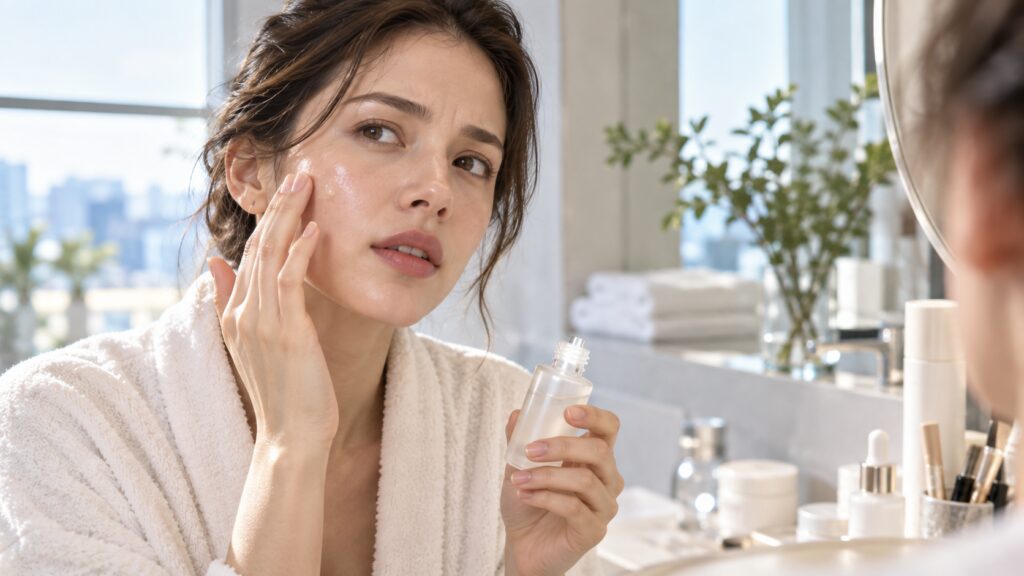
This may be the most important thing for beginners to know:
Spicule skincare may tingle or feel prickly.
The sensation varies by product, formulation and individual skin.
Some people describe it as very mild. Others find stronger formulas noticeably uncomfortable.
That does not mean stronger sensations automatically produce better skincare results.
More tingling is not necessarily better.
If you are accustomed to soothing Korean toners and barrier creams, your first experience with spicule skincare may therefore feel very different from what you normally associate with K-beauty.
How Do People Use Spicule Skincare?
There is no universal routine for every spicule product.
Different products can have different concentrations, accompanying ingredients and usage instructions.
That means the manufacturer’s directions matter.
As a general skincare principle, beginners should avoid introducing several potentially irritating products into their routine at the same time.
A simpler routine also makes it easier to identify what caused a reaction if irritation develops.
And because spicule products can produce a prickling sensation, combining them aggressively with other strong actives without understanding the formulation may not be a good idea.
When in doubt, start conservatively and follow the instructions for the specific product you are using.
Who Should Be Careful With Spicule Products?
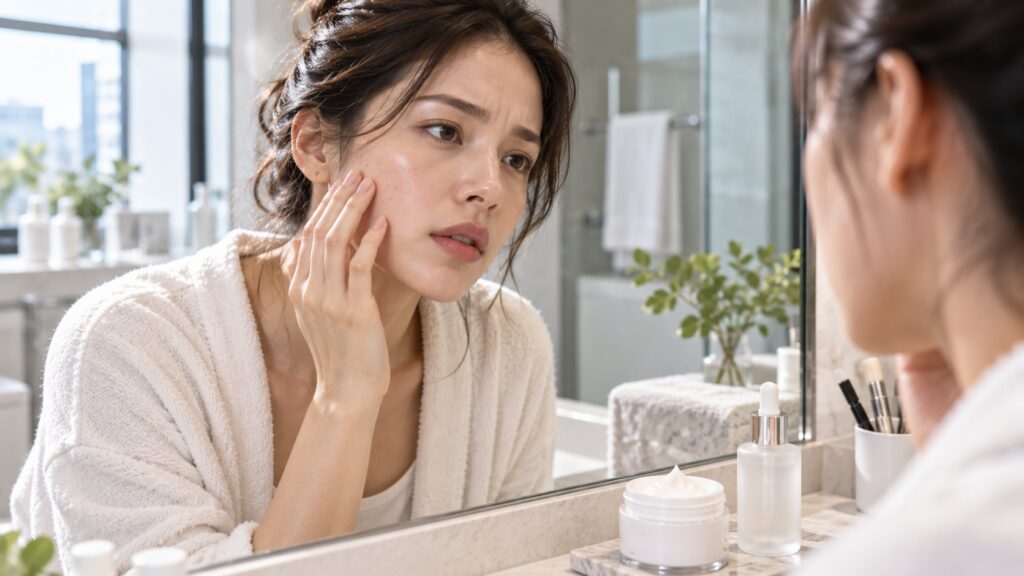
Spicule skincare is not automatically suitable for everyone simply because it is trending.
People with very sensitive or reactive skin should be especially cautious.
Dermatologists interviewed by U.S. beauty publications have warned that people with conditions such as rosacea, eczema, an impaired skin barrier or inflamed acne may experience additional irritation from spicules.
If your skin is already irritated, damaged or inflamed, adding a deliberately prickly product may not be the smartest experiment.
Anyone with an existing skin condition or uncertainty about a product should consider speaking with a qualified dermatologist before adding it to a routine.
Is Spicule Skincare the Same as a Dermatology Treatment?
No.
This distinction is worth repeating because social media terminology can blur the line between cosmetics and medical procedures.
A spicule serum is still a cosmetic skincare product.
Professional microneedling is a procedure performed using specialized equipment and controlled needle penetration.
Calling a serum “microneedling in a bottle” may help explain why the product feels different from an ordinary serum, but it should not be interpreted as meaning the two treatments are clinically equivalent.
That distinction becomes especially important when skincare trends spread internationally faster than the scientific evidence behind some marketing claims.
Is Spicule Skincare Worth the Hype?
That depends on what you expect from it.
If you are interested in new Korean skincare technologies and your skin tolerates the formulation, spicule products are certainly one of the more unusual developments in the current K-beauty market.
But you do not need spicules to have a good skincare routine.
And a stronger prickling sensation does not automatically mean a product is more effective.
The sensible way to approach the trend is the same way you should approach most viral skincare:
understand what the product is before deciding whether you need it.
What Spicule Skincare Tells Us About K-Beauty in 2026
The most interesting part of the spicule trend may be what it says about Korean beauty itself.
K-beauty is no longer defined internationally only by long routines, sheet masks and hydration.
The market is increasingly experimenting with delivery systems, biotechnology-inspired ingredients and treatment-like home skincare experiences.
PDRN is one example.
Spicules are another.
And the global beauty industry is watching closely.
That is why a strange prickling Korean serum can quickly move from a Seoul beauty shelf to TikTok feeds, beauty magazines and bathroom cabinets thousands of miles away.
For international consumers, the important question is not simply, “What is the next viral Korean product?”
A better question is:
What does it actually do — and does it make sense for my skin?
That is a much better way to explore K-beauty.
Frequently Asked Questions
What are spicules in skincare?
Spicules are microscopic, needle-like structures commonly associated with sponge-derived materials. In skincare formulas, they physically interact with the outer surface of the skin and may create a characteristic prickling sensation.
Is spicule skincare really microneedling?
No. Spicule skincare is sometimes marketed as “liquid microneedling,” but it is not the same as professional microneedling performed with a specialized device.
Does spicule skincare hurt?
It can feel prickly or tingly. The intensity varies depending on the product and the user’s skin. Stronger discomfort does not necessarily mean better results.
Is Korean spicule skincare safe for sensitive skin?
People with very sensitive skin, rosacea, eczema, an impaired skin barrier or active inflammation should be cautious. If you have a skin condition, consult a dermatologist before trying a potentially irritating product.
Why is spicule skincare popular in Korea?
It fits a broader shift in K-beauty toward innovative, treatment-inspired at-home skincare. Its unusual sensory experience and compatibility with other trending skincare concepts have also helped it attract attention on social media.
Are spicules the next big K-beauty trend?
They are already receiving significant international attention in 2026. Whether they become a long-term skincare category remains to be seen, but they illustrate how quickly Korean skincare innovations can move into the global beauty market.
Sources & Further Reading
PubMed — Skin Delivery of Hydrophilic Biomacromolecules Using Marine Sponge Spicules
PubMed — A Novel Dermal Delivery System Using Natural Spicules for Cosmetics and Therapeutics
PubMed — Enhanced Skin Delivery of Therapeutic Peptides Using Spicule-Based Topical Delivery Systems
Vogue — Dermatologists and a cosmetic chemist explain spicule skincare and its limits