
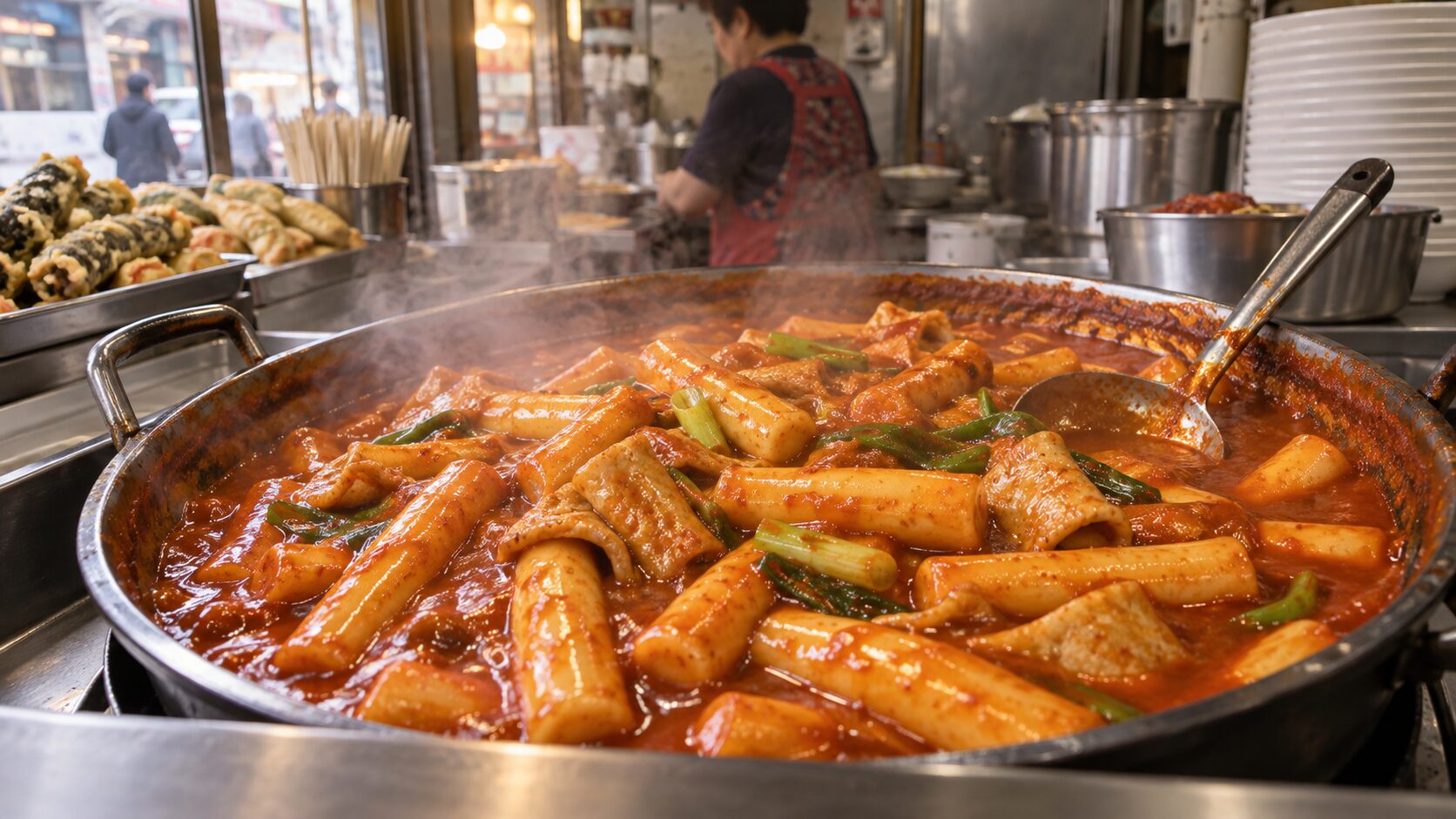
Walk past a Korean street-food stall or a small bunsik shop around lunchtime, and there is a good chance you will see a pan filled with bright red sauce and chewy rice cakes.
That is tteokbokki (떡볶이), one of Korea’s most recognizable comfort foods.
For Koreans, however, tteokbokki is more than simply “spicy rice cakes.”
It can bring back memories of eating inexpensive snacks with school friends, stopping at a street stall on a cold day, or ordering a table full of tteokbokki, fried food and other bunsik dishes to share.
And it is no longer just a Korean favorite.
In the 2025 Hansik Overseas Consumer Survey, tteokbokki ranked among the Korean dishes frequently eaten by international consumers.
So what exactly is tteokbokki, what does it taste like, and how do people actually eat it in Korea?
Here is a local guide.
What Is Tteokbokki?
Tteokbokki is a Korean dish built around tteok, or rice cakes.
If you’re curious about the rice cake itself, our guide to Korean tteok explains the different types of Korean rice cakes, from garaetteok and injeolmi to songpyeon.
The version most people recognize today usually contains cylindrical rice cakes cooked in a thick red sauce commonly made with Korean red pepper paste, or gochujang.
Fish cake, known as eomuk, and green onions are also common additions. Depending on the shop, you may find boiled eggs, cabbage, dumplings, noodles or other ingredients in the pan.
The name itself gives you a clue.
“Tteok” means rice cake, while “bokki” comes from a Korean word associated with stir-frying.
But modern tteokbokki is often simmered in plenty of sauce rather than being dry-fried.
And that sauce is a major part of the experience.
What Does Tteokbokki Taste Like?
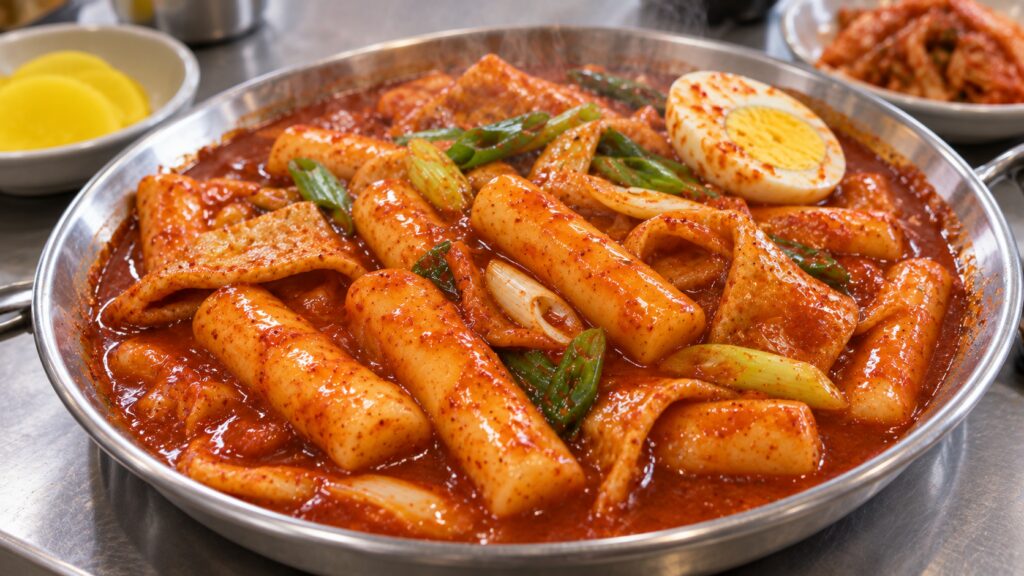
The classic version is usually spicy, slightly sweet and savory.
But the texture may surprise first-time visitors even more than the flavor.
Korean rice cakes are dense and chewy.
They do not have the soft, cake-like texture that the English word “rice cake” might suggest.
Instead, imagine a smooth, springy cylinder that becomes coated in a thick, spicy-sweet sauce.
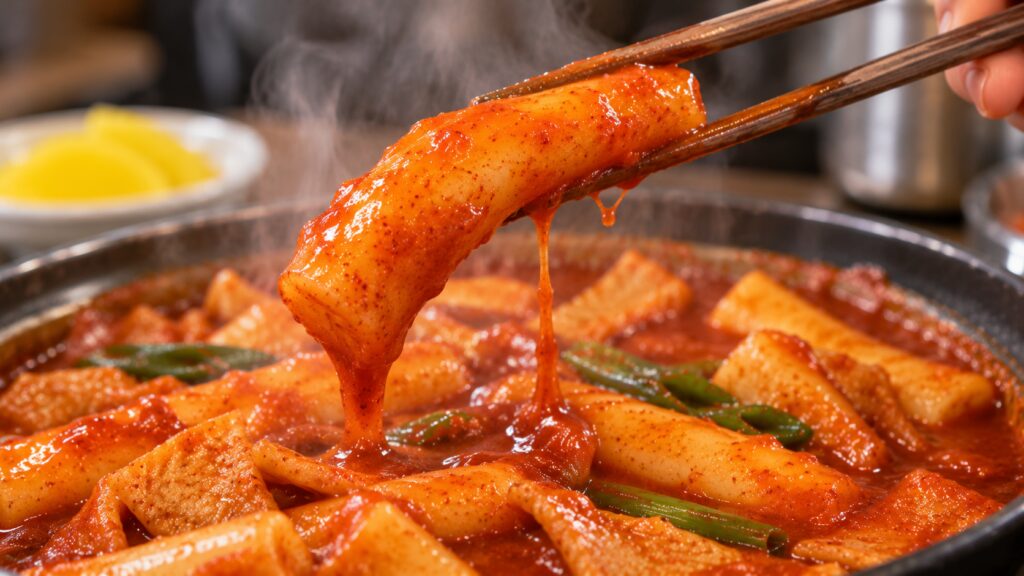
The fish cake adds a softer, savory contrast, while boiled eggs and other ingredients absorb some of the sauce.
The exact balance varies enormously from shop to shop.
Some tteokbokki is noticeably sweet.
Some is intensely spicy.
Some has a thinner sauce, while other versions are thick enough to cling heavily to every rice cake.
That variation is part of the fun.
Is Tteokbokki Really Spicy?
It can be.
This is one of the most important things to know if you are trying tteokbokki in Korea for the first time.
The bright red color does not tell you exactly how spicy a particular serving will be.
Some neighborhood bunsik shops make relatively sweet and approachable tteokbokki. Other restaurants specialize in heat levels that can challenge even people who regularly eat spicy food.
If you have a low tolerance for chili, do not assume that “Korean spicy” will feel mild.
Look for a mild option when available, and consider ordering something less spicy alongside it.
And remember: tteokbokki is supposed to be enjoyable.
There is no prize for surviving the hottest sauce on the menu.
How Koreans Actually Eat Tteokbokki
This is where understanding tteokbokki as simply a single dish misses part of the experience.
In Korea, tteokbokki belongs to a broader food culture called bunsik (분식).
A typical bunsik shop might sell tteokbokki alongside:
- eomuk (fish cake)
- twigim (Korean-style fried foods)
- sundae (Korean blood sausage)
- gimbap
- mandu (dumplings)
- ramyeon
Rather than ordering only tteokbokki, people often combine several of these foods.
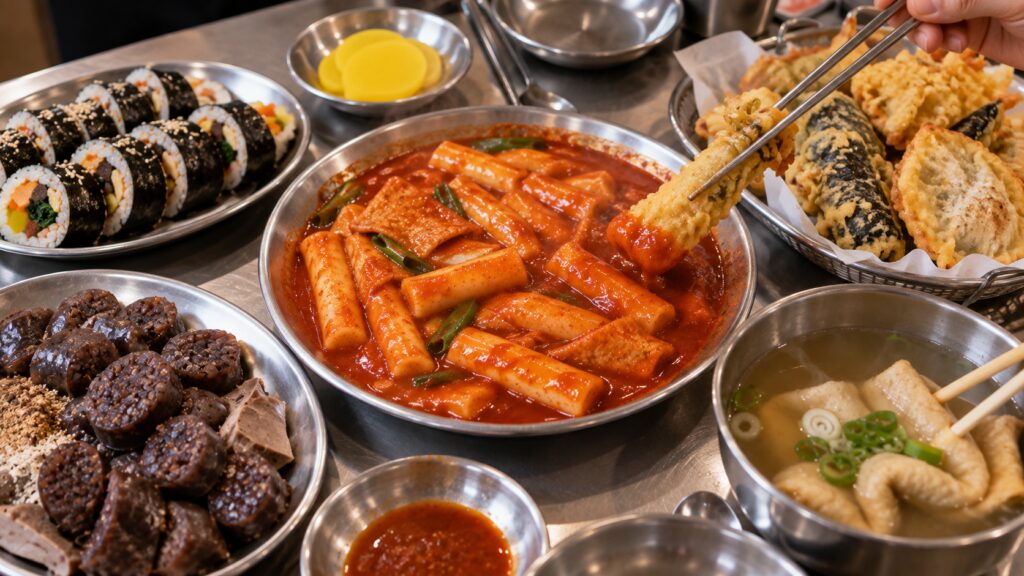
One particularly familiar way to eat it is to dip twigim into the tteokbokki sauce.
The crispy fried coating absorbs the spicy-sweet sauce, creating a completely different texture.
You might also alternate bites of tteokbokki with gimbap or eomuk.
This combination is much closer to the everyday Korean experience than thinking of tteokbokki as an isolated plate of rice cakes.
For a different look at Korea’s everyday quick-meal culture, Korean convenience store food shows how ramyeon, gimbap and ready-to-eat meals have become part of the travel experience too.
Why Tteokbokki Feels Nostalgic to Many Koreans
Tteokbokki has long been associated with inexpensive, casual food.
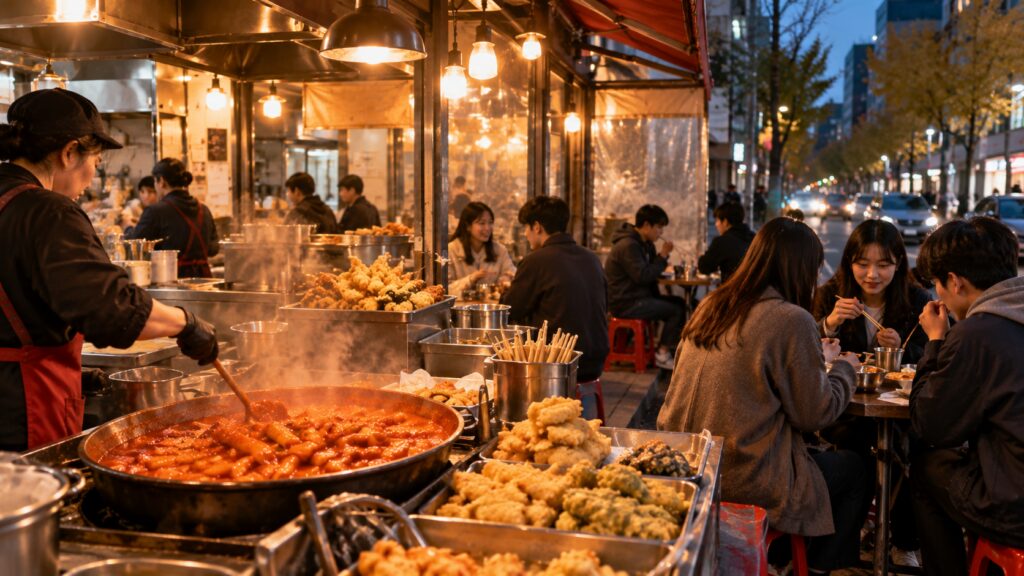
For generations of Koreans, it has been connected with school neighborhoods, traditional markets, street stalls and small bunsik restaurants.
That is why conversations about tteokbokki can quickly become personal.
Someone may remember the version sold outside their school. Another person may insist that a particular neighborhood shop makes the sauce correctly.
It is comfort food, but it is also memory food.
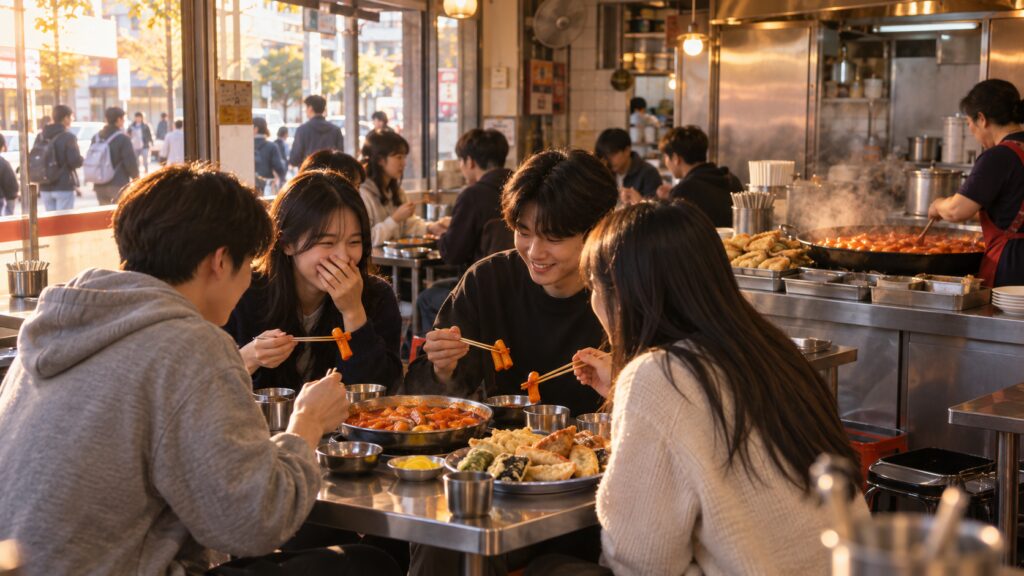
Korea’s bunsik culture developed strongly during the 1960s and 1970s, and tteokbokki eventually became one of its defining dishes.
The familiar spicy red version of tteokbokki is relatively modern, becoming widely associated with Korean street-food culture in the decades after the Korean War.
Today it has moved far beyond its inexpensive street-food roots.
You can still eat a simple portion at a neighborhood shop, but you can also find restaurant versions loaded with noodles, dumplings, sausages, cheese and other toppings.
Tteokbokki Wasn’t Always Red and Spicy
Here is something many people outside Korea do not realize.
Tteokbokki has a history that predates the famous red version.
Gungjung tteokbokki, often translated as royal court tteokbokki, uses soy sauce rather than the fiery red gochujang-based sauce associated with modern street food.
It can include beef, mushrooms and vegetables and has a much milder, savory flavor.
The red tteokbokki most people recognize today developed much later and became widely popular as an affordable snack.
So when someone says “tteokbokki,” they are usually referring to the spicy red version — but that is only one branch of the dish’s story.
There Isn’t Just One Kind of Tteokbokki Anymore
Walk through Korea today and you will find an expanding tteokbokki universe.
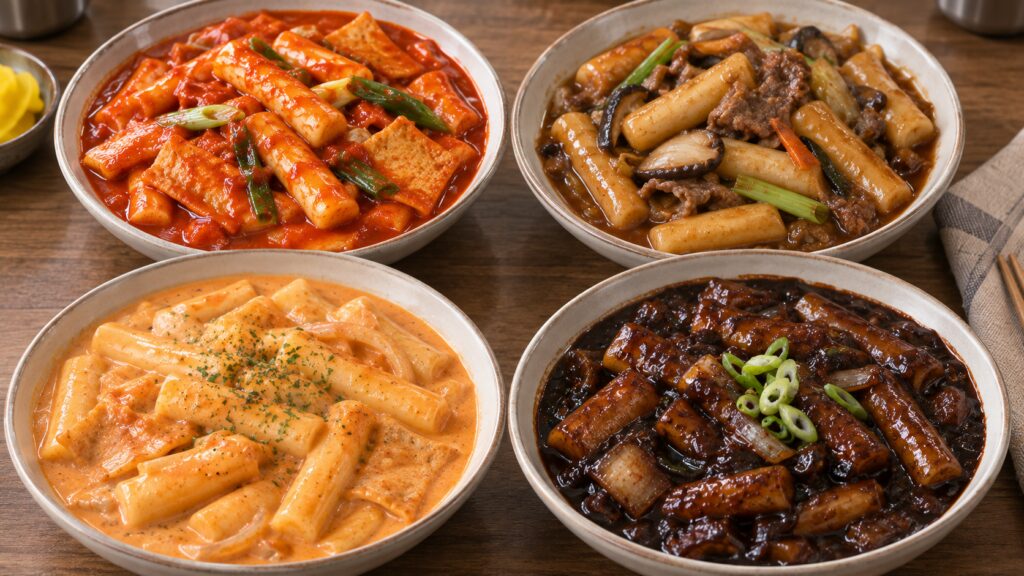
Classic Tteokbokki
The familiar red version made with a spicy-sweet sauce, rice cakes and often fish cake.
This is the place to start if you want the classic Korean street-food experience.
Gungjung Tteokbokki
A soy sauce-based version associated with Korean royal court cuisine.
It is generally savory rather than fiery and may include beef and vegetables.
Jjajang Tteokbokki
This variation uses black bean sauce, giving it a darker color and a different sweet-savory profile.
It can be a useful alternative for people who find traditional spicy tteokbokki difficult.
Cheese Tteokbokki
Add melted cheese to spicy tteokbokki and you get one of Korea’s popular modern combinations.
The richness of the cheese changes both the flavor and perceived heat.
Rosé Tteokbokki
One of the more recognizable modern variations combines the traditional spicy profile with a creamy sauce.
The result is richer and often milder than classic tteokbokki.
These variations show something interesting about Korean food culture.
Tteokbokki is traditional enough to trigger nostalgia, but flexible enough to keep changing.
What Should You Order With Tteokbokki?
If you visit a Korean bunsik restaurant for the first time, don’t stop at the rice cakes.
Try building a small bunsik meal.
Tteokbokki + twigim is an excellent starting combination because the fried food can be dipped directly into the sauce.
Add eomuk if you want something savory and comforting.
Gimbap is another easy companion, particularly if you need a break from the spice.
More adventurous visitors can add sundae, Korea’s blood sausage traditionally made with ingredients including glass noodles.
You do not need to order everything.
But sharing several dishes is one of the easiest ways to understand why tteokbokki occupies such a distinctive place in Korean casual food culture.
If You Try Tteokbokki in Korea for the First Time
A few things can make your first experience better.
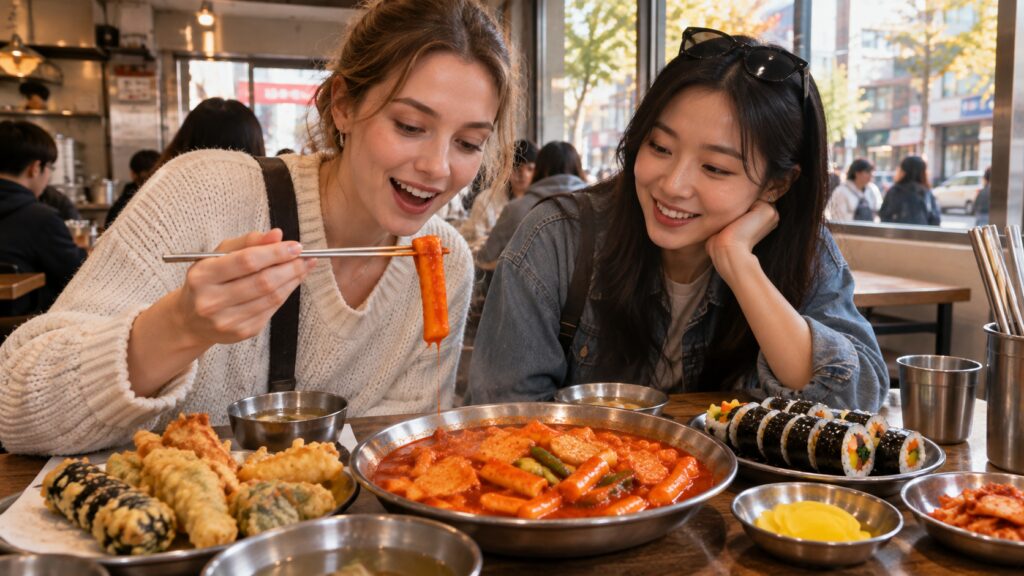
First, check the spice level if the restaurant offers choices.
Second, don’t expect the rice cakes to resemble Western cakes. Their chewy texture is one of the defining characteristics of the dish.
Third, try at least one side dish with it.
And finally, don’t worry too much about finding the single “best tteokbokki in Korea.”
Part of the appeal is that there are so many versions.
A market stall, a tiny neighborhood bunsik shop and a modern tteokbokki chain may all give you completely different experiences.
If you are in Seoul and particularly interested in the dish, Sindang-dong Tteokbokki Town is one of the places historically associated with tteokbokki restaurants.
But you certainly do not need to travel there to find tteokbokki.
It is part of everyday Korean food culture.
Why Tteokbokki Is Going Global
Tteokbokki increasingly sits at the intersection of Korean street food and the global spread of Korean culture.
Korean food is becoming more familiar internationally, and tteokbokki has one major advantage: it is instantly recognizable.
The bright red sauce and cylindrical rice cakes create an appearance that is difficult to confuse with another dish.
But international interest is moving beyond curiosity.
The 2025 Hansik Overseas Consumer Survey found tteokbokki among the ten Korean dishes most frequently consumed by overseas respondents.
That matters.
It suggests that tteokbokki is gradually moving from something people see in Korean entertainment or social media to something they actually eat.
And as Korean ingredients and foods become easier to find outside Korea, that transition is likely to continue.
Tteokbokki Is More Than “Spicy Rice Cakes”
Calling tteokbokki Korean spicy rice cakes is useful.
But it doesn’t tell the whole story.
To understand tteokbokki, you have to understand the small bunsik shop, the plate of fried food waiting to be dipped into red sauce, the student stopping for a snack and the endless argument over which shop makes it best.
You also have to understand how quickly the dish changes.
Classic red tteokbokki can sit on the same menu as rosé, cheese or black bean versions without anyone finding that particularly strange.
If you would rather learn by making Korean food yourself, a Korean cooking class in Seoul can be another way to explore dishes such as tteokbokki and other everyday Korean favorites.
That mixture of nostalgia and constant reinvention is very Korean.
And perhaps that is why a simple plate of chewy rice cakes has become one of the most recognizable faces of K-food.
FAQ
What is tteokbokki made of?
Classic tteokbokki is primarily made with Korean rice cakes cooked in a spicy-sweet sauce commonly based on gochujang. Fish cake, green onions and other ingredients are often added.
What does tteokbokki taste like?
Classic tteokbokki is generally spicy, sweet and savory. The rice cakes themselves have a dense, smooth and chewy texture.
Is tteokbokki very spicy?
It depends on the restaurant and recipe. Some versions are relatively mild and sweet, while others can be extremely spicy. First-time visitors with a low spice tolerance should check the heat level before ordering.
Is tteokbokki always made with rice cakes?
Rice-based garaetteok is strongly associated with tteokbokki, but Korean tteokbokki culture also includes versions using wheat-based tteok. The texture can differ depending on the type used.
What do Koreans eat with tteokbokki?
Common pairings include twigim (fried foods), eomuk (fish cake), gimbap, sundae and mandu. Dipping fried foods into tteokbokki sauce is also a familiar way to enjoy a bunsik meal.
Is tteokbokki a street food?
Yes. Tteokbokki is one of Korea’s best-known street and bunsik foods, although it is now also served in specialized restaurants, chains and delivery formats.
What is rosé tteokbokki?
Rosé tteokbokki is a modern variation that combines spicy tteokbokki flavors with a creamy sauce. It is generally richer and often less intensely spicy than classic red tteokbokki.
Sources & Further Reading
Korean Food Promotion Institute — 2025 Hansik Overseas Consumer Survey
Ministry of Agriculture, Food and Rural Affairs — 2025 Overseas Hansik Consumer Survey