
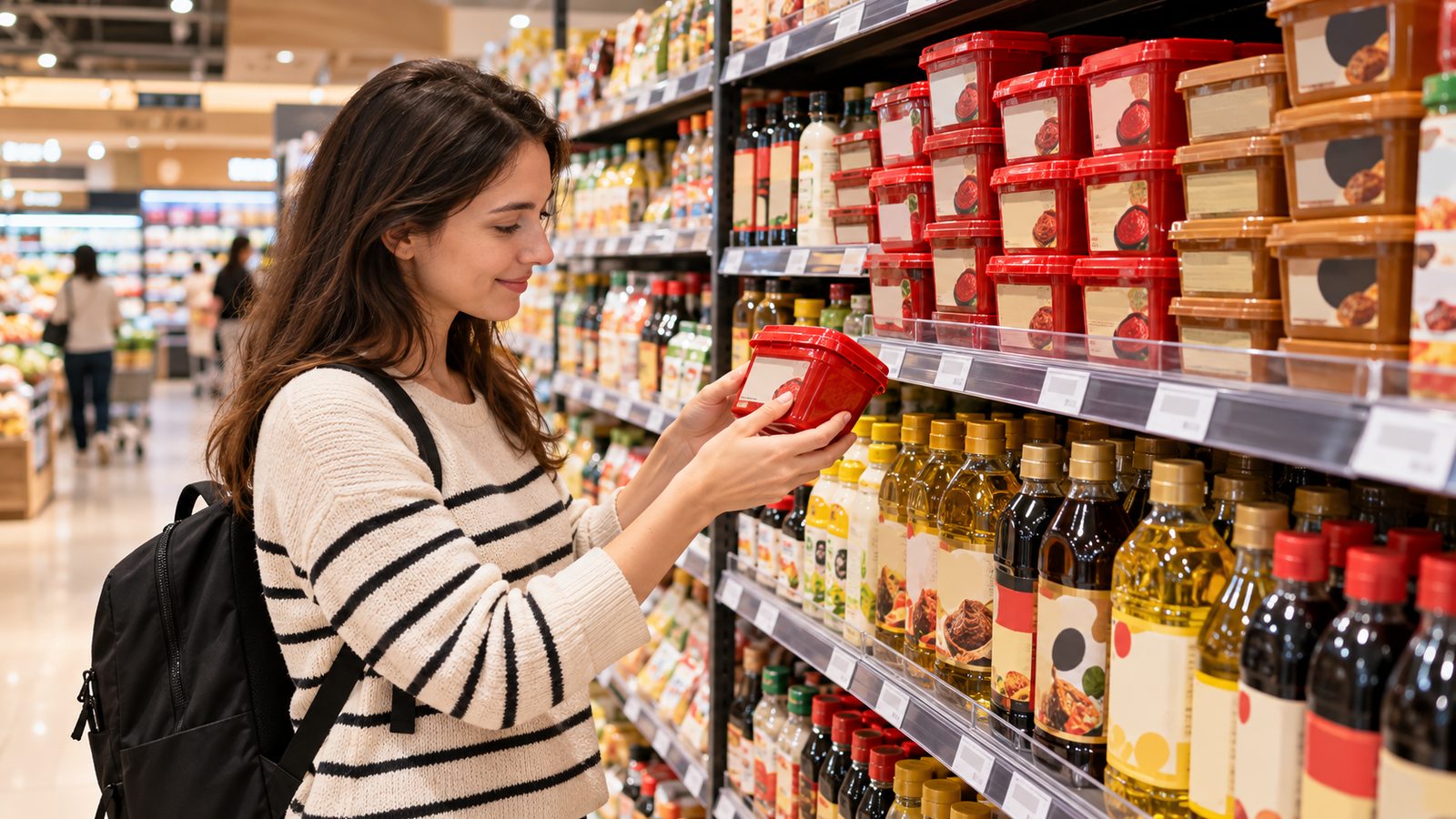
K-beauty products and snacks may fill plenty of suitcases leaving South Korea, but another kind of souvenir is easy to spot in Korean supermarkets: sauces and seasonings.
Gochujang, ssamjang, doenjang and bottles of fragrant sesame oil offer something a little different from a typical souvenir. They let travelers recreate some of the flavors they discovered in Korea after returning home.
The challenge is knowing what to buy. A supermarket shelf can contain several tubs of red or brown paste that look similar but are used in very different ways.
Here is what first-time visitors should know about Korean sauces and seasonings, where to buy them, and what to consider before packing them for the flight home.
Why Are Korean Sauces Popular Food Souvenirs?
Korean sauces work particularly well as food souvenirs because many are closely connected to dishes travelers encounter throughout their trip.
Gochujang appears in everything from marinades and bibimbap to spicy dishes. Ssamjang is commonly eaten with grilled meat and vegetables, while doenjang forms the savory base of familiar soups and stews.
They are also relatively easy to find. Large supermarkets, neighborhood grocery stores, traditional markets and some convenience stores carry Korean seasonings in a range of sizes.
For travelers, that means it is possible to take home an ingredient rather than simply a packaged snack.
But the words on the container matter. Gochujang, ssamjang and doenjang are not interchangeable versions of the same sauce.
6 Korean Sauces and Seasonings Worth Knowing
1. Gochujang
Gochujang is one of Korea’s best-known fermented condiments.
The thick red paste is traditionally built around red pepper powder, grains and fermented ingredients, giving it a combination of heat, sweetness, saltiness and savory depth.
That makes describing gochujang simply as “Korean hot sauce” misleading. Its thick texture and fermented flavor mean it is generally used as an ingredient, seasoning or base rather than poured over food like a thin table hot sauce.
Travelers may recognize its flavor from bibimbap, marinades and spicy Korean dishes.
It is also closely associated with dishes such as tteokbokki, Korea’s spicy rice cakes.
2. Ssamjang
Ssamjang is the one to remember if Korean barbecue was a highlight of your trip.
It is a savory dipping paste commonly eaten with grilled meat wrapped in lettuce or other leafy vegetables. A small amount can be added to the wrap along with meat, garlic and other ingredients.
Ssamjang generally combines fermented soybean-based flavors with chili and other seasonings, although recipes and commercial products vary.
For someone who wants a condiment that can be opened and used easily at a home Korean barbecue meal, ssamjang can be particularly approachable.
3. Doenjang
Doenjang is Korean fermented soybean paste.
Its brown color may make it look similar to ssamjang on a supermarket shelf, but its role is different.
Doenjang is an important base for soups, stews and seasoned dishes, including doenjang-jjigae. Its flavor is salty, fermented and deeply savory.
It is sometimes compared with Japanese miso to give newcomers a rough reference point, but the two should not be treated as identical ingredients. Their production methods, flavors and culinary uses can differ.
If you want to cook Korean soups and stews at home, doenjang is often more useful than a ready-to-eat dipping sauce.
4. Gochugaru
Gochugaru is Korean red pepper powder or flakes rather than a prepared sauce.
Depending on the grind and product, its texture can range from relatively fine to noticeably flaky.
It is an important ingredient in Korean cooking and is particularly associated with kimchi and various seasoned dishes.
Do not confuse it with gochujang.
Gochugaru = dried red pepper flakes or powder.
Gochujang = fermented red chili paste.
They can appear in the same recipe, but they perform different jobs.
5. Chamgireum — Toasted Sesame Oil
Chamgireum, or sesame oil, provides one of the most recognizable aromas in Korean cooking.
It is commonly used in small quantities as a seasoning or finishing oil rather than as a neutral oil for everyday high-volume frying.
A little can add a nutty aroma to rice, vegetables, noodles and seasoned side dishes.
Because a small amount goes a long way, a modest bottle may be more practical for travelers than buying a large container.
6. Deulgireum — Perilla Oil
Perilla oil is another traditional Korean oil, but it should not be confused with sesame oil.
It comes from perilla seeds and has its own distinctive nutty, earthy character. It can be used with vegetables, noodles and other Korean dishes.
Travelers interested in ingredients beyond the most internationally familiar Korean foods may find perilla oil particularly interesting.
Again, smaller bottles are usually easier to pack and use after a trip.
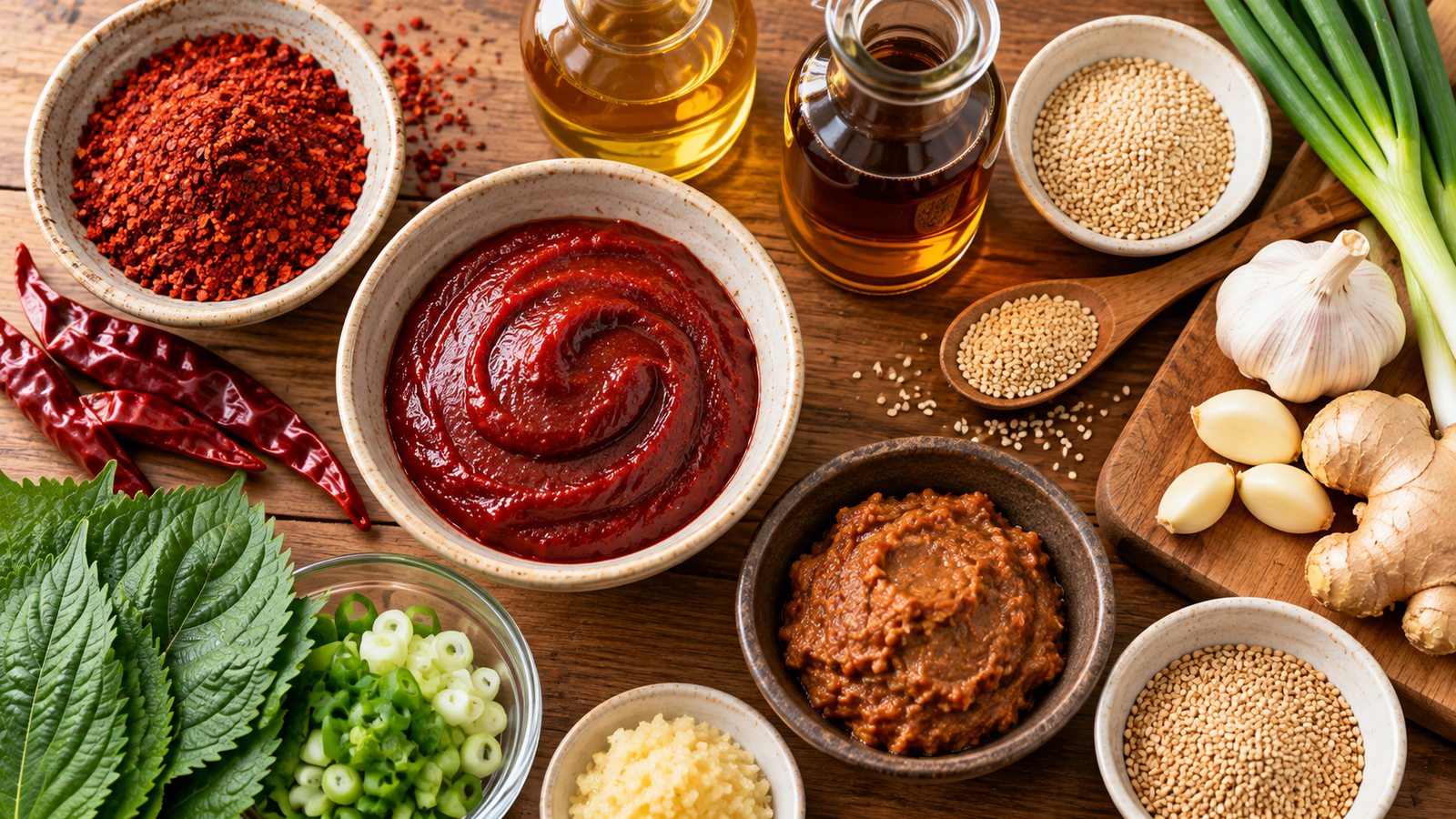
Gochujang vs. Ssamjang vs. Doenjang: What’s the Difference?
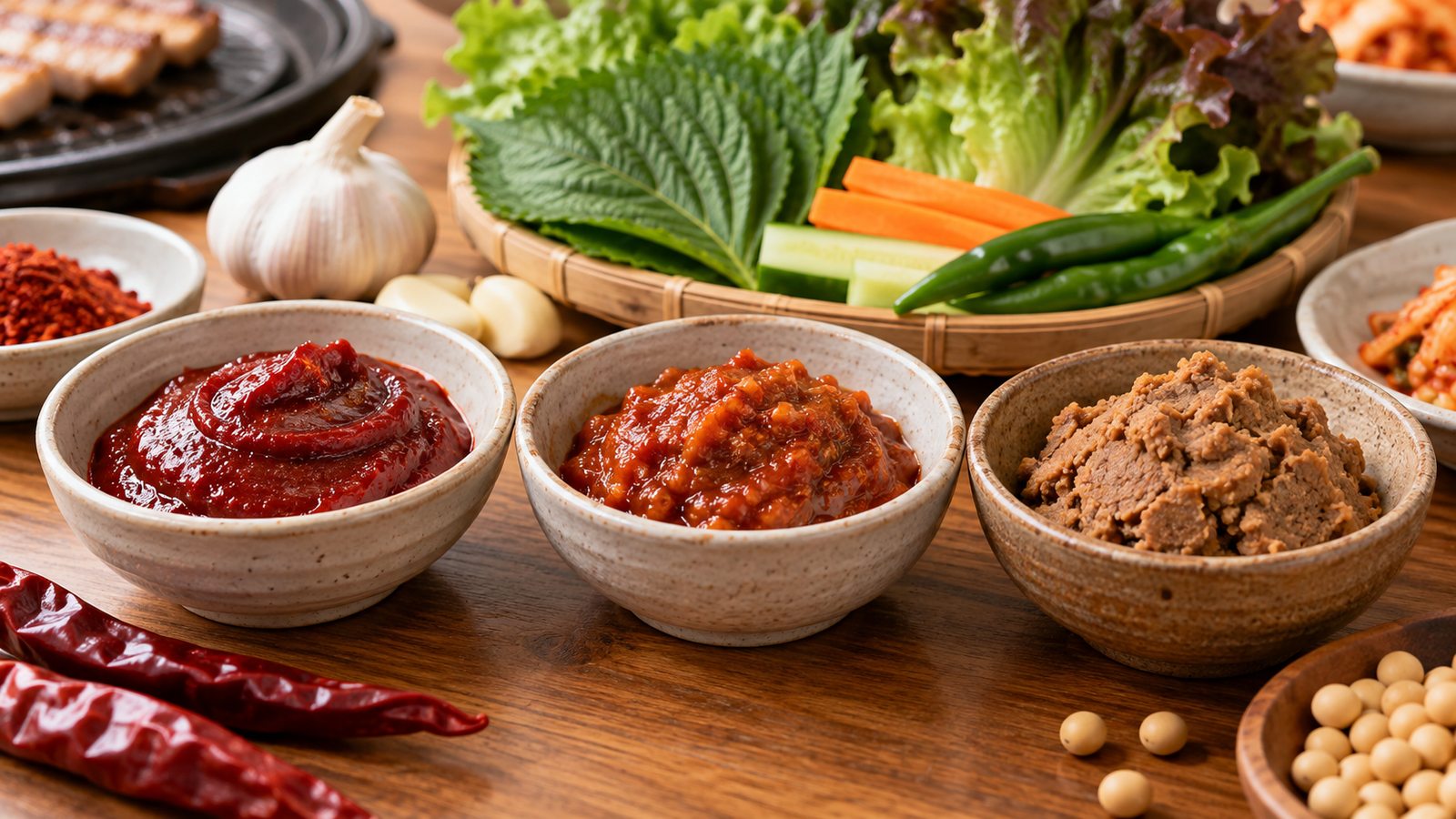
| Korean condiment | What it is | Flavor profile | Easy first use |
|---|---|---|---|
| Gochujang | Fermented red chili paste | Spicy, savory, slightly sweet | Bibimbap, marinades, spicy dishes |
| Ssamjang | Seasoned dipping paste | Savory, salty, mildly spicy | Korean barbecue wraps |
| Doenjang | Fermented soybean paste | Deep, salty, fermented | Soups and stews |
If you are standing in a Korean supermarket wondering which tub to buy, think about what you want to cook, not simply which package looks most Korean.
Which Korean Seasoning Should You Buy First?
There is no single best Korean sauce for every traveler.
If you want to recreate spicy Korean flavors, gochujang is the most versatile starting point.
If your favorite experience was Korean barbecue, ssamjang may be easier to use immediately.
If you plan to cook Korean soups and stews, choose doenjang.
For kimchi-style seasoning and recipes that specifically call for Korean red pepper flakes, look for gochugaru.
And if you mainly want to add a recognizable Korean aroma to simple dishes, a small bottle of sesame oil can be useful.
Buying several small packages may also make more sense for a first-time buyer than choosing one oversized container.
Where Can Travelers Buy Korean Sauces?
The easiest place for most visitors is a large supermarket.
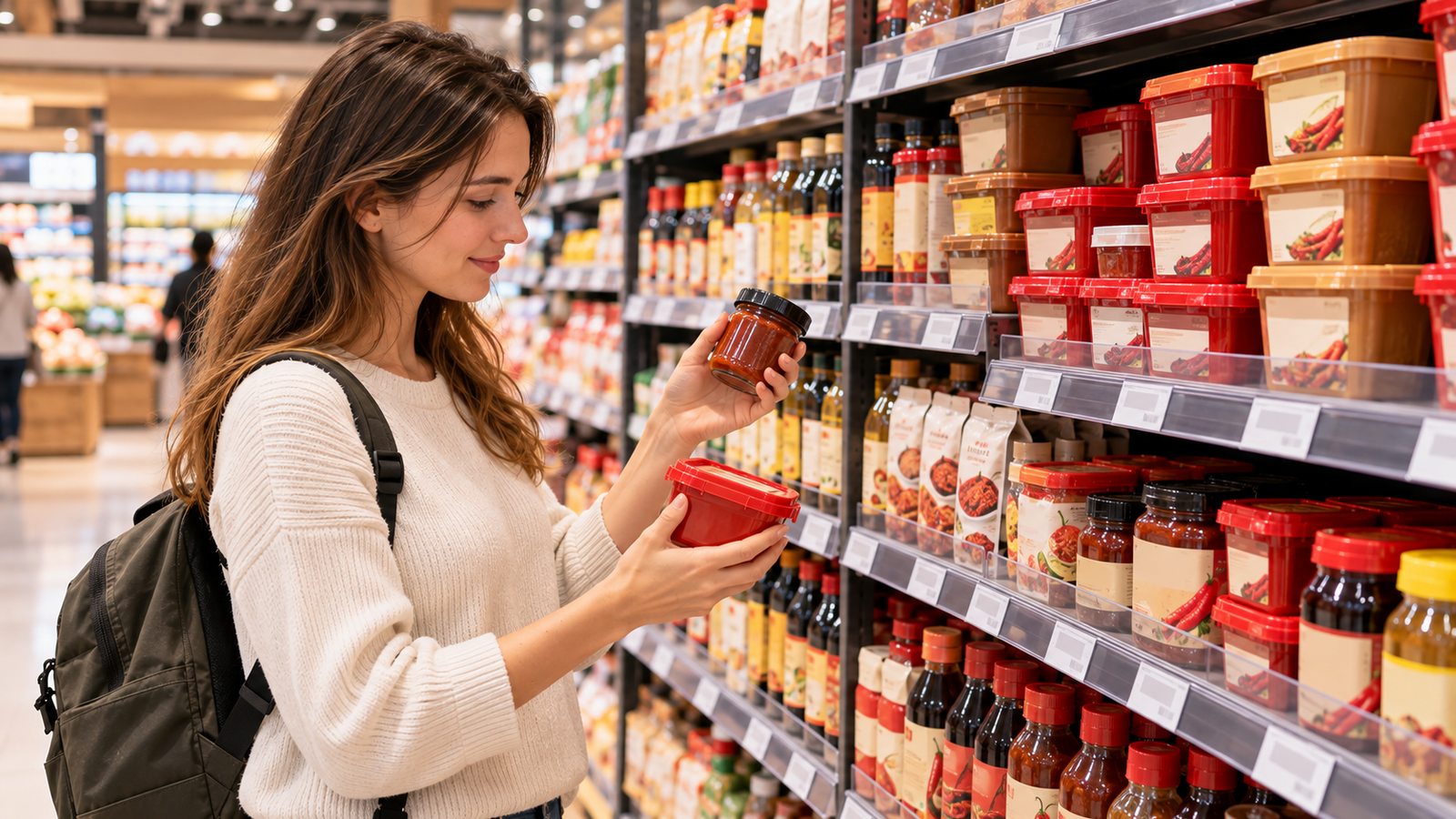
Supermarkets typically offer several sizes and varieties in one place, making it easier to compare products. Neighborhood grocery stores can also be convenient if you already know what you want.
Traditional markets may be interesting for travelers looking for regional or traditional food products, while some convenience stores carry smaller selections of common seasonings.
Airport and duty-free retail can be useful for last-minute shopping, but relying on the airport means you may have fewer choices than at a supermarket in the city.
If food shopping is part of your itinerary, it is better to shop before your final trip to the airport.
How to Choose Korean Sauces at a Supermarket
Do not choose solely by packaging.
First, check what the product actually is: gochujang, ssamjang and doenjang serve different purposes.
Then consider size. A large tub may seem economical, but a smaller package is easier to fit into luggage and may be more realistic for occasional cooking at home.
Check the ingredient list if you have allergies or dietary restrictions. Commercial recipes vary, and a familiar product name does not guarantee identical ingredients across manufacturers.
Also look at storage instructions and the best-before or expiration information on the package.
For travel, factory-sealed commercial packaging is generally more practical than an opened container or an unlabeled homemade product.
How Should You Pack Korean Sauces for a Flight?
There are two separate questions travelers need to consider:
Can you take the product through airport security?

and
Can you legally bring the food into your destination country?
They are not the same thing.
Thick sauces and pastes can be treated as liquids, aerosols or gels under aviation security rules. Containers above the applicable cabin limit may therefore need to travel in checked baggage.
If you are checking a bag, keep sauce containers tightly sealed and consider placing them inside a separate leak-resistant bag. Protect glass bottles such as sesame or perilla oil from impact by cushioning them between clothing or other soft items.
Keeping food in its original commercial packaging can also make the ingredients and product type easier to identify if customs officials ask about it.
Can You Bring Korean Sauces Back to Your Country?
Food import rules depend on your destination, the ingredients in the product and current biosecurity or customs regulations.
A Korean supermarket selling a product does not automatically mean that the product can legally enter every country.
United States
Travelers entering the United States should declare agricultural and food products as required by U.S. Customs and Border Protection.
Whether a particular product is admissible can depend on its ingredients and processing.
Keeping Korean sauces in their original commercial packaging makes it easier to show officials exactly what you are carrying.
Canada
Canada has personal-use rules covering foods including condiments and dressings, but travelers must still follow declaration and import requirements.
Check the Canadian Food Inspection Agency’s current rules before departure, particularly if a sauce contains animal-derived ingredients.
Australia
Australia has particularly strict biosecurity controls.
Commercially manufactured and packaged sauces may be permitted when they meet the relevant conditions, but travelers should declare food when required and check the current Australian rules before flying.
Do not assume that every Korean sauce will be treated the same way simply because it is factory sealed.
United Kingdom
Great Britain places restrictions on certain foods, particularly products containing meat or dairy from some countries.
Packaged plant-based seasonings may fall under different rules, but ingredients matter.
Check the current UK government guidance before packing Korean food souvenirs.
The safest approach for any destination is simple: keep products sealed and labeled, check the official rules shortly before departure, and declare food whenever the destination country’s rules require it.
Are Korean Sauces a Good Souvenir?
For travelers who enjoyed Korean food, they can be.
Unlike a snack that disappears after one serving, a jar of gochujang or doenjang can become part of several meals back home.
They can also help explain something important about Korean food: the flavors people associate with Korean dishes often come from combinations of fermented pastes, oils, chili and seasonings rather than from one universal “Korean sauce.”
You do not need to fill your suitcase with every condiment on the supermarket shelf.
Choose one or two ingredients connected to foods you actually enjoyed in Korea, buy a practical size, pack them carefully and check your home country’s food-import rules.
That way, the souvenir has a good chance of making it out of the suitcase and into your kitchen.
FAQ
Is gochujang the same as Korean hot sauce?
No. Gochujang is a thick fermented red chili paste with spicy, savory and sometimes sweet notes. It is commonly used as an ingredient or seasoning. Thin Korean hot sauces made for pouring are different products.
What is the difference between gochujang and ssamjang?
Gochujang is a fermented chili paste used in many Korean dishes. Ssamjang is a seasoned dipping paste commonly eaten with Korean barbecue and vegetable wraps.
Is doenjang the same as miso?
Both are fermented soybean-based seasonings, but they are not identical. Their production, flavor and typical culinary uses can differ. Use the ingredient specified in a Korean recipe when possible.
Where should tourists buy Korean sauces in Korea?
Large supermarkets are usually the easiest option because travelers can compare several varieties and package sizes. Grocery stores, traditional markets and some convenience stores also sell Korean seasonings.
Can I put gochujang in my carry-on luggage?
Gochujang is a paste and may be subject to airport liquid, aerosol and gel restrictions. Larger containers are generally better placed in checked baggage. Check the current rules for your airport and airline before flying.
Can I bring Korean sauces into the United States, Canada, Australia or the UK?
It depends on the destination and ingredients. Food, customs and biosecurity rules differ by country and can change. Keep products commercially sealed and labeled, declare food when required, and check the destination government’s current rules before departure.
Sources & Further Reading
Korea Tourism Organization — Korean food and shopping information
U.S. Customs and Border Protection — Bringing agricultural products into the United States
Canadian Food Inspection Agency — Bringing food into Canada for personal use
Australian Border Force — What food can you bring into Australia?