
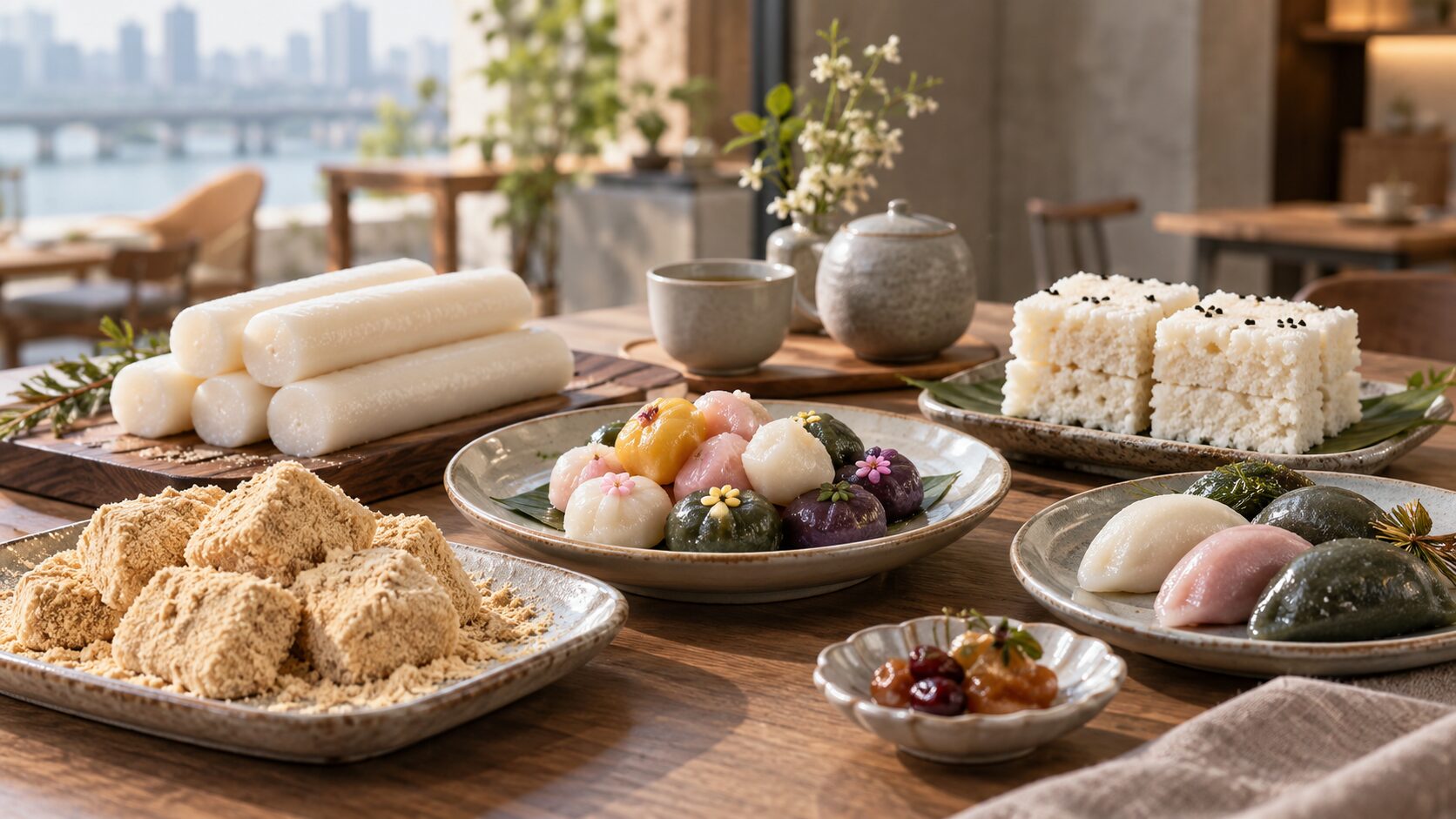
One of Korea’s most talked-about dessert trends in 2026 has roots in a much older food tradition.
In 2026, younger Koreans are lining up for trendy rice cakes, bakeries and cafés are experimenting with chewy tteok-inspired desserts, and international visitors are discovering that Korean “rice cake” means much more than the cylindrical pieces floating in a bowl of spicy tteokbokki.
The trend even has its own playful Korean nickname: tteokjisullye (떡지순례) — a combination of tteok and a word associated with making a pilgrimage — used to describe traveling around in search of famous rice cake shops.
But tteok itself is nothing new.
It has been part of Korean food culture for generations, appearing at holidays, celebrations, markets, neighborhood shops and ordinary family tables.
So what exactly is tteok, why are there so many different kinds, and why is this traditional Korean food suddenly feeling fashionable again?
Here is a beginner’s guide.
What Is Tteok?
Tteok (떡) is the Korean word for a broad family of rice cakes.
That last part is important.
Tteok is not one single food with one texture, flavor or shape. It includes a wide range of foods made primarily from rice or rice flour, prepared using different techniques and combined with ingredients such as beans, mugwort, sesame, nuts and sweet fillings.
Some tteok is soft and fluffy.
Some is dense and chewy.
Some is sweet enough to be eaten as dessert, while other varieties appear in savory dishes.
That is why translating tteok simply as “rice cake” is useful, but incomplete.
Think of it less as the name of one snack and more as an entire category of Korean food.
Why Is Korean Tteok So Chewy?
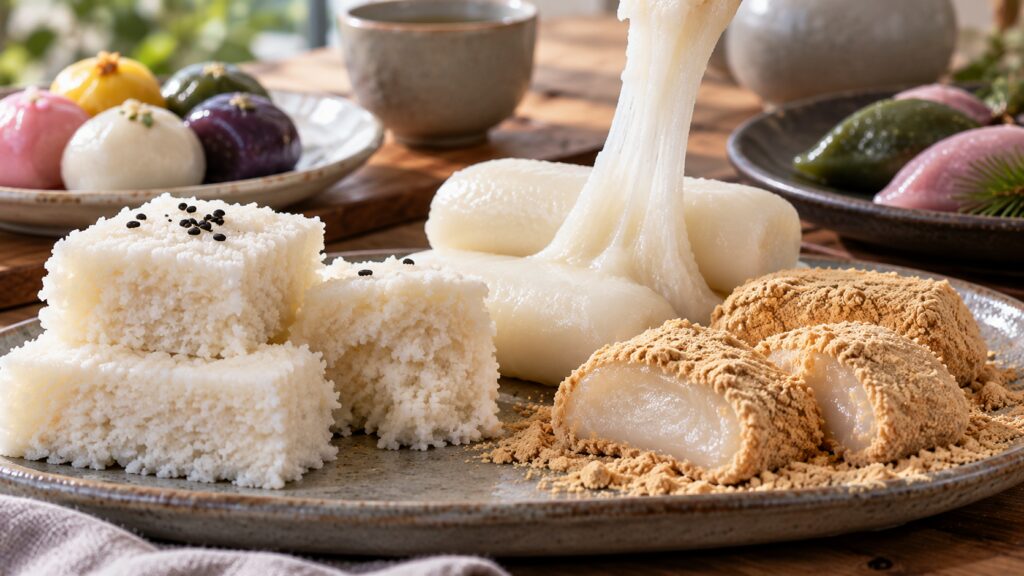
For many international visitors, texture is the first surprise.
Some types of tteok have a distinctive springy, sticky or chewy bite that can feel very different from Western cakes and pastries.
But not every tteok has the same texture.
The type of rice, how it is processed and how the tteok is steamed, pounded, shaped or cooked all affect the final result.
Tteok made with glutinous rice can be especially sticky and chewy, while other varieties made with non-glutinous rice may feel firmer, softer or more cake-like.
That range of textures is part of the appeal.
It is also one reason tteok fits so naturally into Korea’s current fascination with chewy desserts.
Is Tteok the Same as Mochi?
Not exactly.
This is one of the easiest comparisons for international readers to make because Japanese mochi and some types of Korean tteok can both have a soft, chewy texture and are often made from glutinous rice.
But using “mochi” as a general English name for every Korean rice cake can be misleading.
Tteok is a Korean food category with its own history, preparation methods, varieties and cultural uses.
Likewise, mochi belongs to Japanese food culture and has its own traditions and forms.
There can be similarities in ingredients and texture, but the terms are not simply interchangeable.
If you are eating in Korea, tteok is the more useful word to learn.
6 Types of Korean Tteok to Know
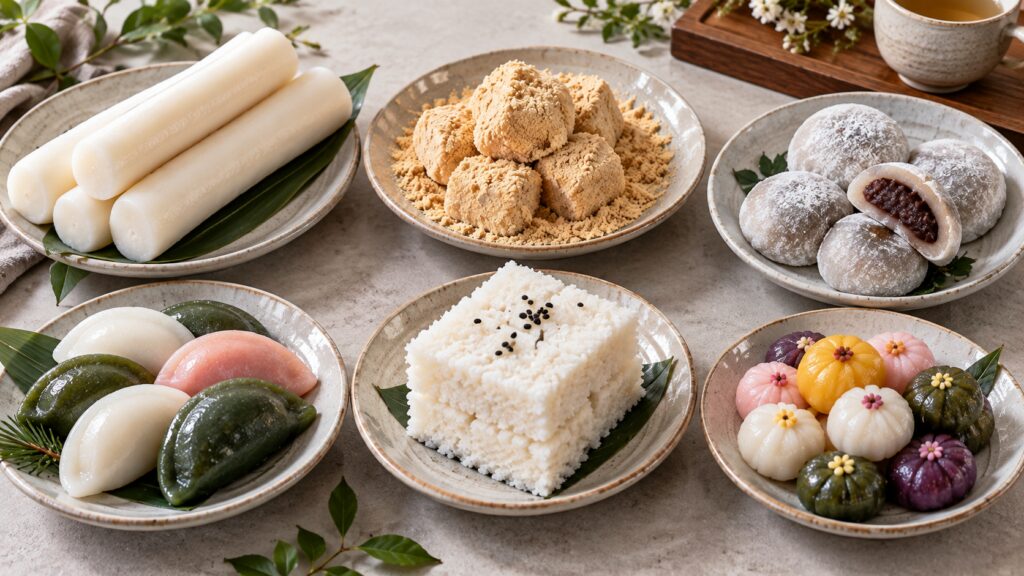
You could spend a very long time exploring Korean rice cakes, but these varieties provide a useful starting point.
1. Garaetteok (가래떡)
Garaetteok is one of the most recognizable forms of Korean rice cake.
It is typically shaped into long, smooth white cylinders and has a pleasantly chewy texture.
If you have eaten tteokbokki, you have probably encountered a version of this style of rice cake.
Garaetteok can also be sliced into thin oval pieces for tteokguk, Korea’s traditional New Year rice cake soup.
Fresh garaetteok can be enjoyed simply, and grilling it until the outside becomes lightly crisp creates a completely different texture.
2. Injeolmi (인절미)
Injeolmi is a classic Korean rice cake traditionally made from glutinous rice and commonly coated in roasted soybean powder.
The combination is simple but distinctive: chewy rice cake with a soft, nutty coating.
Injeolmi has also moved well beyond traditional rice cake shops.
Its flavor appears in modern Korean desserts such as bingsu, toast, ice cream and café drinks.
For someone trying traditional Korean tteok for the first time, injeolmi is one of the most recognizable choices.
3. Chapssaltteok (찹쌀떡)
Chapssaltteok is made with glutinous rice and commonly contains a sweet red bean filling.
It is soft, chewy and usually served in a convenient individual portion.
Modern versions can also include ingredients and fillings that go far beyond the traditional red bean combination.
This makes chapssaltteok a good example of how Korean rice cakes continue to evolve while retaining their familiar chewy base.
4. Songpyeon (송편)
Songpyeon is closely associated with Chuseok, one of Korea’s major traditional holidays.
These small half-moon-shaped rice cakes can contain fillings such as sesame, beans or chestnuts.
For Koreans, songpyeon is not simply another dessert.
Its connection to Chuseok gives it a strong seasonal and cultural identity, and making songpyeon together can be part of a family holiday tradition.
5. Baekseolgi (백설기)
Baekseolgi shows why describing all tteok as sticky or mochi-like is inaccurate.
This white steamed rice cake has a softer, more crumbly and cake-like texture than many of the chewy varieties international visitors first associate with Korean rice cakes.
Its simple appearance and mild flavor also make it a useful introduction to the diversity of tteok.
6. Kkultteok (꿀떡)
Kkultteok is a small, colorful rice cake with a sweet filling.
Its bite-sized shape and glossy appearance make it visually distinctive, while the combination of chewy dough and sweetness makes it easy to understand as a snack or dessert.
It is also an example of a traditional-style Korean rice cake finding new audiences through social media.
Is Tteokbokki Made From Tteok?
Yes — the name gives you a clue.
Tteokbokki is built around tteok, usually cylindrical rice cakes cooked in sauce.
If you want to see how that rice cake becomes one of Korea’s best-known street foods, read our guide to tteokbokki and how Koreans actually eat it.
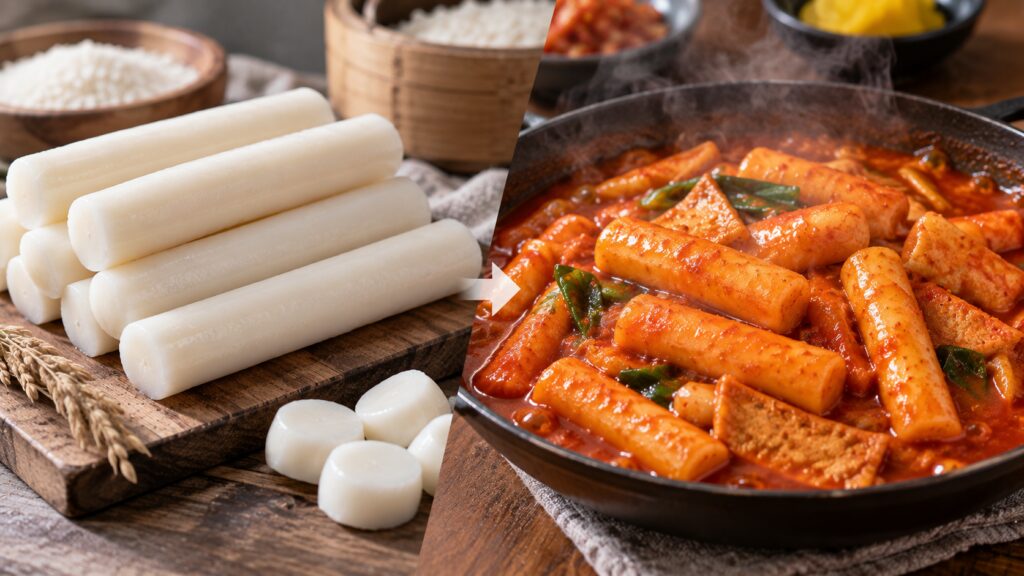
The best-known version is the bright red, sweet-spicy tteokbokki made with gochujang-based sauce, but tteokbokki comes in several styles.
The rice cake itself is what gives the dish its characteristic chewy bite.
This also explains why someone who knows tteok only through tteokbokki has seen just one small corner of Korea’s rice cake culture.
When Do Koreans Eat Tteok?
Almost anytime — but certain kinds of tteok carry special meaning.
Tteok has long been associated with Korean holidays, family celebrations and important life events.
One of the clearest examples is tteokguk, rice cake soup traditionally eaten during Seollal, the Korean Lunar New Year.
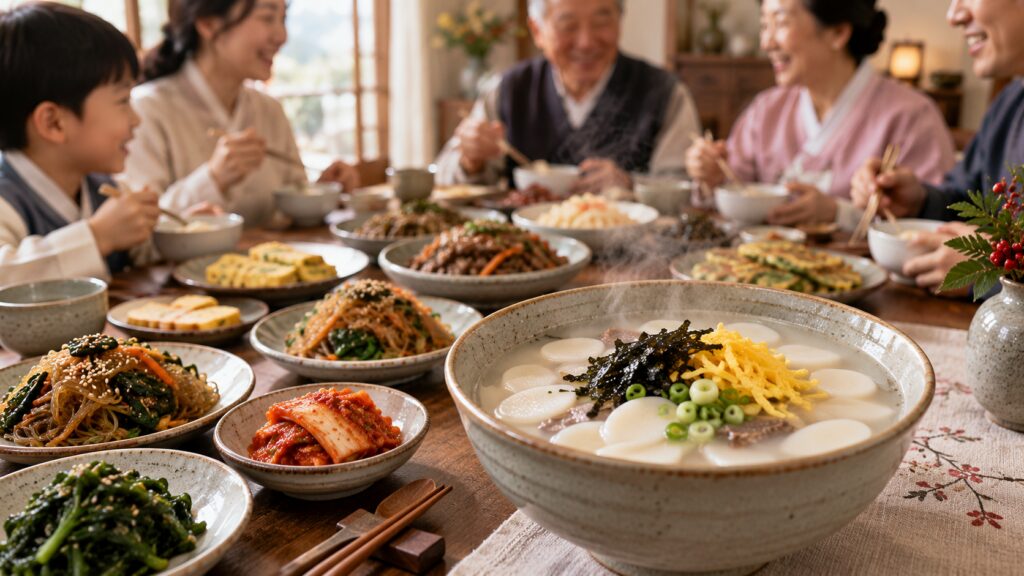
The soup commonly uses thin slices cut from long white garaetteok.
Tteok also appears around Chuseok, birthdays, weddings and other occasions, although the varieties and customs can differ.
At the same time, tteok is not limited to ceremonial food.
You can buy it as an everyday snack at traditional markets, neighborhood rice cake shops, department stores and increasingly fashionable dessert shops.
Travelers who want to explore Korean market food in Seoul can also use our Gwangjang Market Seoul guide to learn what to eat and what to know before visiting.
That combination — deeply traditional but completely ordinary — is part of what makes tteok interesting.
Why Is Tteok Trending Again in Korea?
The answer may be one word:
chewy.
Texture has become a major part of Korea’s dessert conversation in 2026.
Social-media-driven food trends have pushed stretchy, sticky and chewy foods into the spotlight, and tteok already has one of the textures consumers are looking for.
Traditional rice cake shops are also changing.
Alongside familiar injeolmi and baekseolgi, younger consumers can find tteok combined with butter, cream, cheese and other contemporary dessert ingredients.
Some bakeries and cafés are creating products inspired by both Korean rice cakes and international desserts.
The result is not simply a revival of an old-fashioned snack.
Tteok is being reinterpreted for a new generation.
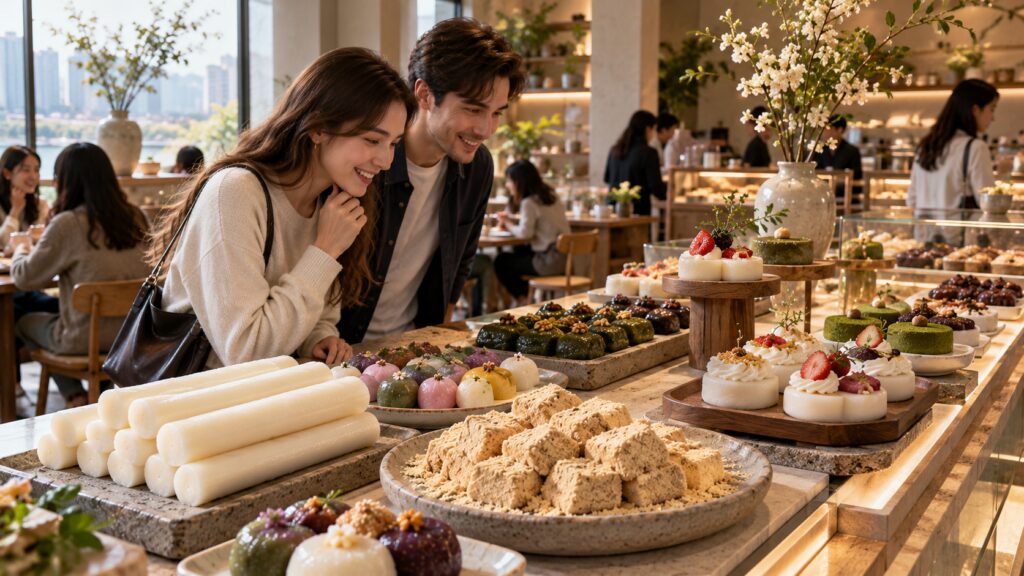
At the same time, international interest in Korean food has expanded beyond the most famous dishes.
Visitors who may have first discovered Korean food through kimchi, Korean barbecue or tteokbokki are increasingly curious about traditional snacks, regional foods and everyday Korean eating culture.
Tteok fits naturally into that next stage of discovery.
What Should You Try First?
If you are new to Korean rice cakes, choose according to texture rather than trying to find one “best” tteok.
Want something nutty and very Korean?
Try injeolmi.
Prefer a sweet filling?
Look for chapssaltteok or kkultteok.
Want to understand the rice cake used in Korean cooking?
Try fresh or grilled garaetteok.
Visiting Korea around Chuseok?
Look for songpyeon.
And if extremely sticky textures are unfamiliar to you, start with a small piece.
Tteok can be surprisingly filling, and fresh rice cake is often best enjoyed while its texture is still at its best.
Where Can You Find Tteok in Korea?
Traditional markets are an easy place to start.
You will often find shops displaying trays of rice cakes in different colors, shapes and coatings.
Neighborhood tteokjip (떡집) — literally rice cake shops — are another important part of Korean food culture.
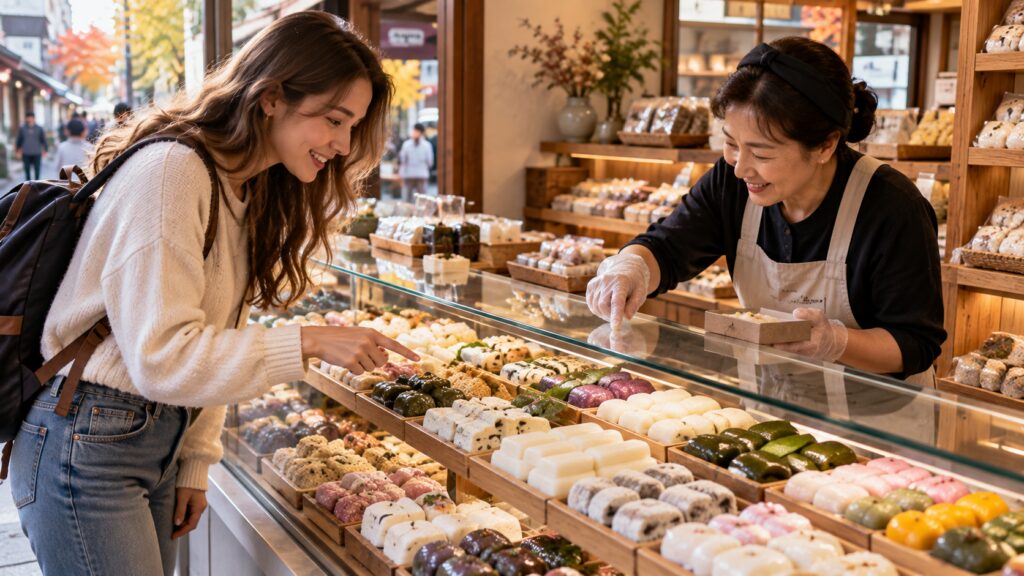
Department-store food halls often offer more polished versions, while Seoul’s newer cafés and dessert shops increasingly reinterpret tteok for younger customers.
That means there is no single “authentic” setting in which you must try it.
An old neighborhood tteokjip and a fashionable Seoul dessert shop can both tell you something about how Koreans eat rice cakes today.
The Korea Front Row Take
Tteok is a good example of why Korean food is more interesting when you look beyond whatever happens to be viral this week.
Yes, chewy desserts are trending.
Yes, younger consumers are rediscovering rice cakes.
And yes, international visitors are becoming more curious about them.
But tteok did not suddenly appear because social media discovered it.
It was already woven into Korean holidays, family celebrations, markets and everyday eating.
What has changed is the context.
A food once easily dismissed by younger consumers as traditional or old-fashioned can now appear in a fashionable café, inspire a viral dessert or become something an international traveler specifically searches for in Seoul.
That combination of old and new is exactly what makes tteok worth understanding.
The trend may change.
Tteok will still be here.
Frequently Asked Questions
What does tteok mean in Korean?
Tteok (떡) refers to a broad category of Korean rice cakes. There are many varieties with different ingredients, preparation methods, shapes, textures and cultural uses.
Is Korean tteok the same as mochi?
No. Some types can share ingredients and a chewy texture with Japanese mochi, but tteok is a distinct Korean food category with its own varieties and traditions.
What kind of tteok is used in tteokbokki?
Tteokbokki commonly uses cylindrical rice cakes. Rice-based and wheat-based versions can both be found, and their textures differ.
Is all Korean tteok sweet?
No. Some tteok is eaten as a sweet snack or dessert, while other rice cakes are used in savory dishes such as tteokbokki and tteokguk.
Why do Koreans eat tteokguk on New Year’s Day?
Tteokguk is traditionally eaten during Seollal, the Korean Lunar New Year. The dish is closely associated with welcoming the new year and Korean holiday traditions.
Where can tourists buy tteok in Seoul?
Traditional markets, neighborhood tteok shops, department-store food halls and modern dessert shops are all good places to explore Korean rice cakes.
Sources & Further Reading
Korea Tourism Organization — Top 5 K-Desserts for a Foolproof Korean Food Trip
Korea Tourism Organization — Celebrate the New Year with Korea’s Traditional Seollal Culture
Korea Tourism Organization — Sweet Rice Cake with Red Bean Filling (Chapssaltteok)
The Korea Economic Daily — 빵집 대신 ‘떡지순례’…트렌드 입은 떡에 MZ·외국인 줄섰다
Korea JoongAng Daily — Sweet, stretchy and chewy: the texture taking over Korea’s desserts