
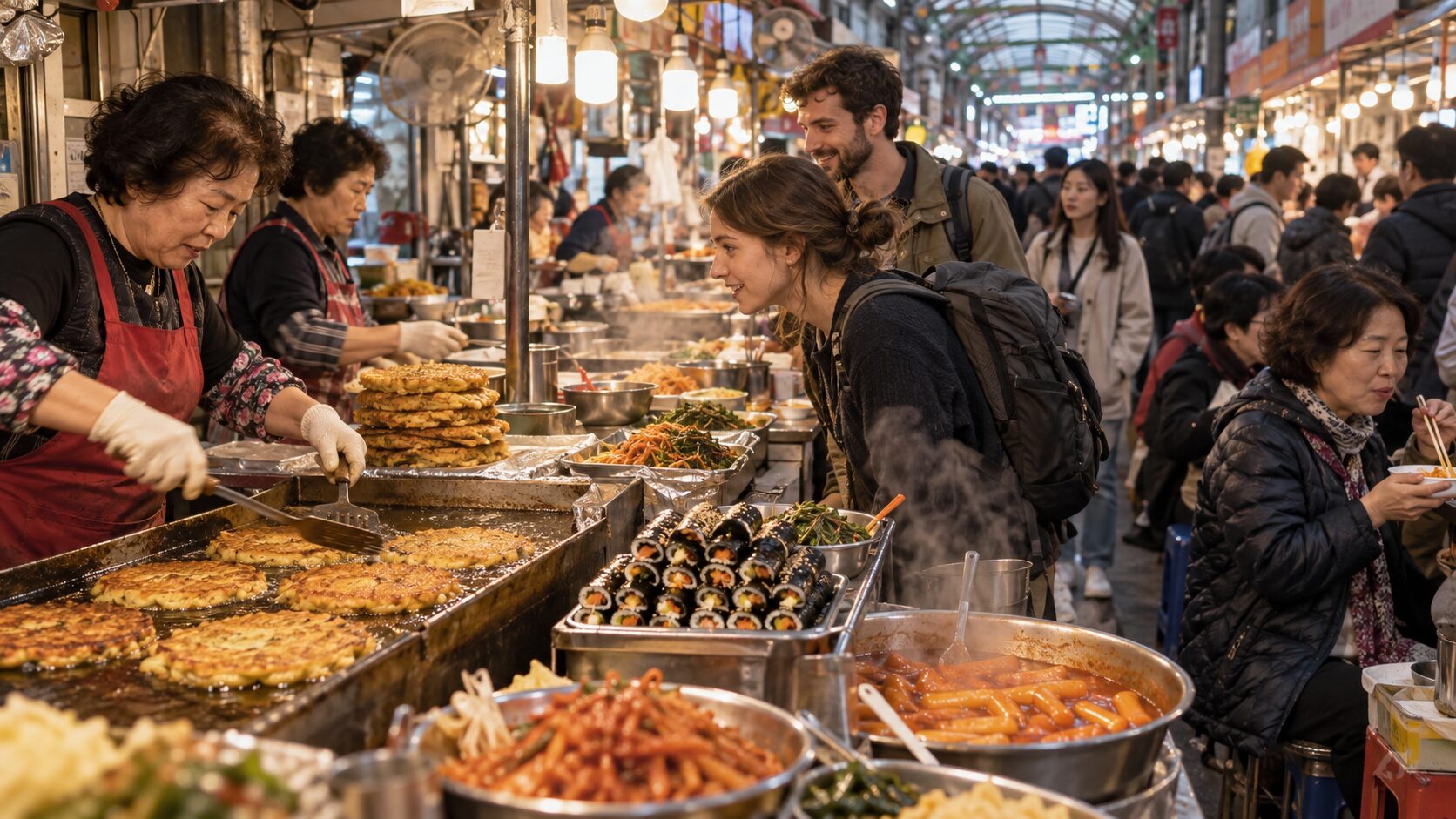
For many first-time visitors to Seoul, Gwangjang Market appears on the itinerary for one obvious reason: food.
Rows of sizzling bindaetteok, bite-sized gimbap, steaming tteokbokki and busy counters serving yukhoe have made the market one of Seoul’s most recognizable food destinations. Social media and travel videos have only expanded its international profile.
But Gwangjang Market is more than a place to collect famous Korean dishes.
It is a working traditional market with more than a century of history, where food stalls exist alongside textile shops, clothing vendors and businesses that have served generations of Seoul residents.
If you are visiting for the first time, knowing what to expect can make the experience much easier — and much more interesting.
Why Is Gwangjang Market So Famous?
Gwangjang Market is one of Seoul’s best-known traditional markets, located in Jongno, in the historic center of the city.
Its history stretches back to the early 20th century, but its modern international reputation has been shaped heavily by food.
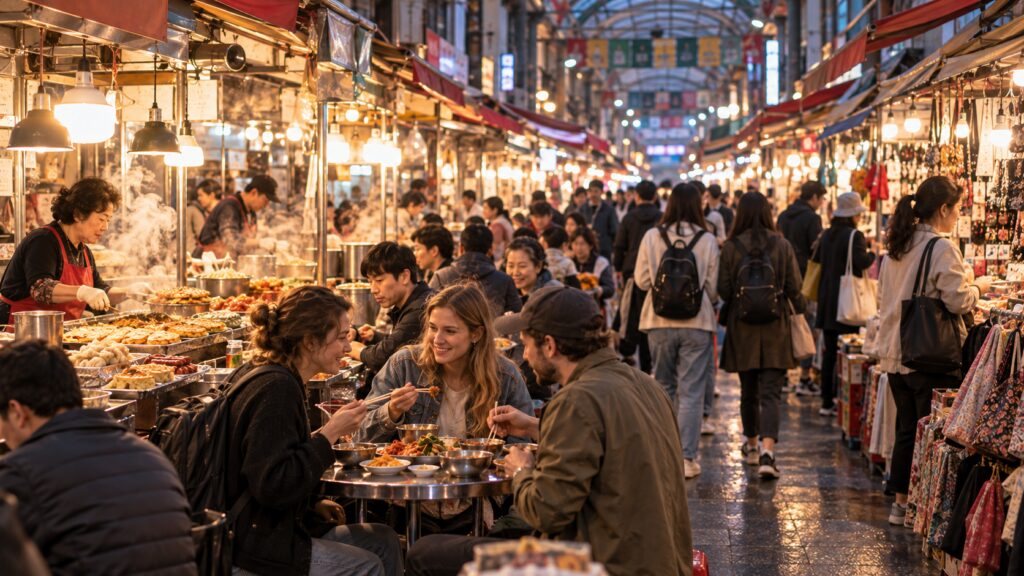
The market’s food alleys bring together several dishes that travelers associate with everyday Korean eating culture, often in a lively environment where customers sit shoulder to shoulder around small counters.
That atmosphere is part of the attraction.
Rather than eating Korean food in a carefully designed restaurant, visitors can see ingredients being prepared, hear food cooking around them and watch how a traditional market operates at close range.
International interest in Korean traditional markets has also grown alongside the wider popularity of Korean food and culture.
For travelers, that makes Gwangjang Market both a food destination and an accessible introduction to a different side of everyday Seoul.
What Should You Eat at Gwangjang Market?
There is no single dish that everyone needs to order.
Part of the fun is walking through the food area first, seeing what is being prepared and choosing according to your appetite.
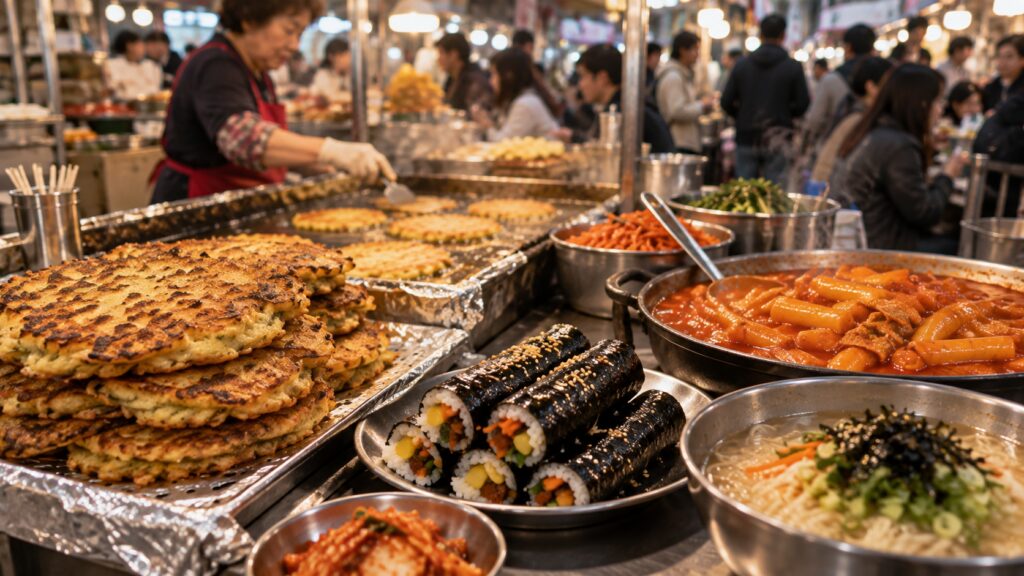
Still, several foods are strongly associated with the Gwangjang Market experience.
Bindaetteok
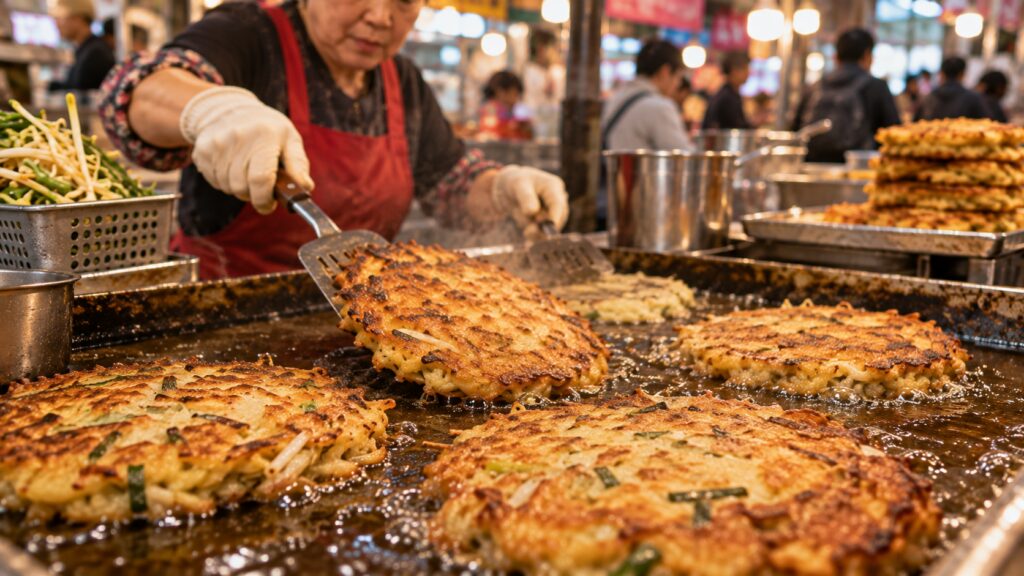
One of the market’s signature foods is bindaetteok, a savory mung bean pancake.
Ground mung beans are cooked on a hot griddle until the outside becomes crisp while the inside remains softer and hearty.
It is richer and more filling than the word “pancake” might suggest to an English-speaking visitor, so sharing one can be a practical choice if you plan to try several foods.
Mayak Gimbap
Another famous market snack is often called mayak gimbap.
These are small rolls of rice and simple fillings wrapped in seaweed, usually served in bite-sized portions.
The nickname uses the Korean word mayak, literally meaning “drug,” as slang suggesting that the food is difficult to stop eating. It does not mean the dish contains drugs or any unusual ingredient.
For international visitors encountering the name for the first time, that distinction is worth knowing.
Yukhoe
Yukhoe is Korean-style seasoned raw beef and is another food closely associated with the area around Gwangjang Market.
It is typically served chilled and seasoned, often with ingredients such as sesame oil and pear.
Because it contains raw meat, it may not be suitable for everyone. Travelers who are pregnant, immunocompromised or otherwise advised to avoid raw meat should choose cooked alternatives.
Tteokbokki
You will also encounter one of Korea’s most recognizable street foods: tteokbokki.
The classic version combines chewy rice cakes with a spicy-sweet red sauce, although recipes and spice levels vary.
If it is your first time trying the dish, our guide to Korean tteokbokki explains its flavor, texture and most common variations.
If you have never eaten Korean rice cakes before, the texture may be the biggest surprise. They are dense, soft and distinctly chewy rather than similar to Western-style cakes.
The rice cakes themselves belong to the much broader world of Korean tteok, which includes everything from everyday snacks to foods associated with holidays and celebrations.
Kalguksu and Other Market Foods
Not everything at Gwangjang Market has to be a viral snack.
Depending on the stall and area, visitors may also encounter kalguksu, dumplings, noodles and other familiar Korean market dishes.
This is one reason not to arrive with an overly rigid checklist.
The market is often more enjoyable when you leave room to choose something simply because it looks good.
Is Gwangjang Market Only for Tourists?
No — although tourism is now a major part of its public image.
The food area attracts large numbers of international and domestic visitors, but Gwangjang Market was not created as a tourist food attraction.
It is a traditional commercial market.
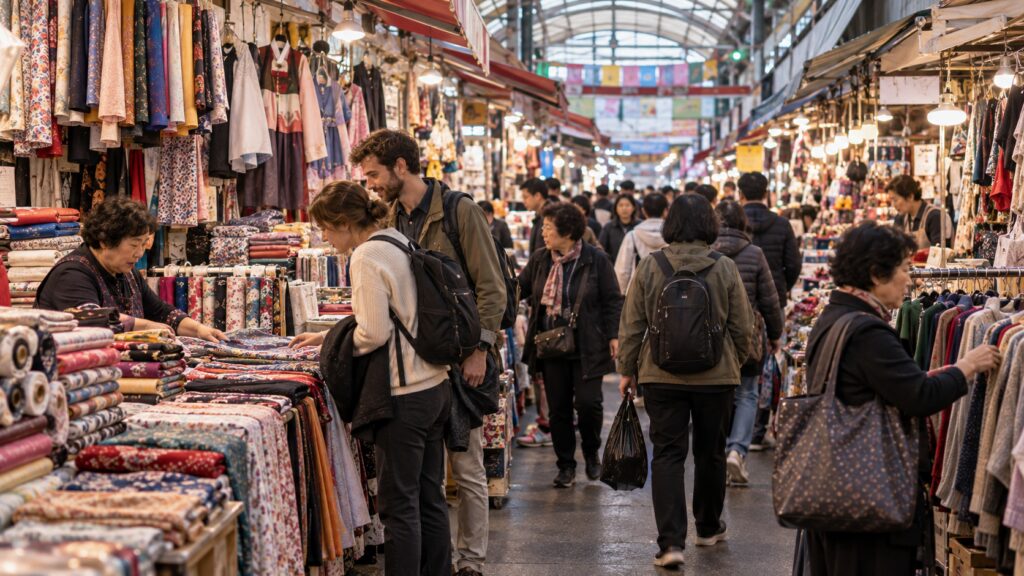
Beyond the most photographed food stalls, the wider market includes textiles, clothing, bedding, traditional goods and other businesses.
That distinction matters because it changes how you experience the place.
Instead of treating the market like an outdoor food court, look around at how different sections function and remember that many vendors are operating everyday businesses.
Gwangjang Market is interesting precisely because tourism and ordinary commercial life now occupy the same space.
When Is the Best Time to Visit Gwangjang Market?
There is no perfect time for everyone.
If your priority is exploring with fewer people around you, arriving earlier can make navigating the market more comfortable.
If you want to experience the energetic atmosphere seen in travel videos, busier meal periods may be more appealing — but expect crowds.
Weekends and popular travel periods can be particularly busy.
One important point is that individual vendors can have different opening hours and days off. The operating hours of a particular stall should not be assumed from the opening hours of the market as a whole.
If there is one specific vendor you want to visit, check its current information separately before making the trip.
How Much Does Food Cost at Gwangjang Market?
Gwangjang Market can offer relatively casual dining, but visitors should not assume that every stall has the same prices or that old prices shown in travel videos are still current.
Prices vary by dish, portion and vendor and can change over time.
The simplest approach is to check the displayed menu and price before ordering.
If a price is unclear, ask first.
This is particularly useful when ordering seafood, larger dishes or portions designed for more than one person.
It also prevents a common travel mistake: relying on a blog post or video filmed several years earlier as if it were a current menu.
Do You Need Cash at Gwangjang Market?
Payment methods vary between vendors.
Many businesses in Seoul accept cards, but traditional markets contain a mixture of shops and stalls, and visitors should not assume that every small vendor will handle international cards in exactly the same way.
Carrying some Korean won can therefore be useful.
At the same time, there is no need to assume that Gwangjang Market is a cash-only environment.
The practical rule is simple: check the payment method before ordering if you are unsure.
How Do You Get to Gwangjang Market?
Gwangjang Market is in central Seoul and is easily reached by subway.
Jongno 5-ga Station on Seoul Subway Line 1 is one of the most convenient access points. Euljiro 4-ga Station, served by Lines 2 and 5, can also be useful depending on where you are coming from.
Because the market has multiple entrances and extends across a wider commercial area, the best station exit can depend on which section you want to visit.
Using a current navigation app once you are nearby is more reliable than memorizing a single entrance.
If you are new to Seoul’s public transportation system, our Seoul subway guide explains how to use T-money, the Climate Card, transfers and subway ticket machines.
First-Time Tips for Visiting Gwangjang Market
A little preparation makes the experience easier.
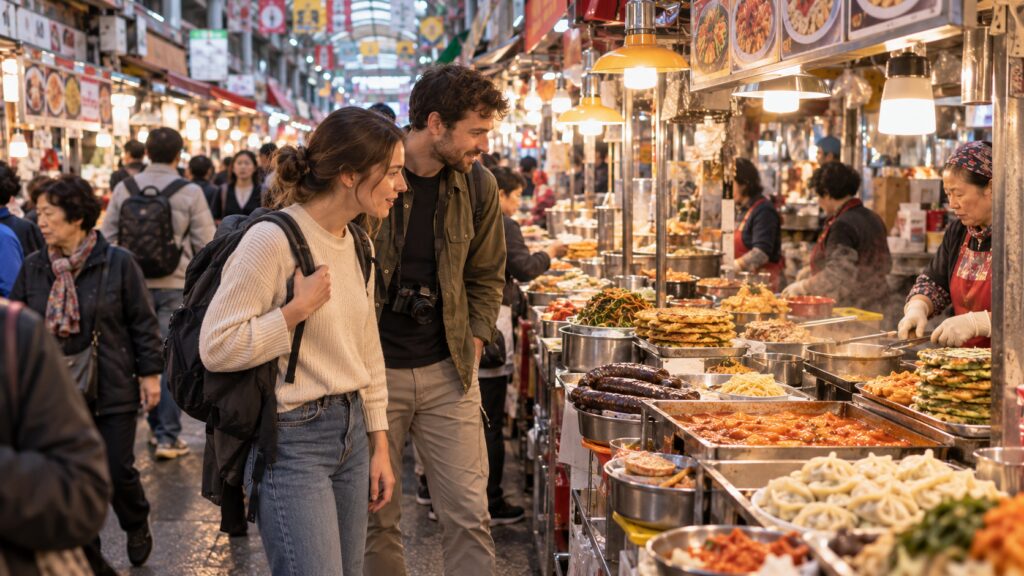
Walk through the food area once before ordering everything you see. Portions can add up quickly, and you may discover something more interesting a few stalls later.
Consider sharing dishes if you are traveling with someone. This lets you try a wider range of foods without turning lunch into an endurance event.
Check prices before ordering and do not assume that every vendor accepts the same payment methods.
Keep your belongings close in crowded aisles and avoid blocking narrow passages while taking photographs.
It is also courteous to ask before taking close-up photographs of individual vendors.
Most importantly, remember that the market is not a film set. People are working there.
A little awareness goes a long way.
Gwangjang Market and Korea’s Street-Food Culture
For international travelers, Gwangjang Market offers an unusually concentrated introduction to several parts of Korean food culture.
Tteokbokki introduces the chewy texture of Korean rice cakes. Bindaetteok shows how mung beans become a substantial savory dish. Gimbap demonstrates how simple ingredients can become an everyday portable meal.
But no single market represents all Korean street food.
Different neighborhoods, cities and regional markets have their own specialties and atmosphere.
For a different Seoul market experience, Mangwon Market combines neighborhood food culture with an easy walk toward the Hangang River.
Gwangjang Market is better understood as one doorway into that much larger food culture.
Is Gwangjang Market Worth Visiting?
If you are interested in Korean food, traditional markets or everyday urban culture, Gwangjang Market can be an easy addition to a Seoul itinerary.
Its popularity also means you should arrive with realistic expectations.
It can be crowded. Some parts feel highly tourist-oriented. You may encounter foods you love and others that simply are not for you.
And that is perfectly fine.
The point is not to complete a checklist of viral dishes.
Gwangjang Market is most rewarding when you treat it as a living market: walk through the alleys, look beyond the most famous stalls, try a few foods that genuinely interest you and pay attention to the ordinary Seoul life happening around them.
That combination of food, commerce, history and contemporary tourism is what makes the market worth understanding — not just photographing.
Frequently Asked Questions About Gwangjang Market
What is Gwangjang Market famous for?
Gwangjang Market is known for its traditional market atmosphere and foods such as bindaetteok, small gimbap rolls, yukhoe, tteokbokki and noodles. It also has long-established textile, clothing and other commercial sections.
What should I eat at Gwangjang Market?
Popular choices include bindaetteok, gimbap, yukhoe, tteokbokki and noodles. Rather than trying every famous dish, walk around first and choose a few foods that match your preferences.
Is Gwangjang Market cash only?
Payment methods vary by vendor. Cards are widely used in Korea, but carrying some Korean won can be useful when visiting traditional markets. Check with the vendor before ordering if you are unsure.
What subway station is closest to Gwangjang Market?
Jongno 5-ga Station on Seoul Subway Line 1 is a convenient option. Euljiro 4-ga Station on Lines 2 and 5 can also provide access depending on your destination within the market area.
Is Gwangjang Market good for first-time visitors to Seoul?
It can be, particularly for travelers interested in Korean food and traditional market culture. Expect crowds during popular periods and remember that it remains a working commercial market rather than only a tourist attraction.
Is Gwangjang Market only about street food?
No. Food is the part most international visitors recognize, but the wider market also includes textiles, clothing and other traditional market businesses.
Sources & Further Reading
Visit Seoul — Gwangjang Market
Ministry of Culture, Sports and Tourism — Korea’s traditional markets as travel destinations