

Busan’s sightseeing pass can make a trip easier to plan, but it is not automatically a bargain. Whether the Visit Busan Pass is worth buying depends on the attractions you actually want to visit, their locations and how much time you have.
There is also an important purchasing detail for 2026: the official operator announced a temporary suspension of physical card sales from February 10, while mobile versions remained available. Check the latest notice before you pay, rather than assuming every format shown on an older travel guide can still be purchased.
This guide explains the main pass types, how to compare their value and what to check before your first attraction.
What Is the Visit Busan Pass?
The Visit Busan Pass is a sightseeing product for eligible international visitors. Depending on the pass you choose, it provides admission to participating attractions during a set period or allows you to select a fixed number of attractions from designated groups. Other participating businesses may offer discounts rather than free admission.
The distinction is important: a free-admission attraction and a discounted venue do not contribute the same amount to your potential savings. Check the current benefit on the official Visit Busan Pass website before adding a stop to your itinerary.
Visit Busan Pass Prices and Types
The following are the listed prices used for this guide. Prices, availability and attraction groups can change, so confirm the current checkout price before purchasing.
| Pass | Listed price | Best suited to |
|---|---|---|
| 24-hour | KRW 55,000 | Several eligible attractions in one concentrated sightseeing day |
| 48-hour | KRW 85,000 | Eligible attractions spread across two days |
| BIG3 | KRW 45,000 | Three selected attractions under the published group rules |
| BIG5 | KRW 65,000 | Five selected attractions under the published group rules |
24-hour vs 48-hour passes
A time-based pass is useful when you can visit multiple eligible attractions within its validity window. Under the published rules, its clock starts when you first use it at a free-admission attraction, not when you buy it. That makes the timing of your first visit part of your budget decision.
BIG3 vs BIG5
BIG3 and BIG5 are selection-based passes, not permission to enter any three or five venues. The published structure assigns attractions to Purple Group A and Blue Group B. BIG3 permits one Purple Group attraction and two Blue Group attractions; BIG5 permits two Purple Group attractions and three Blue Group attractions. Check the live group list before buying, especially if most of your preferred attractions fall into one group.
Which Busan Attractions Are Included?
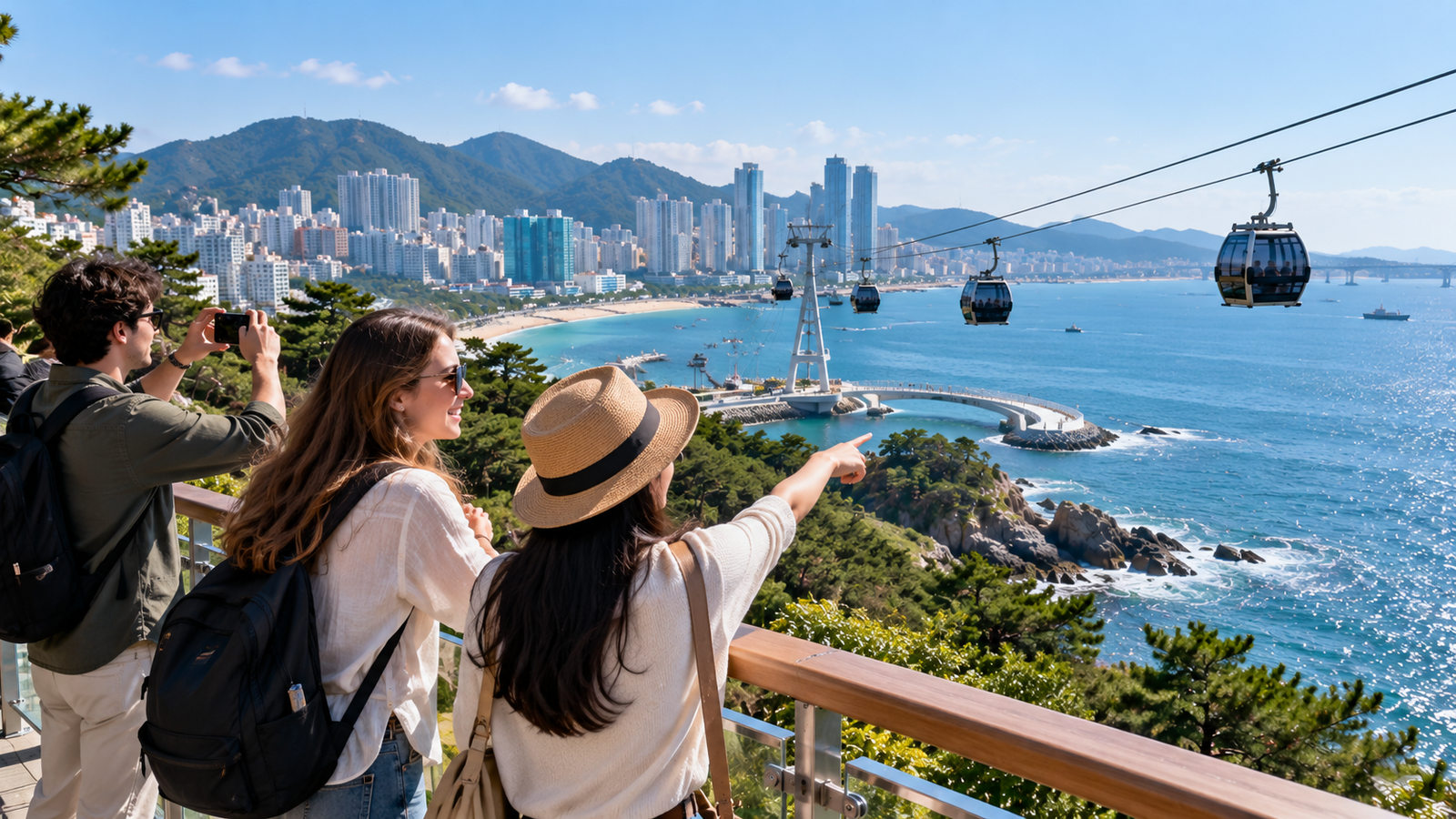
The official attraction directory includes a mix of viewpoints, cable-car experiences, entertainment venues and other ticketed activities. Examples that have appeared in the pass listings include Busan X the Sky, Spa Land Centum City, Lotte World Busan and Songdo Marine Cable Car. Participation, pass group and the exact benefit can change; treat the official directory as the final check rather than assuming every example is included on your travel date.
For a broader route covering beaches, neighborhoods, food and where to stay, use our first-time Busan travel guide. This article focuses on the separate decision of whether to buy the sightseeing pass.
Is the Visit Busan Pass Worth It?
Start with the attractions you would pay to visit even without a pass. Find each venue’s current individual admission price, then add those prices together. Compare that total with the pass price. Do not count optional attractions you would visit only to justify buying the pass.

Potential admission savings = total regular admission for your planned eligible attractions − pass price. This is only a starting point: transport, queues, closures, reservations and excluded services can change the practical value of the pass.
A 24-hour pass can be more practical when your chosen attractions are reasonably close together. Busan is a large city, and crossing it repeatedly can consume much of your validity period. A 48-hour pass gives you more time, but you should still compare the extra cost with the additional attractions you will realistically visit.
If your trip mainly involves free beaches, markets, cafés and neighborhood walks, buying individual tickets for one or two paid attractions may be simpler. BIG3 or BIG5 may suit a traveler with a defined shortlist who wants more flexibility, provided the Purple and Blue Group allocations match that shortlist.
How to Buy and Use the Mobile Visit Busan Pass
Check the official product and sales notices, choose the pass type that fits your itinerary and complete the purchase through the official website or an authorized seller. Follow the instructions for the platform you used to access your mobile pass.

At a participating attraction, show the valid mobile pass as instructed by the venue to receive the applicable benefit. The official usage instructions say screenshots, printouts and PDF copies of the QR code are not accepted. Keep your phone charged and ensure you can access the live pass when you arrive.
For time-based passes, check the activation and expiry time shown in your pass account after your first eligible use. For BIG3 and BIG5, check the current validity period and your remaining group selections rather than assuming every attraction can be visited more than once.
Does the Visit Busan Pass Include Subway and Bus Rides?
Do not confuse the sightseeing pass with an unlimited public-transport ticket. The mobile Visit Busan Pass does not work as a subway or bus transit card. The physical card format has offered a separate rechargeable transport-card function, but this does not make ordinary transit fares free.
Because physical card sales were temporarily suspended, check the latest official notice if you have an existing exchange voucher or specifically want a physical card. Otherwise, plan to pay for local transport separately.
What to Check Before You Buy
Confirm your eligibility, the current price and whether the pass format you want is on sale. Next, check each attraction’s participation, group, opening days, booking requirements and any excluded activities. Finally, review the cancellation terms of the seller you use; third-party platforms may apply their own conditions.
It is worth checking the weather and your route as well. A cable-car or outdoor attraction may be less useful on a day when conditions disrupt operations, and a distant attraction may cost more travel time than its admission saving is worth.
Frequently Asked Questions
Does the 24-hour Visit Busan Pass start when I buy it?
Under the published rules, the validity period starts when you first use the pass at an eligible free-admission attraction, not at checkout. Confirm the activation time in your pass account.
Can I visit the same attraction twice?
Pass admission is generally limited to one use per participating attraction. Check the venue-specific conditions before your visit.
Can I choose any three attractions with BIG3?
No. BIG3 follows the designated Purple Group and Blue Group selection rules. Check which group each of your preferred attractions belongs to before purchasing.
Can I use the mobile pass as a subway card?
No. The mobile sightseeing pass does not replace a separate transportation card or ticket.
Do I need to reserve attractions in advance?
Some venues may have reservations, capacity limits or special operating schedules. Check the current attraction listing and the venue’s own instructions.
Should I buy a 48-hour pass for a two-day Busan trip?
Not automatically. Compare the individual admission total for the attractions you genuinely plan to visit with the 48-hour price, then consider BIG3, BIG5 and travel time between venues.