
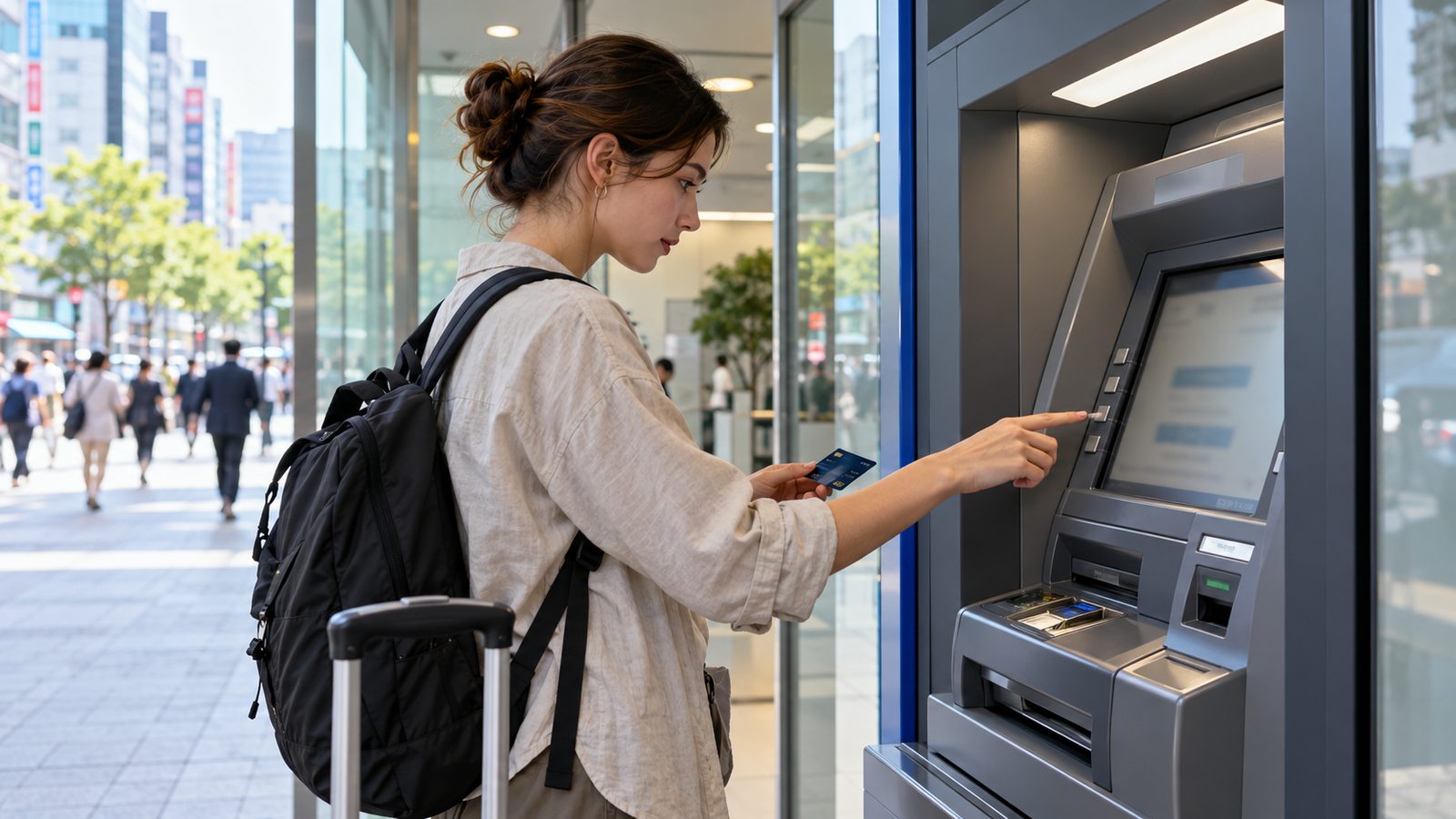
Using a foreign card at an ATM in South Korea is possible, but finding an ATM is only part of the problem.
Not every machine supports overseas-issued cards. The fee you see on the ATM may not be the only cost. Your own bank can add another withdrawal or foreign-transaction fee, and some ATMs may offer to convert the withdrawal into your home currency through Dynamic Currency Conversion (DCC).
For travelers, the useful question is therefore not simply “Can I withdraw cash in Korea?”
It is:
Which ATM should I use, what will the withdrawal really cost, and which options should I choose before pressing confirm?
This guide explains how to make that decision.
Quick Answer: Can You Use a Foreign Card at an ATM in Korea?
Yes, foreign-issued cards can work at ATMs in South Korea, but you should look for a machine that specifically supports international cards.
A practical first step is to look for:
- “Global ATM” or international-card signage
- your card network logo on the machine
- an international or foreign-card option on the ATM screen
Hana Bank, for example, states that overseas cards carrying Mastercard, Maestro, Cirrus, Visa, PLUS, JCB or UnionPay logos can use certain services at its Global ATMs. Availability can still depend on the country and card issuer.
The safest rule is simple:
Do not assume that every ATM displaying an English menu will accept your foreign card. Check the international-card support and network logos first.
Do You Actually Need Much Cash in Korea?
South Korea is highly card-friendly, so most travelers do not need to carry large amounts of cash.
International cards are commonly used at hotels, department stores, restaurants, cafés and many other businesses.
Cash can still be useful for situations such as:
- some traditional-market purchases
- smaller independent businesses
- certain street-food stalls
- cash-only situations
- topping up some transportation products — see our Seoul subway and T-money guide for current payment and top-up options
- keeping emergency backup money
That means an ATM strategy for most tourists is not about converting their entire travel budget into Korean won.
It is about having enough cash when cash is useful without paying unnecessary withdrawal and conversion costs.
For a broader look at cards, cash and transportation payments, see our guide to paying in Korea as a tourist. If you are deciding whether to use an ATM at all, our airport vs ATM vs Seoul currency exchange comparison helps you choose between the main ways to get Korean won.
How to Find an ATM That Accepts Foreign Cards
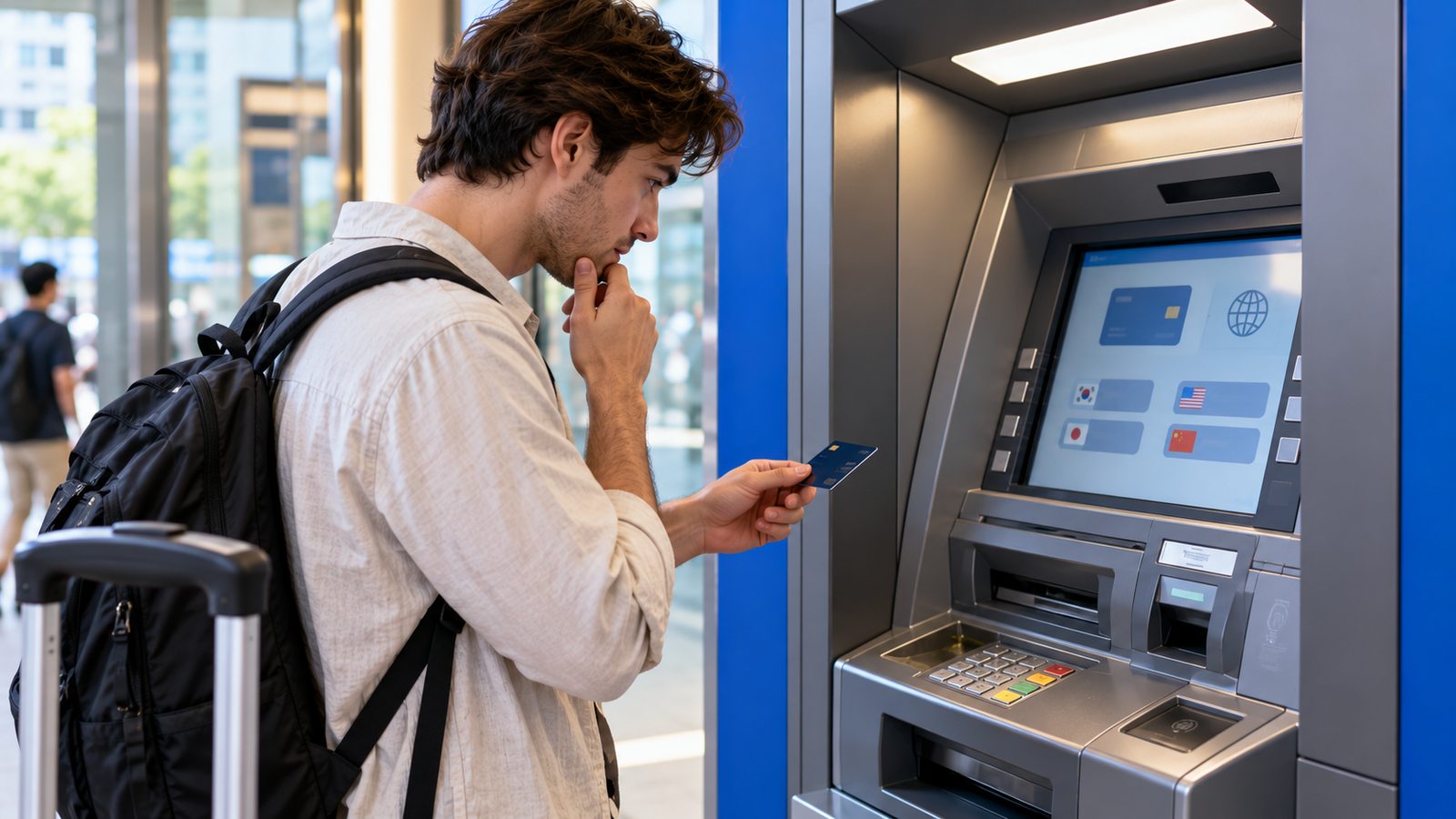
Start with the machine rather than the bank name.
Look for signs such as:
Global ATM
International Card
Foreign Card
Overseas Card
Then check whether the ATM displays a network matching your card.
Depending on the machine and issuer, this can include networks such as Visa/PLUS, Mastercard/Cirrus/Maestro, JCB or UnionPay.
International-card ATMs can be found at major bank branches and in other high-traffic locations. Some convenience-store or third-party ATMs may also support foreign cards.
However, acceptance can vary by individual machine.
Bank ATM or Convenience-Store ATM?
For a traveler, the practical difference is not simply “bank good, convenience store bad.”
You should compare what the specific machine tells you before confirming.
| ATM choice | Main advantage | What to check |
|---|---|---|
| Bank Global ATM | Clear bank operator and international-card support | Network compatibility, displayed fee, operating access |
| Convenience-store ATM | Easy to find and often accessible late | Foreign-card support and operator fee |
| Airport ATM | Convenient immediately after arrival | Fee and conversion choices before confirming |
| Other independent ATM | May be convenient | Operator identity, network support, fee and DCC screen |
If one ATM charges a fee you consider too high, cancel before confirming and compare another machine when practical.
The Real Cost of a Korean ATM Withdrawal
One of the biggest mistakes travelers make is looking only at the fee displayed by the Korean ATM.
Your total cost can come from several different places.
1. Korean ATM Operator Fee
The company or bank operating the ATM may charge a withdrawal fee.
The amount can vary by machine, operator and transaction.
Do not assume there is one nationwide “Korea ATM fee.”
Check the amount shown on the ATM screen before approving the withdrawal.
2. Your Card Issuer’s ATM Fee
Your home bank or card issuer may separately charge for using an overseas ATM.
This charge may not be included in the Korean ATM’s displayed fee.
Check your card’s international ATM terms before traveling.
3. Foreign-Transaction or Currency-Conversion Cost
Your issuer may also apply a foreign-transaction fee or currency-conversion cost.
The exact structure depends on your card.
4. Dynamic Currency Conversion
The ATM may offer to convert the transaction into your home currency.
This is a separate decision and deserves special attention.
5. Credit-Card Cash-Advance Costs
If you withdraw cash using a credit card rather than a debit card, the transaction may be treated as a cash advance by your issuer.
That can involve different fees and interest rules.
Check your credit-card terms before using it for an ATM withdrawal.
ATM Withdrawal Cost Framework
Instead of memorizing a supposedly universal ATM fee, think about your withdrawal this way:
Total withdrawal cost = ATM operator fee + issuer withdrawal fee + issuer foreign-transaction/conversion cost + any optional DCC cost + any applicable cash-advance cost
Not every traveler will pay every component.
That is exactly why two people withdrawing the same ₩300,000 from the same ATM can end up with different total costs.
What Is DCC at a Korean ATM?
DCC stands for Dynamic Currency Conversion.
Suppose you want to withdraw Korean won with a card issued in the United States.
The ATM may give you two broad choices:
Process the withdrawal in Korean won (KRW)
or
Convert the transaction into U.S. dollars for you
The second option is DCC.
Visa explains that when DCC is offered at an ATM, the screen should disclose information including the withdrawal amount in both currencies, the conversion rate and additional fees or markup. The cardholder must be allowed to accept or decline the conversion.
The important point is that seeing your home currency on the screen does not automatically mean it is the cheaper option.
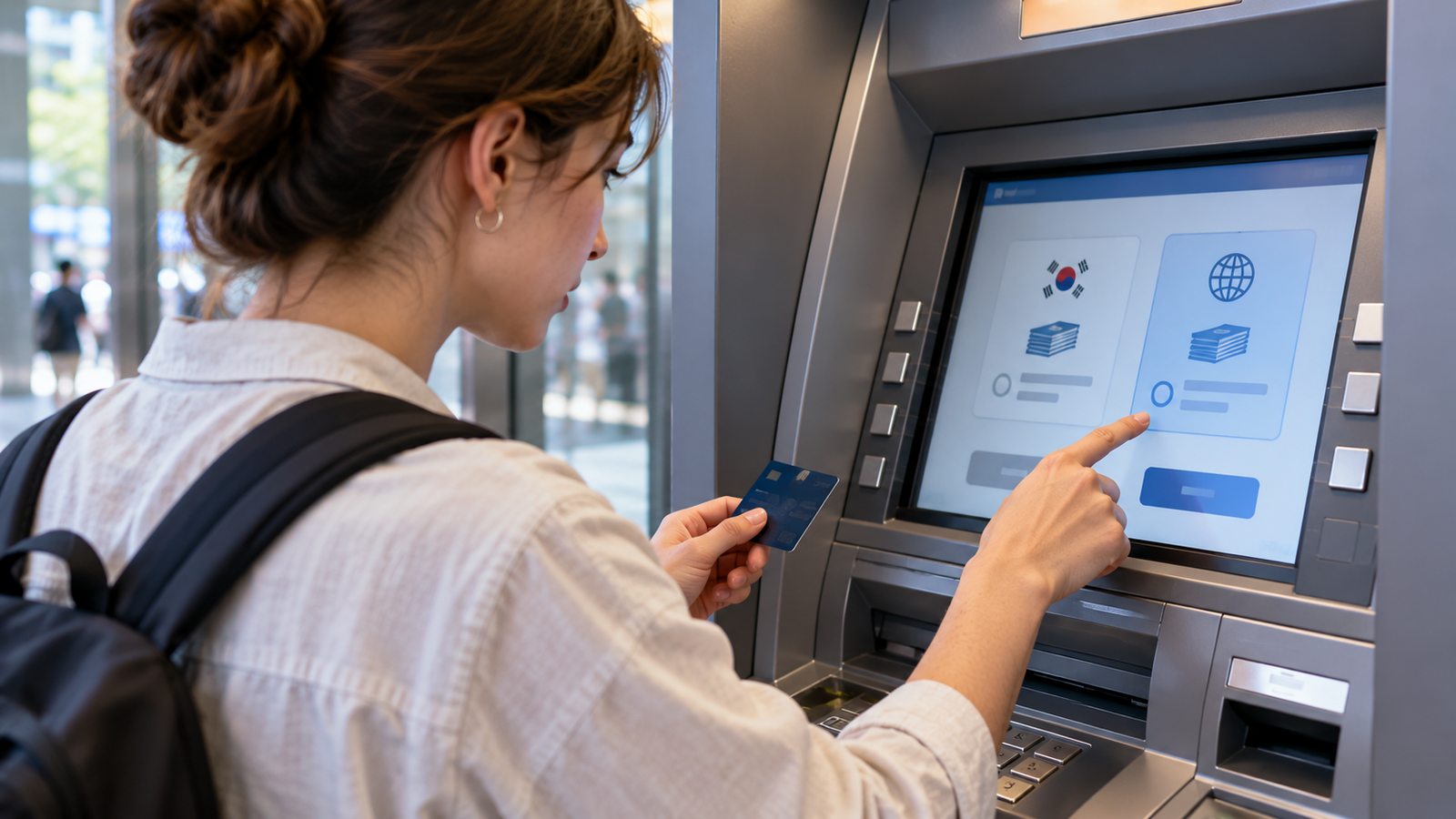
Should You Choose KRW or Your Home Currency?
When an ATM offers DCC, compare the information carefully.
If you decline DCC and continue in Korean won, currency conversion is generally handled later through your card network and/or issuer under your card’s terms.
If you accept DCC, the ATM-side provider is offering the conversion at the rate and markup shown on the screen.
So do not choose your home currency simply because the number looks more familiar.
Before accepting DCC, check:
- the exchange rate shown
- any markup or additional fee
- your own card’s foreign-exchange terms
- the final amount you will be charged
If the ATM does not clearly disclose the conversion terms, declining the DCC offer and continuing in KRW is generally the more transparent way to let your own card arrangement handle the conversion.
Example: Why Withdrawal Frequency Matters
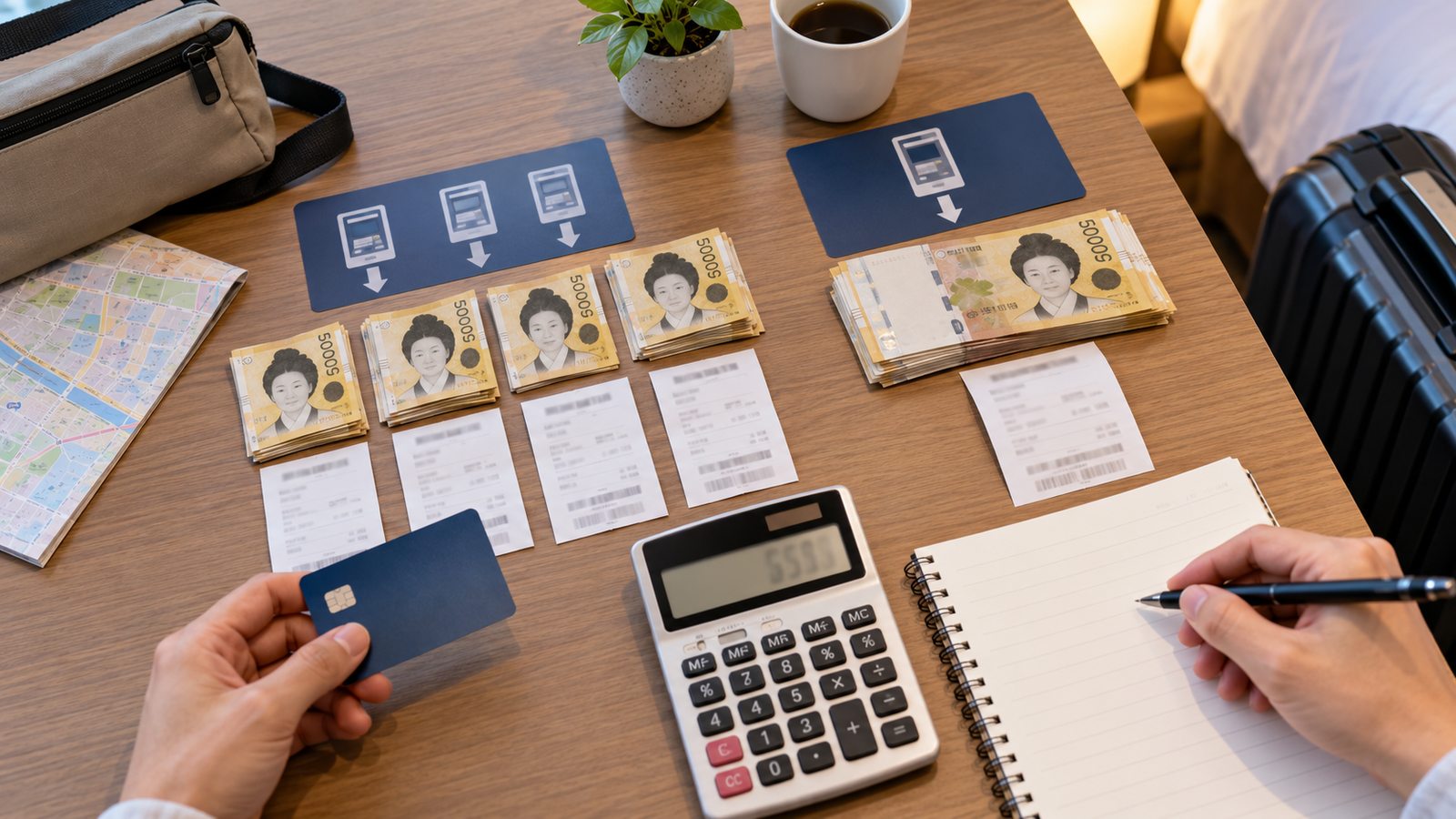
Imagine you need ₩300,000 in cash during your trip.
You could withdraw:
Option A: ₩100,000 three times
or
Option B: ₩300,000 once
If the ATM charges a fixed operator fee for every transaction, Option A can generate that fee three times.
Option B generates it once.
However, withdrawing a very large amount merely to avoid another fee is not automatically the right decision either. You may not need that much cash, and carrying unnecessary cash creates its own risk.
The better principle is:
Estimate how much cash you realistically need, then avoid unnecessary repeated small withdrawals.
A Simple ATM Cost Calculator You Can Use
Before withdrawing, collect four pieces of information:
- Amount you want in KRW
- ATM operator fee displayed on screen
- Your issuer’s overseas ATM fee
- Your issuer’s foreign-transaction or conversion fee
Then compare the cost of one larger withdrawal with several smaller withdrawals.
Example Scenario
Assume you expect to need ₩300,000.
The ATM displays a fixed fee per transaction.
If you withdraw ₩100,000 three separate times, that fixed ATM charge can be paid three times.
If you withdraw ₩300,000 once, it is paid once.
Your issuer may also charge a fixed fee per withdrawal, making the difference larger.
The exact result depends on your card and the ATM, so the useful number is not an average fee from another traveler.
It is the fee shown on your ATM plus the fees listed in your own card terms.
Debit Card vs Credit Card: Which Is Better for Cash?
For ATM withdrawals, check whether you have a debit card that supports international cash access.
A debit-card withdrawal normally draws money from the linked account according to the issuer’s international withdrawal rules.
A credit-card withdrawal may instead be classified as a cash advance.
That can mean:
- a cash-advance fee
- different interest treatment
- a separate cash-advance limit
- additional ATM or international charges
For that reason, do not treat a credit card that works perfectly in Korean shops as automatically equivalent to a debit card for cash withdrawals.
Check the issuer’s cash-advance terms first.
What Should You Do Before Traveling to Korea?
Before departure, check these five things with your card issuer:
Is overseas ATM withdrawal enabled?
A card may support international purchases while overseas cash withdrawal is disabled.
What is your ATM PIN?
Do not wait until you are standing at a Korean ATM to discover that you do not know the correct PIN.
What is your daily withdrawal limit?
Your issuer can impose a limit even if the Korean ATM would otherwise allow the transaction.
What does your bank charge?
Look for:
- overseas ATM fee
- foreign-transaction fee
- currency-conversion terms
- cash-advance terms if using a credit card
Which network does your card use?
Knowing whether your card uses Visa/PLUS, Mastercard/Cirrus or another network makes it easier to check compatibility at the ATM.
What If Your Foreign Card Is Rejected?
A rejected withdrawal does not necessarily mean your card cannot be used in Korea.
Try this checklist.
1. Check the ATM
Make sure it actually supports foreign-issued cards and your card network.
2. Try Another Global ATM
Individual ATM configurations can differ.
If one machine rejects the card, try another supported machine rather than assuming every Korean ATM will do the same.
3. Try a Smaller Withdrawal
The requested amount may exceed the machine’s transaction limit or your issuer’s overseas withdrawal limit.
4. Check Your Bank App
Look for:
- overseas usage settings
- ATM withdrawal controls
- fraud alerts
- daily limits
- card locks
5. Contact Your Issuer
Your home bank can tell you whether it declined the transaction and why.
6. Do Not Repeatedly Guess Your PIN
Repeated incorrect PIN attempts can create a much bigger problem than finding another ATM.
If you are uncertain about the PIN, stop and contact the issuer.
What If Your Account Is Charged but the ATM Gives You No Cash?
This is different from a normal declined transaction.
If the account shows a debit but no cash was dispensed:
- Keep any receipt.
- Photograph or note the ATM location and operator.
- Record the date, time and amount.
- Note any ATM identification number shown on the machine.
- Contact your card issuer promptly.
- Follow the ATM operator’s instructions if a contact number is displayed.
Do not simply repeat the same withdrawal immediately without checking what happened to the first transaction.
How Much Cash Should a Tourist Withdraw?
There is no single correct amount.
Your answer depends on your itinerary.
Mostly Seoul + Card-Friendly Businesses
You may need relatively little cash.
Traditional Markets and Small Businesses
Keeping a modest cash reserve can be useful.
Regional Travel
Cash can provide useful backup even when cards are normally accepted.
Emergency Reserve
Some travelers prefer to keep a small amount of won separate from their main wallet.
The goal is not to maximize the amount of cash you carry.
It is to have enough to handle the situations where cash is useful without repeatedly paying ATM fees.
If you are building your overall travel budget, our South Korea trip cost calculator can help you estimate transportation, accommodation, food, attractions and shopping before deciding how much spending money to prepare.
ATM vs Card Payment: Which Should You Use?
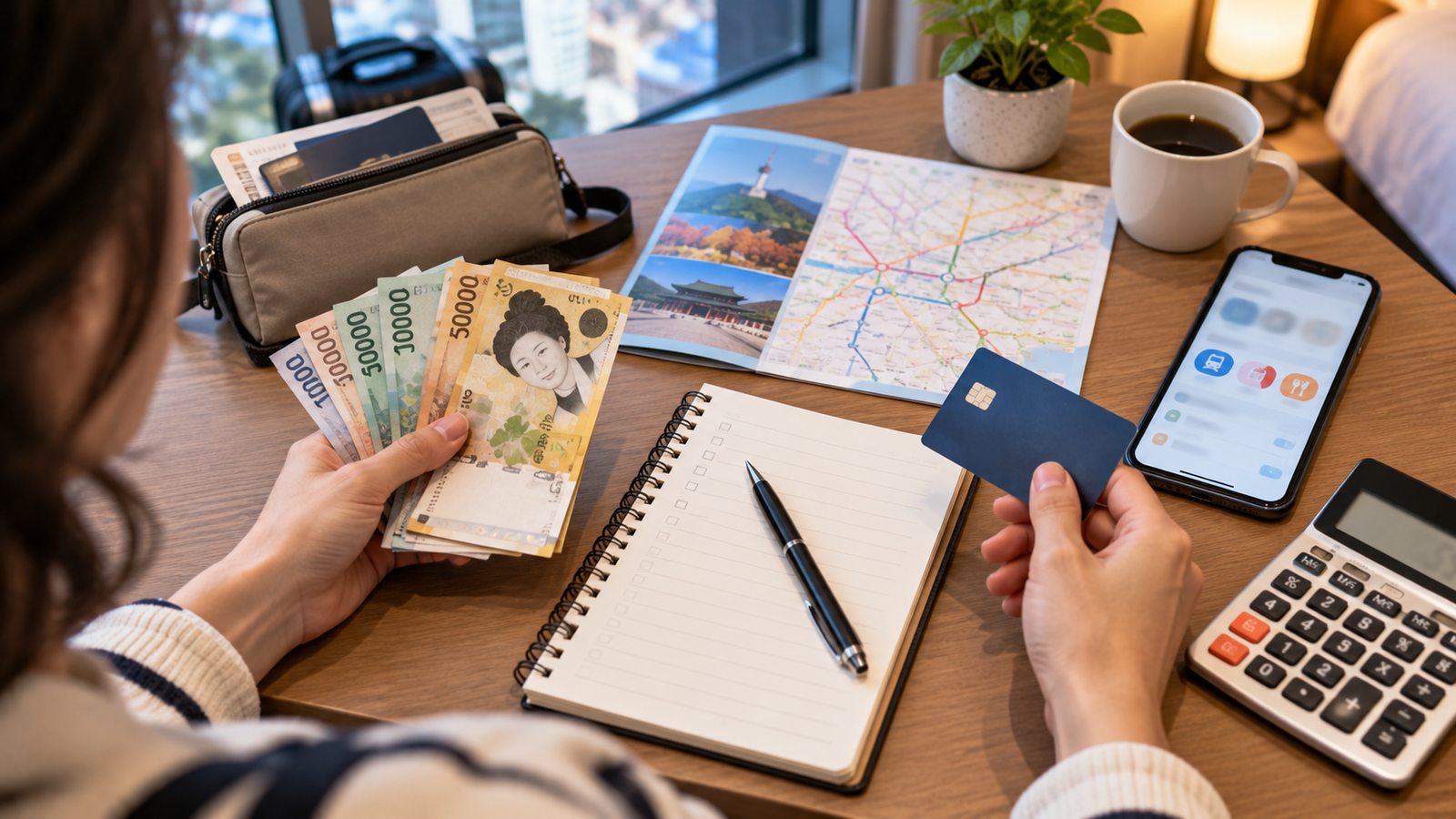
For many visitors, direct card payment should be considered before withdrawing cash solely to pay for something that already accepts cards.
Why?
An ATM withdrawal can potentially involve several cost layers, while a direct card purchase may have a different fee structure under your card agreement.
But this depends entirely on your card.
A traveler with a no-foreign-transaction-fee card can face a very different calculation from someone whose bank charges both international transaction and ATM fees.
The best strategy is therefore not:
“Always use cash.”
or
“Never use cash.”
It is:
Use cards where they make sense, keep a practical amount of won for cash situations, and understand the cost before using an ATM.
Korea ATM Decision Checklist
Before pressing the final confirmation button, ask:
Does this ATM support my foreign card network?
What operator fee is displayed?
Will my home bank add another ATM fee?
Is the ATM offering DCC?
What exchange rate or markup is being offered?
Am I processing the withdrawal in KRW or allowing the ATM to convert it?
Am I using a debit card or triggering a credit-card cash advance?
Would one sensible withdrawal be cheaper than several small withdrawals?
If you can answer those questions, you are no longer guessing at the ATM.
You are making a financial decision with the actual information in front of you.
Frequently Asked Questions
Can I use a foreign Visa or Mastercard at an ATM in Korea?
Yes, but not every Korean ATM necessarily supports overseas-issued cards. Look for a Global ATM or other international-card indication and check that the machine supports your card’s network.
Should I choose KRW at a Korean ATM?
If the ATM offers Dynamic Currency Conversion, choosing your home currency means the ATM-side provider performs the conversion under the rate and markup it displays. Compare those terms carefully. Processing the withdrawal in KRW avoids accepting that ATM-side DCC conversion and leaves conversion to your card network and/or issuer under your card terms.
How much does a Korean ATM charge foreign cards?
There is no single nationwide fee that applies to every foreign-card withdrawal. Fees can vary by ATM operator, card issuer and card. Check the fee displayed before confirming and your issuer’s international ATM terms.
Why did a Korean ATM reject my foreign card?
Possible reasons include using an ATM that does not support international cards, network incompatibility, issuer restrictions, an overseas cash-withdrawal setting, daily limits or the requested amount. Try another compatible Global ATM and check with your issuer if the problem continues.
Is it better to withdraw one large amount or several small amounts?
If fixed fees apply to each transaction, fewer withdrawals can reduce total fees. But withdrawing more cash than you realistically need is unnecessary. Estimate your cash requirement and balance transaction costs against the risk and inconvenience of carrying cash.
Can I withdraw cash with a credit card in Korea?
Potentially, if your card and ATM support it, but your issuer may treat the withdrawal as a cash advance. Check cash-advance fees, interest rules and limits before doing so.
Final Takeaway
Foreign travelers can withdraw Korean won from compatible ATMs in South Korea, but the machine you choose is only one part of the cost.
The most useful strategy is to:
find an international-card-compatible ATM, check the displayed operator fee, understand your own bank’s charges, review any DCC offer carefully, process the transaction in the currency arrangement that makes sense for your card, and avoid unnecessary repeated withdrawals.
A few seconds spent reading the ATM screen can matter more than memorizing someone else’s list of “cheapest Korean ATMs.”
The exact fee that matters is the one offered to your card, at that machine, for that transaction.
Sources & Further Reading
- Hana Bank — CD/ATM Frequently Asked Questions
- Visa — What You Should Know About Dynamic Currency Conversion
- Mastercard — Dynamic Currency Conversion Guide
- Korea Tourism Organization / VISITKOREA — Korea Travel Information and Payment Resources