
If you are visiting South Korea, choosing a transportation card can be more confusing than using the subway itself.
T-money is the simplest pay-as-you-go option and works far beyond Seoul. The Climate Card can save money if you take public transportation frequently within its coverage area. WOWPASS combines a prepaid payment card with T-money transit functionality, which can be convenient if you also want a travel payment card.
The best choice depends on three things: how long you will stay in Seoul, how often you will use public transportation, and whether you will travel outside the Climate Card service area.
Use the calculator below first, then compare the three options in detail.
Korea Transit Card Calculator
Compare estimated pay-as-you-go transit costs with a short-term Seoul Climate Card.
Planning tool only. Actual fares depend on distance, transfers and services used. Climate Card coverage must be checked separately. “Best Fit” is Korea Front Row’s editorial decision framework, not an official recommendation from a card issuer or transportation authority.
Use the calculator above to compare estimated pay-as-you-go transportation costs with a short-term Climate Card.
Important: This is a Korea Front Row planning tool, not an official fare calculator. Actual T-money fares depend on distance, transfers and the transportation services you use. Climate Card coverage also matters: a cheaper pass is not useful if your planned trips fall outside its service area.
Quick Answer: Which Card Is Best?
| Traveler Type | Best Starting Choice | Why |
|---|---|---|
| Mostly staying in Seoul and taking many subway/bus rides | Climate Card | Short-term unlimited travel can cost less than paying for every ride |
| Traveling around Seoul plus Busan, Gyeongju or other regions | T-money | Much broader nationwide transportation use |
| Want transit plus a prepaid card for shopping and payments | WOWPASS | Combines payment functionality with a separate T-money transit function |
| Only taking a few subway rides per day | T-money | You may not use enough transit to justify an unlimited pass |
| Unsure about your itinerary | T-money | Simple and flexible without committing to a fixed-duration pass |
There is no single best card for every tourist.
The important question is not “Which card has the most features?” It is which card matches your actual itinerary.
What Is T-money?
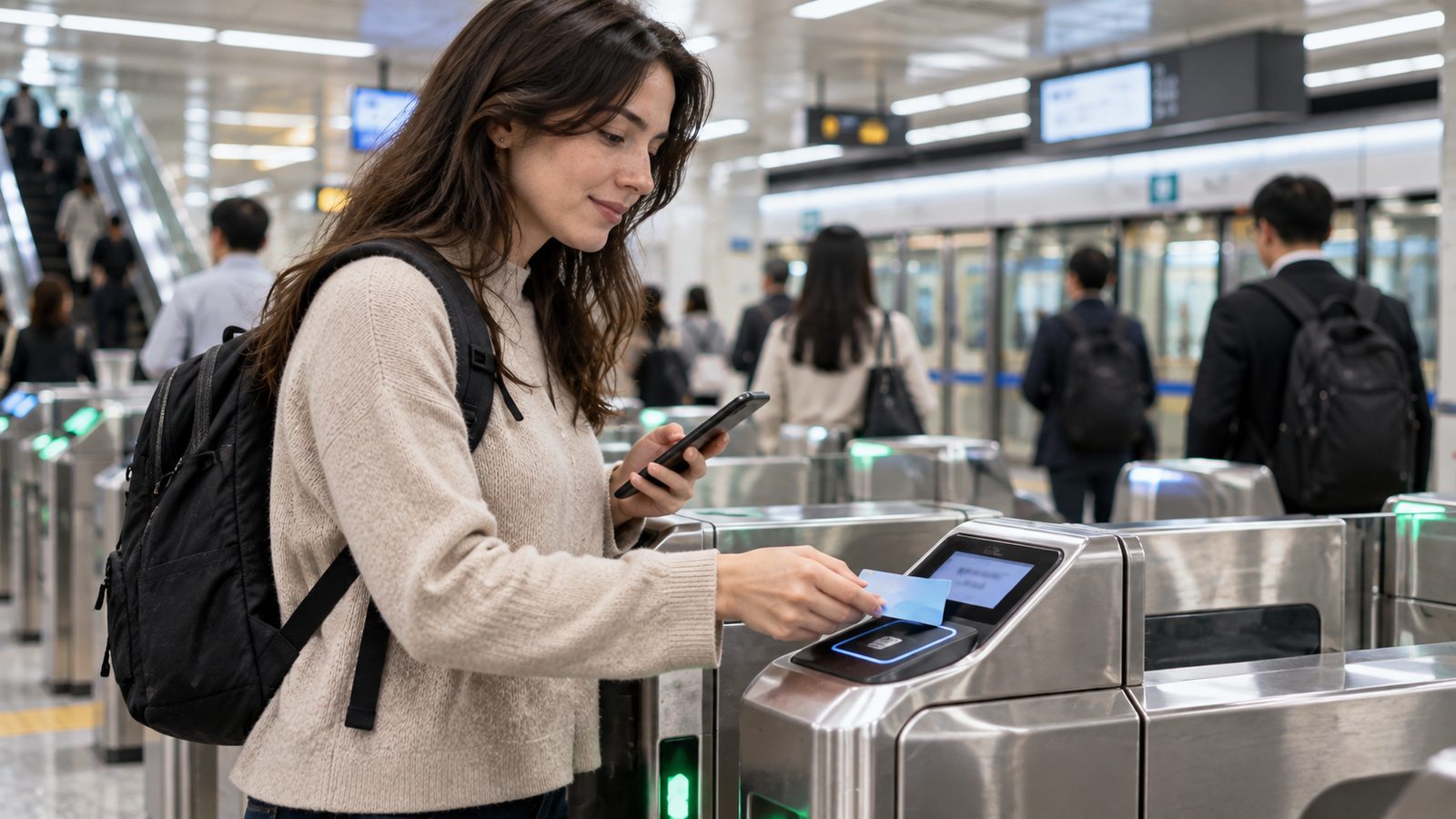
T-money is South Korea’s widely used rechargeable transportation card.
For international visitors, the official TMONEY TRAVEL CARD currently costs ₩4,000 before adding transportation credit.
It can be used for public transportation around the country, including buses, subways, taxis, airport buses and express buses where T-money is accepted.
That nationwide usability is its biggest advantage.
If your trip looks like:
Seoul → Busan → Gyeongju → Seoul
a regular T-money option is generally much easier to use as your basic transportation card than a Seoul-focused unlimited pass.
You load money onto the card and transportation fares are deducted as you travel.
T-money Is Usually Best If:
- you will travel outside Seoul
- you do not know exactly how many rides you will take
- you want a straightforward pay-as-you-go card
- your itinerary includes transportation not covered by the Climate Card
- you prefer flexibility over an unlimited Seoul transit pass
The downside is equally simple: every eligible ride still costs money.
If you take the subway or bus repeatedly throughout the day, a short-term Climate Card may become cheaper.
What Is the Climate Card for Tourists?
Seoul’s Climate Card offers unlimited use of eligible public transportation within its service area during the validity period.
For short-term visitors, five tourist-friendly passes are currently available:
| Short-Term Pass | Price |
|---|---|
| 1 day | ₩5,000 |
| 2 days | ₩8,000 |
| 3 days | ₩10,000 |
| 5 days | ₩15,000 |
| 7 days | ₩20,000 |
A physical Climate Card currently costs an additional ₩3,000.
That means a first-time visitor buying a physical 5-day pass would initially spend:
₩3,000 card + ₩15,000 pass = ₩18,000
The physical card can be reused, so the ₩3,000 card cost should not be counted again every time you load another pass onto the same card.
Short-term passes begin on the day they are charged, so you should not treat them like attraction tickets that can simply be activated whenever you decide to use them later.
2026 update for international visitors: since March 17, 2026, internationally issued credit and debit cards such as Visa and Mastercard can be used at supported Seoul Metro ticket vending machines to purchase a Climate Card and recharge the 1-, 2-, 3-, 5- and 7-day short-term passes. Seoul says an average service fee of about 3.7% applies when using an international card. This means tourists no longer necessarily need Korean cash just to buy or recharge a short-term Climate Card.
When Can the Climate Card Save Money?
The standard adult Seoul subway base fare when using a transportation card starts at ₩1,550, although longer journeys can cost more.
Consider a simple example.
You stay in Seoul for five days and estimate:
4 rides per day × 5 days × ₩1,550 = ₩31,000
A first physical 5-day Climate Card would cost:
₩15,000 pass + ₩3,000 card = ₩18,000
Under that simplified scenario, the difference is:
₩31,000 − ₩18,000 = ₩13,000

The Climate Card would therefore look significantly cheaper.
But this calculation alone is not enough.
You must also check whether the transportation you plan to use is actually within the Climate Card service range.
The Biggest Climate Card Limitation: Coverage
This is where many simple card comparisons become misleading.
The Climate Card is not an unlimited transportation pass for all of South Korea.
Its coverage includes Seoul-based subway services and certain connected sections, Seoul-licensed buses and other specifically included services.
However, important exclusions exist.
For example, the official Seoul guidance excludes the Sinbundang Line, intercity and airport buses, non-Seoul-licensed buses and subway travel outside the applicable service area, subject to the detailed route rules.
That means a traveler could calculate that the Climate Card is cheaper but still choose T-money because the itinerary extends beyond the pass coverage.
A Simple Rule
Mostly central Seoul + many rides → check the Climate Card first.
Regional travel or uncertain coverage → T-money is usually the safer starting point.
For a broader explanation of fares, transfers and navigating the system, see our Seoul subway and T-money guide.
What Is WOWPASS?
WOWPASS solves a somewhat different problem.
It combines a prepaid payment function for purchases with T-money transportation functionality.
That can be useful for international visitors who want one physical card for both everyday payments and public transportation.
But there is an important detail:
the WOWPASS payment balance and the T-money transportation balance are separate.
Loading money into the payment side does not mean that the same balance automatically pays your subway fare.
You still need to manage the transportation balance separately.
This distinction matters because WOWPASS should not be compared with the Climate Card purely as if both were transportation passes.
They solve different problems.
When Does WOWPASS Make More Sense?
WOWPASS becomes more interesting when your question is not just:
“How should I pay for the subway?”
but:
“How can I manage transportation and everyday spending while traveling in Korea?”
For example, consider a visitor who wants:
- a prepaid payment card
- a way to manage travel spending
- T-money transportation functionality
- an alternative for situations where using an overseas card may be inconvenient

That traveler may value WOWPASS even if it is not the cheapest transportation-only option.
If your foreign credit or debit card already works well for most purchases and you only need public transportation, the extra payment functionality may be unnecessary.
For more context on cash, foreign cards and everyday purchases, read our guide to paying in Korea as a tourist.
T-money vs Climate Card vs WOWPASS
Here is the practical difference.
| Feature | T-money Travel Card | Climate Card Short-Term Pass | WOWPASS |
|---|---|---|---|
| Main purpose | Pay-as-you-go transportation | Unlimited eligible Seoul transit | Prepaid payments + T-money transit |
| Geographic strength | Nationwide | Mainly Seoul service area | T-money function can be used for transit |
| Unlimited eligible rides | No | Yes | No |
| Best for frequent Seoul transit | Good | Potentially best | Good |
| Best for regional travel | Strong | Weak | Depends on T-money usage |
| Shopping/payment function | Limited T-money merchant use | Not the main purpose | Major feature |
| Need to monitor transit balance | Yes | Not for covered rides during validity | Yes, T-money balance is separate |
| Simple for first-time travelers | Very simple | Simple after checking coverage | Requires understanding two balances |
Three Realistic Travel Scenarios
Scenario 1: Five Days Almost Entirely in Seoul
Suppose you stay in Myeongdong and visit places such as:
- Gyeongbokgung
- Hongdae
- Seongsu
- Gangnam
- Insadong
- Namsan
You expect four or five public transportation rides most days.
Best option to check first: Climate Card.
The combination of a fixed short-term price and frequent Seoul travel makes it a strong candidate.
However, check the service range for any itinerary involving excluded lines or destinations outside the covered area.
Scenario 2: Seoul, Busan and Gyeongju
You spend three days in Seoul and then travel to other parts of Korea.
You may use Seoul public transportation heavily for a few days, but your overall trip includes regional transportation.
Best simple option: T-money.
A Climate Card could still make sense specifically for your Seoul days, but buying multiple cards or passes just to optimize a relatively small difference may not be worth the extra complexity.
This is where convenience can matter more than finding the mathematically cheapest option.
Scenario 3: Seoul Shopping Trip With Heavy Card Spending
You spend most of your trip shopping, eating and visiting attractions in Seoul.
You want a prepaid payment option as well as public transportation.
Option worth comparing: WOWPASS.
Its value comes from combining travel payment functionality with T-money transportation capability—not from offering unlimited subway rides.
How Many Rides Make the Climate Card Worth It?
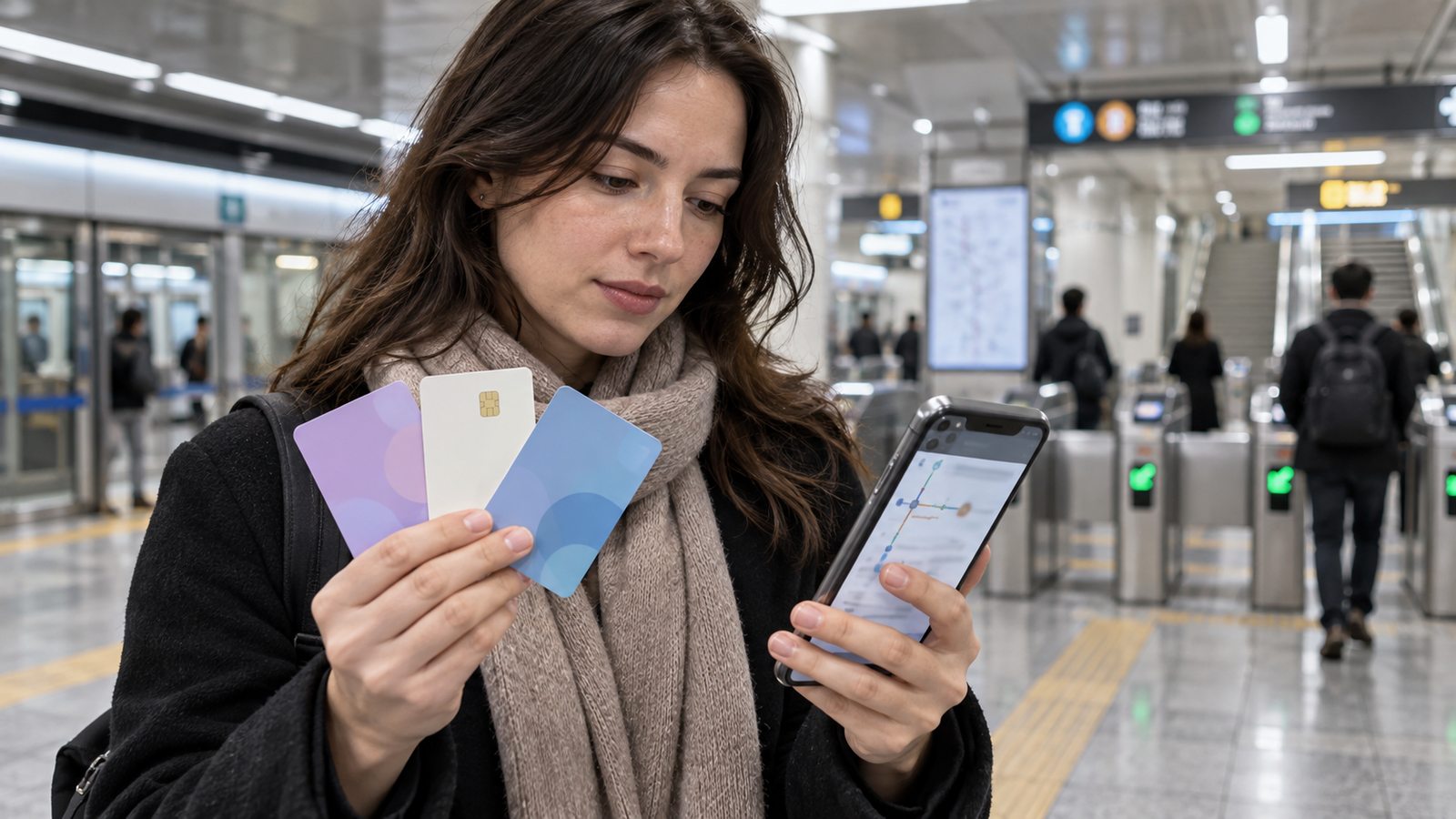
There is no universal number because subway fares vary with distance and travelers use different combinations of buses and trains.
But a rough break-even calculation is useful.
For a first-time physical 5-day Climate Card:
₩18,000 total initial cost ÷ ₩1,550 base fare ≈ 11.6 rides
So at the base fare, approximately 12 individual rides would equal the initial cost of a physical 5-day Climate Card.
Spread over five days, that is roughly:
2.4 rides per day
This does not mean everyone taking three rides per day should automatically buy the Climate Card.
Some journeys may cost more than the base fare, while other itinerary segments may fall outside Climate Card coverage.
The calculation is a decision starting point, not a guarantee.
Do You Need More Than One Card?
Possibly.
Trying to force one card to handle every part of a Korea trip is not always the best strategy.
For example, a traveler could use:
Climate Card during five busy Seoul sightseeing days + T-money for transportation outside the Climate Card network.
Another traveler might simply use T-money for the entire trip to avoid managing multiple cards.
A third may use WOWPASS because the prepaid payment function matters more than maximizing transit savings.
The cheapest combination is not automatically the best combination.
Climate Card vs T-money for a 3-Day Seoul Trip
The 3-day Climate Card short-term pass costs ₩10,000, plus ₩3,000 if you need to buy a physical card.
First-use total:
₩13,000
At a ₩1,550 base fare:
₩13,000 ÷ ₩1,550 ≈ 8.4 rides
That is roughly nine base-fare rides across three days.
A traveler taking only two rides per day may find pay-as-you-go T-money more practical.
Someone taking four or five eligible rides per day may find the Climate Card considerably more attractive.
Again, coverage must be checked before deciding.
Climate Card vs T-money for a 7-Day Seoul Trip
The 7-day short-term pass costs ₩20,000.
With a new ₩3,000 physical card:
₩23,000
At the ₩1,550 subway base fare:
₩23,000 ÷ ₩1,550 ≈ 14.8 rides
That is approximately 15 base-fare rides over seven days, or a little more than two rides per day.
For travelers spending an entire week sightseeing around Seoul, the Climate Card can therefore become financially attractive surprisingly quickly.
But an itinerary with airport buses, regional day trips or extensive travel outside the coverage area changes the calculation.
What About Airport Transportation?
Do not assume that buying a Climate Card means all transportation from Incheon Airport to your hotel is covered.
Airport transportation has its own service and route rules, and airport buses are excluded from Climate Card coverage.
Important October 2026 update: Seoul’s current Climate Card guidance allows eligible Seoul subway travel with alighting at Incheon International Airport Terminal 1 and Terminal 2. This does not mean every airport trip or airport service is covered, and airport buses remain outside the Climate Card. Check the official coverage rules for the exact route you plan to use.
Plan your arrival separately and do not assume that every airport transportation option is included.
Our Incheon Airport to Seoul guide compares the main airport transportation options.
What Changed With Seoul’s Climate Pass in 2026?
This is an important source of confusion.
Seoul discontinued recharging the old 30-day prepaid Climate Card after August 31, 2026 as the new resident-focused Climate Pass system launched in September.
That does not mean tourist Climate Cards disappeared.
Existing Climate Cards can still be loaded with the 1-, 2-, 3-, 5- and 7-day short-term passes.
The resident Climate Pass and the short-term visitor Climate Card should therefore not be treated as the same product.
For most short-term international visitors, the tourist short-term passes are the relevant option.
What May Change in 2027?
Korea’s transportation payment system continues to evolve.
Foreign-issued contactless bank-card payment is being developed for parts of the transportation network, which could eventually reduce the need for some visitors to buy a separate transit card.
But travelers should make decisions based on services actually available during their trip, not planned future rollouts.
If direct foreign-card transit payment expands, this comparison will need to be updated because the convenience advantage of traditional transportation cards could change.
KFR Decision Framework: Which Card Should You Buy?
Use these questions in order.
1. Will Most of Your Public Transportation Be Inside Seoul?
No → Start with T-money.
Yes → Continue to Question 2.
2. Will You Take Public Transportation Several Times Per Day?
No → T-money is probably simpler.
Yes → Compare your expected fares with the Climate Card price.
3. Are Your Planned Routes Inside the Climate Card Coverage Area?
No or unsure → T-money reduces coverage risk.
Yes → Climate Card becomes a stronger option.
4. Do You Also Want a Prepaid Card for Everyday Shopping?
Yes → Compare WOWPASS with your normal foreign card setup.
No → Keep the decision focused on T-money vs Climate Card.
5. Is the Price Difference Small?
Choose convenience.
Saving a few thousand won is rarely worth making your transportation system unnecessarily complicated.
The Bottom Line
For most travelers, the choice can be simplified like this:
Choose T-money if you want flexibility and expect to travel beyond Seoul.
Choose the Climate Card if you will take many eligible subway and bus rides during a concentrated Seoul stay.
Consider WOWPASS if you also want a prepaid payment tool and understand that its payment balance and T-money transit balance are separate.
The Climate Card can produce meaningful savings for a transit-heavy Seoul itinerary, but only when your routes are actually covered.
That is why the best decision is not based on the card name or the number of advertised features.
It is based on your itinerary, your expected number of rides and where those rides take you.
Frequently Asked Questions
Is T-money or the Climate Card better for tourists?
T-money is generally more flexible because it can be used across South Korea. The Climate Card can be better value for travelers making frequent eligible public transportation trips within Seoul during a short period.
How much is a tourist Climate Card?
Current short-term passes cost ₩5,000 for 1 day, ₩8,000 for 2 days, ₩10,000 for 3 days, ₩15,000 for 5 days and ₩20,000 for 7 days. A physical Climate Card costs an additional ₩3,000.
Can tourists still use the Climate Card after the 2026 Climate Pass change?
Yes. The change to the resident-focused Climate Pass does not eliminate the short-term 1-, 2-, 3-, 5- and 7-day Climate Card options for visitors.
Does WOWPASS include T-money?
WOWPASS provides T-money transportation functionality, but the transportation balance is managed separately from the WOWPASS payment balance.
Can I use the Climate Card outside Seoul?
Only on specifically included routes and services. It should not be treated as a nationwide transportation pass. Travelers with significant regional transportation needs should consider T-money or another appropriate ticket.
Can I use both T-money and the Climate Card?
Yes. Some travelers may use a Climate Card during intensive Seoul sightseeing days and T-money for journeys outside Climate Card coverage. Whether the extra complexity is worthwhile depends on the itinerary.
Sources & Further Reading
- Seoul Metropolitan Government — Climate Card
- Seoul Metropolitan Government — Subway Fares
- Tmoney — TMONEY TRAVEL CARD
- WOWPASS — Official User Guide
- Seoul Metropolitan Government — Climate Card Policy Information