
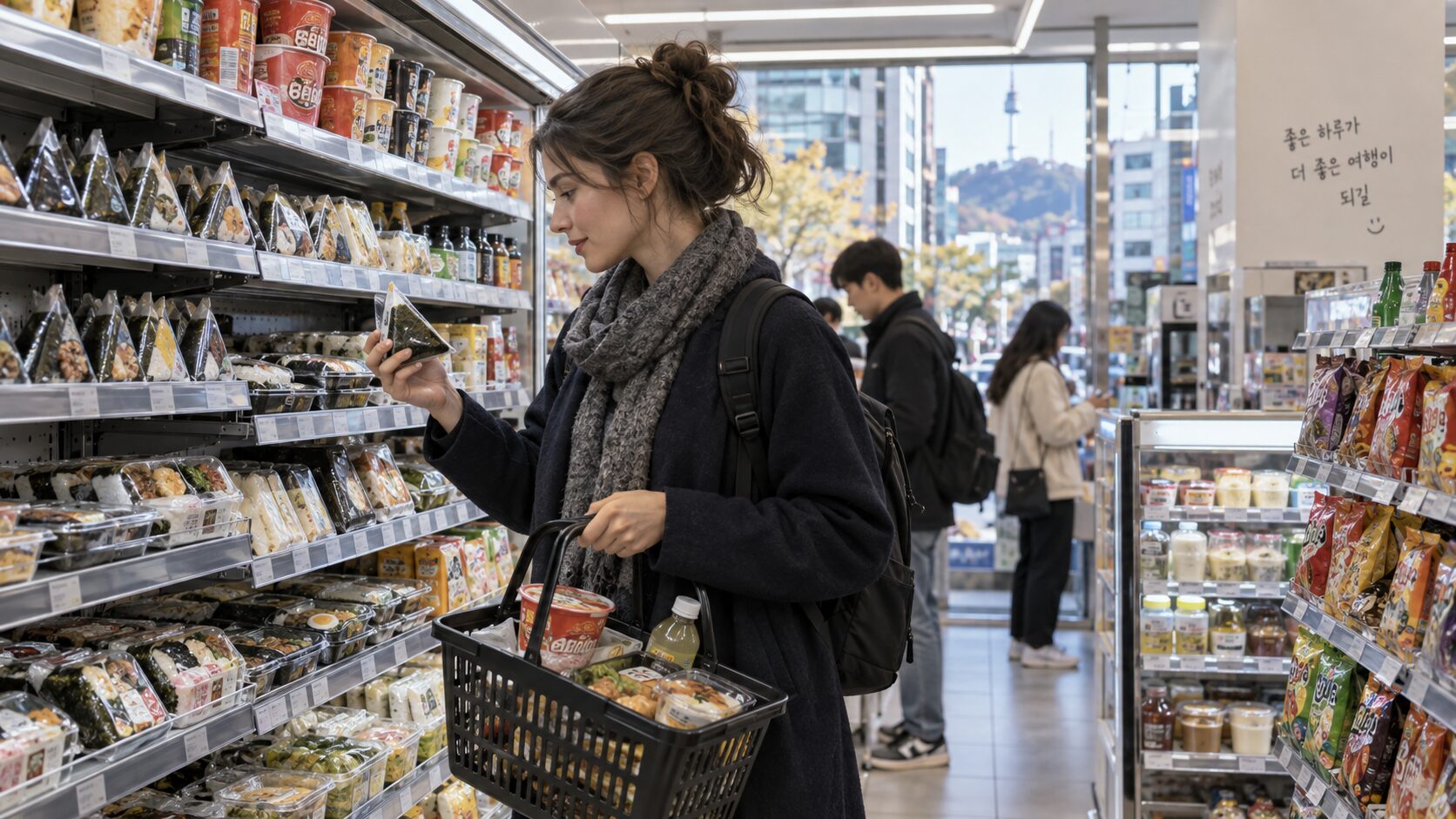
For many travelers, a Korean convenience store is no longer just a place to grab a bottle of water.
It has become part of the Korea experience.
Visitors walk in looking for instant ramyeon, triangular gimbap, ready-made meals, drinks and desserts they have seen in Korean dramas, YouTube videos or social media. Some combine several products into their own convenience-store meal. Others simply sit down with a cup of noodles and watch everyday Korean life pass by.
That may sound ordinary to Koreans.
But that is exactly what makes it interesting.
Convenience stores offer travelers an unusually accessible glimpse into how people in Korea actually snack, eat quickly and experiment with new food trends.
So what should you try, how does the experience work, and why have Korean convenience stores become a tourist attraction in their own right?
Here is a beginner’s guide.
Why Korean Convenience Stores Feel Different
Convenience stores exist around the world, but their role in everyday Korean life can be surprisingly broad.
A Korean convenience store may function as a snack shop, quick-meal stop, coffee counter and late-night food option all at once.
Depending on the location, customers can buy chilled meals, heat them in a microwave, prepare instant noodles with hot water and eat at a small seating area.
The selection also changes constantly.
Alongside familiar products such as ramyeon, gimbap and bottled drinks, stores regularly introduce new desserts, limited-edition snacks and ready-to-eat meals designed around current food trends.
For a traveler, that makes even a quick convenience-store visit feel a little like exploring a miniature version of Korea’s constantly changing food culture.
What Do Koreans Actually Eat From Convenience Stores?
There is no single “Korean convenience store meal.”
People use convenience stores differently depending on the time of day, budget and situation.
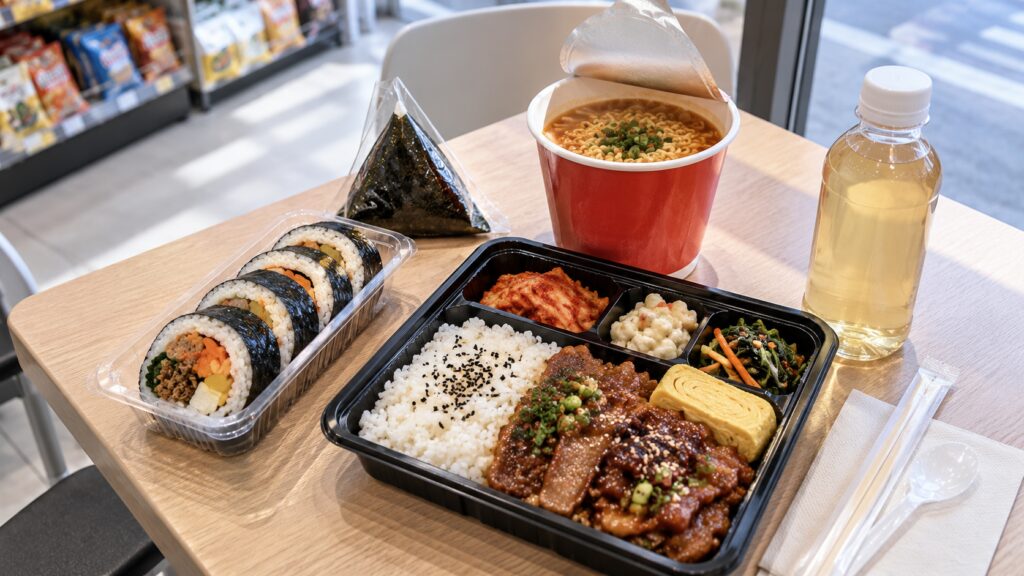
But several food categories are especially useful for first-time visitors to understand.
Samgak-gimbap
Samgak-gimbap (삼각김밥) is triangular rice wrapped in seaweed with a filling inside.
It is compact, inexpensive and designed to be eaten quickly.
Fillings vary, but tuna, kimchi, meat and mayonnaise-based combinations are common themes.
The packaging can look confusing the first time because the seaweed is designed to stay separate from the rice until you open it.
Follow the numbered opening instructions carefully and the seaweed should wrap around the rice as the package comes apart.
It is one of the simplest examples of Korean convenience-store food designed around speed and portability.
Gimbap
Convenience stores also sell longer rolls of gimbap, usually sliced and packaged for a quick meal.
They may not replace a freshly made roll from a specialist gimbap or bunsik shop, but they are convenient when you need something more substantial than a snack.
Fillings can range from traditional combinations to tuna, meat, kimchi and other modern variations.
Dosirak
Dosirak (도시락) means a packed meal or lunchbox.
Convenience-store dosirak can include rice, meat, vegetables, kimchi, eggs and several small side dishes in one tray.
Most are intended to be heated before eating.
For travelers, dosirak is particularly useful when restaurants are closed, you are eating alone or you simply want to see what an inexpensive Korean ready-made meal looks like.
Ramyeon
Instant noodles deserve their own category.
Korean convenience stores usually carry shelves of ramyeon in cups and bowls, from relatively mild varieties to products known for intense heat.
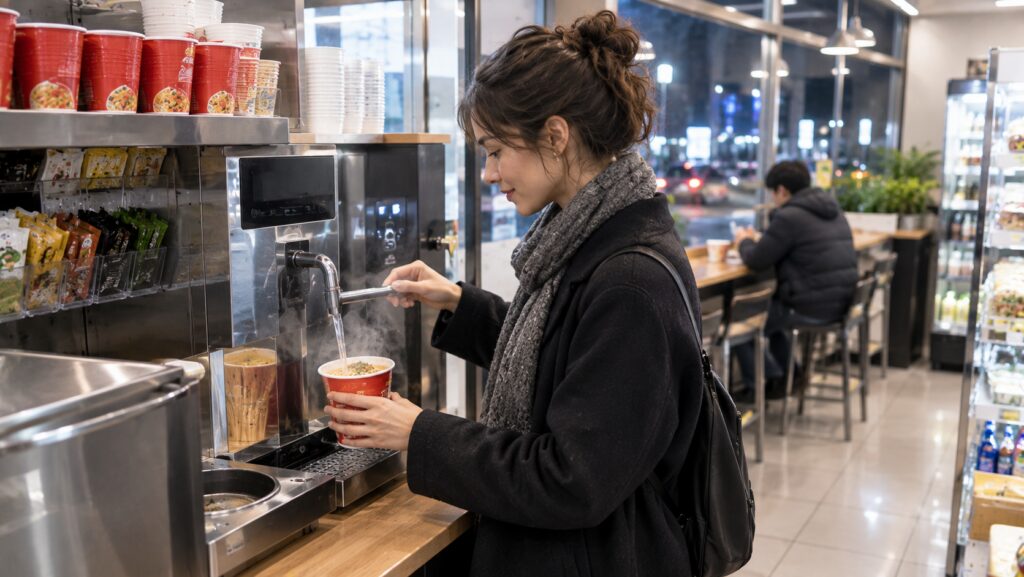
Hot water is commonly available, making it possible to prepare noodles immediately after purchase at many locations.
And in some places, the experience goes beyond a simple cup of noodles.
The Korean Convenience Store Ramyeon Experience
Instant ramyeon is one of the easiest Korean convenience-store foods for international visitors to recognize.
But eating it in Korea can still feel different.
At many stores, you buy the noodles, prepare them with hot water and eat them soon afterward.
Some locations also have dedicated cooking equipment for particular noodle products or larger food-preparation areas.
The appeal is partly convenience.
But it is also atmosphere.
Eating hot ramyeon late at night, after traveling or while sitting near a convenience store is an extremely ordinary Korean experience — which can make it memorable for someone visiting the country for the first time.
The best-known travel variation is Han River ramyeon.
Convenience stores around popular riverside areas sell instant noodles that visitors prepare and eat while spending time by the river.
The noodles themselves are not necessarily unique.
The setting is what turns an inexpensive meal into a Seoul travel experience.
Why Do Korean Convenience Store Food Combinations Go Viral?
One of the most interesting parts of Korean convenience-store culture is that customers do not always eat products exactly as they are sold.
They combine them.
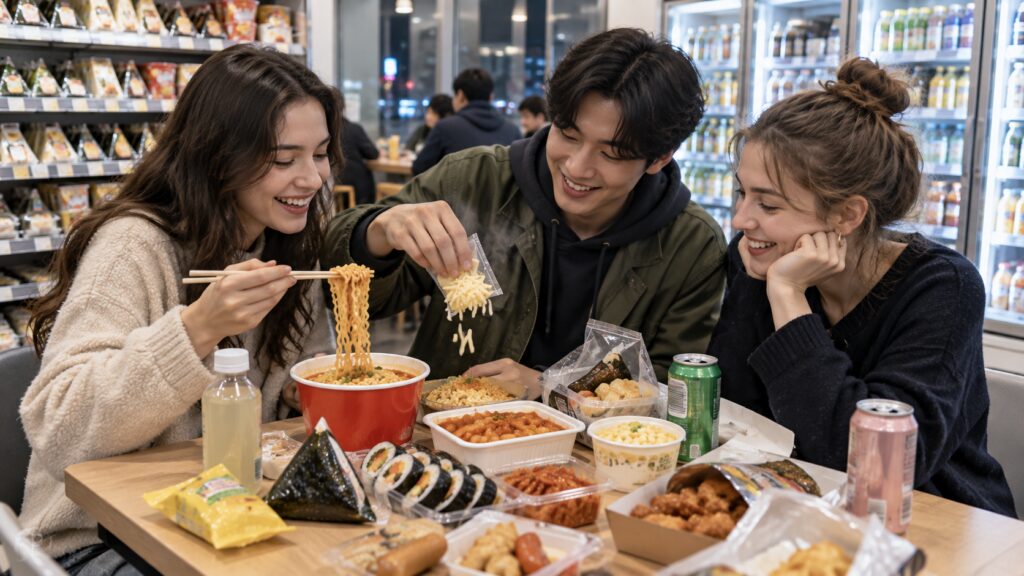
A noodle product might be paired with cheese or another packaged food. A drink can be mixed with another beverage. Snacks and desserts may be combined into something that looks completely different from the original products.
Social media has accelerated this habit.
When a particular combination becomes popular, people recreate it, modify it and post their own versions.
International visitors have increasingly joined in.
That matters because it changes the convenience store from somewhere tourists simply buy Korean products into somewhere they can participate in a food trend.
The specific viral combinations will change.
The underlying behavior probably will not.
Korean convenience stores are particularly well suited to experimentation because so many inexpensive foods, drinks and toppings are available in one small space.
Korean Convenience Stores Are Also Dessert Stops
Do not assume the interesting food ends with noodles and lunchboxes.
Desserts have become an increasingly visible part of Korean convenience-store culture.
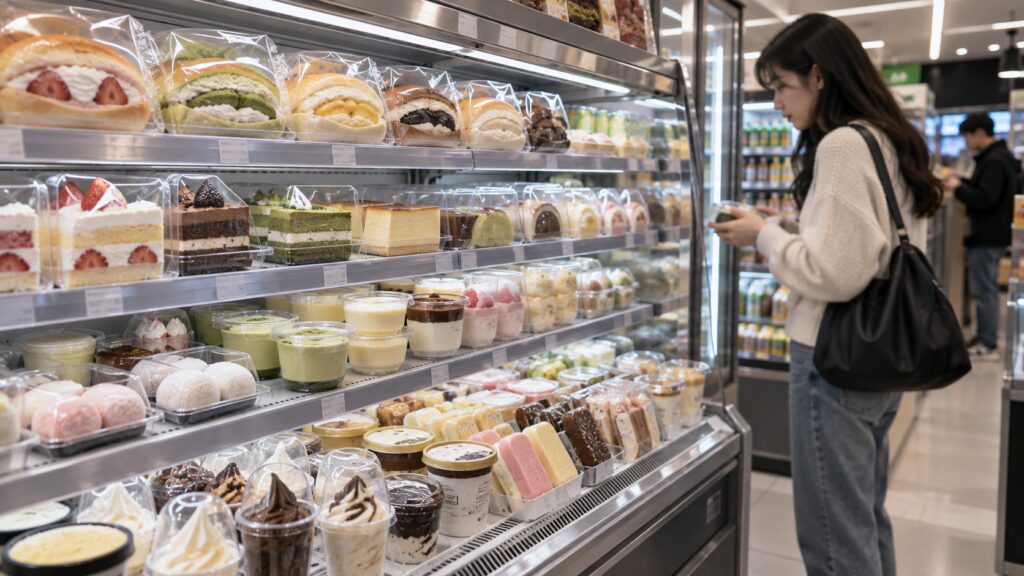
Depending on the season and store, you may encounter cakes, cream-filled breads, ice cream, puddings, traditional-flavor-inspired sweets and limited-edition products built around whatever texture or ingredient is currently fashionable.
This is also where traditional Korean flavors can meet modern convenience-store trends.
Ingredients associated with foods such as injeolmi, sweet red bean or rice cake can reappear in ice cream, bread, drinks and packaged desserts.
That does not make every product traditional Korean food.
Often, these are modern snacks borrowing a familiar Korean flavor or texture.
The distinction is worth understanding.
What Should a First-Time Visitor Try?
The easiest approach is not to search for one definitive list of “the best Korean convenience store foods.”
Those lists become outdated quickly.
Instead, build a small meal from categories.
Choose one rice-based item such as samgak-gimbap or gimbap.
Add ramyeon if you want something hot.
Try a ready-made side dish or snack that looks unfamiliar.
Then choose a drink or dessert.
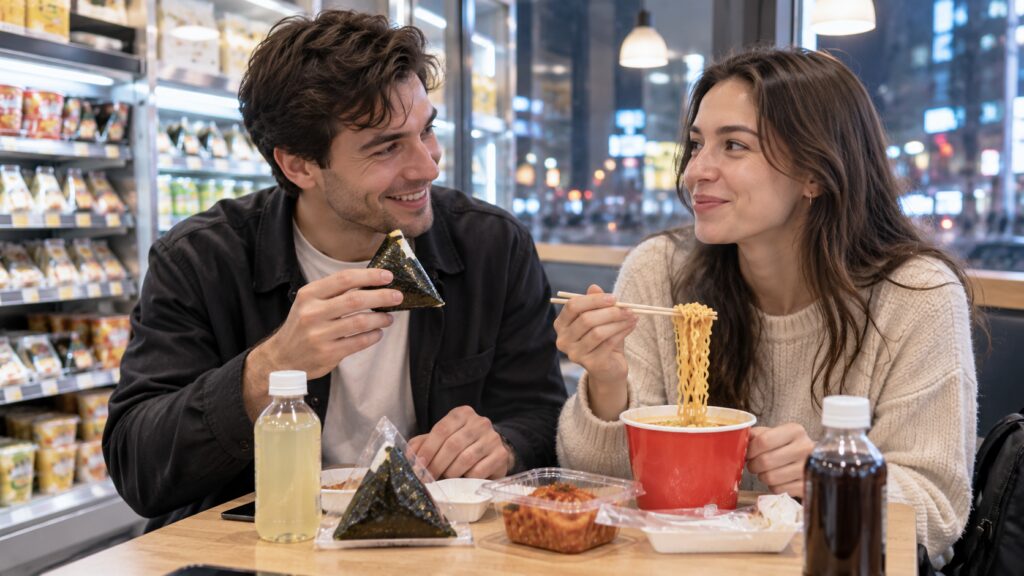
This gives you several different textures and flavors without buying an enormous pile of food simply because it appeared on social media.
If you do not tolerate spicy food well, check noodle packaging carefully.
Korean instant noodles vary enormously in heat level, and the most famous product online is not necessarily the best choice for your first meal.
The same principle applies to unfamiliar products in general.
You do not have to turn a convenience-store visit into a challenge.
Pick foods you are actually interested in eating.
What About Tteokbokki?
Convenience stores can also sell packaged or ready-to-heat versions of familiar Korean foods, including tteokbokki.
But convenience-store tteokbokki should not be treated as the only version of the dish.
Tteokbokki has a much broader place in Korean bunsik and street-food culture, where chewy rice cakes are commonly served with spicy-sweet sauce and paired with foods such as fried snacks, fish cake and gimbap.
For another side of Korea’s casual food culture, tteokbokki shows how a simple, inexpensive snack became one of the country’s most recognizable comfort foods.
A convenience-store version can be fun.
A neighborhood bunsik shop gives you another part of the story.
Can You Eat Inside Korean Convenience Stores?
Sometimes.
Many Korean convenience stores have tables or counters where customers can eat purchased food, but this is not universal.
Store size, location and local circumstances matter.
Some shops have generous seating areas.
Others have only a tiny counter.
Some have no seating at all.
The simplest rule is to look at how the particular store is arranged rather than assuming every convenience store works the same way.
If a microwave, hot-water dispenser or other preparation equipment is provided, use it according to the instructions and leave the area clean for the next customer.
Dispose of packaging in the appropriate bins when available.
And remember that a convenience store is still an everyday business used by local residents.
For visitors, it may feel like a travel attraction.
For the person standing behind you, it may simply be where they are buying dinner after work.
Are Korean Convenience Stores Open 24 Hours?
Many people associate Korean convenience stores with 24-hour access, and many locations do operate around the clock.
But travelers should not assume that every store is open 24 hours.
Operating hours can vary by location.
That is especially worth remembering if you are relying on a particular store for a late-night meal.
What remains true is that convenience stores are exceptionally widespread in Korean cities, making them one of the easiest food options for travelers to encounter.
Why Have Korean Convenience Stores Become a Tourist Experience?
Part of the answer is the global popularity of Korean culture.
International audiences have repeatedly seen convenience stores in Korean dramas, entertainment programs, online videos and everyday lifestyle content.
Then they arrive in Korea and discover that those stores are not a television set.
They are everywhere.
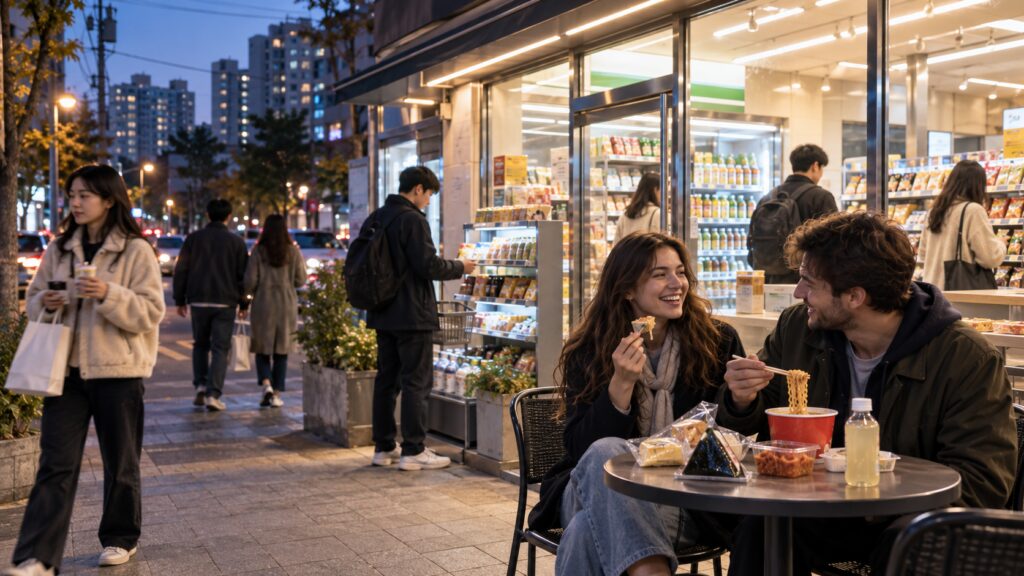
The experience is inexpensive, informal and requires very little planning.
You do not need a reservation.
You do not need to understand a complicated menu.
And you do not have to commit to an expensive meal.
That accessibility is powerful.
Travelers who want another look at everyday Korean food culture can also try food delivery in Korea, which has become increasingly accessible to international visitors.
It allows a traveler to participate in a small piece of everyday Korean life almost immediately after arriving.
For another everyday Korean experience that can feel unfamiliar at first, a Korean jjimjilbang offers a look at Korea’s distinctive bathhouse, sauna and relaxation culture.
Recent growth in foreign-customer spending at Korean convenience stores suggests that this behavior is becoming economically significant as well, rather than remaining a niche social-media curiosity.
But numbers explain only part of the appeal.
The deeper attraction is that Korean convenience stores sit somewhere between ordinary life and tourism.
The Korea Front Row Take
A Korean convenience store is not a hidden secret.
It is almost the opposite.
Convenience stores are so common in Korea that local residents can easily stop noticing them.
That is why international interest in them is fascinating.
Travel does not always make the extraordinary more interesting.
Sometimes it makes the ordinary visible again.
A visitor sees the ramyeon machine, rows of triangular gimbap, constantly changing desserts and tiny tables outside a convenience store as something distinctly Korean.
A local resident may simply see lunch.
Both perspectives are correct.
And that is what makes the Korean convenience store worth understanding.
The specific viral snack will change.
The latest dessert will disappear.
A new noodle combination will replace the old one.
But the convenience store’s place in Korean everyday food culture is much more durable.
That is the story behind the trend.
Frequently Asked Questions
What should I eat at a Korean convenience store?
A good first meal could include samgak-gimbap or gimbap, instant ramyeon and a drink or dessert. Rather than chasing one viral product, try several different categories of Korean convenience-store food.
Can you cook ramyeon at Korean convenience stores?
Many locations provide hot water for instant noodles, and some have additional preparation equipment. Facilities vary by store, so check what is available before preparing your food.
Can tourists eat inside Korean convenience stores?
Many stores have small seating areas or counters, but not all do. Seating depends on the size and location of the store.
Are Korean convenience stores open 24 hours?
Many are, but not every location operates 24 hours. Check the opening hours of a specific store if you are depending on it for a late-night meal.
What is samgak-gimbap?
Samgak-gimbap is a triangular portion of rice with a filling, wrapped in seaweed using special packaging designed to keep the seaweed crisp until opened.
Why are Korean convenience stores popular with tourists?
They offer an inexpensive and accessible way to experience everyday Korean food culture. Their appearance in Korean entertainment and social media has also made foods such as ramyeon, gimbap and viral snack combinations familiar to international visitors before they arrive.
Sources & Further Reading
Korea JoongAng Daily — Foreigner treat tweaks fuel retail spending surge
Korea JoongAng Daily — Convenience stores take a slice out of Korea’s pizza market
Ministry of Agriculture, Food and Rural Affairs — 2026 First-Half K-Food Export Performance