
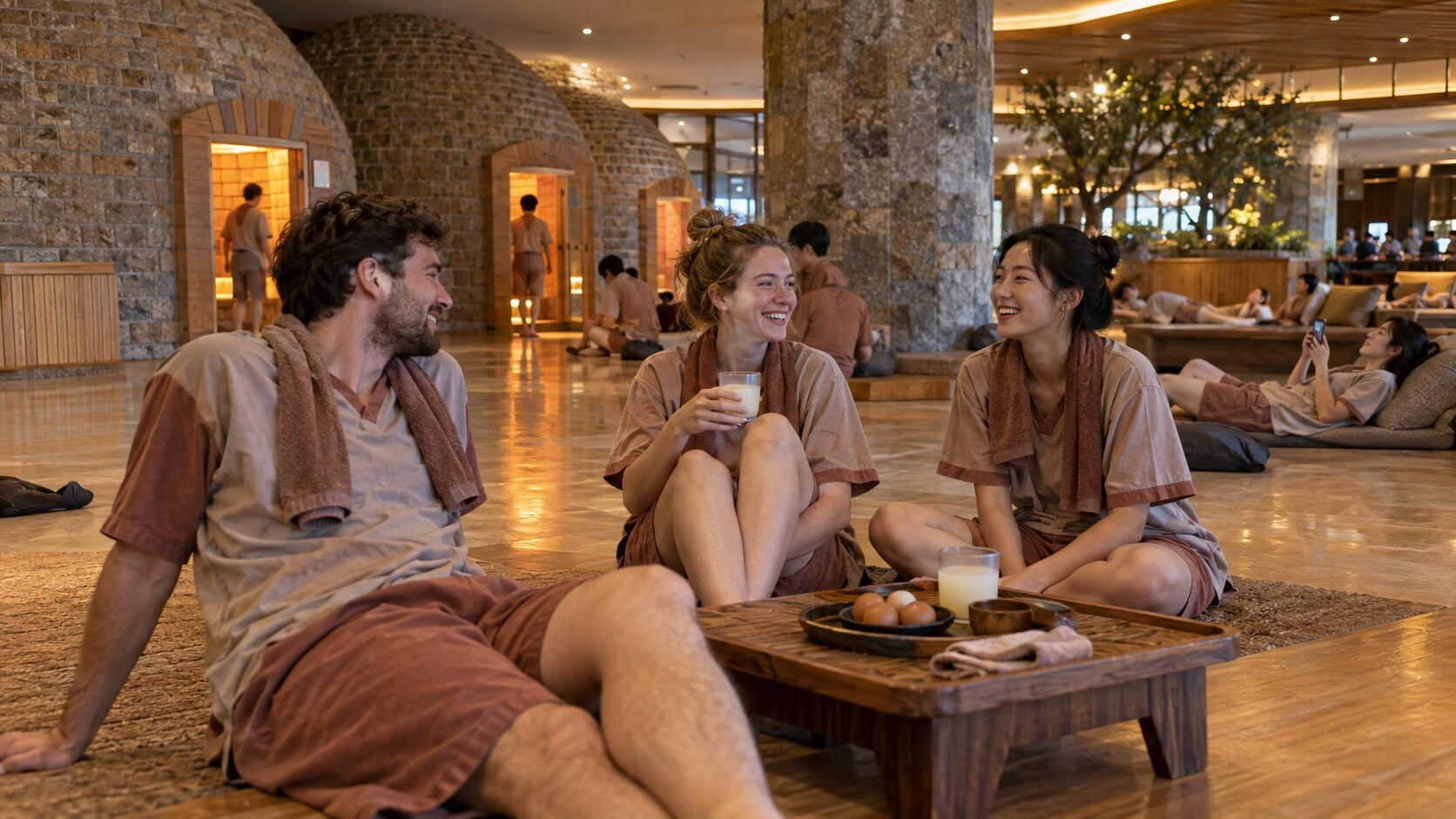
For first-time visitors to Korea, a jjimjilbang can be both fascinating and slightly intimidating.
You may have seen the familiar scenes in Korean dramas: people wearing matching sauna clothes, resting on heated floors, eating eggs and drinking sikhye, or wrapping towels around their heads. But walking into a real Korean jjimjilbang is different when you do not know what happens after the front desk.
Do you take off all your clothes? Are men and women together? Do you shower first? What are you supposed to wear in the sauna?
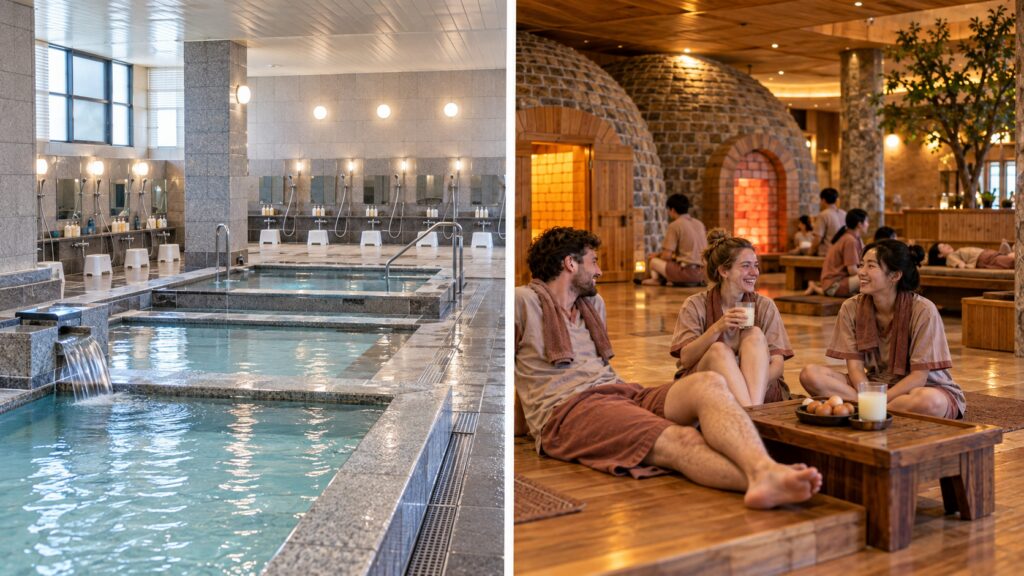
The experience becomes much simpler once you understand one important point: the bathing area and the communal jjimjilbang area are usually two different spaces.
Here is what first-time visitors should know before trying one in Korea.
What Is a Korean Jjimjilbang?
A jjimjilbang (찜질방) is a Korean sauna and relaxation facility built around heated rooms, bathing and communal rest.
The exact setup varies widely. Some are neighborhood bathhouses with relatively simple facilities, while larger complexes can include multiple heated rooms, restaurants, cafés, relaxation areas and spaces for children.
This is also why translating jjimjilbang simply as “Korean sauna” does not tell the whole story.
Depending on the facility, it can feel like a combination of a bathhouse, sauna and casual social space.
For travelers, that makes a jjimjilbang more than a wellness stop. It is also a glimpse into a familiar part of everyday leisure culture in Korea.
The Most Important Difference: Bath Area vs. Jjimjilbang Area
This distinction clears up one of the biggest sources of confusion for first-time visitors.
The bathing area
The bath and changing areas are separated by gender. Visitors typically undress, wash thoroughly and use the baths without clothing.
This is the part that can surprise travelers from cultures where public bathing usually involves a swimsuit.
Photography and phone use should be avoided in these private bathing and changing spaces.
The communal jjimjilbang area
After bathing, visitors put on the T-shirt and shorts or other sauna clothes provided by the facility before entering the communal relaxation areas.
These areas may be shared by men and women and can include heated rooms, cooling rooms, large resting spaces and food areas.
So if you are traveling as a couple or with friends of different genders, you may separate for the bathing portion and meet again after changing into the provided sauna clothes.
What Happens When You Enter?
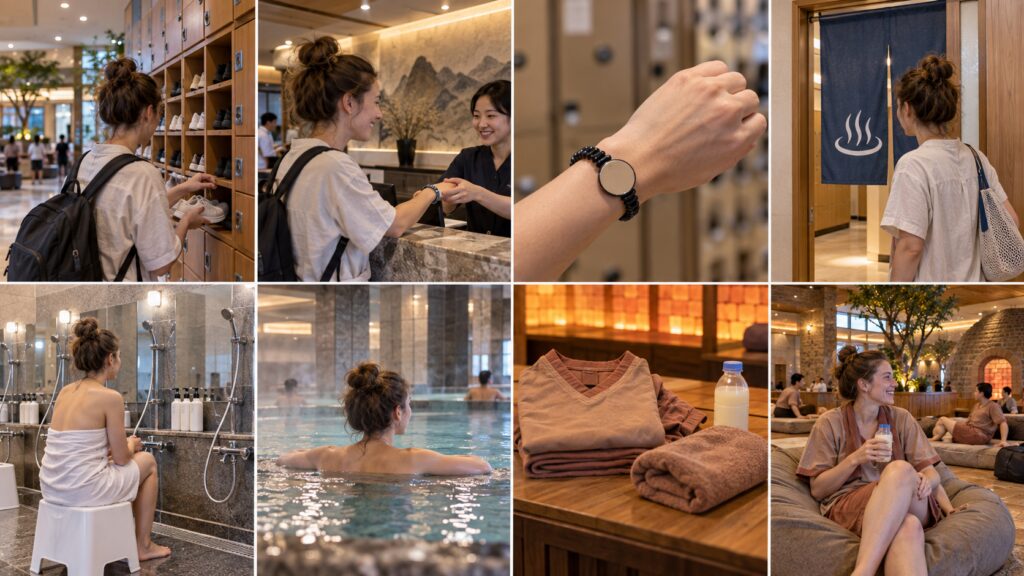
Every facility is slightly different, but a typical visit goes something like this.
First, remove your shoes and store them in the designated shoe locker. At the counter, pay the admission fee and receive whatever the facility uses for access, such as a locker key or wristband. If the jjimjilbang area is included, you may also receive sauna clothes and towels.
Next, go to the appropriate changing room and store your belongings.
If you plan to use the baths, undress and enter the bathing area.
Before getting into a shared bath, wash and rinse your body thoroughly.
After bathing, dry off, return to the changing area and put on the provided jjimjilbang clothes.
You can then head to the communal area and explore the heated rooms and relaxation spaces.
The system can seem complicated when described all at once. In practice, following the signs and watching how the space is organized usually makes the sequence easy to understand.
Do You Have to Be Naked at a Jjimjilbang?
This is probably the question that worries international visitors most.
In the gender-separated bathing area, nude bathing is the usual practice. Swimsuits are generally not part of the traditional public-bath experience.
But you are not walking around the entire jjimjilbang naked.
In communal mixed-gender areas, visitors wear the sauna clothes provided by the facility.
If public nudity makes you uncomfortable, check the facility before visiting rather than assuming every Korean spa works in exactly the same way. Korea now has everything from traditional neighborhood bathhouses to modern spa complexes and private bathing options.
Basic Jjimjilbang Etiquette
You do not need to memorize dozens of Korean rules before entering a jjimjilbang. A few basics will take you a long way.
Wash before entering the bath. Shared baths are for soaking after you are clean, not for washing yourself.
Keep long hair out of the bathwater. Tie it up if necessary.
Respect privacy. Avoid taking photos or using a phone in changing and bathing areas.
Wear the provided clothes in communal areas. The shared sauna and relaxation floors are different from the nude bathing zone.
Keep the atmosphere relaxed. People may be talking, eating or spending time with family, but others may also be resting.
And always pay attention to posted instructions. Temperatures, facilities, operating rules and restrictions vary from one jjimjilbang to another.
What Do People Do in the Heated Rooms?
The “jjimjil” part of the experience comes from spending time in heated rooms.
Larger facilities may offer several rooms with different temperatures and materials. Some modern complexes also have cool rooms where visitors can rest between hotter spaces.
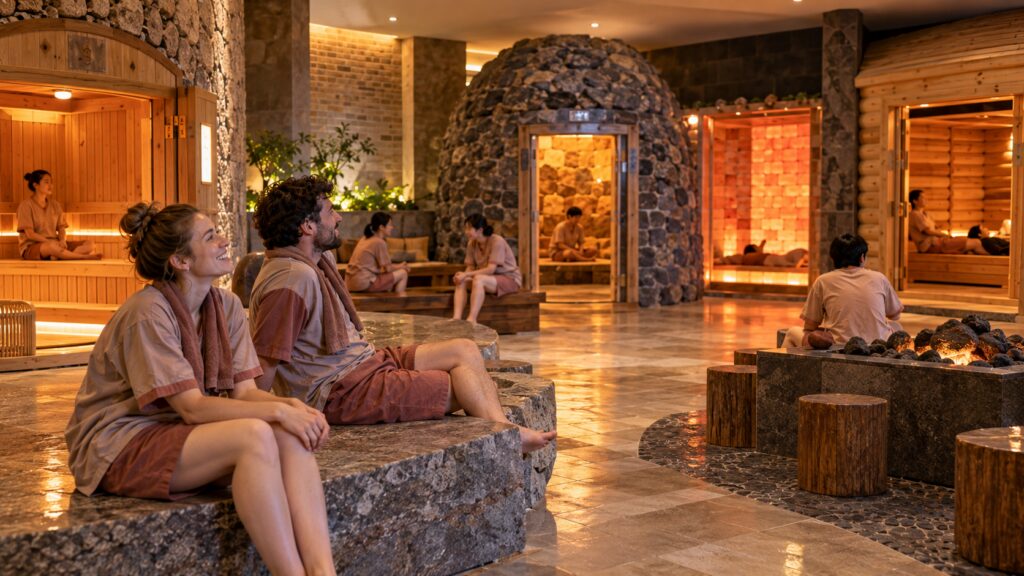
There is no reason to treat the hottest room as a challenge.
Use the rooms according to your comfort level, take breaks and follow the facility’s safety instructions. If you feel dizzy, weak or unwell, leave the heated room.
For many Koreans, the point is not to endure as much heat as possible. It is simply to relax.
Why Are Eggs and Sikhye Associated With Jjimjilbangs?
Food is part of the classic jjimjilbang image.
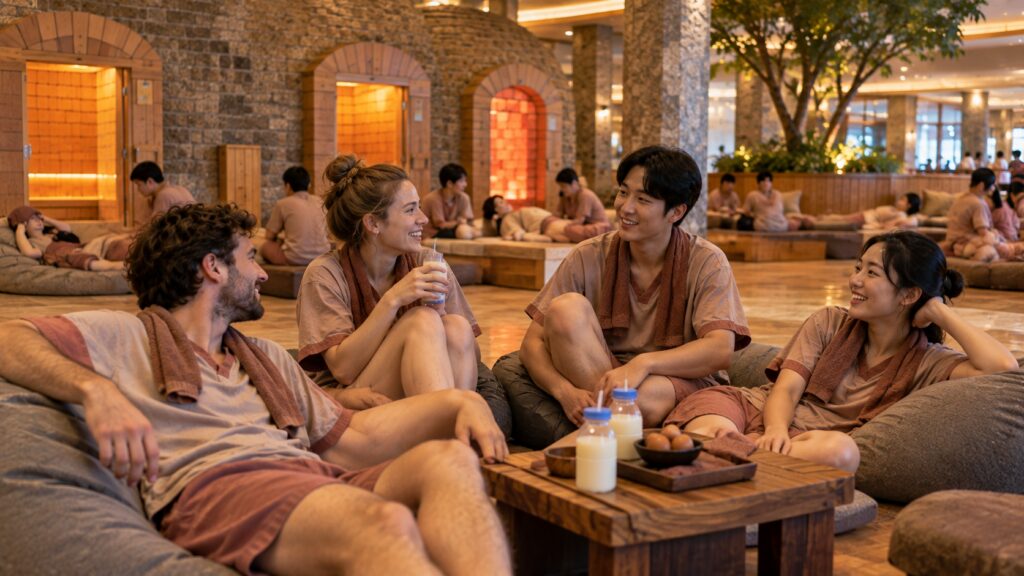
Two items strongly associated with the experience are baked eggs and sikhye, a sweet Korean rice drink usually served cold.
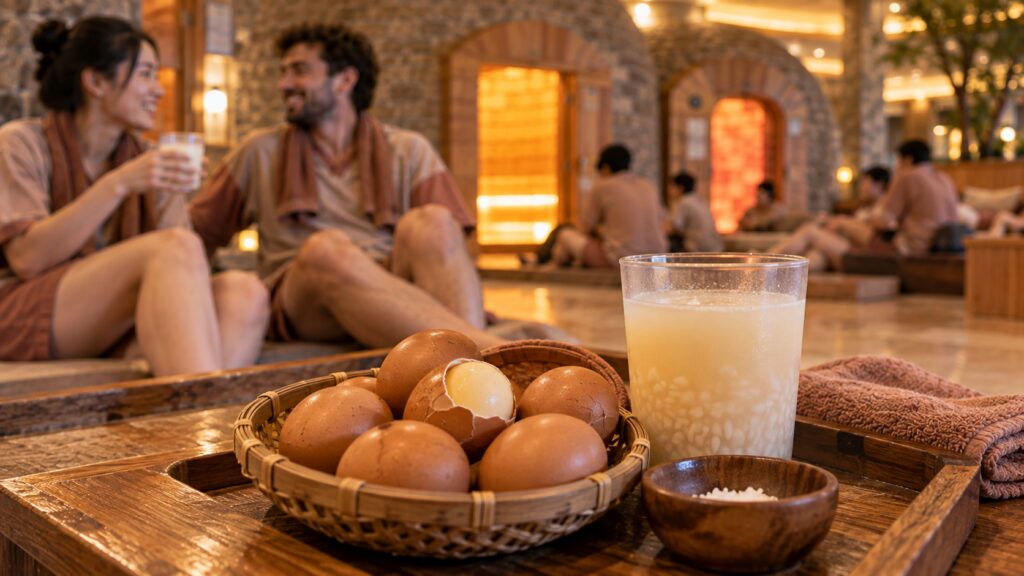
Many larger facilities go much further, offering snack bars or cafeterias where visitors can order dishes such as ramyeon, rice dishes or Korean comfort food.
That is one reason a large jjimjilbang can feel less like a quick sauna visit and more like somewhere to spend several hours.
For travelers interested in Korean food culture, even the snack break can become part of the experience.
If you enjoy discovering Korea through everyday food, a Korean convenience store offers another surprisingly useful window into how locals eat, snack and grab quick meals.
Can You Sleep Overnight at a Jjimjilbang?
This is where old travel advice can be misleading.
Jjimjilbangs have long been associated with late-night stays, and some facilities still operate 24 hours. But not every jjimjilbang is open overnight, and opening hours vary considerably.
Some modern facilities close in the evening, while others operate around the clock.
Do not assume that a jjimjilbang can replace a hotel simply because an older guidebook says so. Check the current operating hours and overnight policy of the specific facility before you go.
What Should You Bring?
You usually do not need much.
A small toiletries kit can be useful if you prefer your own shampoo, conditioner or skincare products. Bringing a hair tie is a good idea if you have long hair.
You may also want clean underwear and basic skincare for after bathing.
Exactly what is provided varies by facility, so check before visiting if there is something you consider essential.
And leave the elaborate spa-day packing list at the hotel. Part of the appeal of a jjimjilbang is its simplicity.
What About Tattoos?
Tattoo policies can vary by facility.
Korea’s attitude toward tattoos has changed considerably, but that does not mean every bathhouse has the same policy. A small neighborhood sauna and a large tourist-oriented spa complex may handle tattoos differently.
If you have large or highly visible tattoos, checking the individual facility’s rules in advance is the safest approach.
Is a Jjimjilbang the Same as a Luxury Korean Spa?
Not necessarily.
The word can describe very different experiences.
A neighborhood jjimjilbang might be inexpensive, practical and relatively simple. A large modern spa complex may offer elaborate themed rooms, pools, restaurants and entertainment facilities at a much higher price.
For example, Korea Tourism Organization listings show traditional sauna facilities with relatively modest admission prices as well as large contemporary spa complexes with significantly higher fees.
So rather than asking whether a jjimjilbang is “cheap” or “luxurious,” it is better to ask what type of jjimjilbang you are considering.
Is a Jjimjilbang Worth Trying on a Trip to Korea?
If you are comfortable with the bathing customs, a jjimjilbang offers something that many polished tourist attractions cannot: an experience connected to ordinary Korean leisure culture.
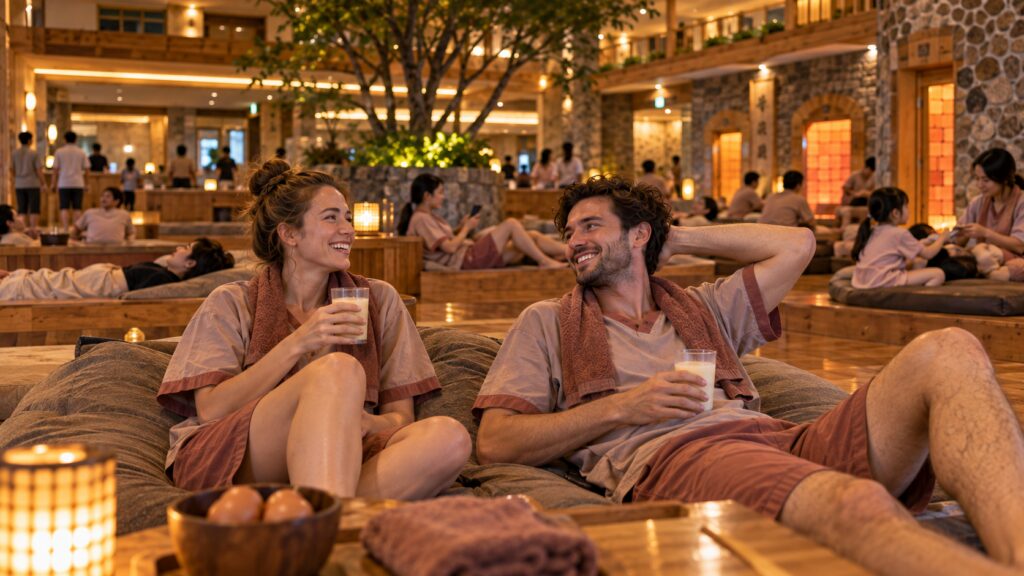
You can bathe, sit in a heated room, stretch out on the floor, drink cold sikhye and watch families and friends spend an unhurried afternoon together.
You do not need to understand every custom before walking through the door.
You just need to remember the basic rhythm:
wash first, respect the bathing area, change into the provided clothes for communal spaces, and follow the rules of the individual facility.
Once that makes sense, a Korean jjimjilbang becomes much less intimidating — and much easier to enjoy.
Frequently Asked Questions About Korean Jjimjilbangs
Do you have to be naked at a Korean jjimjilbang?
In the gender-separated bathing areas, nude bathing is generally the norm. In communal jjimjilbang areas, visitors typically wear the sauna clothes provided by the facility.
Can men and women use a jjimjilbang together?
The bathing and changing areas are separated by gender, while many communal sauna and relaxation areas can be shared by men and women while wearing the provided clothing.
Can foreigners go to a jjimjilbang in Korea?
Yes. Jjimjilbangs are widely used by both Koreans and international visitors. However, facilities, policies and English-language assistance vary, so checking current information before visiting is useful.
Can you sleep overnight at a jjimjilbang?
Some facilities operate 24 hours and may allow overnight resting, but many do not. Always check current opening hours and overnight policies rather than assuming every jjimjilbang stays open all night.
What should I bring to a jjimjilbang?
You generally need very little. Personal toiletries, a hair tie for long hair, clean underwear and your preferred skincare products can be useful. What the facility provides varies.
What do people eat at a jjimjilbang?
Baked eggs and sikhye, a sweet Korean rice drink, are two foods strongly associated with jjimjilbang culture. Larger facilities may also have snack bars or restaurants serving full meals.
How much does a Korean jjimjilbang cost?
Admission prices vary by facility, location and the services included. Some bathhouses charge separately for access to communal jjimjilbang areas, while larger spa complexes may have different rates for weekdays, weekends or extended stays. Check the facility’s current admission options before visiting.
Sources & Further Reading
Korea Tourism Organization — Supsok Hanbang Land, a traditional Korean jjimjilbang in Seoul
Korea Tourism Organization — Wellness Escape Near Incheon International Airport
Seoul Tourism Organization — Riverside Spa Land