
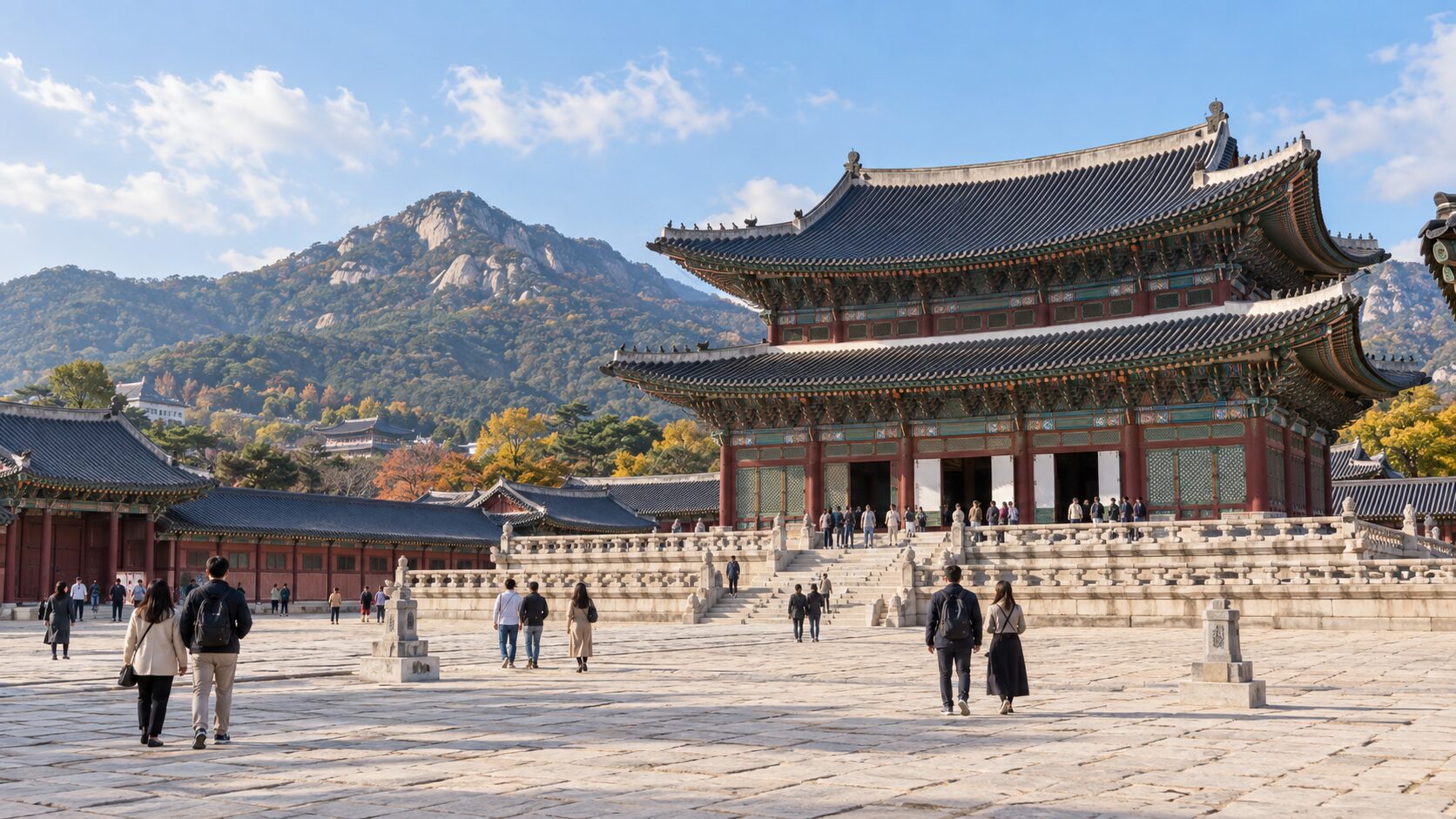
Gyeongbokgung Palace is one of those Seoul landmarks that appears on almost every first-time itinerary — but visiting it is more rewarding when you know a few practical details before you arrive.
The palace is large enough to deserve more than a quick photo at the main gate. Inside, broad courtyards, royal halls, pavilions and gardens offer a very different side of Seoul from the shopping districts and cafés just a few subway stops away.
If you are planning your first visit, here is what to know about admission, opening hours, hanbok, the guard ceremony, getting there and combining Gyeongbokgung with nearby historic neighborhoods.
What Is Gyeongbokgung Palace?
Gyeongbokgung was the principal royal palace established early in the Joseon Dynasty. Today, it is the largest of Seoul’s major royal palace complexes and one of the city’s best-known historic sites.
Rather than thinking of it as a single building, picture a large palace compound.
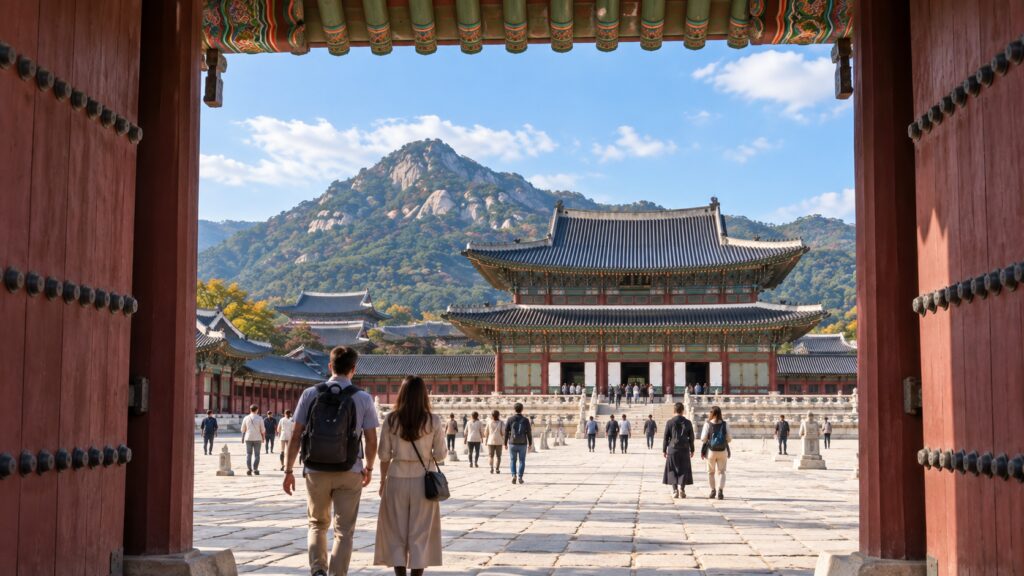
After entering through the Gwanghwamun area, visitors move through a sequence of gates, ceremonial courtyards, royal halls and quieter garden spaces.
Among the best-known places inside are Geunjeongjeon, the main throne hall, and Gyeonghoeru, a pavilion standing beside a large pond. Hyangwonjeong and its surrounding pond offer another, more intimate palace landscape.
For first-time visitors, the appeal is not only individual buildings. It is the contrast between the scale and symmetry of the palace grounds, the mountains behind them and the modern city immediately outside.
Is Gyeongbokgung Palace Worth Visiting?
For most first-time visitors to Seoul, yes — especially if you are interested in Korean history, architecture, photography or traditional culture.
Gyeongbokgung is also particularly easy to combine with other attractions in historic central Seoul.
Bukchon Hanok Village lies nearby, while the Gwanghwamun area, museums and traditional neighborhoods can all fit naturally into the same part of a Seoul itinerary.
That makes the palace useful even when you have limited time: instead of traveling across the city for one attraction, you can build several experiences into one day.
How Much Does It Cost to Enter Gyeongbokgung?
The regular adult admission fee is currently 3,000 won.
Admission rules and exemptions vary by age and eligibility, so it is worth checking the official palace information before your visit if you qualify for a discount or free admission.
One rule that particularly interests international travelers is the hanbok free-admission policy.
Visitors wearing qualifying hanbok can enter Gyeongbokgung without paying the standard admission fee.
Can You Enter Gyeongbokgung for Free Wearing Hanbok?
Yes. Visitors wearing hanbok that meets the official guidelines are eligible for free admission.
This is one reason hanbok rental shops are so common around the palace area.
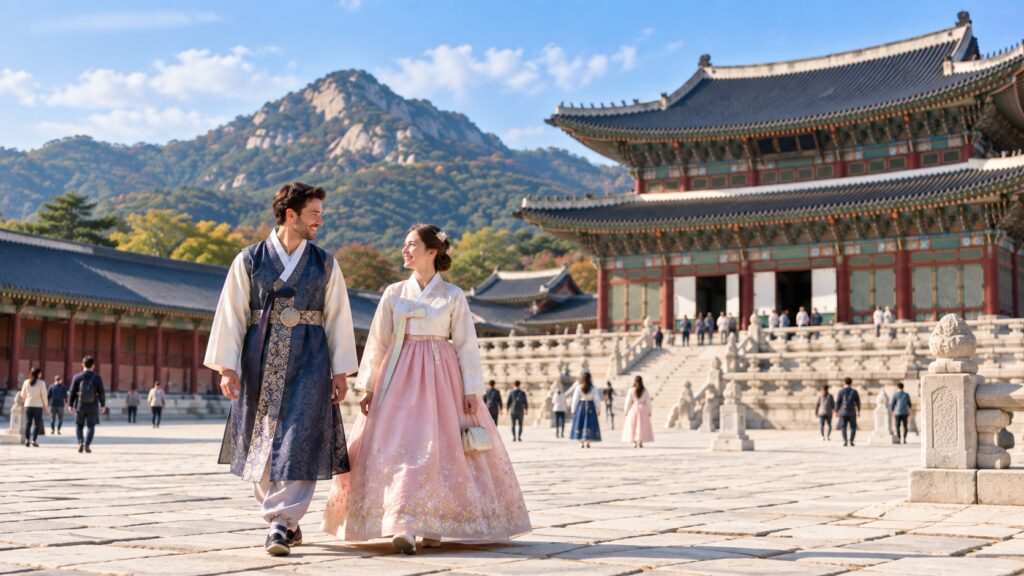
However, renting hanbok should not be viewed only as a way to save a 3,000-won ticket. For many travelers, the larger appeal is spending part of the day exploring a historic palace while wearing traditional Korean clothing.
Rental packages vary in duration, clothing style, accessories and hairstyling, so it helps to choose your rental before building the rest of your itinerary.
What Are Gyeongbokgung Palace Opening Hours?
Regular opening hours change by season.
November to February: 9:00 a.m.–5:00 p.m.
March to May: 9:00 a.m.–6:00 p.m.
June to August: 9:00 a.m.–6:30 p.m.
September to October: 9:00 a.m.–6:00 p.m.
Last admission is one hour before closing.
Gyeongbokgung is normally closed on Tuesdays. If the regular closing day falls on a public or substitute holiday, the closure can move to the next applicable non-holiday.
Because schedules can change for special events or maintenance, check the official palace website shortly before visiting.
How Long Should You Spend at Gyeongbokgung?
For a first visit, around two hours is a practical starting point.
You can move through the major areas faster, but rushing from Gwanghwamun to the main halls and straight back out misses much of what makes the palace interesting.
Allow more time if you plan to:
- wear hanbok and take photos;
- watch the guard ceremony;
- explore the quieter northern sections;
- visit one of the nearby museums; or
- continue toward Bukchon afterward.
In warm weather, remember that the palace includes large open courtyards with limited shade. Comfortable walking shoes and water can make a noticeable difference.
What Should You See Inside Gyeongbokgung?
You do not need to identify every building to enjoy the palace.
For a first visit, concentrate on a few major spaces.
Geunjeongjeon Hall
Geunjeongjeon is the palace’s main throne hall and one of the most imposing spaces in the complex.
The large stone courtyard in front of it helps communicate the ceremonial scale of royal life more clearly than a photograph usually can.
From September 2 through October 31, 2026, access to the raised stone platform (woldae) at Geunjeongjeon is restricted to help protect its stone structures. Visitors can still appreciate the hall from the permitted viewing areas.
Gyeonghoeru Pavilion
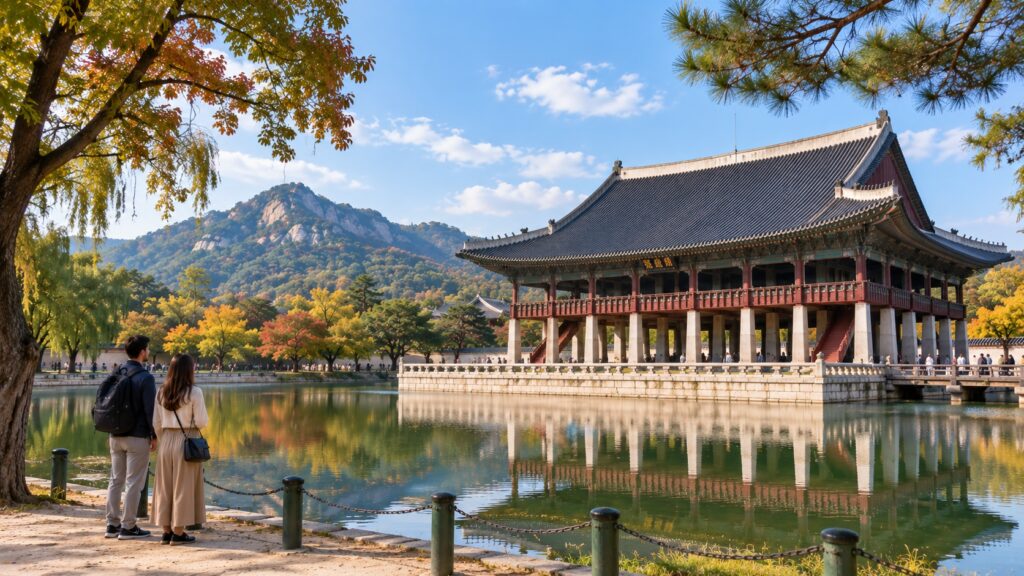
Gyeonghoeru is one of Gyeongbokgung’s most recognizable sights.
Built beside a large pond, the pavilion creates one of the palace’s most distinctive landscapes and is worth including even on a shorter visit.
Hyangwonjeong Pavilion
Farther into the palace grounds, Hyangwonjeong offers a different atmosphere from the grand ceremonial halls near the entrance.
The pavilion, pond and surrounding greenery make this part of the palace feel quieter and more landscape-oriented.
Rather than trying to photograph everything, leave some time simply to walk between these spaces. The changing scale of the palace is part of the experience.
What Is the Gyeongbokgung Guard Changing Ceremony?
One of the easiest cultural events to add to a visit is the Changing of the Royal Guard Ceremony near Gwanghwamun.
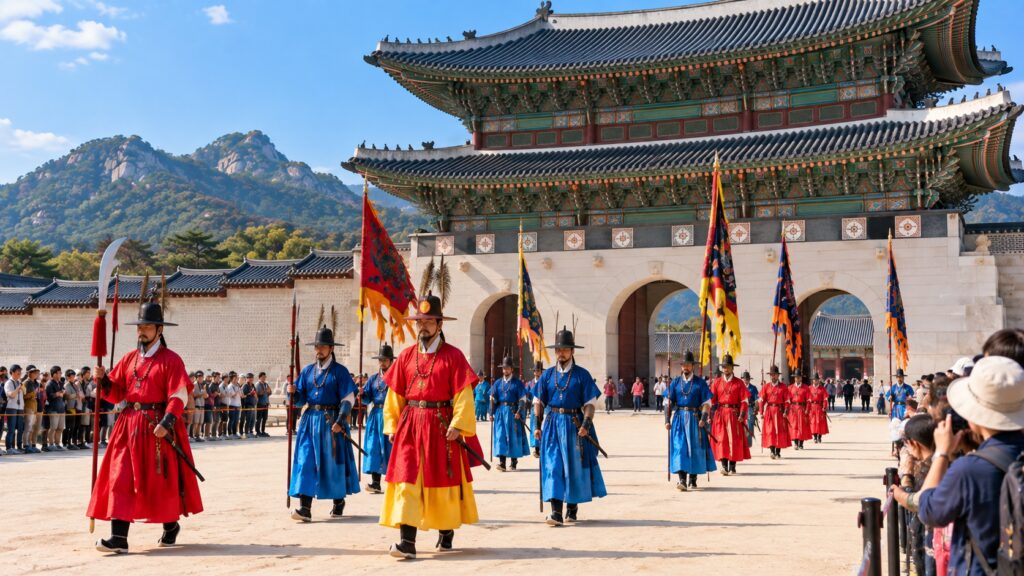
The current schedule lists ceremonies at 10:00 a.m. and 2:00 p.m., except Tuesdays.
The reenactment features guards in historical uniforms and traditional ceremonial elements inspired by royal palace guard duties during the Joseon period.
Weather and operational conditions can affect the schedule, so treat the ceremony time as something to verify rather than something to build an inflexible day around.
If you want to see it, arriving before a scheduled ceremony and then entering the palace afterward is an efficient way to plan your visit.
How Do You Get to Gyeongbokgung Palace?
The subway is usually the simplest option for international visitors.
Gyeongbokgung Station on Seoul Subway Line 3 provides convenient access, with Exit 5 commonly used for the palace.
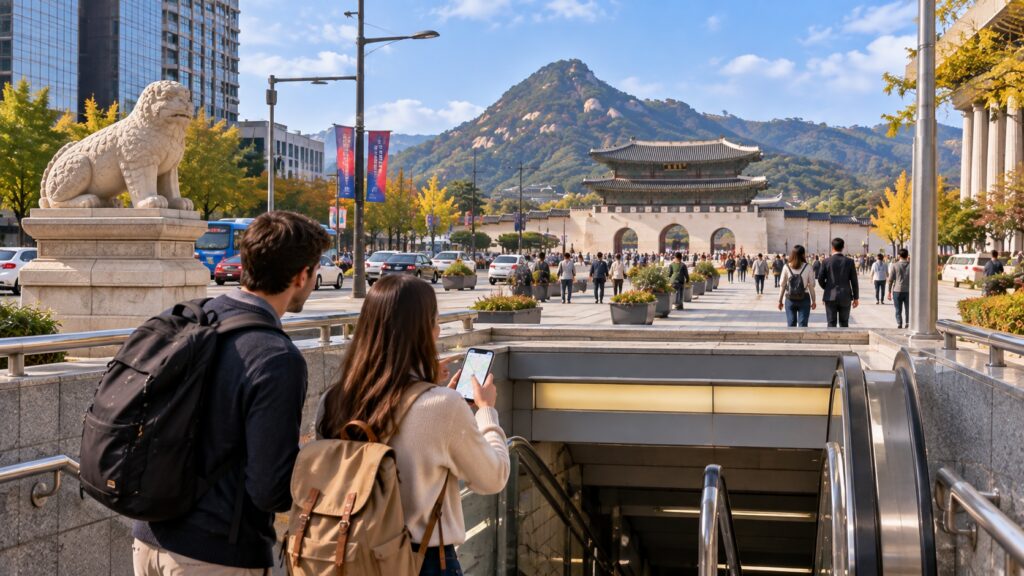
Gwanghwamun Station on Line 5 is another option if you are approaching through the Gwanghwamun area.
If this is your first trip to Seoul, understanding transportation cards, transfers and subway navigation before the day will make trips between historic Seoul and other neighborhoods much easier.
Can You Visit Gyeongbokgung and Bukchon on the Same Day?
Yes. In fact, they make a natural combination.
A simple first-time itinerary could look like this:
Morning: Gyeongbokgung Palace
Late morning or lunch: surrounding Gwanghwamun or historic district
Afternoon: Bukchon Hanok Village
If you rent hanbok, you can adjust the order around your rental period.
Remember, however, that Gyeongbokgung and Bukchon are very different environments.
Gyeongbokgung is a major heritage attraction designed to receive visitors. Bukchon is also a living residential neighborhood, where visitor rules and consideration for residents matter.
Treating them as two different experiences makes for a better day.
Visiting Gyeongbokgung at Night in Fall 2026
If you are in Seoul right now, there is a seasonal option worth knowing about.
The 2026 fall nighttime viewing runs from September 2 through October 2, 2026, from 7:00 p.m. to 9:30 p.m., with last admission at 8:30 p.m. It is not held on Mondays or Tuesdays.
Foreign visitors can purchase same-day tickets at the Gwanghwamun ticket office by presenting a passport or other valid identification. Official on-site sales are limited to 300 tickets per day, with a maximum of two tickets per person, so availability is not guaranteed.
Night openings are special events rather than the palace’s normal year-round schedule, so travelers reading this guide later should check the official Gyeongbokgung website for current dates and ticket rules.
What Should First-Time Visitors Know?
The palace may look compact on a map, but expect to walk.
Seoul’s summer heat, winter cold and seasonal rain can also change the experience considerably because much of the palace visit takes place outdoors.
If you are visiting in autumn, our 2026 Korea fall foliage guide explains the expected peak dates and how Seoul’s autumn timing compares with destinations such as Seoraksan, Naejangsan and Hallasan.
A few practical habits help: wear comfortable shoes, check the weather, avoid arriving just before last admission and give yourself enough time to explore beyond the first courtyard.
If photography is important to you, early in the day can feel less rushed than arriving during the busiest part of a sightseeing itinerary.
And if you are wearing hanbok, remember that you are visiting a cultural heritage site rather than a photo studio. Enjoy the experience, but leave space for other visitors and follow any restrictions around buildings and protected areas.
A Good Way to Plan Your First Visit
Gyeongbokgung works best as part of a wider historic-Seoul day rather than as an isolated stop.
You might start at the palace, continue toward Bukchon, and then finish in Insadong for traditional crafts, galleries, souvenirs or tea. Alternatively, combine a hanbok rental with a slower palace visit and leave the rest of the area for another morning.
There is no need to see every corner.
For a first visit, understanding the main spaces, allowing enough walking time and leaving room to enjoy the atmosphere will usually give you more than trying to turn the palace into a checklist.
Frequently Asked Questions
Is Gyeongbokgung Palace closed on Tuesdays?
Yes. Gyeongbokgung is normally closed on Tuesdays. When the regular closing day coincides with a public or substitute holiday, the closure schedule can change, so check the official website before visiting.
How much is Gyeongbokgung Palace admission?
Regular adult admission is currently 3,000 won. Age-based and other exemptions apply, so check the official admission rules if you may qualify.
Is Gyeongbokgung free if you wear hanbok?
Visitors wearing hanbok that meets the official palace guidelines can receive free admission.
How long do you need at Gyeongbokgung Palace?
Around two hours is a useful starting point for a first visit. Allow longer if you plan to wear hanbok, watch the guard ceremony, visit museums or explore the palace more slowly.
What subway station is closest to Gyeongbokgung?
Gyeongbokgung Station on Seoul Subway Line 3 is one of the most convenient options, with Exit 5 commonly used to approach the palace. Gwanghwamun Station on Line 5 is another practical choice.
Can you visit Gyeongbokgung and Bukchon on the same day?
Yes. The two are close enough to combine comfortably, but remember that Bukchon is a residential neighborhood and has visitor rules that differ from those at the palace.
Sources & Further Reading
Korea Heritage Service — Gyeongbokgung Palace Opening Hours
Korea Heritage Service — Palace Admission Fees
VISITKOREA — Gyeongbokgung Palace
Visit Seoul — Changing of the Royal Guard at Gyeongbokgung Palace
Korea Heritage Service — 2026 Fall Gyeongbokgung Palace Nighttime Viewing