
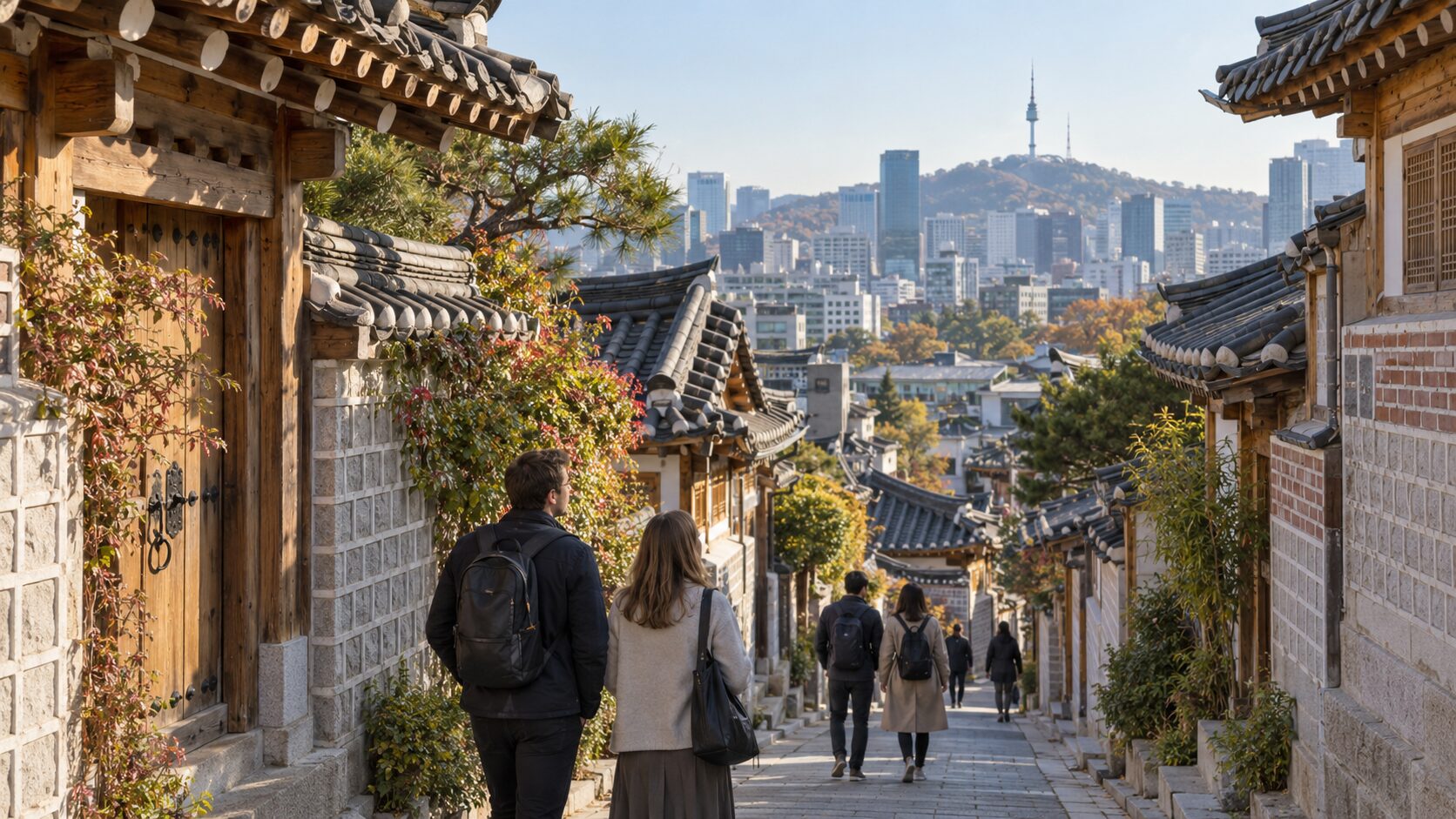
Bukchon Hanok Village is one of the most recognizable places to see traditional Korean architecture in Seoul. Its tiled roofs, narrow alleys and hillside views make it an easy addition to a first trip to the city.
But there is something visitors should understand before going: Bukchon is not an open-air museum. It is a neighborhood where people actually live.
That distinction has become even more important in recent years. Seoul has introduced visitor restrictions in part of Bukchon to reduce the impact of tourism on residents.
Here is what to know before you visit, including the Red Zone rules, what to see, how to behave respectfully and how Bukchon fits into a day of exploring central Seoul.
What Is Bukchon Hanok Village?
Bukchon is a historic neighborhood in Jongno-gu, located between Gyeongbokgung Palace and Changdeokgung Palace.
The area is known for its concentration of hanok, traditional Korean houses recognizable by features such as tiled roofs, wooden structures and courtyards.
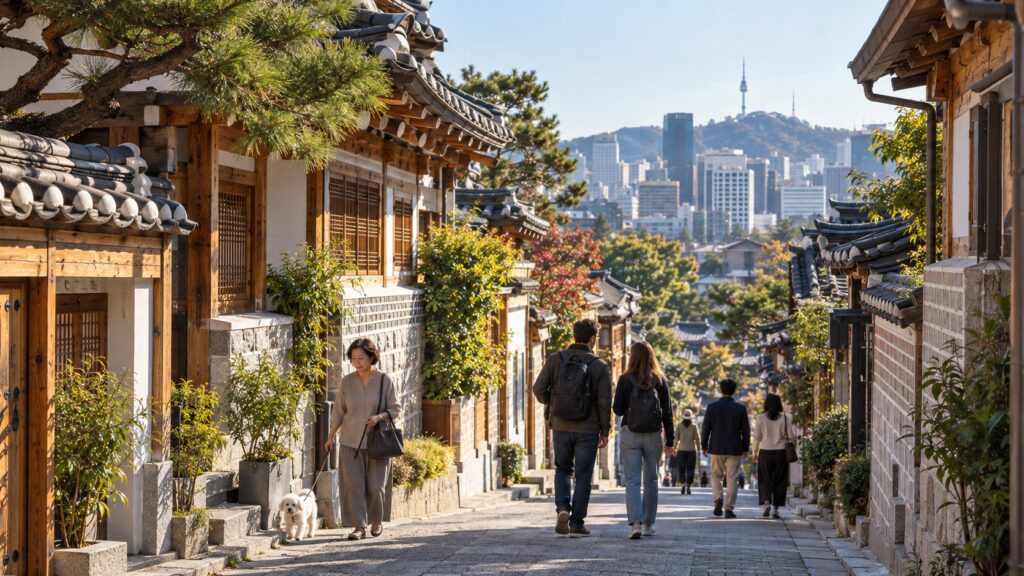
Unlike a reconstructed folk village created primarily for visitors, Bukchon remains part of the living city. Traditional houses stand alongside workshops, galleries, cultural spaces, cafes and other businesses.
That mix is part of what makes the neighborhood interesting. Bukchon is not simply a preserved image of Korea’s past. It is a place where older architecture and contemporary Seoul continue to exist side by side.
The Most Important Visitor Rule: Know the Bukchon Red Zone
One of the easiest mistakes travelers can make is assuming that all of Bukchon follows the same visiting-hour restriction.
It does not.
Seoul has designated parts of Bukchon as a Special Management Area, with different zones receiving different levels of visitor management.
The most important for tourists is the Red Zone around Bukchon-ro 11-gil.
What Are the Red Zone Visiting Hours?
Tourists may visit the designated Red Zone between:
10:00 a.m. and 5:00 p.m.
Tourist visits are restricted from:
5:00 p.m. to 10:00 a.m. the following day.
The rule is enforced, and violations can result in a KRW 100,000 fine.
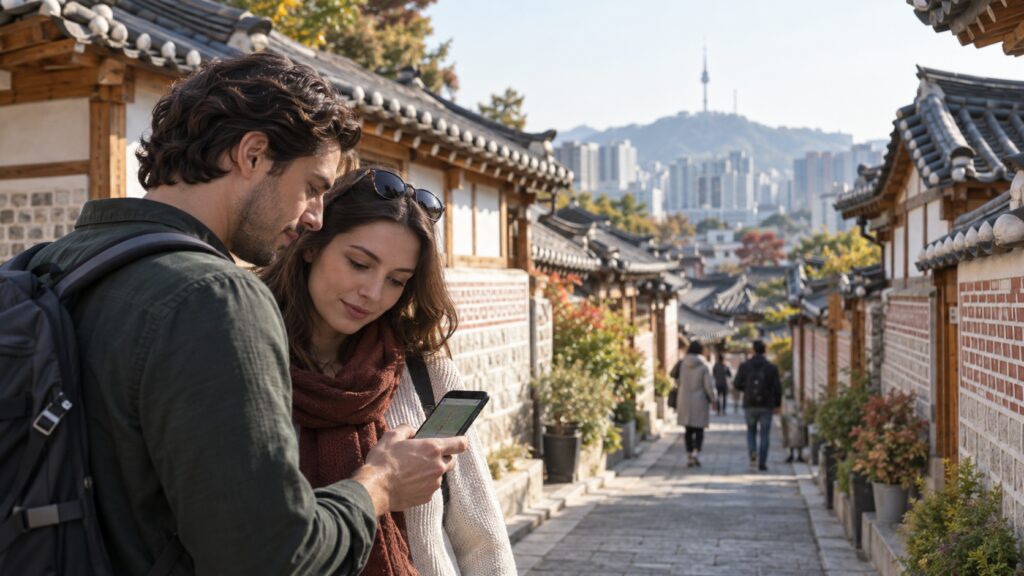
This does not mean that the entire Bukchon neighborhood simply “closes at 5 p.m.” The restriction specifically applies to the designated Red Zone.
That distinction is worth checking when planning your route, especially if Bukchon is one stop in a longer day around Jongno.
Why Does Bukchon Have Visitor Restrictions?
The answer becomes clearer when you walk through the neighborhood.
Many of the beautiful hanok-lined alleys seen in travel photos are also residential streets. People live behind those doors and windows.
Large tour groups, repeated photography, noise and heavy foot traffic can therefore affect everyday life in ways that are different from tourism at a palace, museum or purpose-built attraction.
The restrictions are intended to reduce that pressure while allowing visitors to continue experiencing the neighborhood.
There is also a designated area where chartered tourist buses are restricted. Enforcement of those bus restrictions began in 2026, another sign of Seoul’s effort to manage tourism in Bukchon rather than treat the area as an unlimited sightseeing zone.
For independent travelers, the practical lesson is simple: visit slowly, keep your voice down and remember that the most photogenic alley may also be someone’s front door.
What to See in Bukchon Hanok Village
Bukchon is best experienced as a neighborhood walk rather than as a checklist of attractions.
The hanok-lined alleys are the obvious draw, but looking only for one famous photo spot can miss much of what makes the area interesting.
As you walk, you can see how traditional rooflines, walls and narrow streets interact with modern Seoul. Small cultural spaces, workshops, galleries and businesses operating in or around hanok add another layer to the neighborhood.
The official Bukchon guide also introduces historical and cultural sites throughout the wider area, making it possible to explore beyond the most photographed streets.
Allow yourself time to walk rather than rushing from one viewpoint to another.
How to Visit Bukchon Respectfully
“Silent tourism” is a useful idea to keep in mind in Bukchon.
You do not literally need to remain silent, but visitors are asked to minimize noise and respect residents’ privacy.
A few rules make a big difference:
- Keep conversations at a reasonable volume.
- Do not litter.
- Avoid large groups; official visitor guidance recommends groups of no more than 10 people.
- Do not use microphones, megaphones or loudspeakers.
- Do not photograph or film inside private homes, even if a door happens to be open.
- Do not block narrow alleys while taking photos.
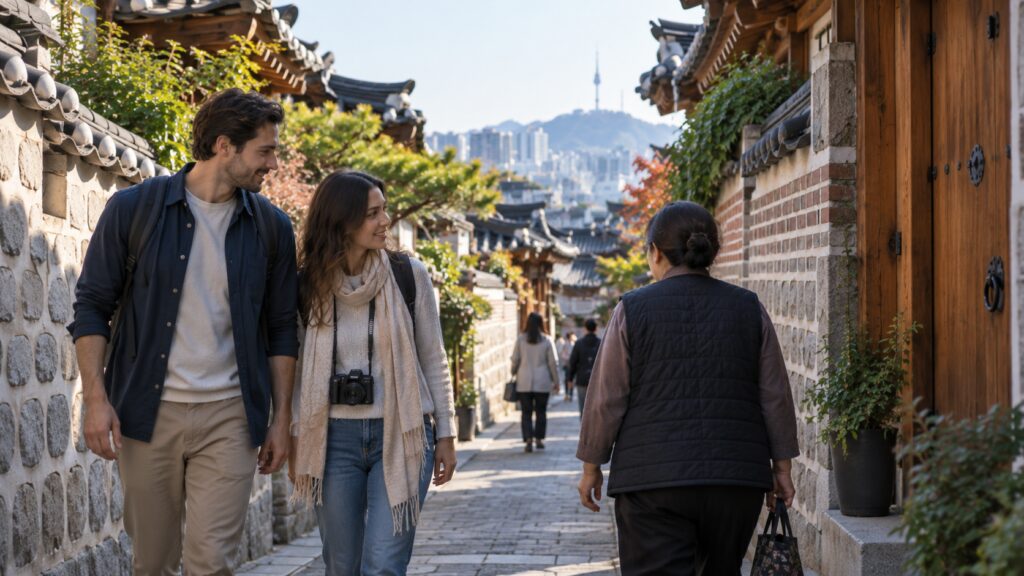
The best photographs of Bukchon do not require treating the neighborhood like a private photo studio.
Walk, look around, take a few considerate photos and leave space for residents and other pedestrians to pass.
How to Get to Bukchon Hanok Village
For most travelers, Anguk Station on Seoul Subway Line 3 is the easiest starting point.
Visit Seoul currently lists Anguk Station Exit 3 as a convenient access point, with the village area roughly a short walk away.
From Anguk, you can explore the wider Bukchon area on foot.
Comfortable shoes are useful. The neighborhood includes slopes, narrow alleys and uneven sections, so Bukchon can involve more walking than its compact appearance on a map might suggest.
If you are combining Bukchon with nearby palaces or Insadong, planning the route as one continuous walking itinerary can save unnecessary backtracking.
How to Get from Seoul Station to Bukchon Hanok Village
From Seoul Station, take Subway Line 1 toward Jongno 3-ga and transfer to Line 3 toward Anguk. Get off at Anguk Station and use Exit 3 to reach the Bukchon area. The village is a short walk from the station, although the exact walking time depends on which part of Bukchon you plan to visit.
If you are heading to the designated Red Zone, plan your arrival within the permitted tourist visiting hours of 10:00 a.m. to 5:00 p.m. Check your route before leaving, as subway services and local access conditions can change.
If you are new to Seoul’s public transportation system, our Seoul subway guide explains how to use T-money, the Climate Card, transfers and subway ticket machines.
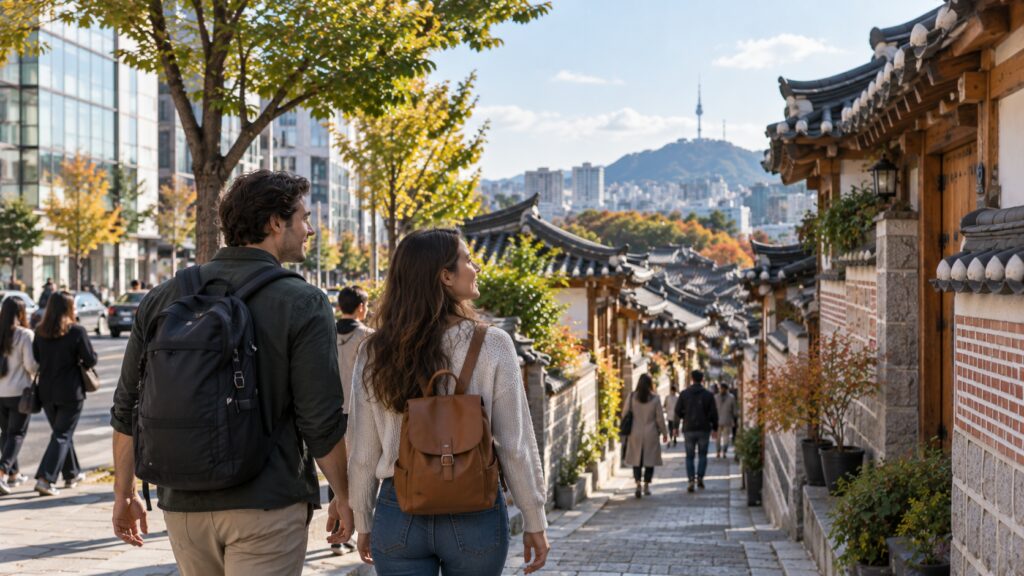
Can You Wear Hanbok in Bukchon?
Yes. Seeing visitors wearing hanbok around the historic neighborhoods of Jongno is common, particularly when they are also visiting nearby royal palaces.
However, wearing hanbok does not change Bukchon’s residential character. The same rules about noise, private property and restricted visiting hours still apply.
If wearing hanbok is part of your Seoul itinerary, our hanbok rental guide near Gyeongbokgung explains what to expect when renting one, how long to allow and what to consider before choosing a rental.
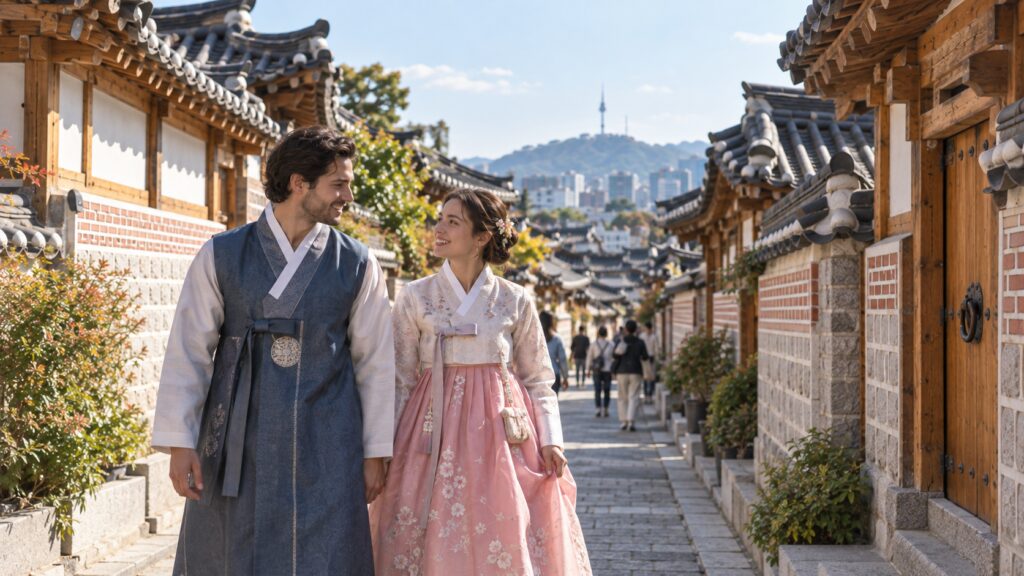
Bukchon can then become one part of a broader traditional Seoul experience rather than simply a backdrop for photos.
What Else Can You Visit Near Bukchon?
One of Bukchon’s biggest advantages is its location.
Gyeongbokgung Palace lies to the west, while Changdeokgung Palace is nearby to the east. Insadong and Samcheong-dong can also fit naturally into the same part of a Seoul itinerary.
This makes it possible to build a day around several different sides of Korean culture: royal architecture, hanok neighborhoods, traditional crafts, contemporary cafes and walkable historic streets.
Do not try to squeeze everything into a short stop, though. Bukchon is more enjoyable when it is treated as a place to walk through carefully rather than something to “complete.”
When Is the Best Time to Visit Bukchon?
For the Red Zone, the first consideration is simple: visit within the permitted tourist hours of 10:00 a.m. to 5:00 p.m.
Within that window, earlier visits can make it easier to walk the alleys at a relaxed pace before the busiest part of the day.
Weather matters too. Bukchon is primarily an outdoor walking experience, so extreme summer heat, heavy rain or icy winter conditions can change how comfortable the slopes and alleys feel.
Whatever time you choose, check the latest official visitor information before your trip because access rules and local conditions can change.
Is Bukchon Hanok Village Worth Visiting?
Bukchon is worth considering if you want to see how traditional Korean architecture exists within modern Seoul rather than only inside a palace or museum setting.
Its value is not just in getting a photograph of tiled rooftops.
The more interesting experience is noticing the relationship between the architecture, narrow streets, cultural spaces and people who continue to live in the neighborhood.
That is also why the new visitor rules matter.
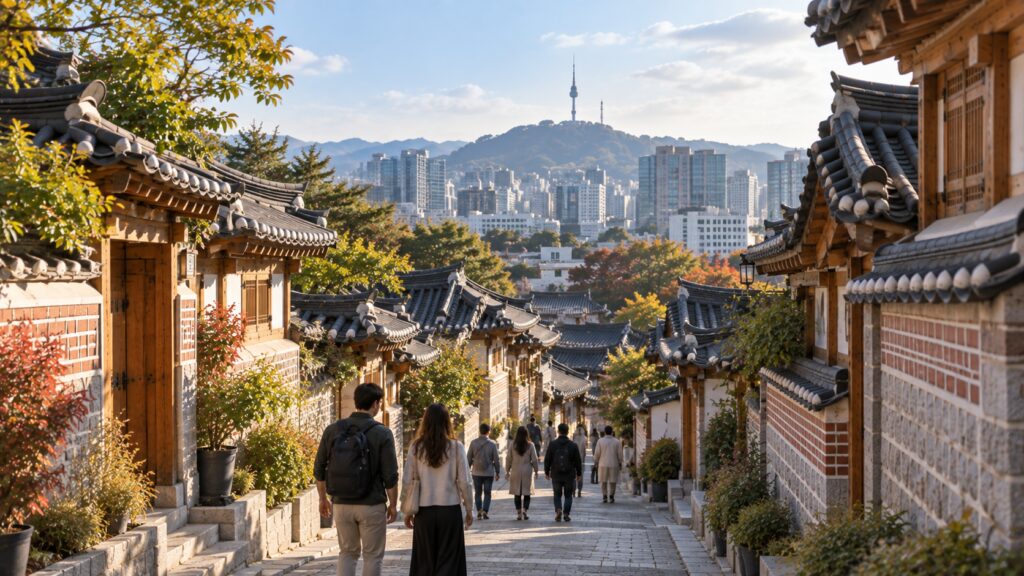
Bukchon is at its best when travelers approach it not as a theme park, but as a living neighborhood that happens to preserve an extraordinary part of Seoul’s architectural landscape.
Visit during the permitted hours, walk slowly and leave the neighborhood as quietly as you found it.
FAQ
Is Bukchon Hanok Village free to visit?
Walking through the public streets of Bukchon does not require a general admission ticket. Individual museums, workshops, cultural programs or private facilities may have their own admission fees or reservation requirements.
What time can tourists visit Bukchon Hanok Village?
Tourist access to the designated Red Zone around Bukchon-ro 11-gil is permitted from 10:00 a.m. to 5:00 p.m. Tourist visits to that zone are restricted from 5:00 p.m. until 10:00 a.m. the following day.
Is all of Bukchon closed after 5 p.m.?
No. The timed tourist-access restriction applies specifically to the designated Red Zone. It is misleading to describe the entire Bukchon neighborhood as simply closing at 5 p.m.
Can tourists wear hanbok in Bukchon?
Yes. Visitors can wear hanbok while exploring the area, but they still need to respect residential privacy, noise guidelines and any access restrictions.
Which subway station is best for Bukchon Hanok Village?
Anguk Station on Seoul Subway Line 3 is one of the most convenient access points. Visit Seoul currently directs visitors toward the village from Exit 3.
Can I take photos in Bukchon?
Photography in public areas is possible, but visitors should respect residents’ privacy. Do not photograph or film inside private homes, even when a door is open, and avoid blocking narrow residential alleys for extended photo sessions.
Sources & Further Reading
Seoul Metropolitan Government — Notice on Restrictions for Tourist Visits to Bukchon Special Management Area
Official information on the Red Zone, restricted tourist visiting hours, fines and chartered-bus restrictions.
Visit Seoul — Bukchon Hanok Village
Official Seoul tourism information covering access, visitor etiquette, transportation and the residential character of Bukchon.
Seoul Hanok Portal — Bukchon Hanok Village Guide
Official guide to Bukchon’s history, cultural spaces, walking routes and hanok heritage.
Visit Seoul — Face to Face with Korean Tradition: Bukchon Hanok Village
Additional official guidance on respectful travel and visitor etiquette in the residential neighborhood.