
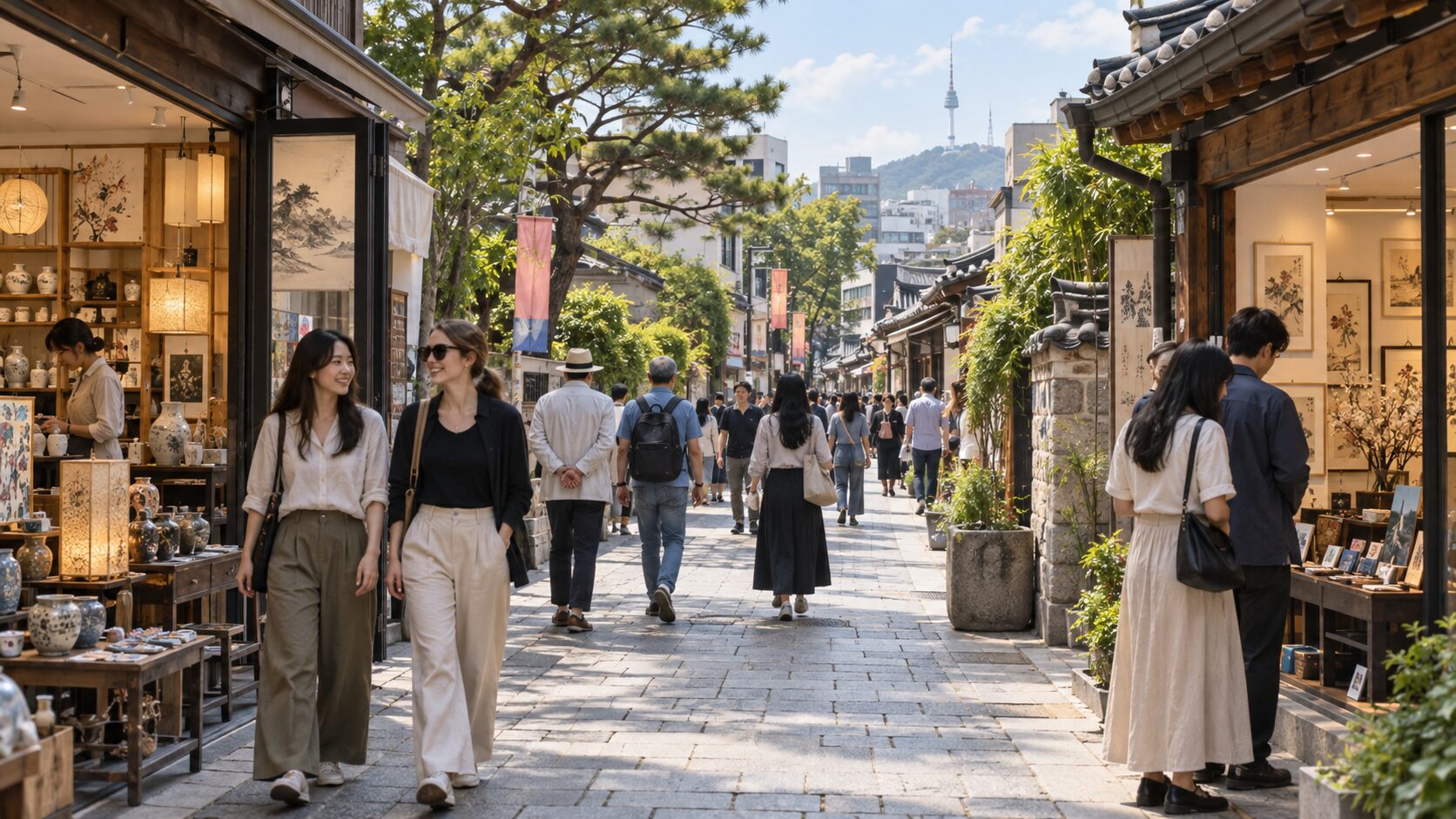
Seoul moves quickly.
One subway stop can take you from glass office towers and beauty stores to palace walls, hanok rooftops and streets lined with traditional crafts.
Insadong sits comfortably between those worlds.
Located in historic central Seoul, the neighborhood is known for Korean crafts, galleries, souvenirs, traditional tea houses and small streets that reward slow exploration. It is also close enough to Gyeongbokgung Palace and Bukchon Hanok Village to become part of a larger day in old Seoul.
But what is actually worth doing in Insadong? What should you buy? And how much time should you allow?
Here is a practical guide for a first visit.
What Is Insadong Known For?
Insadong is one of Seoul’s best-known areas for traditional Korean culture, art and crafts.
The main street, Insadong-gil, is lined with shops and cultural spaces, while smaller side streets lead toward galleries, restaurants, tea houses and other businesses.
What makes the neighborhood interesting is that it is not frozen in the past.
You can find calligraphy materials, ceramics, traditional crafts and antiques alongside contemporary souvenirs, modern interpretations of Korean design and busy cafés.
That mixture makes Insadong especially useful for first-time visitors.
You do not need detailed knowledge of Korean art or history to enjoy it. You can simply walk, browse, stop for tea and pay attention to how traditional design continues to appear in contemporary Seoul.
What Should You Do in Insadong?
There is no single attraction that defines the entire neighborhood.
Insadong works better as a place to explore than as a checklist.
Walk Along Insadong-gil
Start with the main street.
It gives you an immediate sense of the neighborhood and makes it easy to spot craft stores, galleries, souvenir shops, cafés and entrances to smaller alleys.
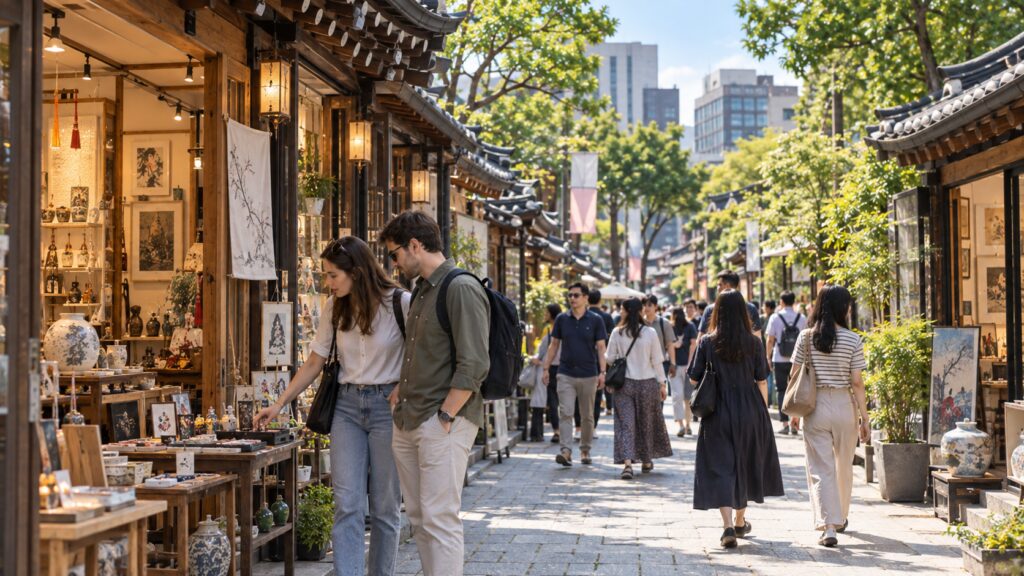
But do not stay only on the main road.
Some of the more interesting parts of Insadong are found by turning into the side streets, where the atmosphere can change surprisingly quickly.
The goal is not to visit every shop.
Give yourself permission to wander.
Explore Ssamzigil
Ssamzigil is one of Insadong’s most recognizable landmarks.
Rather than functioning like a conventional enclosed shopping mall, the building is arranged around a continuous sloping walkway that gradually leads visitors upward.
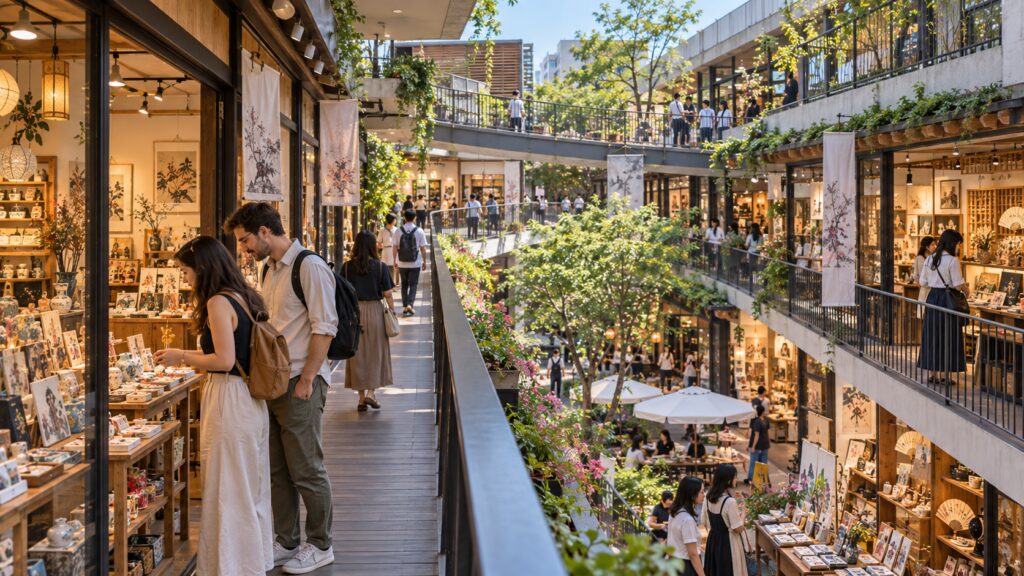
Along the route are small shops selling crafts, accessories, art and design goods, as well as galleries, workshops and places to eat.
It is particularly useful for travelers looking for Korean souvenirs that feel more connected to craft and design than generic tourist merchandise.
The building itself is also part of the experience.
Walk all the way up rather than browsing only the ground floor.
Current tourism information lists Ssamzigil as open from 10:30 a.m. to 8:30 p.m., although individual businesses and operating conditions can change.
What Should You Buy in Insadong?
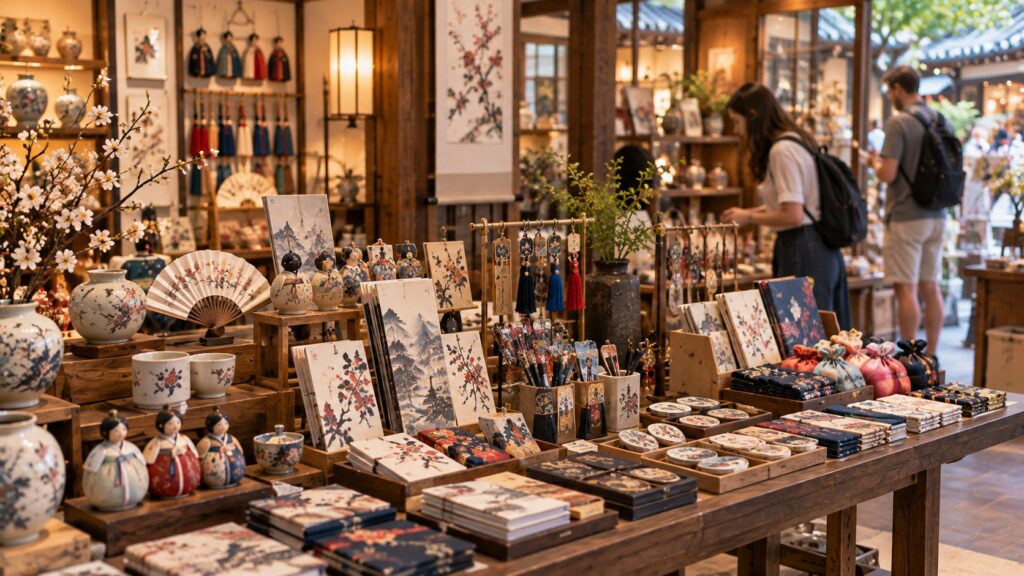
Insadong is one of the easiest places in central Seoul to shop for Korean-style gifts and souvenirs.
Depending on the store, you may find:
- ceramics and pottery;
- handmade crafts;
- Korean stationery;
- calligraphy supplies;
- decorative objects;
- traditional-style accessories;
- art prints;
- small fabric goods;
- fans;
- modern products inspired by traditional Korean design.
The important word is “depending.”
Quality, price and originality vary considerably from shop to shop.
If you want something meaningful rather than simply something that says Korea, take time to compare several stores before buying.
A contemporary object inspired by traditional patterns can sometimes make a better travel souvenir than an item designed purely for tourists.
And if you are looking at antiques, fine art or expensive craft pieces, treat the purchase differently from buying an inexpensive souvenir. Ask appropriate questions about the item and make sure you understand what you are purchasing.
Visit an Art Gallery
Shopping gets much of the attention, but galleries have long been an important part of Insadong’s identity.
The neighborhood contains spaces showing Korean painting, calligraphy, sculpture and contemporary art.
For a casual visitor, the advantage is flexibility.
You do not necessarily need to turn the afternoon into a formal museum visit. If a gallery is open and welcomes visitors, you can step inside, spend a short time looking around and continue your walk.
Exhibition schedules and admission policies can vary, so check the individual gallery if there is a specific exhibition you want to see.
Otherwise, allow curiosity to decide.
Try a Traditional Korean Tea House
One of the best ways to slow down in Insadong is to stop for tea.
Traditional tea houses are part of the neighborhood’s appeal, and some are tucked into quieter side streets or traditional-style interiors that feel very different from Seoul’s modern coffee chains.
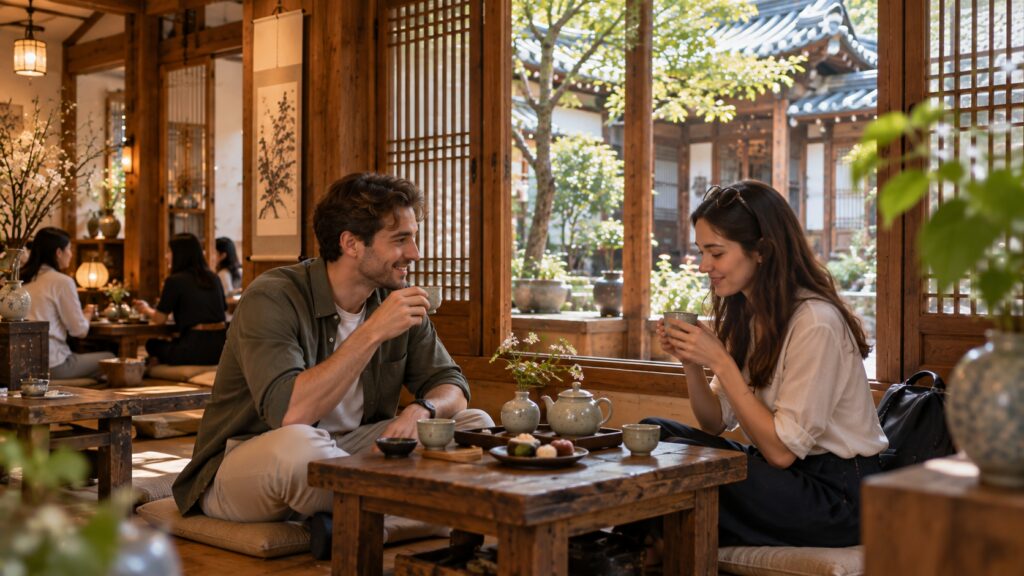
Depending on the menu, you may encounter drinks such as jujube tea, ginger tea, omija tea or other Korean teas and traditional beverages.
Do not expect every tea house to look or operate the same way.
Some emphasize traditional interiors and classic drinks. Others combine Korean elements with a more contemporary café experience.
For a traveler who has spent the morning walking through a palace or Bukchon, tea in Insadong can also provide something very practical: a chance to sit down.
Seoul sightseeing involves more walking than many first-time visitors expect.
What Should You Eat in Insadong?
Insadong has more than tea.
The surrounding streets contain Korean restaurants, snack shops, cafés and places serving traditional-style meals.
You may encounter Korean set meals, dumplings, noodles, sweets and street snacks depending on where you walk.
But there is no single dish you must eat in Insadong to have an “authentic” visit.
That is worth remembering.
The neighborhood is popular with visitors, so restaurants vary from highly tourist-oriented businesses to places used by local office workers and residents.
Check the menu and price before sitting down, particularly if you are choosing a full Korean set meal.
If food is the main purpose of your day, Seoul has neighborhoods and markets better suited to a dedicated food crawl.
In Insadong, food works especially well as part of a broader cultural walk.
If you want a more hands-on food experience during your time in central Seoul, you can also consider a Korean cooking class and plan it around your Jongno sightseeing day.
How Much Time Do You Need in Insadong?
For most first-time visitors, around two to three hours is a useful starting point.
That gives you enough time to:
- walk the main street and several side streets;
- explore Ssamzigil;
- browse a few shops;
- visit a gallery or cultural space; and
- stop for tea or a snack.
You can spend less time if Insadong is simply one stop between nearby attractions.
You can also stay much longer if you enjoy galleries, shopping, craft experiences or a relaxed meal.
The neighborhood rewards a slower pace.
Trying to cross it off your list in 30 minutes misses much of the point.
How Do You Get to Insadong?
For many visitors, Anguk Station on Seoul Subway Line 3 is one of the easiest access points.
Ssamzigil, in the center of the Insadong area, is only a short walk from Anguk Station, and the neighborhood is easy to continue exploring on foot once you arrive.
Jonggak and Jongno 3-ga can also be useful depending on where you are coming from and which part of the area you want to visit.
If this is your first trip to Seoul, learning how T-money, subway transfers and ticket machines work before your sightseeing day can make moving between neighborhoods much easier.
Once you reach historic central Seoul, however, walking becomes a major part of the experience.
Wear comfortable shoes.
Can You Visit Insadong and Bukchon on the Same Day?
Yes — and this is one of the most natural combinations in central Seoul.
Bukchon Hanok Village and Insadong offer very different experiences even though they are close together.
Bukchon is a living residential neighborhood known for its hanok streets and views. Visitors need to pay particular attention to resident privacy, noise and designated tourist-access restrictions.
Insadong is a commercial and cultural district where browsing shops, galleries and tea houses is part of the experience.
Combining them lets you see two different ways traditional Seoul survives within the modern city.
A simple route is:
Bukchon → Anguk area → Insadong
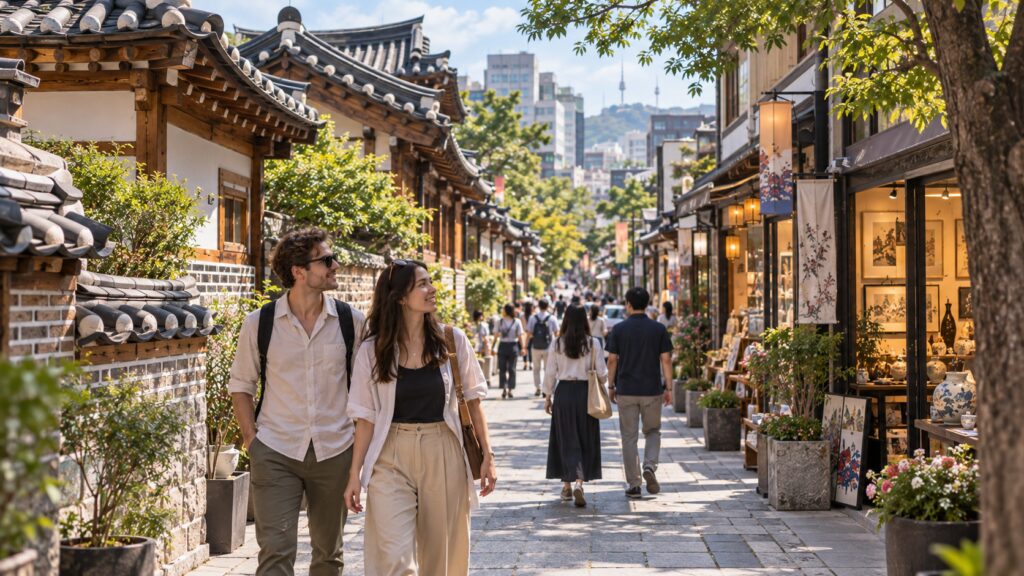
This works particularly well if you want to visit Bukchon during its permitted daytime visiting period and then move toward shopping, tea or dinner afterward.
Can You Combine Gyeongbokgung, Bukchon and Insadong?
In fact, these three places can form one of the most practical historic-Seoul itineraries for a first-time visitor.
A possible route is:
Gyeongbokgung Palace → Bukchon Hanok Village → Insadong
Start at Gyeongbokgung when you have the energy to explore its large palace grounds.
Continue toward Bukchon, remembering that it is a residential neighborhood rather than an open-air museum.
Then finish in Insadong, where you can browse shops, look for souvenirs, visit a gallery or sit down for tea.
If you want to add a quieter cultural experience to the same part of Seoul, a Korean temple stay can introduce you to Buddhist temple life through meditation, tea, ceremonies or an overnight program.
Do not treat the route as a race.
Gyeongbokgung alone can easily take around two hours, and wearing hanbok, watching the guard ceremony or visiting museums will add more time.
If your schedule begins to feel rushed, split the attractions across two days.
A good Seoul itinerary leaves room to notice the city between the attractions.
Is Insadong Better Than Bukchon?
They are not substitutes for each other.
Choose Bukchon if your priority is historic hanok streets, neighborhood scenery and understanding how a traditional residential area exists inside modern Seoul.
Choose Insadong if you are more interested in crafts, souvenirs, galleries, tea houses and browsing.
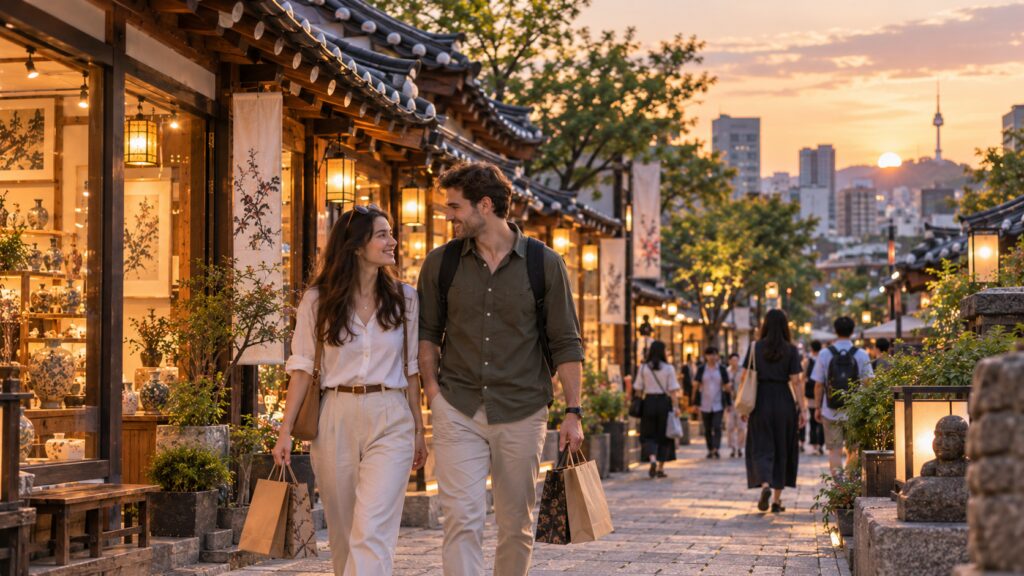
If you have enough time, visit both.
Their differences are precisely what make the combination worthwhile.
When Is the Best Time to Visit Insadong?
Late morning through the afternoon is generally the easiest period for a first visit because shops, galleries, cultural spaces and tea houses are more likely to be operating.
The street itself is accessible outside normal shop hours, but walking through an almost-closed shopping district is not the same experience.
Weekends can feel livelier and busier.
Weekdays may offer a calmer browsing experience.
For specific shops, workshops, galleries or restaurants that matter to your itinerary, always check their current opening hours before traveling.
Individual businesses can change schedules even when the neighborhood itself remains accessible.
Is Insadong Worth Visiting?
Insadong is worth considering if you want more from historic Seoul than palace photographs.
It gives travelers a chance to see how Korean tradition is packaged, preserved, redesigned, sold and experienced in an ordinary commercial neighborhood.
Some parts are clearly aimed at tourists.
That does not make the area meaningless.
Look beyond the first souvenir rack and you can find crafts, art, old businesses, modern design and quiet tea houses occupying the same few streets.
Insadong works particularly well because it does not demand an entire day.
You can connect it naturally with Gyeongbokgung, Bukchon and the wider Jongno area while giving yourself a few hours to slow down.
And in a city famous for moving fast, slowing down for tea, art and a little aimless wandering is not a bad way to spend an afternoon.
Frequently Asked Questions
What is Insadong famous for?
Insadong is known for traditional Korean crafts, souvenirs, art galleries, tea houses, restaurants and cultural spaces. It is one of central Seoul’s best-known areas for visitors interested in Korean art and traditional culture.
How long should I spend in Insadong?
Around two to three hours is a useful starting point for a first visit. Allow more time if you plan to shop extensively, visit galleries, join a craft experience or have a full meal.
What is the closest subway station to Insadong?
Anguk Station on Seoul Subway Line 3 is one of the most convenient stations for reaching the main Insadong area. Other nearby stations can also be useful depending on your route.
Is Ssamzigil free to enter?
Yes. You can enter and browse Ssamzigil without a general admission fee. Individual workshops, activities or purchases may have their own costs.
What should I buy in Insadong?
Popular options include ceramics, stationery, crafts, art, traditional-style accessories and contemporary products inspired by Korean design. Compare several shops because quality, originality and prices vary.
Can I visit Gyeongbokgung, Bukchon and Insadong in one day?
Yes. The three areas are close enough to form a practical historic-Seoul itinerary. However, allow enough time for Gyeongbokgung and follow the visitor rules in residential Bukchon rather than rushing through all three.