
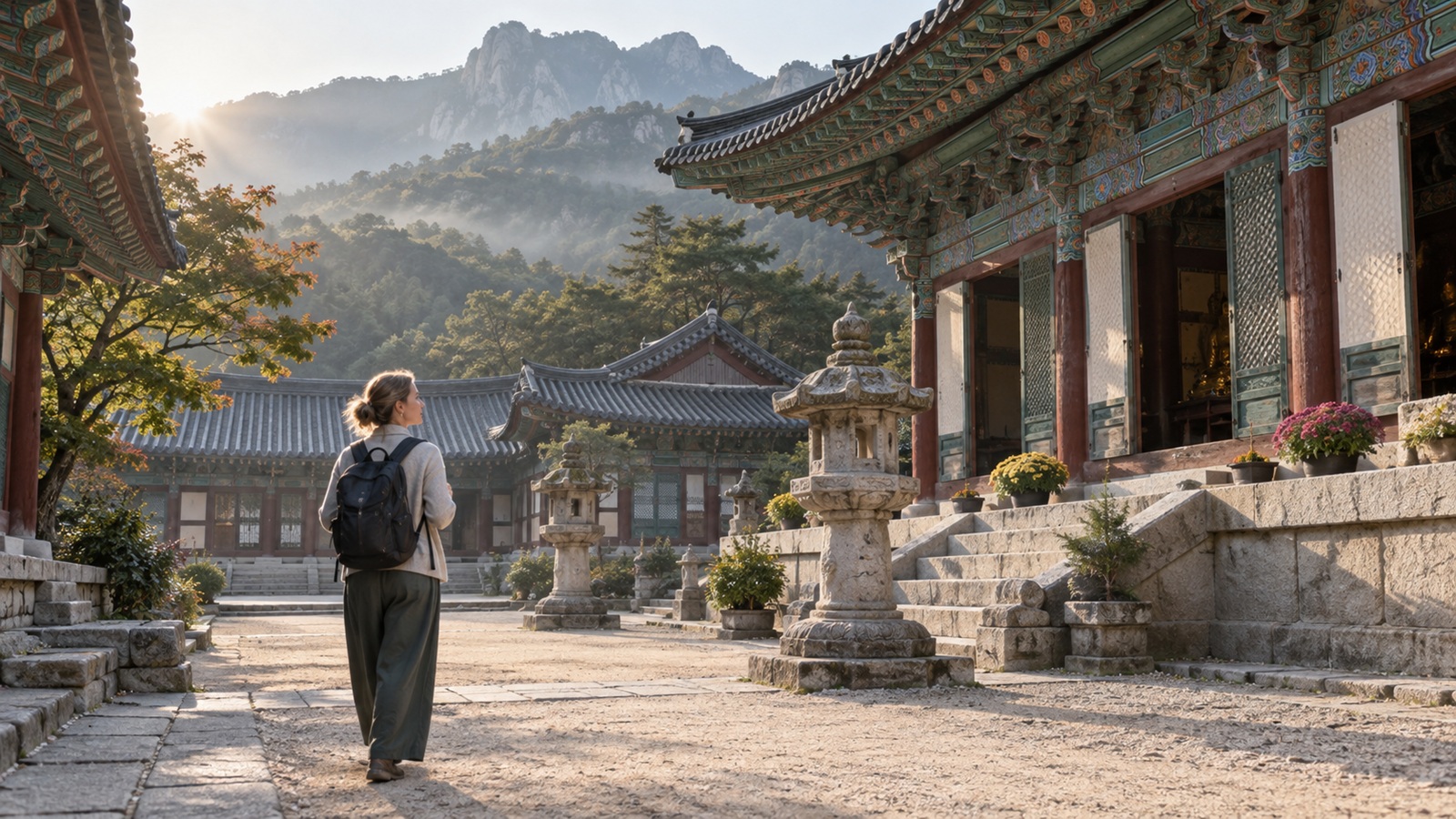
A night at a Buddhist temple may not be the first thing that comes to mind when planning a trip to Korea. But for travelers looking beyond palaces, shopping streets and cafés, a Korean temple stay offers a very different way to experience the country.
Known as Templestay in Korea, the program allows visitors to spend time at a Buddhist temple and take part in selected elements of temple life. Depending on the program, that might mean meditation, a temple tour, tea, Buddhist meals, chanting or traditional cultural activities.
You do not necessarily need to travel deep into the mountains, either. Several temples in Seoul offer programs that are accessible to international visitors.
Here is what to know before booking your first Korean temple stay.
What Exactly Is a Korean Temple Stay?
Templestay is a cultural experience program built around Korean Buddhist temple life.
It is important not to think of it simply as unusual accommodation. You are entering an active religious space where monks and other members of the Buddhist community may live, worship and practice.
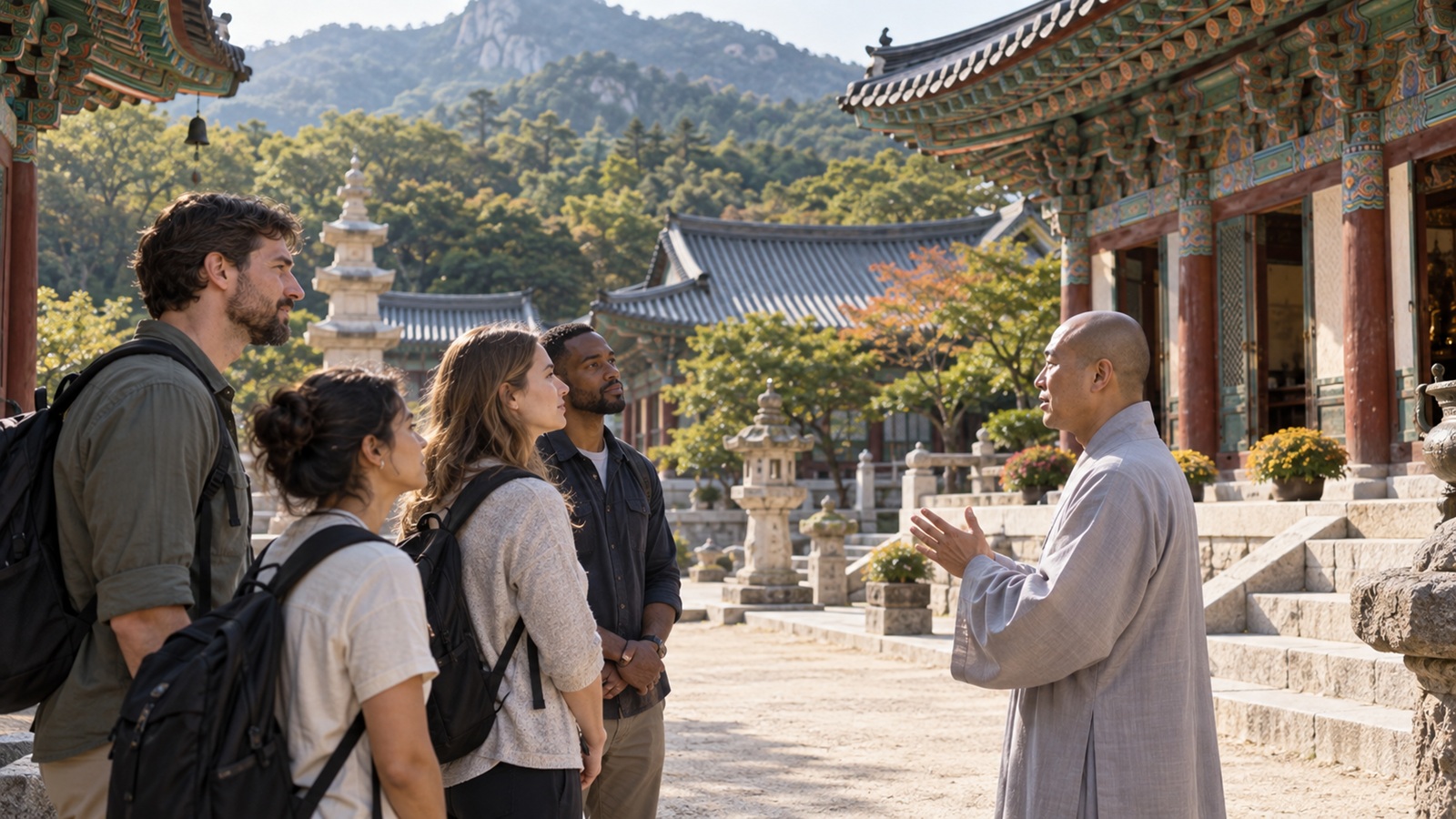
At the same time, programs are designed to make aspects of Korean Buddhist culture accessible to visitors.
The official Templestay program describes three broad formats: one-day programs, experience-oriented stays and rest-oriented stays.
A one-day program may take only a few hours. An experience-oriented stay usually has a more structured schedule, while a rest-oriented program gives participants more unstructured time.
The exact experience varies considerably from one temple to another.
What Do You Actually Do During a Temple Stay?
There is no single schedule followed by every temple.
Depending on where and when you stay, activities may include a temple tour, Seon meditation, Buddhist chanting, tea, traditional cultural activities and Buddhist meals.
Some programs may also include 108 prostrations or making prayer beads or lotus lanterns.
Meditation and Buddhist Ceremonies
Meditation is one of the experiences most closely associated with Templestay.
In Korea, you may see Seon meditation mentioned in program descriptions. Seon is the Korean Buddhist tradition commonly associated with Zen in English.
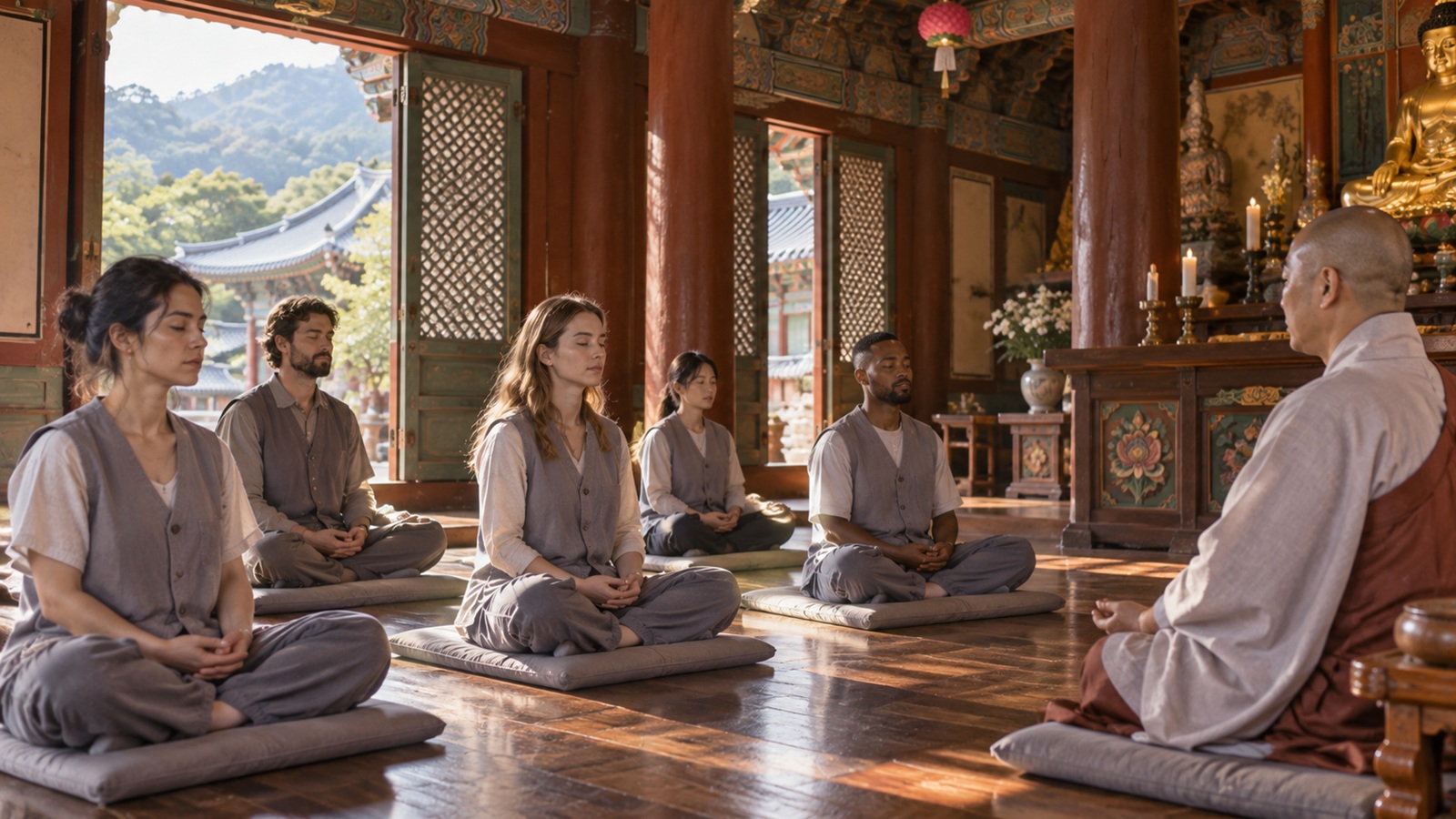
Some stays also include yebul, a Buddhist ceremonial service involving chanting and paying respect to the Buddha and Buddhist teachings.
For a first-time visitor, the point is not to arrive already knowing how to perform these practices. Follow the staff’s instructions and observe the atmosphere respectfully.
Temple Meals and Tea
Food can be another memorable part of the experience.
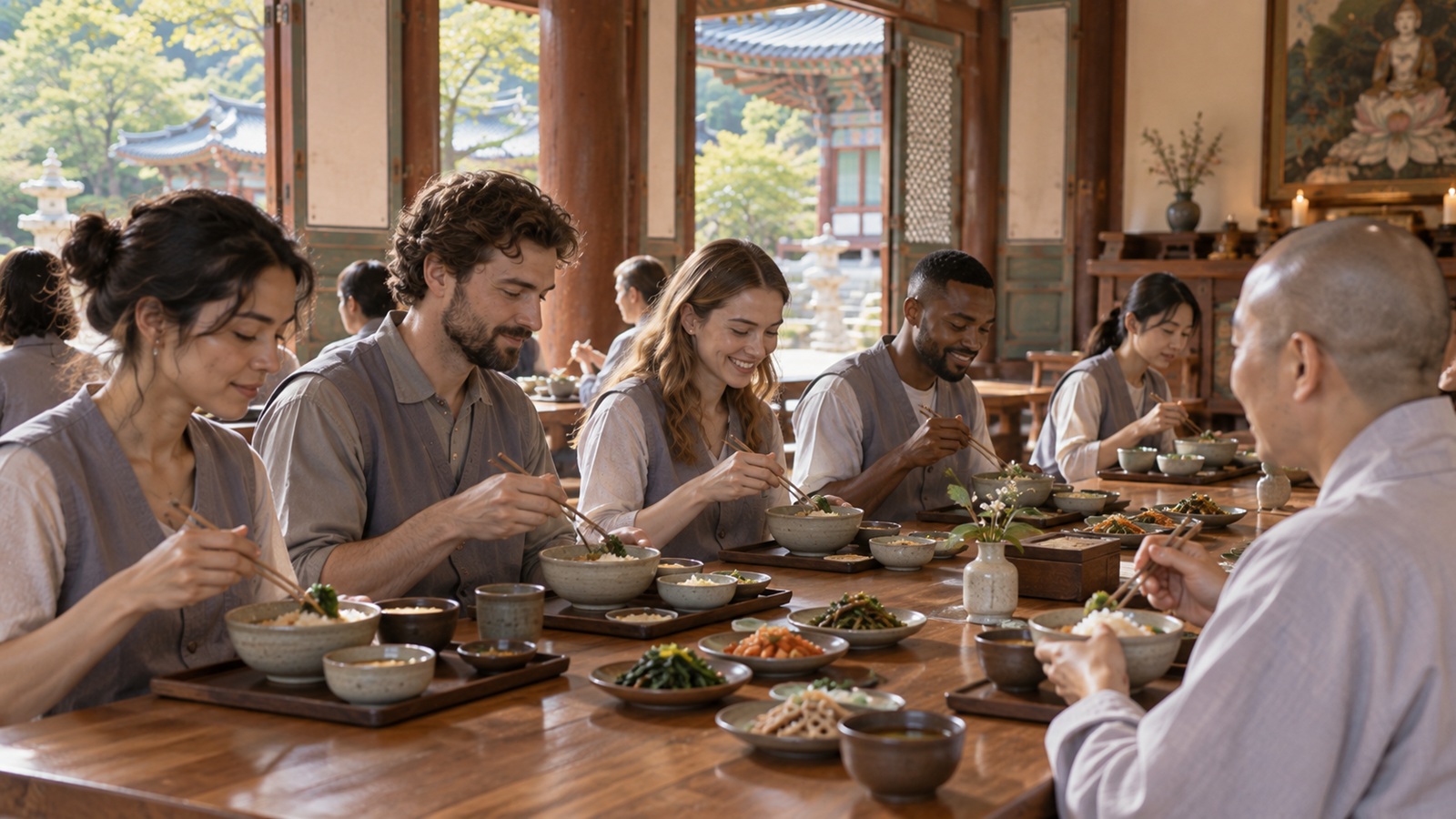
Depending on the program, participants may eat meals at the temple or experience aspects of Korean Buddhist food culture. Some programs also include tea or conversation over tea.
Do not assume that every stay includes a formal monastic meal ceremony. Meal arrangements vary, so check the program description before booking.
Traditional Cultural Activities
Some temples incorporate cultural activities such as making prayer beads or lotus lanterns.
These activities can make Templestay more approachable for travelers who are curious about Korean Buddhist culture but are not looking for an intensive meditation retreat.
Again, the program matters more than the word “Templestay” itself. Two temple stays can have very different schedules.
One-Day Experience vs. Overnight Temple Stay
You do not have to sleep at a temple to try Templestay.
A one-day Templestay is useful if your Seoul itinerary is already packed. Official guidance describes these programs as short experiences that can include activities such as a temple tour, meditation and tea.
An overnight experience-oriented Templestay goes further into temple life. Depending on the temple, it can include evening and morning Buddhist ceremonies, meditation, meals and cultural activities.
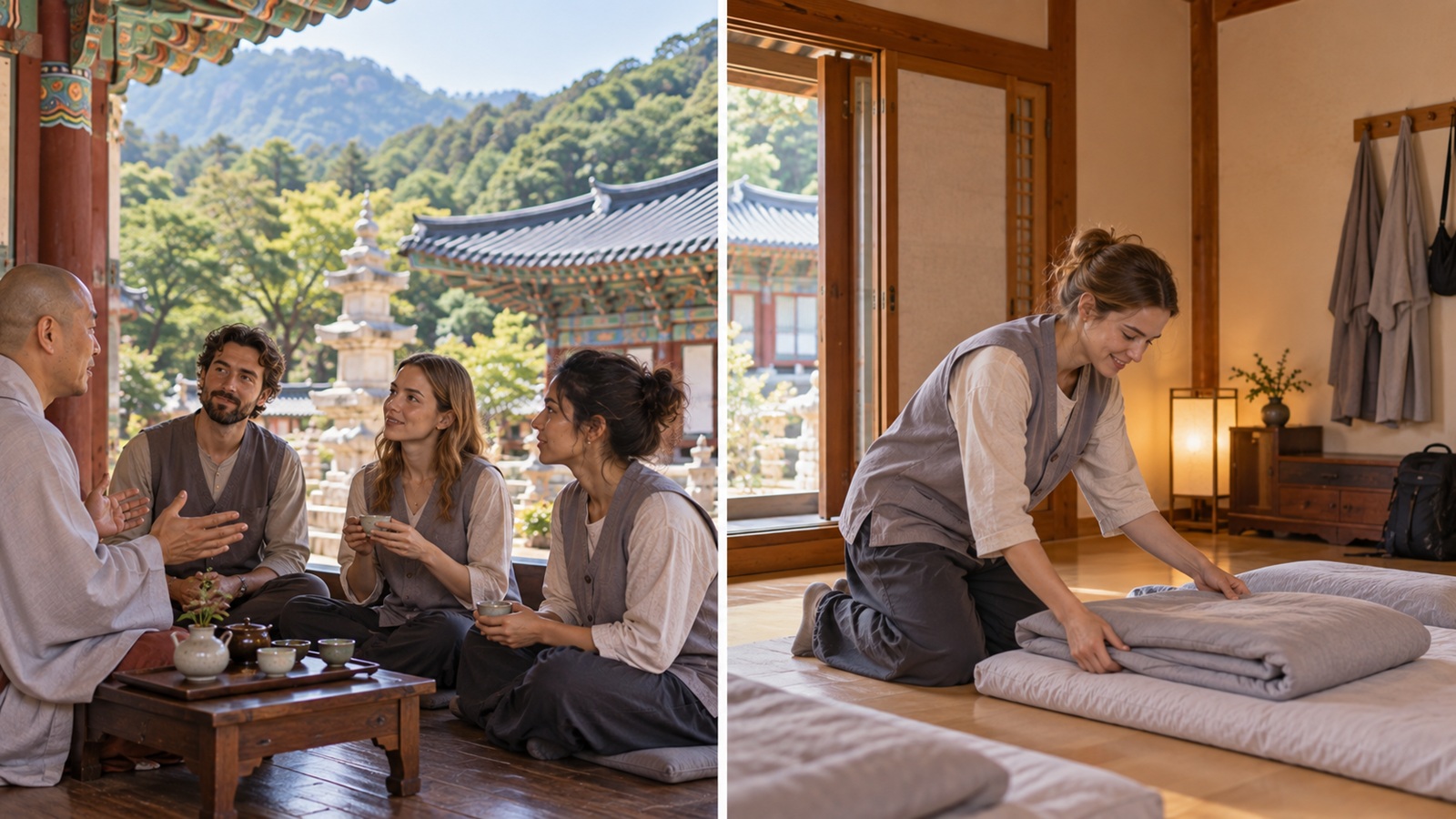
There are also rest-oriented programs, where the schedule may be much lighter.
If this is your first visit to Korea and you mainly want an introduction to temple culture, a short program can be enough. If slowing down and experiencing the rhythm of temple life is the reason you are booking, an overnight stay makes more sense.
How Much Does a Temple Stay Cost in Korea?
There is no single nationwide Templestay price.
The cost depends on the temple, length of stay, program and sometimes special promotions.
As a current example, Myogaksa in Seoul lists a two-day, one-night program at KRW 95,000 per person, while Bongeunsa lists its regular Saturday-to-Sunday Templestay at KRW 120,000 per person.
Special programs can be priced differently, so these numbers should be treated as examples rather than standard rates.
Always check the current price on the official Templestay reservation page before making plans.
What Is an Overnight Temple Stay Really Like?
Expect something closer to communal temple life than a conventional hotel stay.
Rooms and facilities vary by temple. In some programs, you may share a room with other participants. Private rooms may be available at certain temples or for an additional charge, but they should not be assumed.
Schedules can also start much earlier than a typical vacation morning when a program includes morning Buddhist practice.
That is part of the experience.
If sleeping late, complete privacy and hotel-style service are priorities, read the program details carefully before choosing an overnight stay.
What Should You Wear and Bring?
Comfort and modesty are more useful than fashionable travel clothes.
The official Templestay guidance recommends bringing personal items such as toiletries, towels, underwear, socks and a change of clothes.
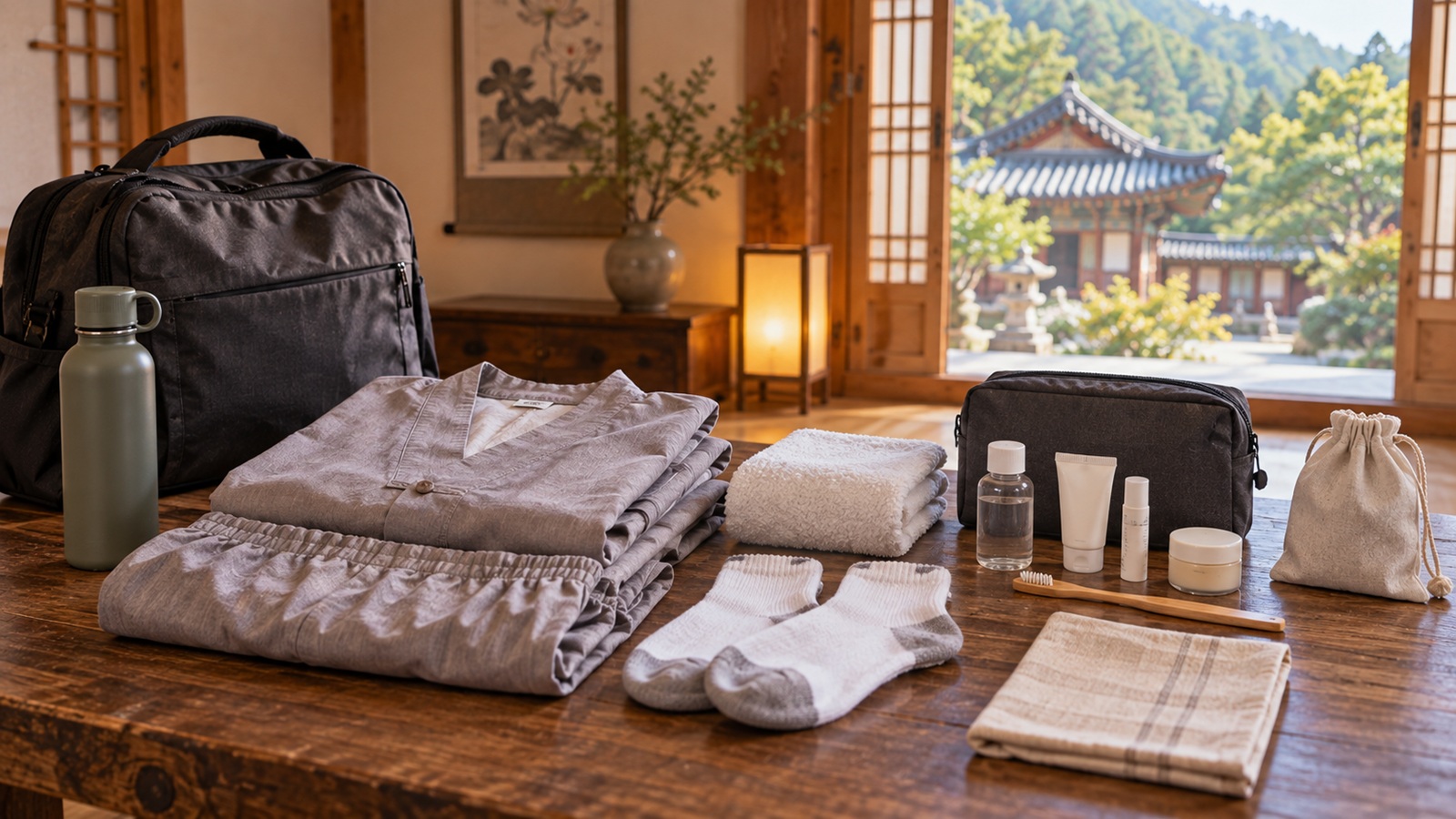
Individual temples may have additional requirements. For example, some indoor spaces require visitors to remove their shoes, making socks important.
For an overnight stay, check the temple’s own packing instructions rather than relying on a generic Korea travel checklist.
Comfortable clothes that allow you to sit on the floor or participate in meditation are a sensible choice.
Do You Need to Be Buddhist?
International visitors should not assume that Templestay is limited to practicing Buddhists.
Temples across Korea operate programs specifically accessible to international visitors, and some Seoul temples provide English-language support or interpretation.
However, being open to visitors does not turn a Buddhist temple into an ordinary tourist attraction.
You may encounter chanting, bows, Buddhist images and religious ceremonies. You do not need to pretend to hold beliefs that you do not hold, but you should follow instructions and treat the space and practices respectfully.
Can Foreign Travelers Join a Korean Temple Stay?
Yes. There are temples that specifically accommodate international participants.
In Seoul alone, temples associated with international visitor programs include International Seon Center, Geumsunsa, Myogaksa, Bongeunsa, Jogyesa and Jinkwansa.
Language support differs by temple and program, so do not assume that every activity at every temple is conducted in English.
The safest approach is to select the “Temples for Foreigners” option on the official Templestay reservation website and check the individual program details.
Temple Stay Options in Seoul
Travelers sometimes imagine that an authentic temple experience requires a long journey into rural Korea.
It does not.
Seoul has several options, and the right one depends on the type of experience you want.
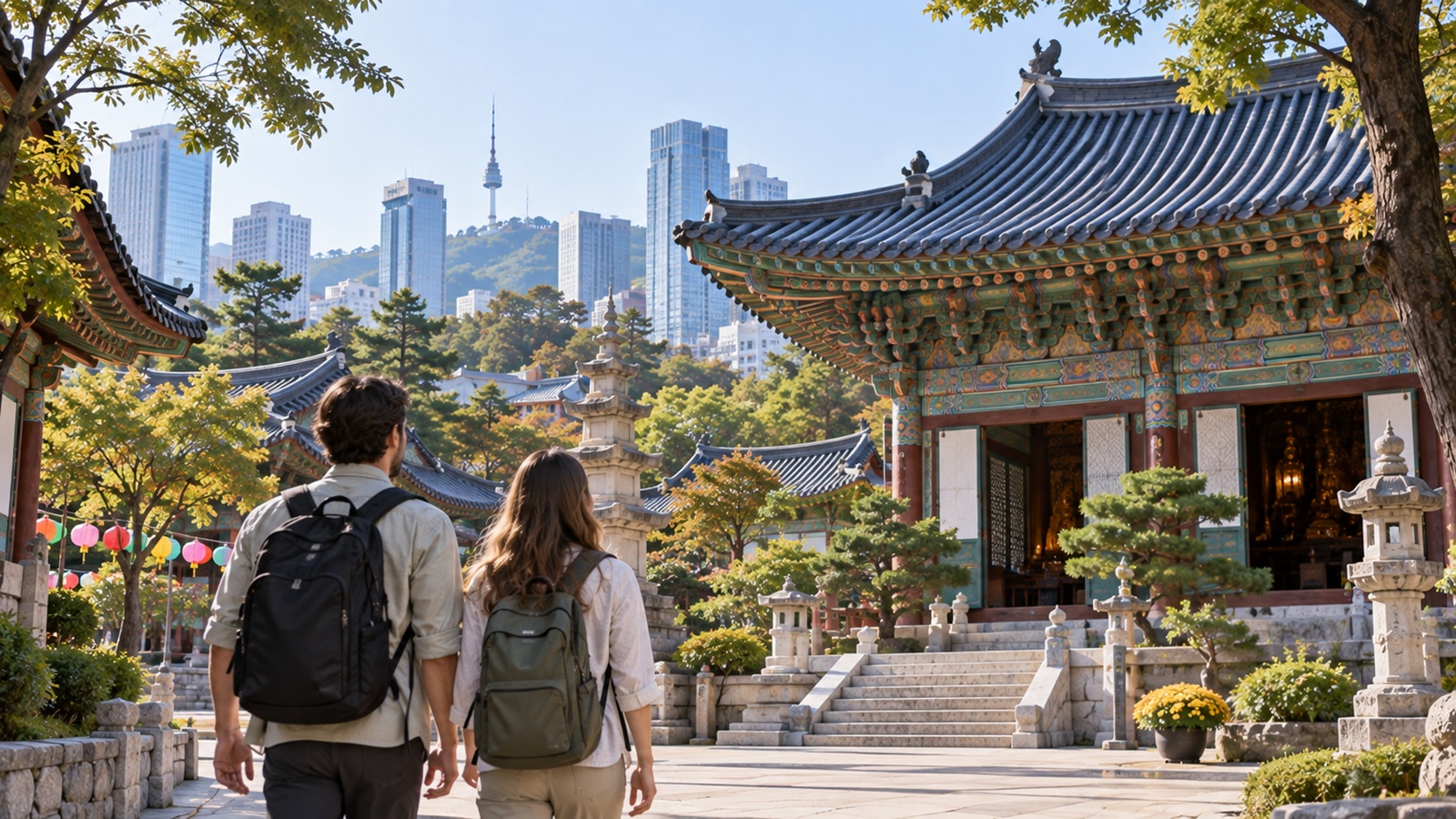
Bongeunsa
Bongeunsa is in Gangnam, making it one of the easiest temples to incorporate into an urban Seoul itinerary.
Its programs can range from structured overnight stays to lighter experiences. This makes it worth checking the specific program calendar rather than assuming every visit involves an overnight stay.
Myogaksa
Myogaksa is in Jongno and offers programs for international participants.
Its location makes it particularly practical for travelers already exploring central Seoul.
Jogyesa
Jogyesa sits in the historic center of Seoul near Insadong , a neighborhood known for traditional crafts, galleries and tea houses.
For travelers interested in Korean traditional culture, this area can work particularly well because a temple experience can be combined with nearby historic neighborhoods, traditional tea houses, palaces and cultural attractions.
The official Templestay Information Center is also located next to this area on Ujeongguk-ro.
International Seon Center
The International Seon Center in western Seoul is specifically geared toward sharing Korean Buddhist culture and Seon meditation with both Korean and international visitors.
It operates residential and daily programs, and English interpretation is available for many activities.
If meditation is a major reason for your interest in Templestay, this is one of the Seoul options worth checking.
How to Book a Korean Temple Stay
The simplest starting point is the official Templestay website.
You can search available programs by location, date and program type, and there is an option for temples that accommodate foreign visitors.
Do not choose a temple based only on photographs.
Before paying, check:
- whether it is a one-day, overnight, experience-oriented or rest-oriented program;
- the exact check-in and finishing times;
- which activities are included;
- the language used;
- room arrangements;
- meals;
- what you need to bring;
- cancellation rules; and
- transportation to and from the temple.
Availability is date-specific. A famous temple may not operate the program you want on the day you are free.
Temple Etiquette First-Time Visitors Should Know
The easiest rule is to remember that you are visiting a functioning Buddhist temple, not a themed accommodation.
Keep your voice down where appropriate, follow instructions during ceremonies, dress respectfully and avoid interrupting other people’s practice for photographs.
Your schedule may also be more communal than you are used to.
If you are unable to participate in an activity because you are tired or unwell, communicate with the Templestay staff rather than simply disappearing from the schedule.
And if you are unsure about a bow, ceremony or temple custom, asking politely is better than guessing.
Is a Korean Temple Stay Worth Adding to Your Trip?
A temple stay offers something that many popular Seoul experiences do not: time deliberately removed from the speed of the city.
That does not mean every traveler needs to spend a night in a temple.
For some visitors, a two- or three-hour program may provide exactly the cultural experience they want. Others may find that waking up at a temple, eating simple meals and following a structured schedule becomes one of the most distinctive parts of their trip.
The key is choosing the program, not simply the most famous temple.
Check what actually happens, how long it lasts and how structured the experience is. Then choose the version that fits the way you want to experience Korea.
FAQ
Is a Korean temple stay open to non-Buddhists?
Yes. Programs are available to international visitors, including people who are simply interested in Korean culture and Buddhism. Visitors should still respect the temple as an active religious space.
Can I do a temple stay in Seoul?
Yes. Seoul has multiple participating temples, including Bongeunsa, Jogyesa, Myogaksa, Jinkwansa, Geumsunsa and the International Seon Center.
Do Korean temple stays have private rooms?
Not always. Templestay is based partly on communal temple life, so shared accommodation is possible. The official FAQ says some temples offer private rooms for an additional charge.
Do I have to participate in every activity?
Program expectations vary. The official FAQ advises participants who feel unwell or too tired to tell staff when they need to skip an activity.
How far in advance should I book?
There is no universal booking window. Availability depends on the individual program. For example, Myogaksa states that reservations generally open about a month in advance, while other temples have different arrangements.
Is a one-day Templestay available?
Yes. Official Templestay programs include one-day experiences, which are designed for people who want a shorter introduction to Korean temple culture.
Sources & Further Reading
Templestay — What Is Templestay?
Templestay — Official Reservations and Programs