
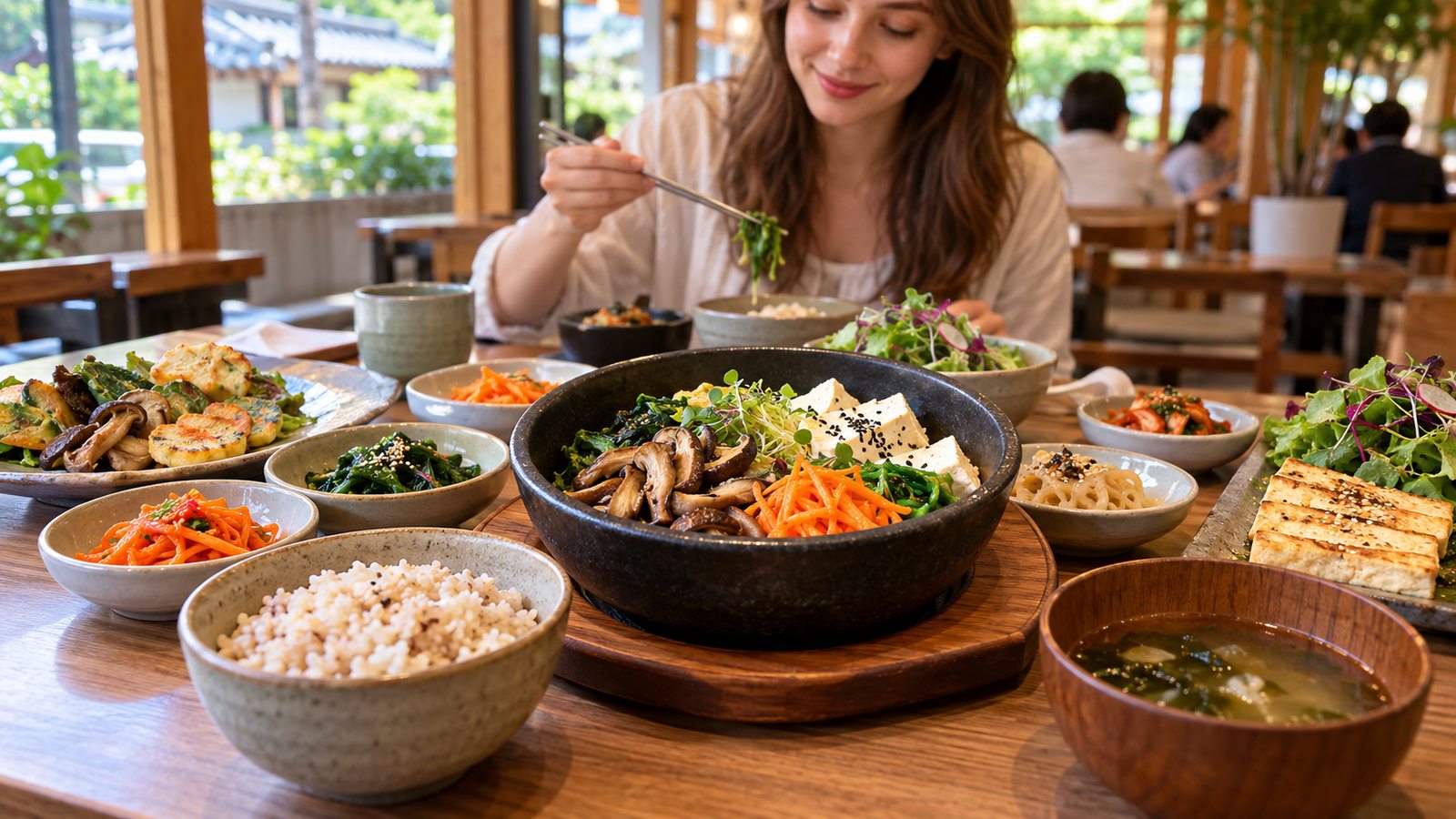
Finding vegetarian food in Korea is possible, but it can require more checking than simply looking for a dish without visible meat.
Korean meals often include plenty of vegetables, tofu, rice and vegetable side dishes. The complication is what you cannot immediately see: a soup may use anchovy or meat stock, kimchi may contain seafood-based seasoning, and a vegetable-looking dish may arrive with egg, ham or another animal ingredient.
That does not mean vegetarian travelers need to avoid Korean food. It means knowing what to ask before ordering makes a big difference.
Here is how to approach vegetarian and vegan eating in South Korea, from regular restaurants and temple food to convenience-store backups.
Is It Easy to Eat Vegetarian in South Korea?
It depends on how strictly you define your diet and where you are traveling.
In Seoul and other large cities, you can find dedicated vegetarian and vegan restaurants, plant-based cafés and restaurants that offer vegetarian options. Korean Buddhist temple food also provides a distinct meat-free culinary tradition.
The challenge can be greater at ordinary Korean restaurants where dishes are not specifically designed for vegetarian customers.
A meal that looks vegetable-based may still contain animal ingredients in its broth, seasoning, sauce or garnish.
For that reason, the most useful rule is:
Do not judge a Korean dish only by what you can see. Ask about the ingredients that went into making it.
If you eat eggs or dairy, explain that as well. The word “vegetarian” can mean different things to different people, so a specific request is often clearer than a label.
Vegetarian vs. Vegan: Be Specific About What You Do Not Eat
Before ordering, decide exactly what you need to exclude.
A vegetarian traveler may avoid meat and seafood but eat eggs or dairy. A vegan traveler may avoid all animal-derived ingredients.
That distinction matters in Korea because removing visible meat does not necessarily make a dish vegan.
For example, a bowl of bibimbap may contain vegetables but also come with beef and an egg. A soup may contain no pieces of meat while still being prepared with anchovy or beef stock.
Instead of asking only whether something is “vegetarian,” it can be more effective to list the ingredients you cannot eat.
Hidden Animal Ingredients to Check in Korean Food
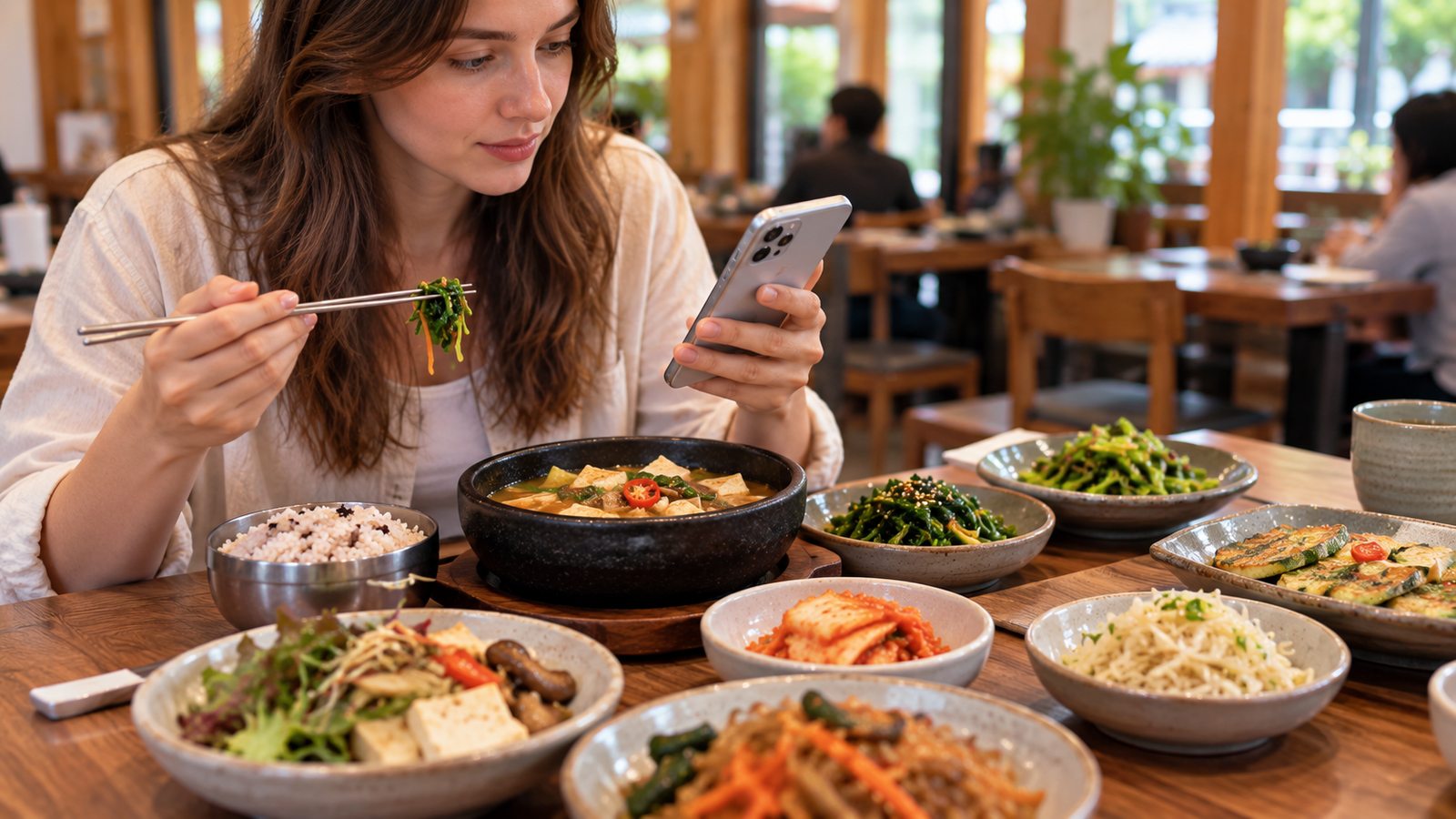
Broth
Broth is one of the first things to check.
Soups, stews and noodle dishes may be prepared with anchovies, seafood or meat even when the solid ingredients look mostly vegetable-based.
If you follow a strict vegetarian or vegan diet, ask about the broth rather than simply asking staff to remove visible meat.
A kitchen may also prepare its stock in advance, which means removing meat from the finished bowl may not change the broth.
Kimchi and Fermented Seasonings
Kimchi is made primarily from vegetables, but that does not automatically make every kimchi vegetarian or vegan.
Recipes vary, and some use fish sauce, salted seafood or other seafood-based seasonings.
The same principle applies to side dishes and sauces: ingredients can vary between restaurants and recipes.
If you have strict dietary requirements, confirm the actual preparation rather than assuming that a vegetable side dish is plant-based.
Eggs and Dairy
Egg is another ingredient that can be easy to overlook.
Bibimbap frequently comes with an egg, while gimbap commonly includes egg among its fillings.
Modern cafés, bakeries and fusion restaurants may also use milk, butter, cream or cheese.
If you are vegan, check these separately instead of assuming that “no meat” means “no animal products.”
Korean Foods That Can Work for Vegetarians — With a Few Checks
There is no universal list of Korean dishes that will be vegetarian at every restaurant. Recipes and preparation methods vary.
However, several dishes can be useful starting points if the restaurant can confirm or adjust the ingredients.
Bibimbap
Bibimbap is one of the easiest Korean dishes for travelers to recognize.
Rice is topped with vegetables and mixed with gochujang or another sauce. However, many versions also include beef and egg.
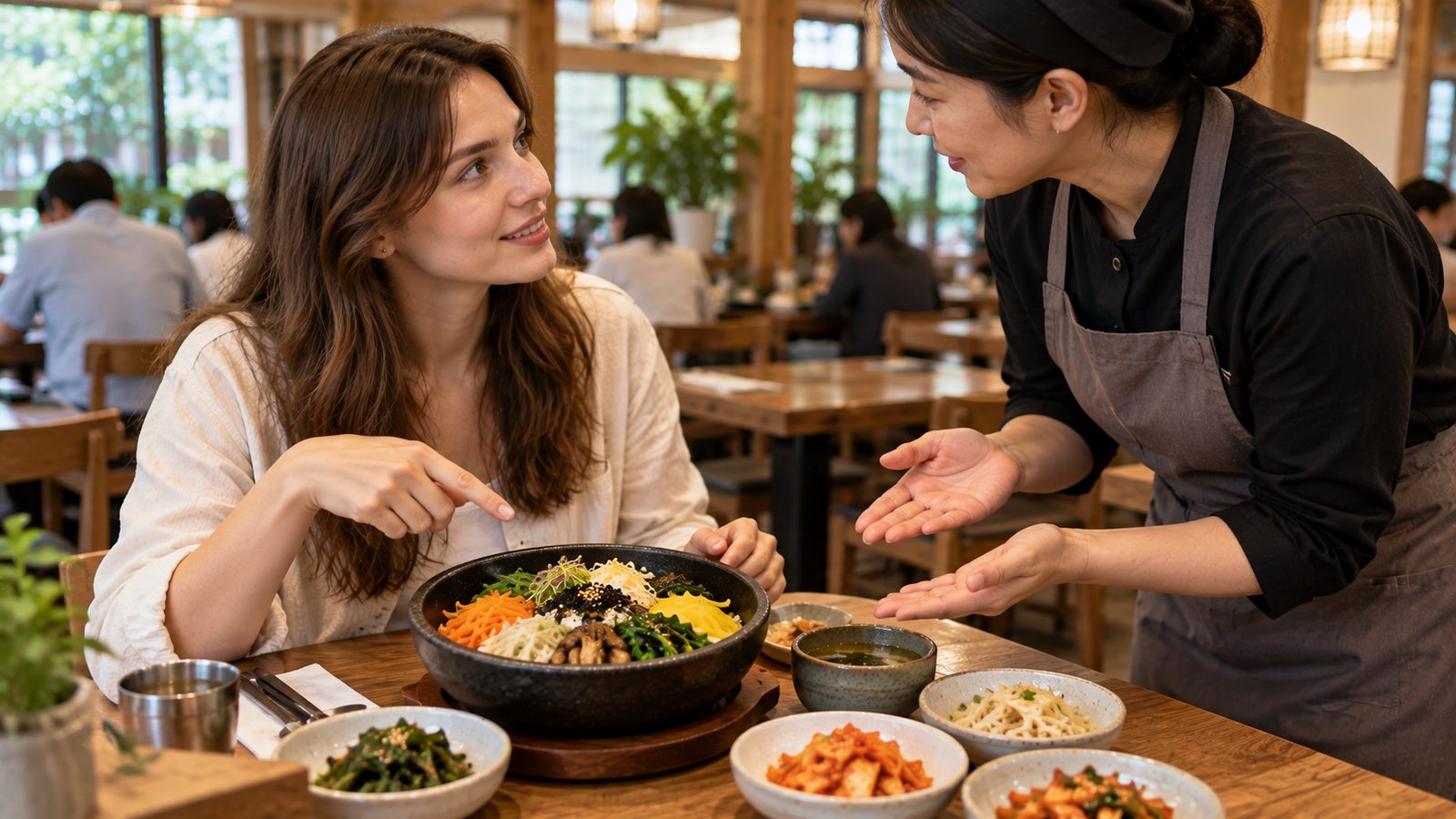
Ask for the meat to be omitted and, if necessary, the egg as well. Strict vegetarians and vegans should also confirm any sauce or other ingredients they are concerned about.
The advantage of bibimbap is that many of its components are visually separate, making it easier to discuss what should be included.
Gimbap
Gimbap is another food that may look vegetable-heavy but requires checking.
Standard fillings can include egg, ham, tuna, crab-flavored products or other animal ingredients.
Some restaurants and shops sell vegetable-focused versions, but the name alone is not enough to guarantee that every filling meets your diet.
Check the ingredients before ordering.
Kongguksu
Kongguksu is a cold noodle dish served in a creamy-looking soybean broth and is especially associated with warmer weather.
It can be a useful dish to investigate when looking for plant-based Korean food, but recipes and garnishes vary.
As with any dish, confirm the ingredients at the specific restaurant rather than treating the dish name as a guarantee.
Tofu and Vegetable Dishes
Tofu, mushrooms, seasoned vegetables and namul appear throughout Korean cuisine.
They can make a Korean meal feel naturally plant-forward, but preparation still matters.
A tofu dish may be served in a stew made with seafood stock, while a vegetable side dish may use seafood-based seasoning.
Think of these foods as promising ingredients rather than automatically vegetarian dishes.
Foods That Deserve Extra Checking
Some foods are particularly easy to misread when you are unfamiliar with Korean cooking.
Soups and stews: Check the stock, not only the visible ingredients.
Kimchi: Ask whether seafood-based seasoning such as fish sauce or salted seafood is used.
Gimbap: Check for egg, ham, tuna, crab-flavored products and other fillings.
Bibimbap: Check for meat and egg.
Pancakes: Vegetable pancakes may still include seafood or other ingredients depending on the recipe.
Noodle dishes: The noodles themselves may not be the issue; the broth and toppings can be.
The goal is not to create a long list of foods to fear. It is to learn which questions give you the information you need.
Why Korean Temple Food Is Worth Knowing About
Korean Buddhist temple food, or sachal eumsik (사찰음식), is one of the most interesting options for vegetarian travelers because plant-based eating is part of a much older culinary tradition rather than a modern substitute for meat dishes.
Korean temple cuisine developed alongside Buddhist practice and emphasizes vegetables, grains, beans, mushrooms, fermented foods and seasonal ingredients.
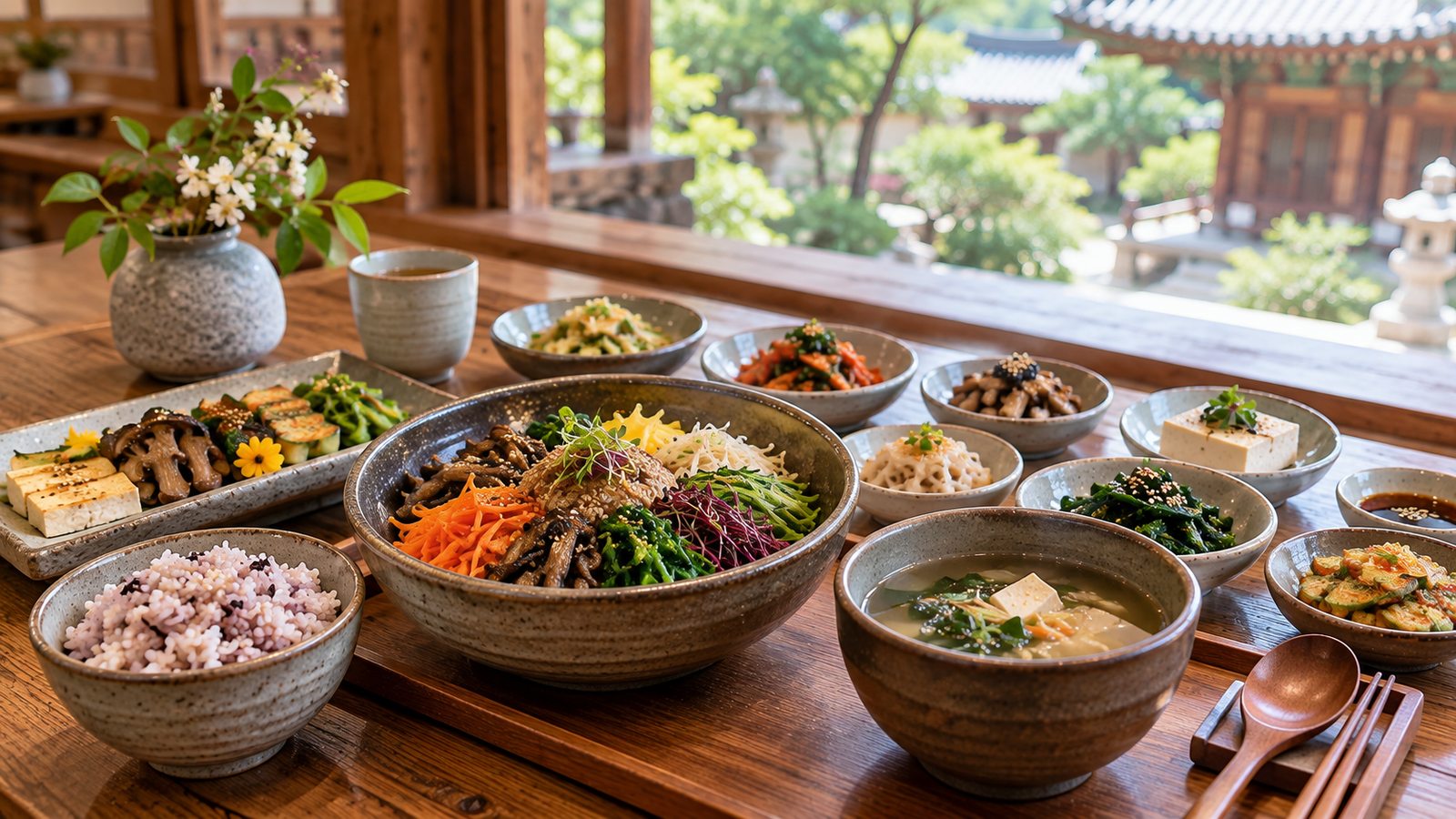
Traditional temple food excludes meat and fish. It also traditionally avoids five pungent vegetables known collectively as oshinchae, including garlic and green onions.
In May 2025, Korean Buddhist temple food was designated a National Intangible Cultural Heritage, recognizing its long-standing cultural traditions and connection to Buddhist principles.
Travelers can encounter temple food in several ways. Some Buddhist temples serve it as part of a Templestay program, while specialist temple-food restaurants and cultural programs offer it outside an overnight temple experience.
If you are interested in experiencing the wider Buddhist cultural context, see our Korean temple stay guide before booking.
One caution is important for strict vegans: definitions and individual preparations can differ. Official Korean tourism information about temple food notes an exception for dairy in some descriptions.
If avoiding all animal-derived ingredients is essential, confirm the specific meal rather than relying only on the words “temple food.”
Useful Korean Phrases for Vegetarian Travelers
You do not need to speak fluent Korean to explain a dietary preference, but showing a clear sentence on your phone can be much easier than trying to communicate through a single word.
Here are several useful phrases.
| Korean | Meaning |
|---|---|
| 저는 채식주의자예요. | I am vegetarian. |
| 저는 비건이에요. | I am vegan. |
| 고기를 먹지 않아요. | I do not eat meat. |
| 생선이나 해산물을 먹지 않아요. | I do not eat fish or seafood. |
| 계란을 먹지 않아요. | I do not eat eggs. |
| 우유나 치즈를 먹지 않아요. | I do not eat milk or cheese. |
| 멸치 육수가 들어가나요? | Does this contain anchovy broth? |
| 고기 없이 가능해요? | Can this be made without meat? |
| 이 음식에 생선이나 해산물이 들어가나요? | Does this dish contain fish or seafood? |
If your diet is strict, a longer written message listing everything you avoid may work better than repeating several individual questions.
A translation app can also help, particularly when you need to show a sentence rather than pronounce it.
Our essential apps for traveling in Korea guide explains translation and navigation tools that can be useful before your trip.
How to Order Vegetarian Food at a Regular Korean Restaurant
First, look at the menu before sitting down if possible.
A restaurant specializing in one meat or seafood dish may have little flexibility, while a restaurant with rice dishes, tofu, noodles or vegetable dishes may offer more possibilities.
Once you identify a possible dish, ask about the parts that matter:
- Does it contain meat or seafood?
- What kind of broth is used?
- Does it contain egg?
- Does the kimchi or seasoning contain seafood?
- Can the animal ingredient actually be omitted during preparation?
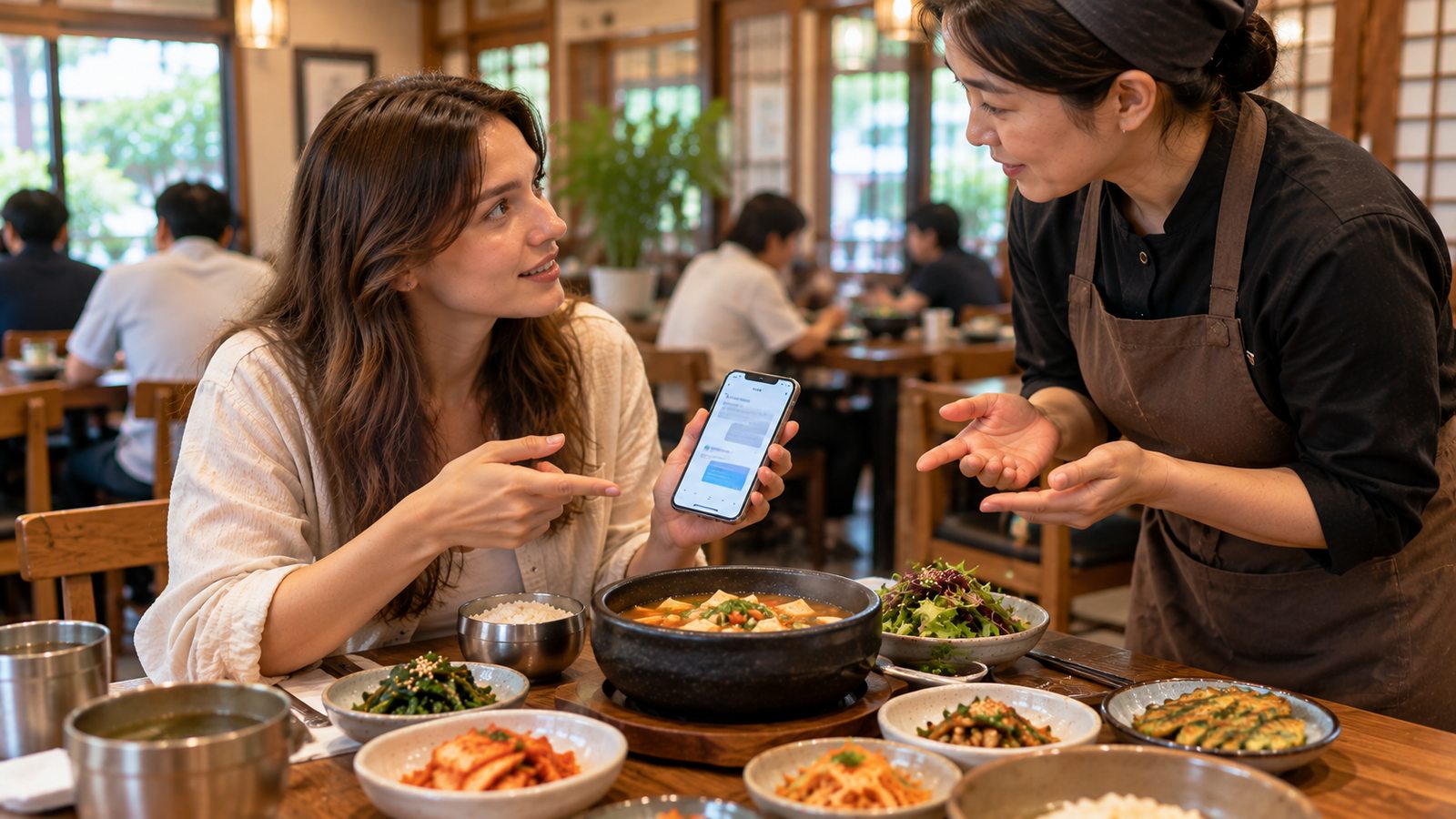
That final question matters.
If a stock or sauce was prepared earlier, asking staff to remove the visible meat may not change the underlying ingredients.
If the restaurant cannot accommodate your request, choosing another restaurant may be easier than trying to redesign a dish that depends on meat or seafood for its base.
For the rest of the dining process — ordering systems, banchan, call buttons, payment and tipping — our guide to eating at a Korean restaurant explains what first-time visitors can expect.
Finding Vegetarian and Vegan Restaurants in Korea
Dedicated vegetarian or vegan restaurants remove much of the uncertainty around modifying regular dishes.
Seoul has the widest range of options, including plant-based restaurants, cafés and specialist temple-food restaurants.
Official tourism resources also provide vegetarian dining information, but restaurant details can change. Always check current opening hours, menus and reservation requirements before traveling across the city for a specific restaurant.
When searching a Korean map or translation service, useful terms include:
비건 — vegan
채식 — vegetarian
채식 식당 — vegetarian restaurant
사찰음식 — temple food
Saving several options around your hotel and major sightseeing areas before your trip can be more useful than searching only when you are already hungry.
What About Convenience Stores?
Korean convenience stores can be useful as a backup, especially late at night, on travel days or when you cannot find a suitable restaurant nearby.
But packaged food still requires label checking.
A rice ball, sandwich, instant noodle or snack may contain meat, seafood, dairy or other animal-derived ingredients even when that is not obvious from the front of the package.
Product recipes also change, so a recommendation from an old travel video should not replace checking the current label.
Simple packaged foods, fruit, drinks and other clearly labeled products can help fill the gap between restaurant meals.
For a broader introduction to what you will find inside these stores, see our Korean convenience store food guide.
Vegetarian Travel Is Easier With a Backup Plan
You do not need to plan every meal before arriving in Korea.
It does help to plan a few.
Save a dedicated vegetarian or vegan restaurant near your accommodation. Identify one or two options around neighborhoods where you expect to spend a full day.
Keep your dietary message saved in Korean on your phone.
If you are leaving Seoul for a smaller city or rural area, research meals earlier rather than assuming you will find the same range of dedicated restaurants.
And keep a simple backup snack available on long sightseeing or transportation days.
These small preparations can make eating in Korea much less stressful.
The Bottom Line
Vegetarian food in Korea is not limited to salads or international restaurants.
Korean cuisine includes an enormous variety of vegetables, grains, tofu, mushrooms and fermented foods, and the country has its own distinctive Buddhist temple-food tradition.
The main challenge is that visible ingredients do not tell the whole story.
Broth, seafood-based seasonings, egg and other animal ingredients may appear in dishes that initially look vegetarian.
Instead of memorizing a list of supposedly “safe” Korean dishes, learn what to ask.
Check the broth. Check the seasoning. Explain exactly what you do not eat. And when you want a distinctly Korean plant-focused experience, explore the country’s temple-food tradition.
With those habits and a little preparation, vegetarian travelers can experience much more of Korean food culture without having to guess what is on the plate.
Frequently Asked Questions
Is South Korea vegetarian-friendly?
Vegetarian travel in South Korea is possible, especially in Seoul and other large cities, but ordinary restaurants may not have dedicated vegetarian menus. Broth, sauces and seasonings can contain animal ingredients, so strict vegetarians should confirm preparation rather than relying only on a dish name.
Is kimchi vegetarian in Korea?
Not always. Kimchi recipes vary, and some use fish sauce, salted seafood or other seafood-based seasonings. Vegetarian and vegan travelers should check the specific kimchi rather than assuming all kimchi is plant-based.
Is bibimbap vegetarian?
Bibimbap can be adapted for vegetarians, but many versions include meat and egg. Ask for these ingredients to be omitted and confirm any other ingredients that matter for your diet.
Is Korean temple food vegan?
Traditional Korean temple food excludes meat and fish and is strongly plant-focused. However, official Korean tourism material notes dairy as a possible exception in its definition. Strict vegans should therefore confirm the ingredients of the specific meal or program.
How do I say “I am vegetarian” in Korean?
You can say “저는 채식주의자예요” (Jeoneun chaesikjuuijayeyo), meaning “I am vegetarian.” If you have stricter requirements, it is better to list the specific foods you do not eat.
Can I find vegetarian food outside Seoul?
Yes, but dedicated vegetarian and vegan restaurants may be less concentrated outside major cities. Research options before traveling to smaller destinations, save useful Korean phrases and keep a backup meal or snack for days when choices are limited.
Sources & Further Reading
Korea Tourism Organization — Tips for Vegetarians
Korea Tourism Organization — Vegan Tour in Seoul
Korea Tourism Organization — Experience Making Korean Foods First-Hand: Korean Temple Food Center
Korea.net / Korea Heritage Service — Temple Food Designated National Intangible Cultural Heritage
Visit Seoul — Official restaurant and vegetarian dining information