
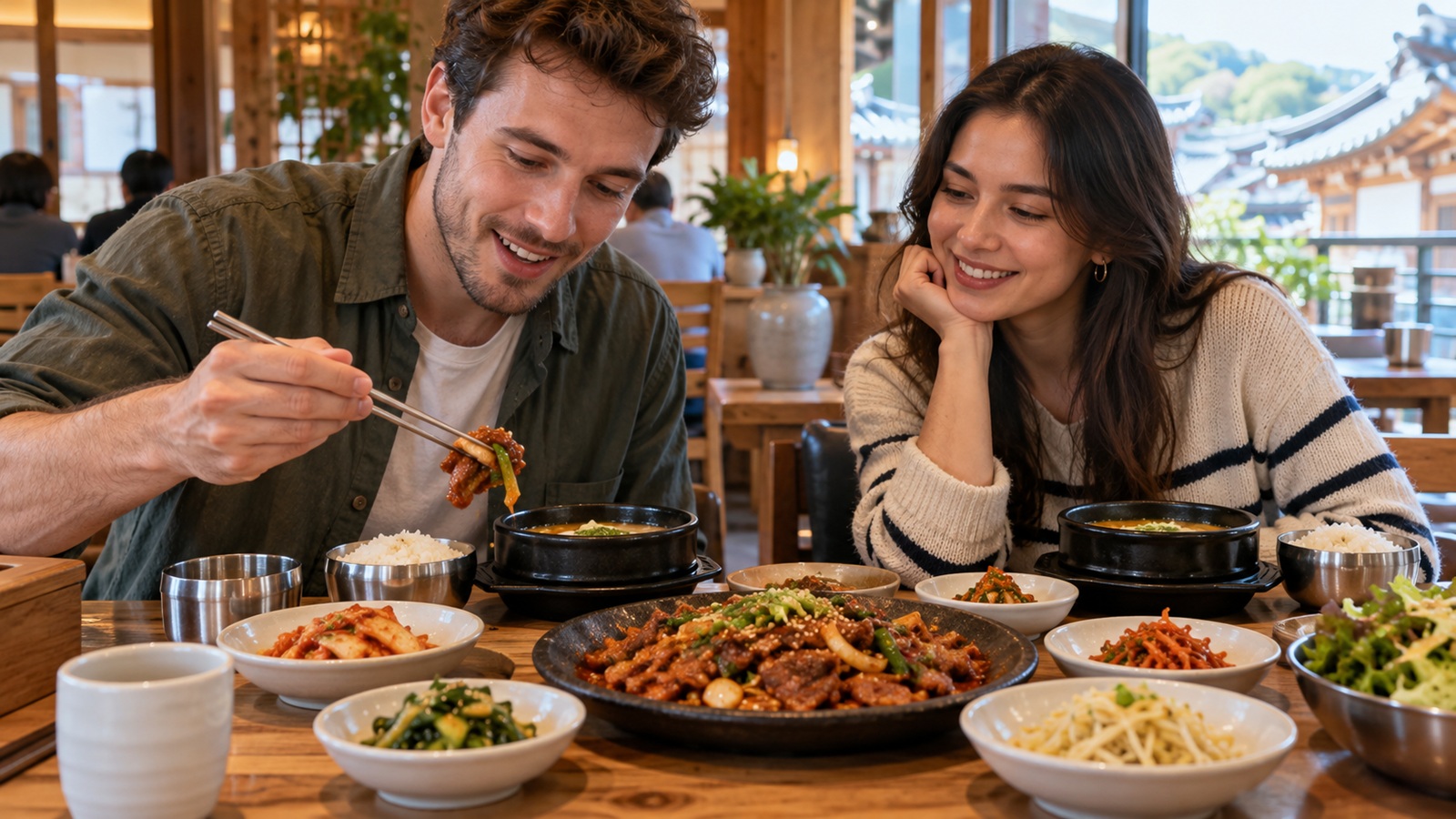
Walking into a Korean restaurant for the first time can raise a surprising number of questions. Should you wait to be seated? Do you order at the counter or at your table? Are the small side dishes free? And where do you pay when you are finished?
The answers are usually straightforward once you know what to look for. Korean restaurants range from small neighborhood eateries to barbecue restaurants and modern places with touchscreen ordering systems, so there is no single procedure that applies everywhere.
This guide takes you through a typical meal, from choosing a restaurant to paying the bill, with practical tips for travelers who do not speak Korean.
Before You Sit Down: Check the Restaurant’s Setup
When you enter, look for a host, an available table or a sign directing customers to order first. Some restaurants seat guests, while others expect you to choose a table or order at a counter.
At a busy restaurant, there may be a waiting list or a kiosk near the entrance. If you are unsure, a simple “Annyeonghaseyo” (hello) and a gesture toward an available table will usually help you get the staff’s attention.
Some restaurants have a break between lunch and dinner, while others stop taking orders before their posted closing time. Check current information before making a special trip.
Look for Minimum-Order Rules
Some shared meals and barbecue sets have a minimum order for two people or a minimum number of portions. A menu price may be for one serving even when two servings are required to start. If you are dining alone, check before sitting down. Solo dining is possible in Korea, but easier at some restaurants than others.
How to Order Food at a Korean Restaurant
The ordering method depends on the restaurant. You may order from a staff member, use a touchscreen at the table, scan a QR code or place an order at a self-service kiosk.
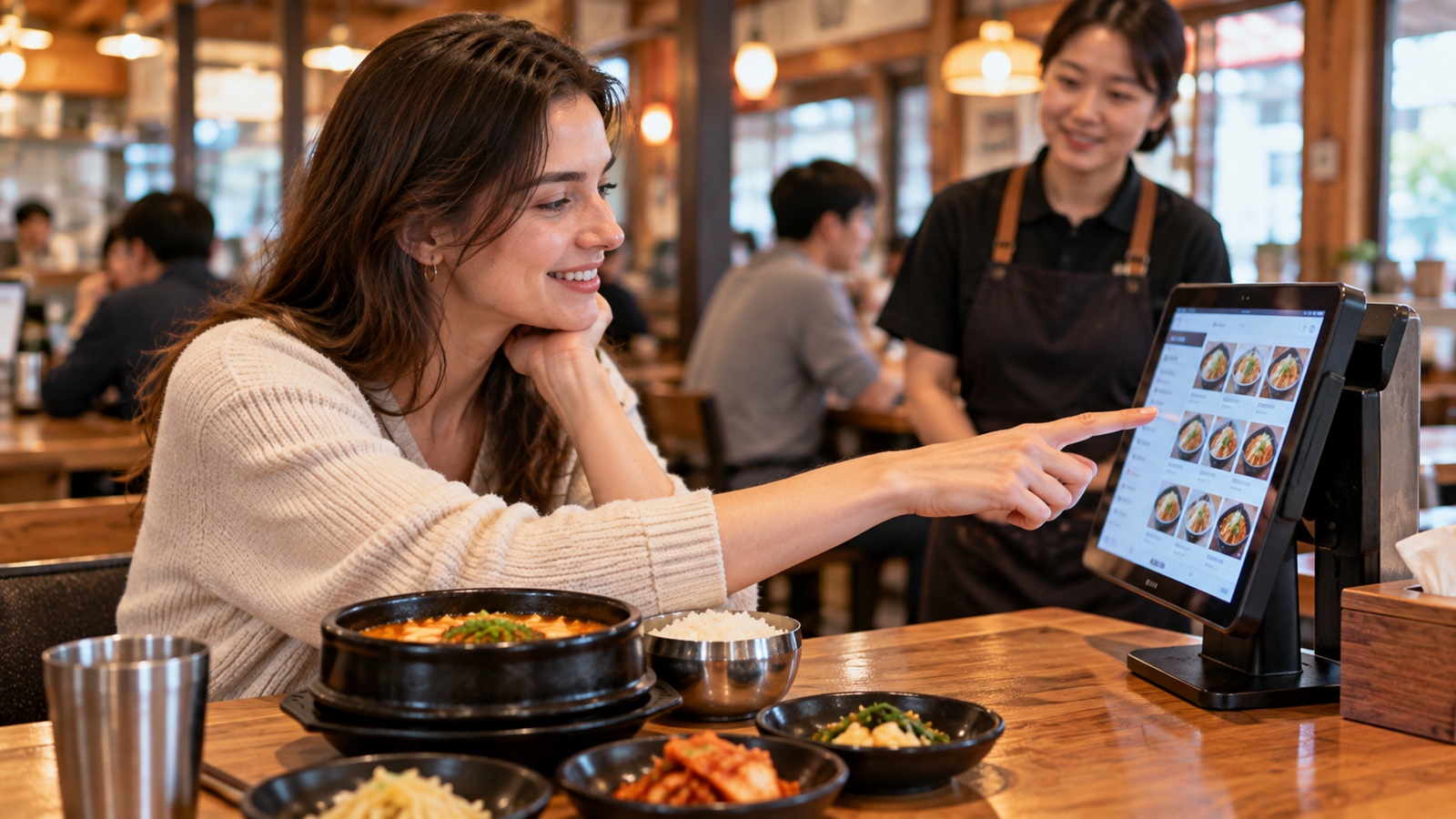
At a traditional neighborhood restaurant, a staff member may come to your table. If there is a call button, press it once when you are ready. With a touchscreen, check your selections before confirming the order.
Some menus have photographs or English descriptions, but not all do. A translation app can help identify dishes and ask a specific question. Our essential apps for traveling in Korea guide explains which tools to prepare before your trip.
A Few Useful Korean Phrases
| Korean | Pronunciation | Meaning |
|---|---|---|
| 이거 하나 주세요 | Igeo hana juseyo | One of this, please. |
| 이거 두 개 주세요 | Igeo du gae juseyo | Two of this, please. |
| 물 주세요 | Mul juseyo | Water, please. |
| 덜 맵게 해 주세요 | Deol maepge hae juseyo | Please make it less spicy. |
| 계산할게요 | Gyesanhalgeyo | I’d like to pay. |
| 감사합니다 | Gamsahamnida | Thank you. |
These phrases are useful, but they are not a substitute for checking ingredients if you have an allergy or a strict dietary requirement. If you have a food allergy, our guide to food allergies in South Korea explains labeling, restaurant questions, cross-contact and emergency preparation in more detail.
Vegetarian and vegan travelers can also use our guide to vegetarian food in Korea to learn which broths, seasonings and hidden ingredients are worth checking before ordering.
What Is Banchan, and Do You Have to Order It?
Banchan (반찬) are the small side dishes served alongside many Korean meals. Depending on the restaurant and main dish, you might receive kimchi, seasoned vegetables, pickles or other accompaniments.
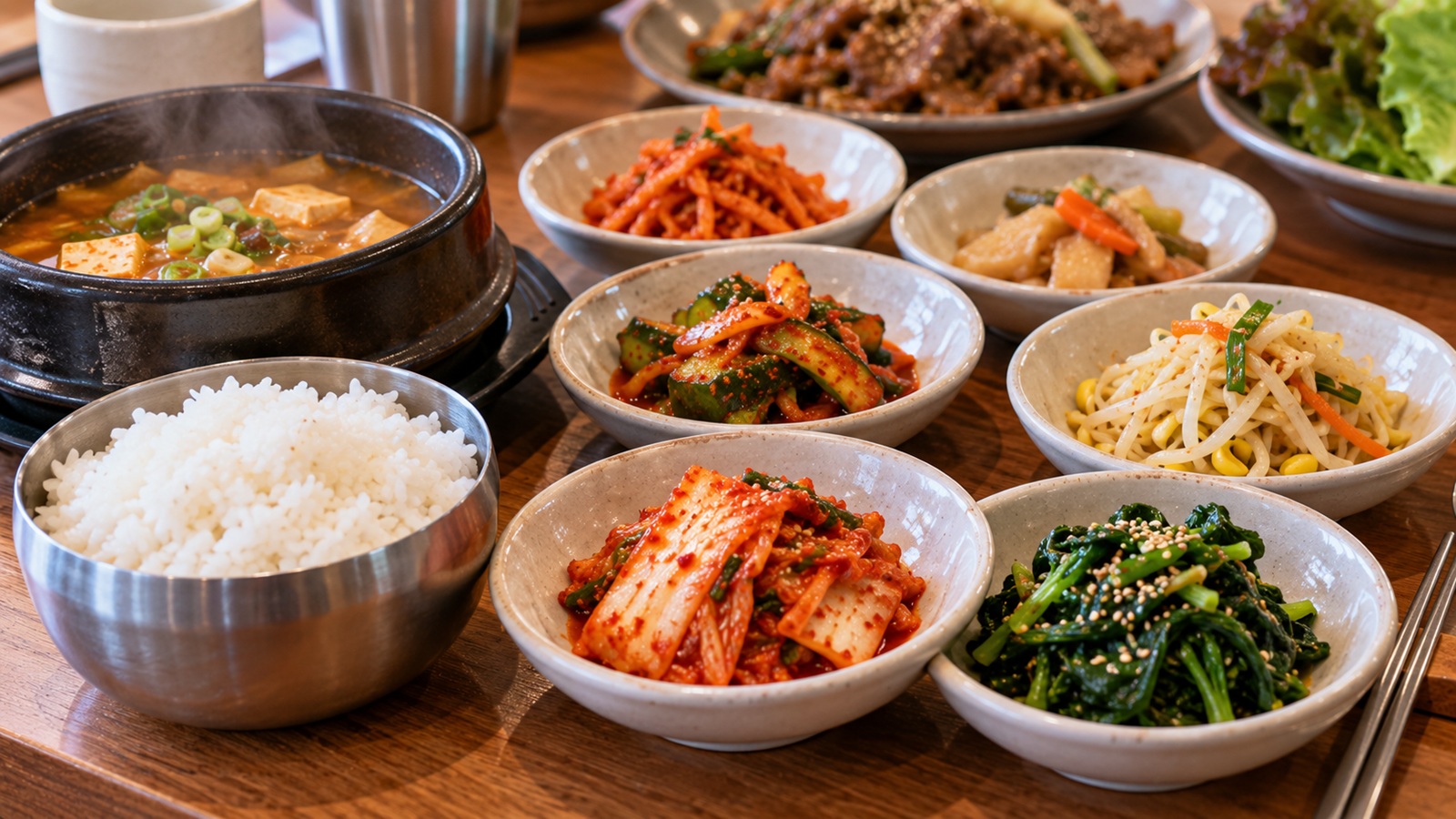
In a typical Korean meal, rice, soup, the main dish and banchan are served together. You can eat the side dishes in whichever order you prefer and combine them with your rice and main dish.
Banchan are usually included with the meal at restaurants that serve them. They are not automatically an extra order simply because several small plates arrive at your table.
Are Banchan Refills Free?
At many Korean restaurants, you can ask for more of the included side dishes without paying extra. Some have a self-service station where customers refill their own plates. However, separately priced side dishes, additional meat or special set-menu items may cost extra. Check the menu or ask if unsure.
If there is a self-service station, take a modest amount first and return for more if needed. This helps avoid food waste and leaves the station ready for other diners.
Water, Cutlery and the Call Button
Several small details can make a Korean restaurant easier to navigate.
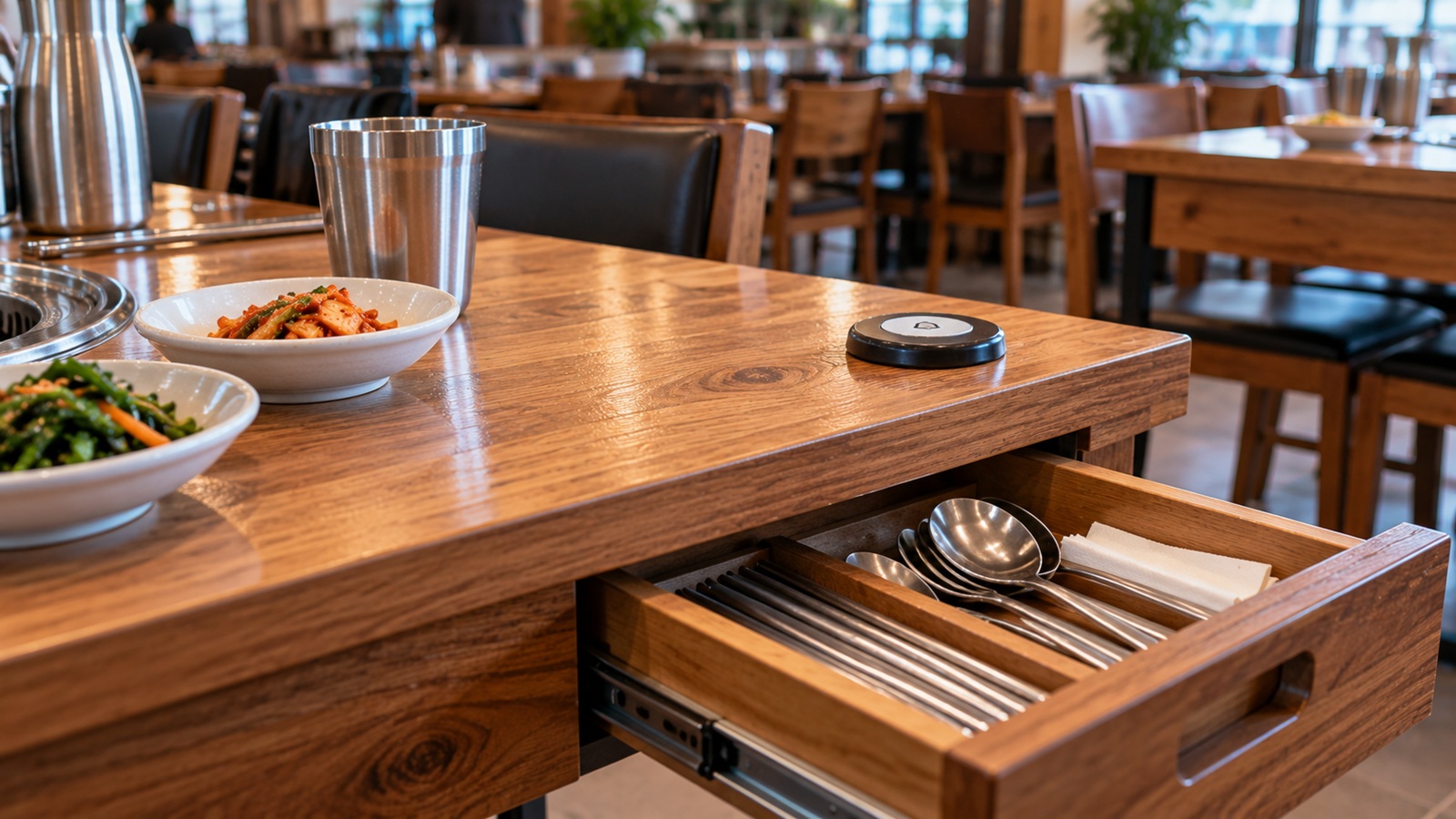
Water may arrive at your table, or you may find a dispenser and cups at a self-service station. Some restaurants keep spoons, metal chopsticks and napkins in a drawer attached to the table.
A call button lets you get a server’s attention. Not every restaurant has one, so look around your table before assuming you need to call out.
At barbecue restaurants, you may find a grill built into the table and storage inside the seat for your coat or bag. Follow the restaurant’s instructions about who cooks the meat and how the grill is handled. If you want to understand the dipping paste often served with barbecue wraps, our guide to Korean sauces and seasonings explains ssamjang, gochujang and doenjang.
Korean Restaurant Etiquette: What Actually Matters?
You do not need to memorize a long list of rules. Being considerate of staff and other diners matters more than performing every custom perfectly.
Return shared utensils to the correct dishes and avoid taking more food than you can eat from a refill station. If using a touchscreen or kiosk, check whether your order has been submitted before waiting.
Chopsticks are common, but a spoon is also a standard part of a Korean table setting. Use the utensils that work for the dish and be mindful of shared plates.
For a broader introduction to manners beyond restaurants, see our Korea travel etiquette guide for first-time visitors.
Do You Tip at Korean Restaurants?
No tip is generally expected at ordinary restaurants in South Korea. The Korea Tourism Organization’s dining guidance states that tipping is not required. You can simply pay the amount on your bill.
How to Pay at a Korean Restaurant
Before leaving, check whether your restaurant uses table payment, counter payment or a kiosk. At many casual restaurants, customers pay at the counter near the entrance or exit, but the arrangement varies.
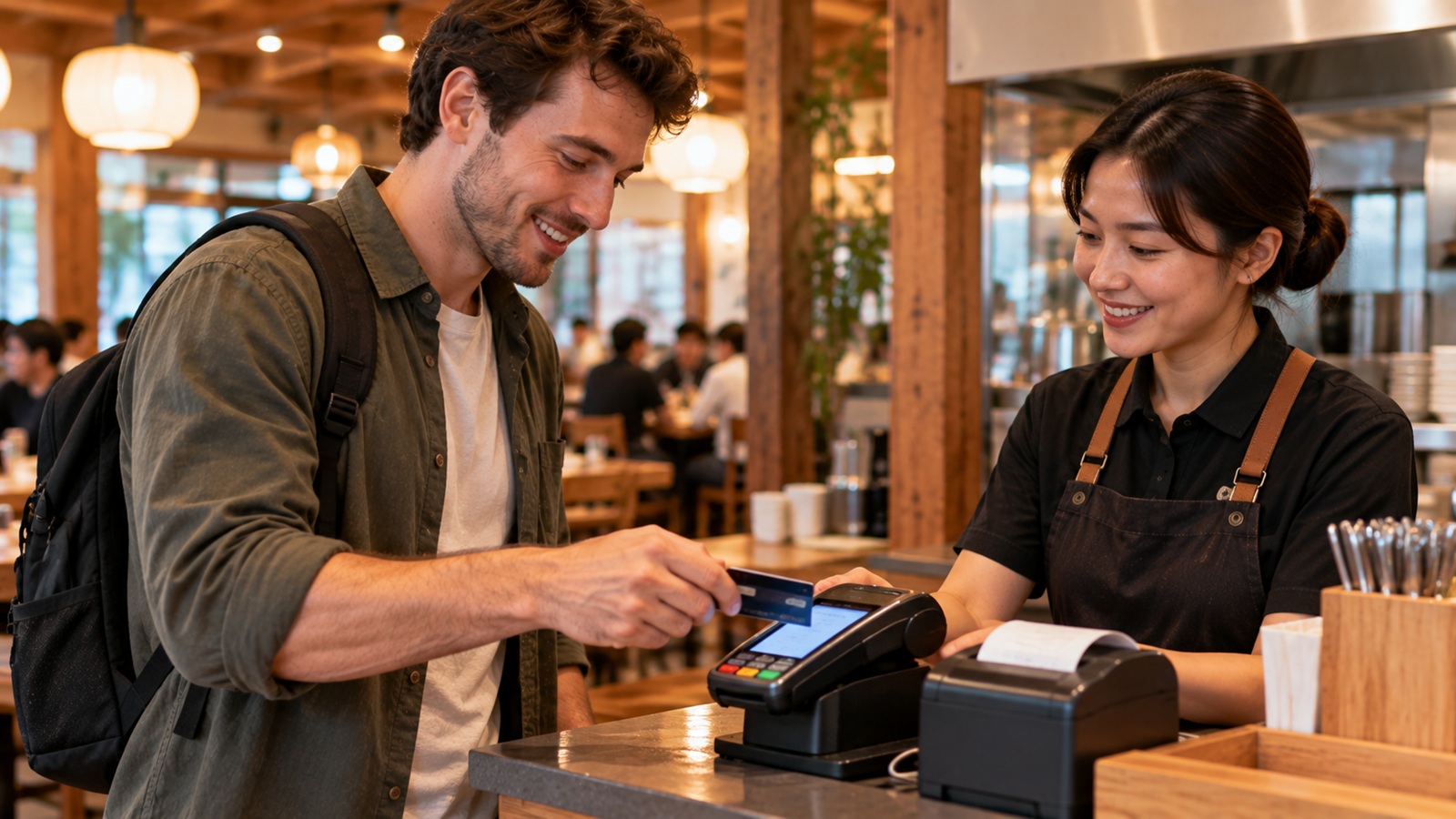
Some places take payment when you order. Others provide a bill or identify your table when you are ready to leave. If you cannot find a bill, approach the counter and say “Gyesanhalgeyo.”
Card acceptance can vary by establishment and issuer. Keep a backup payment option rather than assuming every overseas card will work everywhere. For more on cards, cash and transportation payments, see our guide to paying in Korea as a tourist.
If you are splitting the bill, ask before payment is processed. A restaurant may be able to divide a payment, but separate bills are not guaranteed.
Different Restaurants, Different Dining Styles
A neighborhood restaurant serving a set meal can feel very different from a Korean barbecue restaurant or a quick-service noodle shop.
At a set-meal restaurant, your main dish may arrive with rice, soup and side dishes. At a barbecue restaurant, you may need to order a minimum quantity of meat. At a quick-service restaurant, you might pay first and collect your meal when your number is called.
A café has its own ordering and seating conventions. If you are planning a coffee stop after lunch, our Korean café culture guide covers that experience separately.
The most useful habit is to look at how the restaurant operates before ordering. A sign, touchscreen or self-service counter often tells you more than a general rule about Korean dining.
A Simple First-Time Restaurant Checklist
Before ordering, check the price, portion size and minimum order. If you have dietary restrictions, confirm ingredients rather than relying on a photograph or translated dish name.
During the meal, look for the water station, cutlery drawer and call button. Ask before assuming an extra portion is included, and follow instructions at the self-service counter.
When you finish, check whether payment happens at your table or at the counter. You generally do not need to leave a tip.
Frequently Asked Questions
Do you need to tip at restaurants in Korea?
No. Tipping is generally not expected at ordinary Korean restaurants. Pay the amount shown on your bill unless a separate charge is clearly stated.
Are side dishes free at Korean restaurants?
Banchan served as part of a meal are generally included. Many restaurants provide free refills of those side dishes, but separately priced dishes and special items may cost extra.
Can I eat alone at a Korean restaurant?
Yes, although some shared dishes and barbecue restaurants have minimum-order requirements. Check whether the listed price is per person or per portion.
Do I pay before or after eating in Korea?
Both systems exist. Some restaurants take payment when you order, while others ask you to pay at a counter after your meal.
What if I cannot read the Korean menu?
Look for photographs, an English menu or a touchscreen language option. Translation apps help with basic items, but confirm ingredients directly for allergies or strict dietary needs.
Can I ask for more kimchi or other banchan?
At many restaurants, yes. Ask staff or use the designated refill station. Check first if an item is listed separately or you are unsure whether it is included.