

Taking the KTX is one of the most convenient ways to travel between Korean cities. Whether you are heading from Seoul to Busan or exploring beyond the capital, the booking process is manageable once you know which station to use and where to find your ticket.
Korea began integrated high-speed rail operations in September 2026. Older guides may describe KTX and SRT as entirely separate booking systems, so check current official schedules rather than relying on an outdated tutorial.
This guide covers booking, station selection, boarding, luggage and whether a KORAIL PASS makes sense for your trip.
What Is the KTX?
KTX is Korea’s high-speed rail service, connecting Seoul with major destinations including Busan. For travelers, the key details are the departure station, destination, departure time, journey duration and ticket conditions. KTX is different from the Seoul subway: a T-money card does not replace a reserved intercity train ticket.
Where Should You Book KTX Train Tickets?
Start with KORAIL’s official English-language reservation website or the current official KORAIL app. Korea began integrated high-speed rail operations in September 2026, so older tutorials that treat every KTX and SRT booking channel as entirely separate may be outdated. Check the current results, and confirm the exact train, station and departure time before paying.
Third-party booking services may not show the same inventory or refund conditions as an official channel. Read the conditions attached to your specific ticket.
How to Book a KTX Ticket Step by Step

1. Choose your departure and arrival stations
Enter the station you will actually use, not just the city you are visiting. Seoul Station, Yongsan Station and Suseo Station are separate places. Check which is closest to your accommodation and which is printed on the train result.
2. Select your date and passenger count
Choose your travel date and the number of passengers, then compare departure times and journey durations. Ordinary ticket sales and special holiday reservation periods may follow different schedules, so check official notices for your travel date. For the wider impact on attractions, restaurants and transport, see our guide to traveling in South Korea during public holidays.
3. Review the train and fare
Before selecting a train, confirm the exact departure and arrival stations, departure time, whether a transfer is required, seat class and the conditions shown before payment. A faster service is not necessarily more convenient if its station is far from your hotel.
4. Complete payment and save your ticket
Follow the payment steps shown by the official booking channel. Payment and verification options can vary, so do not assume every foreign-issued card will work in every app. After paying, verify that a ticket was actually issued and save the details needed to retrieve it. If payment appears to fail, check for an existing booking before trying again.
Which Seoul Station Should You Use?
Seoul has several major railway stations, and they are not interchangeable.

Seoul Station is a major long-distance departure point convenient for many visitors staying in central Seoul. Yongsan Station serves important intercity routes and may be shown for your destination. Suseo Station is in southeastern Seoul; check the current train listing rather than assuming its services are identical to those at Seoul Station.
The correct station is the one printed on your ticket. Search its location before departure and allow time to reach the platform. For help with maps and transport, see our essential apps for traveling in Korea.
How Early Should You Arrive for a KTX Train?
For your first journey, arriving around 20–30 minutes before departure is a sensible planning buffer, especially with luggage or at an unfamiliar station. This is practical advice, not an official mandatory check-in time. Check the departure board for your train number, destination, departure time and platform. Several trains can travel toward the same city, so do not rely on the destination alone.
How Do You Board the KTX?
Find your train and carriage, then locate the seat number shown on your ticket.

Keep your ticket accessible during the journey in case staff ask to check it. Carry any identification required by your booking or rail pass. If you are unsure which train to board, ask station staff before departure.
Can You Bring Luggage on the KTX?
Ordinary travel luggage can be brought on board, although storage space varies by train type and carriage. Some trains have luggage racks, and smaller bags may fit on suitable overhead racks.
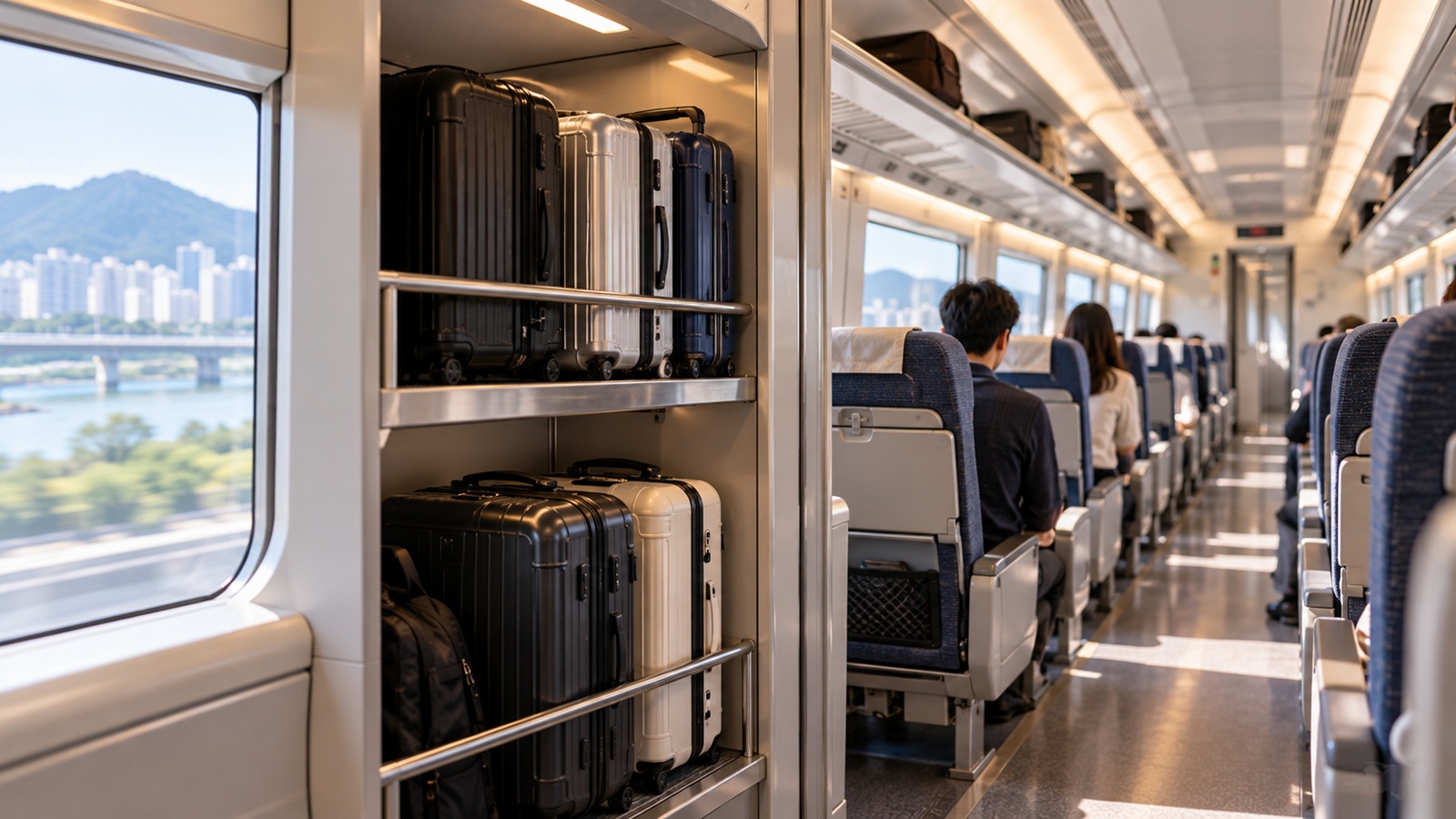
Keep aisles, doors and emergency equipment clear. If you are traveling with a large suitcase, board with enough time to find an appropriate space. Check current KORAIL rules before traveling with unusual battery-powered equipment or oversized items.
Is a KORAIL PASS Worth Buying?
A KORAIL PASS is intended for eligible international visitors planning to use qualifying rail services over a specified period. It is different from buying an ordinary ticket for one journey. Compare the current pass price with the individual tickets you expect to buy; a pass is not automatically cheaper. Our KORAIL Pass worth-it guide and savings calculator lets you compare the pass with the train fares in your actual itinerary.
A pass does not guarantee a reserved seat on every train. Follow the pass-specific reservation process and check availability. Because rail operations changed in September 2026 while some English-language pass guidance may still contain older service exclusions, confirm that your exact train is covered under the current official KORAIL PASS conditions before relying on it.
What If Your Preferred KTX Train Is Sold Out?
Search nearby departure times and check whether another suitable station or train is available. During major Korean holidays, demand and booking procedures can differ from ordinary periods, so consult official reservation notices.
You can also compare an intercity bus for the same journey. Our guide to express and intercity buses in Korea explains how that alternative works.
Taking the KTX from Seoul to Busan
Seoul to Busan is a common first intercity rail journey for international travelers. Compare the exact station in Seoul, total journey time and your arrival time in Busan. Choosing a convenient departure station may matter more than taking the earliest possible train. If you are deciding between rail and road, our KTX vs express bus from Seoul to Busan comparison weighs total cost, travel time, luggage and arrival location.
If you are staying longer, our first-time Busan travel guide can help you plan what to do after arrival.
Final Checklist Before Your Train
Before leaving your accommodation, confirm the departure station, travel date, train number, departure time and ticket. Make sure you can open the ticket on your phone, keep any required passport or pass information accessible, and allow enough time to find your platform.
Frequently Asked Questions
Can foreigners book KTX tickets online?
Yes. KORAIL provides an official English-language reservation website. Available payment and verification steps depend on the booking channel.
How far in advance can I book a KTX ticket?
Check the current official sales schedule for your route and date. Major holiday reservations may follow a separate timetable.
Can I use T-money to ride the KTX?
No. A T-money card for eligible local public transport does not replace an intercity train ticket.
Is Seoul Station the same as Suseo Station?
No. They are separate stations in different parts of Seoul. Travel to the exact station printed on your ticket.
Do I need to print my KTX ticket?
Follow the instructions for the ticket you purchased. Make sure you can access the valid ticket or booking record required by your booking channel.
Does a KORAIL PASS include every high-speed train?
Do not assume so. Check the current pass conditions and confirm that your specific train is eligible.