
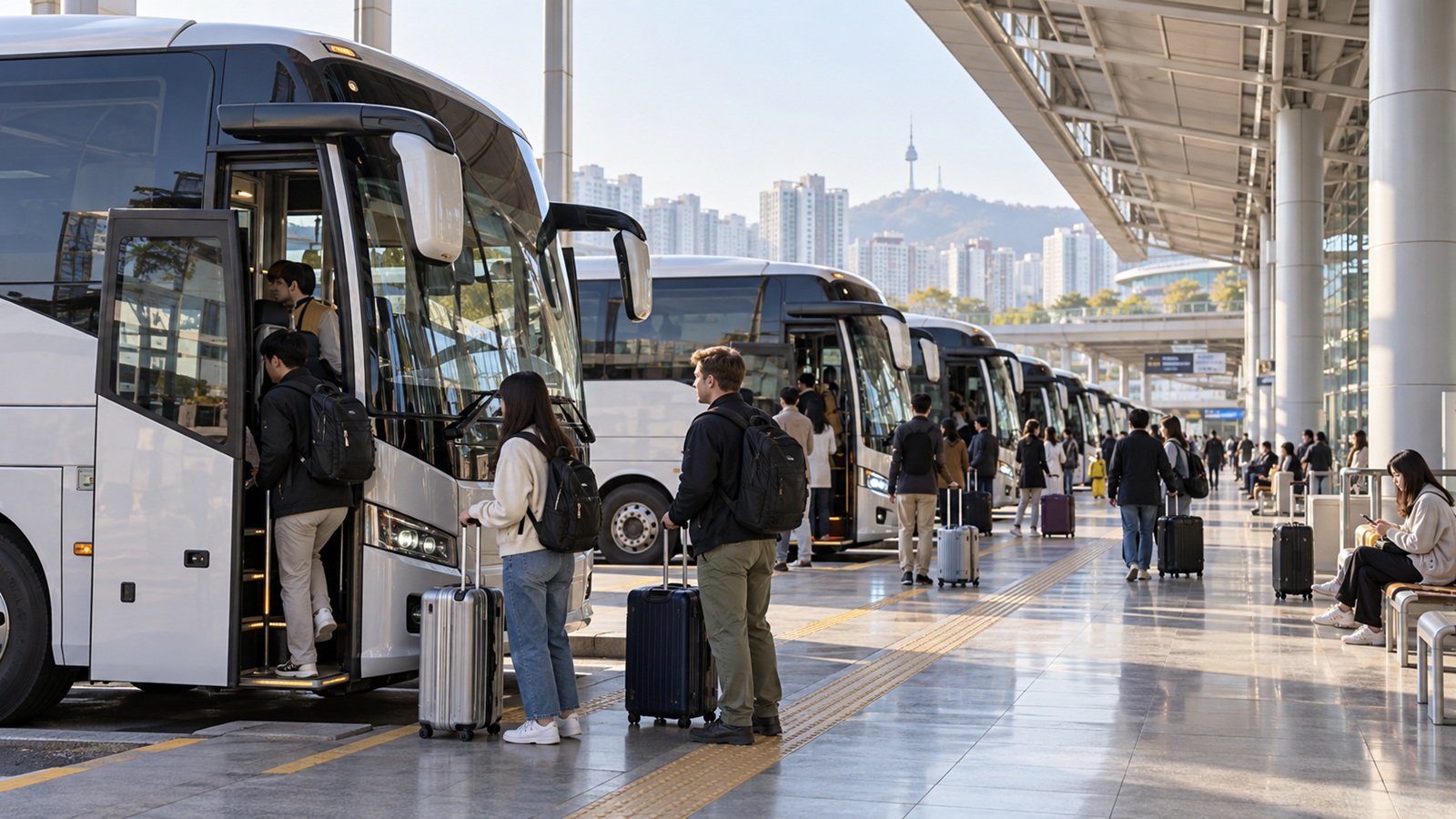
Traveling beyond Seoul does not always mean taking a train. South Korea has an extensive network of long-distance buses connecting major cities, smaller towns and destinations that may be difficult to reach by rail.
For international travelers, the challenging part is often not the journey itself. It is figuring out which bus to take, where it departs from and how to book a ticket with an overseas payment card. This guide explains the differences, booking options and what to expect on your first journey.
Express Bus vs. Intercity Bus: What Is the Difference?
South Korea has two main categories of long-distance buses: express buses (고속버스, gosok beoseu) and intercity buses (시외버스, sioe beoseu). Both connect cities, but their routes, intermediate stops and terminals can differ.
| Feature | Express bus | Intercity bus |
|---|---|---|
| Korean name | 고속버스 | 시외버스 |
| Typical service | Long-distance expressway routes | Regional and intercity routes |
| Intermediate stops | Generally limited | May stop in towns or cities |
| Destinations | Established long-distance routes | Major cities and smaller regional destinations |
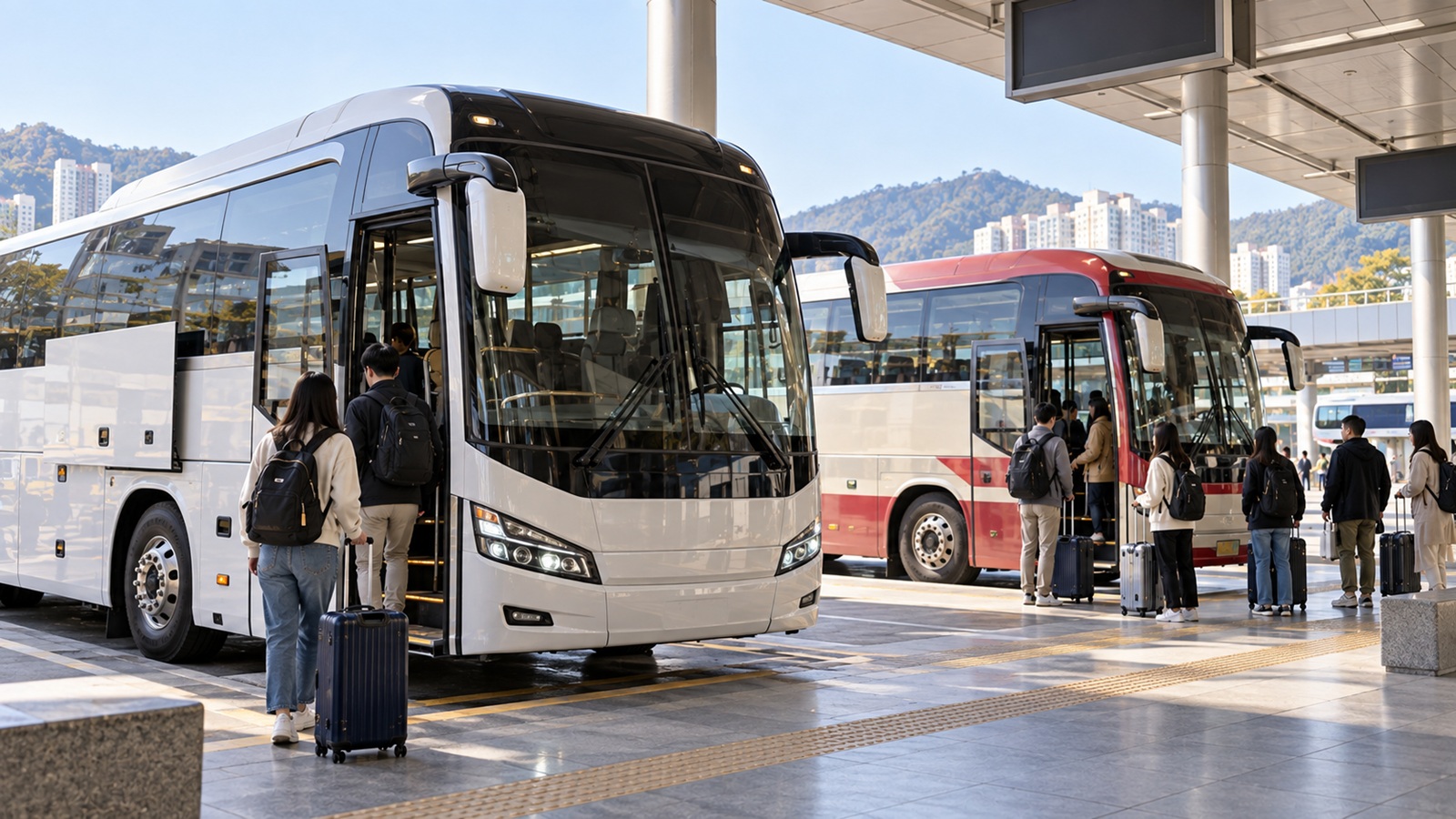
An express bus can be convenient between major cities. An intercity bus may reach a town without a convenient railway station. Compare the actual departure and arrival terminals rather than choosing by category alone.
Where Can Foreign Travelers Book Korean Bus Tickets?
You can buy tickets online or at a terminal. Your best option depends on your route, payment method and whether you want to reserve before arriving in Korea.
Official Express Bus Booking
Kobus is an integrated express bus booking service with multilingual options. Check your departure terminal, destination, date, time and ticket conditions before paying. An English-language interface does not guarantee that every overseas payment card will work.
Official Intercity Bus Booking
Intercity routes can be searched through services including T-money’s intercity bus booking service and Bustago. Route availability, language options and payment requirements may differ. If a journey is missing, check another authorized service or ask at the departure terminal.
Booking Through International Travel Platforms
International booking platforms may be easier for some visitors. The Korea Tourism Organization identifies Klook and Go Hanpass as options for international travelers. Check your specific route, final price, payment acceptance, cancellation terms and whether you must collect a separate boarding ticket.
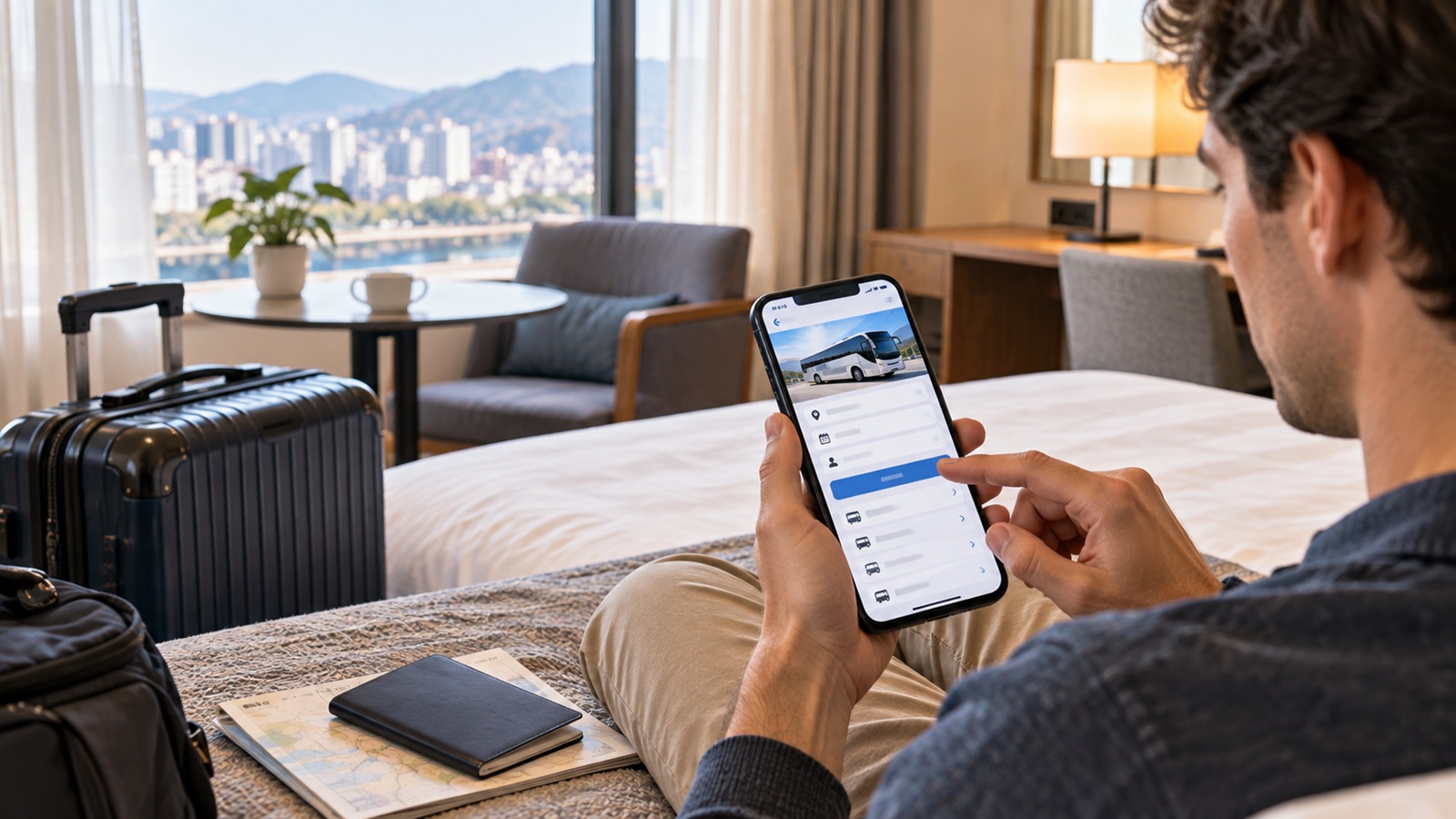
Can You Buy Korean Bus Tickets With a Foreign Credit Card?
Participating booking channels support foreign-issued cards, but acceptance varies by platform, card issuer and transaction. If payment fails, try an officially identified international booking channel or ask about buying a ticket at the terminal. Keep a backup payment method available.
Our guide to paying in Korea as a tourist explains everyday card payments, cash and transportation cards.
Which Bus Terminal Should You Use in Seoul?
One of the easiest mistakes is going to the wrong terminal. Seoul has several long-distance bus terminals, and even buses serving the same region may depart from different facilities.
Seoul Express Bus Terminal
Seoul Express Bus Terminal is connected to Express Bus Terminal Station on subway Lines 3, 7 and 9. Check the terminal and boarding area printed on your ticket.
Central City Express Bus Terminal
Central City is also accessible from Express Bus Terminal Station, but it is a separate facility. Do not assume that reaching the correct subway station means you have found your bus platform.
Dong Seoul Terminal
Dong Seoul Terminal is near Gangbyeon Station on subway Line 2 and serves a range of regional routes.
Seoul Nambu Terminal
Seoul Nambu Terminal is near Nambu Terminal Station on subway Line 3 and serves various intercity routes.
The correct terminal depends on your exact journey. Save the location shown on your booking before leaving your hotel. For subway transfers and transportation cards, see our Seoul subway and T-money guide.
How to Take a Long-Distance Bus in Korea
1. Check Your Booking Details
Confirm the date, departure time, departure terminal, arrival terminal and seat number. A city may have multiple terminals, and the arrival point may be far from your accommodation.
2. Arrive With Time to Find Your Platform
For a first journey, allowing roughly 20–30 minutes before departure is a practical planning allowance, not a universal official requirement. Allow more time if you need to collect a ticket or have large luggage.
3. Check Whether You Need a Printed Ticket
Some reservations provide a boarding ticket or code, while others require ticket collection or printing at the terminal. Follow the instructions for your booking and keep your confirmation accessible.
4. Find Your Departure Platform
Check the platform number on your ticket and the terminal departure screens. Verify it again on arrival because platform assignments may change. Do not assume a bus will wait for late passengers.
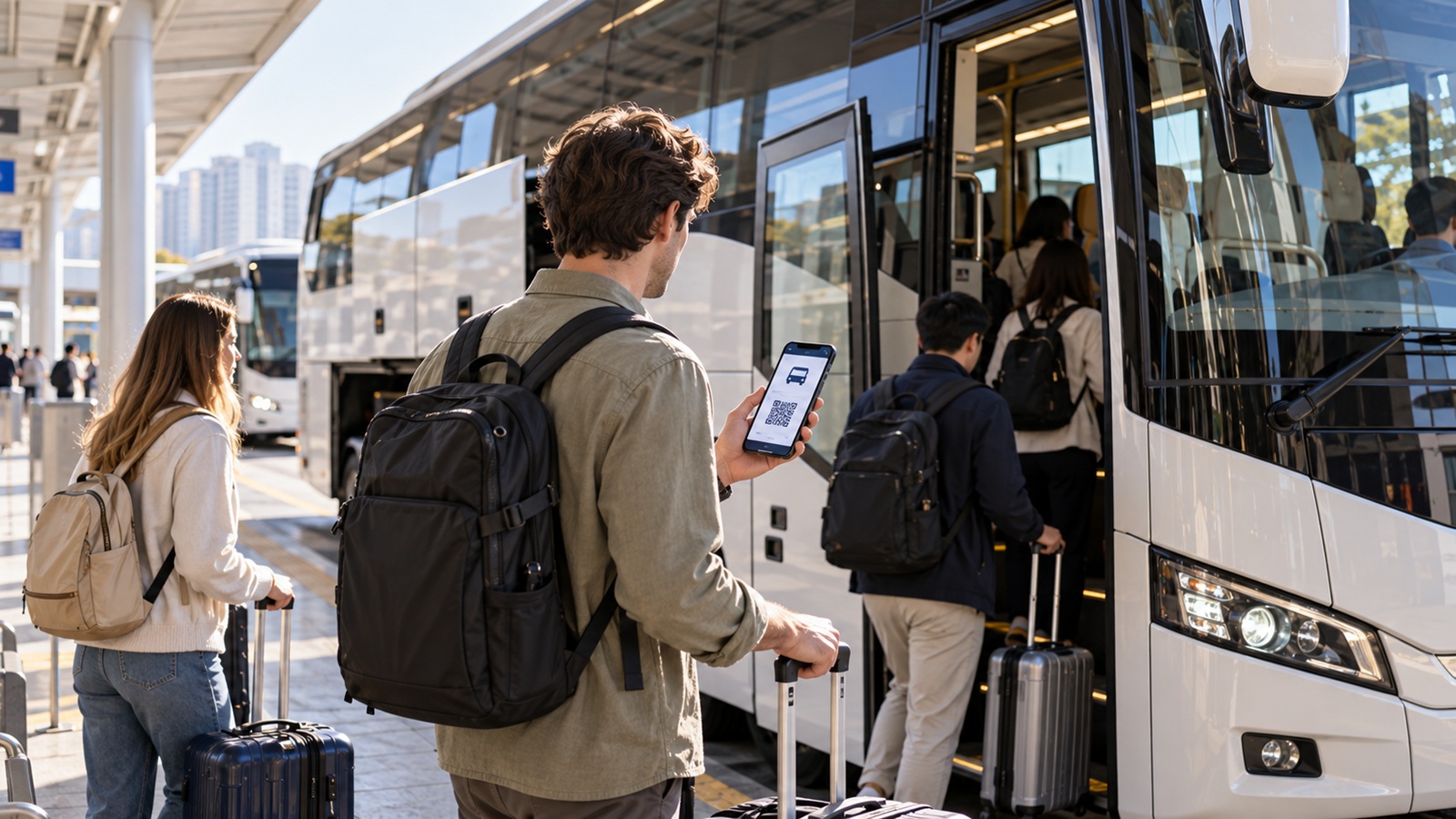
5. Board the Correct Bus
Check the destination displayed on the vehicle, present your ticket as required and use your assigned seat. Follow the driver’s instructions for storing larger luggage.
What Should You Expect During the Journey?
Seating classes vary by operator and route. Premium services may offer more space, but compare the actual seat layout and ticket conditions before paying extra.
Long-distance buses generally do not have onboard restrooms. Some longer journeys stop at a highway service area, or hyugeso (휴게소), where passengers can use restrooms and buy refreshments. Not every route includes a stop. If yours does, note the driver’s departure instructions and return to the correct bus promptly.

Traffic can affect journey times, especially on weekends and major Korean holidays. Avoid scheduling a tight connection immediately after a long-distance bus trip. If your trip overlaps with Seollal or Chuseok, our South Korea public holidays travel guide explains what else to check before departure.
Is a Bus or KTX Better for Traveling Around Korea?
KTX can be convenient between cities served by high-speed rail. A bus may offer a more direct route to destinations without a convenient train station. Compare the complete journey from your accommodation to your final destination, not just the time spent on the vehicle. For the most common long-distance visitor route, see our KTX vs express bus from Seoul to Busan comparison for cost, time, luggage and arrival-location trade-offs.
If Busan is on your itinerary, our first-time Busan travel guide can help you plan your stay.
Practical Tips Before Booking Your Bus
- Compare express and intercity routes to your exact destination.
- Check both departure and arrival terminals.
- Confirm payment methods, cancellation terms and ticket collection instructions.
- Save your booking details for offline access.
- Allow time to find your platform.
- Check whether your journey includes a rest stop.
- Leave extra time during holidays and busy weekends.
For maps, translation and transport tools, our essential apps for traveling in Korea guide explains what to prepare before departure. For general travel assistance, the Korea Tourism Organization operates the 1330 Korea Travel Helpline.
Frequently Asked Questions
Can foreigners book Korean express bus tickets online?
Yes. Kobus offers multilingual options, and international booking channels may provide additional payment options. Check availability and ticket instructions for your route.
What is the difference between an express bus and an intercity bus in Korea?
Express buses generally serve established longer-distance routes with limited intermediate stops. Intercity buses may make additional stops and serve regional destinations.
Can I use a foreign credit card to buy bus tickets in Korea?
Some international booking channels support foreign-issued cards. Acceptance varies by service and card; check before relying on one payment method.
Do Korean long-distance buses have toilets?
Generally, no. Longer routes may include a highway service-area stop, but you should not assume every journey has one.
How early should I arrive at a Korean bus terminal?
For a first journey, approximately 20–30 minutes gives you time to find your platform and collect a ticket if required. This is a practical allowance, not a universal rule.
Can I take a large suitcase on a Korean express bus?
Long-distance buses commonly have luggage compartments, but space and operator rules vary. Check ahead for oversized luggage and follow the driver’s instructions.
Sources & Further Reading
- Korea Tourism Organization — Express Bus & Intercity Bus
- Korea Tourism Organization — Korea Transportation Guide for International Visitors
- Korea Tourism Organization — Discover Every Corner of Korea by Bus
- Kobus — Integrated Express Bus Booking
- T-money — Intercity Bus Booking
- Bustago — Intercity Bus Booking