
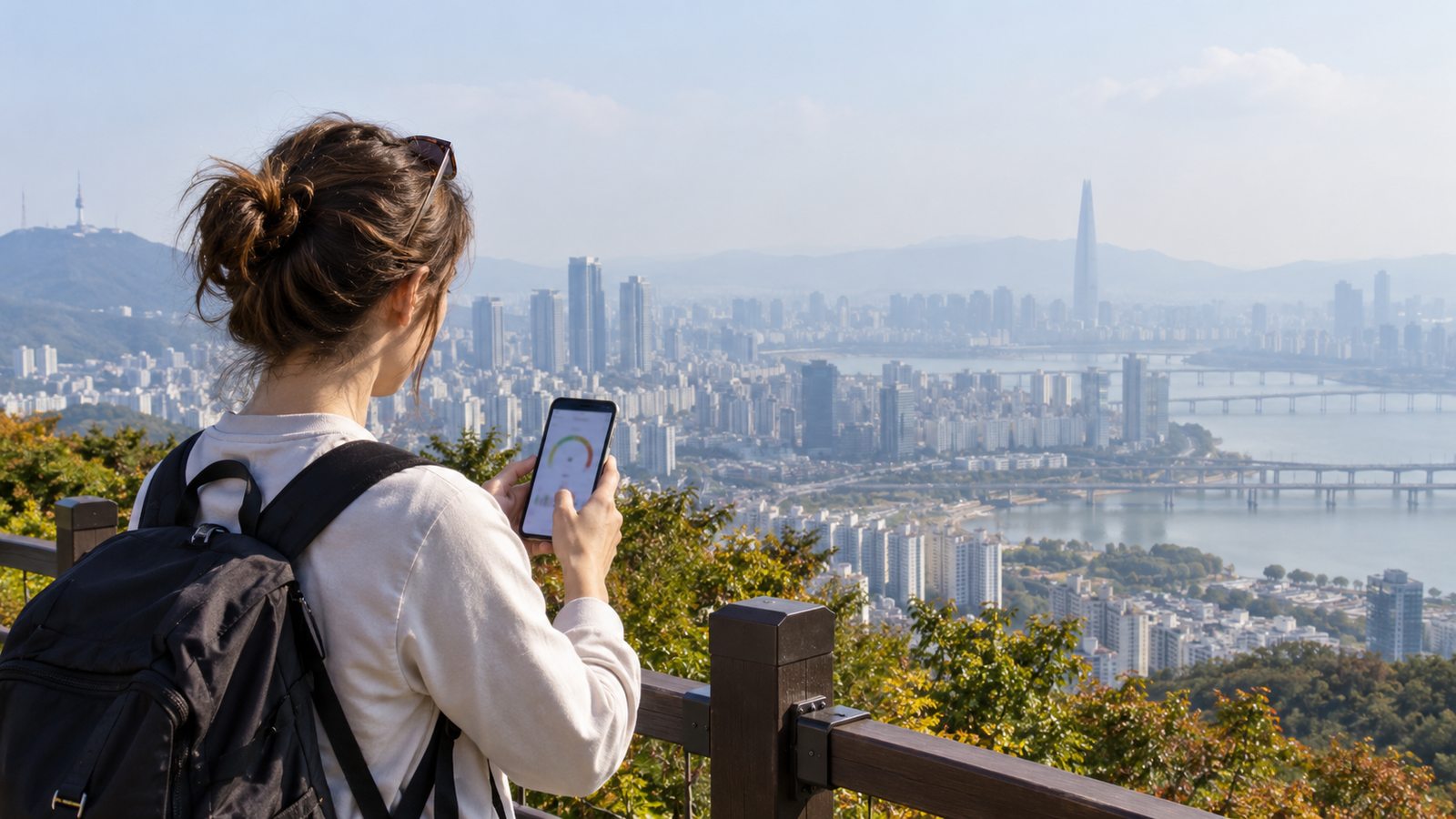
A clear blue sky can turn hazy during a trip to South Korea, and one of the first terms travelers may encounter is “fine dust.”
In Korean, you will often see mise meonji (미세먼지) for fine particulate matter and cho-mise meonji (초미세먼지) for finer particles. Air-quality information is common on Korean weather reports, apps and public information screens.
For travelers, however, the practical question is simpler: Is the air quality good enough for the day you have planned?
The answer is easier to find once you know where to check and how to read Korea’s air-quality system.
What Does “Fine Dust” Mean in Korea?
In everyday Korean usage, “fine dust” generally refers to particulate matter in the air.
Two measurements appear frequently:
- PM10 — particles with a diameter of 10 micrometers or smaller
- PM2.5 — finer particles with a diameter of 2.5 micrometers or smaller
In Korean public information, PM10 is commonly called mise meonji (미세먼지), while PM2.5 is called cho-mise meonji (초미세먼지).
You do not need to understand atmospheric science to use these numbers while traveling. The important point is that PM2.5 and PM10 are separate measurements, and both can appear on Korean air-quality services.
How Does Korea Rate PM2.5 and PM10?
Korea’s AirKorea system divides particulate-matter concentrations into four categories.
| Air Quality | PM2.5 | PM10 |
|---|---|---|
| Good | 0–15 µg/m³ | 0–30 µg/m³ |
| Moderate | 16–35 µg/m³ | 31–80 µg/m³ |
| Unhealthy | 36–75 µg/m³ | 81–150 µg/m³ |
| Very Unhealthy | 76+ µg/m³ | 151+ µg/m³ |
These are concentration categories used by AirKorea.
That distinction matters because another app may display an air-quality index rather than the raw PM concentration.
A number such as “40” therefore does not mean much unless you first check what the number represents.
Why Do Different Air-Quality Apps Show Different Numbers?
This is one of the most confusing parts of checking air quality while traveling.
One service may show:
PM2.5: 28 µg/m³
Another may show an AQI or another index value based on the same underlying pollution data.
AirKorea also uses Korea’s Comprehensive Air-quality Index (CAI). The CAI considers six air pollutants and expresses overall air quality on a scale from 0 to 500.
Its broad categories are:
- Good: 0–50
- Moderate: 51–100
- Unhealthy: 101–250
- Very Unhealthy: 251–500
That means a PM2.5 concentration, a Korean CAI value and an AQI value from another country or app are not necessarily numbers you can compare directly.
Before deciding that two apps disagree, check the unit and index system shown on each screen.
Where Should Travelers Check Air Quality in Korea?
The most useful official starting point is AirKorea, South Korea’s national air-quality information service.
AirKorea provides information for Seoul, Busan, Incheon, Daegu, Jeju and other regions across the country.

Travelers can check:
- current PM2.5 levels
- current PM10 levels
- regional and monitoring-station data
- air-quality forecasts
- warnings and alerts
- overall CAI information
If you are staying in Seoul, for example, you can select Seoul and then look at individual districts and monitoring stations.
The closest station may give you a more useful picture than a single national number.
AirKorea also notes that its most recent real-time measurements are provided before final data approval, so small changes or corrections can occur later.
Check the Forecast, Not Just the Current Reading
Checking the air once in the morning is useful, but it may not tell you what conditions will be like for the rest of the day.
AirKorea provides forecasts for today, tomorrow and the day after tomorrow.
That can be especially useful when your itinerary includes several hours outdoors.
Imagine that you have two flexible plans:
- hiking in the morning and visiting a museum tomorrow
- visiting the museum today and hiking tomorrow
If the official forecast suggests noticeably better conditions tomorrow, switching those activities may make the trip more comfortable.
You do not necessarily need to cancel an entire sightseeing day because of one number. Think of air quality as another planning factor, alongside rain, heat, cold and wind.
Fine Dust and Yellow Dust Are Not the Same Thing
Travelers sometimes use “fine dust,” “yellow dust” and “air pollution” as if they mean exactly the same thing.
They do not.
Fine dust describes particulate matter measured as PM10 or PM2.5.
Yellow dust, also known as Asian dust or hwangsa (황사), is a meteorological phenomenon involving dust transported over long distances from dry regions of the Asian continent.
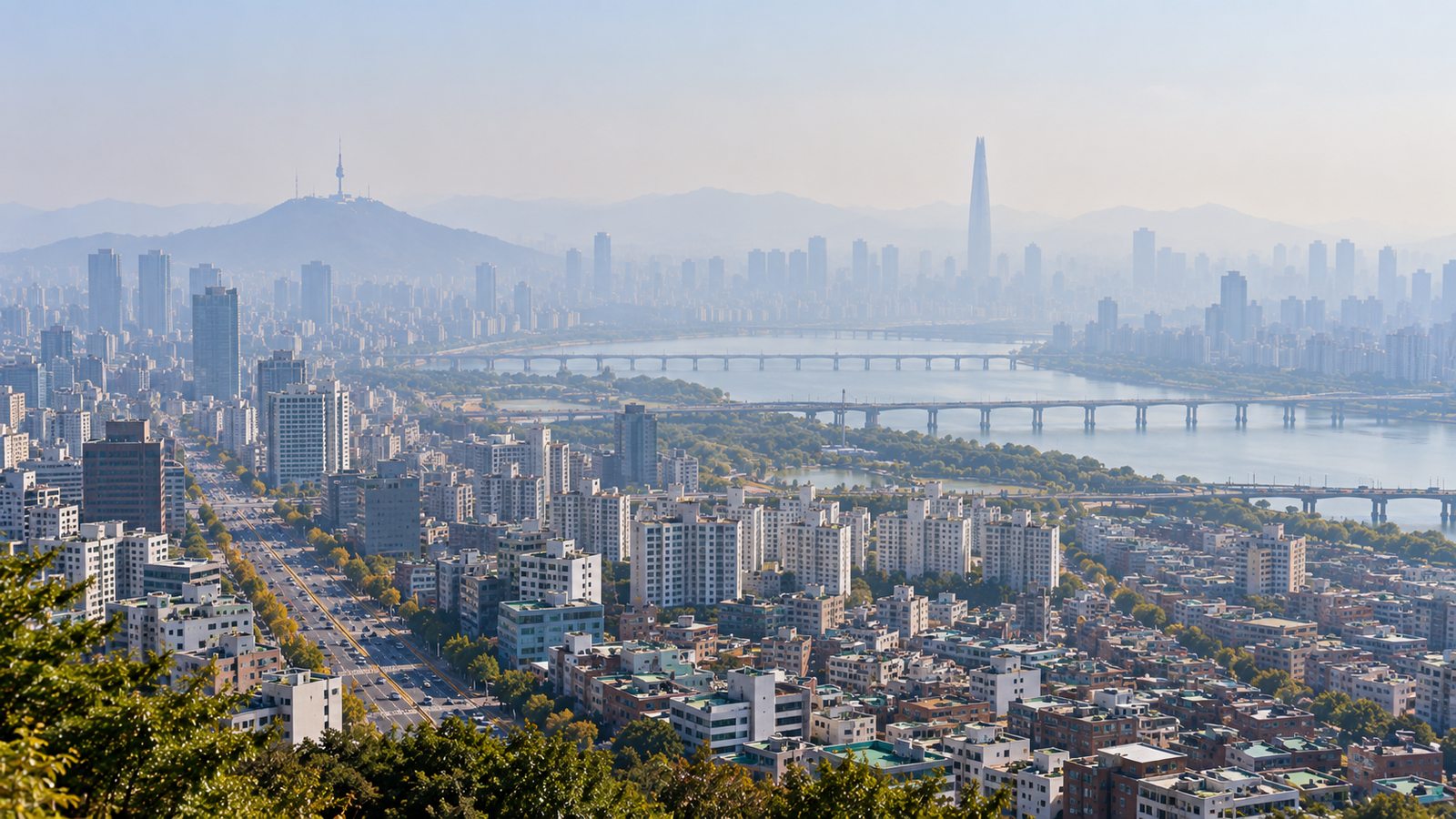
Yellow-dust events can cause PM10 concentrations to rise sharply, but not every bad fine-dust day is a yellow-dust event.
South Korea’s Korea Meteorological Administration monitors Asian dust separately and can issue weather warnings for significant events.
For travelers, a simple rule works well:
Check AirKorea for particulate-matter conditions and official air-quality information, and check Korean weather information when yellow dust is being reported.
Is Fine Dust Only a Spring Problem?
No.
Spring is strongly associated with yellow-dust events, but poor particulate-matter conditions are not limited to spring.
Weather patterns, atmospheric stagnation, domestic emissions and pollution transported from outside Korea can all influence air quality.
South Korea also operates seasonal fine-dust management measures, particularly during periods when high PM2.5 concentrations are more likely.
The practical lesson for travelers is not to assume that one season is always “safe” and another is always “bad.”
Check the actual conditions for the days you are traveling.
What Should You Do When Air Quality Is Poor?
Your response should depend on the official air-quality category, your planned activity and your personal health situation.
AirKorea provides behavioral guidance associated with its air-quality index, with stronger precautions as pollution levels rise.
For a traveler, the most useful approach is to reconsider long or strenuous outdoor activities when official information shows poor conditions.
A day of shopping, museums, cafés or indoor cultural attractions may be easier to rearrange than a long mountain hike.
This is particularly relevant if your itinerary includes running, cycling or hiking, where you may spend several hours exercising outdoors.
Travelers with respiratory or cardiovascular conditions, children, older adults and others who may be more sensitive to air pollution should follow official health guidance and any advice provided by their healthcare professional.
What About Hiking in Seoul?
Seoul’s mountains are one of the city’s biggest attractions, but hiking is also an activity where checking air quality before leaving is useful.
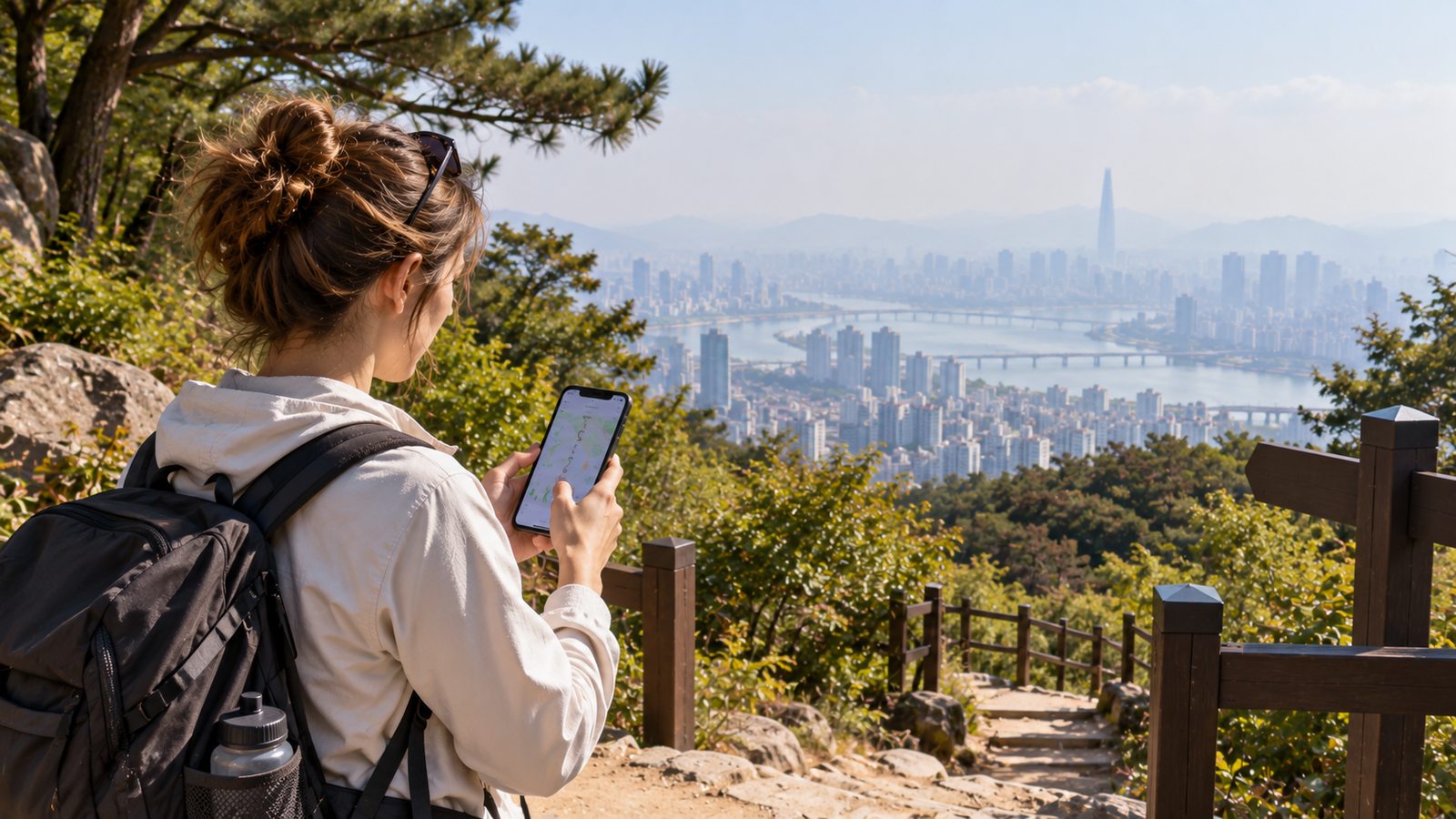
A hike on Bukhansan, Inwangsan or another Seoul mountain can keep you outdoors for several hours.
Before leaving your hotel:
- check the weather
- check AirKorea
- look at PM2.5 and PM10
- check for warnings
- reconsider a long hike if official guidance recommends reducing outdoor activity
Our guide to hiking in Seoul covers routes, seasons and practical preparation for first-time visitors.
On a hazy day, moving the hike to another day may also give you better city views.
What About Running or Cycling?
The same planning principle applies to running and cycling.
A short walk between attractions is not the same type of exposure as a long run or several hours cycling beside the Han River.
If you are planning a morning run, check current conditions shortly before leaving rather than relying only on what the air looked like the previous evening.
Our running in Seoul guide explains popular running areas and practical considerations for visitors.
Travelers planning to use Seoul Bike can also check our Ddareungi guide before combining cycling with a day of sightseeing.
Should You Pack a Mask for Fine Dust?
A compact travel kit can be useful if you expect to spend a lot of time outdoors.
However, a mask should not be treated as a guarantee that outdoor exposure no longer matters.
If Korean authorities issue air-quality guidance or warnings, follow the official recommendations for the conditions at that time.
Travelers with medical conditions that make air pollution a particular concern should discuss appropriate precautions with a healthcare professional before traveling.
For a broader checklist of seasonal clothing, electronics and travel essentials, see our South Korea packing guide.
Can You Trust What the Sky Looks Like?
Not completely.
Haze can be an obvious visual clue, but air quality should not be judged only by whether the sky looks blue or gray.
Visibility is affected by humidity, clouds, fog and other weather conditions as well as airborne particles.
Conversely, air that looks reasonably clear does not tell you the exact PM2.5 concentration.
Checking official measurements takes only a moment and gives you better information than looking out of the hotel window.

A Simple Air-Quality Routine for Travelers
You do not need to monitor pollution continuously during your vacation.
A simple routine is usually enough.
In the morning:
Check AirKorea and the weather forecast.
Before a long outdoor activity:
Check PM2.5, PM10 and any current warnings again.
If conditions are poor:
Consider moving a long run, bicycle ride, hike or extended outdoor sightseeing session to another day.
If apps disagree:
Check whether they are showing µg/m³, Korea’s CAI or another AQI system.
If you have a health condition:
Follow official guidance and the medical advice appropriate to your individual situation.
This turns air quality into a normal part of travel planning rather than something that needs to dominate your trip.
Useful Korean Words You May See
A few Korean terms can make weather apps and public information easier to understand.
| Korean | Meaning |
|---|---|
| 미세먼지 | Fine dust / PM10 |
| 초미세먼지 | Ultrafine or fine particulate matter / PM2.5 |
| 황사 | Yellow dust / Asian dust |
| 좋음 | Good |
| 보통 | Moderate |
| 나쁨 | Unhealthy / Bad |
| 매우 나쁨 | Very Unhealthy / Very Bad |
| 주의보 | Advisory / warning notice |
| 경보 | Warning / alert |
Translations can vary slightly between services, but recognizing the Korean terms is useful when checking local information.
If you plan to use Korean transport, maps and translation tools during your trip, our guide to essential apps for traveling in Korea can help with the rest of your phone setup.
The Bottom Line
Fine dust is something travelers in South Korea may encounter, but it does not need to make trip planning complicated.
Remember four things:
Check the official data. Understand whether you are looking at PM concentration or an air-quality index. Do not confuse fine dust with yellow dust. Adjust long outdoor activities when conditions warrant it.
AirKorea is a useful official reference for current PM2.5 and PM10 readings, forecasts and air-quality alerts, while Korea’s weather service provides additional information when Asian dust is affecting the country.
A thirty-second check before heading out can help you decide whether today is better for a mountain trail, a Han River bike ride or an indoor Seoul itinerary.
Frequently Asked Questions
What is fine dust called in Korean?
Fine dust is commonly called mise meonji (미세먼지). PM2.5 is commonly called cho-mise meonji (초미세먼지), while yellow or Asian dust is called hwangsa (황사).
What is the best website for checking fine dust in Korea?
AirKorea is South Korea’s official national air-quality information service. It provides current PM2.5 and PM10 readings, monitoring-station information, forecasts and air-quality warnings.
What PM2.5 level is considered unhealthy in Korea?
Under AirKorea’s concentration categories, PM2.5 from 36 to 75 µg/m³ is classified as Unhealthy, while 76 µg/m³ or higher is Very Unhealthy.
Is yellow dust the same as PM2.5?
No. Yellow dust, or Asian dust, is a meteorological dust phenomenon. It can strongly affect PM10 concentrations, but it should not be treated as another name for PM2.5 or for every fine-dust event.
Why does my weather app show a different air-quality number from AirKorea?
The apps may be showing different measurements or index systems. One may show PM2.5 concentration in µg/m³, while another shows an AQI or Korea’s CAI. Check the unit and index before comparing the numbers.
Should I cancel outdoor activities when fine dust is high?
Check the current official category and behavioral guidance rather than using a single universal cutoff. Long or strenuous activities such as hiking, running and cycling are particularly worth reconsidering when official guidance recommends reducing outdoor activity. People who are more sensitive to air pollution should follow relevant official and medical advice.
Sources & Further Reading
AirKorea — Current Air Quality
AirKorea — Introduction to the Comprehensive Air-quality Index
AirKorea — Behavioral Guidelines
AirKorea — Air Quality Forecast
Korea Meteorological Administration — Current Severe Weather Status and Asian Dust Criteria
Ministry of Environment — Air Pollution and Fine Dust Policy