
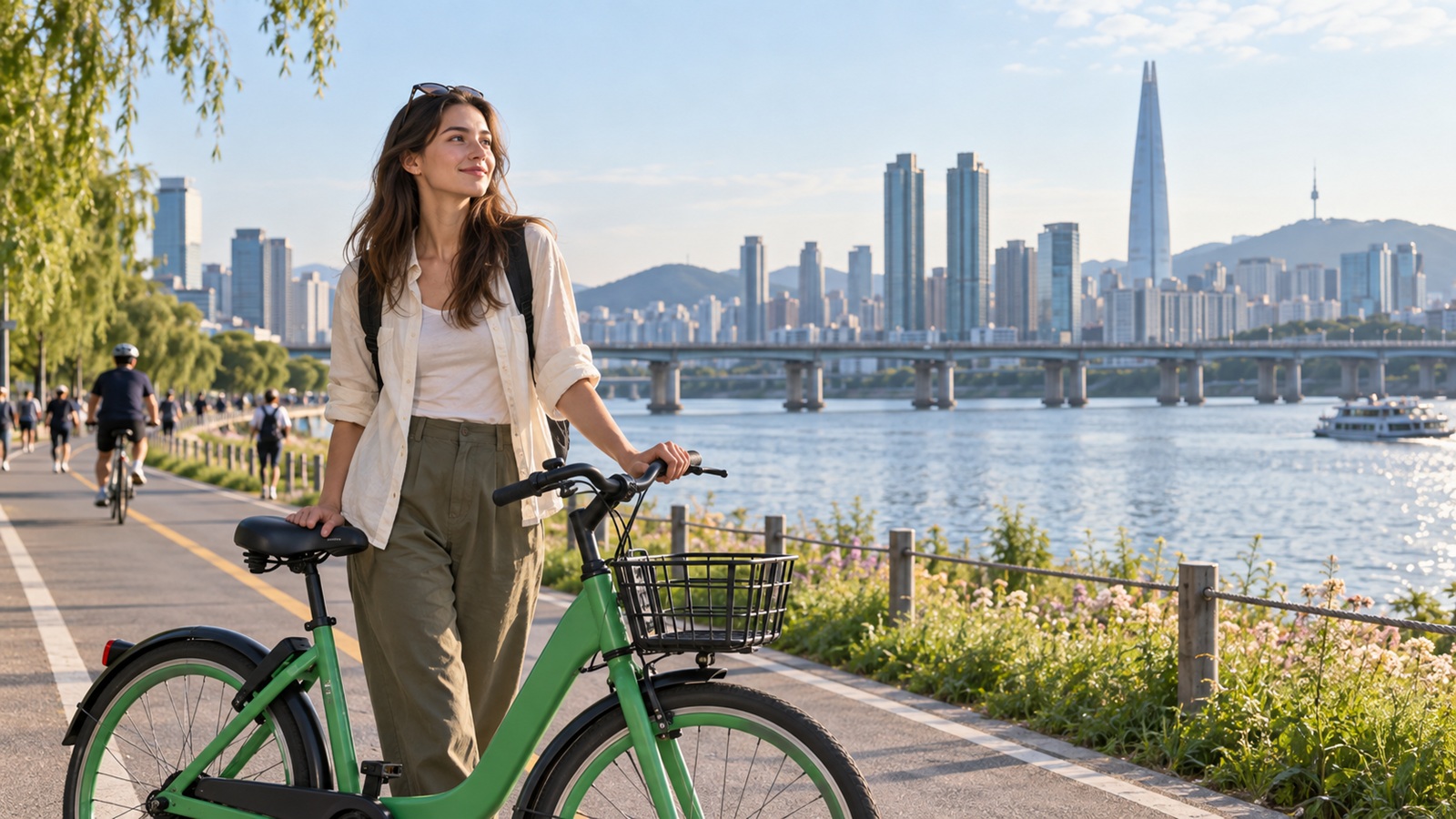
Seoul is a city of subway rides, busy intersections and neighborhoods best explored on foot. But there is another way to see the city: on one of its public rental bicycles.
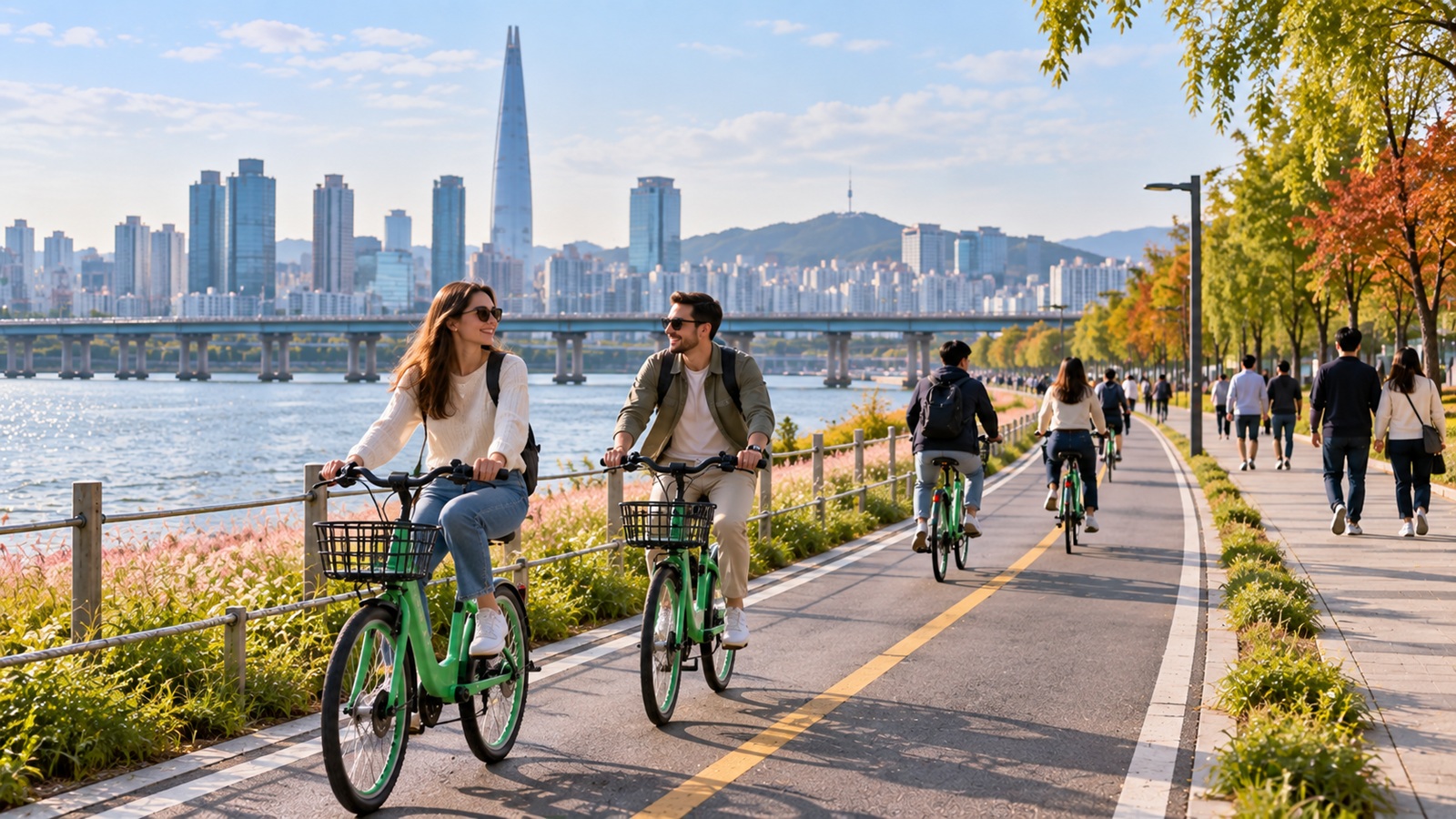
Seoul Bike, known locally as Ddareungi (따릉이), lets you pick up a bicycle at a rental station, ride across the city and return it at another official station. It can be particularly enjoyable along the Hangang River, where cycling paths connect some of Seoul’s most popular riverside parks.
The system is available to international visitors, although buying a pass and understanding the rental time limits can take a little preparation.
Here is how to use Seoul Bike in 2026, from choosing a pass to returning your bicycle without unexpected charges.
What Is Seoul Bike (Ddareungi)?
Ddareungi is Seoul’s public bicycle-sharing service, operated by the Seoul Metropolitan Government.
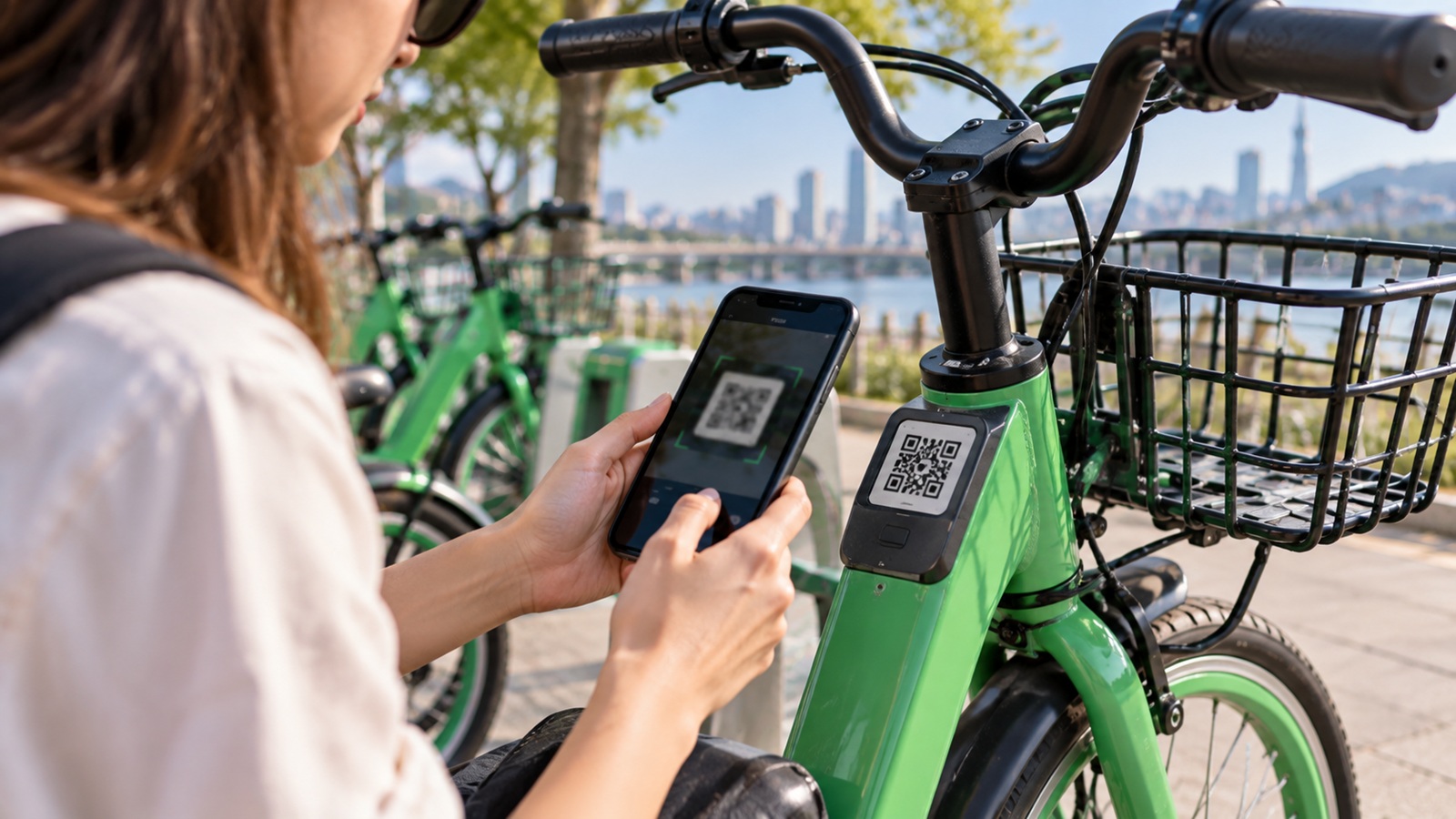
Unlike a conventional bicycle rental shop, it uses a network of automated rental stations. You can find available bicycles through the official app, unlock one using a QR code and return it at a participating station.
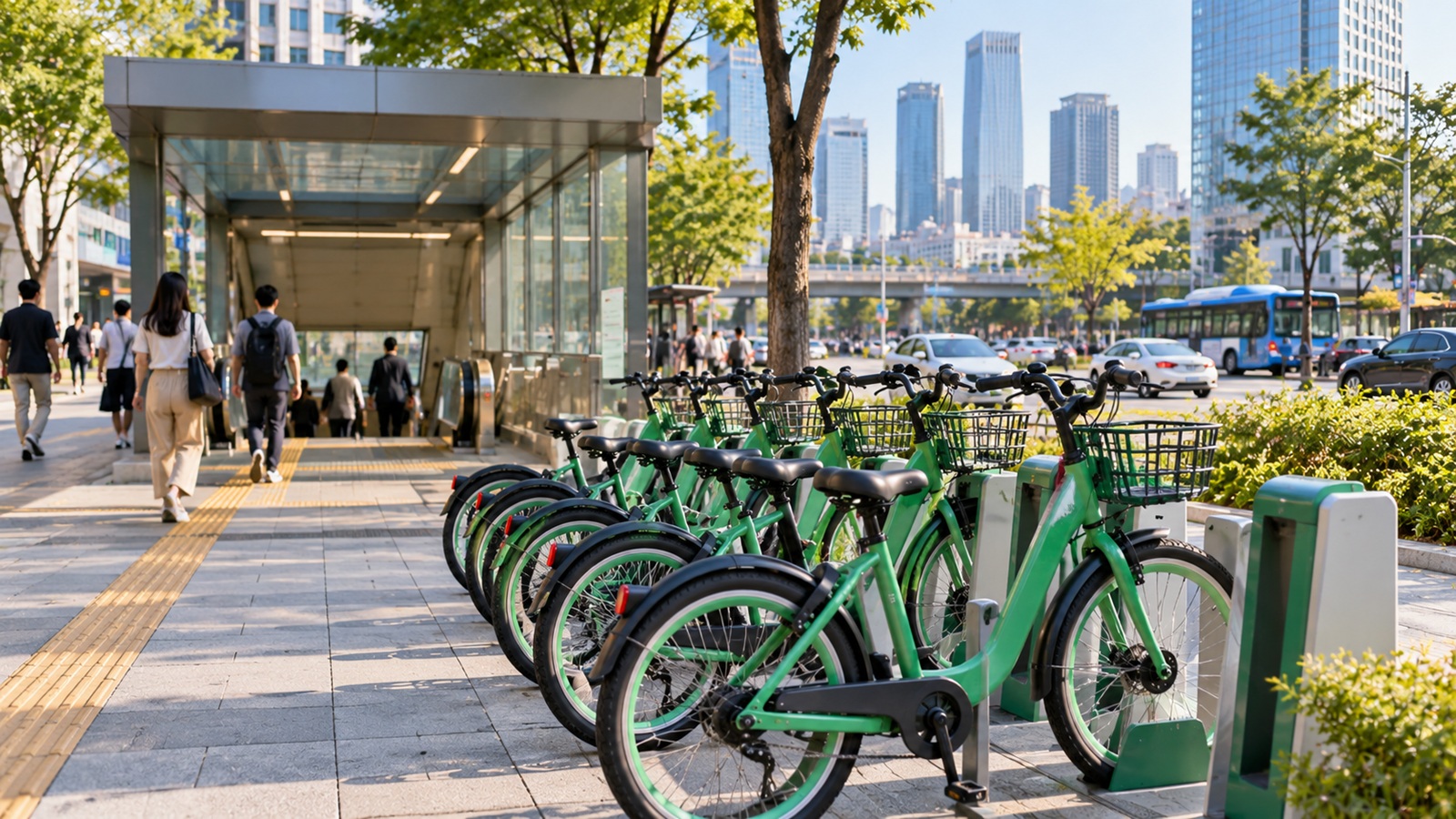
Rental stations are commonly located near subway stations, residential neighborhoods, public facilities and popular destinations.
That makes Ddareungi useful for both short journeys and recreational rides. You might use it to explore a riverside park, travel between nearby neighborhoods or enjoy a different view of Seoul.
It is worth remembering that Ddareungi is a shared transport service, not a bicycle you can keep for your entire vacation.
Can Foreign Tourists Use Seoul Bike?
Yes. International visitors can use Seoul Bike without becoming long-term residents of Korea.
The official Seoul Bike app provides a foreigner option for purchasing rental passes. Seoul has also introduced English-language assistance to help international visitors navigate the rental and return process.
You will generally need a compatible smartphone, an internet connection, a payment method accepted by the service and access to your rental pass.
For most short-term visitors, the foreigner rental option is the most relevant place to start.
Do You Need a Korean Phone Number?
The official foreigner purchase process provides a separate route from the standard Korean resident registration process.
Seoul’s published instructions show international visitors selecting the foreigner option, choosing a pass and entering an email address before payment.
However, app interfaces and payment verification requirements can change. Follow the instructions displayed for your selected purchase method rather than assuming every registration screen requires a Korean phone number.
Can You Pay With a Foreign Credit Card?
The official service supports credit-card payments, and the foreigner purchase process includes a card-payment step.
However, acceptance can depend on the card issuer, payment network and authentication requirements. A card that works in Korean shops is not necessarily guaranteed to work with every online payment gateway.
If your payment fails, check the official app for other available payment methods or the Discover Seoul Pass option.
Avoid purchasing an additional pass repeatedly until you have confirmed whether the original payment was successful.
How Much Does Seoul Bike Cost in 2026?
Seoul Bike offers several rental options, including one-hour, two-hour and three-hour passes.
For occasional visitors, the following single-use options are the most relevant.
| Pass | Listed price | Basic rental time |
|---|---|---|
| 1-hour pass | KRW 1,000 | 60 minutes |
| 2-hour pass | KRW 2,000 | 120 minutes |
| 3-hour pass | KRW 3,000 | 180 minutes |
The three-hour option was introduced in November 2025, giving riders more flexibility for longer outings.
Prices and pass availability may change, so check the official Seoul Bike app before purchasing.
Does a One-Day Pass Mean You Can Ride for 24 Hours?
Not necessarily.
A pass’s validity period and the basic rental time for each ride are different things.
For example, a pass may allow repeated rentals during its validity period, but you must still return the bicycle within the time limit attached to each rental.
If you want to continue riding, return the bicycle properly and start another rental when permitted by your pass.
Do not simply leave the bicycle parked somewhere and assume your rental has ended.
What Happens if You Exceed the Rental Time?
Additional charges may apply when you exceed the basic rental time.
Seoul’s published fare information lists an additional KRW 200 for every five minutes beyond the applicable time limit. Check the current terms for your selected pass before riding.
Set a reminder on your phone and allow extra time to find a return station. It is easier to plan a relaxed ride than to rush back through unfamiliar streets.
How to Rent a Seoul Bike: Step by Step
The rental process is designed to be straightforward once you have purchased a pass.
Step 1: Download the Official Seoul Bike App
Search for the official Seoul Bike app, also known as 따릉이, in your phone’s app store.
You can also access service information through the official Seoul Bike website at bikeseoul.com.
Check that you are using the official service rather than an unrelated bicycle rental app.
Step 2: Choose the Foreigner Option and Buy a Pass
Open the app and look for the foreigner rental option.
Choose the pass that suits your planned ride, enter the requested information and complete payment.
Keep your purchase confirmation and any pass code or email you receive until your rental is finished.
If you already have a valid pass, follow the app’s instructions for retrieving or using it rather than purchasing another one.
Step 3: Find an Available Bicycle
Use the app’s map to locate a nearby rental station and check bicycle availability.
If you are staying near a subway station, there may be a rental station within walking distance.
For a first ride, consider starting somewhere with a clearly marked cycling path rather than immediately entering busy city traffic.
Step 4: Check the Bicycle Before Unlocking It
Take a moment to inspect the bicycle.
Check the tires, brakes, saddle, handlebars and visible condition of the frame. Make sure the bicycle appears suitable for your height and that you can control it comfortably.
If something looks damaged or unsafe, choose another bicycle and report the problem through the official service.
Step 5: Scan the QR Code and Start Your Ride
Select the rental function in the app and scan the QR code on the bicycle.
Follow the on-screen instructions and wait for the lock to release.
Before setting off, make sure the rental has started successfully and the bicycle is ready to move.
Keep an eye on the remaining rental time while you ride.
How to Return a Ddareungi Bicycle
Returning the bicycle correctly is just as important as renting it.
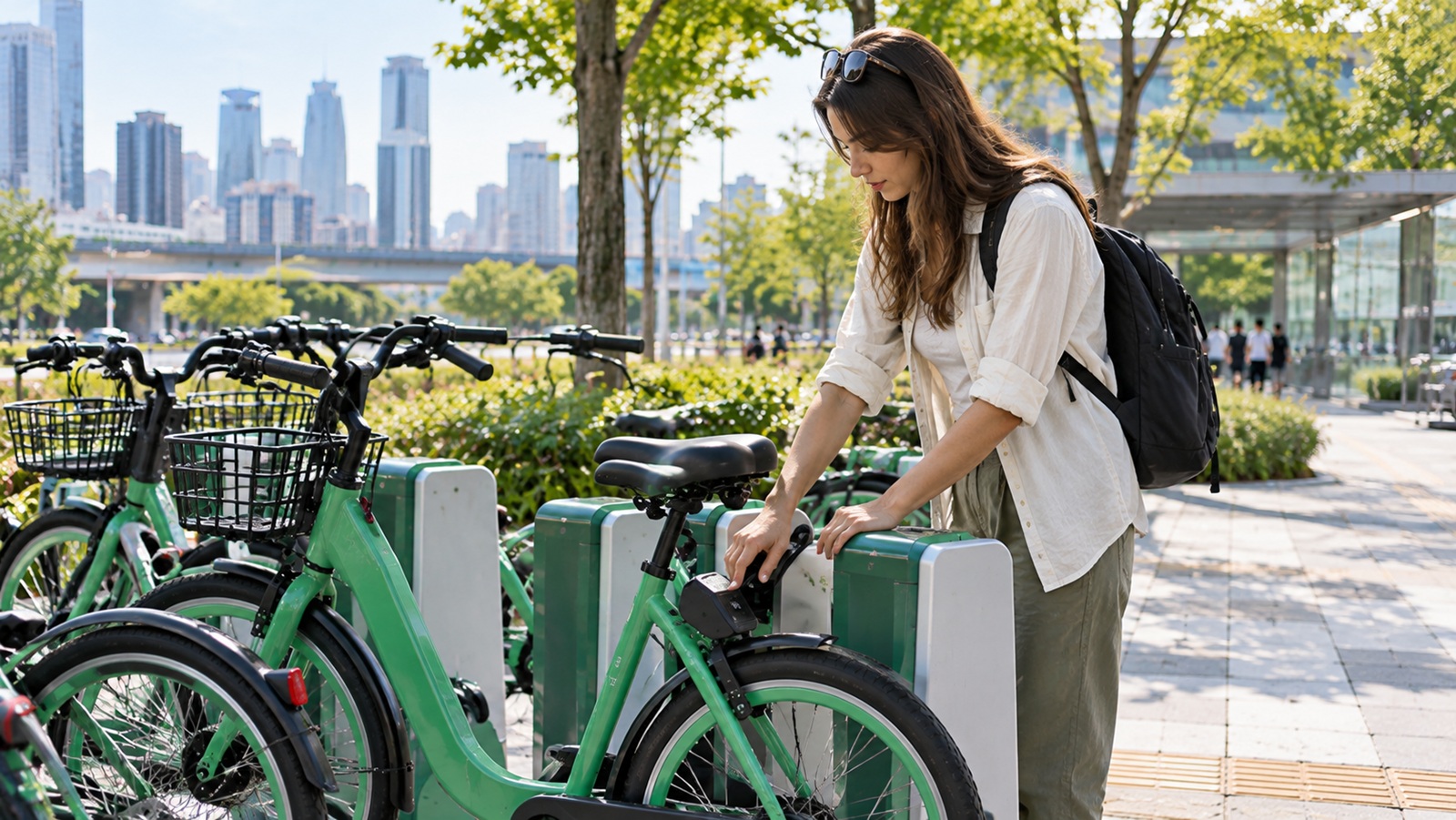
Find an official Seoul Bike rental station using the app and follow the instructions for securing the bicycle at the designated return area.
Make sure the lock engages and wait for the app or service to confirm that your rental has ended.
Do not leave the bicycle at a random bike rack, outside your hotel or beside a subway entrance unless it is an authorized return location.
If the return confirmation does not appear, check the app and use the official support service before leaving the bicycle.
A photograph of where you parked may help document a problem, but it does not replace a successful return confirmation.
Where Should You Ride a Seoul Bike in Seoul?
For first-time visitors, the Hangang River is an appealing place to start. Its riverside parks offer cycling paths, open views and opportunities to take breaks away from the busiest city streets.
Choose a route that matches your confidence and the rental time available.
Yeouido Hangang Park
Yeouido is a practical starting point for a relaxed riverside ride.
The park has broad open spaces and views of the Hangang River, making it a popular destination for walking, cycling and picnics.
You can combine a short ride with a riverside break or try Han River ramyeon after returning your bicycle.
The park can become busy on weekends and during major events, so slow down around pedestrians and crowded areas.
Banpo Hangang Park
Banpo offers a different riverside atmosphere, with views of the bridges and surrounding city.
It is a pleasant area for a leisurely ride, particularly when the weather is mild.
If you plan to stay until evening, check the lighting, weather and your route back to the rental station before setting off.
Ttukseom Hangang Park
Ttukseom is another option for visitors who want to combine cycling with time by the river.
The area offers riverside scenery and access to Seoul’s broader cycling network.
You do not need to plan an ambitious cross-city journey to enjoy Ddareungi. A short ride followed by time in the park can be just as rewarding.
For visitors who prefer exploring the city on foot, our guide to running in Seoul covers several outdoor routes and practical tips for enjoying the city without a bicycle.
Seoul Bike Safety and Cycling Etiquette
Seoul’s cycling infrastructure is extensive, but conditions vary considerably between riverside paths and city streets.
A riverside ride can feel relaxed, while a short journey through a busy intersection may require much more attention.
Keep these precautions in mind:
- Use designated bicycle paths where available and follow traffic signs and signals.
- Wear a properly fitted bicycle helmet.
- Give pedestrians space, especially near parks, crossings and shared paths.
- Keep your phone away while riding and stop somewhere safe before checking directions.
- Use appropriate lights after dark and avoid riding when visibility is poor.
- Reduce your speed around other cyclists, children and crowded areas.
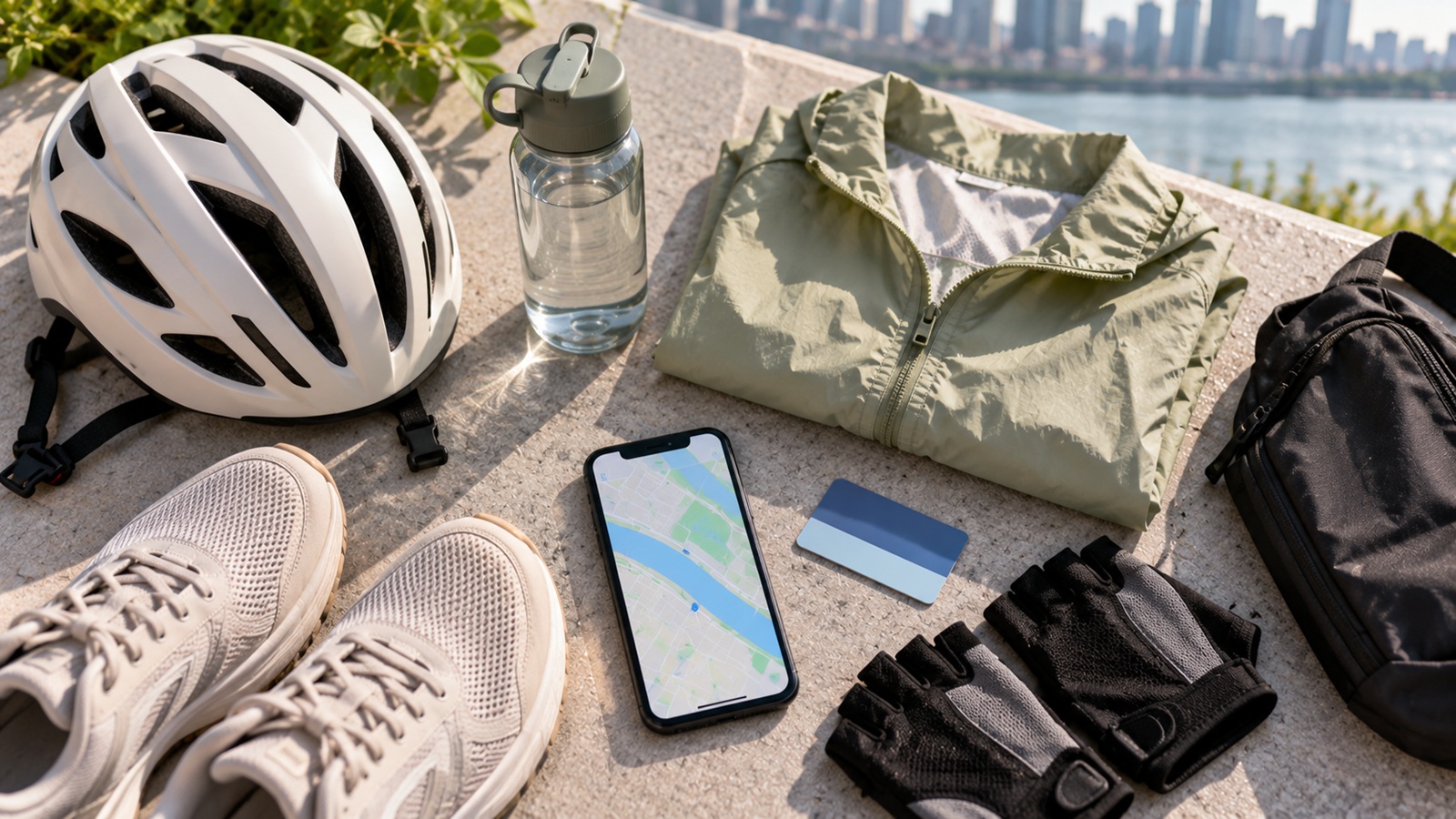
Seoul has promoted a 20 km/h speed limit on Hangang Park bicycle paths. Follow the posted speed limit and any local restrictions along your route.
If you are unfamiliar with cycling in urban traffic, choose a quieter riverside route for your first ride.
When Is the Best Time to Cycle in Seoul?
Spring and autumn are often comfortable seasons for recreational cycling, although temperatures and air quality can vary from day to day.
Summer can be hot and humid, while winter may bring freezing temperatures, icy surfaces and cold winds along the river.
Check the weather forecast, air-quality conditions and any official cycling-path notices before heading out.
Morning rides can be a good option when you want to avoid the busiest park hours. During the evening, allow enough time to return your bicycle safely.
Heavy rain, strong winds or poor visibility are good reasons to postpone your ride.
Seoul Bike vs. the Subway: Which Should You Use?
Ddareungi and Seoul’s subway serve different purposes.
The subway is generally more practical for longer journeys across the city, particularly when you have luggage or need to arrive at a specific time.
Seoul Bike is more suitable for short journeys, exploring neighborhoods and enjoying the riverside at your own pace.
You can use both during the same day: take the subway to a neighborhood, rent a bicycle for a short ride and return it before continuing your journey.
Our Seoul subway and T-money guide explains how to navigate the city’s rail network and choose a transportation card.
Is Seoul Bike Worth Trying as a Tourist?
If you are comfortable cycling and want to experience Seoul beyond its busiest shopping streets, Ddareungi can be an enjoyable addition to your itinerary.
The service is affordable for short rides, and the official foreigner rental option makes it accessible to international visitors.
The key is to choose a suitable route, understand your pass’s time limit and confirm that your bicycle has been returned successfully.
You do not need to cycle across the entire city. Even a short ride along the Hangang River can offer a memorable perspective on everyday life in Seoul.
Frequently Asked Questions
Can tourists rent Ddareungi without a Korean phone number?
Seoul Bike provides a foreigner rental option with a separate pass-purchase process. Follow the instructions in the official app, as the information required may vary by payment method.
How much does Seoul Bike cost?
The listed single-use prices are KRW 1,000 for one hour, KRW 2,000 for two hours and KRW 3,000 for three hours. Check the official app for current prices and pass conditions before purchasing.
Can I return a Seoul Bike to a different station?
Yes. Seoul Bike allows bicycles to be returned at participating rental stations. Make sure you use an authorized return location and receive confirmation that your rental has ended.
Can I use a foreign credit card to rent a Seoul Bike?
The foreigner purchase process supports card payment, but acceptance depends on the card issuer and payment requirements. Check the available options in the official app if your card is declined.
Does Seoul Bike provide helmets?
Do not assume a helmet will be provided with your rental. Bring or arrange a properly fitted helmet before riding, and check the current service information for any available safety equipment.
Can I ride Ddareungi along the Hangang River?
Yes. The Hangang River has an extensive cycling network and several riverside parks. Follow designated paths, posted speed limits and local safety instructions, particularly where cyclists and pedestrians share space.
Sources & Further Reading
1. Seoul Metropolitan Government — Seoul Bike Pass Types and Rental Fees
2. Seoul Metropolitan Government — Seoul Bike Instructions for International Tourists
3. Seoul Metropolitan Government — New Three-Hour Seoul Bike Pass
4. VISITKOREA — Helpful Apps & Resources
5. Seoul Metropolitan Government — Cycling Safety at Hangang Park