
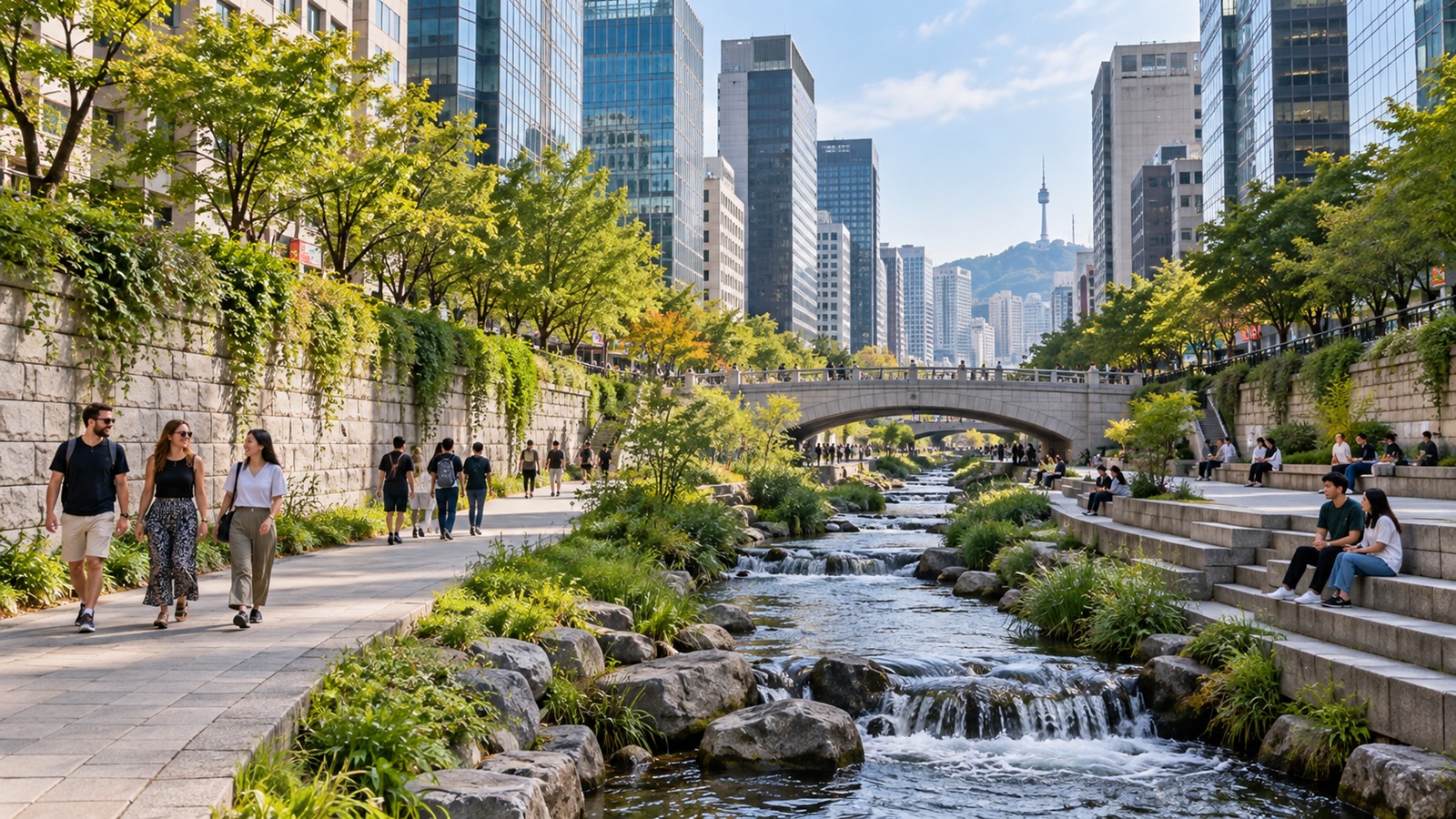
Seoul is famous for its busy streets, towering buildings and neighborhoods that seem to change around every corner. Yet right in the middle of the city, Cheonggyecheon Stream offers a different way to experience the capital: a waterside walk beneath the surrounding streets.
You can stop by for a short break between attractions, follow the stream toward a traditional market or return after sunset to see downtown Seoul in a different light.
This guide covers where to start, which route to take, how to get there by subway and what to know before visiting Cheonggyecheon Stream.
What Is Cheonggyecheon Stream?
Cheonggyecheon is an urban stream running through central Seoul. Its pedestrian paths sit below street level, creating a striking contrast between the flowing water and the busy city above.
The stream has a long history, but its modern appearance is closely connected to Seoul’s major restoration project in the early 2000s. An elevated roadway that once occupied the area was removed, and the restored stream opened to the public in 2005.
Today, Cheonggyecheon is both a public walking space and a reminder of how Seoul has changed. Bridges, stepping stones, public art and small stretches of greenery give visitors several reasons to slow down.
For travelers, one of its biggest advantages is location. You can easily combine a visit with other central Seoul attractions without planning an entire day around the stream.
Where Should You Start Your Cheonggyecheon Walk?
For a first visit, Cheonggye Plaza is a convenient starting point.
Located near Gwanghwamun in central Seoul, the plaza marks the beginning of the restored downtown stream. Its waterfall and open public space make it easy to recognize, even if you have never visited the area before.
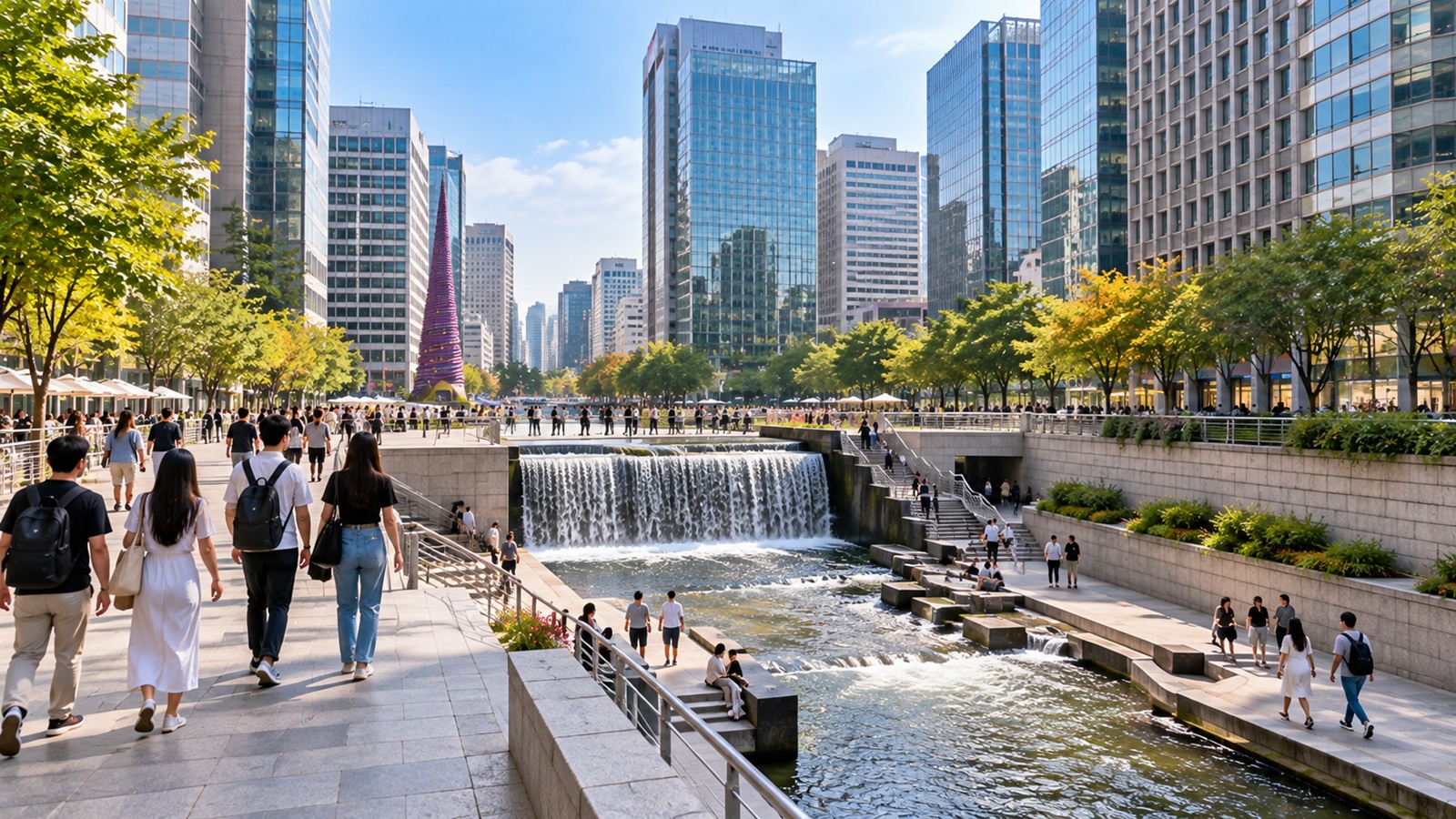
From here, you can descend to the waterside path and walk east, passing bridges and different sections of the stream as the city continues above you.
How to Get to Cheonggye Plaza by Subway
Gwanghwamun Station on Subway Line 5 is a practical option. Exit 5 is also the meeting point for Seoul’s official Cheonggyecheon daytime walking tour.
City Hall Station, served by Lines 1 and 2, is another option for visitors approaching from the western side of downtown.
If you are staying elsewhere in Seoul, check your route before leaving. The stream has multiple access points, so you do not necessarily need to begin at Cheonggye Plaza.
For help understanding transfers, transportation cards and station navigation, see our Seoul subway and T-money guide.
The Best Cheonggyecheon Walking Route for First-Time Visitors
You do not have to walk the entire stream to enjoy it. The central section is particularly convenient because it connects several downtown landmarks and can fit into a half-day itinerary.
Seoul’s official daytime walking tour follows a route from Cheonggye Plaza through several historic bridges before finishing near Gwangjang Market. The published tour duration is approximately two hours.
Here is how to adapt that route for an independent visit.
Stop 1: Cheonggye Plaza
Begin at the plaza and take a moment to look at the surrounding city before heading down to the water.
This is a useful place to get your bearings, take photographs and decide how far you want to walk.
The stream’s lower-level path gives you a noticeably different view of downtown Seoul from the streets above.
Stop 2: Gwangtonggyo Bridge
Continue east toward Gwangtonggyo, one of the historic bridge landmarks along the central stream.
The bridge offers a connection to the area’s past, while the surrounding walkway provides views of the restored urban waterway.
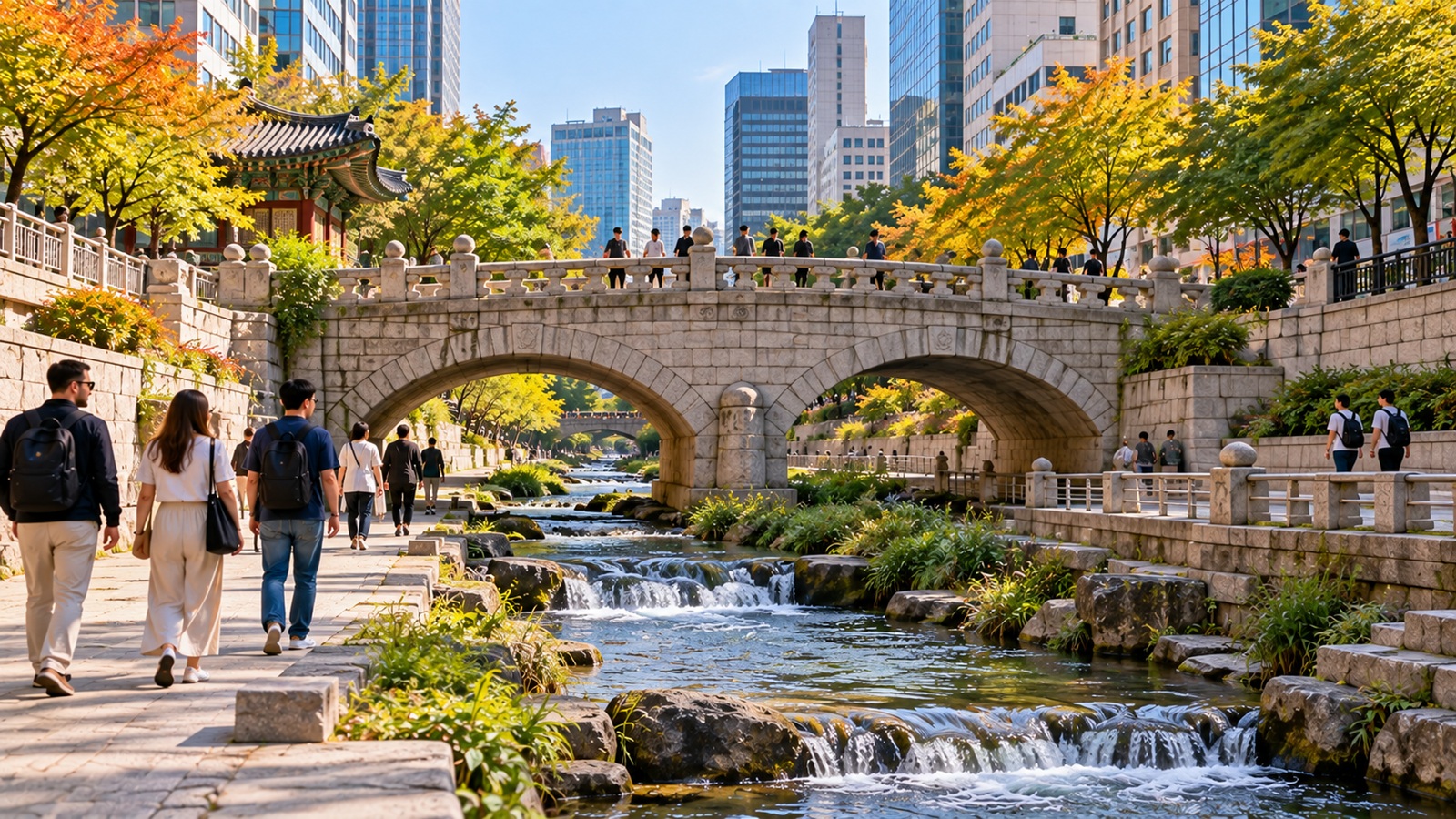
Take your time here rather than treating the route as a checklist. Much of the appeal of Cheonggyecheon comes from the contrast between its small waterside details and the city around it.
Stop 3: Samilgyo and Supyogyo
As you continue along the stream, you will pass additional bridges and stretches of pedestrian walkway.
This part of the route works well for a relaxed city walk. You can stop for photographs, watch the water or use one of the access points to return to street level.
You will also be within reach of the Jongno and Euljiro areas, where restaurants and cafes offer convenient places to take a break.
Stop 4: Saebyeokdari and Gwangjang Market
For a longer walk, continue toward Saebyeokdari and finish near Gwangjang Market.
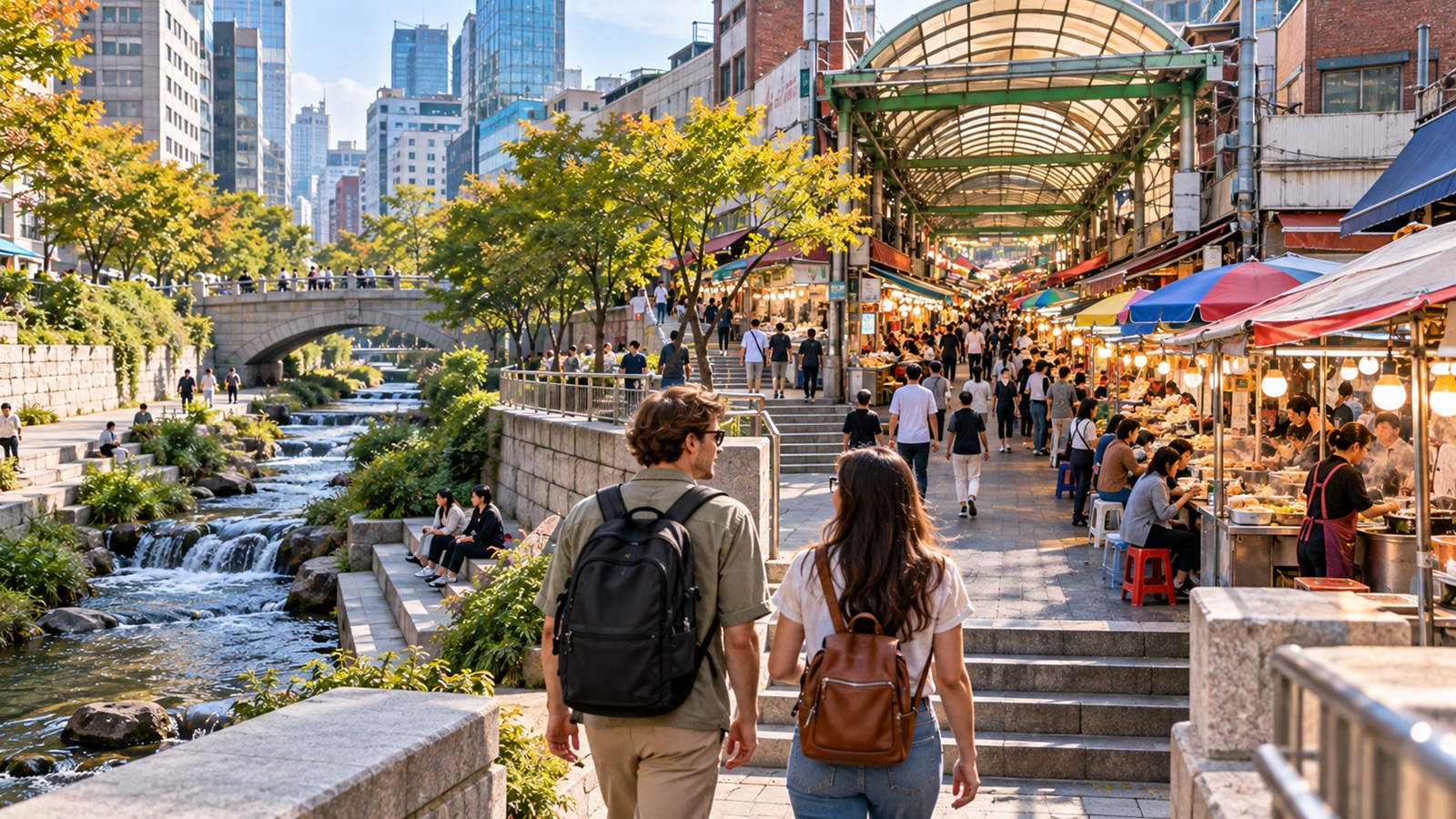
This makes a natural transition from a quiet waterside route to one of Seoul’s well-known traditional food markets.
Gwangjang Market is a place to explore Korean market food, including dishes such as bindaetteok, a savory mung bean pancake, and mayak gimbap, small seaweed rice rolls.
If you want to plan your food stops before arriving, our Gwangjang Market Seoul guide covers what to eat and what first-time visitors should know.
Is Cheonggyecheon Better During the Day or at Night?
Both are worthwhile, but they offer different experiences.
During the day, it is easier to appreciate the bridges, landscaping and details along the water. Daylight is also helpful if you are following a longer route or combining the stream with nearby attractions.
At night, lights from the surrounding buildings and bridges reflect on the water, giving the stream a different atmosphere. A shorter evening walk near Cheonggye Plaza can be an easy addition to dinner or sightseeing in central Seoul.
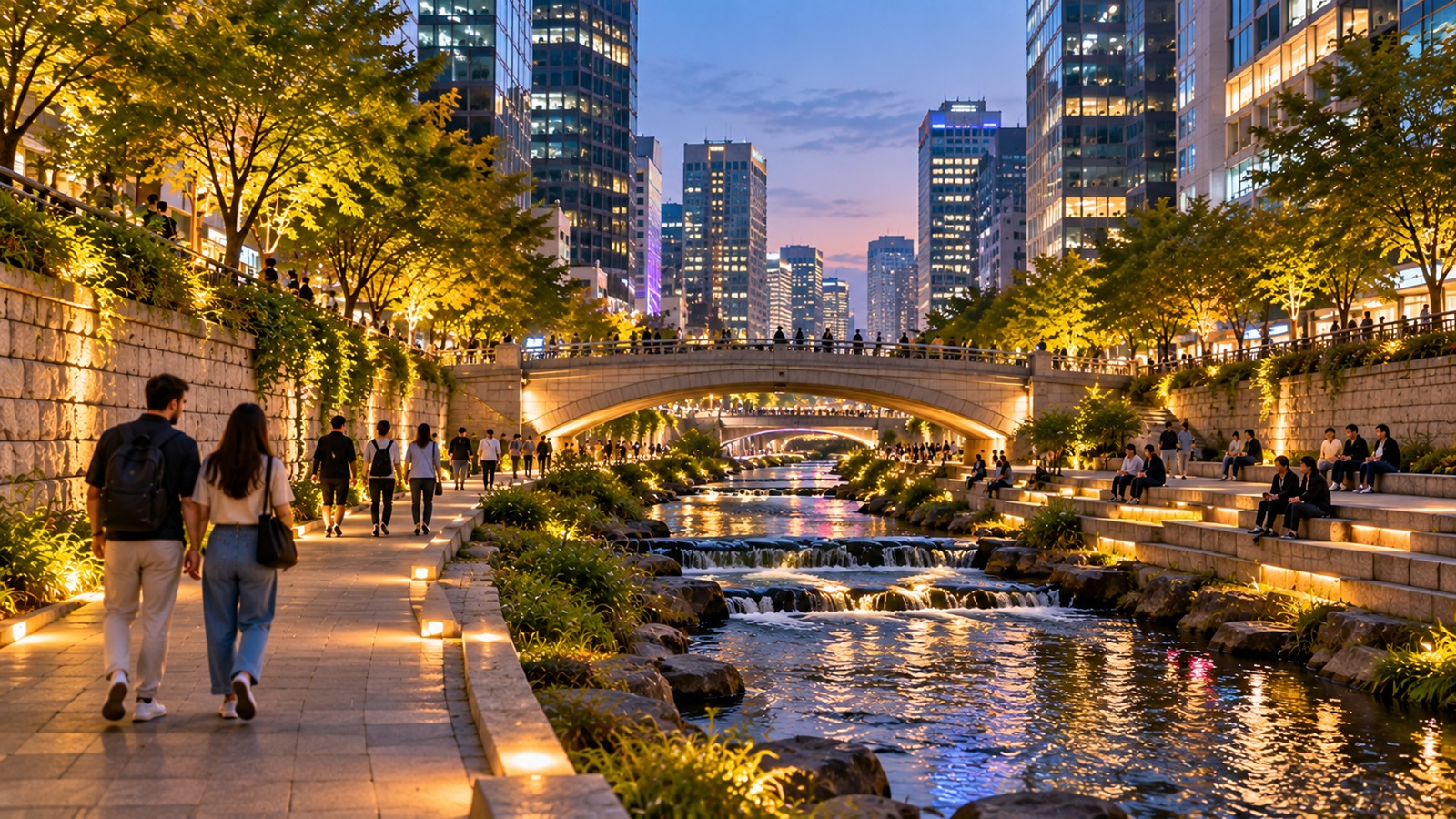
The promenade is generally open around the clock, although weather-related access restrictions can apply. Individual fountains, lighting installations and seasonal events may operate on separate schedules.
If you are visiting specifically for an illuminated installation or festival, check the official schedule rather than assuming it runs every evening.
What Can You Visit Near Cheonggyecheon Stream?
Cheonggyecheon is especially useful when you want to connect several central Seoul experiences without spending the entire day on transportation.
Gwanghwamun and Gyeongbokgung Palace
The western starting area is close to Gwanghwamun, making it convenient to combine a stream walk with a visit to the historic heart of Seoul.
Gyeongbokgung Palace is a natural choice if you want to explore royal architecture and Korean history before heading toward the stream.
Our Gyeongbokgung Palace guide explains the practical details for a first visit, including admission, opening hours and planning your route.
Gwangjang Market
If food is a priority, follow the stream east toward Gwangjang Market.
The combination works particularly well for travelers who want a relaxed walk followed by Korean street food or a traditional market meal.
You can also reverse the route, visiting the market first and walking west toward Cheonggye Plaza afterward.
Jongno and Euljiro
The streets around the central stream offer another side of Seoul, with restaurants, cafes, offices and older commercial areas sitting close together.
Instead of planning every minute, consider leaving time to explore a few streets above the stream.
One of the pleasures of walking through central Seoul is discovering how quickly the atmosphere changes between the waterside path and the neighborhoods around it.
Practical Tips for Visiting Cheonggyecheon
A little preparation will make your walk more comfortable, especially if you are visiting in summer or during the rainy season.
Check the Weather Before Going Down to the Stream
This is the most important safety consideration.
Cheonggyecheon’s water level can rise quickly during rainfall, and access to the lower walkway may be restricted even when the rain does not seem particularly heavy where you are standing.
Follow official announcements and instructions from safety personnel. If an evacuation announcement is made, leave through the nearest available exit.
Never shelter beneath a bridge during heavy rain. Floodgates can open, and the water level can change rapidly.
If the lower walkway is closed, choose a street-level route or visit another attraction instead.
Wear Comfortable Shoes
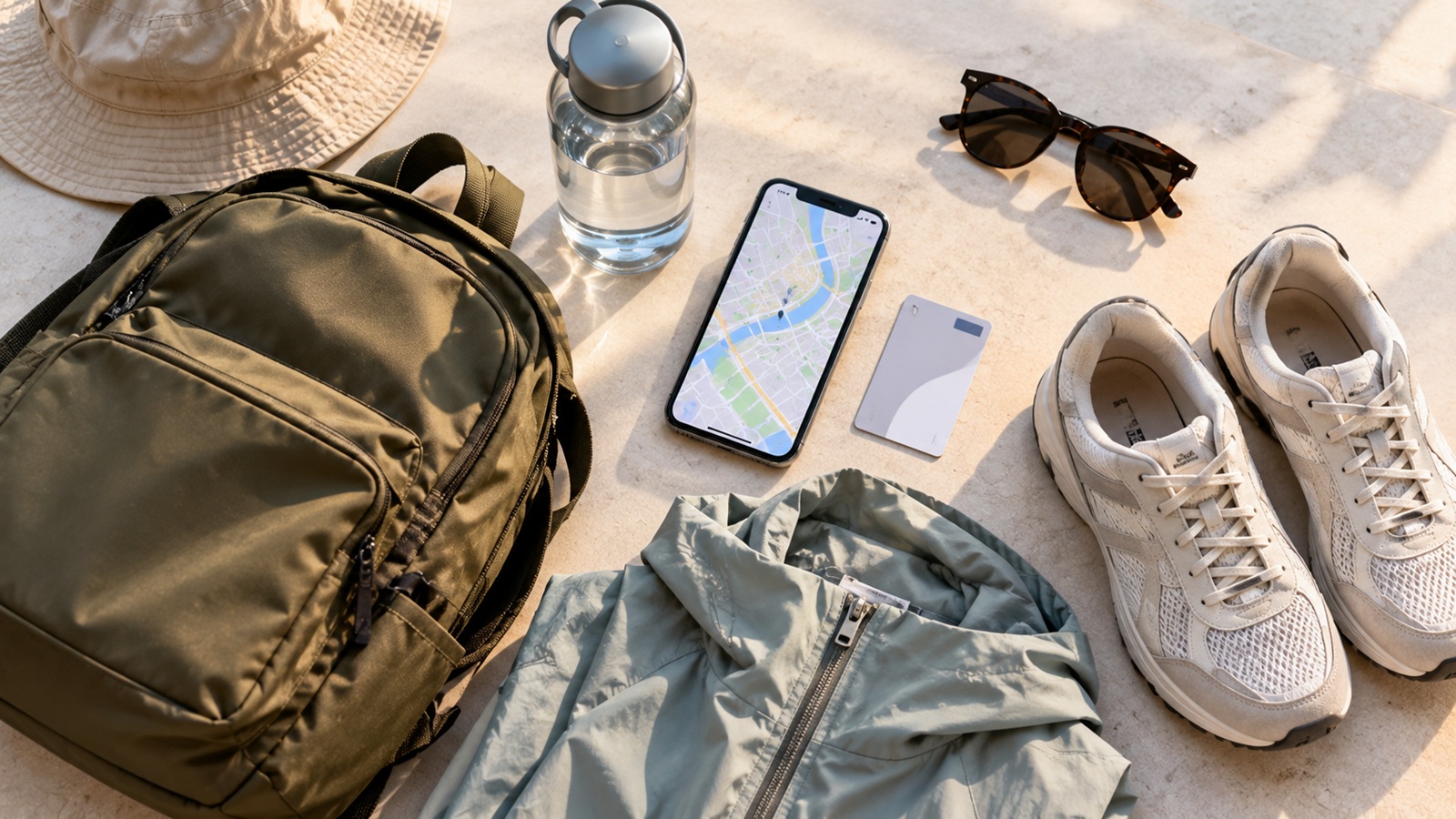
Most visitors will find comfortable walking shoes more useful than specialized outdoor equipment.
Some sections include steps, stone crossings or surfaces that can become slippery when wet. Use designated crossings and avoid stepping into the water.
If you have mobility requirements, check the access points for the particular section you plan to visit. Not every entrance has the same facilities.
Keep the Waterside Path for Walking
Cheonggyecheon is a shared public space, so leave room for other visitors and avoid blocking narrow sections while taking photographs.
Bicycles and roller skates are restricted on the central stream promenade. Do not assume that a route suitable for walking is also an approved cycling route.
For a separate cycling experience, see our Seoul Bike (Ddareungi) guide, which explains how visitors can rent public bicycles and plan a ride using appropriate cycling routes.
Allow Time to Explore Without Rushing
You do not need a packed itinerary to enjoy Cheonggyecheon.
A short visit near the plaza can be enough if you are already sightseeing downtown. If you want to continue toward Gwangjang Market, allow more time for walking, photographs and food stops.
In hot weather, carry water and take breaks. In colder months, dress for the temperature, especially if you plan to stay out after sunset.
A Simple Half-Day Cheonggyecheon Itinerary
For a first visit, a straightforward route is often the most enjoyable.
Start in the Gwanghwamun area, visit Cheonggye Plaza and follow the stream east at a comfortable pace. Stop at the bridges that interest you, then continue toward Gwangjang Market for a meal.
If you prefer a shorter outing, walk only part of the central stream and return to street level when you are ready.
Alternatively, visit Gyeongbokgung Palace earlier in the day and save Cheonggyecheon for the late afternoon or evening.
The stream is not an attraction you need to rush through. Its appeal is the opportunity to experience central Seoul at a slower pace, just a few steps below some of the city’s busiest streets.
Frequently Asked Questions About Cheonggyecheon Stream
Is Cheonggyecheon Stream free to visit?
Yes. You can walk along the public Cheonggyecheon promenade without paying an admission fee. Separate guided tours, exhibitions or nearby attractions may have their own booking requirements or charges.
Is Cheonggyecheon Stream open 24 hours?
The promenade is generally open 24 hours a day throughout the year. However, access can be restricted during rainfall or other unsafe conditions. Individual fountains and installations may have different operating schedules.
How long does it take to walk along Cheonggyecheon?
It depends on which section you choose. A short visit near Cheonggye Plaza can fit into a brief sightseeing stop. Seoul’s official daytime walking tour from Cheonggye Plaza toward Gwangjang Market takes approximately two hours.
What is the nearest subway station to Cheonggyecheon Stream?
Gwanghwamun Station on Line 5 is convenient for starting near Cheonggye Plaza. City Hall Station is another option, while other stations serve different sections of the stream. Choose your station based on where you plan to begin or finish.
Can you ride a bicycle along Cheonggyecheon?
Bicycles are restricted on the central Cheonggyecheon pedestrian promenade. Cycling access can differ on designated routes farther downstream, so follow local signs and use approved bicycle paths rather than assuming the entire stream is open to cycling.
Is Cheonggyecheon safe to visit when it rains?
The lower walkway can become dangerous during rainfall because water levels may rise quickly. Follow official announcements and access restrictions, and never enter a closed section. If an evacuation announcement is made, leave through the nearest exit rather than sheltering under a bridge.
Sources & Further Reading
Seoul Metropolitan Government — Cheonggyecheon Stream
Visit Seoul — Cheonggyecheon Daytime Walking Tour