
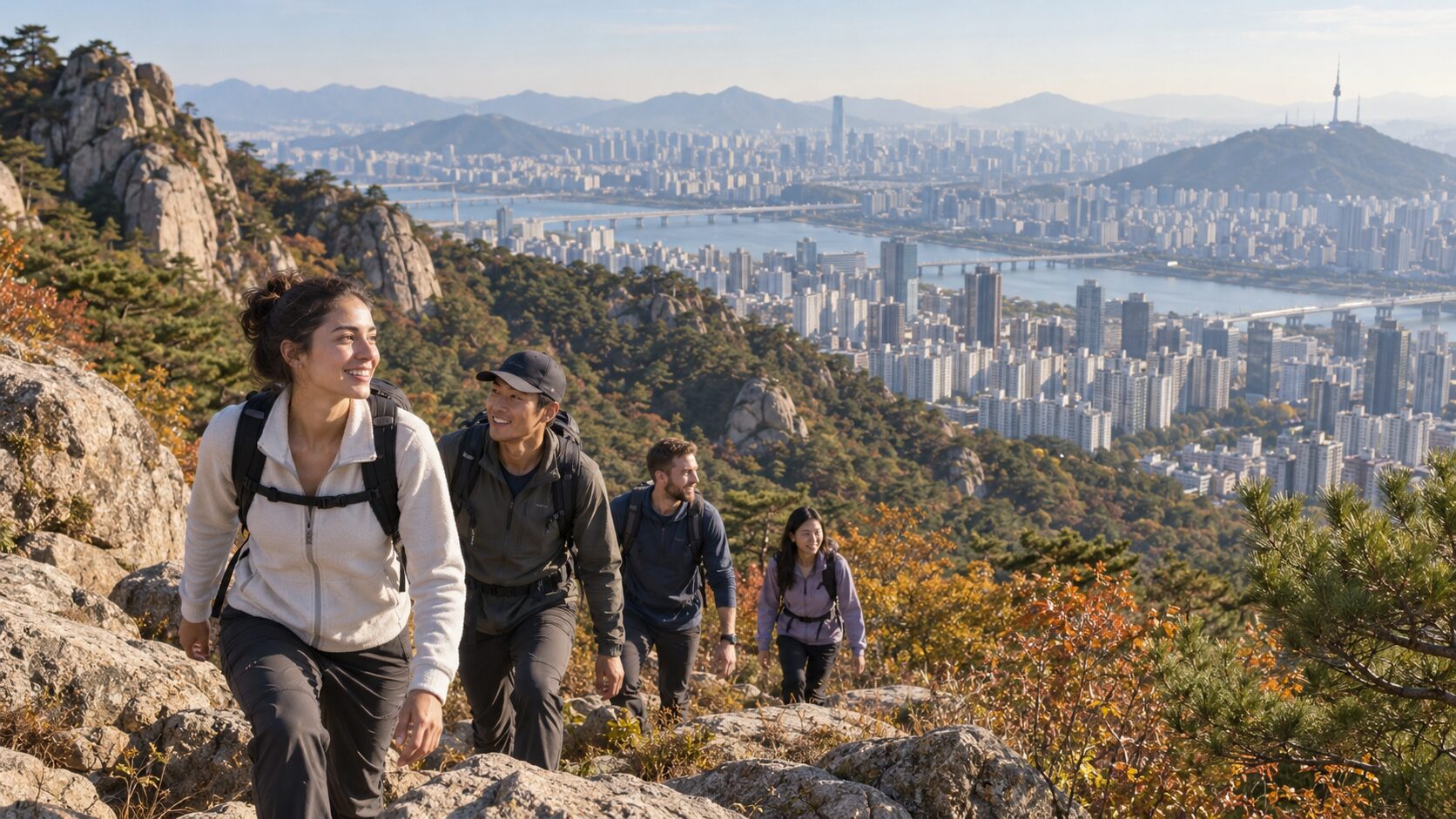
Seoul is known for palaces, shopping districts, cafés and late-night food, but one of the easiest ways to see a different side of the city is to look up — toward the mountains.
Hiking is woven into everyday life in Korea, and Seoul makes it unusually accessible. Mountains and forest trails rise directly beside dense neighborhoods, subway stations and historic districts, making it possible to spend the morning on a trail and return to the city for lunch, shopping or sightseeing.
International travelers are noticing, too. Recent Seoul tourism data shows growing foreign visitor numbers at several of the city’s major hiking destinations.
For first-time visitors, the good news is that hiking in Seoul does not necessarily mean attempting a difficult mountain summit. There are routes for casual walkers, beginners and experienced hikers — and Seoul even operates hiking tourism centers where international visitors can get trail information and rent gear.
Here is what to know before adding K-Hiking to your Seoul itinerary.
Why Is Hiking So Popular in Seoul?
In Korea, hiking is not limited to serious mountaineers.
On weekends, Seoul’s trails can fill with people of different ages heading into the mountains for exercise, fresh air, views and time with friends or family.
Part of the appeal is geography.
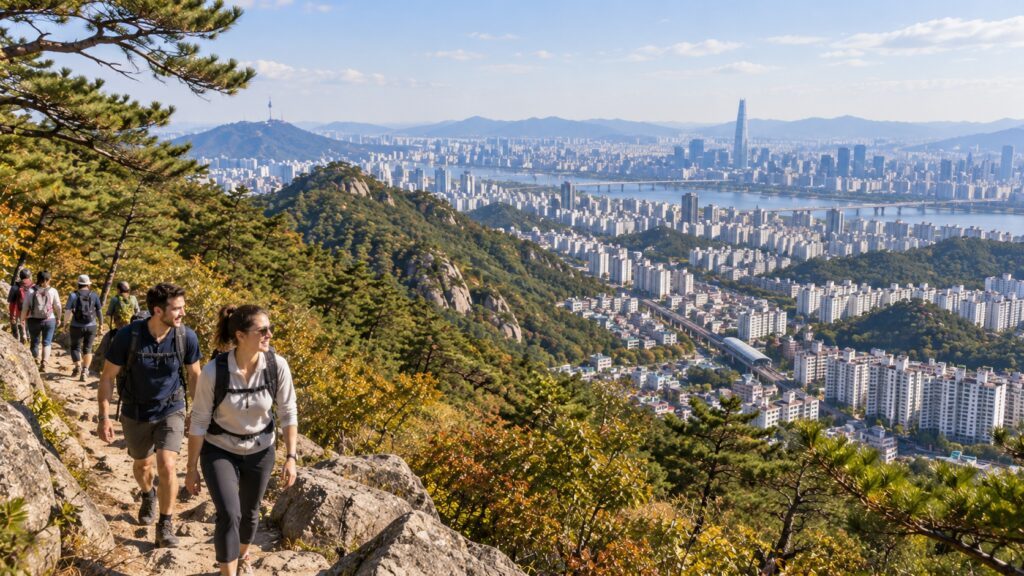
Unlike cities where reaching a hiking area requires a rental car or a long journey outside the metropolitan area, Seoul has mountains and walking trails integrated into the urban landscape.
A traveler can move from a subway station and busy neighborhood to wooded trails and panoramic city views surprisingly quickly.
That combination — dense city life and accessible nature — is one of the defining features of hiking in Seoul.
If you are still learning how to get around the city, our Seoul subway guide explains T-money, the Climate Card, transfers and the basics of using Seoul’s public transportation system.
K-Hiking Is Attracting More International Travelers
Hiking is also becoming a more visible part of the Seoul travel experience.
According to a 2026 analysis released by the Seoul Metropolitan Government, foreign visitation increased at several major hiking destinations in 2025.
Bukhansan recorded the largest number of foreign visitors among the mountains analyzed, with an average of 4,015 per day, up 9.2% year over year. Bugaksan averaged 2,169, while Gwanaksan and Achasan recorded increases of 10.0% and 11.8%, respectively.
The numbers point to a broader change in how some visitors experience Seoul.
Shopping, palaces and food remain central to the city’s tourism appeal, but more travelers are also looking for activities that feel connected to everyday Korean life.
Hiking fits naturally into that shift.
Which Mountain Should You Hike in Seoul?
There is no single “best” Seoul hike.
The right choice depends on your fitness level, available time and what you want to see.
Bukhansan: For a More Serious Mountain Experience
Bukhansan is one of Seoul’s best-known hiking destinations and offers everything from gentler walking routes to challenging climbs.
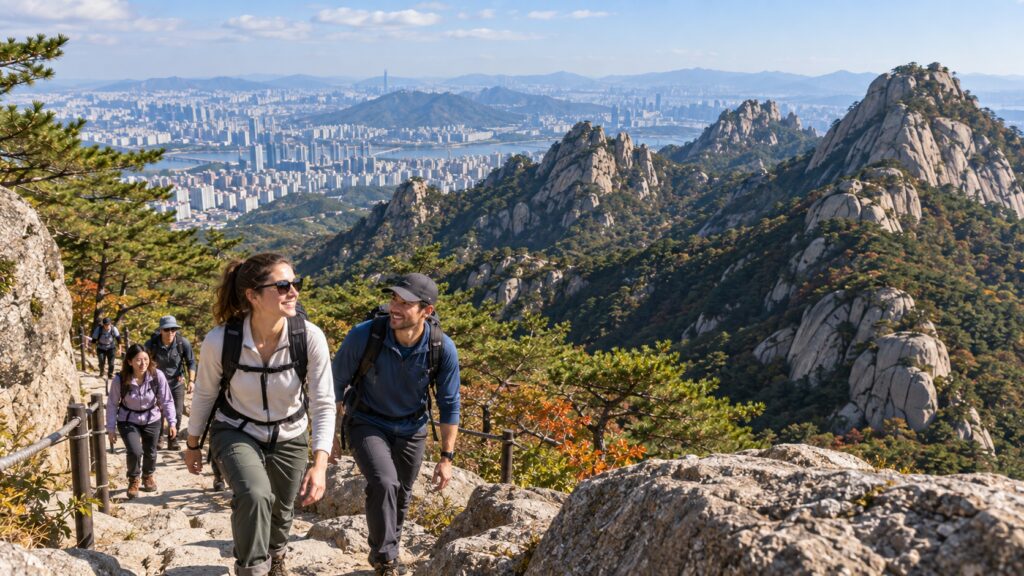
For travelers who want their Seoul hike to feel like a genuine mountain day rather than a short urban walk, Bukhansan is an obvious place to start.
However, do not assume every Bukhansan route is beginner-friendly. Some courses involve steep or rocky terrain, and your route should be chosen according to your fitness, experience and weather conditions.
One major advantage for international visitors is the Seoul Hiking Tourism Center near Bukhansan Ui Station, where travelers can get trail information and rent hiking equipment.
Inwangsan: For City Views and a Shorter Hike
Inwangsan is particularly attractive for travelers who want to combine hiking with central Seoul sightseeing.
The rocky mountain rises close to historic neighborhoods, and part of the Seoul City Wall runs across it.
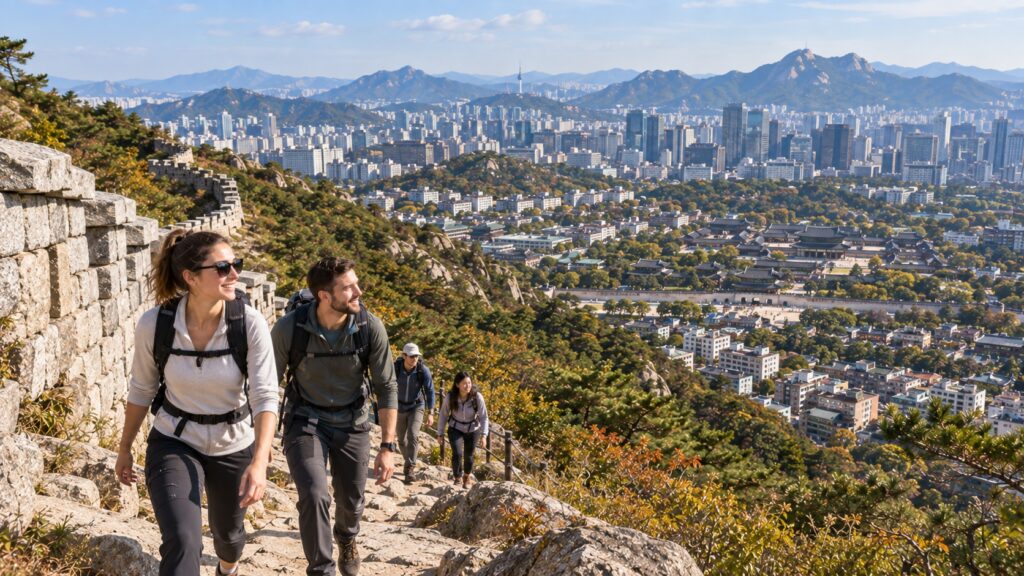
From the mountain, hikers can see central Seoul, including views toward Gyeongbokgung and surrounding mountains.
Official Seoul tourism information describes the ridge hike as relatively easy and taking around two hours, making Inwangsan a practical option for visitors who do not want to dedicate an entire day to hiking.
Bugaksan: For History and the Seoul City Wall
Bugaksan combines mountain scenery with Seoul’s history.
Routes around the mountain connect with sections of Hanyangdoseong, the Seoul City Wall, allowing visitors to experience nature and historical Seoul during the same outing.
The Seoul Hiking Tourism Center for Bugaksan is located in Samcheong-dong, making this area especially convenient to combine with nearby historic neighborhoods.
Gwanaksan: For Travelers Who Want a Stronger Hike
South of central Seoul, Gwanaksan offers another more substantial mountain experience.
It has become increasingly popular with international visitors, and Seoul now operates a dedicated Hiking Tourism Center inside Gwanaksan Station on the Sillim Line.
That makes the mountain unusually convenient for travelers who want trail information or equipment before starting.
As with Bukhansan, route difficulty varies, so choosing a trail based on your experience is more important than simply aiming for the summit.
Achasan: A Friendlier Introduction to Seoul Hiking
For travelers nervous about tackling a Korean mountain for the first time, Achasan can be a more approachable choice.
The mountain has several relatively easy trails and offers wide views over Seoul and the Han River.
It is a good example of what makes hiking in Seoul appealing: you can experience a real mountain landscape without committing to an all-day expedition.
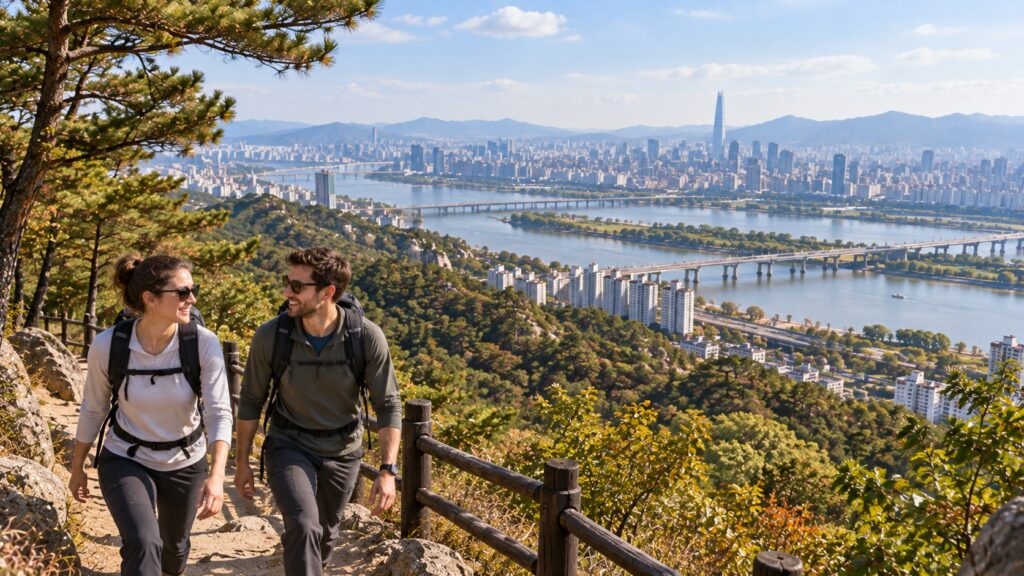
Quick Comparison: Seoul Hiking for First-Time Visitors
| Mountain | Best For | General Experience |
|---|---|---|
| Inwangsan | First-time visitors and short itineraries | Shorter hike, central location and city views |
| Achasan | Beginners | Easier trails and Han River views |
| Bugaksan | History and scenery | Hiking combined with the Seoul City Wall |
| Bukhansan | More experienced or ambitious hikers | Larger mountain environment with many route choices |
| Gwanaksan | Travelers wanting a stronger hike | More substantial hiking south of central Seoul |
Difficulty can vary significantly by route, weather and trail conditions. Always check the specific course rather than choosing only by mountain name.
Do You Need to Bring Hiking Gear to Korea?
Not necessarily.
This is one of the most useful things international visitors should know about hiking in Seoul.
Seoul operates Hiking Tourism Centers at Bukhansan, Bugaksan and Gwanaksan. They provide multilingual hiking information and rent equipment to foreign visitors for a small fee.
Available equipment can include hiking shoes, clothing, trekking poles, gloves and crampons, depending on the center and season.
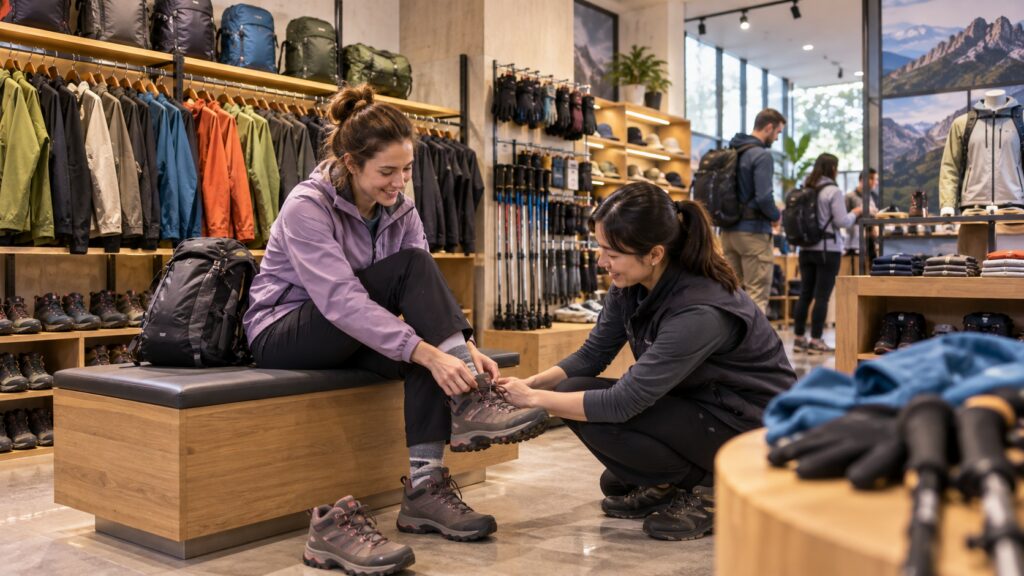
The centers also provide facilities such as lockers, and some operate hiking programs for international visitors.
This makes K-Hiking much more practical for travelers who want to hike once during a Seoul trip but do not want hiking boots taking up half their suitcase.
Check current operating hours, rental availability and reservation requirements before visiting, as services can change.
What Should You Wear for Hiking in Seoul?
Your clothing should match the trail and weather rather than the way people around you are dressed.
For a straightforward hike, comfortable moisture-managing layers and footwear with reliable grip are more important than looking like an experienced mountaineer.
Bring water, and consider a lightweight water-resistant outer layer because mountain weather can change.
For more demanding trails, proper hiking shoes become increasingly important.
Winter hiking requires additional preparation. Snow and ice can make otherwise familiar trails significantly more difficult, and crampons or other winter equipment may be necessary.
Before leaving your accommodation, check both the weather and current trail conditions.
Korean Hiking Etiquette Is Mostly Common Sense
You do not need to memorize a complicated list of Korean hiking rules.
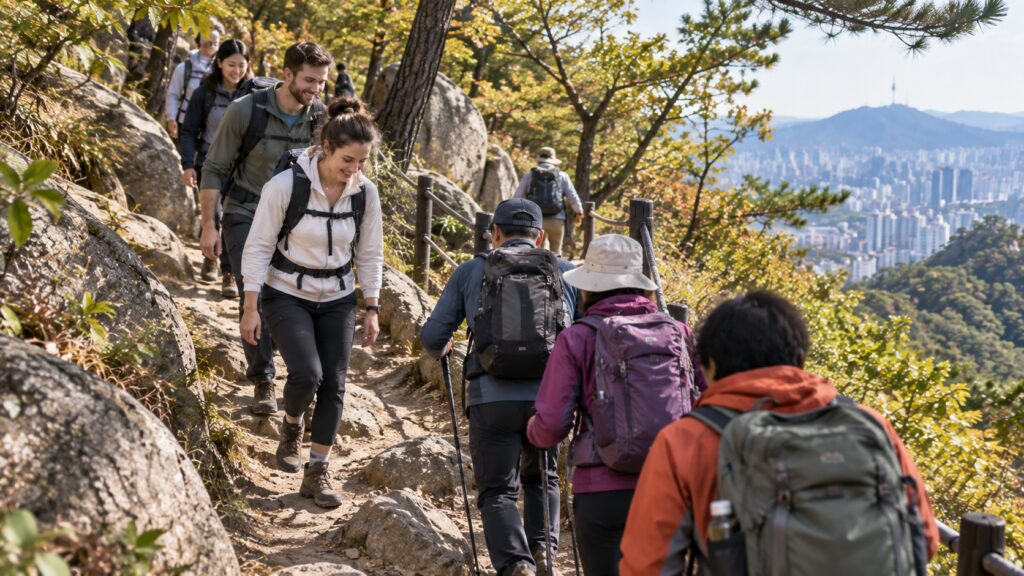
Stay on designated trails, avoid excessive noise, take your trash with you and avoid blocking narrow viewpoints or trail sections while taking photographs.
If other hikers are waiting at a popular photo spot, take your photos and allow others to move through.
Smoking should also be avoided on mountain trails, particularly because of wildfire risk.
The basic principle is simple: enjoy the mountain without making the experience worse for the hikers — or the environment — around you.
Safety Matters More Than Reaching the Summit
A mountain inside a major city is still a mountain.
Do not underestimate a trail simply because you reached it by subway.
Choose a route appropriate for your fitness level, stay on marked trails and allow enough daylight to descend safely.
Official Seoul hiking guidance recommends planning to come down before sunset because visibility and temperatures can change quickly in mountain environments.
If conditions become uncomfortable, turning around is a perfectly successful hike.
The view will still be there next time.
When Is the Best Time to Hike in Seoul?
Spring and autumn are especially attractive hiking seasons in Seoul.
Spring brings milder temperatures and fresh greenery, while autumn is popular for cooler conditions and colorful foliage.
For travelers planning around autumn colors, our 2026 Korea fall foliage guide covers the latest forecast, expected peak dates and where to see the season across Korea.
Summer hiking is possible, but Seoul can be hot, humid and rainy. Starting earlier in the day and carrying enough water becomes particularly important.
Winter creates beautiful mountain scenery but requires more caution because of cold temperatures, snow and ice.
There is no universal best month. The better question is whether the weather and trail conditions are appropriate for the route you have chosen.
How to Add Hiking to a Seoul Itinerary
You do not necessarily need to sacrifice an entire sightseeing day.
If you prefer a shorter workout without heading into the mountains, our Running in Seoul guide covers Han River routes, downtown running and practical tips for visitors.
A shorter Inwangsan hike can pair naturally with historic central Seoul. Bugaksan can be combined with the Samcheong-dong area, while Achasan works well for travelers who want a lighter outdoor experience.
Bukhansan or Gwanaksan deserve more time if you are planning a longer or more demanding route.
That flexibility is one reason hiking works so well in Seoul.
You can experience palaces, markets, cafés and shopping streets during your trip — and still spend a few hours above the city looking back at all of it from a mountain trail.
Is K-Hiking Worth Adding to Your Korea Trip?
For travelers who enjoy walking and nature, yes — especially because hiking in Seoul shows a side of Korea that can be difficult to understand from major tourist districts alone.
You see how closely mountains sit beside apartment neighborhoods, historic walls and subway lines. You also see something very ordinary in Korean life: people making time for the mountains without necessarily leaving the city behind.
K-Hiking does not have to mean conquering the highest peak.
Your version might simply be a two-hour walk on Inwangsan followed by lunch back in central Seoul.
And that may be exactly the point.
In Seoul, going to the mountains does not always mean escaping the city.
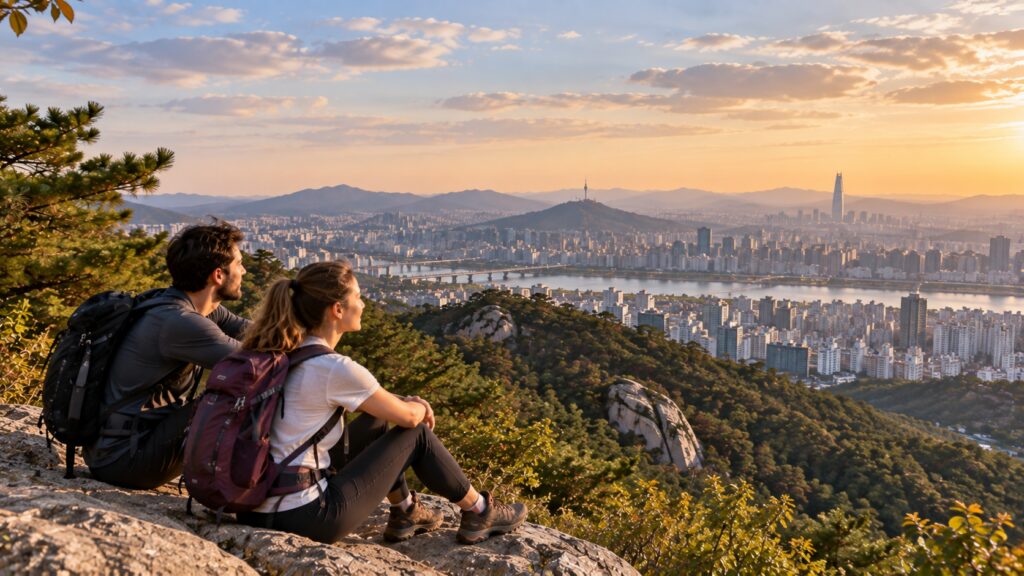
Sometimes it is simply another way to experience it.
FAQ
Is Seoul good for hiking?
Yes. Seoul has mountains and trails throughout and around the city, ranging from relatively easy urban hikes to more demanding mountain routes. Many are accessible by public transportation.
What is the easiest mountain to hike in Seoul?
There is no single easiest route, but Achasan has several relatively easy trails, while Inwangsan is popular with visitors looking for a shorter hike with central Seoul views. Always check the specific route and current conditions.
Can beginners hike Bukhansan?
Yes, but Bukhansan has routes of very different difficulty levels. Beginners should choose an appropriate course rather than automatically attempting a major summit.
Can tourists rent hiking gear in Seoul?
Yes. Seoul Hiking Tourism Centers at Bukhansan, Bugaksan and Gwanaksan offer equipment rental for foreign visitors. Available items can include hiking shoes, clothing, trekking poles, gloves and crampons. Current availability and operating hours should be checked before visiting.
How long does hiking in Seoul take?
It depends entirely on the mountain and route. A shorter Inwangsan outing can take around two hours, while longer routes on mountains such as Bukhansan can take much more time.
What is the best season for hiking in Seoul?
Spring and autumn are especially popular because of milder conditions and seasonal scenery. Summer can be hot and humid, while winter hiking may require equipment and preparation for snow and ice.
Sources & Further Reading
Visit Seoul — Seoul Hiking Tourism Center (Bukhansan Mountain)
Visit Seoul — Seoul Hiking Tourism Center (Bugaksan Mountain)
Visit Seoul — Seoul Hiking Tourism Center (Gwanaksan Mountain)