
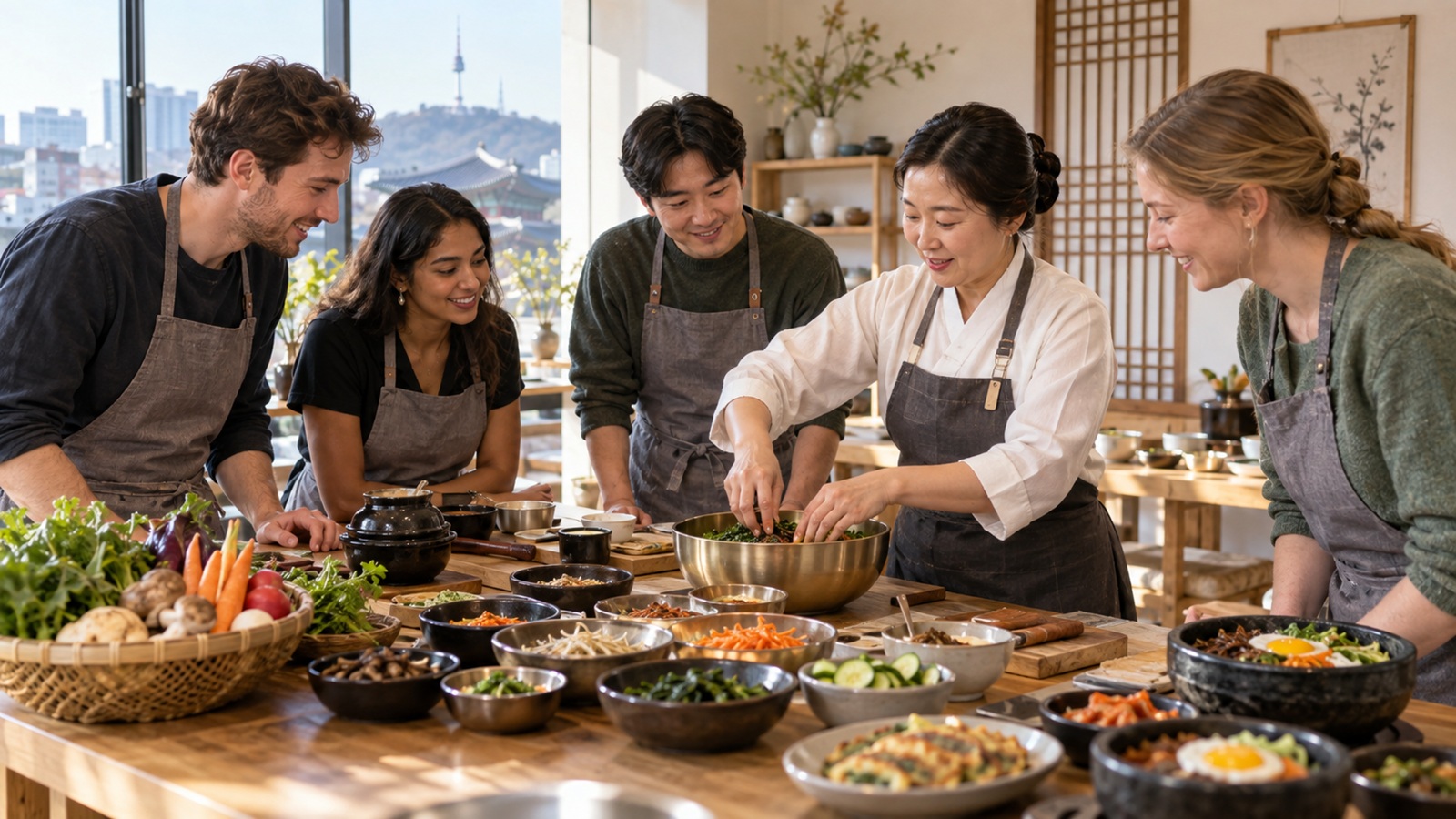
Eating Korean food is one of the highlights of a trip to Seoul. But for travelers who want to go beyond ordering bibimbap or trying street food, a Korean cooking class offers a more hands-on way to understand what goes into the dishes.
Cooking experiences in Seoul vary widely. Some take place entirely in a kitchen studio, while others begin at a local market. Some focus on familiar dishes such as bulgogi and japchae, while others specialize in kimchi, rice cakes or Korean home cooking.
If you are thinking about booking a Korean cooking class in Seoul, here is what to expect — and what to check before choosing one.
Why Take a Korean Cooking Class in Seoul?
A cooking class is different from simply trying Korean food at a restaurant.
You get to see how ingredients are prepared, how different seasonings are used and how several components of a Korean meal come together. Depending on the class, you may also learn about ingredients that are difficult to recognize if you are visiting Korea for the first time.
For travelers, the experience can also provide context for foods they have already seen in restaurants, markets and convenience stores.
And because you actually prepare the food yourself, a cooking class can be one of the more interactive cultural activities to add to a Seoul itinerary.
What Happens During a Korean Cooking Class?
There is no single format used by every Korean cooking class in Seoul.
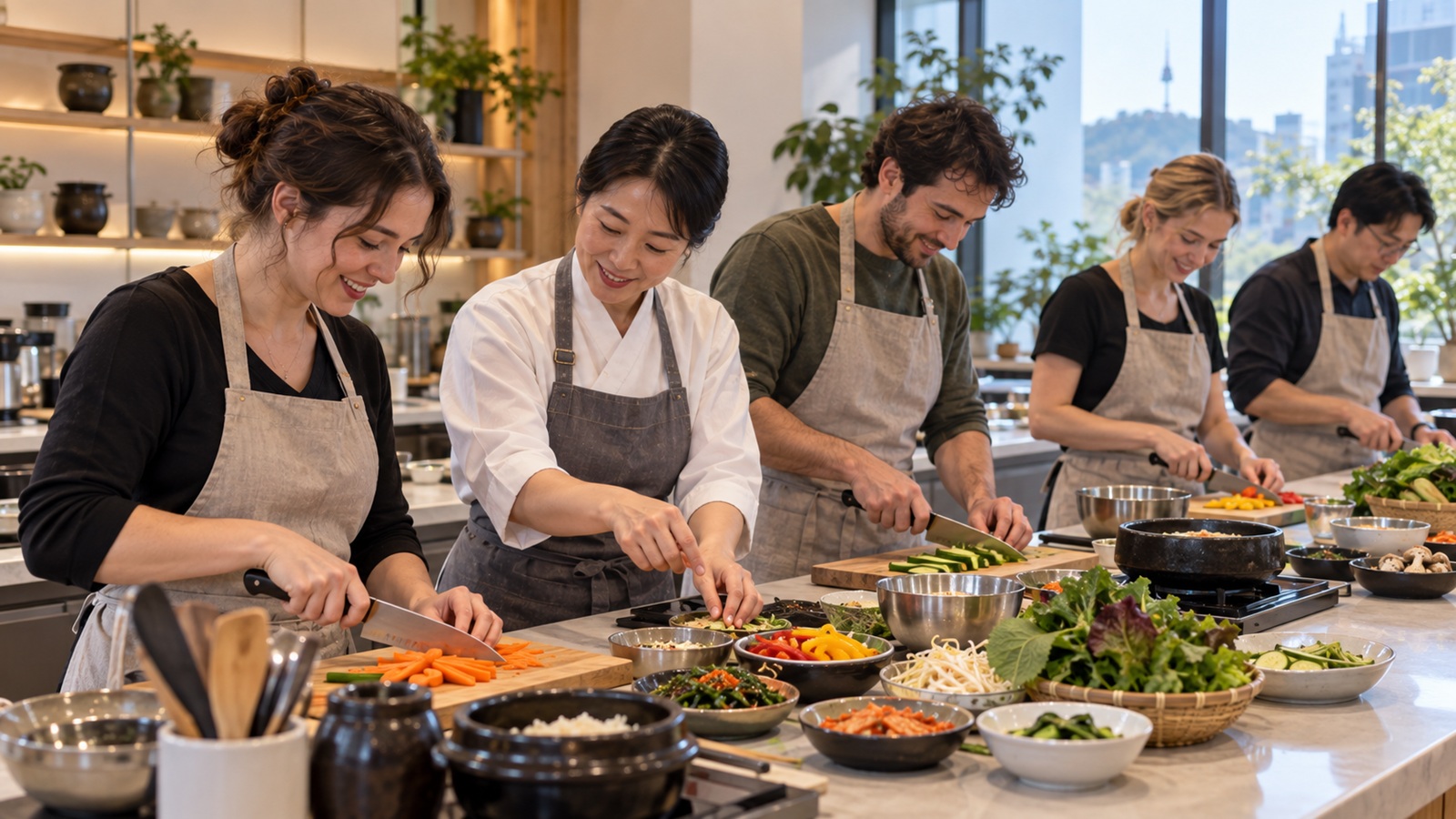
The experience depends on the venue, menu and length of the program, but most classes fall into a few broad categories.
Studio Cooking Classes
A studio class is usually the most straightforward option.
You arrive at the cooking space, meet the instructor and learn how to prepare a set menu. Ingredients may already be measured or partly prepared, although this varies by class.
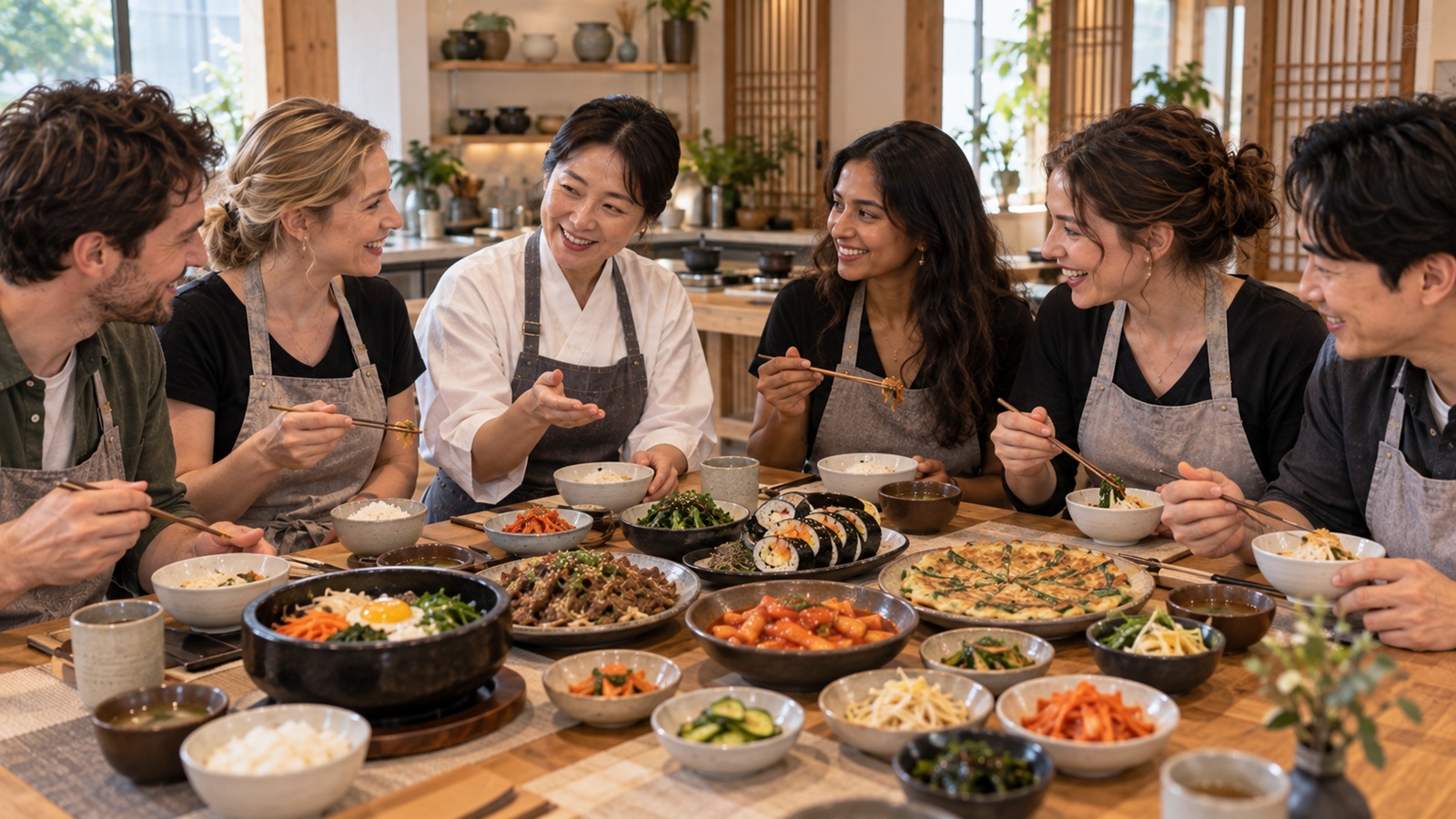
After cooking, participants will often sit down to eat what they have made.
This format can work well if your Seoul itinerary is busy and you mainly want the hands-on cooking experience without adding another activity.
Market Tour and Cooking Classes
Some experiences combine a visit to a traditional or neighborhood market with the cooking lesson.
Instead of beginning at the kitchen, you may first walk through the market, learn about Korean ingredients or see where local shoppers buy food.
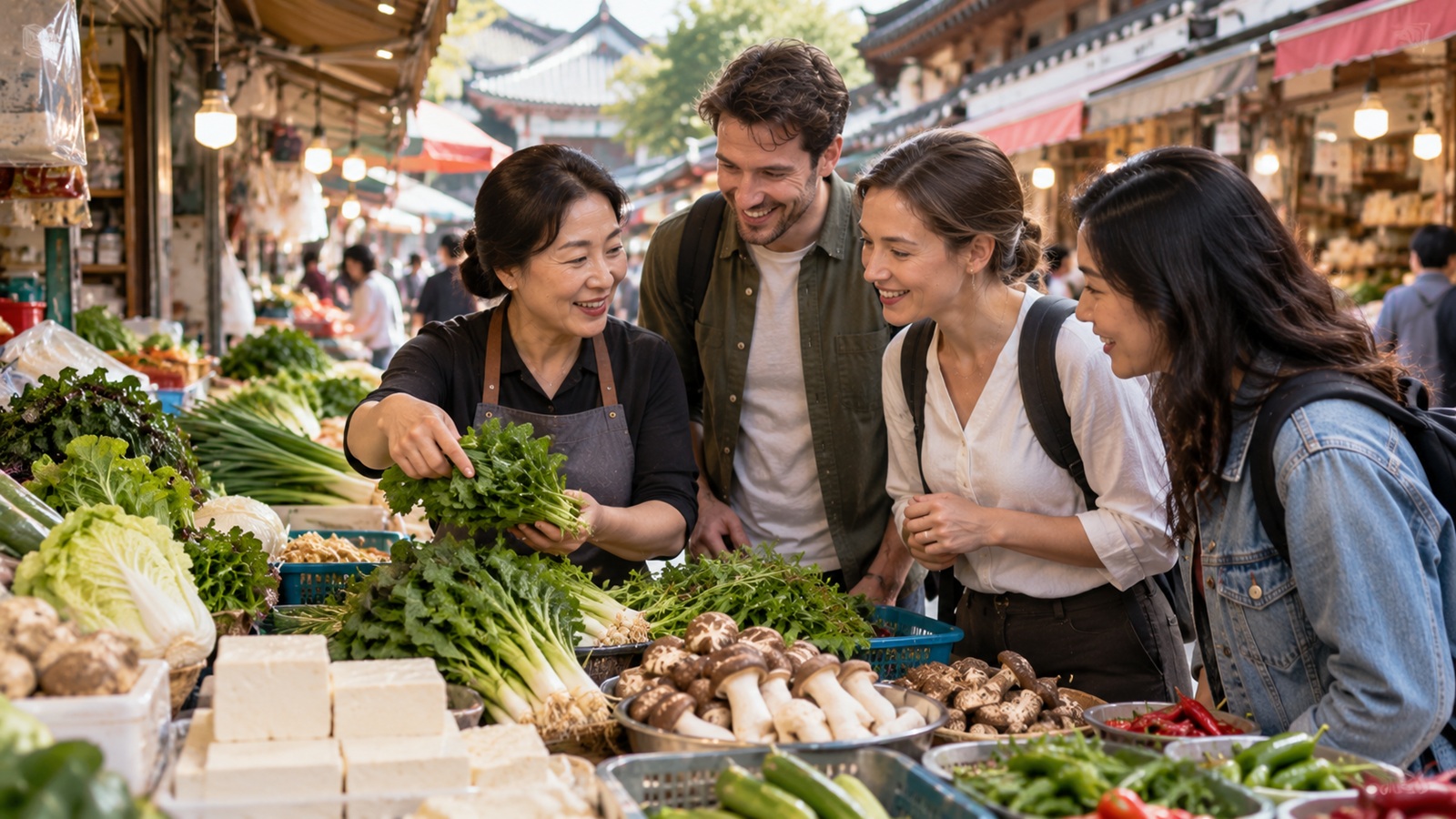
You then move to the cooking space to prepare the meal.
These classes can take longer than a simple studio session, but they add another layer to the experience because you see some of the ingredients in their everyday setting before cooking with them.
Food-Specific Cultural Classes
Not every class is designed around a full Korean meal.
Some experiences focus on a particular food or technique, such as making kimchi, tteok or another traditional dish.
This can be a better choice if there is one part of Korean food culture you are especially interested in rather than several dishes you want to cook in one session.
What Korean Dishes Might You Make?
The menu varies considerably between classes.
Common examples can include:
- bibimbap
- bulgogi
- japchae
- kimchi
- gimbap
- haemul pajeon
- tteokbokki
- Korean soups or stews
- tteok and other traditional foods
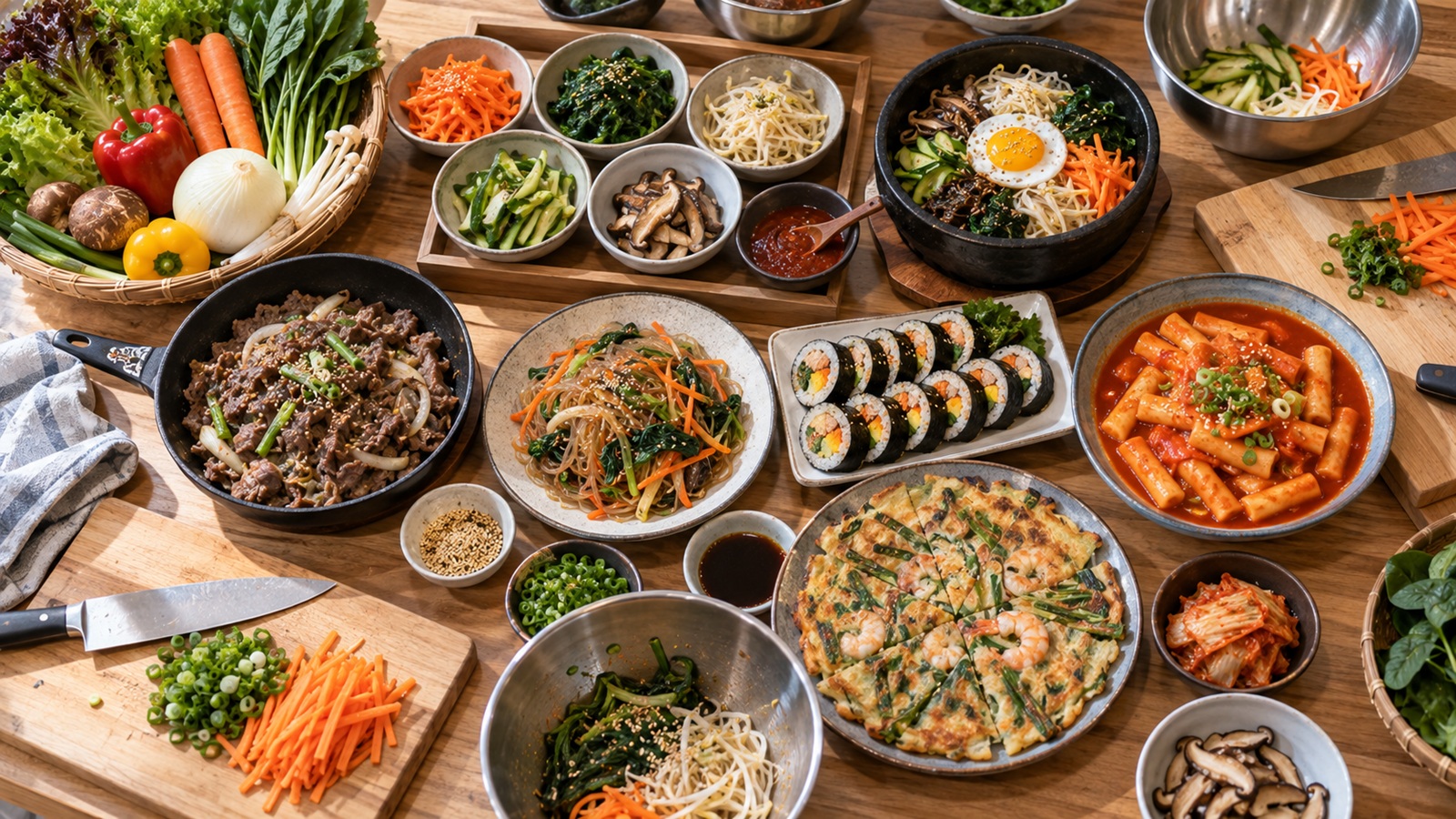
Some programs focus on Korean home cooking, while others build the class around street food or traditional dishes.
If tteokbokki is on the menu, it is worth knowing that the dish is more than simply “spicy rice cakes.” The type of rice cake, sauce and accompanying ingredients can all affect the final dish.
Menus can also change with the season or the program, so check the exact menu for your date rather than booking based only on general photos.
Do You Need Cooking Experience?
Usually, no.
Many cooking experiences in Seoul are designed for travelers and beginners rather than professional or advanced cooks.
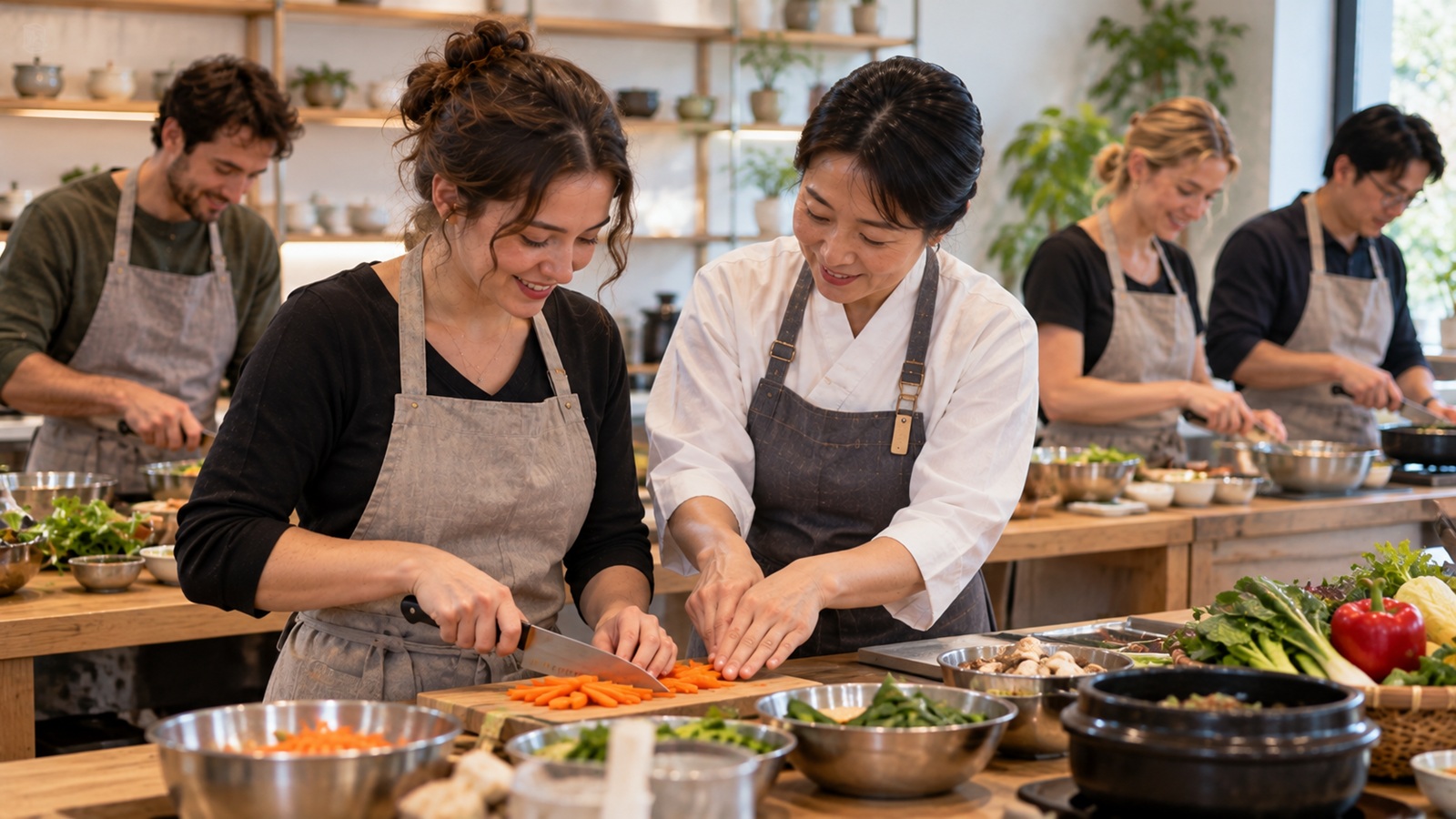
That does not mean every class is equally easy, however.
A class involving several dishes may require more chopping, mixing and cooking than a short food-specific workshop. Children may also have age restrictions because of knives, heat or other kitchen safety issues.
If you are traveling with children, check the minimum age and whether an adult must participate with them before making a reservation.
Are Korean Cooking Classes in Seoul Taught in English?
English-language cooking experiences are available in Seoul, but you should not assume that every class is taught in English.
Some venues specifically offer English instruction or multilingual assistance, while others may primarily operate in Korean.
Check the language information on the actual booking page before paying.
There is also a difference between an English-language booking page and an English-language instructor. If this matters to you, look specifically for the language used during the class itself.
How Long Does a Korean Cooking Class Take?
There is no universal duration.
A focused workshop may take around an hour or 90 minutes, while a more involved cooking session can take several hours. Experiences that include a market tour naturally require additional time.
Do not look only at the cooking time when planning your day.
Allow time to reach the meeting point, find the venue and stay for the meal at the end if eating together is part of the program.
If the class is in Jongno or another historic part of central Seoul, it can often be combined with nearby sightseeing rather than treated as a separate cross-city trip.
How Much Does a Korean Cooking Class in Seoul Cost?
Prices vary too much to give one reliable price for every Seoul cooking class.
The cost can depend on:
- the number of dishes
- class duration
- group size
- private versus shared instruction
- whether a market tour is included
- ingredients
- cultural activities included with the class
A short workshop and a small-group multi-course experience are not directly comparable.
For that reason, it is better to compare what is included rather than simply choosing the cheapest listing.
Also check the current price on the booking page. Travel activities can change prices, menus and schedules, so an older blog post or social-media video may no longer reflect the current program.
What Should You Check Before Booking?
Before paying for a Korean cooking class, check the details carefully.
Menu: Make sure the dishes being taught are actually foods you want to learn.
Language: Confirm the language used during instruction, not just on the booking website.
Dietary requirements: If you are vegetarian, vegan or have food allergies, contact the operator in advance rather than assuming substitutions will be possible.
Market tour: Check whether a market visit is actually included or whether the class takes place entirely in a studio.
Duration: Look at the full experience time, especially if you have another reservation later that day.
Group size: A small class and a large group experience can feel very different.
Age restrictions: Families should check minimum ages and adult-accompaniment rules.
Cancellation policy: Read the policy before booking, particularly if your Seoul schedule may change.
Meeting point: Some experiences meet directly at a cooking studio, while market-based classes may use a different meeting location.
Are Cooking Classes Good for Solo Travelers?
They can be.
Unlike a restaurant meal, a shared cooking class naturally gives participants something to do together. That can make it an accessible group activity for travelers visiting Seoul alone.
But check the booking conditions first.
Some classes accept individual reservations into a group, while others may require a minimum number of participants or operate mainly as private experiences.
If you are traveling solo, look for a class that explicitly allows one-person bookings.
Where Does a Cooking Class Fit Into a Seoul Itinerary?
Location matters more than it may seem.
Many Korean food and cultural experiences are concentrated around central Seoul, including parts of Jongno.
If your class is in this area, it may fit naturally into a day that also includes historic neighborhoods, palaces, markets or Insadong.
A market-based class can work differently. Because the market visit is already part of the experience, you may not need to schedule another food market immediately before or after it.
Think of the cooking class as part of the neighborhood you are exploring rather than an isolated reservation.
That approach can save travel time and make the day feel less rushed.
Is a Korean Cooking Class Worth Adding to a Seoul Trip?
It depends on what you want from your visit.
If your main goal is simply to eat as many Korean dishes as possible, restaurants and markets will give you far more variety.
But if you want to understand how a few dishes are made — and take part rather than only observe — a cooking class offers something different.
The best choice is not necessarily the class with the longest menu.
Look for a format that fits your interests, your schedule and the type of Korean food you genuinely want to learn about.
For many first-time visitors, that can turn an ordinary meal into one of the more memorable hands-on experiences of a trip to Seoul.
Frequently Asked Questions
Do I need cooking experience to take a Korean cooking class in Seoul?
Usually not. Many classes are designed for beginners and international travelers. However, the difficulty varies depending on the menu and number of dishes, so check the class description before booking.
Are Korean cooking classes in Seoul available in English?
Yes, some cooking experiences are offered in English, but not every class is. Confirm the actual language of instruction rather than assuming an English booking page means the class itself will be taught in English.
What food do you make in a Korean cooking class?
It depends on the program. Possible dishes include bibimbap, bulgogi, japchae, kimchi, gimbap, tteokbokki, haemul pajeon and other Korean home-style foods. Menus may change by class or season.
How long does a Korean cooking class in Seoul take?
A focused workshop may take around an hour or 90 minutes, while more involved classes can last several hours. Programs that include a market tour generally require more time.
Can vegetarians join Korean cooking classes in Seoul?
Some classes may accommodate vegetarian, vegan or other dietary requirements, but substitutions are not guaranteed. Contact the operator before booking and explain your requirements clearly, especially if you have an allergy.
Can I join a Korean cooking class alone?
Some group classes accept solo bookings, making them a practical activity for solo travelers. Others may have minimum-participant requirements, so check the booking conditions for your chosen class.
Sources & Further Reading
VISITKOREA — Korean Cooking Classes
Korean Food Promotion Institute — HANSIK Space E:eum Reservations