
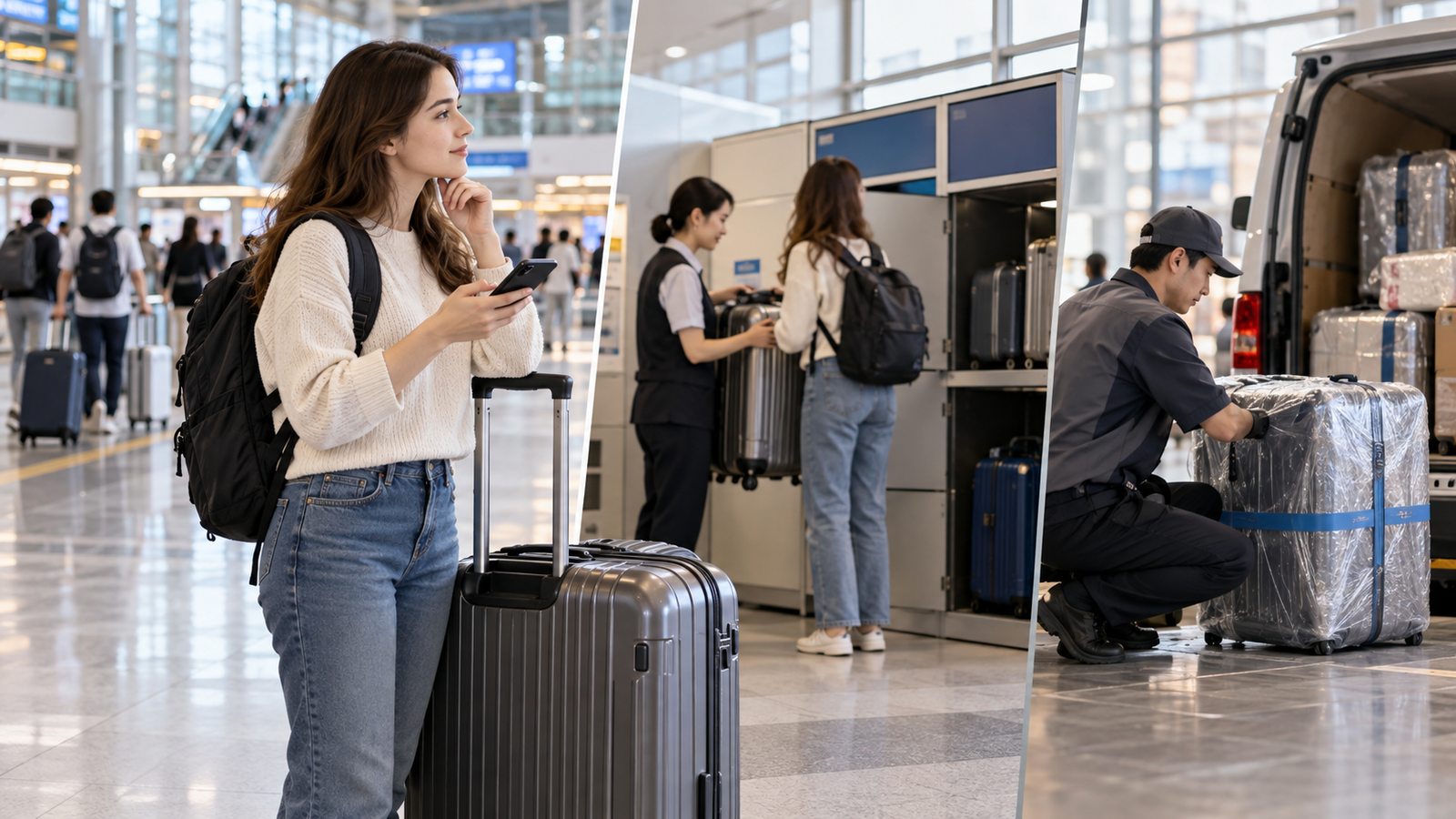
Dragging a large suitcase through Seoul may cost nothing, but that does not always make it the cheapest choice for your trip.
If you have hours between hotel checkout and an evening flight, are taking a short side trip from Seoul, or simply want to explore without luggage, you generally have three choices:
carry your bags, store them, or pay to have them delivered.
South Korea has station lockers, staffed luggage storage and same-day luggage delivery services. The difficult question is not whether these services exist. It is whether paying for one actually makes sense for your itinerary.
This guide compares the real cost, time and convenience of carrying, storing and delivering luggage in Korea.
Quick Answer: Carry, Store or Deliver?
| Your situation | Usually consider |
|---|---|
| Going directly from hotel to station or airport | Carry |
| Exploring for a few hours and returning to the same area | Store |
| Hotel will hold bags free after checkout | Hotel storage |
| Sightseeing in one area, then departing from another | Deliver |
| Taking a 1–2 night side trip with one small bag | Store your large suitcase |
| Final day in Seoul before an evening flight | Store or airport delivery |
| Several large suitcases | Calculate total delivery cost before deciding |
| Tight flight or train schedule | Carrying may give you more control |
The most important distinction is simple:
Storage means you must return for your bag. Delivery changes where you collect it.
That difference can be worth more than the price difference.
What Is T-Luggage?
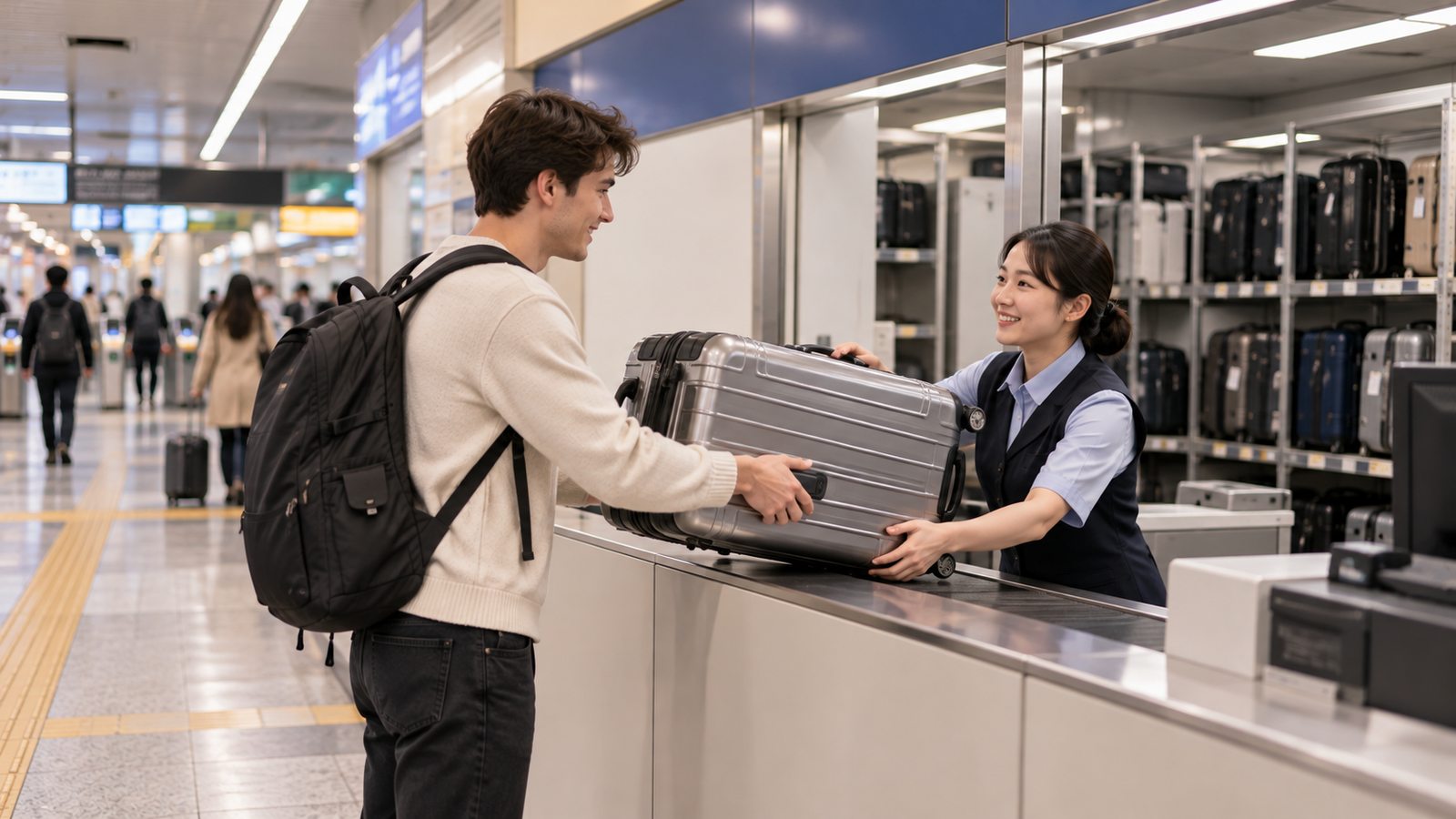
T-Luggage is a luggage storage and same-day delivery service available through designated locations in Seoul’s subway network.
Official Seoul information currently lists staffed T-Luggage locations including:
- Seoul Station
- Hongik University Station
- Jamsil Station
- Myeongdong Station
- Gimpo International Airport Station
- Jongno 3-ga Station
T-Luggage is different from T-Locker.
T-Locker is primarily a self-service subway locker system.
T-Luggage provides staffed storage and selected same-day delivery services.
That distinction matters if you have a large suitcase or want your luggage moved rather than simply stored.
How Much Does Luggage Delivery Cost in Seoul?
Current official T-Luggage prices vary by suitcase size, weekday or weekend, and whether the bag is being moved within Seoul or to Incheon Airport.
Same-Day Delivery Prices
| Bag size | Within Seoul weekday | Within Seoul weekend | Incheon Airport weekday | Incheon Airport weekend |
|---|---|---|---|---|
| S–M, up to about 23 inches | ₩17,000 | ₩25,000 | ₩20,000 | ₩29,000 |
| L, about 23–27 inches | ₩26,000 | ₩38,000 | ₩26,000 | ₩38,000 |
| XL | ₩31,000 | ₩45,000 | ₩31,000 | ₩45,000 |
These are per-bag costs.
That is crucial.
A solo traveler sending one medium suitcase to the airport may pay ₩20,000 on a weekday.
A couple sending two bags would pay roughly ₩40,000.
A family with several large suitcases could spend considerably more.
So luggage delivery should not automatically be treated as a cheap service.
It is better understood as paying to buy back part of your travel day.
How Much Does Luggage Storage Cost?
Staffed T-Luggage storage uses a four-hour starting period.
| Bag size | Weekday | Weekend |
|---|---|---|
| Small, up to 20 inches | ₩3,000 | ₩4,000 |
| Medium, 20–23 inches | ₩4,000 | ₩6,000 |
| Large, 23–27 inches | ₩6,000 | ₩9,000 |
| Extra large, over 27 inches | ₩9,000 | ₩13,000 |
The published additional charge is ₩1,000 per hour.
Self-service subway lockers can start lower.
That makes storage look like the obvious winner.
But storage creates another cost:
you have to return to the same place.
If that return trip takes 45 minutes and requires additional subway or taxi travel, comparing only ₩6,000 storage with ₩26,000 delivery misses the real decision.
The Real Comparison: Money vs Time
Imagine you check out of a Myeongdong hotel in the morning and have an evening flight from Incheon Airport.
Option A: Carry the suitcase
Direct cost: ₩0
But you spend the day moving through cafés, shops, stations and streets with your suitcase.
Option B: Store the suitcase
Suppose storage costs ₩9,000.
That looks inexpensive.
But if you finish sightseeing somewhere else, you may need to travel back to Myeongdong, collect the suitcase and then start your airport journey.
If that detour costs ₩3,000 in transport and takes 60 minutes:
Effective cash cost: ₩12,000
Extra time: about 60 minutes
Option C: Deliver the suitcase
Suppose eligible airport delivery costs ₩26,000.
You pay more cash, but you may avoid the return trip.
The difference between storage and delivery in this example is:
₩26,000 − ₩12,000 = ₩14,000
If delivery saves one hour, you are effectively paying:
₩14,000 for one extra hour of usable travel time.
Now the decision is much clearer.
Is one luggage-free hour in Seoul worth ₩14,000 to you?
There is no universal answer.
But that is a much better question than asking whether delivery is “expensive.”
Luggage Delivery Cost & Time Calculator
Use the calculator below to compare storage with delivery for your own itinerary.
Enter:
- number of bags;
- delivery price per bag;
- total storage cost;
- transportation cost required to return for stored bags;
- and the amount of time that delivery would save.
The calculator compares the cash difference and shows how much you are effectively paying for each hour saved.
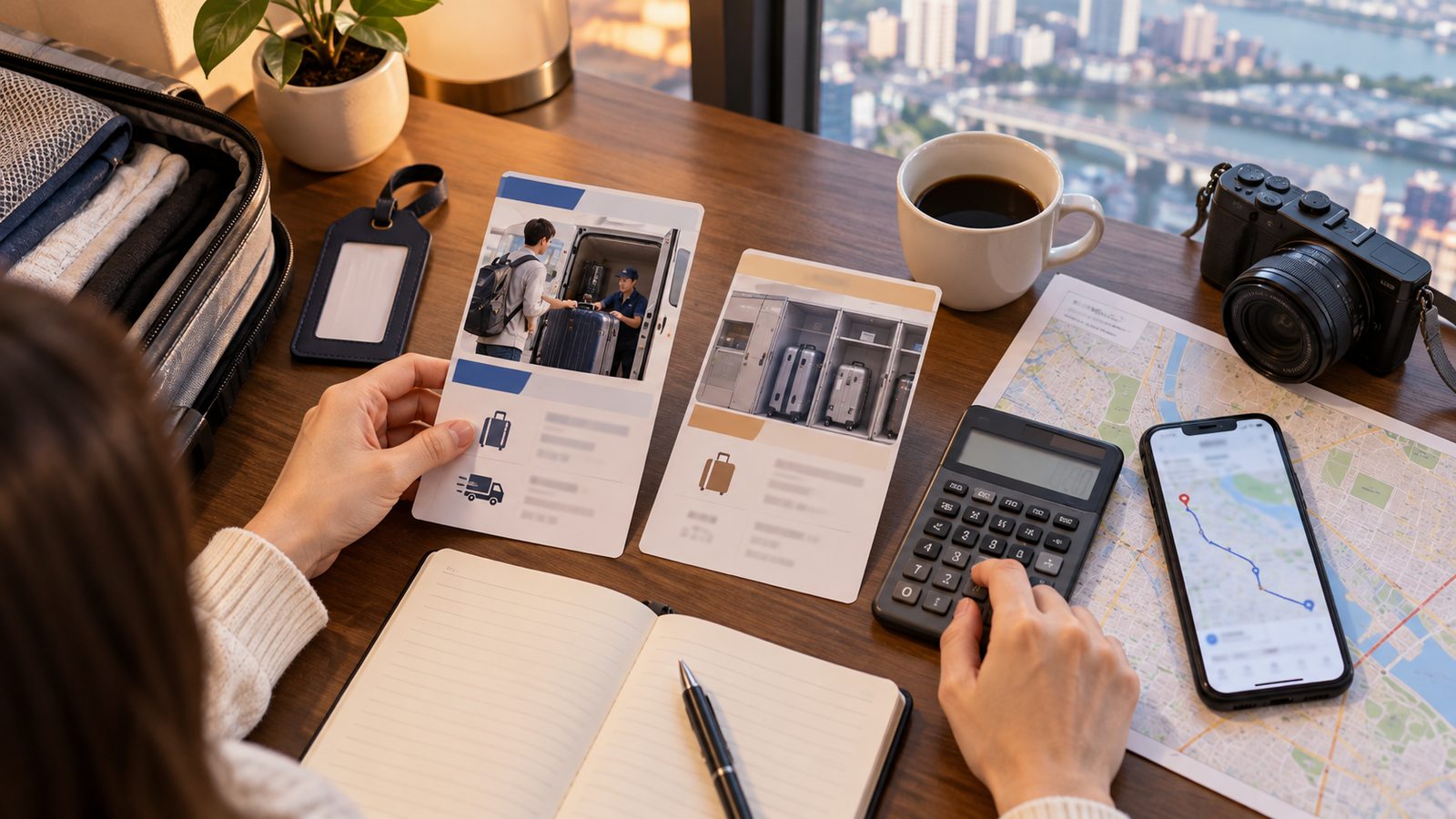
Luggage Delivery vs Storage Calculator
The calculator does not tell you that delivery is automatically “worth it.”
It exposes the trade-off.
A backpacker may prefer to save ₩20,000.
A family with children and several hours of sightseeing ahead may happily pay it.
Scenario 1: Hotel Checkout and an Evening Flight
This is probably the clearest case for comparing storage and delivery.
Suppose your hotel checkout is 11 a.m. and your flight leaves Incheon Airport in the evening.
You want to spend your last afternoon shopping or sightseeing.
Carry
Best when your plans involve very little walking or you are comfortable keeping the suitcase with you.
Advantage: no service fee.
Disadvantage: your final day revolves around luggage.
Store
Best when your sightseeing ends near your hotel or storage location.
Advantage: inexpensive.
Disadvantage: you must return for the bag before going to the airport.
Deliver
Best when you want to finish your day somewhere different from where it began.
Advantage: removes the return trip.
Disadvantage: costs more and requires you to follow delivery deadlines and collection conditions.
This is where luggage delivery provides its strongest value: not carrying less, but backtracking less.
Scenario 2: Seoul to Busan for One or Two Nights
Suppose you are staying in Seoul for a week but want to spend two nights in Busan.
Do you need to take your largest suitcase?
Maybe not.
If your Seoul hotel agrees to keep the suitcase until you return, that may be the easiest solution.
Otherwise, compare commercial storage with bringing the bag on the train.
KTX allows ordinary travel luggage, but storage space can vary by train and carriage. Large suitcases also make subway transfers and station navigation less comfortable. If you plan to take the bag with you, our KTX train ticket and boarding guide also explains luggage considerations for intercity rail travel.
For a short side trip, a useful strategy can be:
large suitcase stays in Seoul + small overnight bag goes to Busan.
That is different from luggage delivery. In this situation, storage may be more useful than sending the large suitcase somewhere else.
Scenario 3: Arriving Before Hotel Check-In
Imagine you reach central Seoul at 9 a.m. but your room is not available until the afternoon.
Before paying for anything, ask your accommodation whether it will hold your luggage.
Many travelers do not need a paid service at all if their hotel provides complimentary pre-check-in storage.
If the hotel cannot accept your bags, compare:
nearby locker → staffed T-Luggage → delivery
based on where you want to spend the day.
Do not send a suitcase across Seoul simply because delivery exists.
If you will return to the same neighborhood for check-in, storage is usually the more logical service.
Scenario 4: Family or Group With Several Suitcases
Delivery becomes more convenient as luggage increases.
But it also becomes more expensive because the charge is generally per bag.
For example, two medium bags using a weekday ₩20,000 airport-delivery rate would cost:
2 × ₩20,000 = ₩40,000
Four bags:
4 × ₩20,000 = ₩80,000
At that point, the decision should expand beyond storage versus delivery.
A group may also want to compare whether taking a taxi with all the luggage makes more sense for the entire journey.
This is why families should calculate total group cost, not just the advertised price for one suitcase.
The Biggest Limitation: Delivery Has Deadlines
Luggage delivery is not an on-demand service like calling a taxi.
Same-day delivery requires you to leave the bag within the service’s acceptance window and collect it during the designated pickup period.
Current T-Luggage guidance lists morning acceptance deadlines for same-day service at major staffed locations.
Airport collection occurs later in the day rather than immediately after you hand over the bag.
That means this service works best when your itinerary naturally leaves several hours between drop-off and collection.
It is a poor choice when your flight schedule is tight.
Before booking, verify:
- where you can drop off the bag;
- the latest acceptance time;
- when the bag will become available;
- which airport terminal you need;
- and how much buffer remains before airline check-in.
Never plan to collect a delivered suitcase immediately before your airline’s baggage-drop deadline.
Can You Send Luggage Between Any Two Seoul Subway Stations?
No.
This is an important limitation.
Incheon Airport’s official guidance states that delivery between two unmanned subway lockers is not currently supported.
At least one end of the delivery needs to be a T-Luggage on-site registration location.
The service also depends on appropriate locker availability and is limited to supported Seoul Metro lines.
So do not assume that seeing lockers at two stations means your suitcase can automatically be transported between them.
Check your exact origin and destination before paying.
Can You Send Luggage to Incheon Airport?
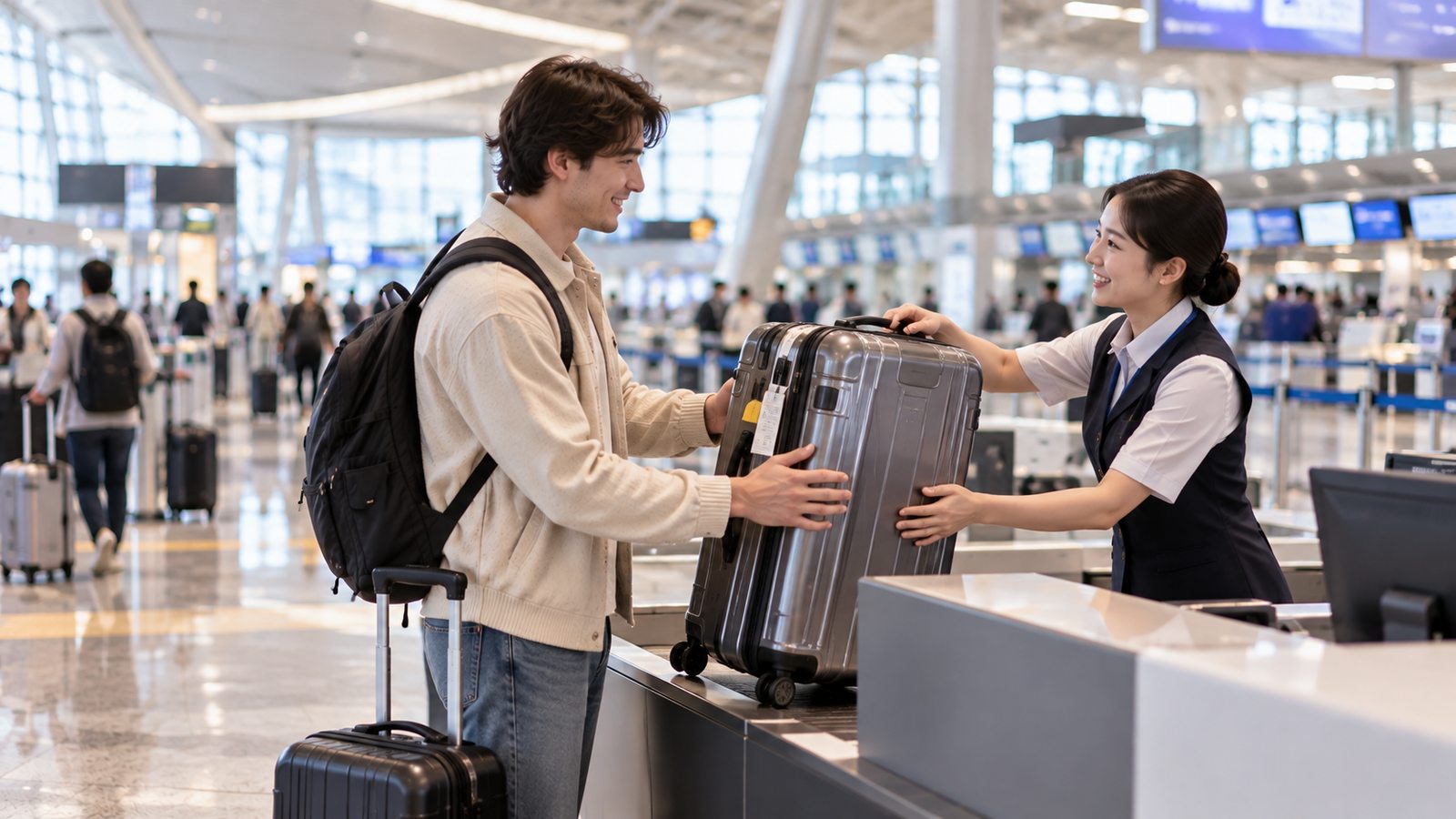
Yes, eligible luggage can be sent between supported Seoul locations and Incheon International Airport.
Airport guidance currently lists T-Luggage-related service counters at:
Terminal 1: 3rd floor, opposite Check-in Counter B.
Terminal 2: 3rd floor, opposite Check-in Counter H.
However, luggage delivery is not airline baggage check-in.
You still need to collect your suitcase and complete the baggage procedures required by your airline.
That distinction is particularly important for international flights.
Carry vs Store vs Deliver: Decision Table
| Factor | Carry | Store | Deliver |
|---|---|---|---|
| Direct service cost | Lowest | Low | Highest |
| Need to return for bag | No | Yes | No |
| Freedom while sightseeing | Low | High | High |
| Schedule dependency | Low | Medium | High |
| Best for short same-area stop | Fair | Excellent | Poor |
| Best when ending day elsewhere | Poor | Fair | Excellent |
| Several bags | Physically difficult | Cost-effective | Can become expensive |
| Tight airport schedule | More control | Depends on detour | Requires caution |
This table explains why the “cheapest” option depends on your route.
Storage usually wins on direct price. For exact locker sizes, staffed counters and current storage options, see our Seoul luggage storage guide.
Delivery can win on time and route efficiency.
Carrying wins on control and zero service cost.
KFR Decision Framework
Use these questions in order.
1. Will your accommodation store your luggage for free?
If yes, start there.
A free hotel service may eliminate the need for both lockers and commercial delivery.
2. Will you return to the same neighborhood later?
If yes, storage usually makes more sense than delivery.
3. Will your day finish somewhere else?
If yes, calculate the cost of backtracking.
This is where delivery becomes more interesting.
4. How many bags are you paying for?
Multiply the delivery rate by every suitcase.
A service that looks reasonable for one traveler can become expensive for a family.
5. How much time will delivery actually save?
Estimate the return journey you would otherwise make.
Then use the calculator.
6. Does the delivery timetable fit your flight or train?
If not, the financial comparison no longer matters.
Choose the option that gives you sufficient schedule control.
When Is Luggage Delivery Worth It?
Luggage delivery is most compelling when three things happen together:
you have a large suitcase + you would otherwise backtrack + you have enough time before collection.
For example, paying an additional ₩15,000 to remove a 90-minute detour from your final day in Seoul can be reasonable.
Paying the same amount when your hotel is five minutes from the station probably is not.
The service is therefore less about luxury and more about route optimization.
When Should You Just Carry Your Bags?
Carry them when:
- you are traveling directly between accommodation and transportation;
- your suitcase is manageable;
- your schedule is tight;
- the delivery route does not match your itinerary;
- or you prefer keeping your luggage under your own control.
A delivery service should solve a real problem.
Do not add another booking, deadline and collection point to your trip when carrying the bag is already straightforward.
What Should You Never Put in Delivered or Stored Luggage?
Follow the current provider’s prohibited-item rules.
As a general travel practice, keep essential items with you, including:
- passport and travel documents;
- wallet and payment cards;
- essential medication;
- valuables;
- electronics or fragile items you cannot afford to lose;
- and anything you need before the scheduled collection time.
Also check the service’s current restrictions before leaving unusually valuable, fragile, oversized or regulated items.
Final Recommendation
For most travelers, the order of consideration should be:
1. Free hotel luggage storage
2. Paid storage if you will return to the same area
3. Delivery if it eliminates meaningful backtracking
4. Carry the luggage when your route is already direct or your schedule is tight
Do not judge luggage delivery only by its ₩20,000–₩45,000 headline price.
Instead ask:
How much extra am I paying, and how much usable travel time am I buying?
For one traveler with one suitcase, the answer may favor delivery.
For a family paying per bag, storage or a taxi may make more sense.
And if your hotel will hold everything for free, the best luggage service may cost nothing at all.
The best option is the one that simplifies your actual route—not the one that sounds most convenient in isolation.
Frequently Asked Questions
How much does luggage delivery cost in Korea?
For T-Luggage, current published same-day prices depend on bag size, weekday or weekend, and destination. S–M luggage starts at ₩17,000 for eligible Seoul delivery on weekdays and ₩20,000 for airport delivery. Larger luggage and weekend service cost more.
Can I send my suitcase from Seoul to Incheon Airport?
Yes, T-Luggage supports eligible same-day luggage delivery between supported Seoul locations and Incheon Airport. Check your exact drop-off location, terminal, acceptance deadline and pickup time before booking.
Is luggage delivery cheaper than a taxi?
For one bag it can cost much less than a taxi, but the comparison changes with several suitcases because delivery is priced per bag. Groups should compare the total delivery charge with their actual transportation alternatives.
Can my hotel send my luggage to the airport?
Hotel services vary by property. Ask the accommodation directly. If it does not provide its own service, you may need to use a supported T-Luggage location or another eligible delivery provider.
Is luggage delivery the same as checking my bag for my flight?
No. Standard luggage delivery transports your suitcase to the designated airport collection point. You still need to retrieve it and complete your airline’s required baggage check-in procedure.
Is luggage storage or delivery better for a day trip?
Storage is generally better when you will return to the same location. Delivery becomes more valuable when you want to finish the day somewhere different and avoid returning solely to collect your suitcase.
Sources & Further Reading
Seoul Metropolitan Government — Subway Storage Facilities
Incheon International Airport — Airport Railroad and Luggage Services
T-Luggage — Official Storage and Delivery Service