
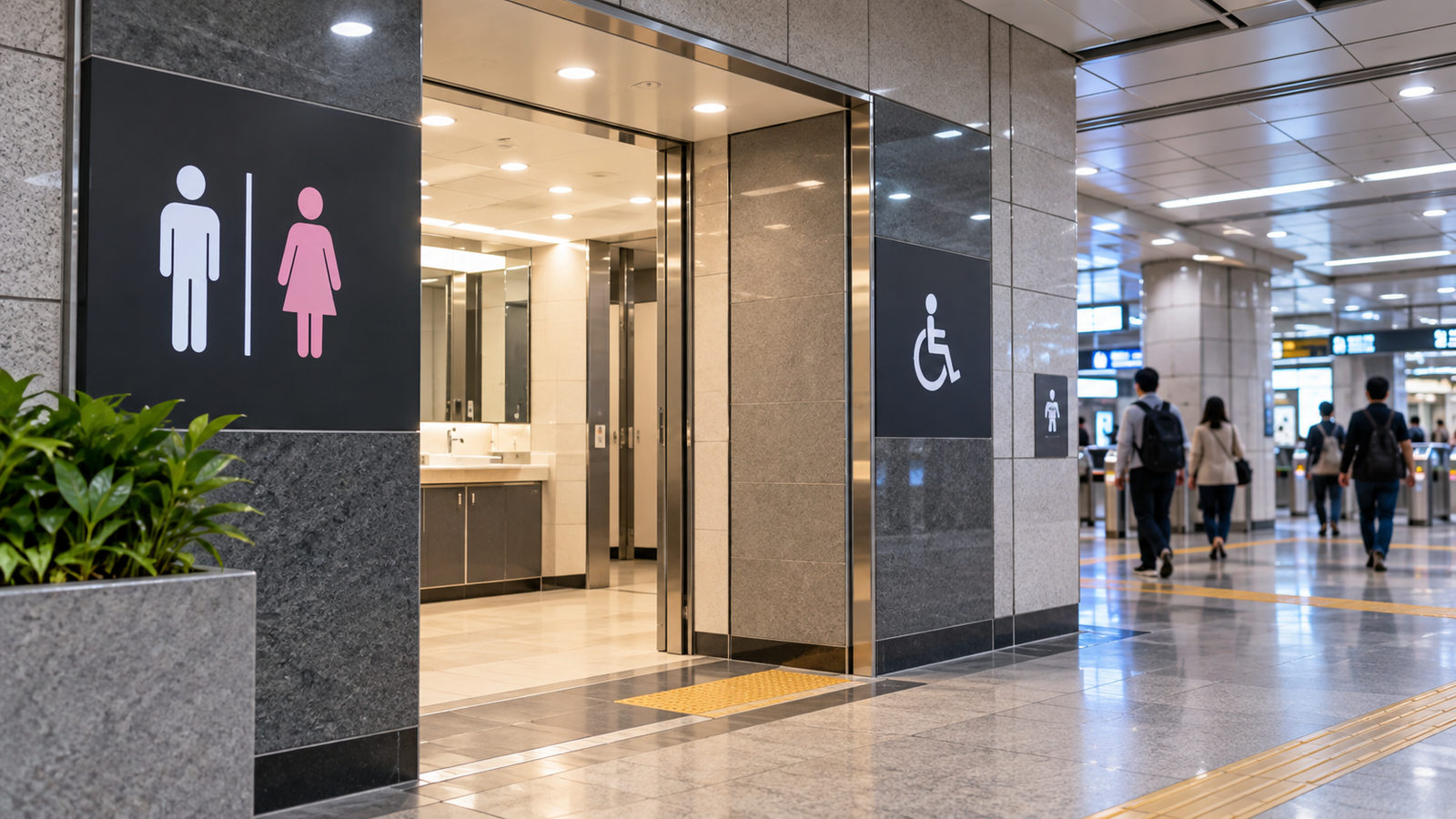
Finding a restroom might not be the first thing on your mind when planning a trip to South Korea. But after a long subway ride, a morning at a traditional market, or an afternoon exploring Seoul, knowing where to find one can make your day easier.
Public toilets are widely available in many of Korea’s major travel destinations. Most public restrooms in Seoul are free, and modern facilities are common at subway stations, parks, museums and major attractions. Still, it helps to know where to look, whether you can flush toilet paper and what to expect in different buildings.
Are Public Toilets Free in South Korea?
Most public toilets in Seoul are free to use. You generally do not need coins, a ticket or a purchase to use a restroom designated for public use.
However, a public restroom is not the same as a toilet inside a privately operated business. A café, restaurant or small commercial building may reserve its restroom for customers or building occupants. Some facilities may be locked or accessible only during business hours.
If you need a restroom without making a purchase, a subway station, public park, tourist information center or major public attraction is often a practical place to start.
Where Can You Find Public Toilets in Korea?
Subway Stations and Train Stations
Subway stations are useful places to look for restrooms while exploring Seoul.
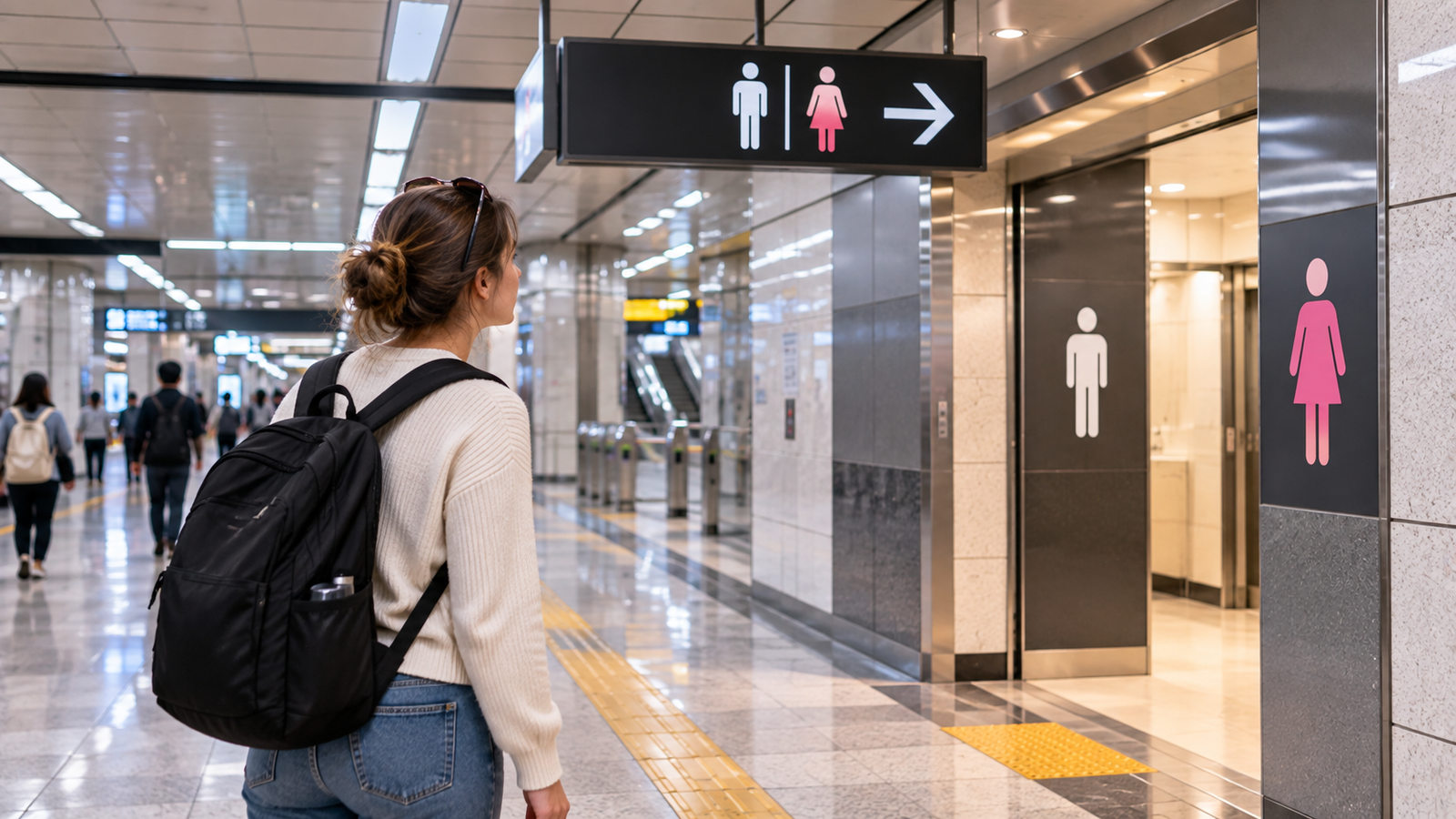
Many stations have clearly marked toilets, and larger stations may also provide accessible facilities. A restroom may be located either inside or outside the ticket gates, so check the station signs before exiting.
At major railway stations, look for restroom signs in the main concourse or near passenger facilities. If you are unfamiliar with Seoul’s subway system, our Seoul subway guide explains transportation cards, station navigation and transfers.
Parks and Tourist Attractions
Public parks, museums and major sightseeing areas are other useful places to look for restrooms. A venue’s opening hours and the availability of its toilets are not necessarily the same: a museum restroom may be unavailable after the building closes, even if the surrounding outdoor area remains open.
Check the facilities listed on an attraction’s official website when planning a long visit.
Shopping Malls and Department Stores
Large shopping malls and department stores generally have restrooms for visitors. Follow the signs or check a floor directory. Smaller commercial buildings may have shared toilets that require a key or access code; ask staff rather than entering a restricted area.
Cafés, Restaurants and Convenience Stores
Restroom access varies at smaller businesses. Some cafés and restaurants have customer restrooms inside, while others share a restroom with neighboring businesses. A convenience store is not a guaranteed public restroom stop. If you are not a customer, ask politely before using a business’s facilities.
How to Find a Toilet Using Korean Signs and Maps
The Korean word for toilet or restroom is 화장실 (hwajangsil). You may see it on signs in stations, shopping centers, parks and other public buildings. Many facilities also use familiar restroom symbols.
In a map app, try searching for 화장실 or 공중화장실, meaning public toilet. You can also search for nearby subway stations, parks or public facilities. A map result does not guarantee that a restroom is open or accessible when you arrive, so check the location and opening hours where available.
For more help navigating the country, see our guide to essential apps for traveling in Korea.
Can You Flush Toilet Paper in South Korea?
Yes. In ordinary modern public restrooms, used toilet paper is generally meant to be flushed. This is a common point of confusion for travelers who have read older advice about Korean toilets.
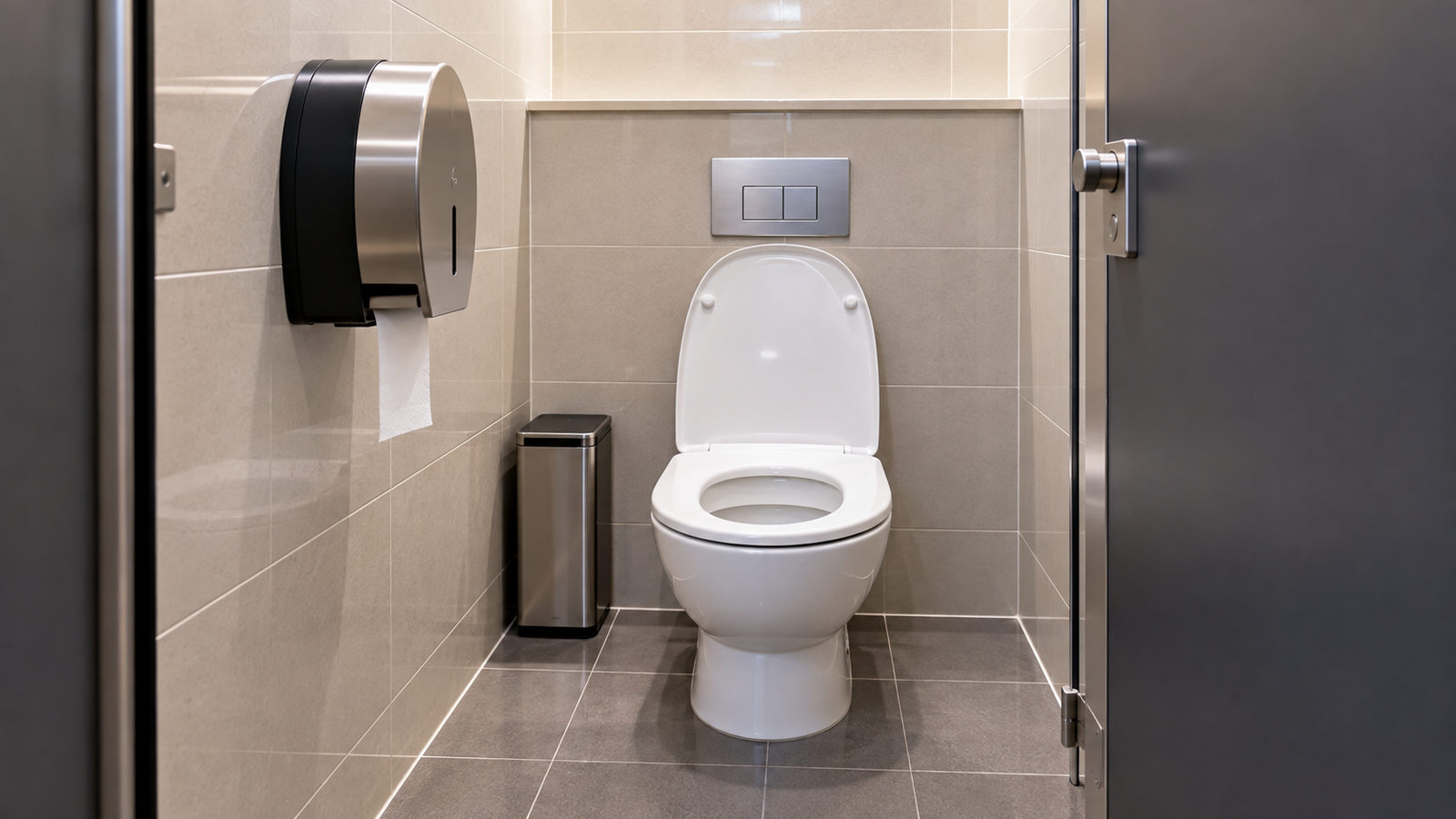
South Korea introduced a public restroom policy in 2018 to remove waste bins from beside toilet bowls. The Ministry of the Interior and Safety instructed users to dispose of used toilet paper in the toilet instead.
Individual facilities may have different plumbing conditions or specific disposal instructions. If a restroom displays a clear sign asking users not to flush paper, follow that facility’s instructions.
Do not flush wet wipes, sanitary pads, tampons, diapers or other hygiene products. Use the appropriate waste bin or sanitary disposal container. Ordinary toilet paper and other disposable hygiene products are not interchangeable when it comes to flushing.
What Are Korean Toilets Like?
Most toilets in Seoul are Western-style seated toilets, according to the city’s official tourism guidance. You may still encounter a squat toilet in an older or less frequently renovated facility. Modern restrooms can also have electronic bidet seats, heated seats or automatic flushing systems; features vary by building and individual toilet.
How to Use an Electronic Bidet
If a toilet has an electronic control panel, you may see buttons for washing, stopping the water or adjusting pressure. You do not need to use the bidet function if you prefer ordinary toilet paper. Avoid pressing unfamiliar buttons repeatedly; use the toilet normally and flush using the appropriate button or handle.
What If You Encounter a Squat Toilet?
Squat toilets are less common in modern Seoul facilities but have not disappeared entirely. If you are uncomfortable using one, look for another stall with a seated toilet where available. Travelers with mobility difficulties can check for an accessible restroom or ask staff about alternatives.
Are Accessible Public Toilets Available in Korea?
Accessible restrooms are available at many public facilities, but their location and features vary.
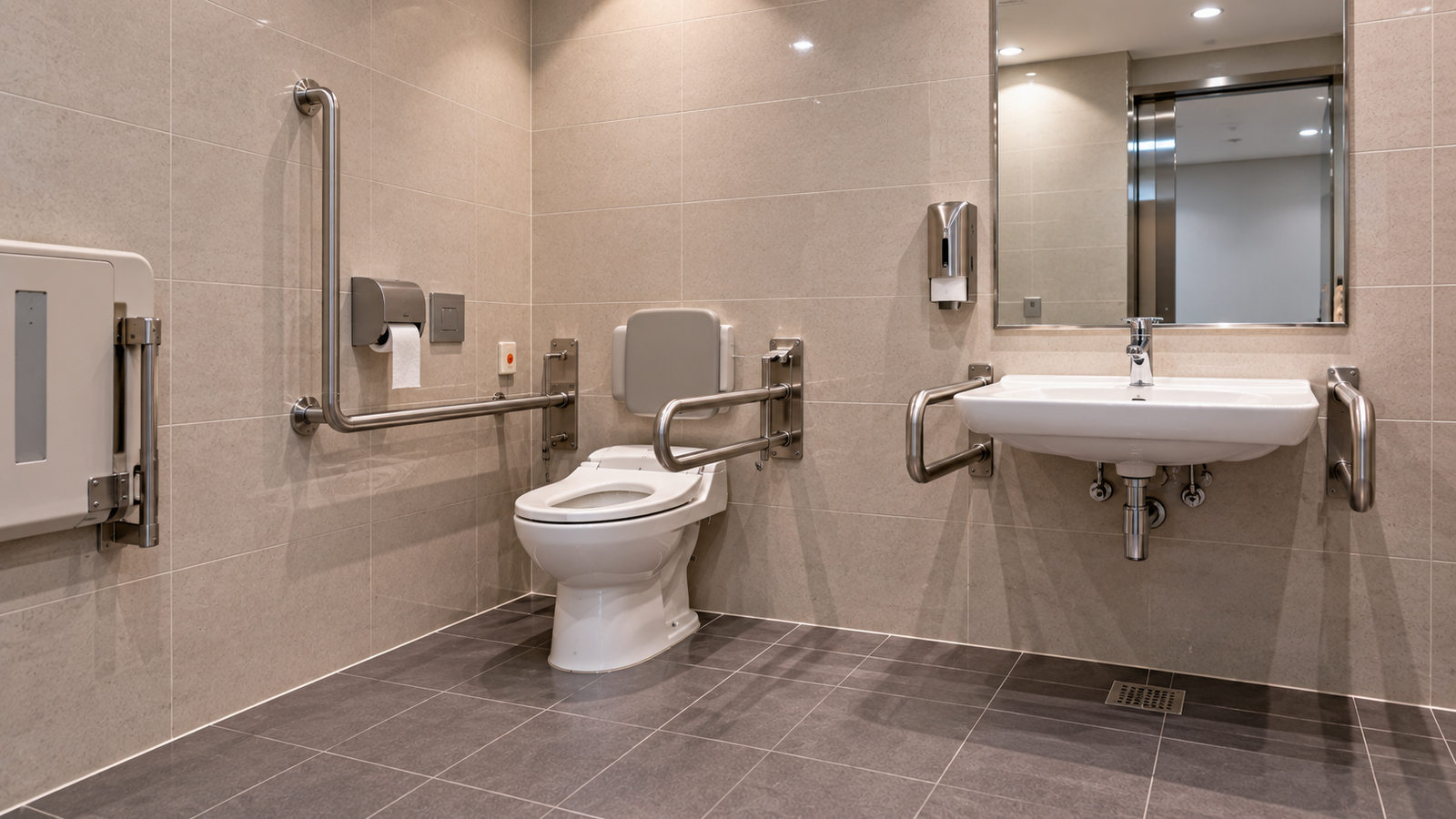
Seoul Metropolitan Government publishes station accessibility information, including accessible restroom facilities at individual subway stations. This can help if you need to plan a journey around step-free access or specific facilities.
Some public buildings also provide family or multipurpose restrooms. Do not assume that every public restroom has the same accessibility features, an adult changing table or a family toilet. If a particular facility is essential for your trip, confirm its availability with the venue or transport operator before traveling.
Korean Public Toilet Etiquette: What Should Visitors Know?
Use the designated restroom and respect signs indicating that a facility is reserved for particular users. Dispose of ordinary toilet paper according to the facility’s instructions, and place sanitary products and other non-flushable items in the appropriate bins.
Leave shared sink areas reasonably clean, avoid occupying an accessible restroom unnecessarily when another suitable facility is available, and do not take photographs inside restrooms. Facilities can vary significantly between a modern shopping mall, an older restaurant, a mountain trail and a small rural station.
Useful Korean Phrases for Finding a Restroom
You do not need to speak Korean fluently to ask for a toilet. You can also show these sentences on your phone.
| English | Korean | Pronunciation |
|---|---|---|
| Where is the restroom? | 화장실이 어디예요? | Hwajangsiri eodiyeyo? |
| Is there a restroom here? | 여기 화장실 있어요? | Yeogi hwajangsil isseoyo? |
| Can I use the restroom? | 화장실 사용해도 돼요? | Hwajangsil sayonghaedo dwaeyo? |
| Is there an accessible restroom? | 장애인 화장실이 있나요? | Jangaein hwajangsiri innayo? |
For a longer sightseeing day, consider checking restroom locations before leaving a major station or public attraction, especially if your next destination is a park, hiking trail or smaller neighborhood.
Frequently Asked Questions
Are public toilets free in South Korea?
Most public toilets in Seoul are free. Restrooms inside private businesses may be reserved for customers or building occupants, and access conditions vary by location.
Can you flush toilet paper in Korean toilets?
Ordinary toilet paper is generally meant to be flushed in modern public restrooms. Follow any specific instructions displayed at an individual facility, and never flush wet wipes or sanitary products.
Do Korean public toilets have toilet paper?
Many public restrooms provide toilet paper, but supplies are not guaranteed at every facility. Carrying a small packet of tissues is a useful precaution.
Are there public toilets in Seoul subway stations?
Many Seoul subway stations have restrooms. Their locations vary, and some are outside the ticket gates. Follow station signs or ask staff if you cannot find one.
Do Korean toilets have bidets?
Some modern toilets have electronic bidet seats, but many do not. You can use a toilet normally without using its bidet functions.
Can tourists use accessible restrooms in Korea?
Accessible restrooms are available at many transport stations and public facilities. If you need specific accessibility features, check the venue or station’s official information before visiting.
Final Tips for Travelers
Public toilets are usually easy to find in Seoul’s major transport hubs and sightseeing areas, but plan ahead when visiting smaller neighborhoods, outdoor attractions or rural destinations. Remember the Korean word 화장실, carry a little tissue and follow the disposal instructions displayed in each facility.