
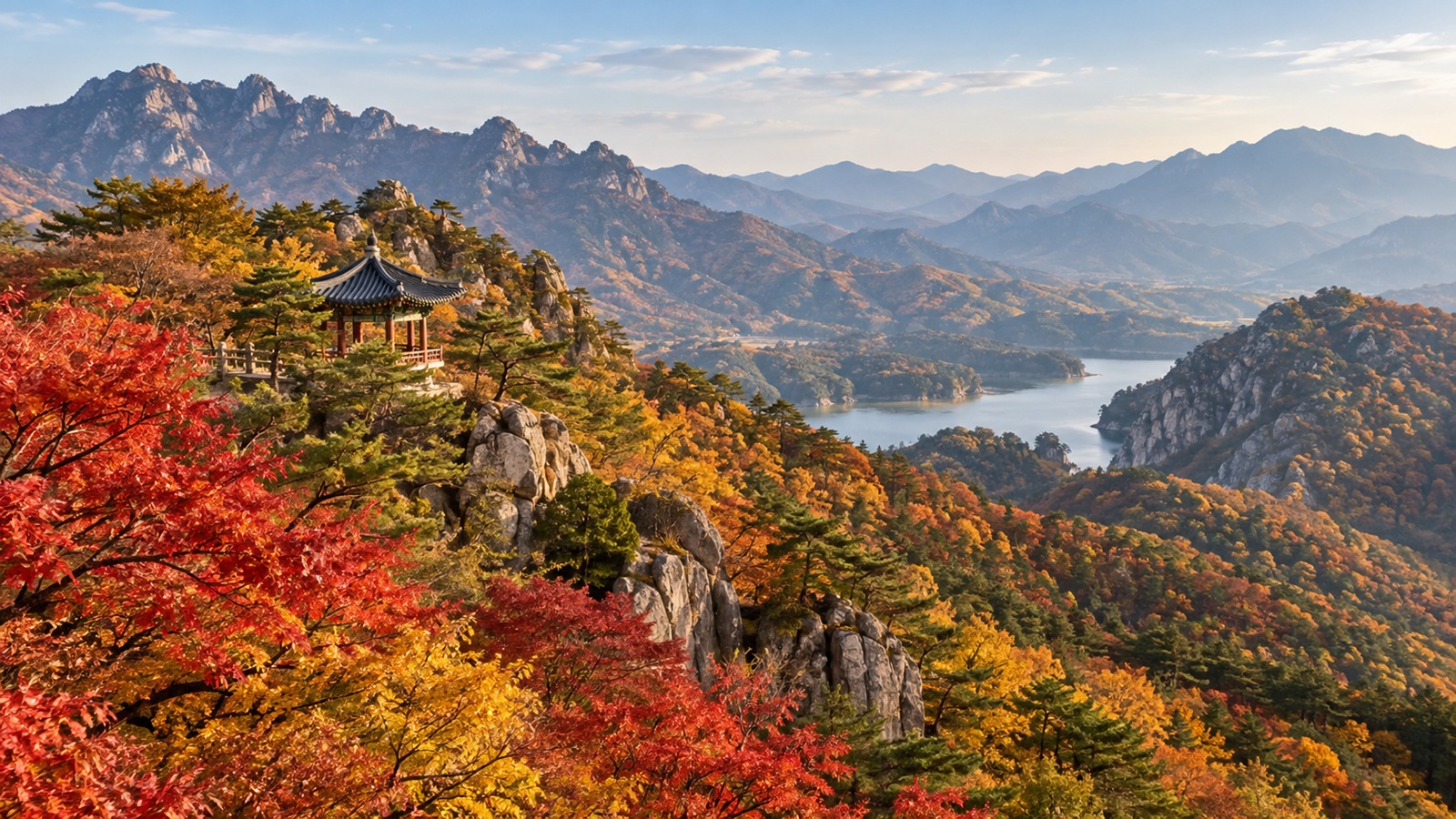
If you are planning an autumn trip to Korea in 2026, late October through early November is the key window to watch.
On September 22, the Korea Forest Service released its 2026 fall foliage forecast for major forests and mountains across the country. The forecast suggests that autumn colors will spread from the northern mountain regions in early October, with much of Korea reaching peak conditions toward the end of the month.
But travelers may notice that different Korean sources give slightly different peak dates.
That is not necessarily a contradiction. Korea’s official forest forecast and tourism-oriented foliage forecasts use different data and criteria, and autumn colors can shift with temperature, rainfall, elevation and local weather.
Here is how to use the 2026 forecasts when planning your trip.
When Is Fall Foliage Season in Korea in 2026?
For most travelers, the safest overall window for autumn foliage in Korea is late October through early November.
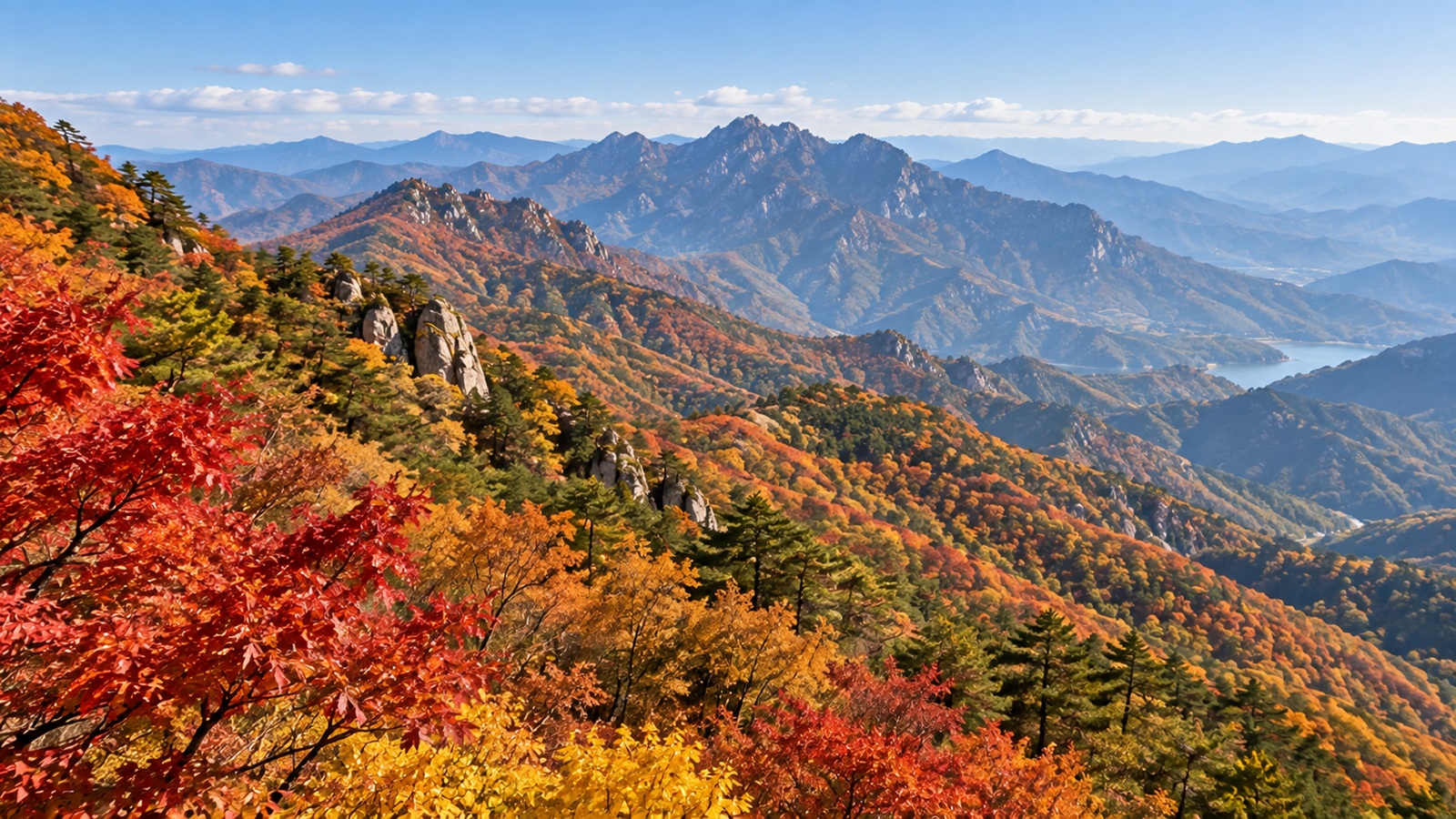
According to the Korea Forest Service’s September 22 forecast, autumn colors are expected to begin spreading in earnest through the northern mountains of Gangwon Province in early October before moving south.
Across the monitoring locations used in the forecast, the average predicted peak dates are:
- Maple species: October 31
- Oak species: October 31
- Ginkgo: October 30
The Korea Forest Service defines its peak around the point when approximately half of the monitored foliage has changed color.
This makes the final week of October an especially useful period to consider if you want to build a Korea itinerary around autumn scenery without relying on a single mountain or destination.
2026 Korea Fall Foliage Peak Dates
The Korea Forest Service’s latest forecast includes several of Korea’s best-known mountain destinations.
| Destination | Korea Forest Service 2026 Forecast |
|---|---|
| Seoraksan | October 20 |
| Songnisan | October 28 |
| Naejangsan | November 4 |
| Hallasan | November 6 |
These dates should be treated as planning guides rather than guaranteed sightseeing dates.
A warm spell, sudden cold weather, heavy rain or strong winds can affect both the timing and how long colorful leaves remain on the trees.
Why Do Korea’s Fall Foliage Forecasts Show Different Dates?
This is one of the most important things to understand when planning an autumn trip to Korea.
The Korea Forest Service forecast and the fall foliage forecast published for travelers by VISITKOREA do not give exactly the same dates.
VISITKOREA’s 2026 forecast, published on September 8 and credited to Weatheri, predicts the following peak dates:
| Destination | VISITKOREA / Weatheri Peak Forecast |
|---|---|
| Seoraksan | October 25 |
| Bukhansan | November 4 |
| Jirisan | November 5 |
| Naejangsan | November 11 |
| Hallasan | November 13 |
For example, the Korea Forest Service forecast points to October 20 for Seoraksan, while the VISITKOREA forecast gives October 25.
For Hallasan, the dates are November 6 and November 13 respectively.
Rather than choosing one date as the only “correct” answer, international travelers should use these forecasts as a window.
If autumn foliage is a major reason for your trip, allow several days of flexibility and check current local conditions again shortly before traveling.
Best Places to See Fall Foliage in Korea
Seoraksan: One of the Earliest Major Autumn Destinations
Seoraksan in Gangwon Province is one of the first major mountain destinations to turn colorful each year.
Its dramatic rocky peaks, forested valleys and elevation changes make it one of Korea’s classic autumn landscapes.
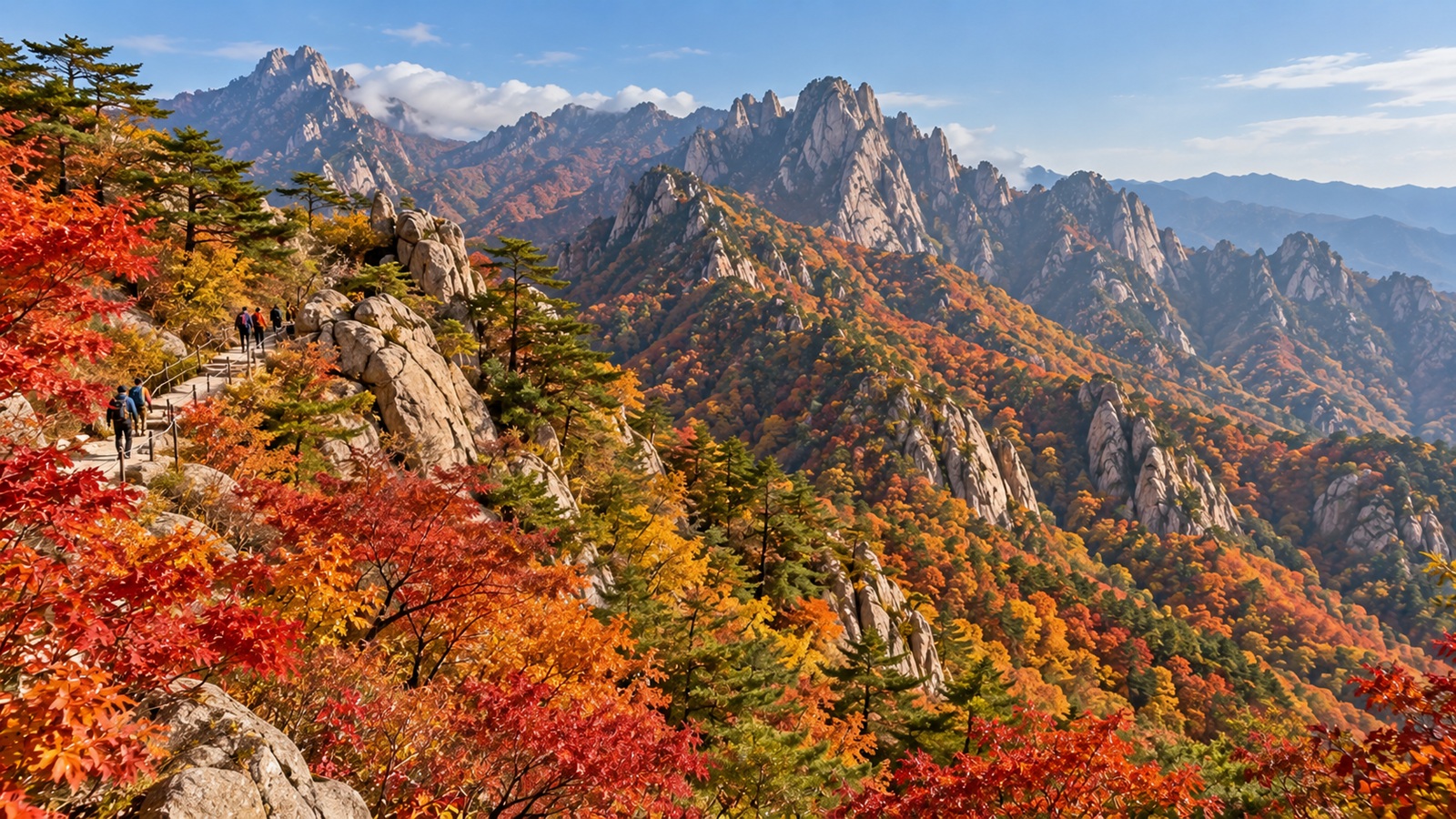
In 2026, the Korea Forest Service forecast points to October 20, while the VISITKOREA/Weatheri forecast places peak foliage around October 25.
That makes the second half of October the main period to watch.
Seoraksan is extremely popular during foliage season, particularly on weekends. Travelers should expect heavier traffic and larger crowds around the most famous trails and viewpoints.
Seoul: An Easy Choice for First-Time Visitors
You do not need to leave Seoul to experience autumn in Korea.
VISITKOREA highlights several places in the capital for fall foliage, including Gyeongbokgung Palace, Seoul Forest, Olympic Park and N Seoul Tower.
For international visitors, Seoul also has an important advantage: you can adjust your plans easily.
If the leaves are not quite ready at one location, you can visit another neighborhood, palace, park or mountain without rebuilding your entire itinerary.
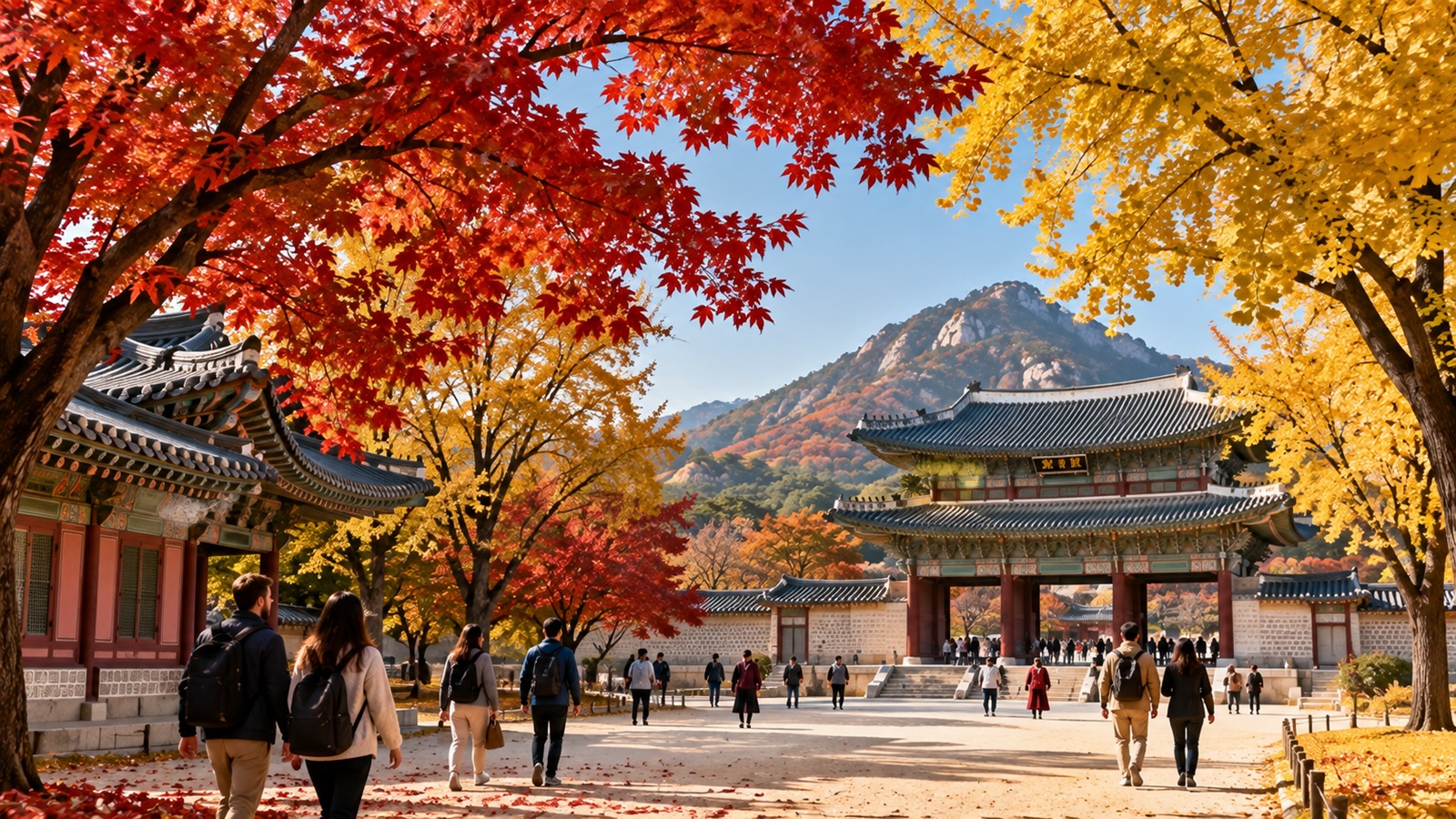
Gyeongbokgung is particularly attractive for first-time visitors because autumn trees add seasonal color to the palace’s traditional architecture.
Seoul Forest offers a very different experience, combining autumn scenery with a contemporary urban neighborhood.
Bukhansan: Autumn Hiking Without Leaving Seoul
For travelers who want a more active autumn experience, Bukhansan offers mountain scenery within the Seoul metropolitan area.
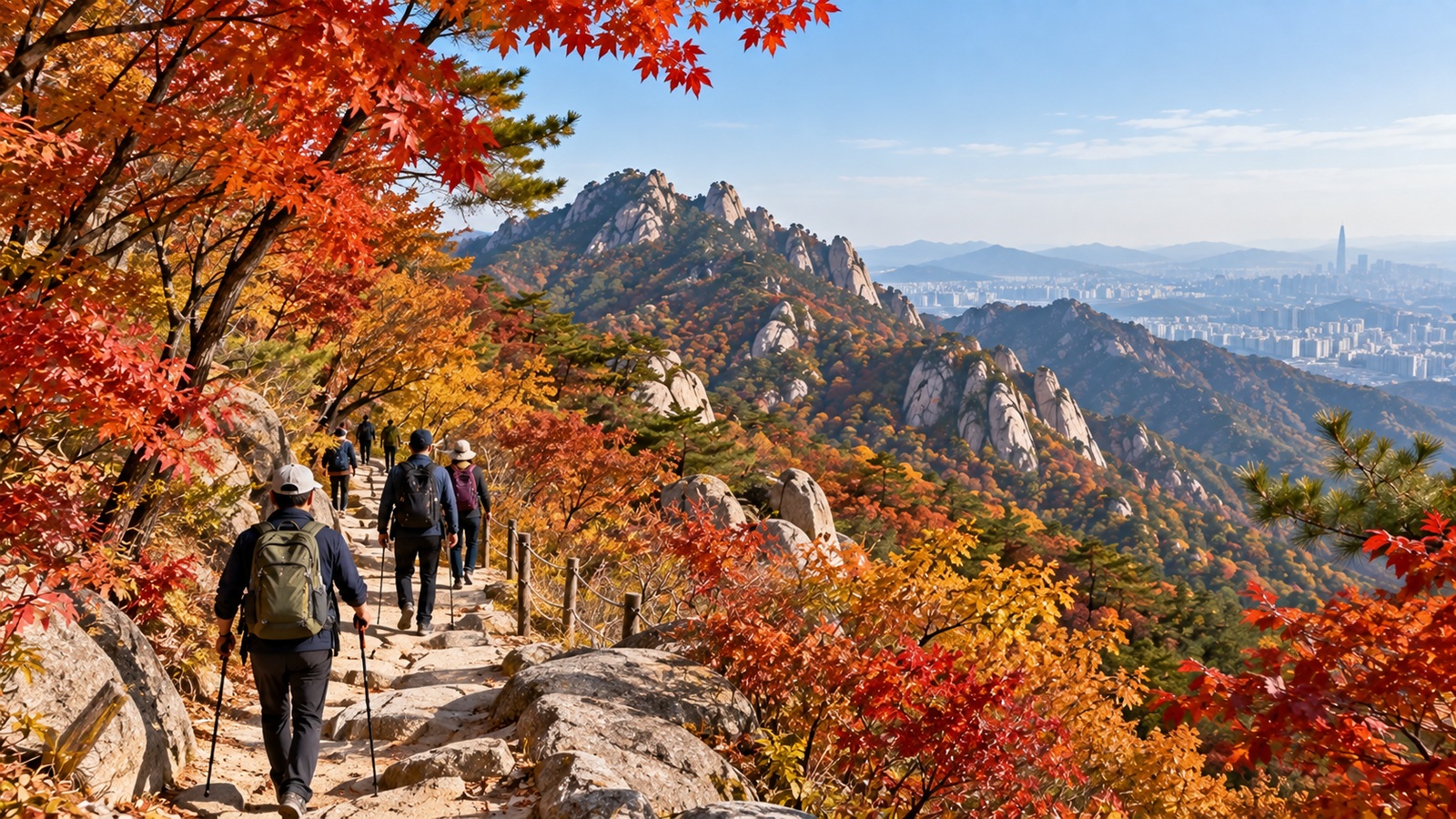
VISITKOREA’s 2026 forecast expects the first foliage around October 23 and peak foliage around November 4.
The exact experience varies by elevation and trail, so the entire mountain does not change color on one single day.
Good walking shoes, weather-appropriate layers and an early start are sensible during the busy autumn hiking season.
If hiking is part of your Seoul itinerary, our guide to hiking in Seoul explains what first-time visitors should know before heading onto the city’s mountain trails.
Naejangsan: A Classic Late-Autumn Destination
Naejangsan is one of Korea’s most famous fall foliage destinations and is especially associated with deep red autumn leaves.
It is also later than Seoraksan.
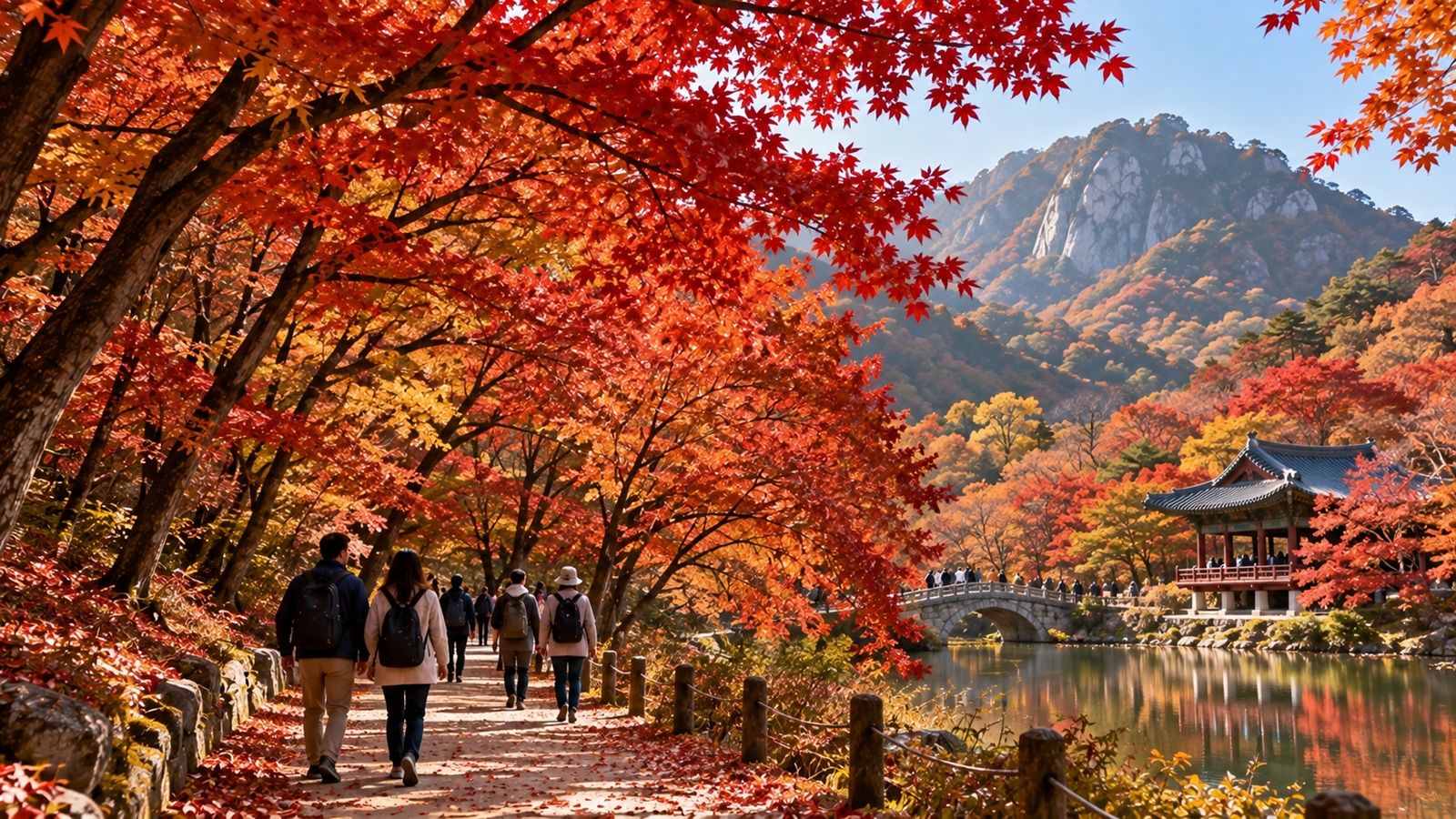
The Korea Forest Service predicts November 4 for its 2026 peak, while the VISITKOREA/Weatheri forecast points to November 11.
For travelers arriving after the main October foliage period, Naejangsan can therefore be an important option to consider.
Hallasan and Jeju: A Later Foliage Option
Jeju’s Hallasan generally gives travelers another chance to experience autumn later in the season.
For 2026, the Korea Forest Service predicts November 6, while the VISITKOREA/Weatheri forecast gives November 13.
Elevation matters considerably on Hallasan, so conditions near higher trails can be different from those in lower parts of Jeju.
Do not assume that one forecast date represents the entire island.
Where to See Fall Colors Near Seoul
If you are staying in Seoul but want to make a foliage day trip, several popular destinations are within reach.
VISITKOREA recommends Hwadam Botanic Garden, Nami Island and The Garden of Morning Calm among the well-known autumn destinations outside the capital.
These can work well for travelers who want landscaped autumn scenery without planning a full mountain hiking trip.
However, popular foliage attractions can become extremely busy in peak season. Reservation requirements, opening hours and transportation arrangements should always be checked on the destination’s official website before departure.
What Is the Best Time to Visit Seoul for Fall Foliage?
For a Seoul-focused trip, late October to early November is the most practical window to watch in 2026.
The VISITKOREA forecast places Bukhansan’s peak around November 4, while major urban foliage spots can change at slightly different speeds.
Instead of planning an entire international trip around one exact “peak day,” think in terms of a foliage window.
A traveler spending several days in Seoul around the end of October and beginning of November has more flexibility to combine palaces, parks, neighborhoods and hiking depending on current conditions.
Should You Plan Your Korea Trip Around One Peak Date?
Usually, no.
Fall foliage does not behave like an event that begins and ends on a fixed date.
Different tree species change at different times. Higher elevations can turn earlier than lower areas, and conditions can vary even within the same destination.
A better strategy is to choose the region that fits your travel dates.
Mid to late October: Watch northern and higher-elevation destinations such as Seoraksan.
Late October to early November: Consider Seoul, central Korea and a wider range of mountain destinations.
Early to mid-November: Look toward later destinations such as Naejangsan and parts of Jeju.

This north-to-south progression gives travelers more flexibility than chasing a single nationwide peak date.
Practical Tips for an Autumn Trip to Korea
Autumn is one of Korea’s most popular domestic travel seasons, so famous foliage destinations can be much busier than they appear in photographs.
Try to visit major attractions on weekdays when possible, and leave early in the morning for mountain destinations.
Temperatures can also vary significantly between daytime and evening, particularly in mountain areas. Layers are more useful than relying on one heavy item of clothing.
For hiking, check the weather and trail conditions before leaving and make sure your route matches your fitness level.
Most importantly, check current foliage conditions again as your travel date approaches. A forecast published weeks earlier is useful for planning, but real-world weather ultimately determines what you will see.
Final Takeaway
For Korea’s 2026 fall foliage season, the broad picture is clear: colors will begin in the northern mountains before spreading south, with late October through early November providing the strongest overall travel window.
The Korea Forest Service’s September 22 forecast points to October 20 for Seoraksan, October 28 for Songnisan, November 4 for Naejangsan and November 6 for Hallasan.
Tourism-oriented forecasts give somewhat later dates for several destinations, which is why travelers should treat peak dates as a range rather than a guarantee.
If your itinerary is flexible, that difference can actually work in your favor.
Choose several possible foliage stops, check current conditions shortly before you go, and let Korea’s autumn colors determine which one makes the most sense on the day.
FAQ
When is peak fall foliage in Korea in 2026?
Peak foliage varies by region and elevation. The Korea Forest Service’s September 22 forecast predicts October 20 for Seoraksan, October 28 for Songnisan, November 4 for Naejangsan and November 6 for Hallasan. Tourism-oriented forecasts give somewhat different dates, so travelers should use them as approximate windows.
What is the best month to see autumn leaves in Korea?
October and early November are generally the key period. Northern mountain areas tend to change earlier, while southern destinations and Jeju can remain good options into November.
When will Seoul have fall foliage in 2026?
Late October through early November is the main period to watch. VISITKOREA’s 2026 forecast predicts peak foliage at Bukhansan around November 4, although urban parks and palace grounds may change at different rates.
Where is the best place to see fall foliage in Korea?
Seoraksan, Naejangsan and Bukhansan are among the best-known mountain destinations. In Seoul, Gyeongbokgung Palace, Seoul Forest, Olympic Park and N Seoul Tower are convenient options for international visitors.
Is Seoraksan worth visiting in autumn?
Yes. Seoraksan is one of Korea’s most famous autumn mountain destinations and tends to change earlier than many southern areas. It can also become extremely busy during peak foliage weekends.
Are Korea fall foliage forecasts accurate?
They are useful planning tools, not guarantees. Temperature, rainfall, wind, elevation and tree species can all change the timing and duration of autumn colors.
Sources & Further Reading
1. Korea Forest Service — 2026 Korean Peninsula Fall Foliage Peak Forecast, September 22, 2026
2. VISITKOREA — 2026 Fall Foliage Forecast, September 8, 2026