
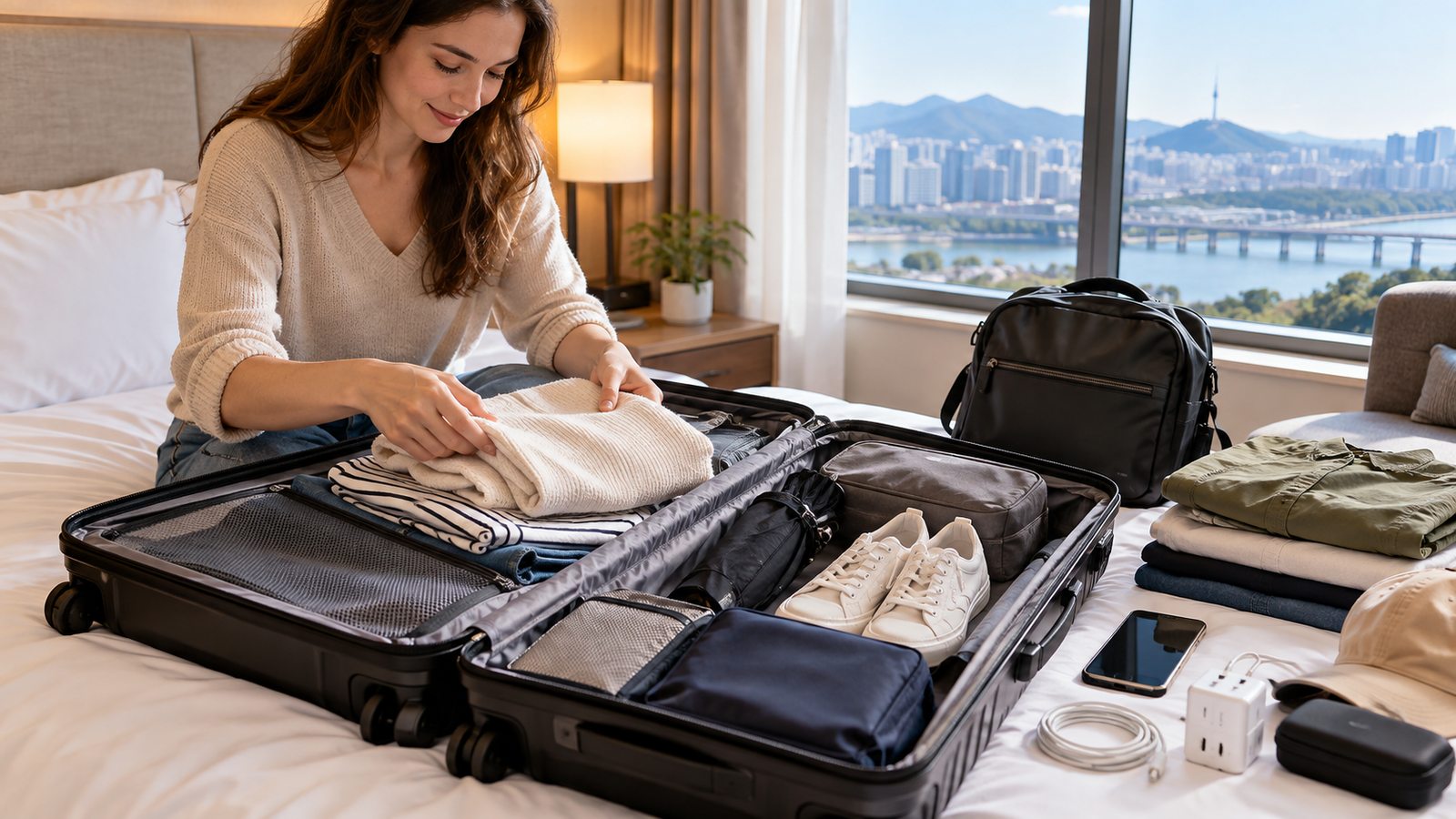
Packing for South Korea is easier once you know when you are going, how much walking you plan to do, and whether your trip will take you beyond Seoul. A spring city break calls for a different suitcase from a winter ski trip or a humid summer visit to Busan.
The good news is that you do not need to pack for every possible situation. Start with a few reliable travel essentials, add clothing for your season, and check the rules for anything you plan to carry on a flight or bring through customs.
Here is a practical South Korea packing list for first-time visitors, with seasonal adjustments and a few things worth checking before departure.
South Korea Packing List: The Essentials
Regardless of the season, build your suitcase around the activities you have actually planned.
| Pack | Why it helps |
|---|---|
| Passport and travel documents | Keep your passport and any documents required for your trip accessible. |
| Comfortable walking shoes | Seoul sightseeing, subway transfers and market visits can involve plenty of walking. |
| Everyday clothing you can layer | Layers are useful when outdoor and indoor temperatures differ. |
| A compact day bag | Carry water, an umbrella, a power bank and small purchases without taking your suitcase everywhere. |
| Phone, charging cable and suitable adapter | You will likely use your phone for maps, translation and transport. |
| Payment card and a backup payment option | A second payment method is useful if your main card does not work. |
| Personal toiletries and necessary medication | Bring products you rely on, while checking airline and Korean entry rules where applicable. |
| A small umbrella or packable rain jacket | Useful when rain is in the forecast, particularly during the warmer months. |
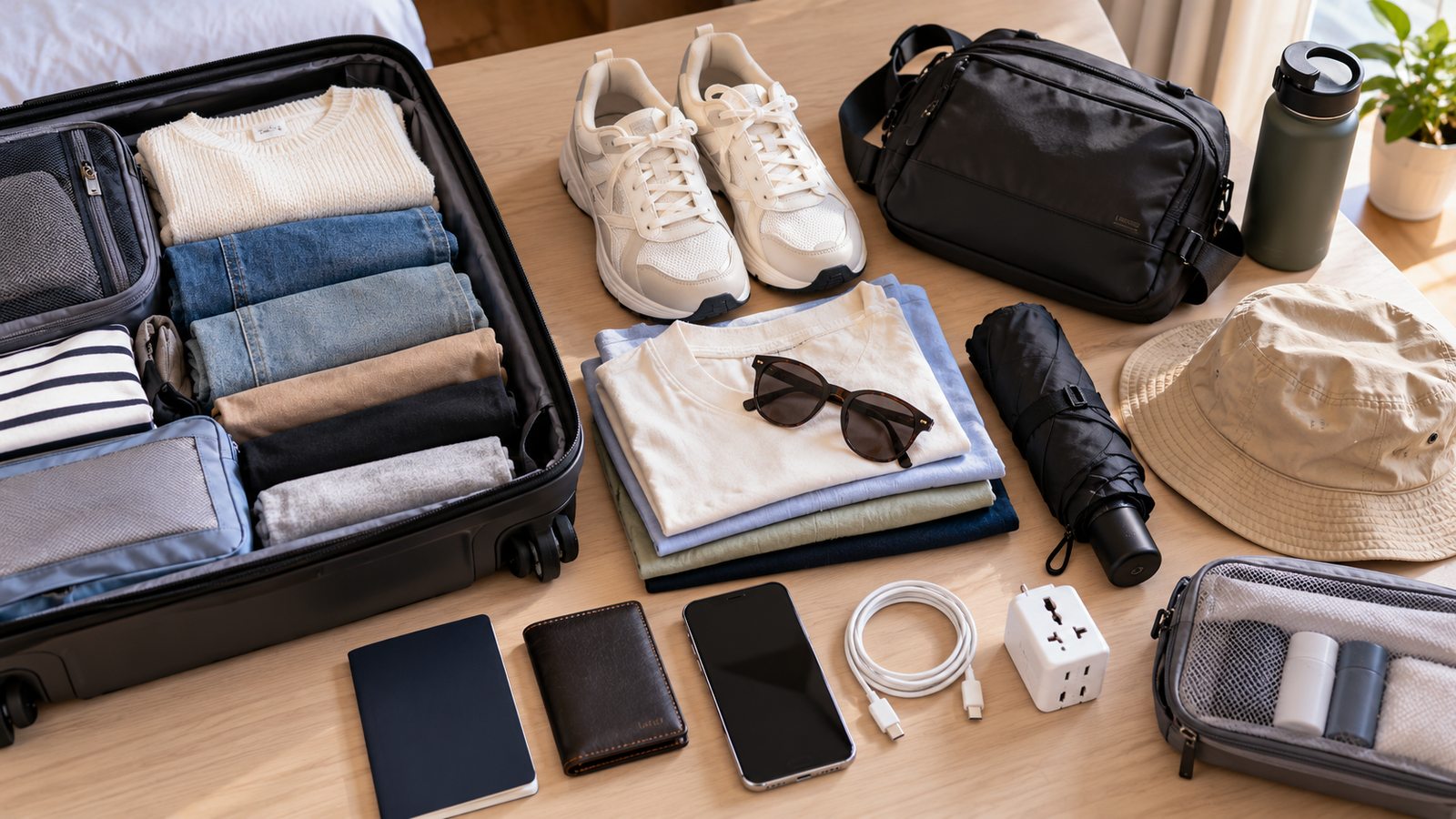
You can buy many ordinary travel items after arrival, so there is little reason to fill your suitcase with things you might never use. The items that deserve more attention are those that need to fit you well, work with your devices, or meet a specific travel requirement.
If your trip requires an arrival declaration, check our Korea e-Arrival Card guide before departure so you know who needs it and when the online submission window opens.
What to Wear in South Korea by Season
South Korea has four distinct seasons, but the weather on your actual travel dates matters more than a generic monthly packing list. Check the forecast for every city on your itinerary shortly before departure, especially if you are visiting mountain areas or traveling between Seoul and the southern coast.
Spring: March to May
Spring is often comfortable for sightseeing, but early spring can still feel chilly, particularly in the morning and evening.
Pack a light-to-medium jacket, long trousers, comfortable closed-toe shoes and tops that work in layers. A light sweater or cardigan is useful when temperatures change throughout the day.
If you are visiting in March, do not assume that cherry blossom season means warm weather. A jacket you can easily remove will be more useful than packing only lightweight spring outfits.
Summer: June to August
Korean summers can be hot and humid, with periods of heavy rain. Choose breathable clothing that dries reasonably quickly, and leave room in your day bag for rain protection.
Lightweight tops, comfortable shorts or trousers, a compact umbrella and a small towel can make long sightseeing days more manageable. A thin extra layer may still be useful in heavily air-conditioned indoor spaces.
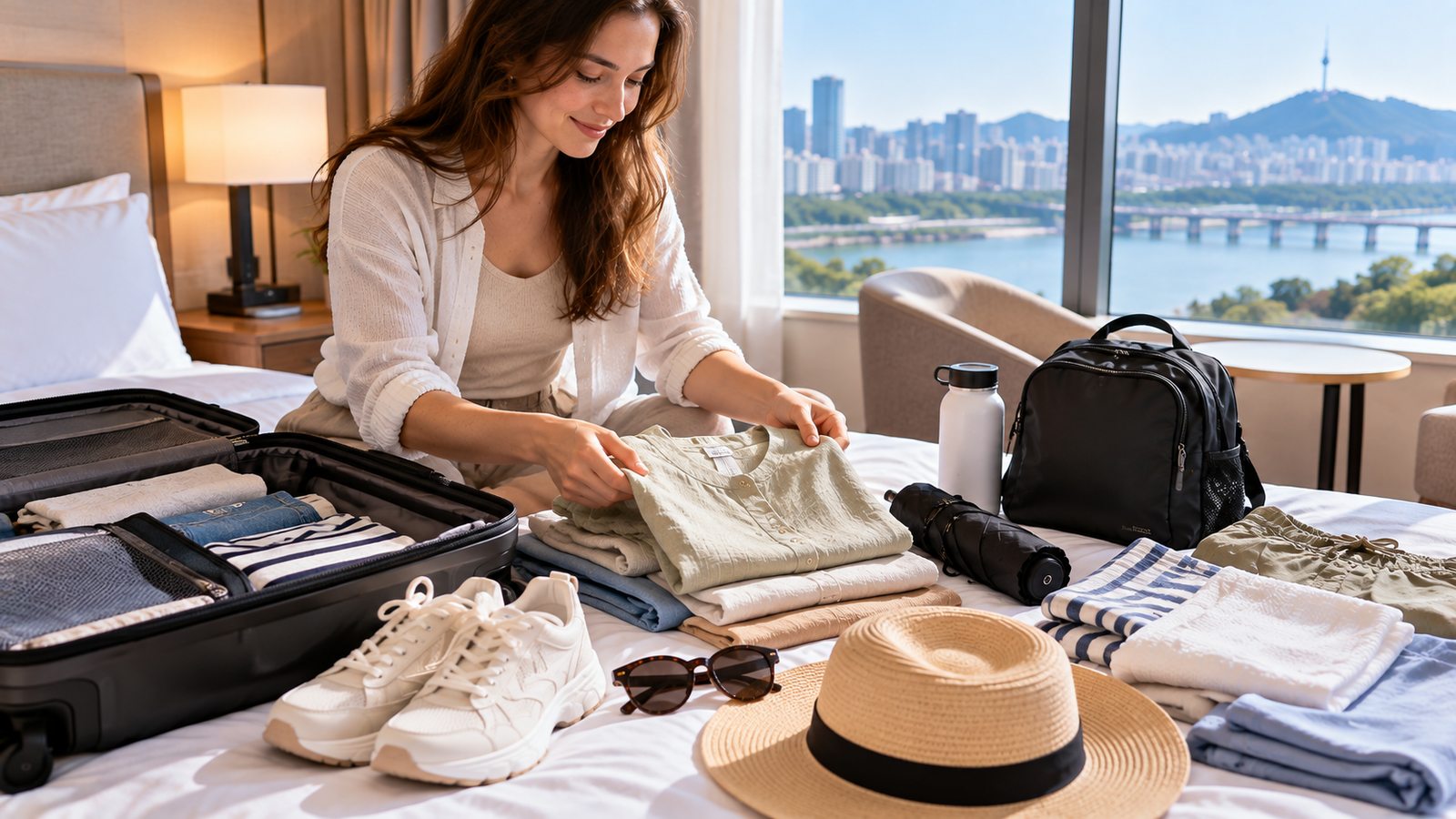
Footwear deserves special attention. Shoes that become uncomfortable when wet can make a rainy sightseeing day much harder than it needs to be. If your itinerary includes long walks, prioritize comfort over packing several pairs purely for different outfits.
Fall: September to November
Fall is popular for city walks and outdoor trips, but it is not one uniform weather season. Early September can still feel like summer, while late November may call for winter-ready layers.
For an early fall visit, bring breathable clothes and a light outer layer. For October and November, add a sweater, a warmer jacket and closed-toe shoes.
If you are planning to see autumn foliage outside Seoul, consider the weather at your specific destination rather than relying on the temperature in the city. Our Korea fall foliage guide can help you plan where to go; check the latest local forecast before deciding what to wear.
Winter: December to February
Winter requires the most deliberate packing, especially if you are not used to cold weather.
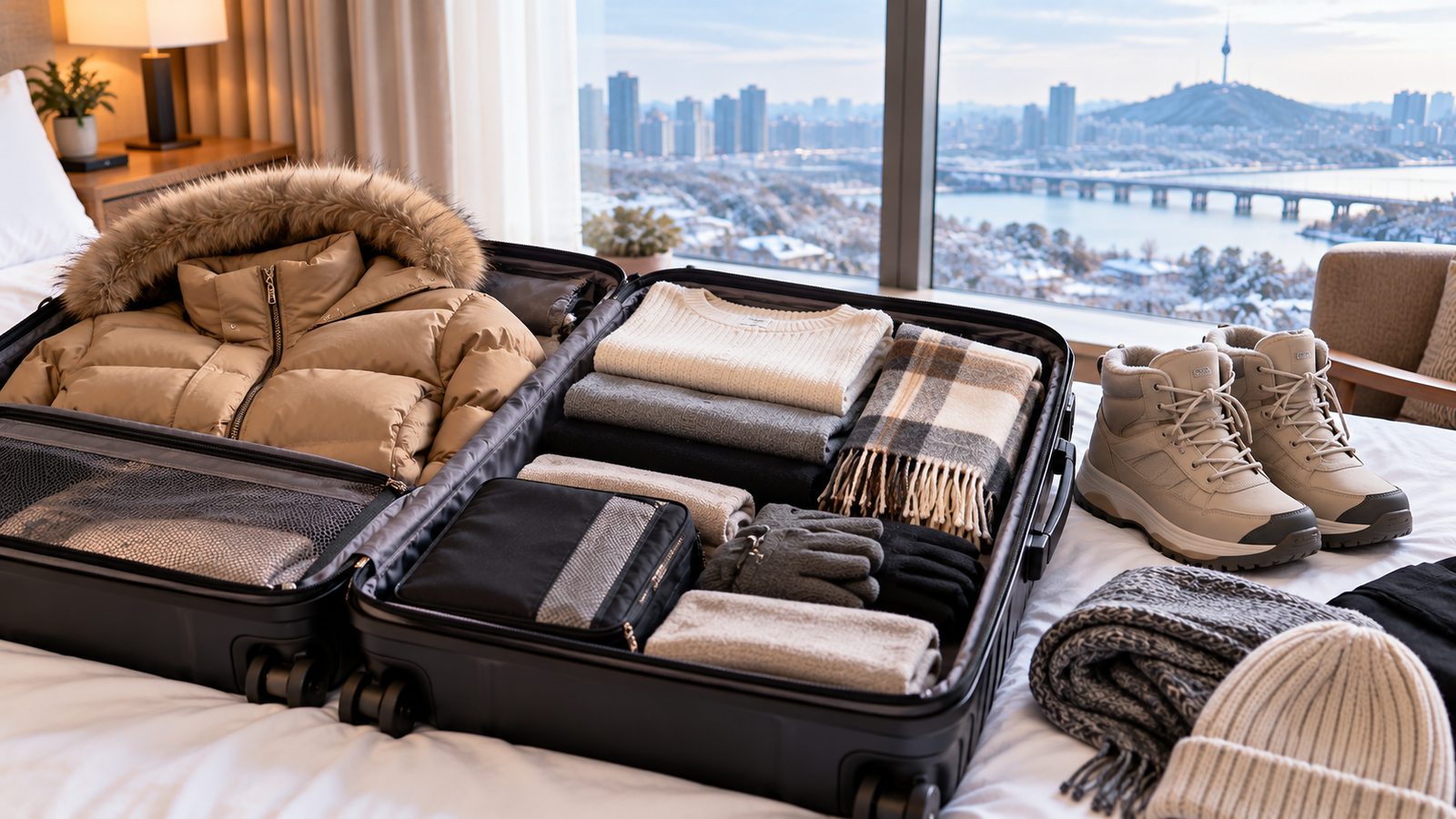
A warm coat, insulating layers, gloves, a scarf and shoes with good grip are sensible starting points. Thermal base layers can be useful for long days outdoors without forcing you to wear several bulky sweaters.
For a closer look at monthly temperatures, Seoul versus Busan, snow and cold-wave planning, see our guide to winter in South Korea.
You may move frequently between cold streets, heated trains, cafés and shopping centers. Clothing you can adjust is more practical than an outfit that is comfortable only outdoors.
If your trip includes skiing, hiking or another winter activity, pack for that activity separately. An everyday city coat is not a substitute for appropriate outdoor equipment.
Choose Shoes for Your Itinerary, Not Just Your Outfits
One comfortable pair of walking shoes is more valuable than several pairs you will barely wear.
For a typical first visit to Seoul, think about subway stairs, pavement, palace grounds and long days moving between neighborhoods. If you plan to hike, bring footwear suited to the route and conditions rather than assuming your everyday trainers will be enough.
Consider a second pair only when it serves a clear purpose, such as wet-weather backup shoes, footwear for a particular activity or something suitable for an event.
Electronics: What to Bring and What to Check
Your phone will probably be one of your most-used travel tools in Korea. Pack your charger, charging cable and any accessories you need to keep it working throughout the day.
Plug adapter and device compatibility
Check your devices’ input ratings and bring a suitable plug adapter where needed. A plug adapter changes the plug shape; it does not necessarily convert voltage.
For the practical distinction between plug types, voltage and converters, see our South Korea plug adapter and voltage guide.
Mobile data and travel apps
Decide how you will get mobile data before departure. Depending on your phone and travel needs, an eSIM or physical SIM may be suitable. Our Korea eSIM vs SIM card guide explains the differences.
Download and sign in to any essential travel apps while you still have a reliable connection. Our guide to essential apps for traveling in Korea covers navigation, translation and transport planning.
Power banks and flight rules
A power bank is useful during long sightseeing days, but do not pack it in your checked suitcase. Battery limits and handling requirements can depend on the battery’s capacity, your airline and the applicable flight rules.
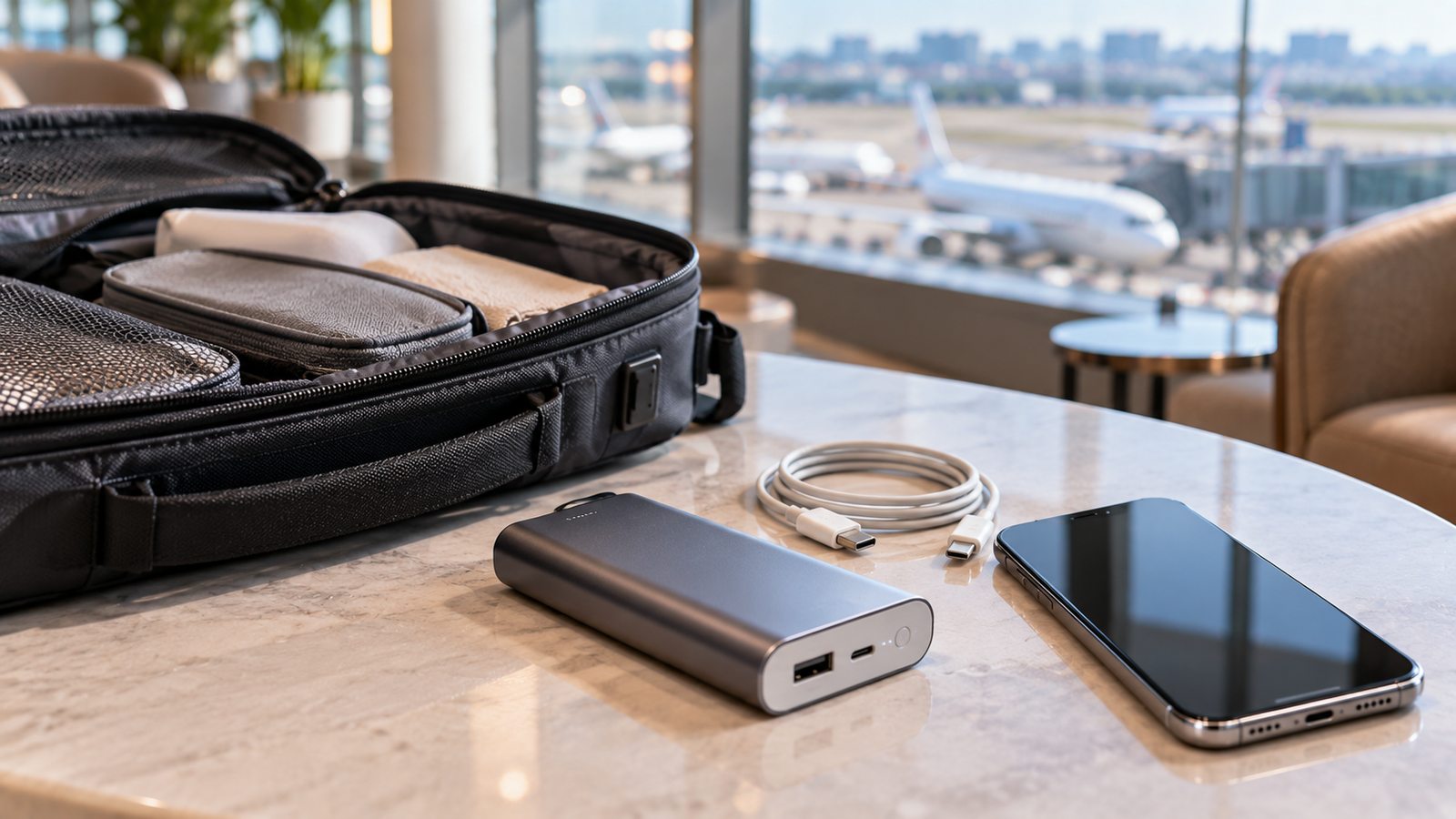
Before flying, check the current instructions from your airline and departure airport. Keep the power bank’s capacity label visible and protect it against accidental short circuits.
Toiletries, Skincare and Medication
Bring travel-size toiletries if you prefer using familiar products on your first few days. You can also leave room for products you intend to buy in Korea.
For skincare, a small routine you already know suits you may be more practical than introducing several unfamiliar products while traveling. Sunscreen and lip balm can be useful in any season, although the products and quantities you need will depend on your activities.
Medication needs more careful planning. Keep necessary medicines in their original packaging where possible, carry supporting prescription or medical documents when relevant, and check Korean entry requirements before traveling. Do not assume that a medicine available without a prescription in your home country can automatically be brought into Korea.
If you take a controlled or restricted medicine, check the relevant Korean authority’s requirements well before your flight. A general packing checklist cannot determine whether a specific medication is permitted.
What to Keep in Your Carry-On Bag
Pack the things you would need if your checked luggage were delayed or you could not access it immediately after landing.
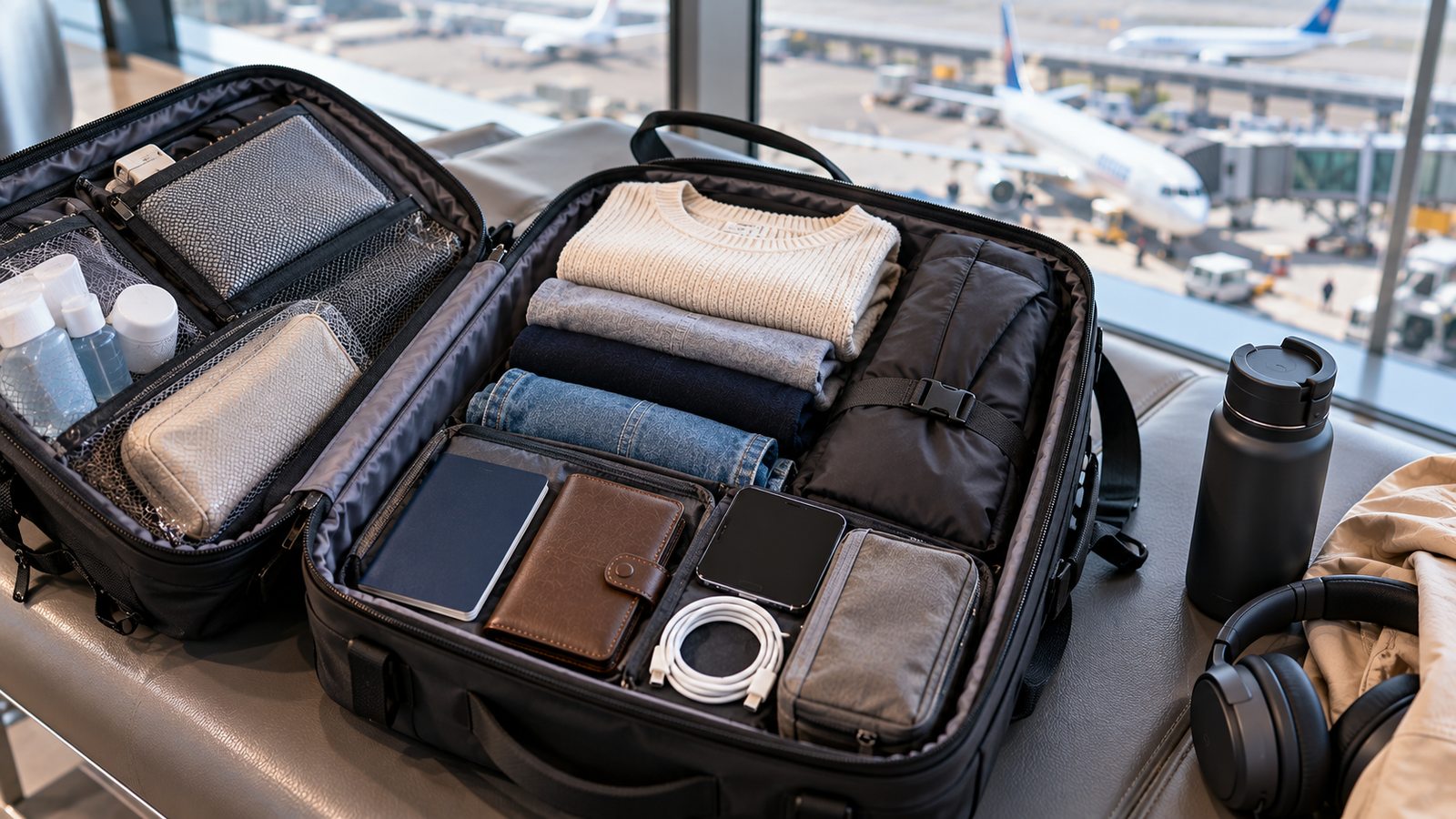
A practical carry-on setup includes your travel documents, wallet, phone, charging cable, permitted power bank, necessary medication and a change of essential clothing. Keep valuables and items subject to cabin-baggage rules in the appropriate bag.
If you are heading straight from Incheon Airport to your accommodation, make sure you can access your hotel address and transport plan without searching through your suitcase. Our Incheon Airport to Seoul guide compares the main ways to reach the city.
What Not to Overpack
Avoid packing an outfit for every possible scenario. For most city trips, a small set of clothes that can be mixed, layered and worn more than once is easier to manage.
If you plan to wash clothes during your trip, our guide to doing laundry in South Korea explains how to find and use a self-service laundromat.
Large quantities of toiletries, multiple pairs of similar shoes and electronics you rarely use at home can take up space without adding much value to your trip.
It is also worth leaving some room for purchases. If you expect to shop for Korean beauty products, clothing or souvenirs, think about how you will bring them home rather than filling your luggage to its limit before departure.
A Final Packing Check Before You Fly
Two or three days before departure, review your itinerary and the latest forecast. Check the weather in each destination, confirm the baggage rules for your flights and make sure your essential documents and devices are ready.
Your packing list should reflect the trip you are taking—not every trip someone could take to South Korea. With comfortable shoes, sensible layers and a little preparation, you can spend less time managing your suitcase and more time enjoying Korea.
FAQ
Do I need a heavy coat in South Korea in winter?
A warm coat is a sensible choice for winter sightseeing, particularly if you will spend extended periods outdoors. The exact insulation you need depends on the forecast, your cold tolerance and whether you are visiting mountain or coastal areas.
What should I pack for Korea in summer?
Start with breathable clothing, comfortable walking shoes, rain protection and the everyday items you need for a hot, humid day. Check the forecast before departure because rainfall and temperatures vary throughout the season.
Can I buy toiletries and travel essentials in Korea?
Yes, many ordinary toiletries and everyday supplies are available in Korean shops. However, bring products you specifically depend on, particularly if you need a particular formulation, size or fit.
Should I bring a power bank to South Korea?
A power bank can be useful for navigation and long sightseeing days. Check your airline’s current battery rules before flying, and do not place a power bank in checked baggage.
Can I bring prescription medication into South Korea?
Requirements depend on the medication and its ingredients. Check Korean customs and the relevant health authority’s rules in advance, especially for controlled or restricted medicines. Carry the documentation required for your particular medication.
How much luggage should I bring for a week in Korea?
There is no single ideal suitcase size. Consider the season, whether you can do laundry, how often you will change hotels and how much shopping you plan to do. A manageable bag is especially helpful if your trip involves trains, subway transfers or multiple destinations.