
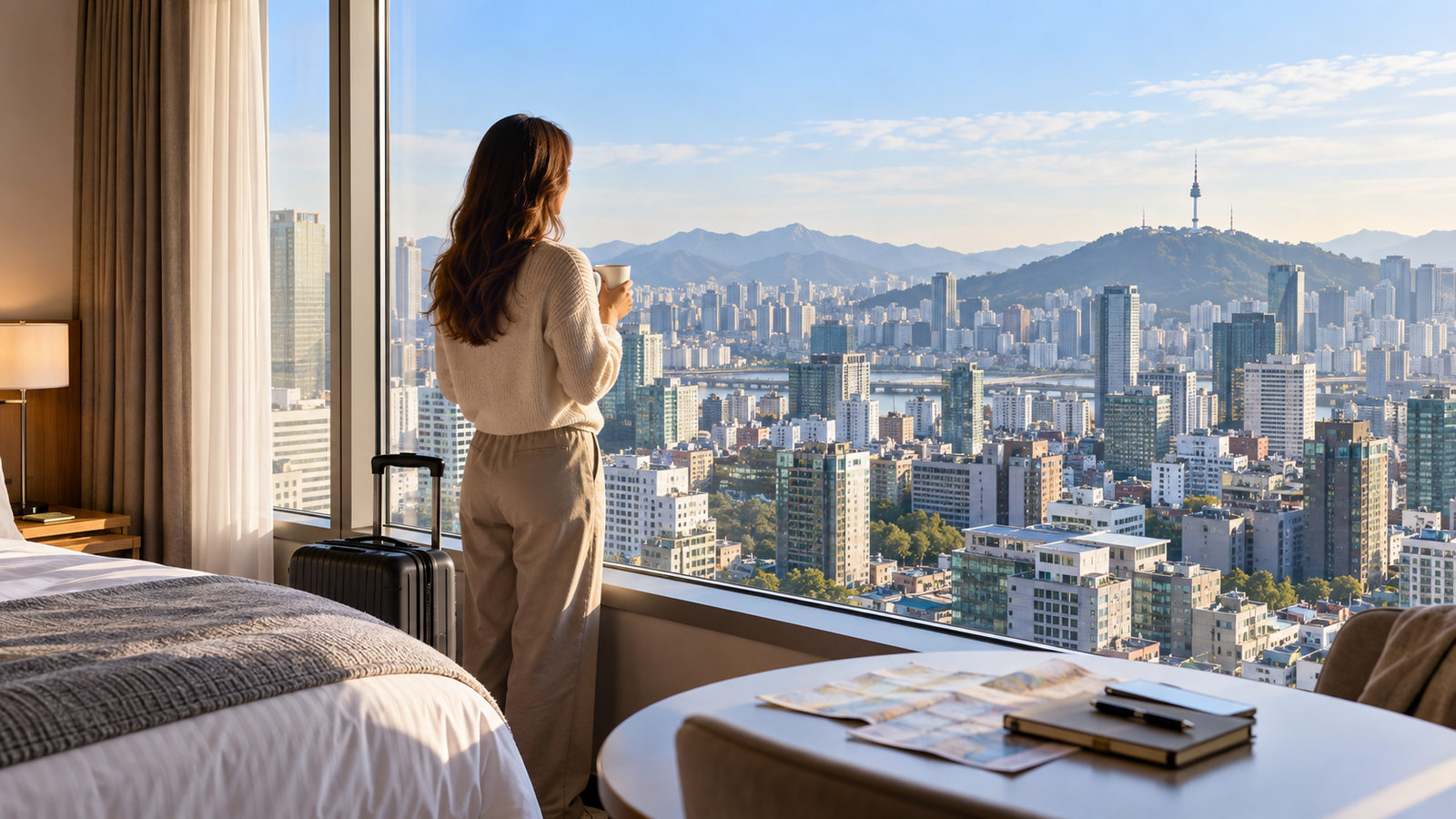
Choosing where to stay in Seoul can shape your entire trip. A hotel that looks close to your favorite attractions on a map might still involve a long subway transfer, while a quieter neighborhood just a few stops away could make your daily plans easier.
For a first visit, the question is not simply which Seoul neighborhood is the most popular. It is which area works for the places you want to visit, how you plan to get around, and what you want to do after sightseeing. Once you have narrowed down the area, compare the practical trade-offs in our Seoul hotel vs Airbnb guide before choosing the accommodation type. Then use our South Korea trip budget calculator to see how the room price changes your total travel budget rather than judging the stay by nightly price alone.
Myeongdong, Hongdae, Jongno, Seoul Station, Gangnam and Seongsu each offer a different kind of base. Here is how to compare them before booking.
Where Should You Stay in Seoul?
Start with your itinerary rather than a hotel ranking. If most of your plans involve palaces and traditional streets, Jongno is worth considering. If you want shopping and a central base, look at Myeongdong. Travelers who expect to spend their evenings around cafés and music venues may prefer Hongdae.
Seoul Station deserves a look if you will take trains to other Korean cities. Gangnam makes more sense when your plans are concentrated south of the Han River. Seongsu can work for travelers who want to spend substantial time exploring contemporary Korean fashion, beauty and café culture.
The exact hotel address matters as much as the neighborhood name. Before booking, check the nearest subway station, the exit you would use with luggage and the actual walking route to the property.
| Area | Consider it if your trip focuses on | Check before booking |
|---|---|---|
| Myeongdong | Shopping, food and central sightseeing | Whether the room faces a busy shopping street |
| Hongdae and Yeonnam | Cafés, music, shopping and evenings out | Distance from nightlife streets and the airport railroad |
| Jongno and Insadong | Palaces and traditional culture | Station access and the property’s amenities |
| Seoul Station | Airport connections and intercity trains | Which side of the station the property is on |
| Gangnam | Business and south-of-the-river plans | Travel time to attractions north of the river |
| Seongsu | Design, beauty, cafés and pop-ups | Whether the property is near Seongsu Station or Seoul Forest |
Myeongdong: A Convenient Base for Shopping and Central Seoul
Myeongdong is one of the first neighborhoods many international visitors consider. Its streets are known for beauty stores, fashion shopping, restaurants and street food, and the wider central Seoul area puts several major attractions within reach.
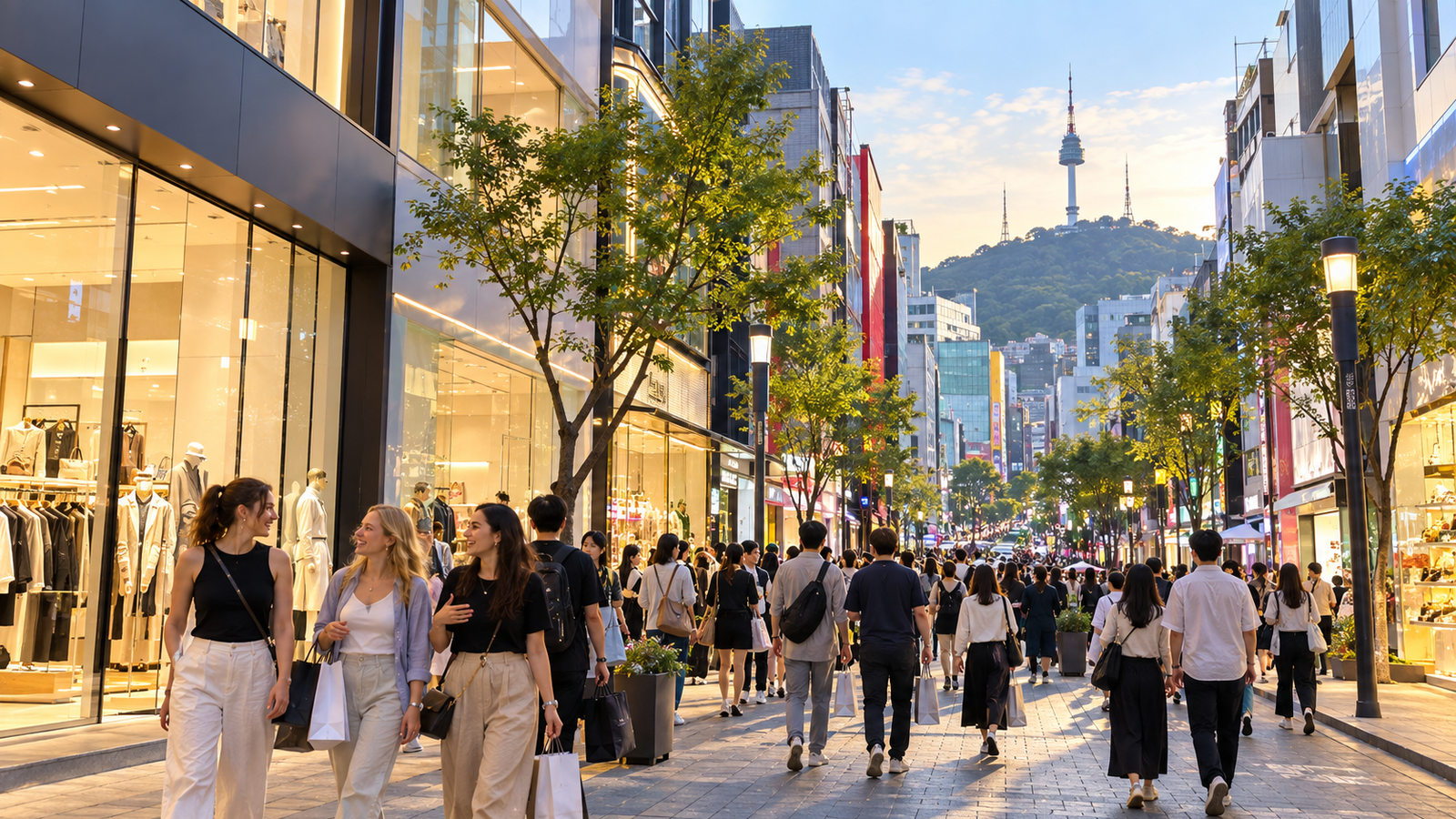
Staying here can be practical if you want to combine shopping with visits to places such as Namsan, Namdaemun and the historic city center. The trade-off is the atmosphere: parts of Myeongdong can feel busy, especially around the main shopping streets.
Consider Myeongdong if: you want a central base, expect to shop frequently or prefer returning to a neighborhood with plenty of dining options.
Check before booking: the nearest station exit, street-facing room reviews and your route from the airport. Do not assume that every Myeongdong hotel has the same airport bus connection.
Hongdae and Yeonnam: Cafés, Culture and Evenings Out
Hongdae is associated with music, art, independent shops and a lively evening scene. Nearby Yeonnam-dong offers another side of the area, with cafés, restaurants and streets that reward slower exploration.
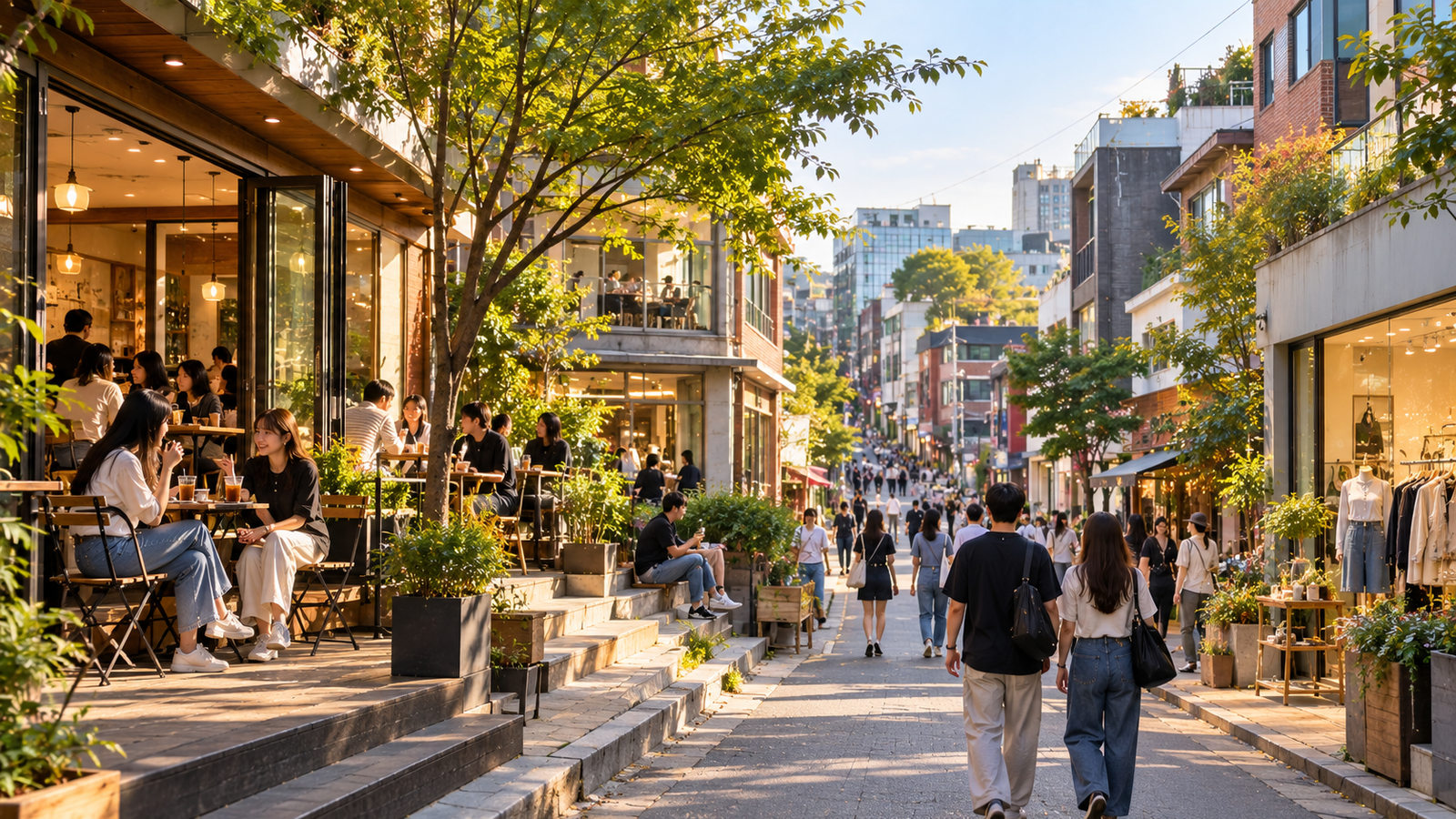
Hongik University Station connects to the airport railroad, although your journey depends on the service you use and how far your accommodation is from the station. A room near a busy nightlife street can feel very different from one on a residential lane toward Yeonnam or in nearby Hapjeong.
Consider Hongdae or Yeonnam if: cafés, contemporary culture, shopping and evening activities are important parts of your trip.
Check before booking: noise-related reviews, the walking route from Hongik University Station and whether the property is actually in Hongdae, Yeonnam or another nearby area.
Jongno and Insadong: For Palaces and Traditional Seoul
Jongno is useful if your itinerary centers on Seoul’s historic landmarks. Gyeongbokgung Palace, Insadong and Bukchon Hanok Village are in the wider historic center, although they are not necessarily within a short walk of every hotel in Jongno.
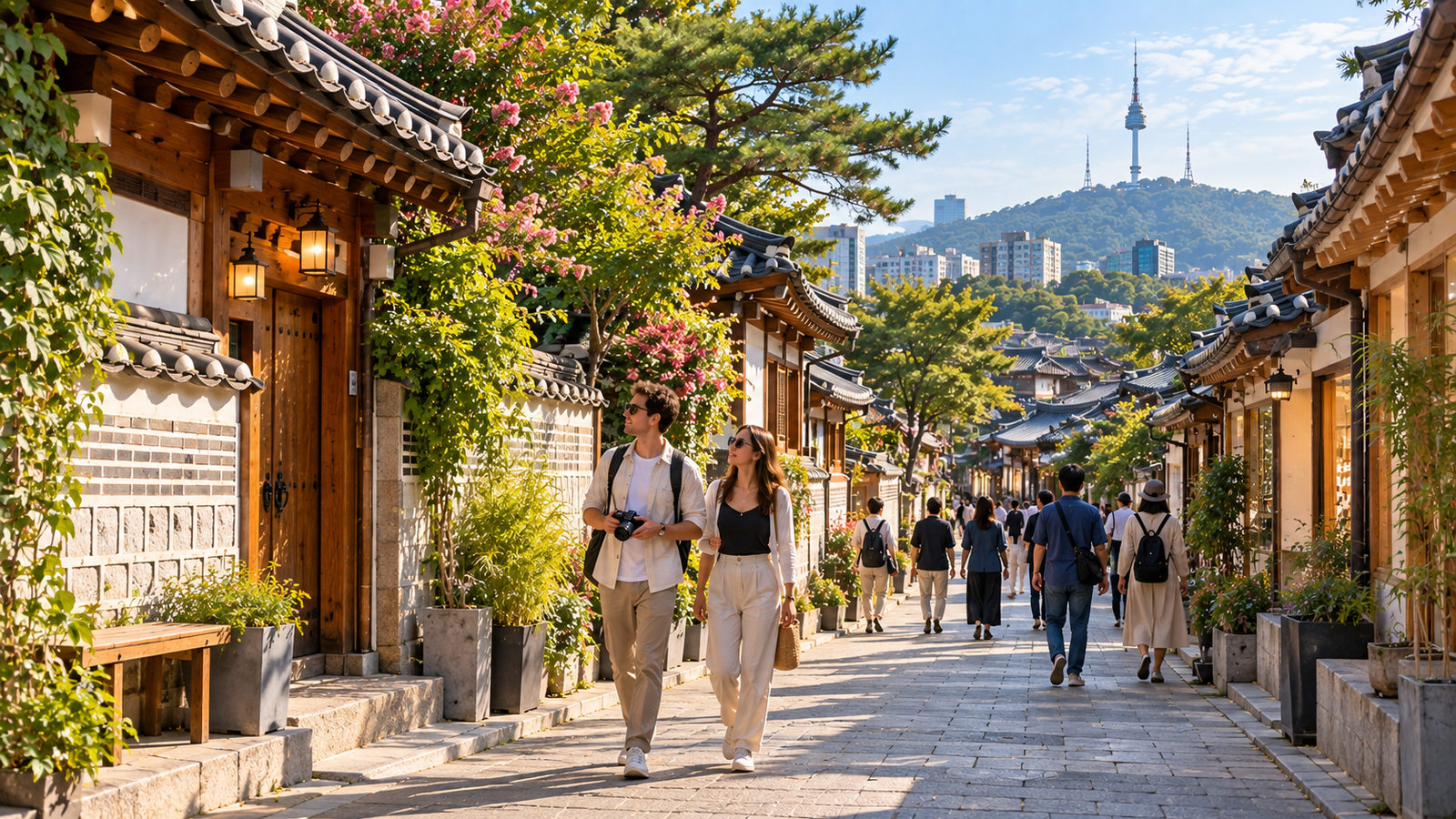
Insadong is particularly appealing for travelers interested in traditional crafts, galleries and tea houses. Staying nearby can make it easier to start early at a palace or spend a slower morning exploring the neighborhood. Our first-time guide to Insadong explains what to see once you arrive.
Accommodation ranges from conventional hotels to smaller guesthouses and traditional-style stays. A hanok stay may offer a memorable setting, but its layout and amenities can differ significantly from those of a standard hotel.
Consider Jongno or Insadong if: your priorities include palaces, traditional streets, museums and exploring central Seoul on foot.
Check before booking: stairs, private bathrooms, luggage access and the room facilities you expect. If you choose a hanok-style stay, review its specific house rules.
Seoul Station: For Airport and Intercity Travel
Seoul Station is worth considering when transportation is a major part of your itinerary. It is a key departure point for KTX journeys to other Korean cities and a terminal for the AREX Express Train serving Incheon International Airport.
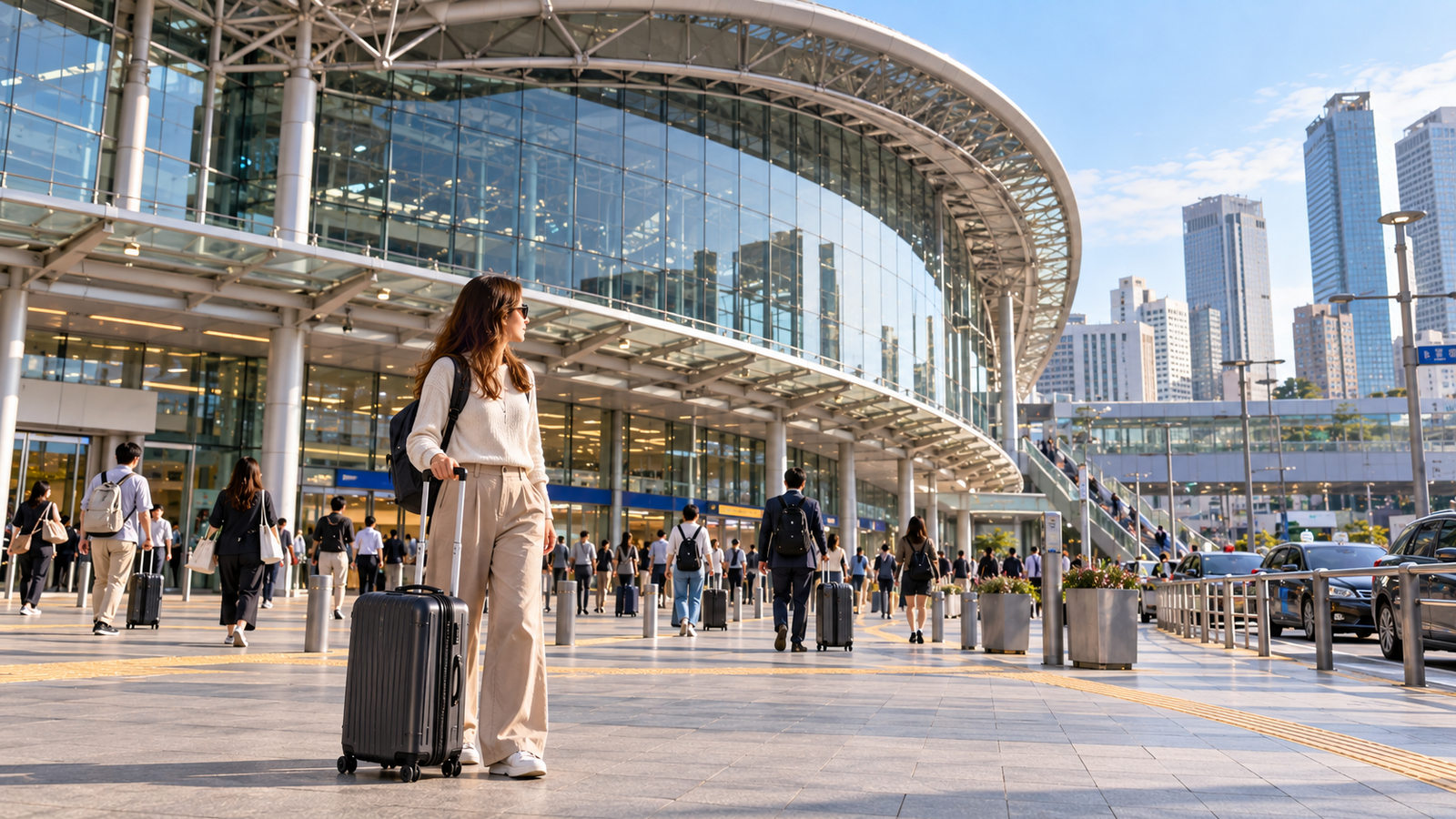
That can make a nearby hotel useful for an early train departure, a short Seoul stopover or a trip combining Seoul with Busan. However, the station is large: a hotel on the opposite side from your intended entrance may involve a longer walk than the booking map suggests.
Consider Seoul Station if: you have an early intercity train, want a straightforward airport-rail option or plan to change cities during your stay.
Check before booking: your train departure area, station entrance, luggage route and the walking time to the hotel.
Gangnam: For Business and South-of-the-River Plans
Gangnam covers a large part of southern Seoul, so narrow down exactly where you need to be. If your trip includes meetings, shopping or events around Gangnam Station, COEX or other destinations south of the Han River, staying nearby may reduce repeated cross-city journeys.
For travelers whose main plans are Gyeongbokgung, Insadong and Myeongdong, Gangnam may involve more time on public transport. That does not make it a poor choice; it simply makes your itinerary more important.
Consider Gangnam if: your main activities are concentrated in southern Seoul or you are combining leisure travel with business. Check before booking: the nearest station and line, transfers and whether the hotel is close to your actual destination.
Seongsu: For Cafés, Design and Contemporary Korean Culture
Seongsu is a destination for warehouse-style cafés, fashion, beauty experiences, design shops and temporary pop-ups. Travelers with a strong interest in contemporary Korean lifestyle culture may enjoy spending more than a single afternoon here.
But a neighborhood that is exciting to visit is not automatically the easiest place to stay for every first-time visitor. Seongsu’s attractions are spread across several streets, and accommodation near Seongsu Station may suit a different itinerary from a property closer to Seoul Forest.
Consider Seongsu if: cafés, pop-ups, Korean design and beauty shopping are central to your trip. Check before booking: the precise station and whether your accommodation is close to the part of Seongsu you want to explore.
For a fuller look at the neighborhood itself, read our first-timer’s guide to Seongsu-dong.
Myeongdong vs. Hongdae: Which Fits Your Trip?
Myeongdong places you in a shopping-focused part of central Seoul. Hongdae offers a stronger connection to music, independent shopping, cafés and evening activities. Hongik University Station’s airport railroad connection can be useful if the property is reasonably close to the station.
If you expect to spend most evenings around Hongdae, staying in Myeongdong could mean an extra journey back to your room. If your days are centered on palaces and central Seoul, the reverse may be true. Neither area is the right choice for everyone: compare the journeys you will make most often.
What to Check Before Booking Accommodation in Seoul
Check the Exact Address, Not Just the Neighborhood
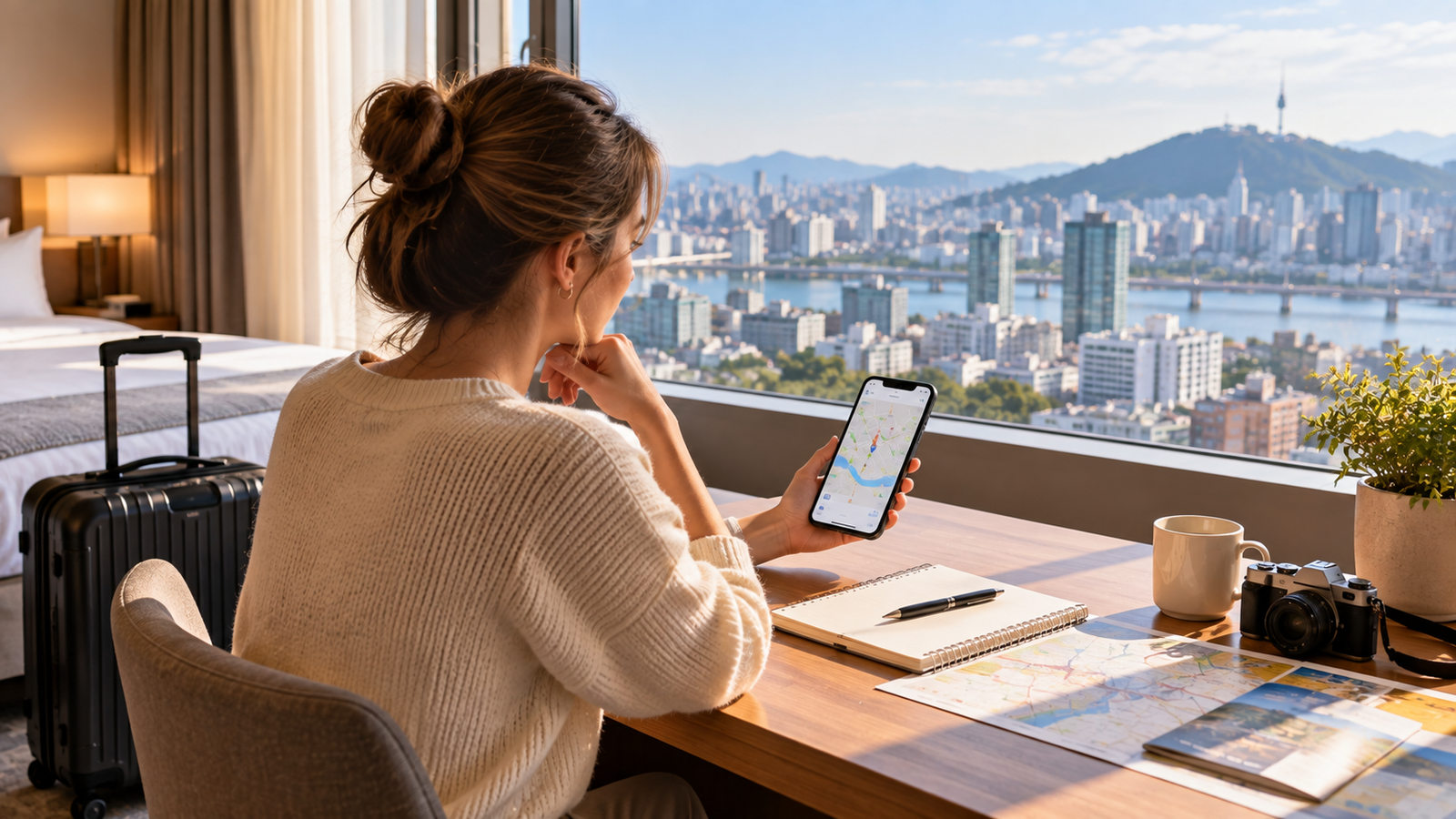
A listing may use a familiar neighborhood name even when the property is some distance from its main station. Open the address in a map service that works well in Korea and check the walking route.
Look at the correct exit, road crossings, slopes and any stairs along the way. If you will arrive with a large suitcase, a slightly longer route with an elevator may be easier than a shorter route involving several flights of stairs.
Compare Your Airport Route
Airport transportation should be checked against your specific hotel address. AREX, airport limousine buses and taxis can all be useful, but the appropriate option depends on your terminal, arrival time, luggage and destination.
A hotel near an airport railroad station is not necessarily close to the AREX Express Train, which has a different stopping pattern from the all-stop service. Our Incheon Airport to Seoul guide explains the main transport options.
Review the Room, Not Only the Property Rating
Check the room you are actually booking: bed type, private or shared bathroom, elevator access, air conditioning and heating, luggage storage, check-in instructions and cancellation policy. If you are traveling with children or in a group, confirm the permitted number of guests.
If hotel VAT refund eligibility could affect your final room cost, check our Korea hotel tax refund guide before paying. Only designated participating accommodation and qualifying bookings can use the program.
If drinking-water arrangements matter to you, our guide to tap water in South Korea explains what to know about hotel taps, water purifiers and municipal drinking water.
Think About Your Last Evening and Departure Morning
An early KTX departure may make Seoul Station appealing for your final night. If you have a late flight, luggage storage and the journey to the airport may matter more than being close to a sightseeing attraction. Changing hotels also takes time, so a single well-connected base may be simpler for a short visit.
So, Where Should a First-Time Visitor Stay?
Begin by marking the places you most want to visit and grouping them by area. Then compare two or three accommodation neighborhoods against those plans. Once you have narrowed the area, decide using the individual property’s exact location, transport route, room conditions, recent reviews and total booking cost.
The right Seoul base is the one that makes your own trip easier—not necessarily the neighborhood that appears most often in travel recommendations.
Frequently Asked Questions
Is Myeongdong or Hongdae better for a first trip to Seoul?
It depends on your itinerary. Myeongdong is worth considering for shopping and central sightseeing, while Hongdae may suit travelers who prioritize cafés, music and evening activities.
Is Seoul Station a good place to stay?
It can be practical if you plan to use KTX or the AREX Express Train, especially for an early departure or a short stopover. Check the hotel’s location relative to the station entrance you need.
Should I stay near Incheon Airport or in Seoul?
For a trip focused on sightseeing in Seoul, staying in the city usually avoids repeated airport-to-city journeys. An airport-area hotel may make sense for a very early flight, a late arrival or a short layover.
Is it worth staying in a hanok in Seoul?
A hanok-style stay can be a distinctive accommodation experience. Check the specific property’s bathroom, bedding, heating, accessibility, luggage arrangements and house rules before booking.
Do I need to stay near a subway station in Seoul?
You do not have to, but convenient station access can make sightseeing easier. Check the actual walking route, the station’s lines and whether transfers are needed for your main destinations.
How many nights should I stay in one Seoul neighborhood?
For a short trip, one well-connected base is often simpler than changing accommodation. For a longer visit, a split stay may be worth considering if your itinerary covers very different parts of the city.