
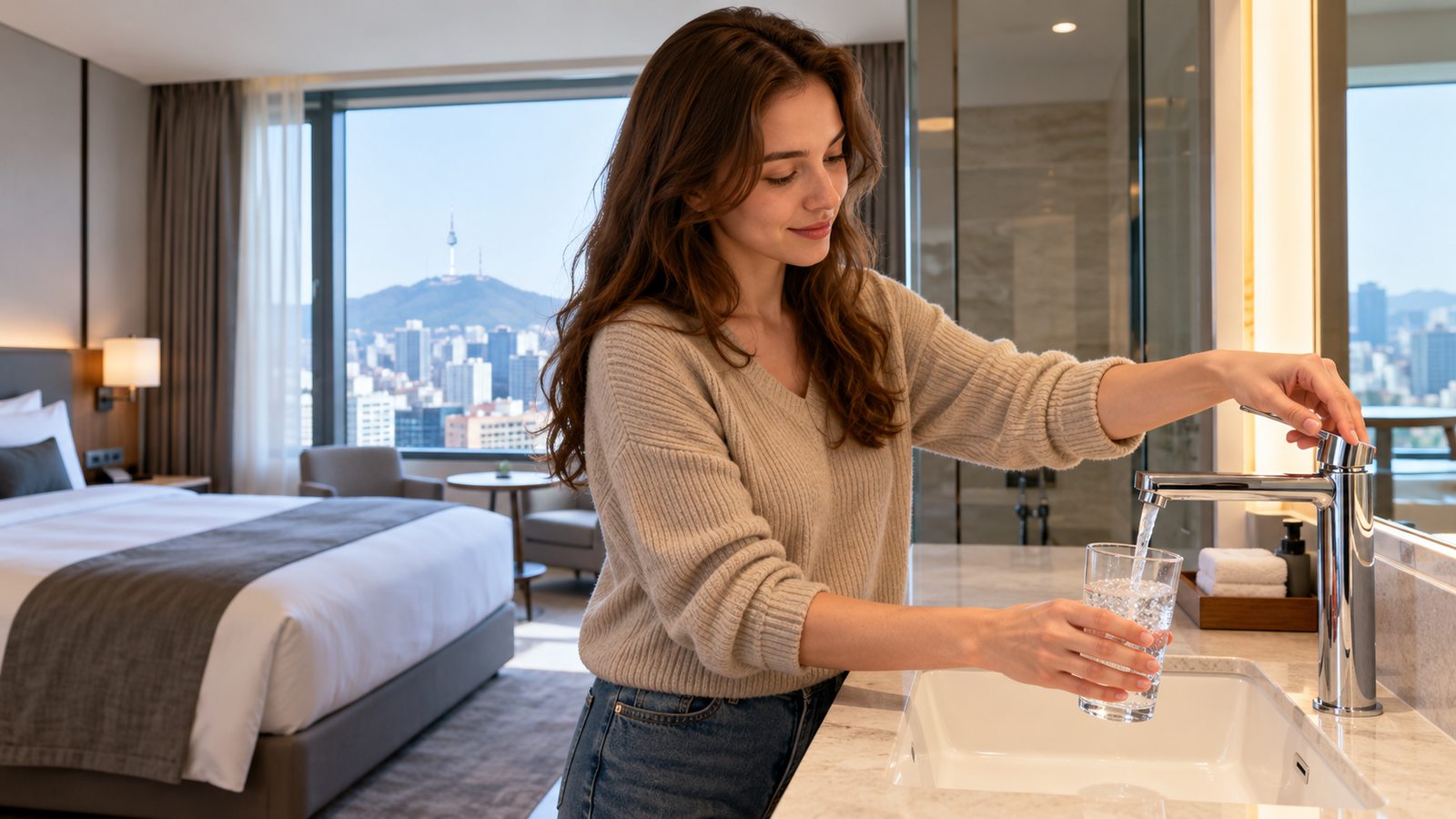
If you are visiting South Korea for the first time, you may wonder whether you can fill a glass from your hotel tap, brush your teeth normally or refill a bottle without buying bottled water every day.
The short answer is that South Korea’s public tap water is treated and monitored as drinking water. In Seoul, the municipal supply is called Arisu, and the city conducts extensive water-quality testing.
For travelers, however, there is another part of the journey to consider: the building itself. Water can pass through internal plumbing or storage facilities before it reaches your hotel or guesthouse faucet.
Here is what that means in practice.
Is Tap Water Safe to Drink in South Korea?
South Korea has national drinking-water quality standards that apply to public water supplies.
In Seoul, the city describes Arisu as drinking water and operates a large testing and monitoring system from water sources and purification centers through the distribution network.
For 2026, Seoul expanded the number of substances and indicators it monitors for Arisu from 357 to 362.
Busan also publishes drinking-water standards and water-quality information through its municipal water authority. Its official guidance states that the city’s tap water is produced and monitored for drinking.
So travelers should not assume that Korean tap water is untreated or inherently unsafe.
There is, however, an important distinction between the water produced by a municipal system and the water that finally comes out of a particular building’s faucet.
Why Can the Building Matter?
After treated water enters a building, it may pass through internal pipes and, depending on the property, water-storage facilities.
The Seoul Metropolitan Government specifically recognizes this issue. Its Arisu Quality Verification System checks tap water as well as the condition of indoor water pipes and water tanks.
That does not mean travelers should distrust every older building. It means the condition of a particular property can matter separately from the quality of the municipal water leaving the treatment system.
If you are staying in a hotel, guesthouse or rental and are unsure about the drinking water, ask the property whether the tap is normally used for drinking or whether guests are expected to use a purifier or another water source.
What Should You Do at a Hotel or Guesthouse?
Start by checking what your accommodation provides. If you are still choosing accommodation, our guide to where to stay in Seoul explains what else to check before booking a hotel or guesthouse.
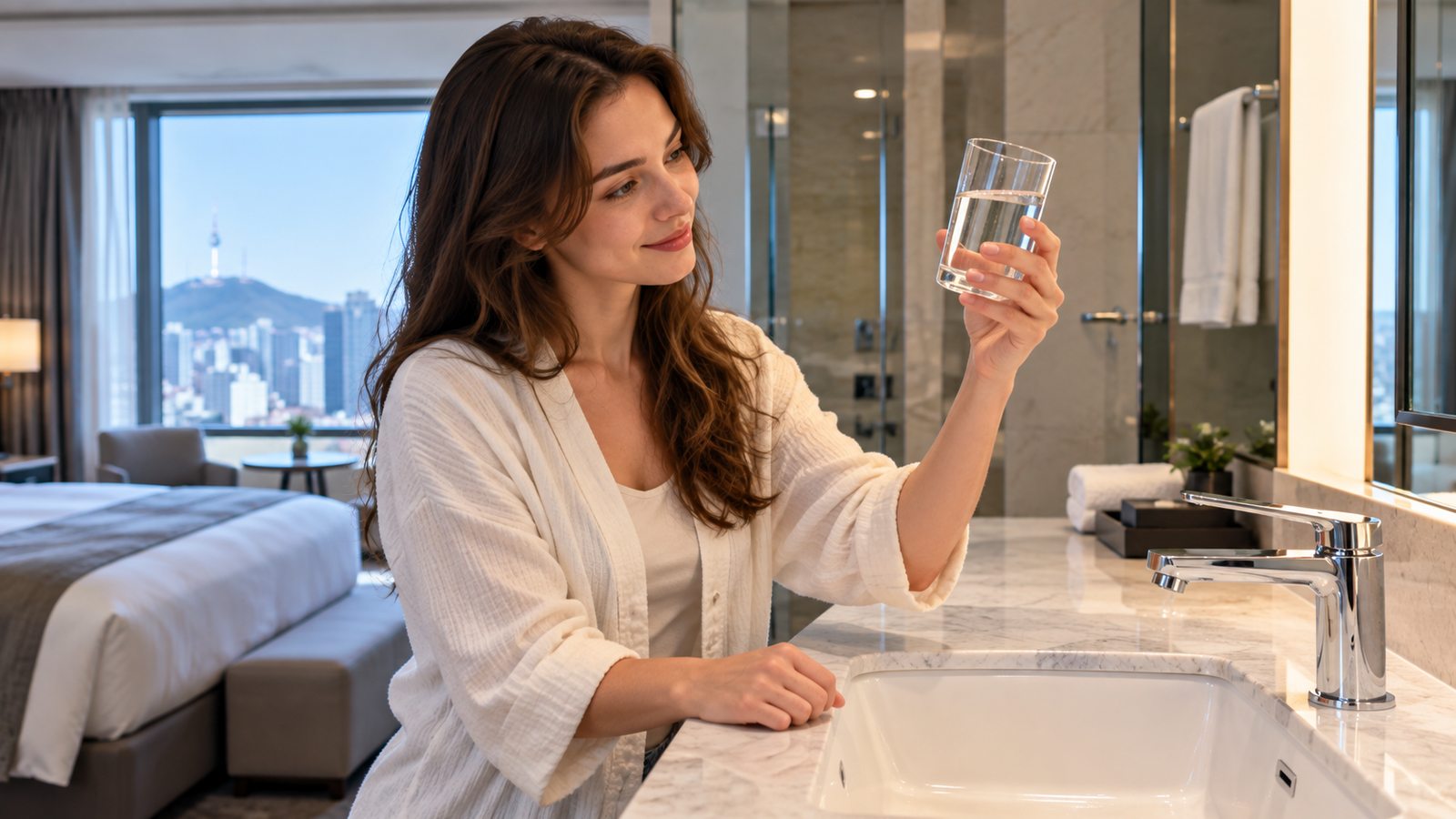
Many properties may provide bottled water, a shared water dispenser, a purifier or an electric kettle. The setup varies, so do not assume that every hotel handles drinking water in the same way.
If you want to drink directly from the tap, look for any notice from the property and consider the condition of the water when you first turn it on.
If the water appears discolored, contains unusual particles or has a strong unexpected odor, do not simply drink it because municipal tap water is generally treated as drinking water. Ask the accommodation staff about the building’s water system.
This is especially sensible after maintenance, a temporary water interruption or any situation in which the property has issued its own water notice.
Should You Let the Tap Run First?
There are situations in which allowing the water to run briefly before using it can be sensible.
Seoul Water advises users to flush water that has been sitting in pipes, particularly when a tap is being used for the first time that day or after the property has been unoccupied for several days.
For a traveler, the practical point is simple: if a faucet has apparently not been used for some time, let fresh water run before filling your glass or bottle.
You do not need to turn this into a complicated travel ritual. It is simply a practical step when water may have been standing in internal plumbing.
What If the Water Smells Slightly Like Chlorine?
A mild disinfectant smell does not automatically mean that the water is contaminated.
Chlorine is used in water treatment to control microorganisms. Busan’s water authority, for example, explains that a light disinfection smell can be associated with properly treated water.
Seoul Water also provides advice for people who dislike the taste or smell of chlorine. Its guidance includes allowing water to stand in a clean container for a short period or chilling it before drinking.
However, there is a difference between a mild chlorine smell and an unusual odor that suggests a problem with a particular faucet or building.
If something seems clearly abnormal, ask the property rather than trying to diagnose the water yourself.
Why Do You See So Many Water Purifiers in Korea?
Visitors may notice water purifiers in homes, offices, restaurants, hotels and other buildings.
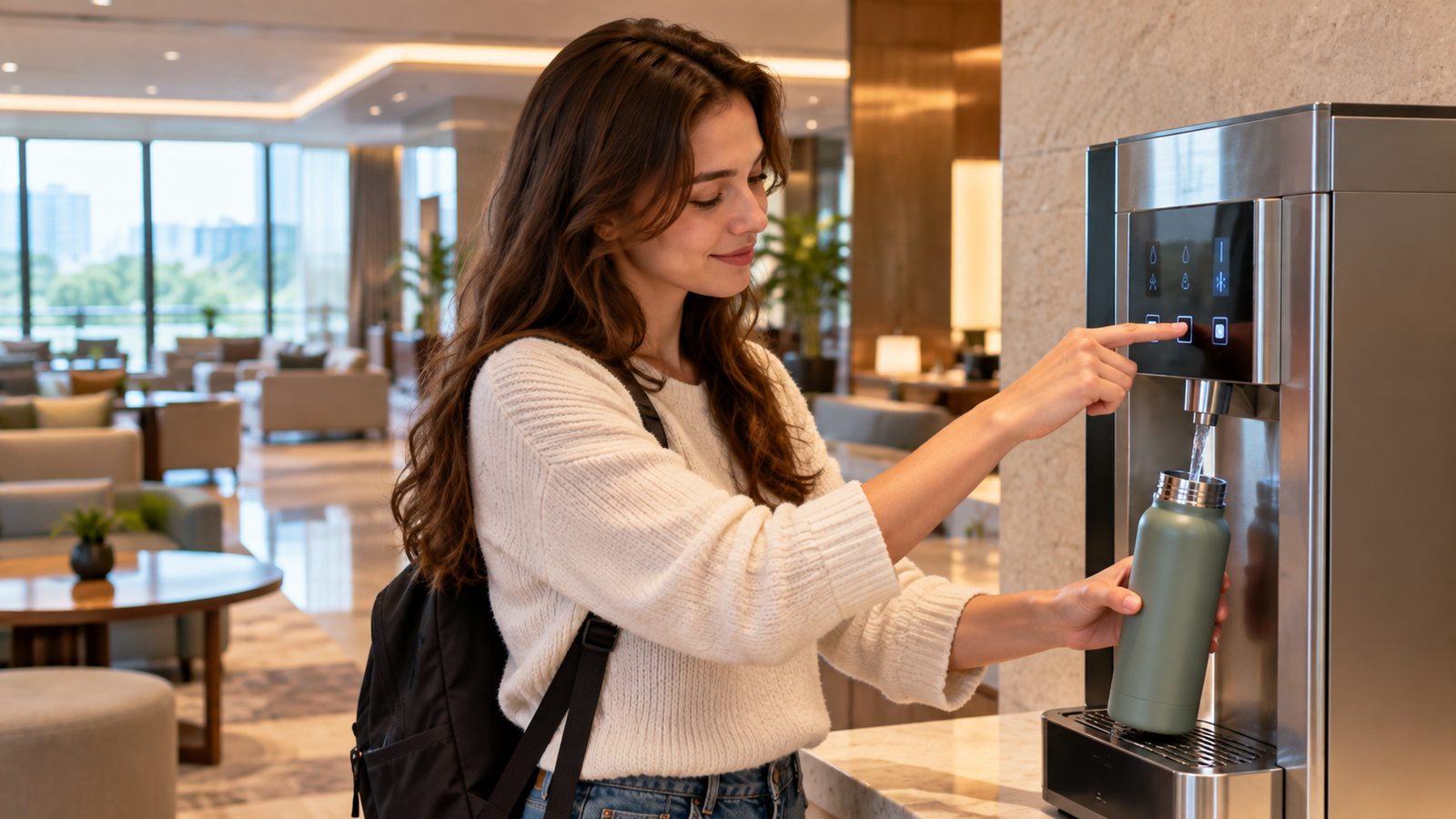
That can create a confusing impression: if the tap water is treated as drinking water, why use a purifier?
The presence of a purifier does not by itself prove that municipal tap water is unsafe. People can choose filtered water for taste, convenience, temperature or personal preference.
For a traveler, the useful rule is not to treat a purifier as evidence of a national water-safety problem.
Instead, use the drinking-water option provided by your accommodation when that is more convenient, and ask if you are uncertain about a particular faucet.
Can You Brush Your Teeth with Tap Water in Korea?
For ordinary travel in accommodation connected to a normal municipal water supply, travelers generally do not need to treat brushing their teeth as a separate water problem.
The same public water system used for drinking supplies bathrooms and sinks.
As with drinking, however, a specific building problem or local notice should take priority over general advice.
If your hotel tells guests not to use the water temporarily, follow the property’s instructions.
What About Water at Korean Restaurants?
Restaurants commonly provide drinking water to customers, although the way it is served varies.
You may receive a bottle or jug at the table, use a self-service water dispenser or be given cups near a water station.
You do not need to assume that the water in a restaurant jug came directly from the faucet. Many businesses use water dispensers or filtration systems.
If you are learning how dining works more broadly, our guide to eating at a Korean restaurant explains ordering, banchan, table service and payment.
Can You Refill a Water Bottle in Seoul?
You may encounter designated drinking fountains and water stations in public facilities and parks.
Seoul operates Arisu drinking fountains in locations including public institutions and major parks. Outdoor fountains can have seasonal operating schedules, particularly because of freezing conditions in winter.
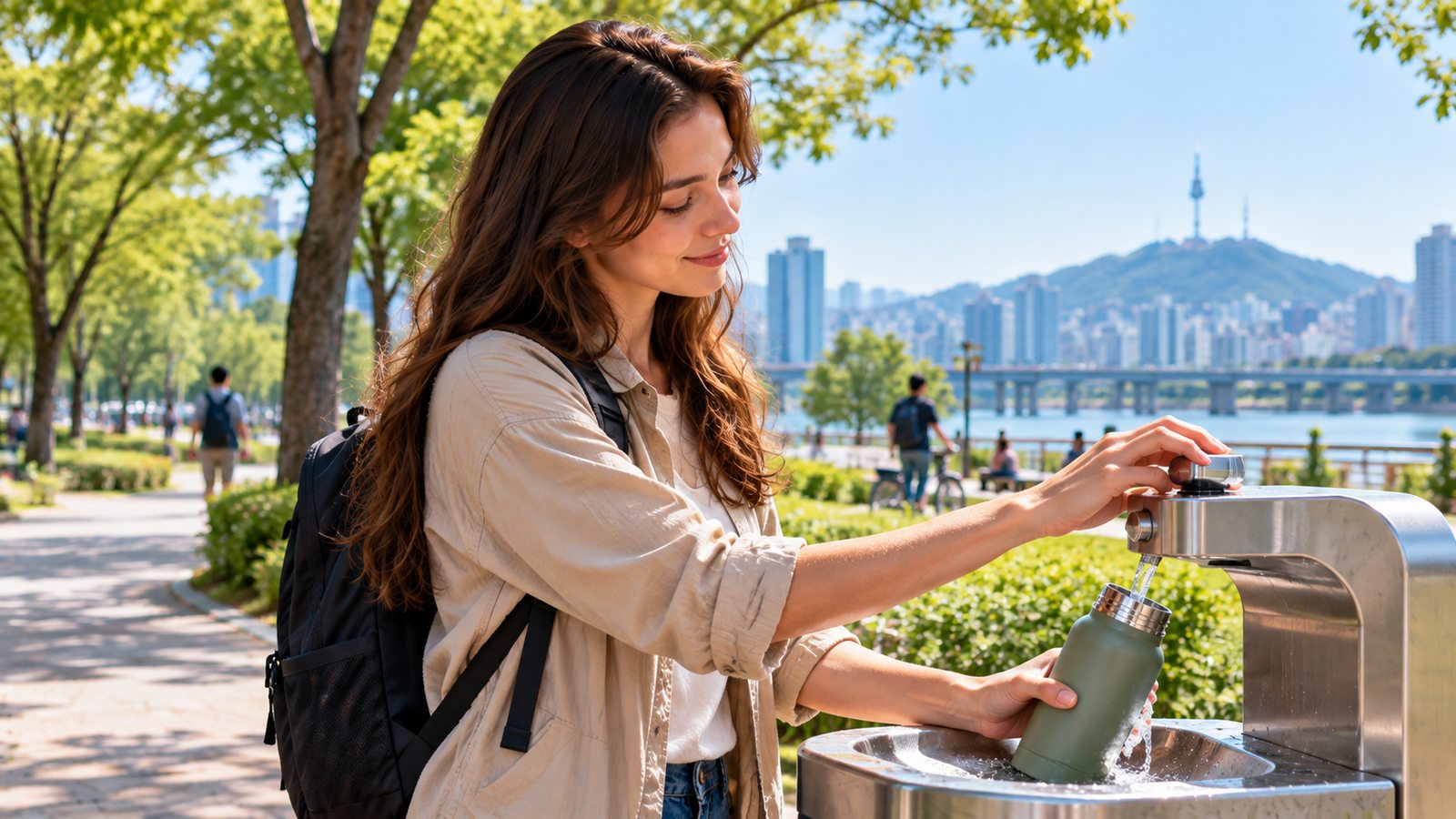
In 2026, Seoul announced the spring reopening of 1,777 outdoor drinking fountains after inspections, with regular water-quality testing planned during operation.
Use a facility clearly intended for drinking rather than assuming that any public faucet is a bottle-refill point.
A reusable bottle can therefore be useful, but you do not have to depend on public fountains for your entire trip. A reusable bottle can also be a useful addition to your South Korea packing list, especially during warm-weather sightseeing.
Do You Need to Buy Bottled Water?
Not necessarily.
Bottled water is widely available if you prefer it, but there is no general requirement for tourists to drink only bottled water in South Korea.
Your accommodation may already provide drinking water through a purifier, dispenser or another system.
For sightseeing days, decide based on convenience. You might leave your hotel with a filled reusable bottle and buy another drink later rather than carrying several bottles from the start.
The important distinction is between personal preference and an official safety requirement.
Is Seoul Tap Water Different from the Rest of Korea?
Arisu is the name used for Seoul’s municipal tap water, not a generic name for all tap water in South Korea.
Other local governments operate their own water systems and publish their own quality information.
Busan, for example, has its own municipal water authority and publishes Korean drinking-water standards and water-quality results.
This is why it is better to say that South Korea regulates public drinking water under national standards while local authorities manage and monitor their own systems, rather than treating every city as if it were part of Seoul’s Arisu system.
How Can You Check Water Quality in Seoul?
Seoul Water publishes water-quality information online, including information for different areas of the city.
The city also operates its Arisu Quality Verification System for households, which examines basic water-quality indicators and can assess indoor pipes and water tanks.
A short-term visitor will usually not need to arrange a household inspection. The service is more useful for understanding how Seoul separates municipal water quality from possible issues inside individual buildings.
If you simply have a question about your hotel faucet, asking the accommodation is normally the more practical first step.
A Simple Drinking-Water Routine for Travelers
You do not need a complicated water strategy for a trip to Korea.
When you arrive at your accommodation:
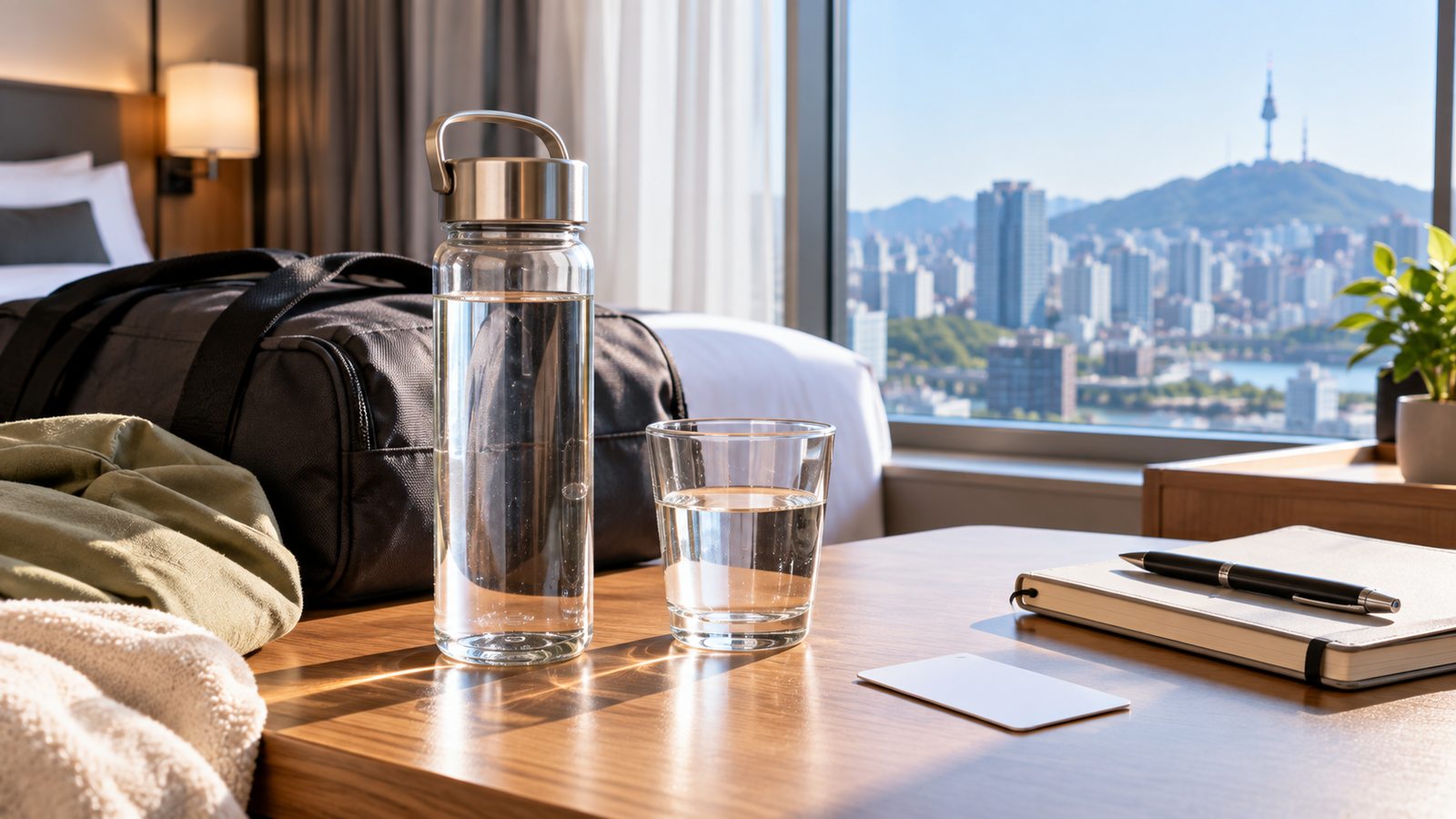
- Check whether the room or property provides a purifier, dispenser or bottled water.
- If you plan to drink from the tap, check for any property-specific notice.
- Let water that may have been standing in the pipes run before filling a bottle or glass.
- If the water looks or smells clearly unusual, ask the property before drinking it.
- Use designated drinking fountains when refilling water in public places.
- Buy bottled water when it is simply the easiest option for your itinerary.
The same principle applies to many everyday travel questions in Korea: use official information for the general rule, then pay attention to the conditions of the particular place you are using.
Useful Korean Words for Drinking Water
| Korean | Meaning |
|---|---|
| 수돗물 | Tap water |
| 아리수 | Seoul’s municipal tap water |
| 먹는 물 | Drinking water |
| 정수기 | Water purifier / dispenser |
| 생수 | Bottled water |
| 음수대 | Drinking fountain |
| 물 | Water |
| 냉수 | Cold water |
| 온수 | Hot water |
Knowing 정수기 can be particularly useful in a hotel, restaurant or public facility when you are looking for a water dispenser.
The Bottom Line
South Korea’s public tap water is treated and monitored as drinking water, and major cities publish detailed water-quality information.
In Seoul, Arisu is subject to extensive monitoring, while the city also acknowledges that the condition of internal building pipes or water tanks can affect the water at an individual faucet.
For most travelers, this means there is no reason to approach Korean tap water as though it were automatically unsafe. At the same time, you should pay attention to your accommodation, any local notice and anything unusual about the water coming from a specific tap.
Use a purifier or bottled water if you prefer, refill at designated drinking fountains when convenient, and ask your accommodation if you have doubts about the building’s water system.
Frequently Asked Questions
Can tourists drink tap water in South Korea?
South Korea’s public tap water is treated and monitored according to drinking-water standards. In a particular hotel or guesthouse, however, the building’s internal plumbing and any property-specific water notice should also be considered.
Is Seoul tap water safe to drink?
Seoul officially treats Arisu as drinking water and conducts extensive water-quality monitoring. In 2026, the city expanded its Arisu water-quality testing and monitoring program to 362 items.
Can I brush my teeth with tap water in Korea?
In accommodation connected to a normal municipal water supply, travelers generally do not need a separate source of water for brushing their teeth. Follow any temporary notice issued by your accommodation or local authority.
Why do Koreans use water purifiers if tap water is drinkable?
A purifier can be used for taste, convenience, temperature or personal preference. Seeing a purifier does not by itself mean that the municipal water supply is unsafe.
Can I refill my bottle from public drinking fountains in Seoul?
Yes, where a facility is clearly designated as a drinking fountain. Seoul operates Arisu drinking fountains in public locations and parks, although outdoor fountains can have seasonal operating schedules.
Should I buy bottled water in Korea?
You can if you prefer, and it is widely available, but tourists are not generally required to rely only on bottled water. Your hotel may also provide a purifier, dispenser or another drinking-water option.
Sources & Further Reading
Seoul Metropolitan Government — 2026 Arisu Water Quality Management Expansion
Seoul Water — Arisu Quality Verification System
Seoul Water — How to Enjoy Arisu
Seoul Water — Where Can You Find Arisu?
Busan Water Authority — Water Quality Standards for Drinking Water