
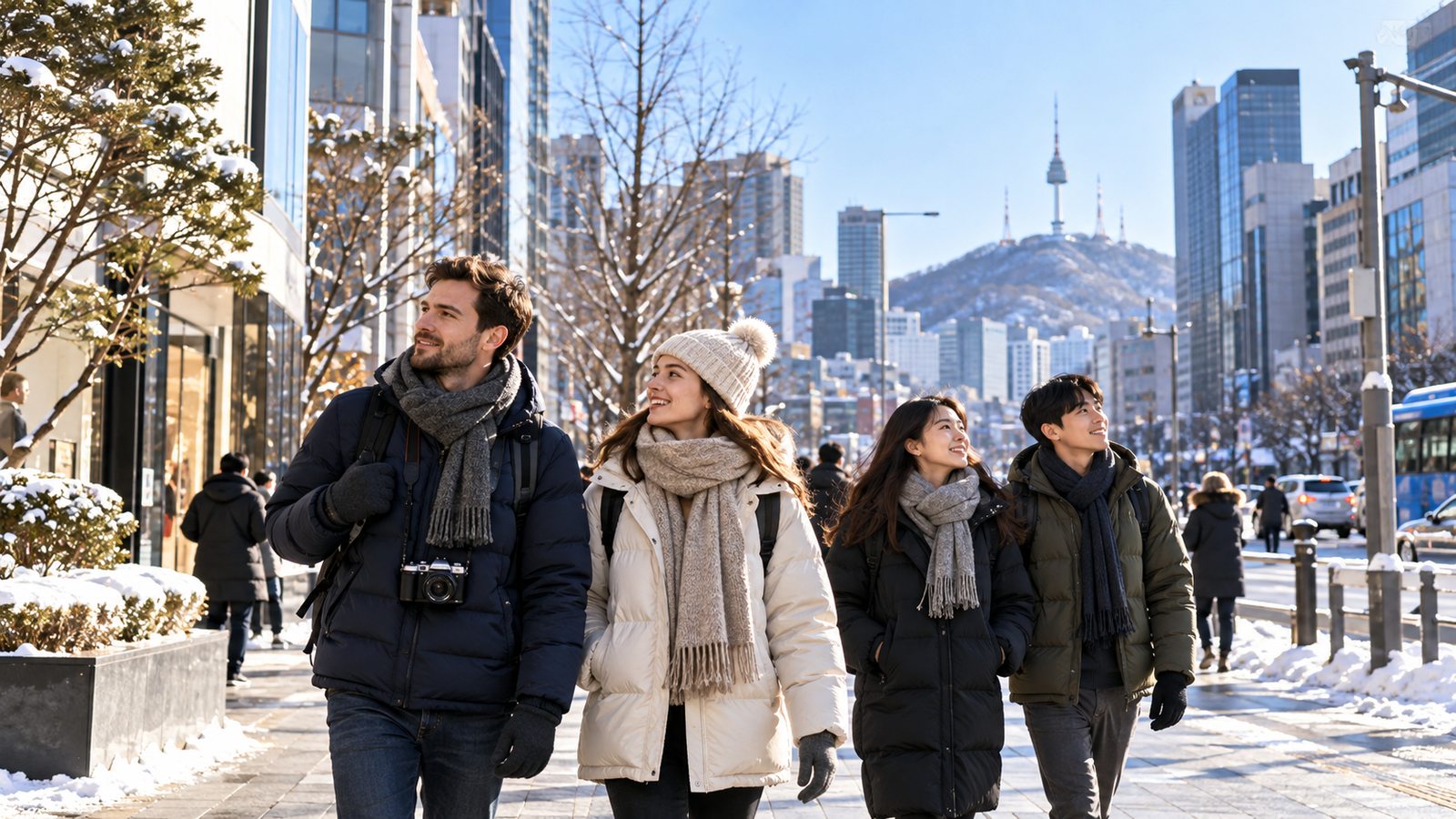
Winter can be one of the most rewarding times to visit South Korea, but it is also a season when checking the weather matters.
A sunny afternoon in Busan can feel very different from a windy morning in Seoul. Temperatures that look manageable on a monthly climate chart can also drop sharply during a cold wave.
For travelers, the useful questions are practical: How cold does Korea actually get? What should you wear? Does it always snow? And how should you plan a day that moves between freezing streets and heated subways, cafés and restaurants?
Here is what to know before visiting South Korea in winter.
When Is Winter in South Korea?
For travel planning, winter in South Korea generally means December through February.
November can already become cold, particularly toward the end of the month, while chilly weather can continue into March.
January is typically the coldest part of winter.
The season is generally cold and relatively dry, but conditions vary by location. Seoul, Busan, mountain destinations and Jeju should not be treated as if they have the same winter climate.
If your trip covers several regions, check each destination separately before deciding what to wear.
How Cold Is Seoul in Winter?
Seoul has a genuinely cold winter.
According to climate information published by the Korea Tourism Organization, Seoul’s average daily high is about 4.2°C in December, 2.1°C in January and 5.1°C in February.
Average lows are about -3.4°C in December, -5.5°C in January and -3.2°C in February.
| Month | Average High | Average Low |
|---|---|---|
| December | 4.2°C | -3.4°C |
| January | 2.1°C | -5.5°C |
| February | 5.1°C | -3.2°C |
Those are averages, not limits.
During a cold wave, temperatures can fall considerably lower. Wind can also make an outdoor sightseeing day feel harsher than the temperature alone suggests.
Seoul’s cold-wave system reflects that possibility. The city can issue cold-wave advisories and warnings when very low temperatures or sharp temperature drops are expected.
For a traveler, this means you should use monthly averages to understand the season, then check the actual forecast shortly before and during your trip.
Is Busan Warmer Than Seoul in Winter?
Usually, yes.
Busan’s southern coastal location gives it a milder winter than Seoul.
Korea Tourism Organization climate data lists Busan’s average highs at about 10.4°C in December, 8.2°C in January and 10.2°C in February.
Average lows are approximately 2.0°C in December, -0.1°C in January and 1.5°C in February.
| Month | Seoul High / Low | Busan High / Low |
|---|---|---|
| December | 4.2°C / -3.4°C | 10.4°C / 2.0°C |
| January | 2.1°C / -5.5°C | 8.2°C / -0.1°C |
| February | 5.1°C / -3.2°C | 10.2°C / 1.5°C |
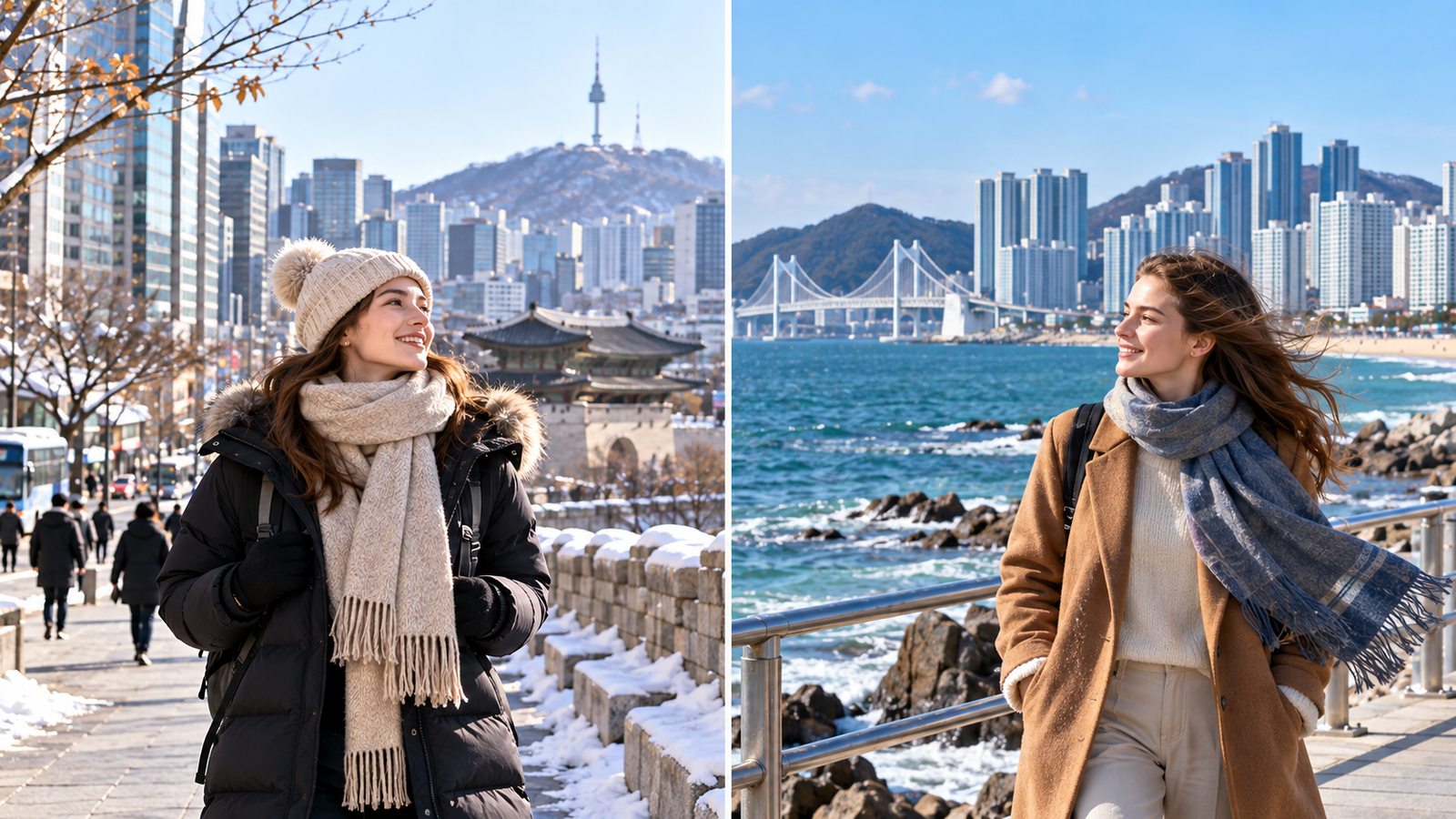
Visit Busan describes winter as cold, dry and windy, despite the city’s relatively mild coastal climate.
That last point matters.
A traveler going from Seoul to Busan may be able to use lighter layers on some days, but Busan should not be treated as a warm-weather destination in January.
If your itinerary includes both cities, pack for the colder part of the trip and adjust your layers when you travel south.
What Does Winter in Korea Actually Feel Like?
Temperature is only part of the experience.
Korean winters can be dry, and cold winds can make exposed skin uncomfortable during long periods outside.
A five-minute walk from a subway station to a café is very different from spending several hours walking around a palace, market or mountain trail.
Your itinerary therefore matters almost as much as the forecast.
A day spent moving between museums, restaurants and subway stations may require less insulation than a day that includes a palace visit, Namsan, a long neighborhood walk and an evening viewpoint.
The useful question is not simply:
“What is the temperature?”
It is:
“How long will I actually be outside?”
What Should You Wear in Korea in Winter?
For most winter sightseeing, think in layers rather than relying on one extremely bulky piece of clothing.
A practical city outfit can include:
- a comfortable base layer;
- a sweater, fleece or other insulating middle layer;
- a warm winter coat;
- long trousers;
- warm socks;
- comfortable closed shoes with useful grip;
- gloves;
- a scarf or neck warmer; and
- a hat or other head covering when conditions are particularly cold.
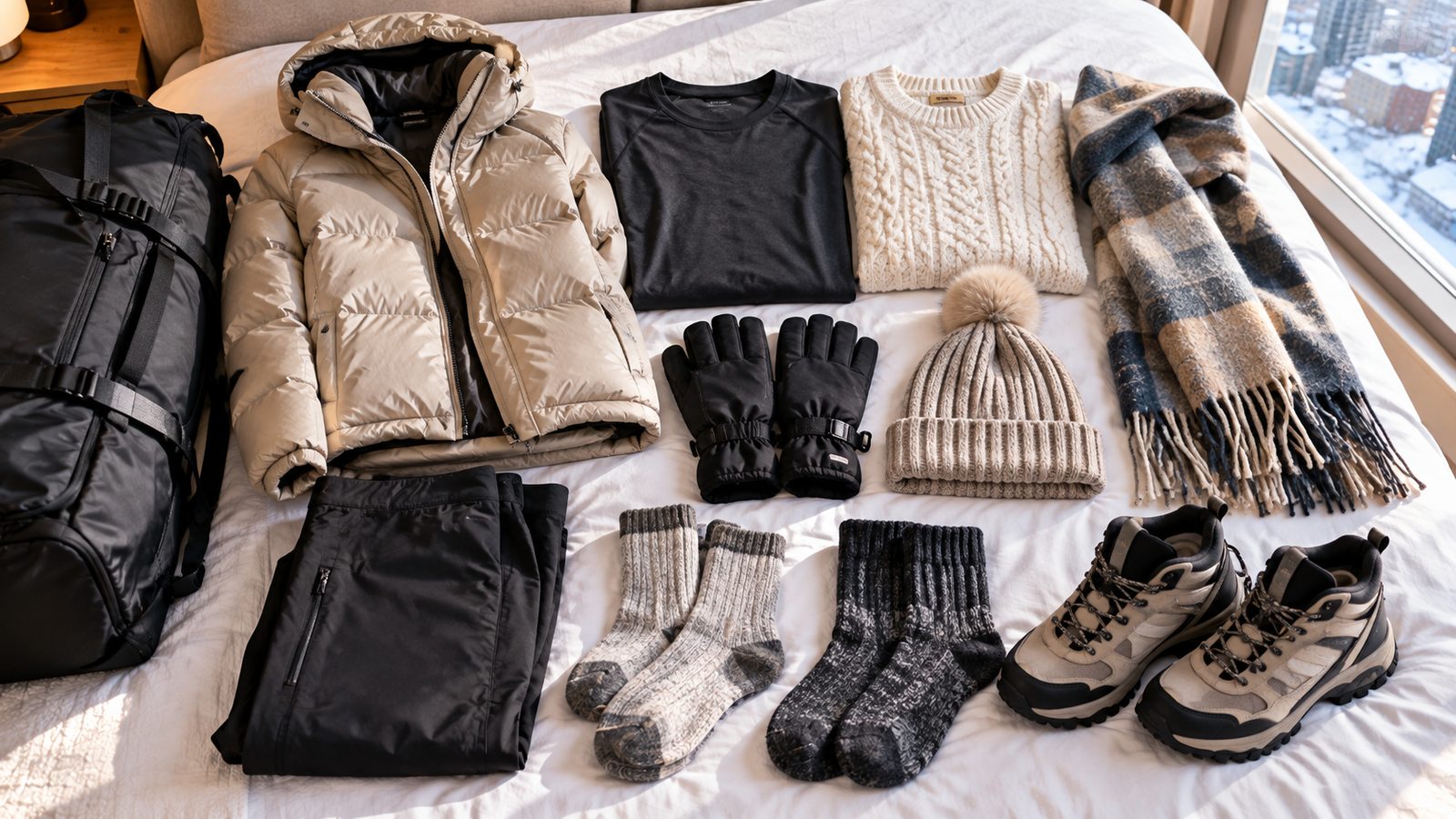
Exactly how much insulation you need depends on the forecast, how long you will stay outside and your own tolerance for cold.
Travelers from tropical or very warm climates may find a Seoul winter much more challenging than visitors accustomed to freezing temperatures.
Do not plan your entire wardrobe from photographs of fashionable winter outfits. Build it around the amount of outdoor walking your itinerary requires.
For a complete suitcase checklist beyond winter clothing, see our South Korea packing guide.
Why Layers Work Well in Korea
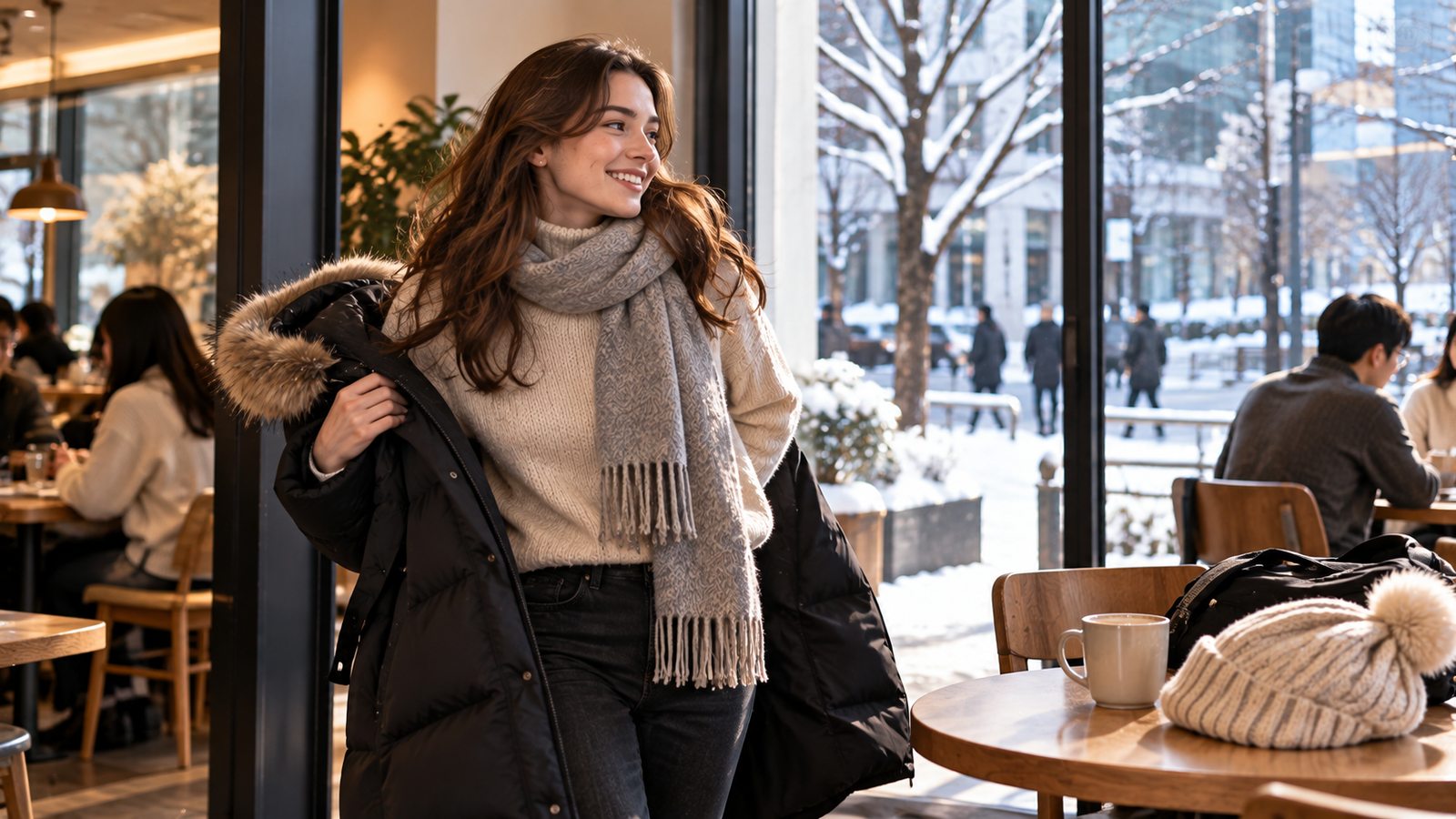
One of the first things winter visitors notice is the contrast between outdoor and indoor temperatures.
You may leave a freezing street and enter a heated subway train, department store, restaurant or café.
A heavy outfit that feels perfect outdoors can quickly become uncomfortable inside.
That is why adjustable layers are useful.
Instead of wearing several pieces that are difficult to remove, choose clothing that lets you open your coat or take off a middle layer when you enter a heated building.
This is especially useful on days when you repeatedly move between sightseeing outdoors and cafés, shops and public transportation.
What Is Ondol?
Traditional Korean heating culture is closely associated with ondol, a floor-heating system.
Modern Korean homes and many accommodation properties use forms of underfloor heating, so a room can feel quite warm even when the temperature outside is below freezing.
This can surprise travelers who expect their hotel room to feel cold simply because Seoul is cold.
Heating arrangements vary by property, however.
When booking accommodation in winter, check recent room reviews and the property’s heating information rather than assuming every hotel or guesthouse operates in exactly the same way.
If you are choosing your base in the capital, our guide to where to stay in Seoul can help you compare neighborhoods and practical accommodation considerations.
Does It Snow in Seoul?
Yes, Seoul can receive snow in winter.
But do not plan a Seoul trip on the assumption that the city will be covered in deep snow every day from December through February.
Snowfall varies from one weather system to another, and snow on busy roads and central sidewalks may be cleared or melt relatively quickly.
A winter trip can therefore include clear dry days, bitter cold, light snow or a heavier snow event.
If seeing snow is an important part of your trip, do not treat a monthly climate average as a snow guarantee.
Check the forecast close to your travel dates.
What Should You Do When It Snows?
For tourists, footwear becomes especially important.
Snow that melts and refreezes can create slippery surfaces, particularly on slopes, stairs and quieter sidewalks.
Shoes with reasonable grip are more useful than smooth-soled fashion shoes on these days.
Seoul’s official winter safety guidance recommends appropriate footwear during heavy snow and warns pedestrians about icy conditions.
Take extra care around:
- subway entrances and stairs;
- steep neighborhood streets;
- palace grounds;
- mountain paths;
- bridges and exposed walkways; and
- sidewalks early in the morning after overnight freezing.
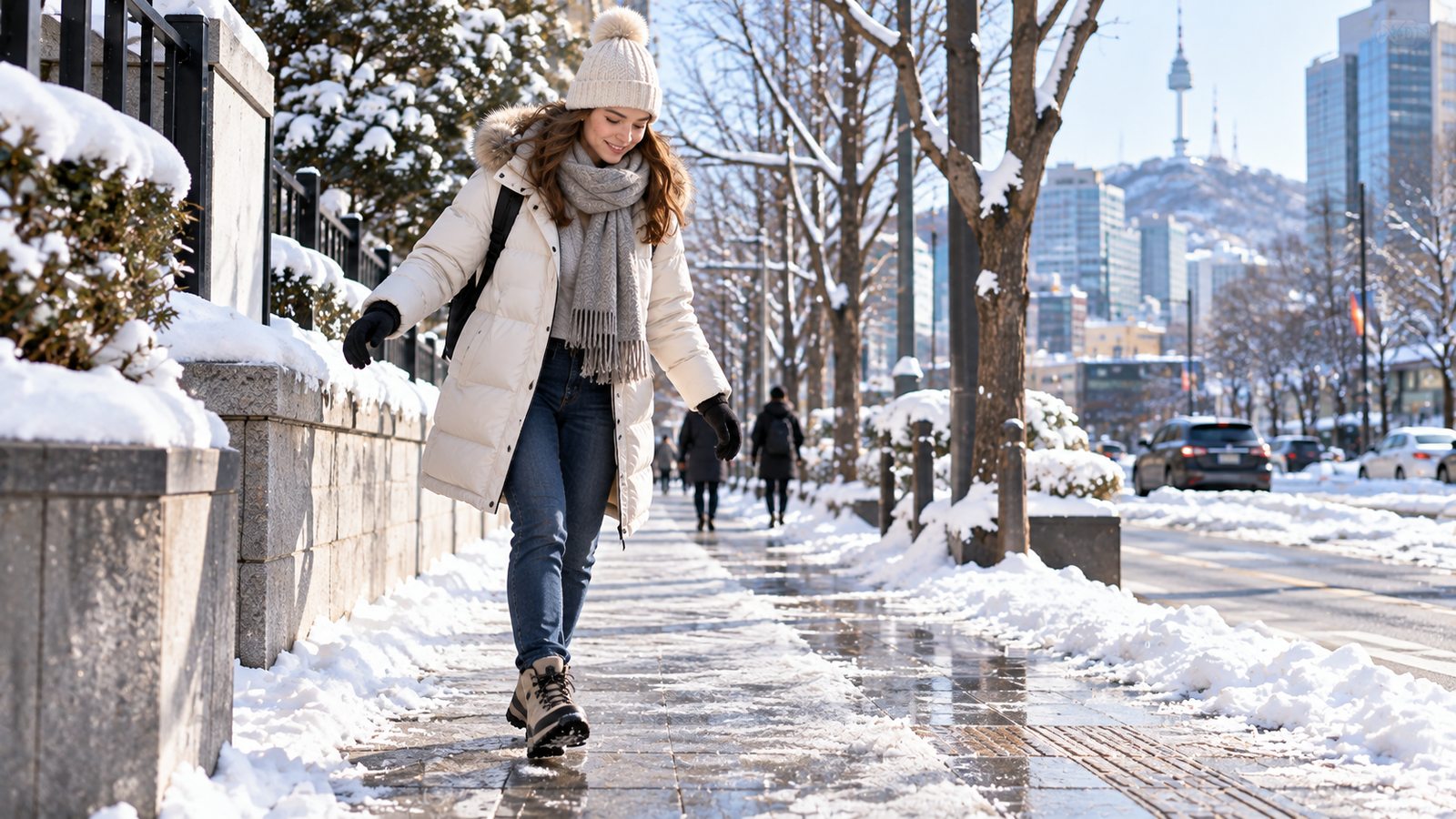
If heavy snow is affecting transport or roads, allow additional travel time and check current official information rather than relying only on your original itinerary.
Do You Need Snow Boots in Seoul?
Not necessarily.
For an ordinary city trip, many travelers can manage with warm, comfortable walking shoes that have good traction, provided the actual conditions are not severe.
Water resistance can be useful on snowy or slushy days.
Dedicated winter or hiking footwear becomes more important when your plans include mountain trails, ski areas or extended time in deeper snow.
Choose footwear for your itinerary rather than buying heavy snow boots simply because you are visiting Korea in January.
December, January or February: Which Is Coldest?
Korea in December
December is the beginning of the core winter season.
Seoul’s average low is already below freezing, and colder outbreaks can push temperatures substantially lower.
Early December and late December can also feel quite different, so travelers visiting around Christmas or New Year should check the forecast rather than relying on an average for the entire month.
Korea in January
January is typically the coldest month.
In Seoul, average lows are well below freezing, and cold waves can bring significantly colder conditions.
If you are visiting in January, pack for real winter weather rather than assuming that urban sightseeing means you will only be outside briefly.
Korea in February
February remains winter.
Average temperatures begin to rise compared with January, but below-freezing mornings are still normal in Seoul and cold spells remain possible.
Late February can occasionally hint at the coming spring, but it is too early to rely on mild weather.
Should You Worry About Fine Dust in Winter?
Air quality should be checked separately from temperature.
Poor particulate-matter conditions are not limited to spring, and South Korea operates seasonal fine-dust management measures during periods when elevated PM2.5 is more likely.
For travelers, this means a sunny winter day is not automatically a good air-quality day.
If your itinerary includes several hours outdoors, check both the weather and the air quality.
Our guide to fine dust in Korea explains how to read AirKorea’s PM2.5 and PM10 information and adjust outdoor plans when necessary.
Winter Hiking Requires Different Preparation
A city walk and a winter mountain hike are not the same activity.
Snow, ice, wind, elevation and rapidly changing conditions can make a trail significantly colder or more difficult than the streets below.
If you plan to hike in Seoul during winter, check:
- the latest mountain weather;
- trail conditions;
- daylight hours;
- your footwear;
- whether traction equipment is appropriate;
- your clothing layers; and
- any current restrictions or safety notices.
Do not assume that clothing suitable for shopping in Myeongdong is suitable for a winter mountain.
Our Seoul hiking guide covers the basics of planning a hike as a visitor; winter conditions should always be checked separately before you leave.
Is Winter a Good Time to Visit South Korea?
It can be, depending on the trip you want.
Winter has several advantages.
Major sightseeing areas can feel different from the hot and humid summer season. Cold-weather foods, heated indoor spaces and winter landscapes are part of the seasonal experience. Travelers interested in skiing and snowboarding also have access to winter resorts outside the major cities.
But there are trade-offs.
Daylight hours are shorter, outdoor sightseeing can become tiring during a cold wave, and snow or icy conditions can affect walking and transportation.
A successful winter itinerary leaves some flexibility.
If one day is unusually cold, snowy or affected by poor air quality, moving a long outdoor activity to another day may be more enjoyable than forcing the original schedule.
How Should You Plan a Winter Sightseeing Day?
Start with the weather forecast, then look at how much of your itinerary is outdoors.
For example, a day could combine:
Morning: an outdoor palace or neighborhood walk
Lunch: a warm indoor meal
Afternoon: a museum, shopping area or café
Evening: an outdoor viewpoint if conditions remain comfortable
This gives you opportunities to warm up rather than spending six consecutive hours outside.
The same principle works in reverse: save long indoor activities for a particularly cold or snowy day.
Public transportation also makes it relatively easy to alternate between indoor and outdoor destinations in major cities.
Check the Weather Again During Your Trip
Do not rely entirely on the forecast you saw before leaving home.
Weather conditions can change during a one- or two-week trip.
Check the latest forecast:
Before departure: for your initial packing decisions.
A few days before each major activity: especially for outdoor attractions, day trips and hiking.
On the morning itself: when cold, snow, wind or air quality could change your plans.
A monthly average tells you what winter is normally like. The daily forecast tells you what you need today.
A Simple Winter Checklist for Korea
Before heading out each morning:
Check the temperature and wind.
A windy day may feel considerably colder during extended outdoor sightseeing.
Look for cold-wave or snow alerts.
Official warnings matter more than a generic weather-app icon.
Check air quality.
Especially before hiking, running or spending several hours outdoors.
Wear adjustable layers.
Expect a large difference between cold streets and heated interiors.
Choose practical footwear.
Pay particular attention to traction after snow or overnight freezing.
Charge your phone.
Cold weather and long days using navigation can make battery management more important.
Keep your itinerary flexible.
Moving one outdoor activity can make a severe-weather day much easier.
Frequently Asked Questions
How cold does South Korea get in winter?
It depends on the region and weather pattern. In Seoul, average winter lows are below freezing, with January averaging around -5.5°C at night according to Korea Tourism Organization climate data. Cold waves can bring considerably lower temperatures.
What is the coldest month in South Korea?
January is generally the coldest month. Seoul’s average January high is around 2.1°C and its average low is around -5.5°C.
Is Busan warmer than Seoul in winter?
Yes, generally. Busan’s coastal location gives it milder winter temperatures. Its January average high is around 8.2°C and average low around -0.1°C, compared with approximately 2.1°C and -5.5°C in Seoul.
What should I wear in Seoul in January?
Start with a warm winter coat, insulating layers, long trousers, warm socks, gloves and comfortable closed shoes with useful grip. Adjust the amount of insulation to the actual forecast and how long you plan to remain outdoors.
Does it snow a lot in Seoul?
Seoul receives winter snow, but continuous deep snow throughout the season is not guaranteed. Conditions vary, and central streets may be cleared quickly after snowfall. Check the short-term forecast if snow is important to your plans.
Do Korean hotels have heating in winter?
Heating is common, and underfloor heating is an important part of Korean heating culture. However, the type of heating and temperature controls vary by property, so check the details and recent reviews for the accommodation you are booking.
Sources & Further Reading
Korea Tourism Organization — Climate
Seoul Metropolitan Government — Winter Season in Seoul and Cold-Wave Safety
Seoul Metropolitan Government — Climate and Four Seasons in Seoul
Visit Busan — Climate of Busan
Korea Meteorological Administration — Weather and Climate Information