
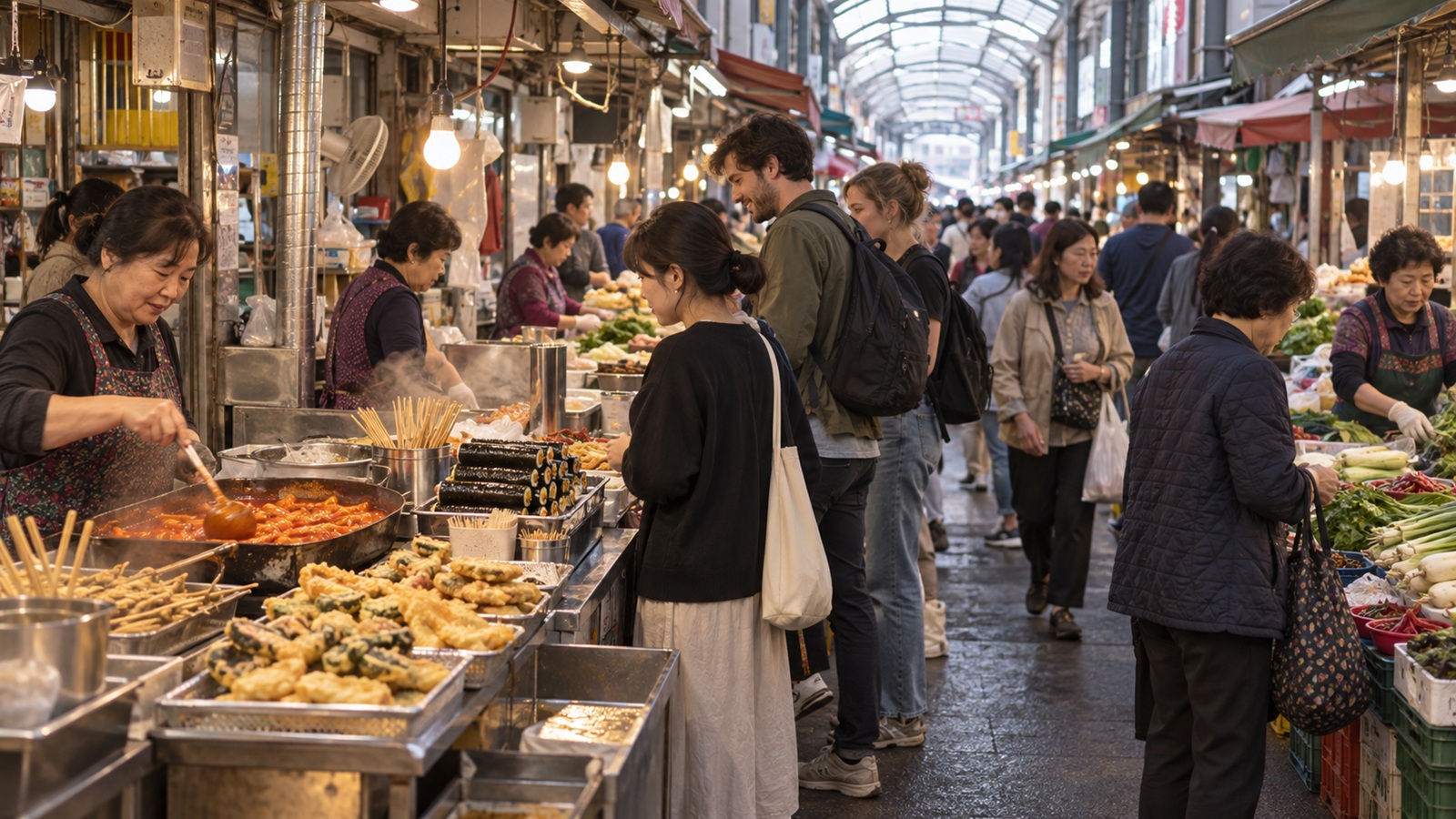
Mangwon Market offers a different side of Seoul from the city’s palace districts, major shopping streets, and famous tourist markets.
Located in Mapo-gu, the traditional market is surrounded by the everyday neighborhood of Mangwon-dong and sits within easy reach of the Hangang River. That combination makes it particularly useful for travelers who want to eat Korean market food without building an entire day around a single attraction.
You can browse the market, pick up a few snacks, explore the surrounding neighborhood, and continue toward Mangwon Hangang Park for a picnic.
Here is what to know before you go.
What Is Mangwon Market?
Mangwon Market is a traditional neighborhood market in Mapo-gu, western Seoul.
Unlike a market designed primarily around tourism, it still functions as a place where local residents shop for fruit, vegetables, seafood, side dishes, household items, and prepared food.
At the same time, its affordable snacks and location near cafés, small shops, and the Hangang River have made it increasingly appealing to visitors.
The market itself is relatively compact. That can actually be an advantage for travelers: you do not need several hours to understand the layout or sample a few foods.
Mangwon-dong surrounding the market adds another layer to the visit. Older neighborhood businesses sit alongside cafés, bakeries, independent shops, and newer restaurants, creating a mix of everyday Seoul and contemporary local culture.
Why Visit Mangwon Market?
The strongest reason to visit Mangwon Market is not that it contains one single must-eat dish.
It is the combination of food, neighborhood atmosphere, and location.
A visit can easily become part of a half-day itinerary rather than a standalone market stop.
You might arrive around lunchtime, sample several foods inside the market, walk through Mangwon-dong, stop at a café, and then continue toward the Hangang River.
For travelers who have already visited Seoul’s major landmarks, this is also an accessible way to see a more residential side of the city without traveling far from central tourist areas.
What to Eat at Mangwon Market
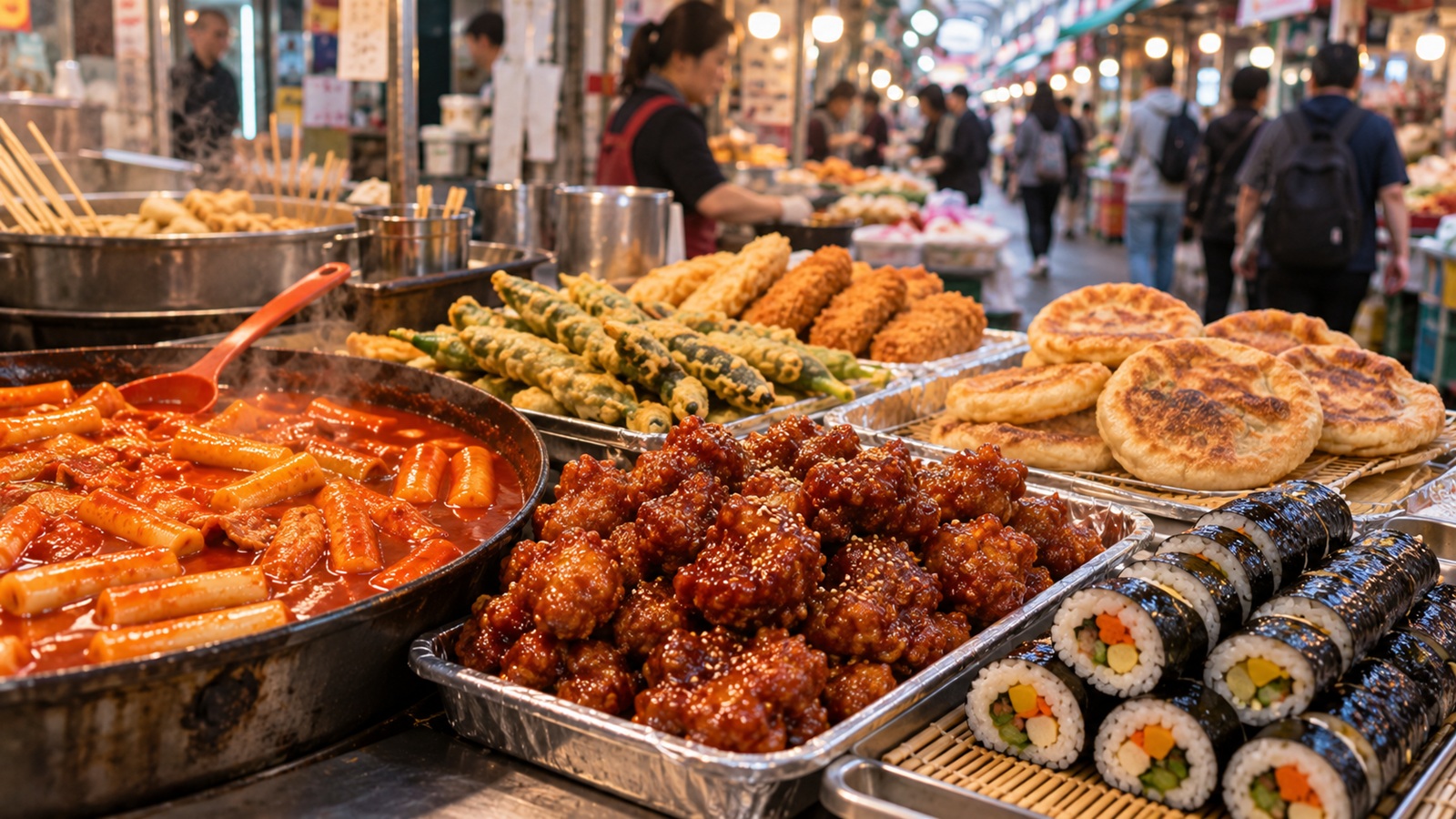
Mangwon Market is better approached as a place to try several small foods rather than one large meal.
Dakgangjeong
Dakgangjeong is bite-sized fried chicken coated in a sweet or savory glaze.
It is one of the foods frequently associated with Mangwon Market and works particularly well as takeaway food if you plan to continue to the river.
Deep-Fried Green Chili Peppers
Crispy fried green chili peppers are another food commonly associated with the market.
The peppers may be filled before frying, producing a combination of crisp batter and savory filling.
Tteokbokki and Fried Snacks
For a classic Korean market combination, look for tteokbokki — chewy rice cakes served in a spicy-sweet red sauce — alongside assorted fried snacks.
If tteokbokki is new to you, expect a chewy texture and a sauce that can range considerably in heat from one vendor to another.
Hotteok
Hotteok is a sweet griddlecake often filled with a mixture based around brown sugar.
Hotteok is especially satisfying during cooler weather. Let it cool slightly before eating, and step aside from the busy market walkway while enjoying it.
Croquettes
Mangwon is also known for inexpensive croquettes with a variety of savory fillings.
They are not uniquely Korean in origin, but they have become one of the foods associated with a casual Mangwon Market food crawl.
Gimbap and Other Everyday Foods
You will also find familiar Korean market staples such as gimbap, noodles, rice cakes, pancakes, and other prepared foods.
Rather than trying to find every famous stall, choose what looks appealing and order small portions where possible.
That leaves room to try more than one thing.
Mangwon Market vs. Gwangjang Market
Travelers sometimes treat Seoul’s traditional markets as interchangeable, but Mangwon Market and Gwangjang Market offer noticeably different experiences.
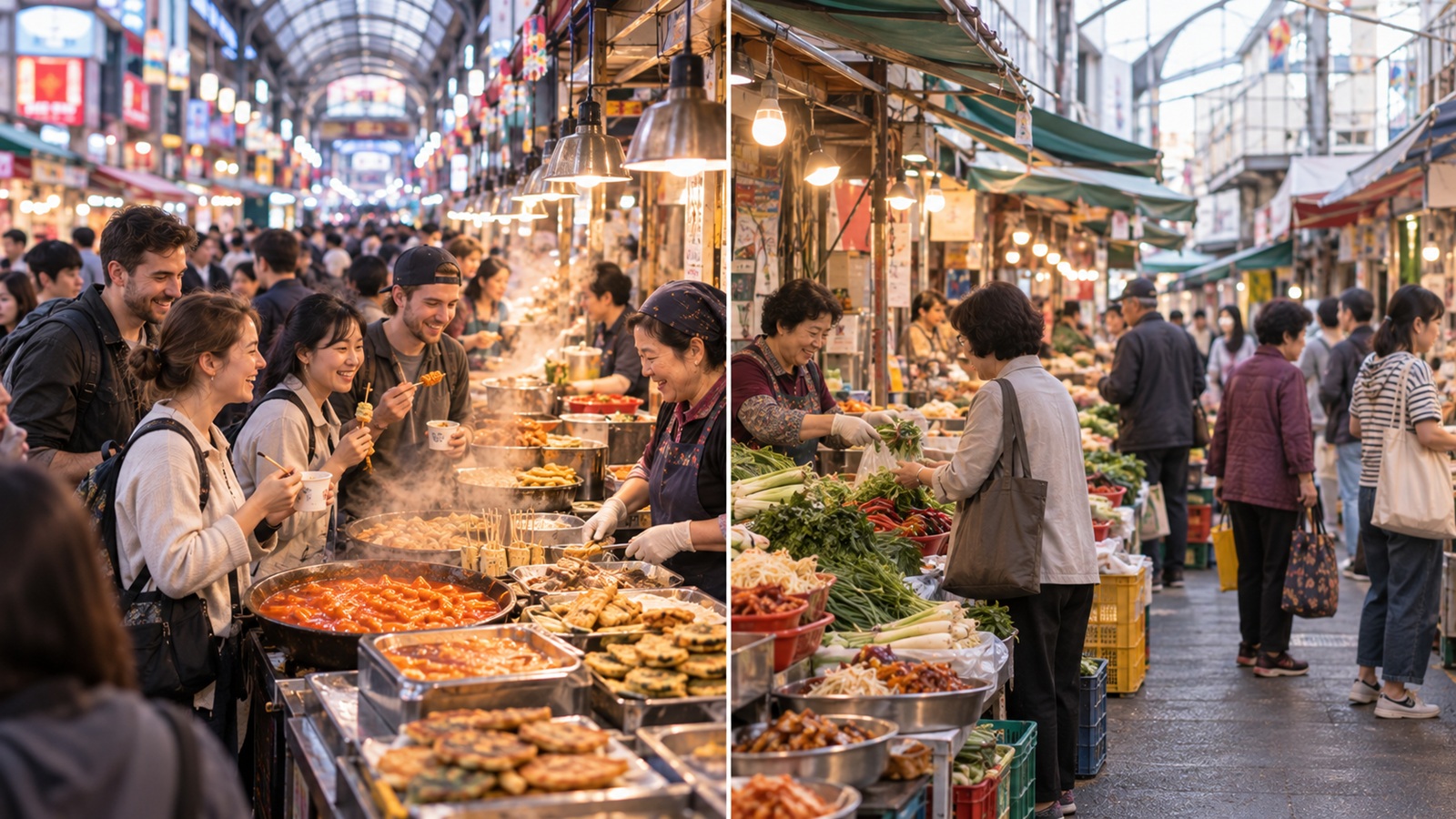
Gwangjang Market is one of Seoul’s best-known markets among international travelers and works well for visitors looking for a famous traditional-market stop as part of a central Seoul sightseeing itinerary.
Mangwon Market feels more closely connected to its surrounding residential neighborhood.
Its appeal comes from combining a compact market visit with Mangwon-dong and the nearby Hangang River.
So the choice depends less on which market is “better” and more on the type of day you want.
Choose Gwangjang if a famous market experience fits naturally into your central Seoul sightseeing route.
Choose Mangwon if you want to combine Korean food with a neighborhood walk and a riverside picnic.
How to Get to Mangwon Market
Mangwon Market is located in Mapo-gu.
The easiest public transportation option for most travelers is Seoul Subway Line 6.
Get off at Mangwon Station and use Exit 2. The market is only a short walk from the station.
Address:
27 Poeun-ro 6-gil, Mapo-gu, Seoul
The market generally operates during the daytime and evening, but individual shops set their own schedules.
As a practical guideline, the official Seoul tourism information lists general operating hours of approximately 10:00 a.m. to 9:00 p.m., while noting that hours vary by store.
For that reason, avoid planning your visit around a single vendor without checking its current opening hours first.
Do You Need Cash?
Not necessarily.
Many stores accept credit cards, so travelers usually do not need to carry large amounts of cash just for Mangwon Market.
However, payment methods can differ among small vendors.
Keeping a modest amount of Korean won in cash is useful for situations where a stall does not accept your card or an overseas card has trouble processing.
For international visitors, it is better to carry both a payment card and a small amount of cash rather than rely entirely on one method.
Combine Mangwon Market With a Hangang Picnic
This is where Mangwon Market becomes particularly useful for a Seoul itinerary.
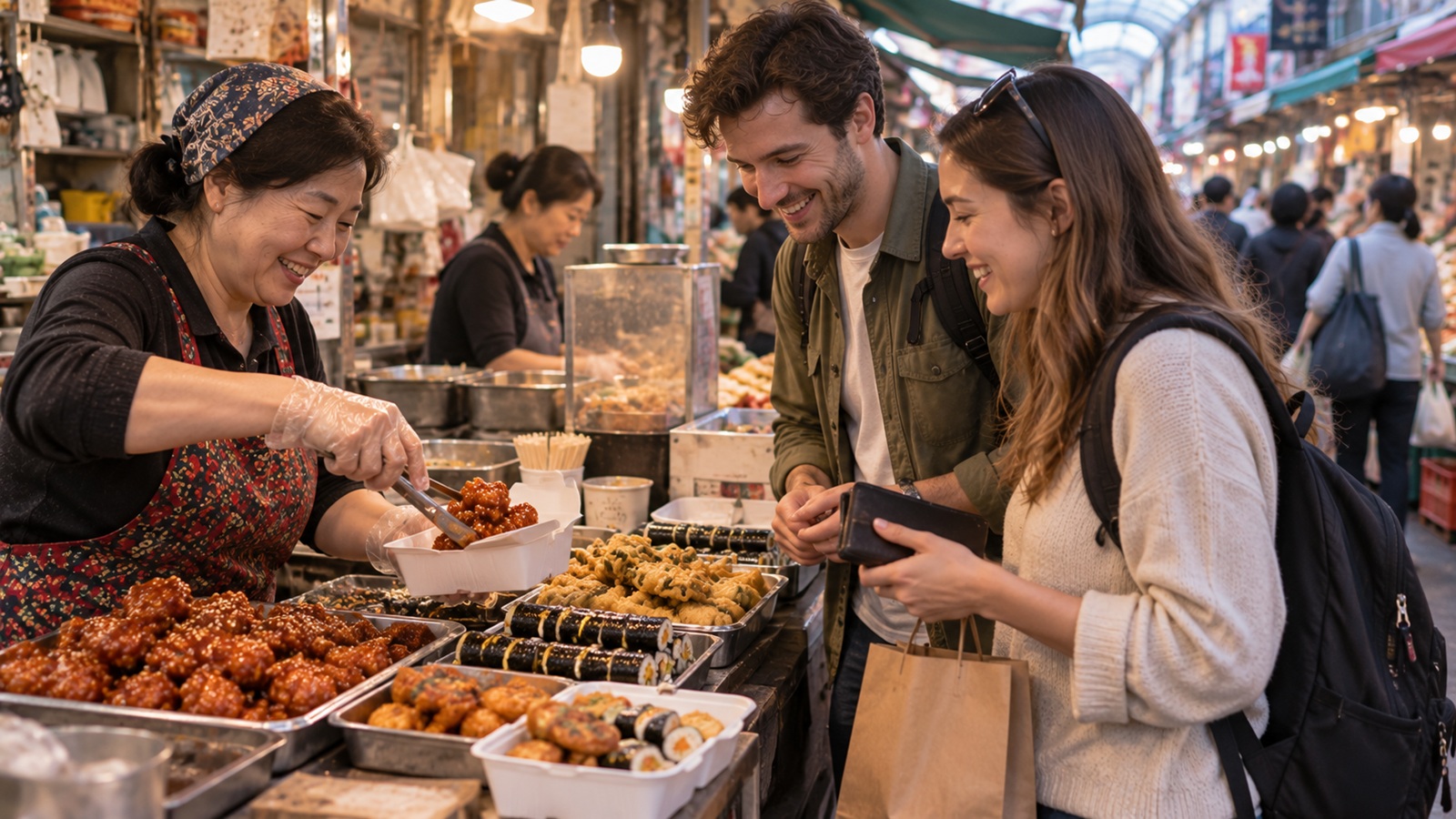
Mangwon Hangang Park is close enough to make buying takeaway food at the market and continuing toward the river a natural combination.
Instead of eating everything immediately, consider buying a few portable dishes to take with you.
Dakgangjeong, gimbap, fried snacks, rice cakes, and similar foods are relatively easy to share outdoors.
Once you reach the river, the experience changes from a market food crawl into something much closer to an everyday Seoul afternoon.
Another classic riverside option is making convenience-store ramyeon, a familiar part of the modern Hangang experience in Seoul.
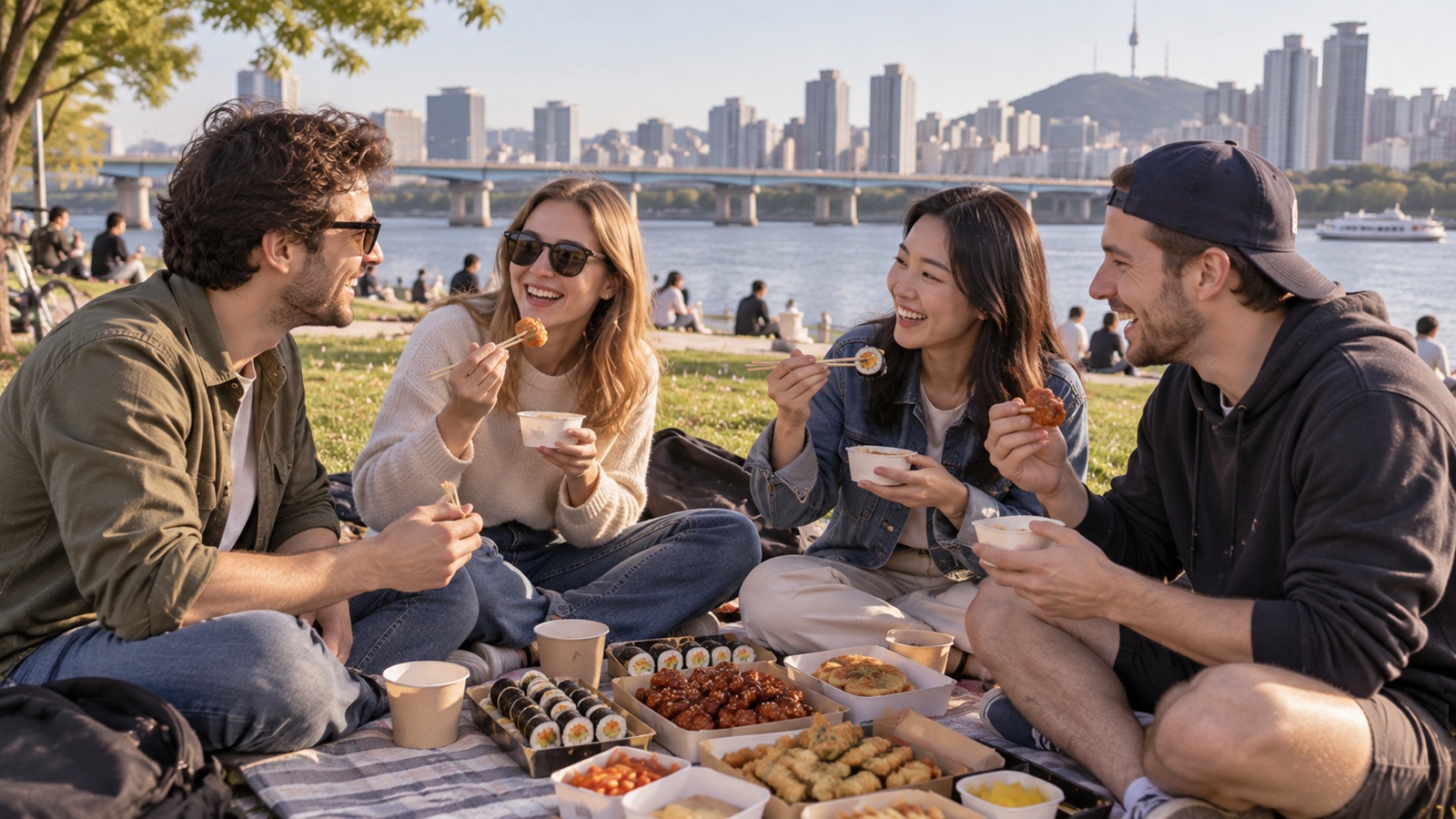
On pleasant spring and autumn days, this can be one of the simplest ways to combine Korean food with the Hangang without making a complicated reservation or itinerary.
Remember to dispose of food containers and other waste properly after your picnic.
A Simple Mangwon Half-Day Itinerary
A Mangwon visit does not need a detailed schedule.
A practical route is:
Mangwon Station → Mangwon Market → Mangwon-dong → café or small shop → Mangwon Hangang Park
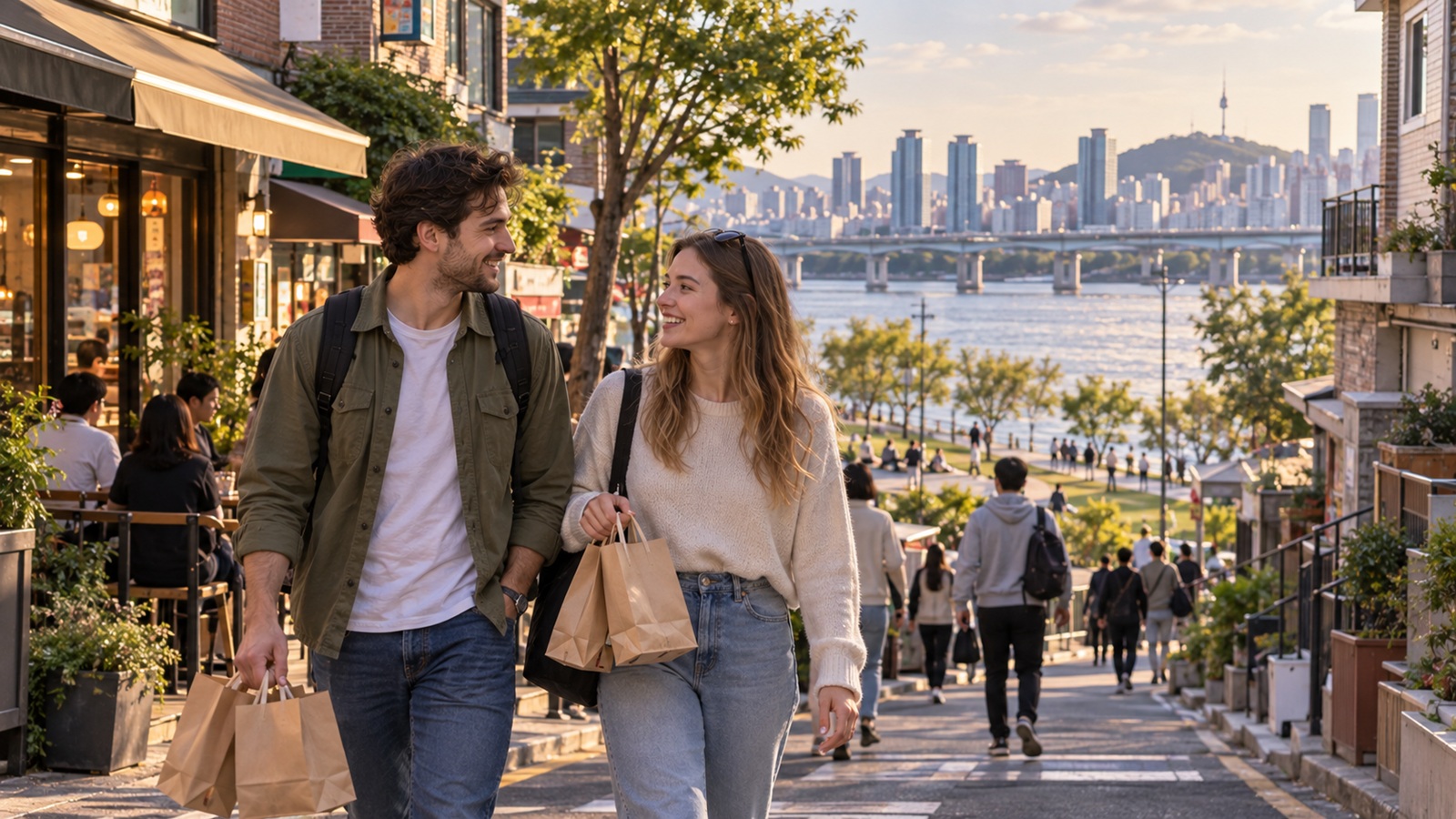
Start at the market when you are hungry enough to sample a few foods.
Afterward, explore the streets around Mangwon-dong rather than immediately returning to the subway. The neighborhood contains cafés and small independent businesses that make the transition from traditional market to contemporary Seoul particularly noticeable.
Then continue toward Mangwon Hangang Park with takeaway food if the weather is suitable.
This route works particularly well from late morning through the afternoon.
Travelers staying around Hongdae or Yeonnam-dong can also incorporate Mangwon into a wider Mapo-gu day rather than treating it as a separate excursion.
Tips for First-Time Visitors
Come hungry, but do not order too much from your first stall. Sampling several foods is part of the appeal.
Weekends and popular meal times can be busier, so visit outside peak lunch and dinner periods if you prefer a slower experience.
Bring a small amount of cash even if you normally pay by card.
Remember that Mangwon Market remains a functioning neighborhood market. Keep entrances clear, avoid blocking narrow passages while taking photos, and ask before closely photographing vendors.
And if the weather is good, leave enough time for the Hangang. The market and river work better together than either experience suggests on a map.
Is Mangwon Market Worth Visiting?
Yes, particularly for travelers interested in seeing a side of Seoul that sits between traditional market culture and contemporary neighborhood life.
Mangwon Market is not enormous, and that is part of its appeal.
You can eat Korean market food without spending half a day inside the market, explore the surrounding streets, and finish beside the Hangang River.
For a first trip to Seoul, it can complement the city’s major landmarks. For a return visit, it offers an easy way to spend several hours experiencing Seoul at a more local pace.
FAQ
What is Mangwon Market famous for?
Mangwon Market is known for affordable Korean market food and its location in the Mangwon-dong neighborhood. Popular foods include dakgangjeong, fried green chili peppers, tteokbokki, hotteok, croquettes, gimbap, and other Korean snacks.
What subway station is closest to Mangwon Market?
Mangwon Station on Seoul Subway Line 6 is the closest station. Exit 2 provides convenient access to the market.
What time does Mangwon Market open?
Official Seoul tourism information lists general operating hours of around 10:00 a.m. to 9:00 p.m., but individual shops have their own opening days and hours.
Can foreigners use credit cards at Mangwon Market?
Many vendors accept cards, but acceptance can vary. International travelers should carry a small amount of Korean won as a backup.
Is Mangwon Market close to the Hangang River?
Yes. Its proximity to Mangwon Hangang Park is one of the market’s biggest advantages for travelers. Buying takeaway food at the market and eating it by the river is a popular way to combine the two.
Is Mangwon Market or Gwangjang Market better for tourists?
They offer different experiences. Gwangjang is convenient for a famous traditional-market experience in central Seoul, while Mangwon works particularly well for travelers who want to combine a neighborhood market, Mangwon-dong, and the Hangang River in one itinerary.
Sources & Further Reading
Seoul Tourism Organization — Mangwon Market
VISITKOREA — Mangwon-dong: When You Want Seoul without the Rush