
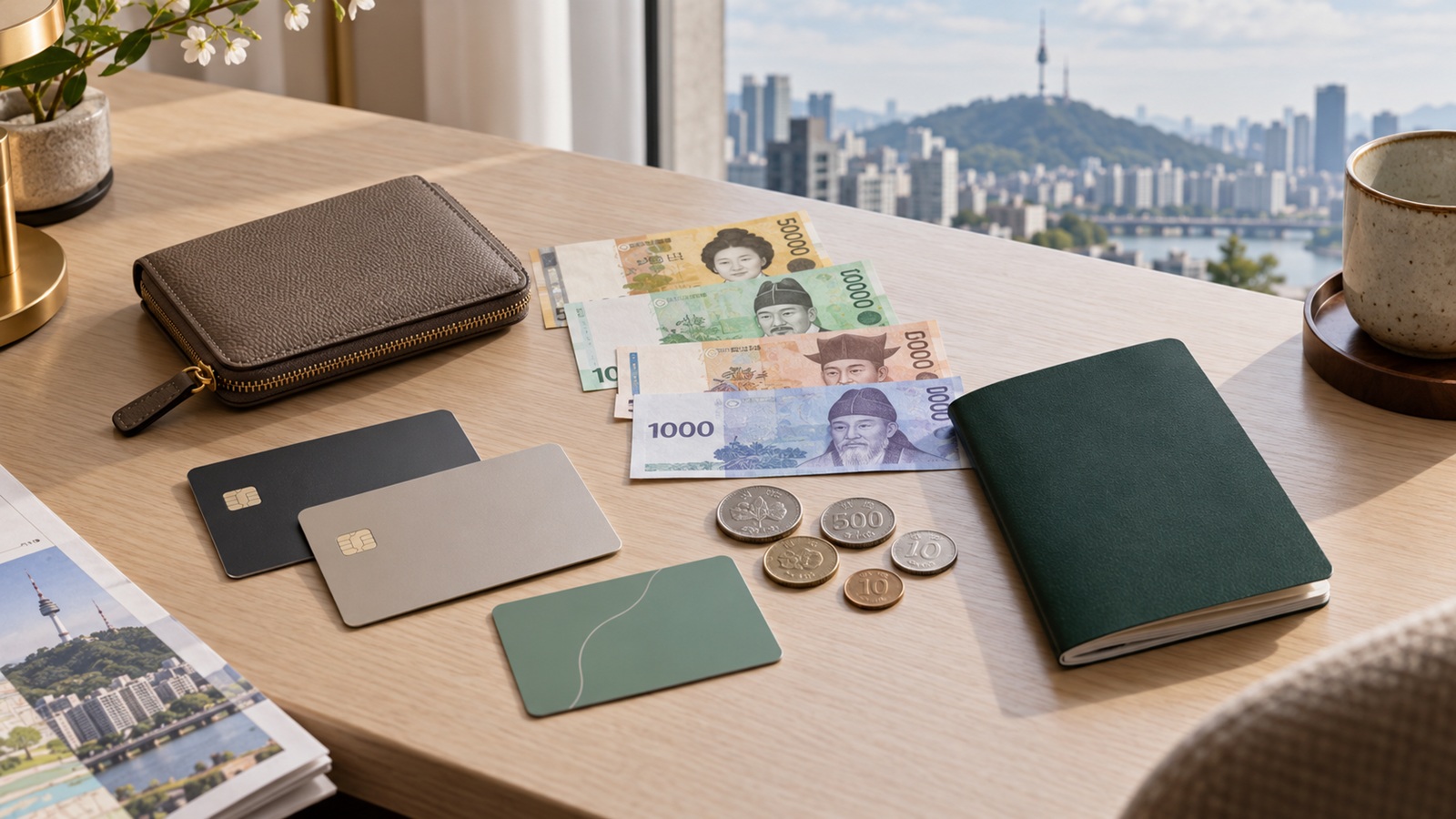
Many everyday purchases in South Korea can be paid for by card, but your usual bank card may not cover every part of your trip. A restaurant bill, a subway ticket and a transportation card top-up can involve different payment arrangements.
For most visitors, a practical starting point is an internationally enabled bank card, access to some Korean won and a suitable transportation card. Here is how to prepare without carrying more payment products than you need.
Can You Use Foreign Credit Cards in Korea?

Internationally issued credit and debit cards are useful for everyday spending in Korea. Hotels, department stores, major retailers and many restaurants have card terminals. However, acceptance is not universal: a small business, unattended machine or online checkout may reject an overseas card even when it accepts Korean-issued cards.
Before departure, enable international transactions and check your issuer’s foreign transaction fees. If possible, carry a backup card separately. When a terminal offers to charge you in your home currency rather than Korean won, review the conversion terms; the final cost depends on the exchange rate and your card’s fees.
Do You Need Cash in South Korea?
You do not need cash for every purchase, but having access to Korean won is useful when a merchant or machine cannot process your card, when a conventional transit card needs a cash top-up or when your bank declines a transaction.
There is no universal amount of cash to bring. Your itinerary and payment preferences matter more than a fixed daily allowance. A modest amount for your arrival and a backup payment method are often more practical than exchanging your entire travel budget at once.
Where Can You Get Korean Won?
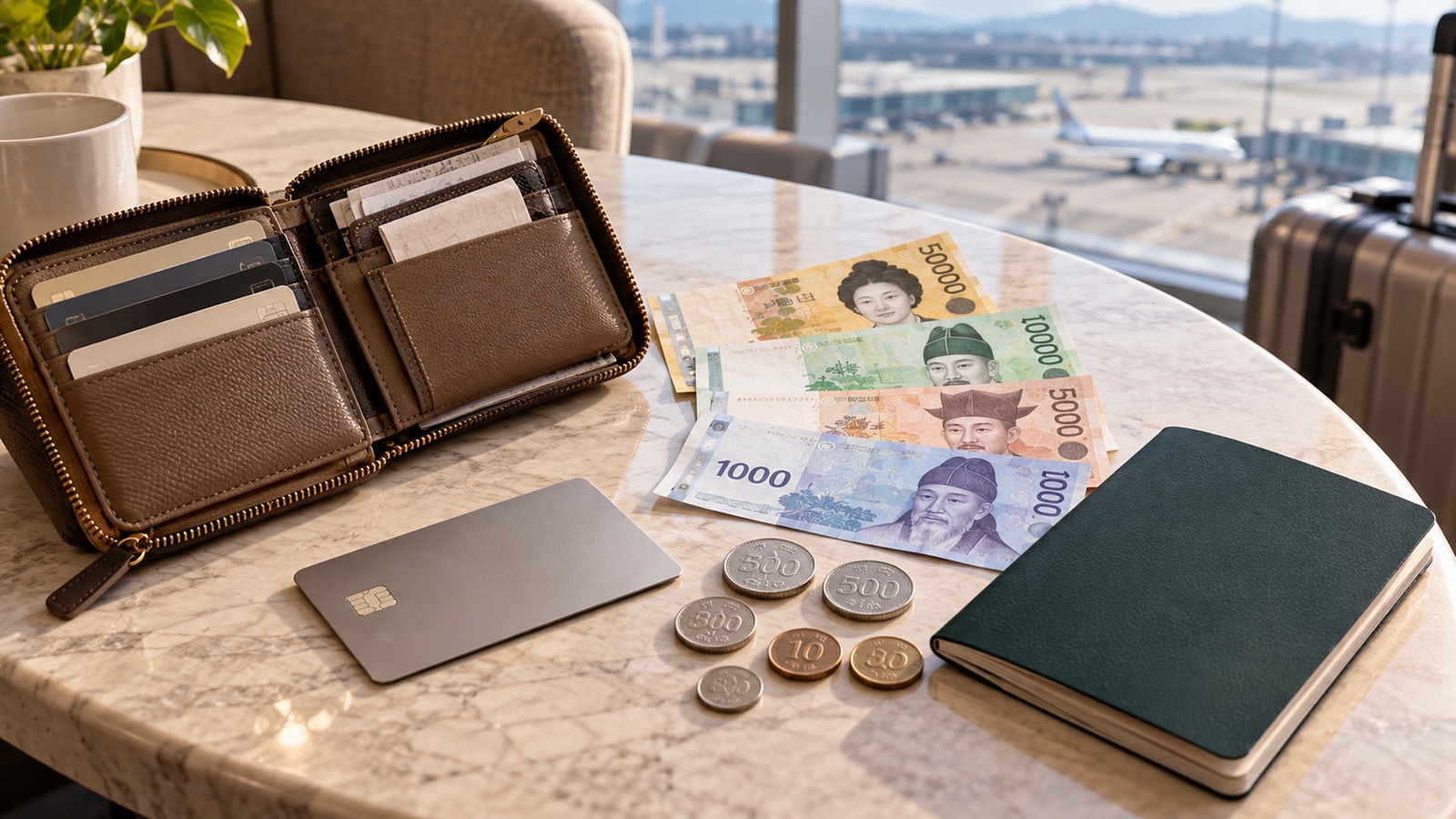
Incheon International Airport lists currency exchange counters and ATMs in its official facilities directory. Check the location and operating hours for your terminal, particularly if you arrive late.
Some ATMs support international cards, but compatibility, withdrawal limits and fees depend on the machine and your bank. Review any charges displayed before confirming a withdrawal. If you are heading straight to Seoul, also decide how you will pay for your airport transfer.
Can You Tap a Foreign Credit Card on the Seoul Subway?
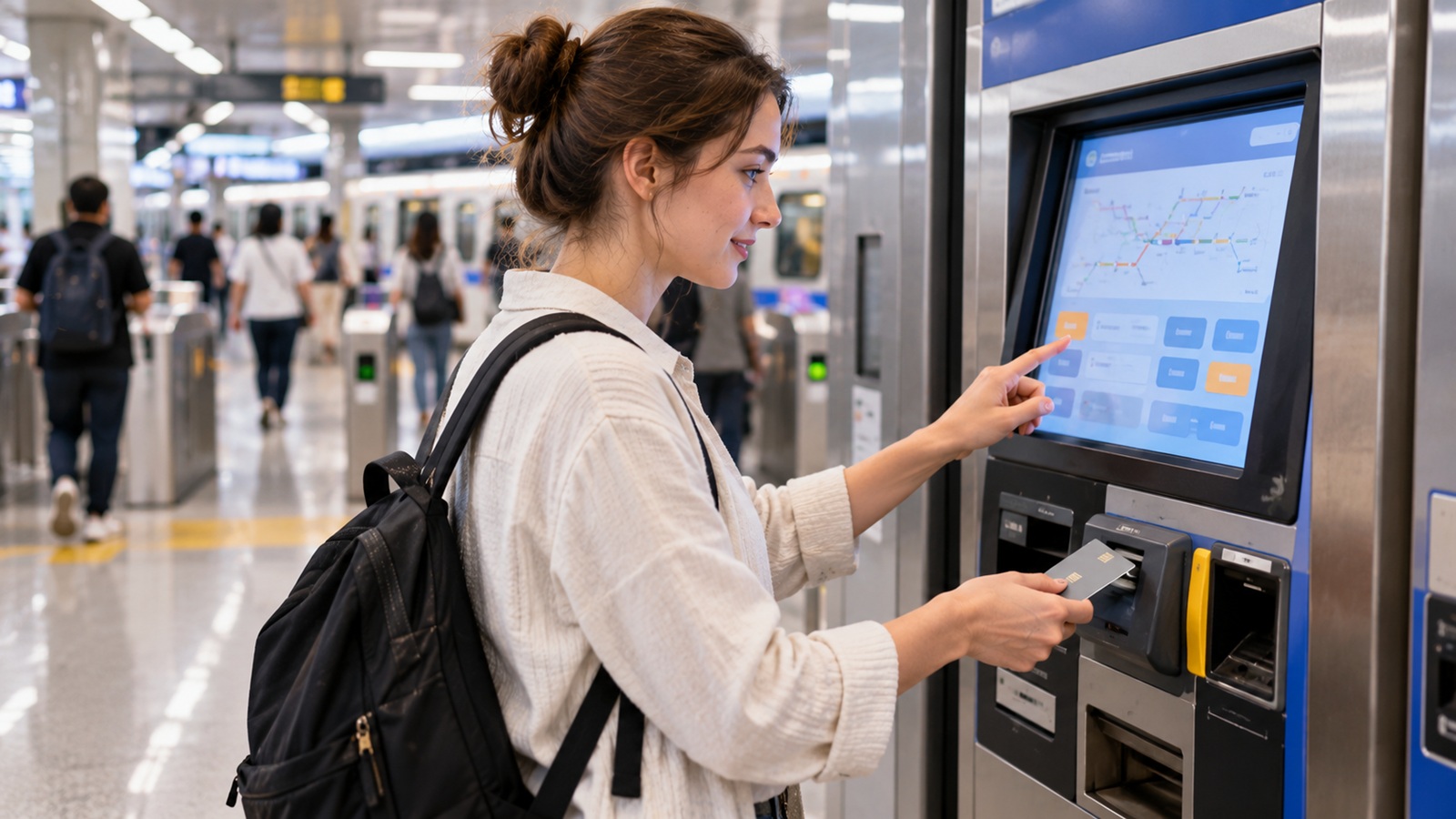
Do not assume that a foreign contactless bank card works directly at every subway gate or bus reader. Paying for a ticket at a machine and tapping a card to enter the transport system are different functions.
Seoul introduced overseas-card payments at designated new ticket machines for certain products in March 2026. That does not mean every transport reader accepts an overseas bank card directly. For repeated subway and bus journeys, a compatible Korean transportation card remains a practical option.
Our Seoul subway and T-money guide explains transportation cards, transfers and the ticket options to check for your itinerary.
T-money, Single-Journey Tickets and Climate Card: What Is Different?
These options serve different purposes. Check the exact product and sales channel rather than assuming they have the same purchase, recharge or coverage rules.
| Option | Best used for | Check before buying |
|---|---|---|
| Compatible prepaid transit card, such as T-money | Repeated eligible subway and bus journeys | Where to buy it and how to add balance |
| Single-journey ticket | A specific rail journey | Payment methods at your station’s machine |
| Short-term Climate Card | Eligible transport within its stated coverage and pass period | Duration, coverage and supported purchase or recharge method |
| Foreign bank card | Shopping and merchants that accept it | Issuer fees and whether a particular ticket machine supports it |
The Korea Tourism Organization’s 2026 transportation guidance distinguishes conventional T-money purchases and top-ups, which may require cash, from other ticket and pass purchases. Seoul’s new machines offer overseas-card payment for eligible single-journey tickets and short-term Climate Card products at participating locations. Check the current fee and supported cards on the machine before paying.
What About Taxis, Markets and Convenience Stores?
Taxis
Many Korean taxis accept card payments, but confirm the payment method before your ride if you rely on an overseas card. A taxi-booking app may have separate payment requirements from paying in the vehicle.
Traditional Markets and Small Shops
Payment arrangements vary by stall and business. Some accept cards; others may prefer cash or support only certain domestic payment methods. Small won notes can be helpful for purchases where your card is not accepted.
Convenience Stores and Larger Retailers
Convenience stores are useful for everyday purchases, but paying for groceries with a foreign card does not necessarily mean you can use that card to top up every transportation product. Ask about the specific service you need.
For shopping purchases, our Korea tax refund guide explains eligible tourist purchases and refund procedures. A tax refund is separate from the payment method used at checkout.
Should You Get a Tourist Prepaid Card?
Some visitor-oriented cards combine shopping payments, currency exchange and transportation features. They can be convenient, but their shopping and transit balances may work differently. Compare issuance fees, supported currencies, top-up methods, refund rules and what happens if the card is lost.
A tourist prepaid card is an option, not a requirement. An internationally enabled bank card, access to won and a suitable transit card may already cover your needs.
What to Prepare Before You Fly
A little preparation can prevent payment problems during your first hours in Korea.
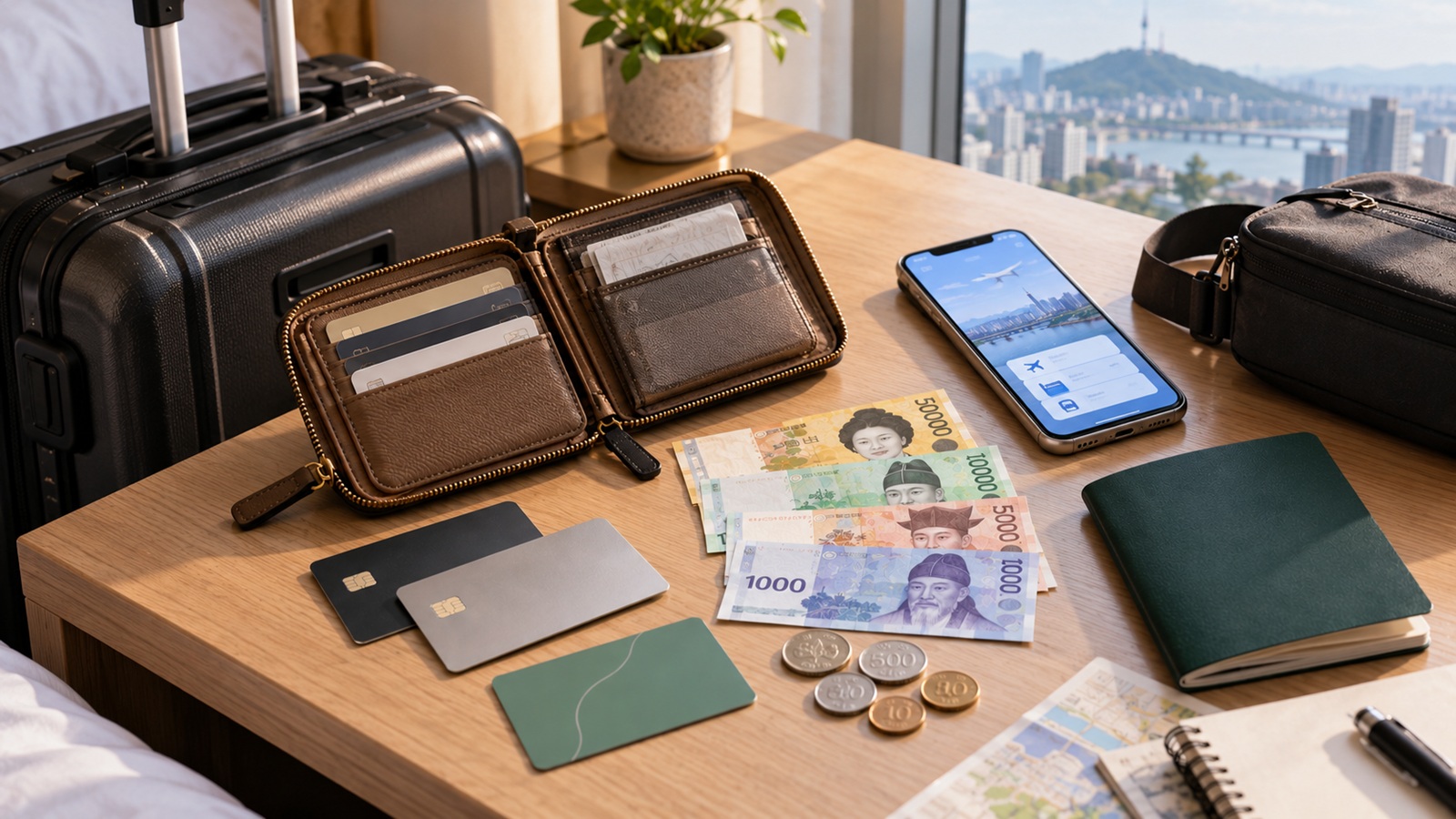
- Check that your bank card is enabled for international use and review its fees.
- Keep a backup payment method separately if you have one.
- Plan how to obtain a modest amount of Korean won.
- Decide how you will pay for your airport transfer and first local transport journey.
- Check purchase and recharge rules for your intended transportation card or pass.
- Keep your bank’s card-locking and support options accessible.
If you are arriving through Incheon International Airport, our Incheon Airport to Seoul guide compares onward transport options so you can plan your first journey.
The goal is not to carry every payment product. It is to avoid depending on a single method in situations where it may not work.
Frequently Asked Questions
Is South Korea cashless for tourists?
Many purchases can be made by card, but some small merchants, machines and transportation card services may still require Korean won.
Can I use Visa or Mastercard in Korea?
Internationally issued cards are useful at many merchants, but acceptance depends on the business, terminal and your card issuer. Keep a backup method for exceptions.
Can I use my foreign card to recharge T-money?
Do not assume every conventional T-money recharge location accepts overseas cards. Check the specific product and machine: overseas-card payment for certain tickets and passes does not automatically apply to all transit card top-ups.
Can I pay for the Seoul subway with Apple Pay or a foreign contactless card?
Payment at a ticket machine is not the same as direct entry at a subway gate. Check the currently supported ticket, transit card and reader before relying on your phone or overseas bank card.
How much Korean won should I bring?
There is no universal amount. Your itinerary, transport choices and card acceptance determine what you need. Access to some won and a backup payment method is more useful than a fixed amount for every traveler.
Can I get Korean won at Incheon Airport?
Yes. The airport lists exchange counters and ATMs. Check your terminal, operating hours and your bank’s overseas withdrawal fees.
Sources & Further Reading
- Korea Tourism Organization — Transportation Cards
- Korea Tourism Organization — International Visitors’ Transportation Guide (2026)
- Seoul Metropolitan Government — Overseas-Card Payment for Transit Tickets and Passes
- Seoul Metropolitan Government — Climate Card
- Incheon International Airport — Convenience and Public Facilities