

You have found a flight arriving at Incheon International Airport, followed by a reasonably priced flight from Gimpo to Jeju. The airports are connected by train and bus, so the itinerary looks straightforward.
But ICN → GMP is a landside airport change, not a normal airside connection.
You must enter South Korea, collect any checked baggage, travel to another airport and complete the required domestic departure procedures. The train or bus ride is only one part of that journey.
Before committing, check one alternative first: is there a suitable direct Incheon → Jeju flight on your actual travel date? Direct service was available for a checked date during our research, but that does not establish daily operation.
Operational information checked October 30, 2026. Transport schedules, fares, airline procedures and flight availability can change. Confirm the details for your travel date and operating carrier before booking.
1. Quick Answer
An Incheon to Gimpo transfer can work, but the useful question is not simply how many hours separate the flights.
Ask whether your itinerary can accommodate:
- The full international arrival process at Incheon.
- Waiting for and taking your chosen ground transport.
- Reaching Gimpo’s Domestic Terminal.
- Your airline’s check-in, baggage and boarding deadlines.
- A realistic fallback if something takes longer than expected.
A connection is a poor booking choice if it works only when the incoming flight is punctual, immigration is fast, baggage arrives immediately and the next train or bus is ready to leave.
A later Jeju flight, a suitable direct flight from Incheon or an overnight stay may cost more initially but leave you with less financial exposure.
Do not use transport ride time as your connection time.
2. First Check: Can You Fly Directly from Incheon to Jeju?
During verification on October 30, 2026, Jeju Air’s official booking system offered a bookable ICN → CJU flight for November 2, 2026:
- Flight: 7C167
- Departure: 18:50 from Incheon
- Arrival: 20:05 in Jeju
The airline’s timetable independently showed the same flight. This was a live booking-availability check, not an assumption based on an expired seasonal announcement.
It establishes that a direct flight was offered for that checked departure. It does not establish daily service, availability on every winter date or an unchanged schedule.
Search Jeju Air’s official booking site for your actual date before deciding that you must change airports.
A direct flight can remove the ICN → GMP journey, but it does not automatically solve every connection issue. Check the departure terminal, baggage arrangements, ticket construction and applicable domestic-flight procedures too.
3. What Actually Happens Between Your Two Flights?
Build the journey from your international arrival to the Jeju flight’s boarding gate.
1. International arrival
Start with the possibility that your incoming flight arrives later than scheduled. The time printed on your itinerary is not the time you will be ready to leave the airport.
2. Deplaning
You still need to leave the aircraft and reach the arrivals route. Seat location, the arrival gate, any concourse transfer and assistance needs can affect this stage.
3. Immigration
Queue length and document checks vary. Preparing the correct entry documents avoids preventable problems, but it does not reserve a place at the front of immigration.
Our Korea e-Arrival Card guide explains who needs the declaration and how it differs from a K-ETA.
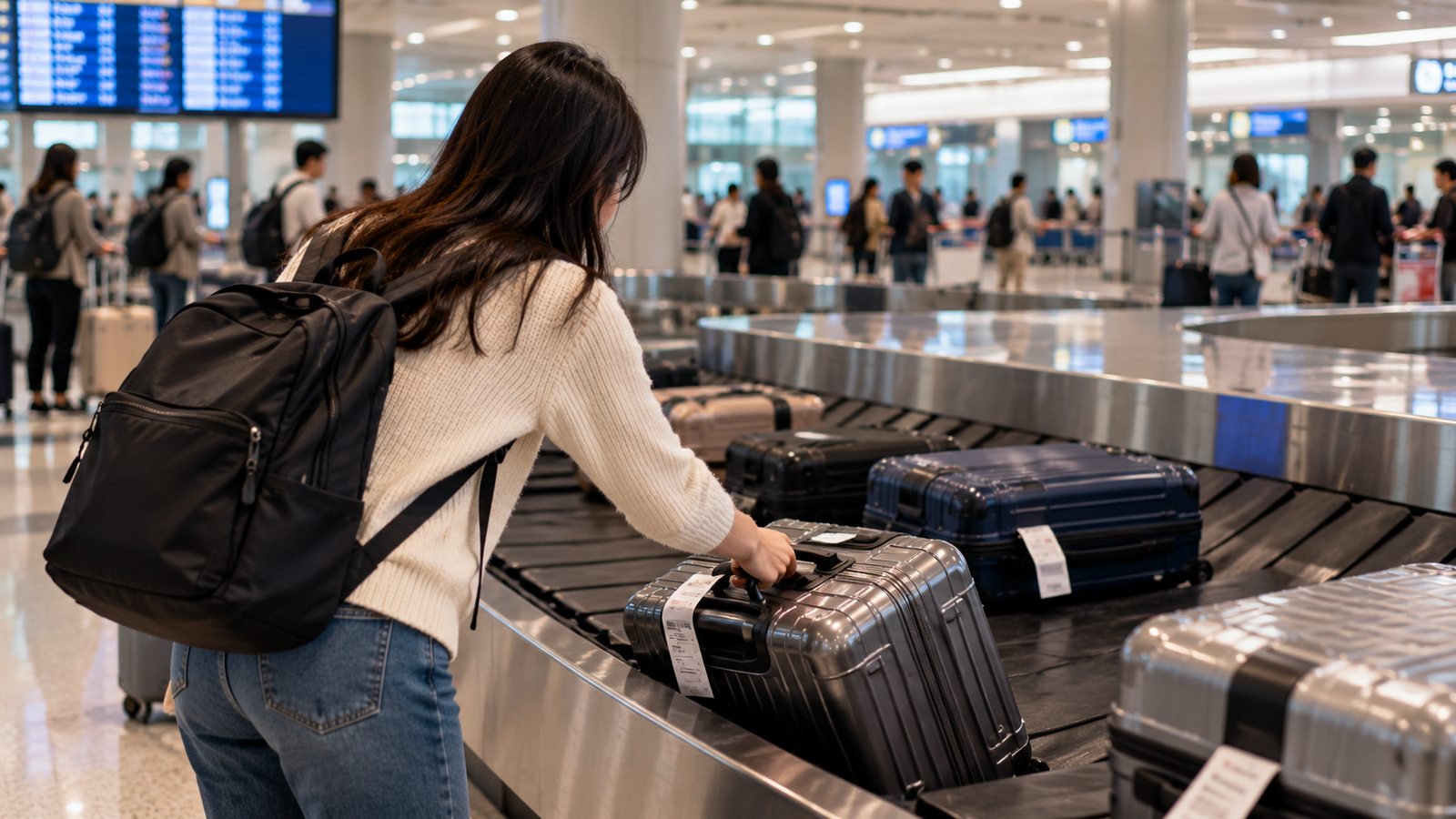
4. Baggage claim
Checked baggage creates another variable. Waiting for a suitcase, collecting an oversized item or reporting a missing bag can change the plan.
5. Customs
Complete the applicable customs process before entering the public arrivals area. Carry-on-only travelers still pass through the arrivals and customs route.
6. Reaching airport transport
Allow for walking, lifts or escalators, buying a ticket, finding the correct platform or stop, and waiting for the next departure.
7. Traveling from ICN to GMP
This is the train, bus or taxi portion. Road travel adds traffic uncertainty; public transport adds departure timing.
8. Reaching Gimpo domestic check-in
Arriving at Gimpo Airport Station is not the same as standing at your airline’s counter. Follow signs for the Domestic Terminal, not the International Terminal.
9. Check-in and baggage drop
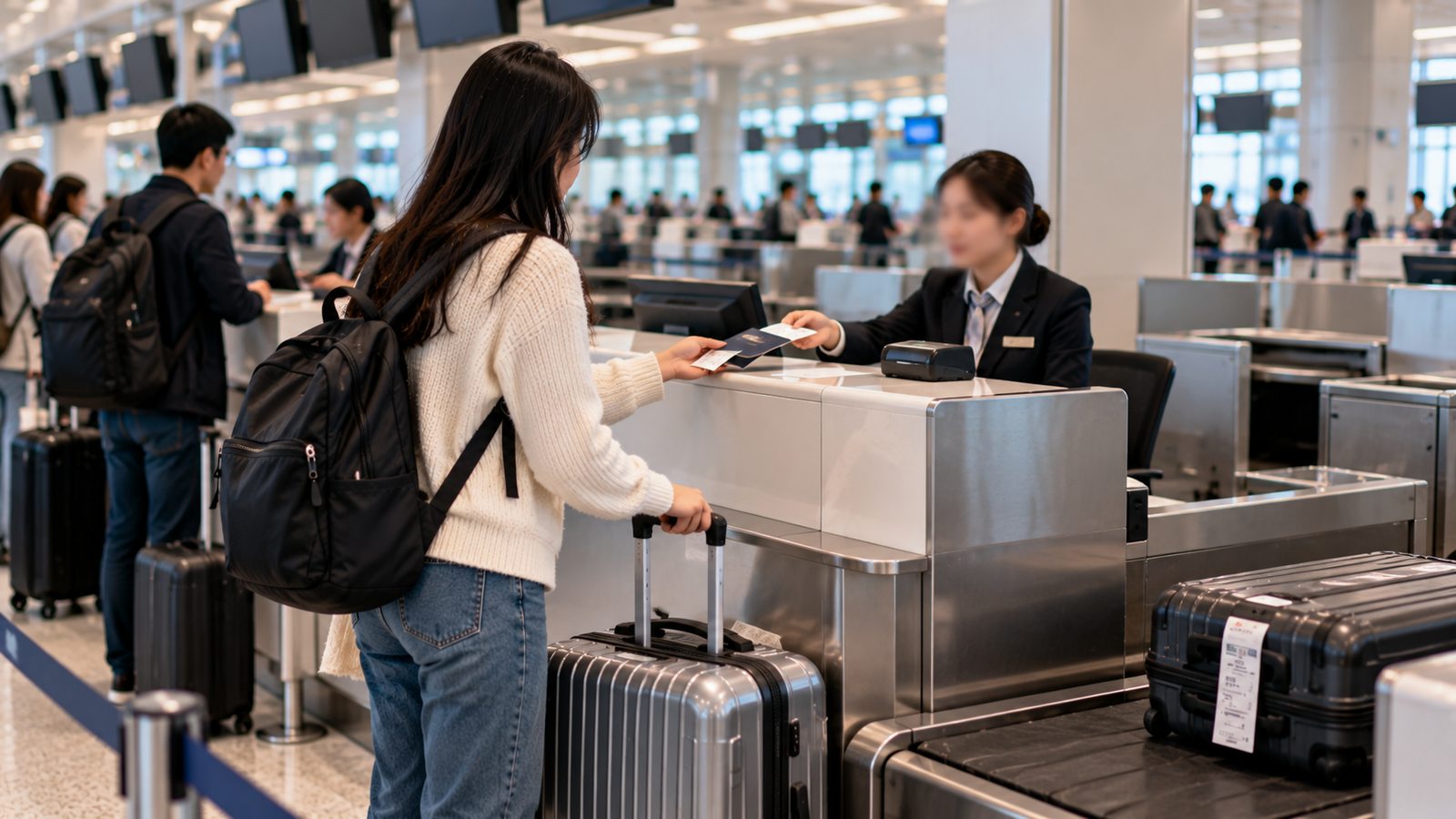
Complete any required counter procedures and bag drop before your airline’s deadline. Being in the queue is not the same as finishing the process.
10. Identification and security
You still need the required identification checks and security screening. Queue conditions and individual screening requirements vary.
11. Reaching the gate and boarding
Finally, walk to the assigned gate and meet the airline’s gate-arrival and boarding requirements.
Asiana’s published inbound transfer procedure explicitly follows this sequence: immigration, baggage claim, customs, transport to Gimpo, domestic check-in, security and the gate.
Incheon Airport advises travelers booking onward public transport to consider one to two hours for immigration after flight arrival. Treat that as planning guidance, not a guaranteed terminal-exit time.
4. Incheon to Gimpo Transfer Options
Choose the option that fits the whole connection, including the next departure, your luggage and the movement required at both ends.
Checked October 30, 2026. Fares, schedules and procedures can change. Ride times exclude arrivals processing, transport waiting, terminal walking and domestic departure procedures. All fares are in Korean won.
| Option | From ICN T1/T2 | Approximate ride time | Fare | Main uncertainty | Luggage practicality | Best fit |
|---|---|---|---|---|---|---|
| AREX All-Stop Train | Available from both terminals through their transportation centers. At Gimpo, follow signs toward the Domestic Terminal. | Operator-planner figures: approximately 37 minutes from T1 or 44 minutes from T2, station to station. | Operator-published adult transit-card fares: ₩4,350 from T1; ₩4,950 from T2. A single-use ticket adds ₩100, plus a refundable ₩500 deposit. | Waiting for the next suitable train, possible disruption, and walking at both airports. Check the live timetable for the travel date; no definitive last departure is stated here. | Carry your own bags through stations, passages and lifts/escalators. No train change is needed for Gimpo Airport. | Travelers who can manage their luggage and want to avoid road-traffic uncertainty. |
| Airport Limousine 6003 | T2 → T1 → Gimpo International → Gimpo Domestic, then onward into Seoul. Remain aboard for the Domestic stop. | Timetable-derived estimates: approximately 32–35 minutes from T1 or 52–55 minutes from T2 to Gimpo Domestic. These are calculated from corresponding published stop times, not guaranteed running times. | Operator-published inter-airport tariff: ₩8,000 adult; ₩6,000 child. Do not substitute the full-route Seoul fare. | The next departure, traffic, boarding and baggage loading/unloading. | Reduces railway-passage walking, but you must retrieve your bags and reach domestic check-in after getting off. | Travelers whose terminal-exit time matches a convenient departure and who prefer a terminal bus stop. |
| Airport Limousine 6014 | T2 → T1 → Gimpo International → Gimpo Domestic, then onward toward Gwangmyeong. Use the Domestic stop. | Timetable-derived estimates: approximately 35 minutes from T1 or 55 minutes from T2 to Gimpo Domestic. Not a traffic guarantee. | Operator-published inter-airport tariff: ₩8,000 adult; ₩6,000 child. | Waiting for the actual departure and road conditions. Do not assume the same frequency as 6003. | Similar baggage advantages and handling requirements to 6003. | Travelers for whom its next departure provides a practical connection. |
| Taxi | Available from both terminals. Specify Gimpo Domestic Terminal. Separate terminal-specific journey estimates were not established in this check. | Traffic-dependent official corridor estimate: approximately 40–50 minutes, not a guaranteed T1/T2 journey time. | Metered fare, plus applicable tolls and surcharges. No fixed ICN → GMP fare was verified. Obtain a current quote for a separately booked car service. | Vehicle availability, loading, traffic and the arrival terminal. A taxi is not a guaranteed shortcut. | Avoids railway-station passages, but the vehicle must accommodate the passengers and bags. | Families, travelers with mobility needs or groups sharing the cost, when suitable transport is available. |
Transport sources: AREX planner, AREX fare table, 6003 operator information, 6014 operator information, bus tariffs, ICN taxi guidance, and Seoul’s airport-transport estimates.

Use the correct train and bus fare
AREX Express does not stop at Gimpo Airport. For this transfer, use the All-Stop Train, not the nonstop service to Seoul Station.
For the buses, distinguish the airport-to-airport fare from the price of continuing farther into Seoul. Airport Limousine publishes a separate inter-airport tariff.
Check the live AREX planner and Airport Limousine route information for your travel date.
Official AREX tools returned inconsistent late-service endpoints during verification, so this guide does not publish a definitive last-train time. Confirm both the departure and the train’s destination before relying on late service.
If you decide to spend a night in Seoul instead, our Incheon Airport to Seoul guide covers the broader airport-to-accommodation choice.
5. Airline Deadlines Matter More Than Ride Time
A fast transfer is useful only if you complete the next required procedure before its deadline.
Keep these separate:
- Online check-in: obtaining or requesting your boarding pass.
- Airport check-in: completing required counter procedures.
- Baggage drop: handing over checked luggage.
- Departure-area entry: reaching the airline’s required processing point.
- Boarding: reaching the gate and boarding before it closes.
Online check-in does not extend the later deadlines.
Domestic-flight guidance checked October 30, 2026. All minute values below mean before scheduled departure. These are completion or arrival requirements, not recommended airport-arrival times. Follow the operating carrier’s current instructions.
| Airline | Online check-in | Airport check-in / counter deadline | Checked-baggage deadline | Departure-area / security guidance | Boarding / gate deadline | Important note |
|---|---|---|---|---|---|---|
| Korean Air | 48 hours to 30 minutes before departure. | Check-in closes 30 minutes before departure. | The published airport-counter guidance covers check-in and baggage drop under the 30-minute closure. | Reach the departure area at least 30 minutes before departure. This does not establish a fixed security-processing time. | Boarding starts 20 minutes before departure and closes 10 minutes before departure. | Online check-in does not remove baggage, security or boarding requirements. |
| Asiana | 24 hours to 30 minutes before departure. | Check-in closes 30 minutes before departure. | Complete baggage check by 30 minutes before departure. | Boarding may be restricted if you have not reached the concourse 20 minutes before departure. Security and gate access still follow. | Boarding starts 15 minutes before departure and ends 5 minutes before departure. | See the separate, dated operating-carrier transition note below. |
| Jeju Air | 24 hours to 30 minutes before departure. | Check-in closes 30 minutes before departure. | Check current airline guidance. A separate explicit baggage deadline was not verified. | Check current airline guidance. A separate departure-area/security deadline was not verified. | Boarding closes 10 minutes before departure. | Do not infer the baggage deadline solely from the check-in cutoff. |
| Jin Air | 24 hours to 30 minutes before departure. | The verified Gimpo counter deadline is 30 minutes before departure. | Baggage-counter procedures close 30 minutes before departure. | Check current airline guidance. A separate departure-area/security deadline was not verified. | Domestic boarding closes 5 minutes before departure. | Gate closure is not an airport-arrival target. |
| T’way | 24 hours to 35 minutes before departure. | Check-in closes 30 minutes before departure. | Check current airline guidance. A separate, clearly domestic-scoped baggage deadline was not verified. | Check current airline guidance. A separate departure-area/security deadline was not verified. | Boarding closes 10 minutes before departure. | Online check-in closes earlier than airport check-in. |
| Air Busan | Online check-in closes 30 minutes before departure. Check current airline guidance for opening time. | The verified Gimpo check-in deadline is 30 minutes before departure. | Complete baggage procedures by 30 minutes before departure, according to the official FAQ. | Check current airline guidance. A separate departure-area/security deadline was not verified. | Boarding starts 20 minutes before departure. Arrive at the gate by 10 minutes before departure. An explicit domestic gate-closing time was not verified. | A gate-arrival instruction must not be relabeled as a verified gate-closing time. |
| Eastar Jet | 24 hours to 35 minutes before departure. | Check-in closes 30 minutes before departure. | Baggage drop closes 30 minutes before departure. | Check current airline guidance. A separate departure-area/security deadline was not verified. | The published boarding interval runs from 20 minutes to 10 minutes before departure. | Completing online check-in does not extend the later deadlines. |
Airline sources: Korean Air online check-in, counter guidance and domestic boarding; Asiana online/baggage/boarding guidance and counter deadlines; Jeju Air; Jin Air check-in and counter information; T’way online check-in and domestic procedure; Air Busan online check-in, procedure and FAQ; Eastar online/baggage guidance and domestic procedure.
The consequence is important: completing check-in just before its cutoff does not establish that you can still complete security and reach the gate.
Asiana’s guidance specifically separates baggage completion, concourse entry and boarding. Plan for all applicable requirements, not just the latest number in the table.
Asiana bookings for December 17, 2026 onward
Asiana’s published transition notice says flights departing on or after December 17, 2026 will operate under Korean Air flight numbers and be operated by Korean Air.
For those departures, check the transferred booking and current operating-carrier instructions. Do not assume the Asiana row above applies unchanged to a later winter flight.
6. Checked Baggage Changes the Calculation
For an international arrival at ICN followed by a domestic departure from GMP, do not expect your suitcase to move automatically between the airports.
Asiana’s published procedure requires international arrivals making this transfer to collect baggage at their first destination in Korea, complete customs and take it to the domestic check-in counter. Korean Air’s airport-change instructions also require baggage collection and recheck.
That creates two separate timing obligations:
- Wait for and collect the bag at Incheon.
- Complete baggage drop at Gimpo before the domestic airline’s deadline.
An international baggage allowance also does not, by itself, tell you what a separately purchased domestic fare includes. Check the Jeju ticket’s allowance and any charges before paying.
What changes with carry-on only?
Carry-on-only travelers remove baggage claim and domestic checked-bag drop from the chain.
They do not remove:
- Immigration.
- Customs.
- The airport change.
- Identification and security checks.
- Any required airline counter visit.
- The gate and boarding deadline.
You may be able to avoid a counter if you have a valid boarding pass and meet the airline’s conditions, but confirm that rather than building the connection around it.
If a Seoul stopover or short Jeju side trip makes storage useful, our Korea luggage delivery and storage comparison explains the alternatives. Ordinary luggage delivery is not a substitute for airline through-checking or a proven way to rescue a tight connection.
7. Protected Connection vs Separate Tickets
Ticket protection changes the financial consequences of a missed flight. It does not eliminate the physical airport change.
What should you confirm about a through itinerary?
A single booking reference, one checkout or an itinerary showing both flights does not automatically establish what protection applies.
Before relying on a connection sold as one journey, ask the airline or ticket issuer:
- Are both flights part of the relevant through-ticket or contract of carriage?
- Has the carrier accepted this specific ICN → GMP connection?
- Who handles rebooking if the international flight is delayed?
- What happens if you miss the flight because of the ground transfer?
- Who pays for transport between the airports?
- What baggage collection and recheck procedures apply?
Korean Air warns that connection procedures are limited when tickets are issued separately. Its published minimum connection specifications should not be read as a tailored safe-buffer recommendation for an independently assembled itinerary.
The currently linked Korean Air conditions and Asiana conditions also distinguish air travel from ground transport. Inter-airport transport is generally excluded from the fare unless an applicable tariff provides otherwise.
What is the exposure with separate tickets?
If your international flight and GMP → Jeju flight are independently purchased, do not assume the domestic airline must move you free of charge after a late arrival.
Depending on the fare and any explicit protection, you could face:
- A change fee or fare difference.
- A replacement ticket.
- No suitable later seat.
- An unplanned hotel night.
- Changes to transport or accommodation already booked in Jeju.
Check any insurance or intermediary self-transfer guarantee separately. Its exclusions and claim conditions matter as much as the headline promise.
Compare the price saving with the recovery cost you could realistically face.
8. How to Judge Your Connection
Work backward from the Jeju airline’s requirements.
First, identify when you must finish any counter or baggage procedures, reach the departure area and board. Then account for every earlier step, including uncertainty.
Do not make the plan fit by allocating almost no time to immigration, waiting or walking.
High risk
The connection works only if most things go right:
- Your international flight arrives on time.
- Immigration and baggage are quick.
- You catch the next departure immediately.
- Gimpo processing is smooth.
- You approach one or more airline cutoffs with little margin.
If these are separate tickets, you are also accepting the financial consequences of that optimistic sequence.
Possible with substantial buffer
You have allowed for the complete process and meaningful waiting time, but important variables remain.
For example, you may have checked bags and separate tickets, while retaining enough flexibility to choose a later Jeju departure if necessary.
The buffer must exist in the actual itinerary, not simply in the gap between the two advertised flight times.
More comfortable, not guaranteed
The plan can absorb slower arrivals processing or a missed transport departure, and you have usable recovery options.
Later flights, changeable tickets and an affordable overnight fallback can make the itinerary more resilient. They do not guarantee the original connection.
Overnight recommended
An overnight stay becomes the better choice when:
- The remaining journey no longer fits the airline’s deadlines.
- The plan depends on the last viable Jeju flight with little recovery flexibility.
- Family or mobility circumstances make rushing unrealistic.
- Losing the domestic ticket and arranging a last-minute hotel would create unacceptable stress or cost.
These are KFR decision bands, not official airport or airline classifications. They are intended to help you judge the itinerary, not assign an unsupported numerical minimum.
9. When Should You Change the Plan?
Choose a direct ICN → Jeju flight when it genuinely fits
If available for your date, compare the complete cost and connection conditions. Avoiding Gimpo may be worth a higher fare, but confirm baggage, terminals and ticket protection.
Choose a later Gimpo departure
A later flight can create room for the arrivals process without changing the rest of your trip.
Check actual seat availability and fare conditions. A flight existing in the timetable does not mean it will be available at an acceptable price when you need it.
Change the domestic booking before the plan collapses
If an inbound delay makes the original connection unrealistic, contact the domestic airline or ticket issuer promptly.
Ask about permitted changes, fees and no-show consequences. Do not assume waiting until after the departure produces the same options.
Stay near Gimpo
An overnight near Gimpo can simplify the following morning’s departure. Check the accommodation’s actual location, check-in arrangements and transport to the Domestic Terminal.
“Airport hotel” does not necessarily mean you can walk to your flight.

Stay overnight after a late ICN arrival
For a late arrival, the best overnight location depends on remaining transport, fatigue and the next day’s departure.
Our late-night Incheon Airport guide compares night transport and waiting alternatives. Do not choose an exhausting cross-city journey merely to preserve a domestic ticket that can be changed more sensibly.
Once the flight plan is settled, use our Jeju rental car vs bus vs taxi comparison to plan transport on the island.
10. Before You Book: Checklist
- Incoming flight and terminal: Have I checked the actual arrival airport and terminal?
- Checked baggage: Must I collect bags at ICN and recheck them at GMP?
- Immigration uncertainty: Does the plan allow for variable arrivals processing?
- Actual transfer option: Which train, bus or taxi arrangement will I use?
- Operating hours: Will that option still run when I am ready to leave the terminal?
- Gimpo airline: Which airline issued the domestic ticket?
- Operating carrier: Who will actually operate the flight on my travel date?
- Check-in and bag drop: Which procedures must be completed, and by when?
- Boarding: What departure-area, gate-arrival and boarding deadlines apply?
- Ticket protection: Is this a confirmed through arrangement or separate tickets?
- Later Jeju flights: What realistic same-day alternatives exist?
- Change and no-show conditions: What happens if I cannot take the booked flight?
- Overnight fallback: Where would I stay, and can I afford the recovery cost?
If several answers remain unclear, resolve them before buying a restrictive domestic fare.
11. FAQ
Does AREX Express stop at Gimpo Airport?
No. AREX Express runs nonstop between Incheon Airport and Seoul Station. Use the AREX All-Stop Train for Gimpo Airport.
Do I collect my baggage at Incheon before flying from Gimpo?
For the international ICN arrival → domestic GMP departure procedures verified here, yes. Collect your baggage, complete customs and take it to Gimpo for domestic recheck. Confirm the instructions for your actual itinerary with the airline.
Can I fly directly from Incheon to Jeju?
Direct service was offered for a checked departure. On October 30, 2026, Jeju Air’s booking system offered ICN → CJU flight 7C167 for November 2, 2026. Search your own date; this does not establish daily operation.
Does online check-in make a tight transfer safe?
No. It may remove some counter work if you meet the airline’s conditions, but it does not remove baggage drop, immigration, the airport change, security or boarding requirements.
What happens if my international flight delays a separately booked Jeju flight?
The result depends on the domestic fare and any explicit carrier, intermediary or insurance protection. Do not assume automatic free rebooking. Contact the domestic airline or issuer and check change and no-show conditions.
Is a taxi faster than AREX?
Not necessarily. A taxi can reduce station walking and be easier with bags, but traffic, availability and loading affect the total time. Compare the complete journey from where you are, not just the advertised ride.
Should I book the last Jeju flight of the day?
Only after considering the recovery consequences. If you miss the last viable departure, another same-day flight may not be an option. Check the actual date’s flights, seat availability, change conditions and overnight fallback.
When is staying overnight the better choice?
When the full transfer no longer fits the airline’s requirements, the itinerary depends on an optimistic sequence, or the cost and stress of failure outweigh the benefit of arriving in Jeju that evening.
Which rules apply to an Asiana booking after December 17, 2026?
Asiana’s transition notice says flights departing on or after December 17 will operate under Korean Air flight numbers and be operated by Korean Air. Korean Air’s conditions generally apply, although the notice allows certain more favorable Asiana clauses to remain applicable. Check your transferred booking and current operating-carrier instructions.
12. Sources
Operational information checked October 30, 2026. Standing procedures, schedules, tariffs and booking availability can change. The direct-flight observation concerns November 2, 2026 only.
Airport procedures and ground transport
- AREX: official route planner and All-Stop fare table.
- Airport Limousine: 6003 route and stop timetables, 6014 route and stop timetables, and inter-airport fares.
- Incheon International Airport: arrival procedures, airport railway access, bus guidance, and taxi guidance.
- Seoul Metropolitan Government: airport transportation guidance and corridor estimates.
- Korea Airports Corporation: Gimpo Airport processing-time information.
Airline deadlines
- Korean Air: online check-in, airport counter, and domestic boarding procedure.
- Asiana: online check-in, baggage and boarding and airport counter deadlines.
- Jeju Air: domestic check-in and boarding guide.
- Jin Air: online check-in and boarding guidance and airport counter information.
- T’way: online check-in and domestic airport procedure.
- Air Busan: online check-in, airport procedure, and baggage/check-in FAQ.
- Eastar Jet: online check-in and baggage guidance and domestic procedure.
Connections, direct flights and operating-carrier changes
- Korean Air: transfer guidance, airport-change procedure, and conditions of carriage.
- Asiana: ICN transfer procedures, connecting baggage, conditions of carriage, and December 17 operating-carrier transition notice.
- Jeju Air: official flight search and timetable. Availability results depend on the selected route and date.