
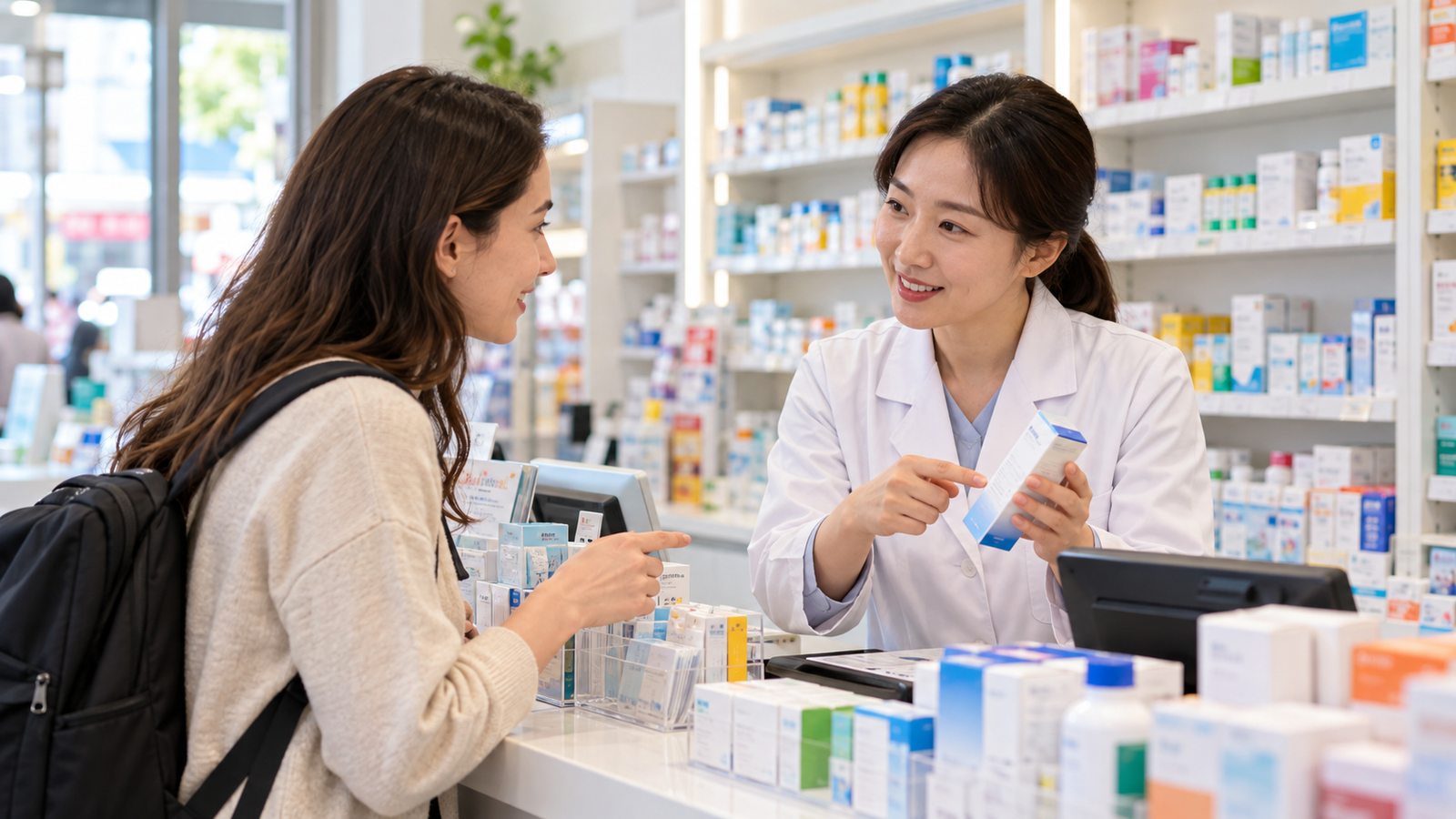
Getting sick is never part of the itinerary. But a headache, upset stomach, cold symptoms or forgotten medication can quickly turn a sightseeing day into a search for help.
Fortunately, pharmacies are easy to find in many Korean cities, and travelers can buy certain medicines without first visiting a doctor. Other medicines require a prescription, however, and convenience stores only carry a limited selection of designated medicines.
The system is fairly straightforward once you know the difference.
Here is what international visitors should know before walking into a pharmacy in South Korea.
How Do You Recognize a Pharmacy in Korea?
The Korean word for pharmacy is 약국 (yakguk).
You will see pharmacies throughout Korean cities, especially near subway stations, hospitals, clinics and busy commercial areas. They are often easy to identify by the Korean word 약국 displayed outside.
Opening hours vary considerably.
A pharmacy near a medical clinic may follow the clinic’s schedule, while another in a busy shopping district may remain open later. Pharmacies can also have different weekend and public-holiday hours.
Do not assume that a pharmacy shown on a map is currently open. Check its latest operating hours before making a special trip.
Can Tourists Buy Medicine at a Korean Pharmacy?
Yes. Being an international visitor does not prevent you from buying medicines that can legally be sold without a prescription.
The important distinction is between over-the-counter medicines and prescription medicines.
Under Korea’s pharmaceutical system, general medicines can be sold without a prescription, while prescription medicines are subject to different requirements.
This means you should not arrive with the assumption that a medicine available without a prescription in your home country will automatically have the same status in Korea.
If you are unsure, show the pharmacist the medicine name, active ingredient or a clear photograph of the packaging and ask what is available in Korea.
Do You Need a Prescription in Korea?
It depends on the medicine.
Some medicines are available directly from a pharmacy, while prescription medicines generally require a prescription from a doctor or dentist.
If you already take a prescription medicine regularly, planning before your trip is much safer than assuming you can replace it easily after arriving in Korea.
Bring enough of your regular medication for your journey when legally permitted, keep it in appropriate packaging, and carry useful medical documentation when necessary.
A photograph of your prescription or medication packaging can be helpful for communication, but it does not automatically function as a Korean prescription.
If you need medical evaluation or a new prescription while in Korea, you may need to visit a clinic or hospital before going to the pharmacy. Our guide to seeing a doctor in South Korea explains how travelers can find a medical facility, check language support and prepare for a consultation.
What Should You Tell the Pharmacist?
You do not need to know the Korean name of a medicine before entering a pharmacy.
Start by explaining the problem rather than guessing which product you need.
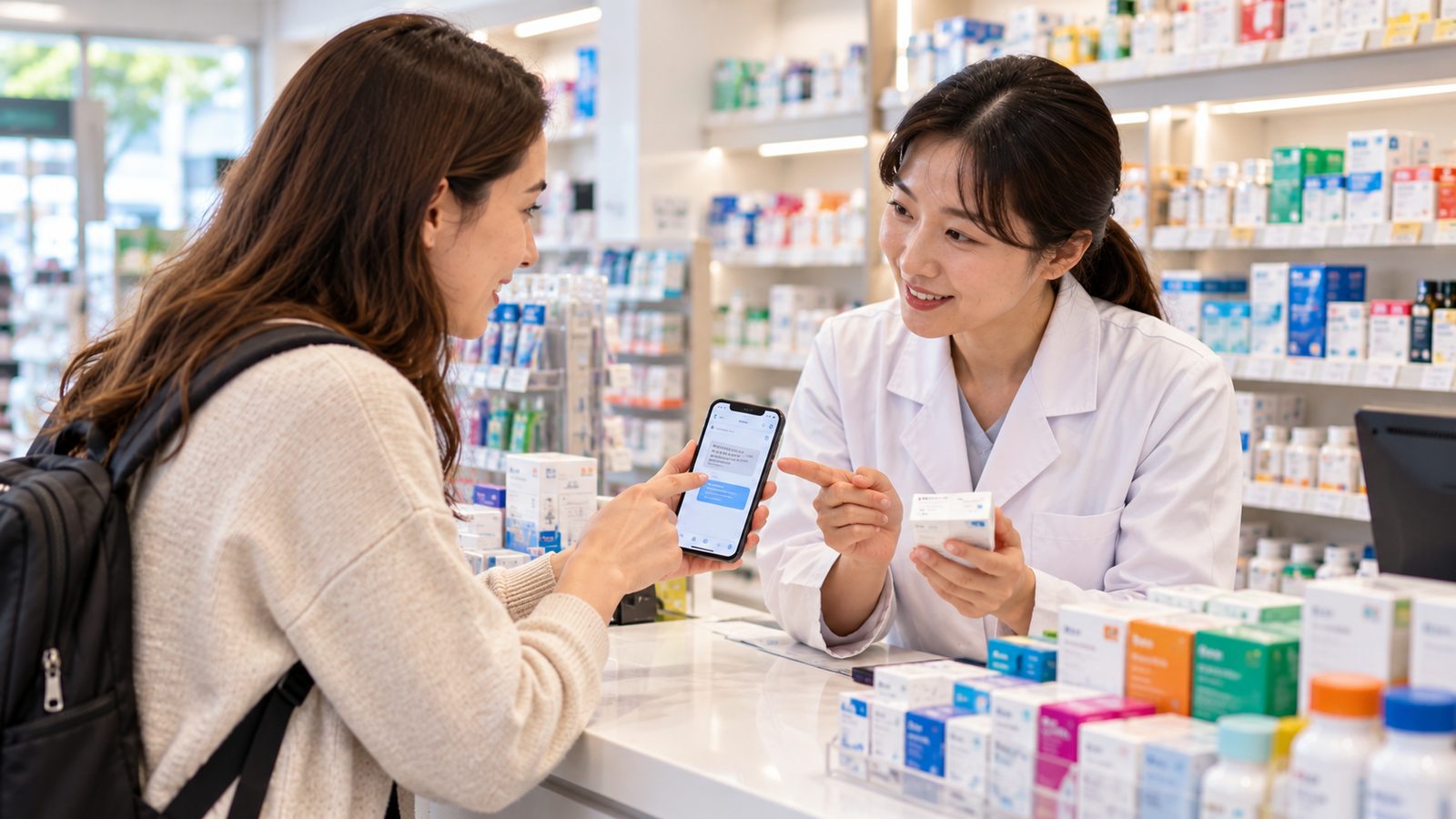
Useful information includes:
- your main symptom
- how long you have had it
- any medication allergies
- medicines you are already taking
- relevant medical conditions
- the active ingredient or medicine you normally use, if known
A translation app can make this much easier.
The Korea Tourism Organization specifically suggests using a translation app and, when useful, showing a photograph of the medicine you are looking for.
For medical information, however, automated translation should be treated as a communication aid rather than a guarantee that every detail has been translated correctly.
If something about dosage, ingredients, allergies or interactions is unclear, ask the pharmacist to confirm it.
Useful Korean Phrases at a Pharmacy
You can also keep a few short phrases on your phone.
약국이 어디예요?
Yakgugi eodiyeyo?
Where is a pharmacy?
처방전이 필요한가요?
Cheobangjeoni piryohan-gayo?
Do I need a prescription?
이 약은 어떻게 먹어요?
I yageun eotteoke meogeoyo?
How do I take this medicine?
알레르기가 있어요.
Allereugiga isseoyo.
I have an allergy.
이 성분이 들어 있나요?
I seongbuni deureo innayo?
Does this contain this ingredient?
Showing the Korean sentence on your phone may be easier than worrying about pronunciation.
For translation, maps and other useful phone tools, our guide to essential apps for traveling in Korea explains what to prepare before your trip.
Can You Buy Medicine at a Korean Convenience Store?
Yes, but only a limited selection.
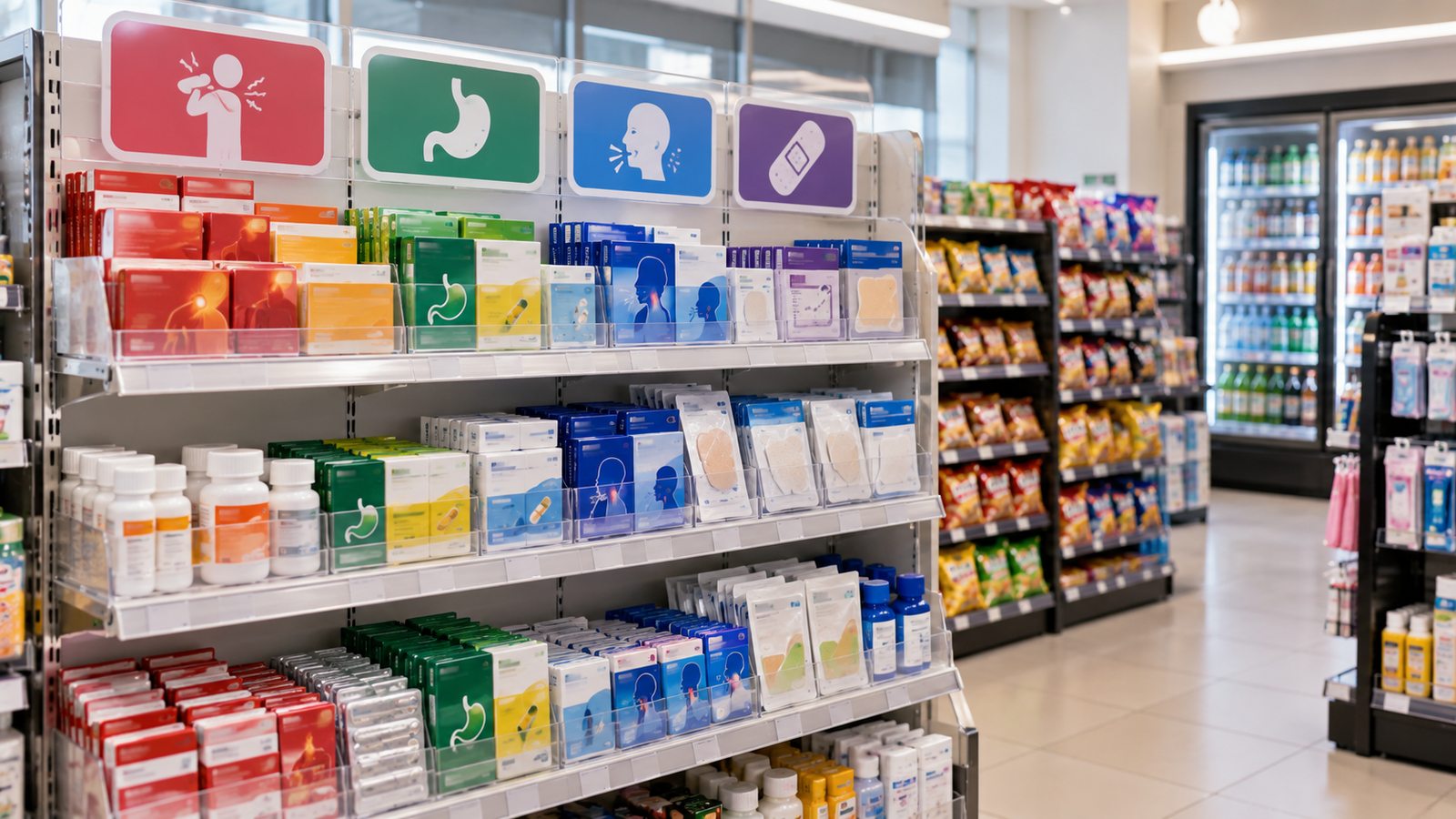
Korea has a specific system that allows registered stores meeting legal requirements to sell designated safe emergency medicines outside pharmacies.
As of March 31, 2026, the Ministry of Health and Welfare lists 13 designated products in categories including fever and pain relief, digestive medicine, cold medicine and pain-relief patches.
This does not mean a Korean convenience store functions like a pharmacy.
The range is deliberately limited, and participating stores must meet registration requirements. The rules also restrict a sale to one package of a designated product at a time and prohibit sales to children under 12.
So if you need advice, cannot identify the correct medicine, take other medications or have symptoms that concern you, a pharmacy is a better starting point than choosing a convenience-store product on your own.
What If You Need Medicine Late at Night?
This is worth checking before you actually need it.
The Korea Tourism Organization directs travelers to duty and late-night pharmacy information for pharmacies operating outside ordinary hours.
In Seoul, the city also operates a network of public late-night pharmacies.
For 2026, Seoul Metropolitan Government lists 39 public late-night pharmacies across all 25 districts, operating from 10 p.m. to 1 a.m. Twenty-eight of those locations are listed as operating year-round.
Schedules can differ by pharmacy, so always check the current listing before traveling to one.
The Korean Pharmaceutical Association also operates its Holiday Keeper Pharmacy service for locating pharmacies, including public late-night pharmacies. Its current website notes that the service should be used through the PC web version.
If your problem is a medical emergency rather than a routine need for medicine, do not spend time searching for an open pharmacy. Korea’s emergency numbers are 119 for fire and ambulance services and 112 for police. Our South Korea emergency numbers guide explains what international visitors should do in an emergency.
Pharmacy, Convenience Store or Hospital?
The right place depends on what you need.
| Situation | Practical starting point |
|---|---|
| Minor symptom and you want pharmacist guidance | Pharmacy |
| You need an OTC medicine | Pharmacy |
| You need a prescription medicine | Clinic or hospital, then pharmacy when a prescription is required |
| You need one of Korea’s designated emergency medicines outside pharmacy hours | Registered convenience store, if the appropriate product is available |
| Symptoms are severe or rapidly worsening | Medical care rather than self-treatment |
| Immediate emergency | Call 119 or 112 as appropriate |
A pharmacy is useful for medicines and medication guidance, but it is not a replacement for medical diagnosis or emergency treatment.
Are Korean Pharmacies the Same as Olive Young?
No.
This distinction has become more important as Korean pharmacies have attracted attention from international beauty shoppers.
Olive Young is primarily a health-and-beauty retailer. A pharmacy is part of Korea’s pharmaceutical system and is staffed to handle medicines and medication-related guidance.
At the same time, Korean pharmacies may sell products beyond conventional medicines, including supplements, cosmetics and skincare-related products.
That is why the shelves can sometimes be confusing to an international visitor.
A product sold inside a pharmacy is not automatically a prescription medicine, an OTC medicine or a cosmetic simply because of where it is displayed.
If you are visiting a Korean pharmacy specifically for skincare, our Korean pharmacy skincare guide explains how cosmetics, dermocosmetics and medicines should not be treated as interchangeable categories.
Why Are Korean Pharmacies Getting More Attention from Travelers?
Pharmacies have recently become more visible as part of Korea’s wider beauty and wellness travel scene.
In September 2026, the Korea Tourism Organization published a dedicated guide to “K-Pharmacy Shopping,” highlighting pharmacies in visitor-heavy areas such as Hongdae, Seongsu and Jonggak.
Some newer pharmacies combine conventional medicine services with supplements, dermocosmetics, multilingual assistance and tourist-oriented shopping. If shopping benefits are your main reason for visiting, our Discover K-Pharmacy guide explains the current tourist program, including participating-store discounts and immediate tax-refund checks for eligible purchases.
That trend can be interesting to explore, but it should not blur the basic distinction between shopping and healthcare.
A viral product recommendation is not a substitute for checking what a product actually is, how it should be used and whether it is appropriate for you.
What Should You Bring If You Take Regular Medication?
Prepare before departure if you rely on medication regularly.
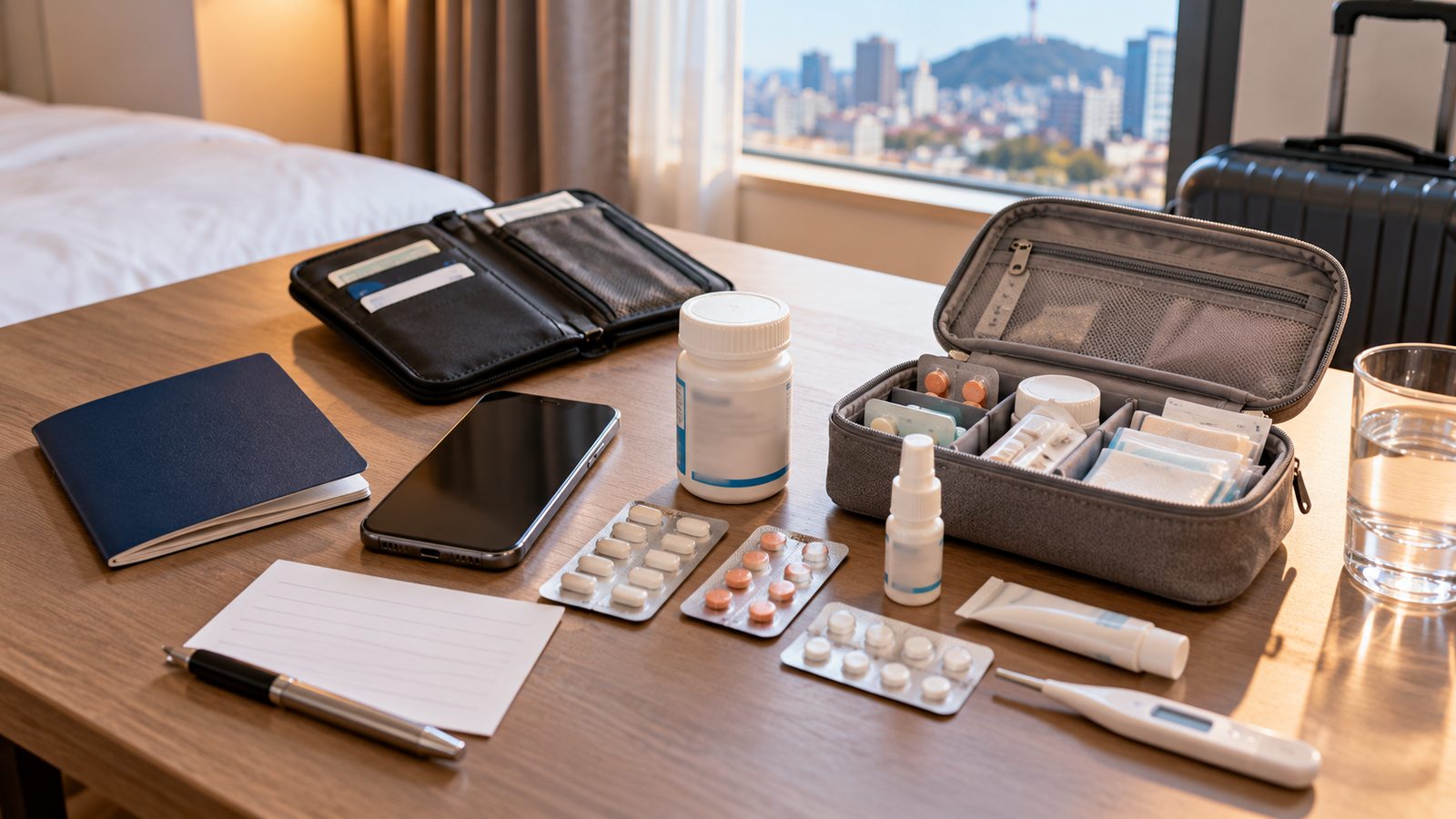
Keep a record of:
- the medicine name
- active ingredient
- dosage
- why you take it
- known allergies
- your prescribing doctor’s information when appropriate
Depending on the medicine, destination rules and quantity, additional documentation may be necessary when bringing medication into Korea.
Do not assume that a brand sold in your country will exist under the same name in Korea.
The active ingredient is often more useful than the brand name when explaining what you normally take.
For complex medications or an ongoing condition, the Korea Tourism Organization recommends preparing relevant medical records and an English prescription before travel.
A Simple Pharmacy Plan for Your Korea Trip
Most travelers will never need to think much about pharmacies during their trip.
Still, a little preparation can save time if you become sick.
Save your accommodation address, keep your medication information accessible, have a translation tool ready and check where the nearest pharmacy is after you arrive.
If you take regular medication, prepare that information before leaving home rather than trying to reconstruct it while feeling unwell abroad.
And remember the most important distinction:
A pharmacy can help with medicines.
A clinic or hospital provides medical diagnosis and treatment.
An emergency requires emergency help.
Knowing which one you need is more useful than memorizing a list of Korean medicine brands.
Frequently Asked Questions
Can foreigners buy medicine at pharmacies in South Korea?
Yes. International visitors can purchase medicines that are legally available without a prescription. Prescription medicines are subject to prescription requirements.
Can I buy antibiotics without a prescription in Korea?
Do not assume a medicine is available without a prescription because it is available that way in another country. Ask a Korean pharmacist or medical professional about the specific medicine you need. Prescription medicines generally require an appropriate prescription.
Can I buy painkillers or cold medicine at a convenience store?
Registered stores can sell a limited list of designated safe emergency medicines. The Ministry of Health and Welfare currently lists 13 designated products across several categories. Convenience stores do not carry the full range available at pharmacies.
How can I find an open pharmacy at night in Seoul?
Check current late-night pharmacy information before traveling. Seoul operates public late-night pharmacies across its 25 districts, with designated locations operating from 10 p.m. to 1 a.m. Schedules vary by location.
What if I cannot speak Korean at a pharmacy?
Use a translation app and show the pharmacist information about your symptoms, allergies and current medicines. A photograph of your usual medication or its active ingredient can also help.
Should I go to a pharmacy or a hospital?
For minor medication needs, a pharmacy may be a reasonable starting point. If you need a diagnosis, prescription treatment, have severe or worsening symptoms, or are concerned about your condition, seek appropriate medical care. For an immediate emergency, call the appropriate Korean emergency service.
Sources & Further Reading
Korea Tourism Organization — Pharmacy Guide in Korea
Ministry of Health and Welfare — Safe Emergency Medicines Sold Outside Pharmacies
Seoul Metropolitan Government — Public Late-Night Pharmacies 2026
Korean Pharmaceutical Association — Holiday Keeper Pharmacy
Korea Tourism Organization — K-Pharmacy Shopping, September 2026
Korea Pharmaceutical Affairs Act — current law effective September 11, 2026