
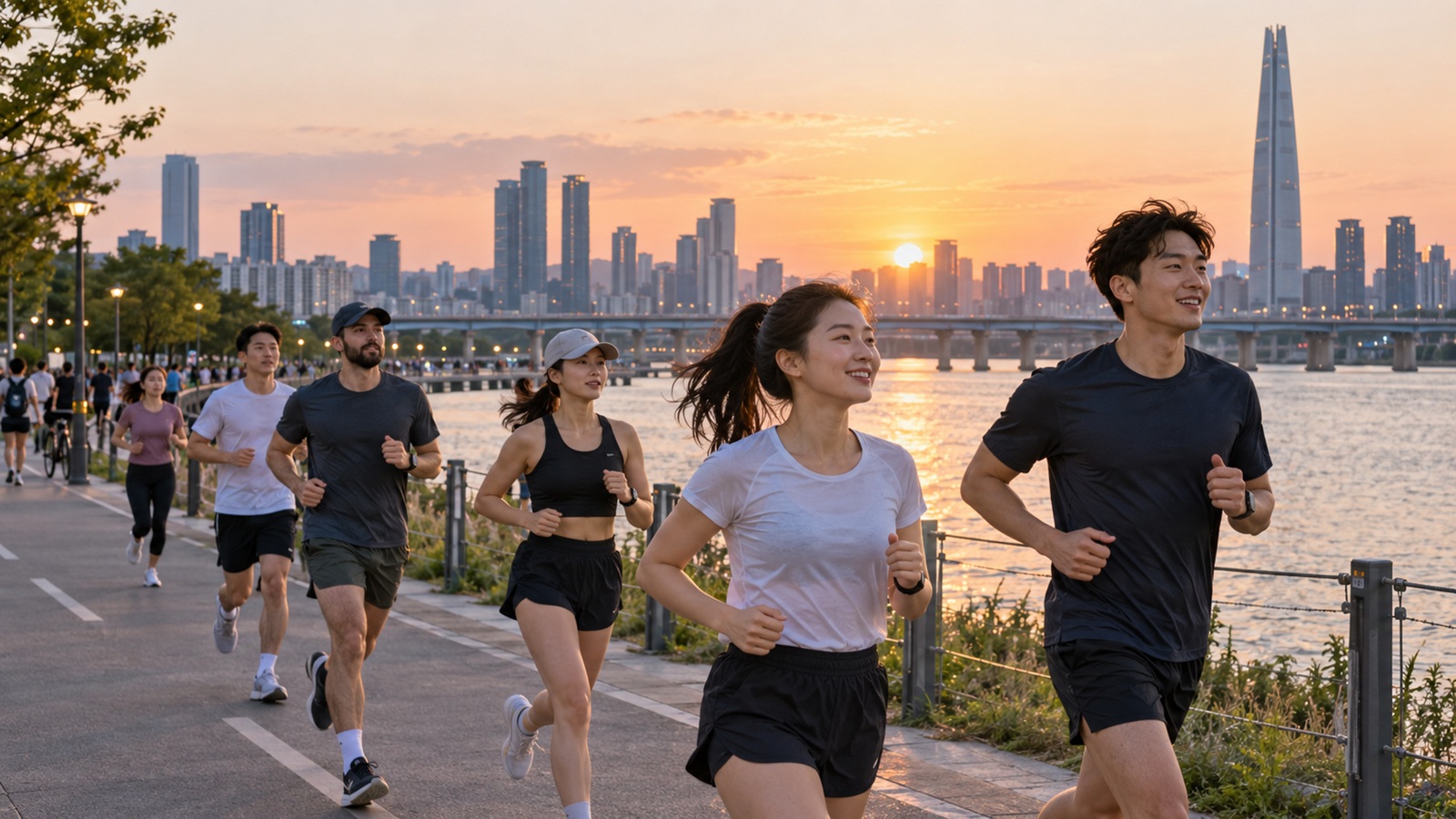
Running has become much more visible in Seoul in recent years. On an evening beside the Han River, it is common to see solo runners, small groups and organized running crews sharing the riverside paths.
For travelers, that creates an unusually simple way to experience the city: pack your running shoes, take the subway to a good starting point and see a different side of Seoul on foot.
You do not need to enter a race or join a club. From flat riverside paths to downtown routes, Seoul has plenty of options for fitting a run into a trip.
Is Seoul a Good City for Running?
Yes — if you choose the right part of the city.
Running through crowded commercial streets can mean traffic lights, pedestrians and constant stops. Seoul’s rivers, streams and large parks are much easier.
The Hangang, or Han River, is particularly important to the city’s running culture. Large riverside parks such as Yeouido and Banpo give runners space away from normal road traffic, while subway access makes them practical even for visitors staying elsewhere.
The trend has become visible enough for the Seoul Metropolitan Government to operate the 7979 Seoul Running Crew, with organized sessions in areas including Gwanghwamun, Banpo and Yeouido.
1. Yeouido and the Han River: The Best First Run
If you only have time for one run in Seoul, Yeouido is an excellent place to start.
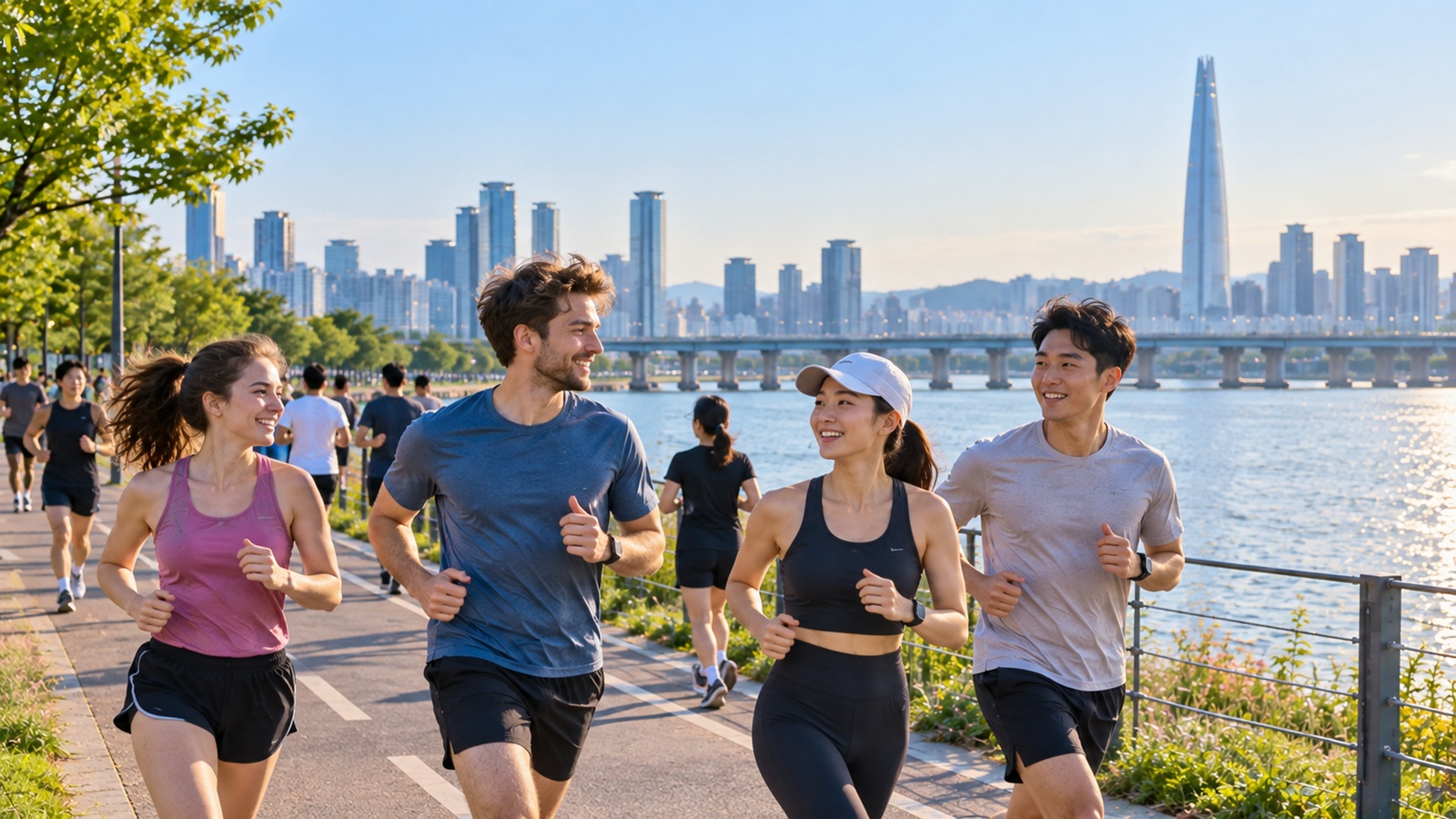
Yeouido sits beside the Han River and combines flat running paths, open river views and easy subway access. You can keep a run short or continue farther along the riverside depending on your distance.
There is another reason Yeouido stands out: Yeouinaru Station has a dedicated Runner Station.
The facility was created as a base for Han River runners and includes lockers, changing facilities and running information. That makes it particularly useful for travelers who want to arrive by subway rather than start directly from their hotel.
Take Line 5 to Yeouinaru Station and you can transition from Seoul’s subway system to the riverside running environment within minutes.
For a first-time visitor, this is probably the easiest introduction to Seoul’s modern running culture.
2. Banpo Hangang Park: Run With a Seoul Skyline
Banpo offers a different Han River experience.
The riverside setting makes it suitable for relatively uninterrupted running, while bridges, city lights and the surrounding skyline give the area a more urban feel.
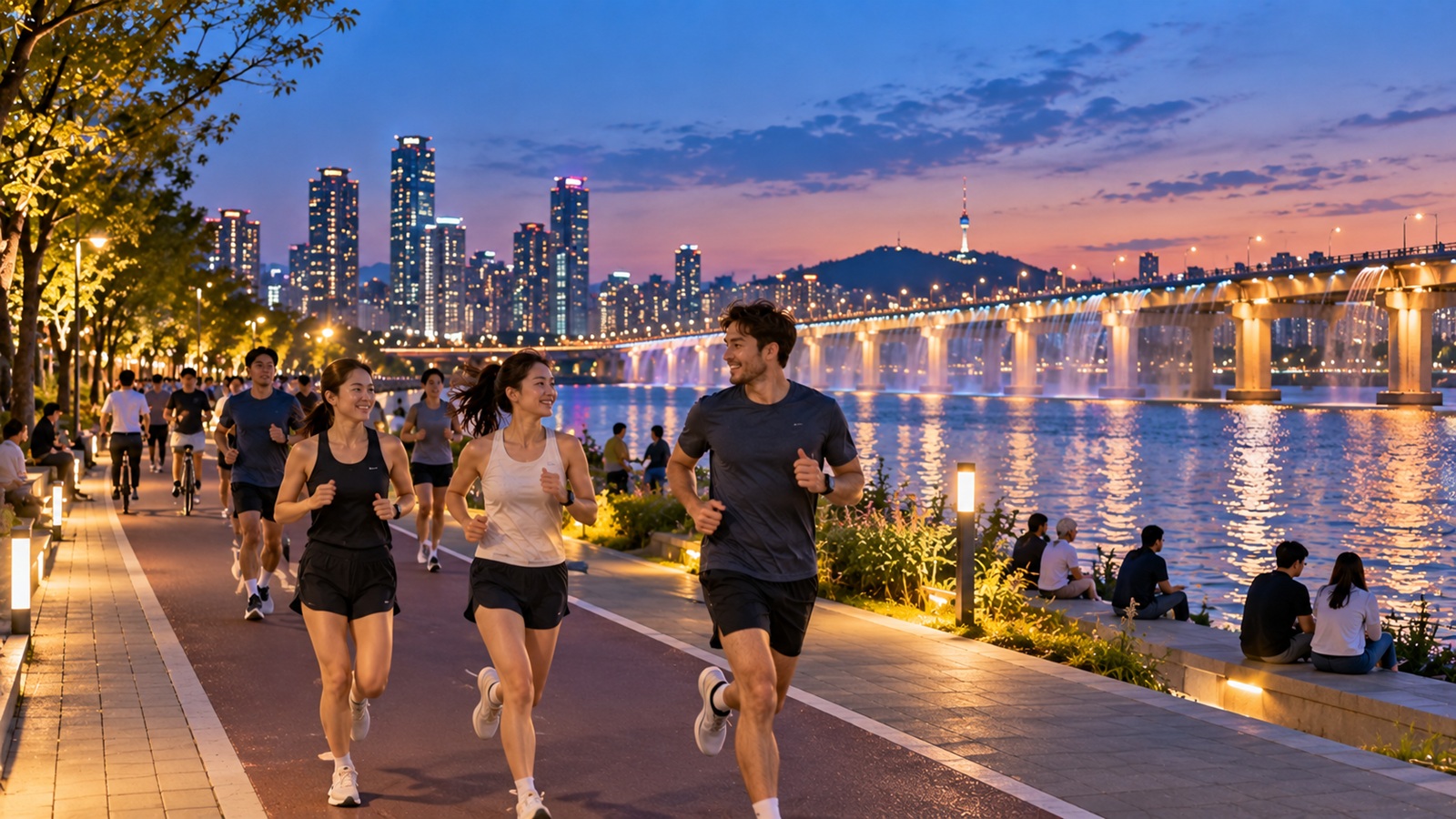
It is particularly appealing around the transition from late afternoon to evening.
However, popular areas of the Hangang can become busy when the weather is good. Runners should expect to share the park with walkers, cyclists, families and other visitors.
If you would rather explore the riverside on two wheels, our Seoul Bike (Ddareungi) guide explains how visitors can rent and return a public bicycle in Seoul.
Rather than treating the riverside as a racecourse, keep a predictable line, pay attention around intersections and use the appropriate pedestrian or running space where marked.
3. Gwanghwamun: Running Through Central Seoul
Not every Seoul run needs to be beside the river.
Gwanghwamun offers a much more central-city experience, surrounded by some of Seoul’s best-known historic and civic spaces.
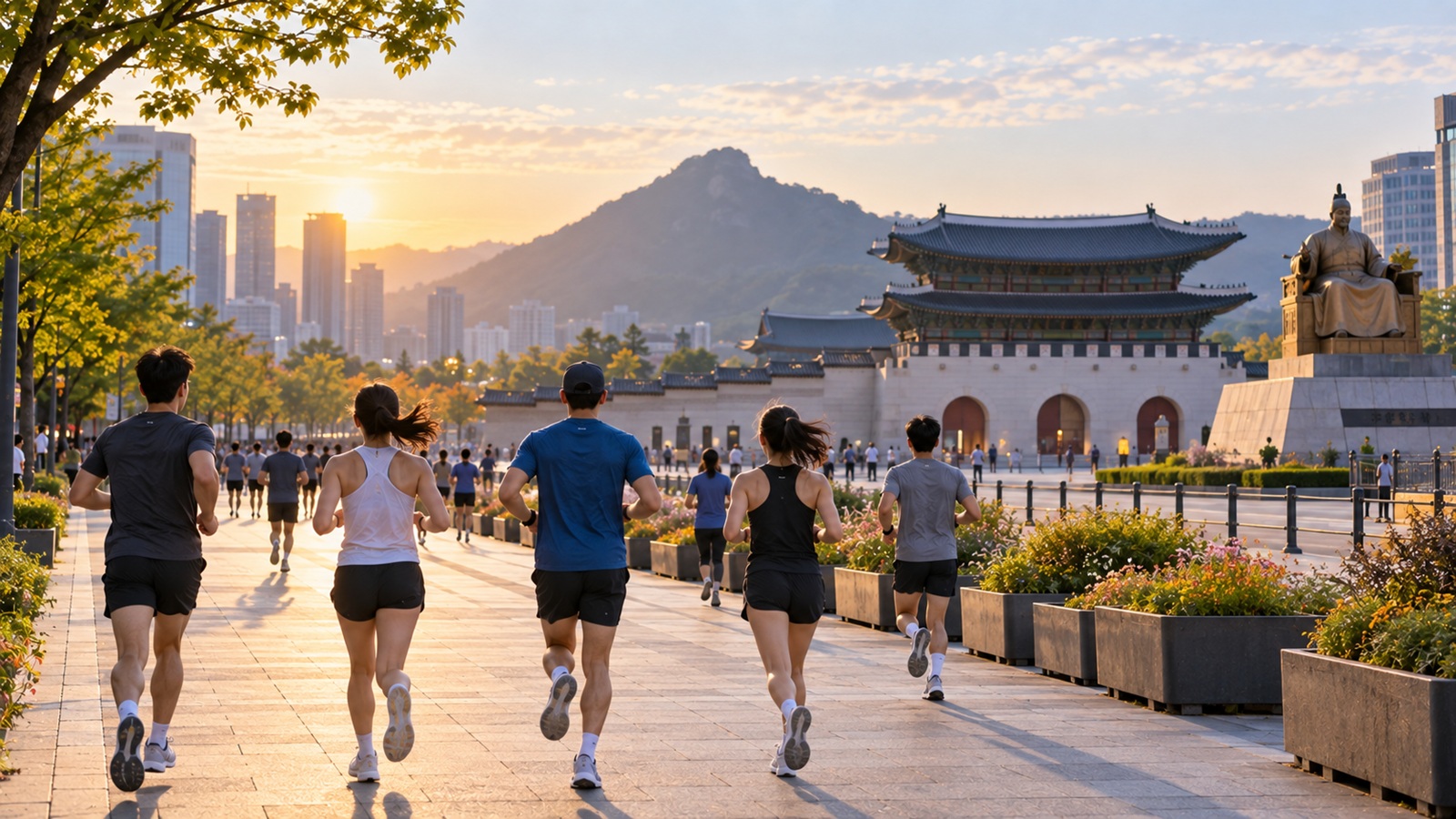
The area is also one of the locations used by Seoul’s official 7979 Seoul Running Crew program.
For travelers, the attraction is less about uninterrupted long-distance running and more about combining exercise with a sense of place.
Expect more crossings and pedestrian activity than beside the Han River. An early run can therefore be more comfortable than attempting the same route during the busiest sightseeing hours.
If your Seoul itinerary already includes Gyeongbokgung Palace, this part of the city is especially easy to combine with sightseeing.
4. Cheonggyecheon: A Short Urban Run
Cheonggyecheon offers another option for travelers staying in central Seoul.
The restored stream runs below much of the surrounding street level, creating a different atmosphere from the busy roads above.
It works particularly well for a shorter morning jog rather than a fast workout during crowded periods.
Because the walkway is also popular with pedestrians, runners should slow down when necessary and avoid treating narrow or busy sections as dedicated training lanes.
For visitors staying around Jongno or central Seoul, however, it can be one of the simplest places to fit a run into the beginning of the day.
If you would rather explore the stream at a walking pace, our Cheonggyecheon Stream guide covers the best starting point, a first-timer’s walking route and nearby attractions.
Seoul’s Runner Station: What Visitors Should Know
One of the most distinctive signs of Seoul’s running boom is the Runner Station at Yeouinaru Station.
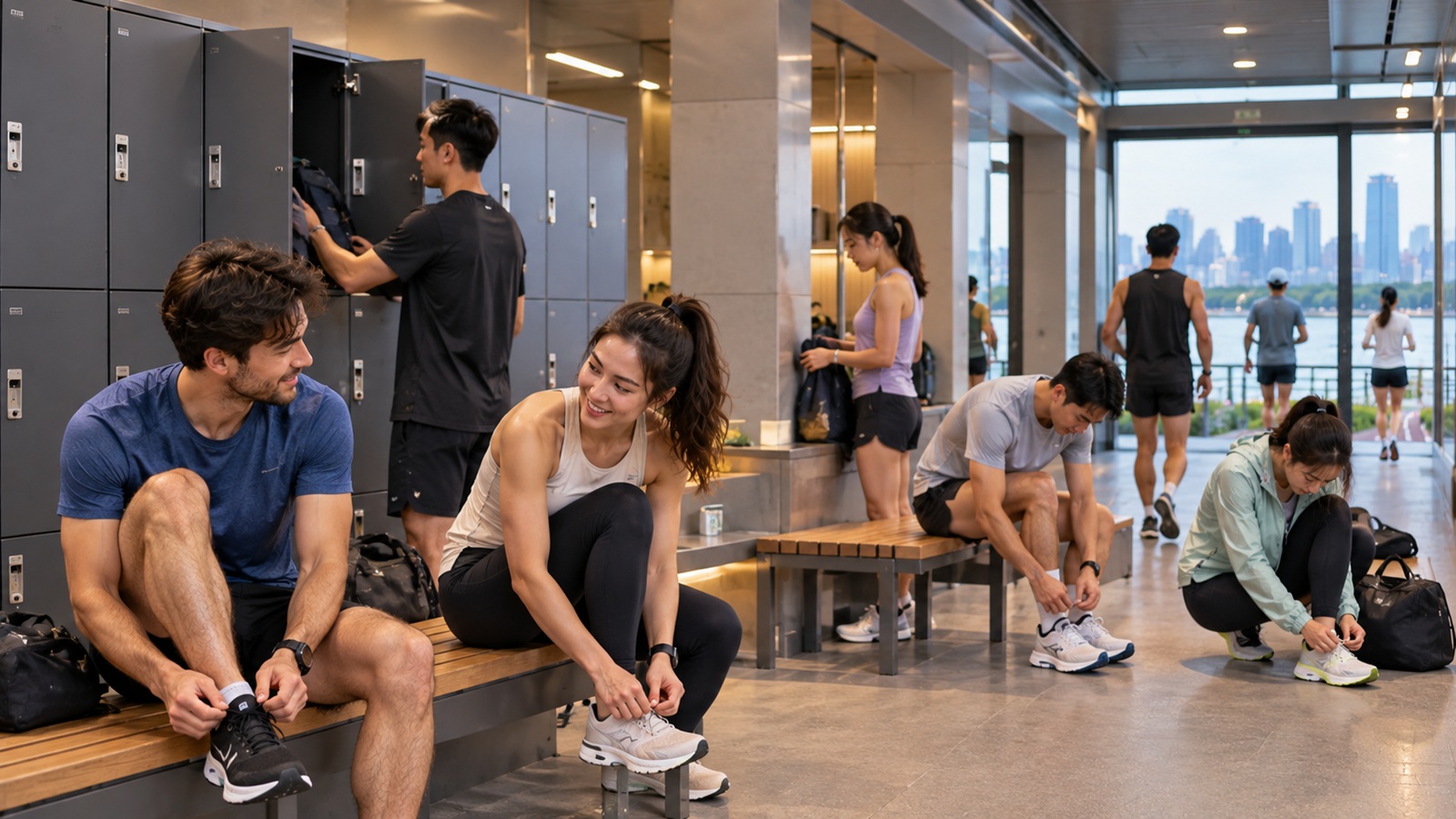
According to Seoul’s official tourism information, the facility includes lockers, changing rooms, powder rooms, shoe sanitizers and running information displays.
That solves a practical problem for travelers.
Instead of wearing running clothes across the city or returning immediately to your accommodation, you can use public transportation to reach one of Seoul’s major running areas and prepare there.
Facilities and operating conditions can change, so check current information before relying on a locker or changing facility for an important schedule.
When Is the Best Time to Run in Seoul?
Spring and autumn are generally the easiest seasons for outdoor running because temperatures tend to be more comfortable.
Summer is a different experience. Seoul can become hot and humid, so early morning or later evening runs are usually more practical than running during the hottest part of the day.
Winter running is possible, but cold temperatures, wind and occasional icy surfaces require more preparation.
Weather is not the only thing to check.
Air quality can vary in Seoul. Before a longer outdoor workout, particularly on a day when conditions look hazy, check current air-quality information rather than assuming conditions are suitable.
Morning or Night?
Both can work, but they offer very different versions of Seoul.
An early-morning run generally means fewer people and a calmer route. It can also fit neatly before a full sightseeing schedule.
An evening run along the Han River shows why running has become part of contemporary Seoul life. The skyline lights up, parks become social spaces and local runners appear after work.
If you are unfamiliar with a route, however, running it for the first time in daylight is the simpler option.
Running Etiquette in Seoul
Running outdoors is a normal part of everyday life in Seoul, particularly around the Han River and major parks.
The main issue is sharing space.
Keep to the appropriate path where pedestrian and bicycle areas are separated, avoid sudden direction changes, and do not run several people abreast when the path is crowded.
Busy parks are public spaces first and training spaces second.
That simple approach will take care of most running etiquette in Seoul.
What Should You Bring?
For a normal recreational run, you do not need specialized equipment beyond what you would use at home.
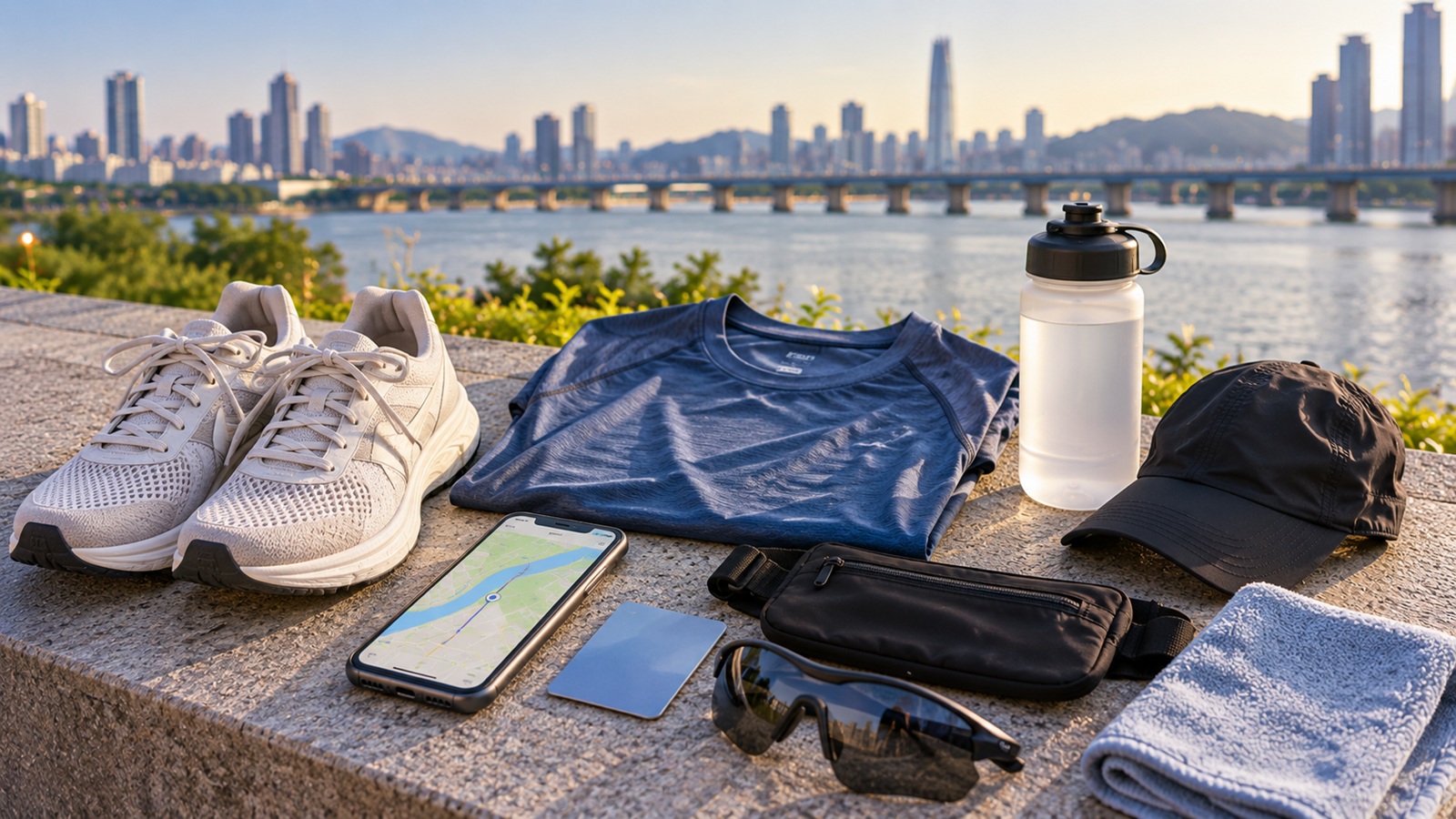
Comfortable running shoes, weather-appropriate clothing and a small amount of water are enough for many shorter runs.
A transit card is also surprisingly useful. Seoul’s subway makes it possible to travel to a running area, complete your route and return without planning an entire day around the workout.
A phone is helpful for navigation, but download or review your route before starting rather than depending entirely on directions while moving.
Can Tourists Join a Running Crew in Seoul?
Running crews have become increasingly visible in Seoul, and the city itself operates the 7979 Seoul Running Crew.
The 2026 city program runs on Thursday evenings from April through October, with courses for different ability levels in Gwanghwamun, Banpo and Yeouido.
However, registration procedures, eligibility and schedules can change.
If joining an organized run is important to your trip, check the current official registration information before arriving rather than assuming that walk-in participation or English-language registration will always be available.
You do not need a crew to experience Seoul’s running culture. Simply running beside the Han River on a weekday evening will put you in the middle of it.
Running vs. Hiking in Seoul
Visitors sometimes overlook how different these two experiences are.
Seoul is surrounded by mountains, making hiking one of the city’s most accessible outdoor activities. Running, however, offers a much easier option when you only have an hour or two.
A morning run along the Han River can fit into a normal sightseeing day without becoming a separate excursion.
If you want elevation, mountain scenery and established trails, hiking is the better choice. If you want to exercise while experiencing everyday urban Seoul, running may fit your itinerary better.
A Simple First Run in Seoul
For most first-time visitors, keep it easy.
Take the subway to Yeouinaru, check out the Runner Station, head toward the Han River and choose a comfortable out-and-back distance.
Do not worry about finding a famous route or completing a specific number of kilometers.
The appeal is simpler than that.
For an hour, Seoul stops being a list of attractions and becomes the city around you — commuters heading home, cyclists following the river and local runners settling into their evening pace.
That is one of the easiest ways to experience everyday Seoul while traveling.
FAQ
Where is the best place to run in Seoul for a first-time visitor?
Yeouido and the Han River are among the easiest choices because the area offers relatively flat riverside running, subway access and the Runner Station at Yeouinaru Station.
Can I run along the Han River in Seoul?
Yes. The riverside parks and paths along the Hangang are widely used for walking, cycling and running. Pay attention to signs and stay in the appropriate space where paths are separated.
Is running common in Seoul?
Yes. Recreational running and running crews have become increasingly visible, especially around the Han River. Seoul also operates its own organized running program.
Can tourists use the Yeouinaru Runner Station?
The station is designed as a base for Han River runners and provides facilities including lockers and changing spaces. Check current operating information before your visit because facility conditions can change.
What is the best season for running in Seoul?
Spring and autumn generally offer the most comfortable conditions. Summer can be hot and humid, while winter requires preparation for cold weather and potentially slippery surfaces.
Should I run on Seoul streets or in parks?
For visitors, riverside paths, streams and parks are usually easier than busy commercial streets because they involve fewer traffic lights and less pedestrian congestion.
Sources & Further Reading
Seoul Metropolitan Government — 2026 7979 Seoul Running Crew
Visit Seoul — Yeouinaru Station Runner Station, updated September 2026