

A trip to South Korea can be surprisingly affordable or become expensive very quickly. The difference often has less to do with the country itself than with three choices: where you stay, how often you take taxis, and how much you spend on shopping and paid experiences.
That is why a single “average cost of a Korea trip” is not particularly useful.
A solo traveler staying in a simple room and using Seoul’s subway will have a very different budget from a couple staying in a central hotel, taking taxis at night and traveling between Seoul and Busan.
This guide takes a different approach. Instead of giving you one unrealistic average, it helps you build a Korea travel budget around the way you actually plan to travel.
Use the calculator below first, then use the cost breakdown to see where your money is likely to go — and where you can save.
Korea Trip Budget Calculator
Use the calculator to estimate your trip based on:
- number of travelers
- number of nights
- accommodation cost
- daily food budget
- local transportation
- intercity transportation
- attractions and activities
- shopping
- airfare, if you want to include it
Tip: Enter the price of the hotel you are actually considering rather than relying on an online “average hotel price.” Accommodation rates in Seoul can change substantially by neighborhood, season, weekday and booking date.
Your result should be treated as a planning estimate, not a guaranteed trip price.
The pre-filled numbers are examples only — they are not average prices.
Replace them with your own expected costs for a more useful estimate.
Korea Trip Budget Calculator
Enter your expected costs in Korean won (KRW). Use your actual hotel and flight prices when possible.
This calculator is for trip planning only. Actual prices vary by travel date, accommodation, route, exchange rate and personal spending.
Not sure what to enter? The sections below explain how to estimate accommodation, food, transportation, activities and shopping without relying on a misleading one-size-fits-all daily budget.
What Should You Include in a South Korea Travel Budget?
For most international visitors, a useful Korea trip budget has seven major categories:
- flights
- accommodation
- food and drinks
- local transportation
- transportation between cities
- attractions and experiences
- shopping
Flights are best treated separately because the cost depends heavily on where you are traveling from.
Accommodation is usually the largest predictable expense after airfare, while shopping can become the largest optional expense — especially for travelers planning to buy Korean skincare, cosmetics, fashion or souvenirs.
Accommodation: Use Your Actual Hotel Price
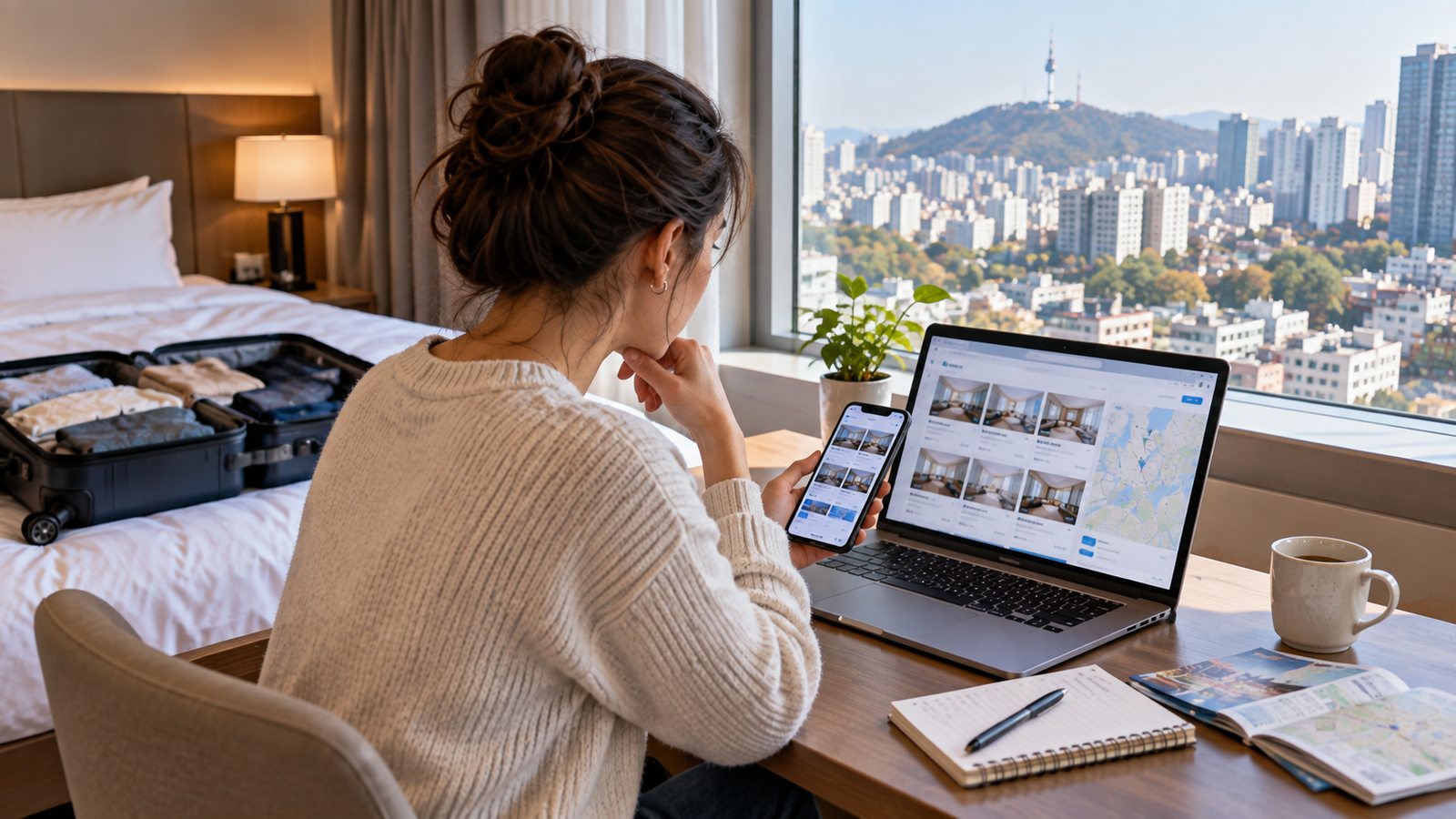
Accommodation is one of the easiest places to make a Korea travel budget inaccurate.
A hotel in central Myeongdong is not directly comparable with a guesthouse outside the main tourist districts, and weekend, holiday and peak-season rates can be very different from weekday prices.
Instead of assuming that a hotel in Seoul “costs” a particular amount, search for accommodation for your actual dates and enter the nightly room price into the calculator.
Also remember that hotel prices are normally charged per room rather than per person.
That makes a major difference for couples or friends sharing a room.
For example, a ₩140,000 room costs ₩140,000 per night for a solo traveler, but only ₩70,000 per person when two people share the room.
Your neighborhood choice also affects transportation and convenience. Paying slightly more for a well-connected area can sometimes reduce taxi use and travel time.
If you have not chosen an area yet, see our guide to where to stay in Seoul before setting your accommodation budget. Once you know the neighborhood, compare the full booking trade-offs in our Seoul hotel vs Airbnb guide rather than comparing nightly rates alone. Some designated tourist accommodation may qualify for a hotel VAT refund, so check our Korea hotel tax refund guide before treating the full room price as your final cost.
Food: Your Eating Style Matters More Than a Single Daily Average
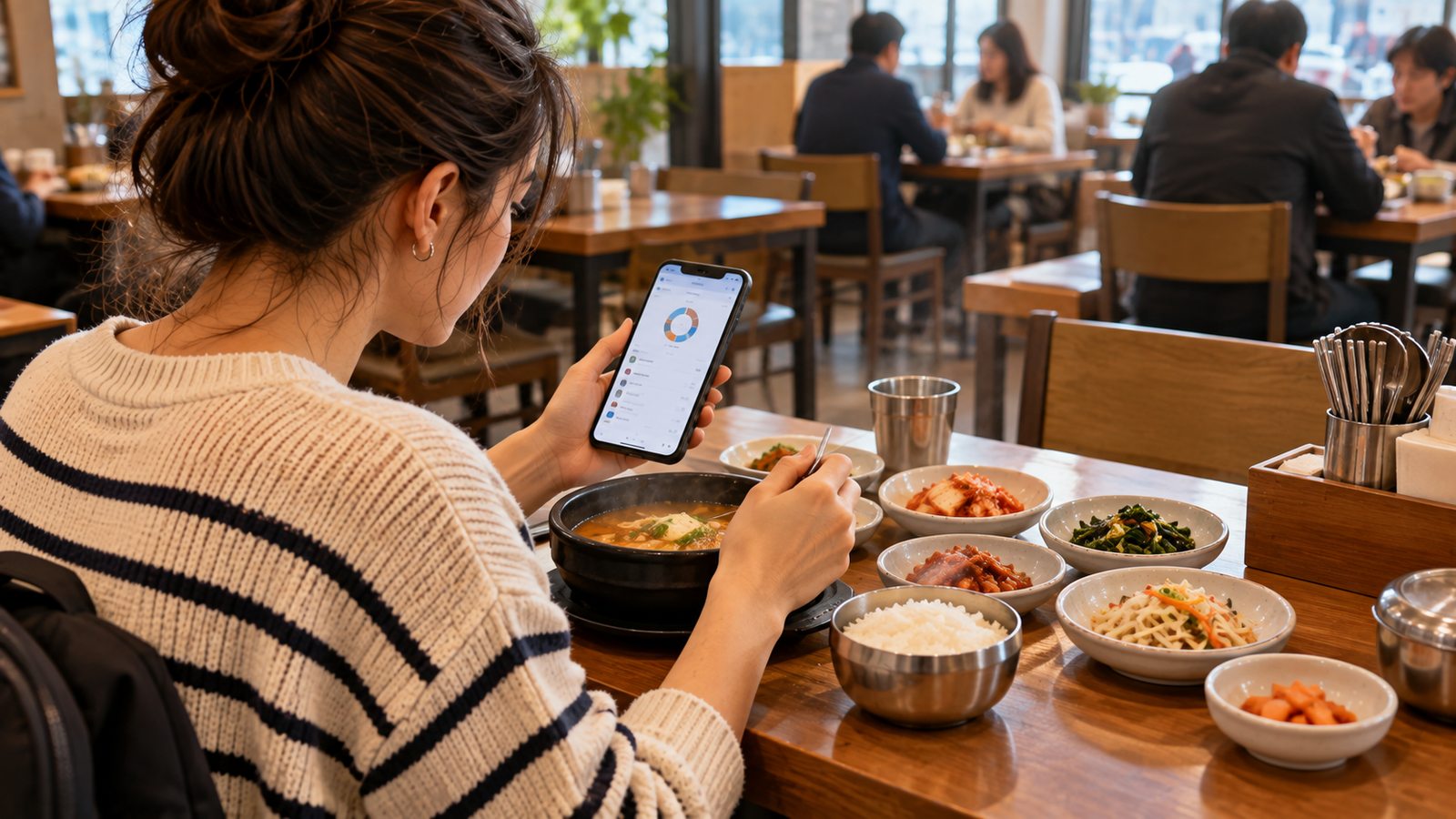
South Korea works well for several different food budgets.
A traveler can combine convenience-store breakfasts, market snacks and casual Korean meals, while another traveler may visit cafés several times a day, order Korean barbecue and book higher-end restaurants.
That makes one universal “daily Korean food budget” misleading.
A better approach is to think about your normal day:
Breakfast
Will breakfast be included with your accommodation, bought at a convenience store, or eaten at a café?
Lunch
Are you likely to eat a casual Korean meal, street food or a sit-down restaurant meal?
Dinner
Dinner is often where the budget changes most. Korean barbecue, seafood, drinks and specialty restaurants can cost considerably more than a simple local meal.
Coffee and snacks
Do not forget cafés. One or two drinks and desserts each day can become a meaningful part of a week-long budget.
Enter a realistic daily food allowance per person into the calculator rather than using somebody else’s travel style as your budget.
Local Transportation: Seoul Can Be Relatively Inexpensive by Subway
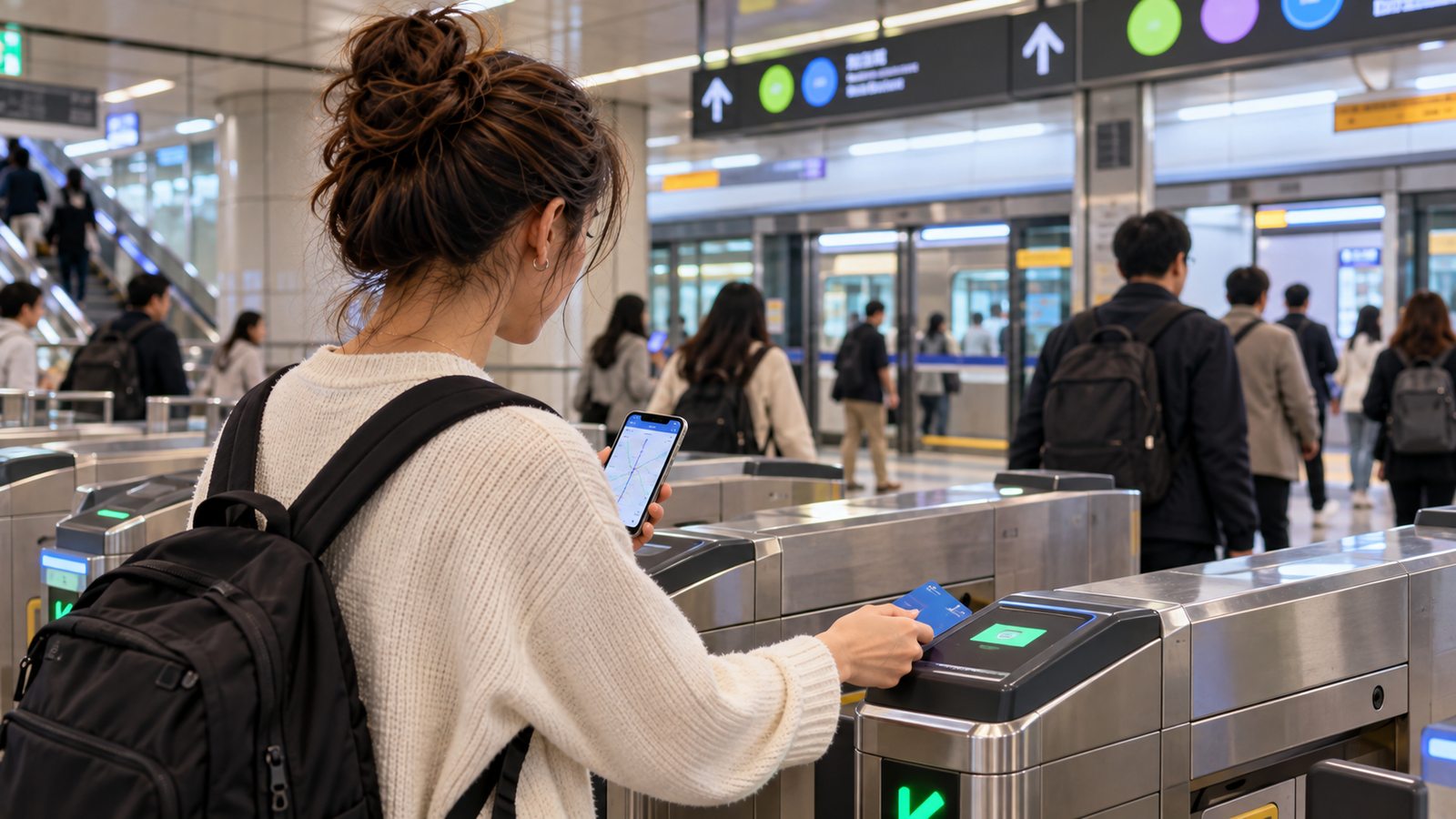
Public transportation is one of the more predictable parts of a Seoul travel budget. If you need the practical basics first, see our Seoul subway and T-money guide. If your itinerary includes Jeju, budget that section separately: our Jeju rental car vs bus vs taxi comparison includes a calculator for comparing the total transport cost by group size and trip length.
The adult base subway fare with a transportation card is ₩1,550. A single-ride ticket costs more, and longer journeys can add distance-based charges.
For visitors making many eligible journeys within Seoul, short-term Climate Card passes can also be worth comparing with pay-as-you-go transportation. Use our T-money vs Climate Card vs WOWPASS comparison to see which option better fits your itinerary.
But do not automatically buy an unlimited pass simply because it sounds convenient.
The better question is:
How many eligible trips will you actually take each day?
If your itinerary concentrates several attractions in one neighborhood and you walk between them, pay-as-you-go transportation may be perfectly reasonable.
If you are repeatedly crossing Seoul, a pass can become more attractive.
Taxis: Convenience Can Change Your Budget Quickly
Taxis are useful in Korea, particularly late at night, when traveling with luggage or when a destination is inconvenient by public transportation.
But frequent taxi use changes the economics of a trip.
The standard taxi base fare in major areas including Seoul starts at ₩4,800, with additional distance charges. Late-night surcharges can also apply.
That does not mean you should avoid taxis.
Instead, treat them as a convenience decision.
A practical approach for many travelers is:
subway and buses for routine sightseeing + taxis when they save meaningful time or solve a luggage/late-night problem.
This gives you much of the convenience without building your entire transportation budget around taxis.
Airport Transportation Is a Separate Decision
Do not hide your airport transfer inside a generic daily transportation estimate.
Travelers arriving at Incheon International Airport have several choices, including rail, airport buses and taxis.
The cheapest option is not automatically the best one.
A traveler staying near a convenient rail connection may prefer the train, while someone carrying several suitcases to a hotel far from a station may decide that a direct airport bus or taxi is worth paying more for.
For that reason, enter your expected airport transportation cost separately when building your budget. Before choosing a transfer, compare the practical options in our Incheon Airport to Seoul guide.
Seoul Plus Busan Costs More Than Seoul Only
A Seoul-only trip and a Seoul-and-Busan trip should not use the same transportation budget.
Adding another city can mean:
- intercity train or bus tickets
- additional local transportation
- transfers between stations and accommodation
- possible luggage storage
- different hotel prices
If Busan is part of your itinerary, add your actual intercity ticket cost separately instead of increasing your generic “transportation per day” estimate. Before setting that amount, our KTX vs express bus from Seoul to Busan comparison can help you compare ticket cost, door-to-door time and arrival convenience. If you are considering a rail pass, use our KORAIL Pass savings calculator to compare the pass price with the eligible train tickets you actually plan to buy.
This makes the calculator much more useful for comparing two itineraries:
7 days in Seoul
versus
5 days in Seoul + 2 days in Busan
Sometimes the second itinerary is absolutely worth the additional expense. The important point is knowing what that decision adds to the total before you book.
Attractions in Korea Are Not Always the Biggest Expense
Visitors sometimes overestimate how much they need for sightseeing admission.
Many parks, neighborhoods, markets, temples, walking areas and public spaces can be explored for little or no admission cost.
Even major historical attractions can be relatively inexpensive. Standard adult admission to Gyeongbokgung Palace, for example, is ₩3,000.
Your activities budget tends to rise when you add commercial experiences such as:
- theme parks
- observation decks
- performances
- guided tours
- DMZ tours
- cooking classes
- K-pop experiences
- beauty services
- day tours outside Seoul
Rather than assigning a large generic sightseeing budget, list the paid experiences you actually want.
This is also where attraction passes should be evaluated by mathematics rather than marketing: compare the pass price with the attractions you genuinely plan to visit. If you are considering Seoul’s main tourist pass, use our Discover Seoul Pass savings calculator before you buy.
Shopping Deserves Its Own Budget

Shopping is optional, which is exactly why it should not be hidden inside your basic daily spending estimate.
For some visitors, shopping may mean a few snacks and souvenirs.
For others, Korean skincare, cosmetics, fashion, character goods and food products can become one of the largest expenses of the entire trip.
Set a shopping limit before arriving if controlling your total budget matters.
You can then separate:
Essential trip cost — accommodation, food and transportation
from
Discretionary trip cost — shopping and optional experiences.
This distinction makes it much easier to see whether your Korea trip itself is expensive or whether your personal shopping plans are increasing the total.
Example: How to Build a 7-Day Korea Budget
Instead of copying someone else’s total, build your own budget in this order.
Step 1: Enter your accommodation
Use the actual room price for your dates.
Multiply it by the number of nights — not the number of travelers — unless you need multiple rooms.
Step 2: Choose a daily food allowance
Set this per traveler.
Be realistic about cafés, snacks and drinks as well as meals.
Step 3: Estimate everyday transportation
Think about whether you will mainly use public transportation or expect regular taxi trips.
Step 4: Add airport transportation
Include both arrival and departure transfers.
Step 5: Add intercity travel
If you are traveling beyond Seoul, enter train, bus or domestic transportation separately.
Step 6: Add paid activities
Use the actual current prices of the attractions or experiences you intend to book whenever possible.
Step 7: Add shopping
Treat this as optional spending rather than part of the basic cost of visiting Korea.
Step 8: Add airfare only if you want an all-in trip total
Because airfare varies dramatically by origin and travel date, keeping it separate often gives you a more useful picture of how much you will spend after arriving in Korea.
Where Can You Save the Most Money?
If the calculator produces a total higher than expected, do not cut every category equally.
Start with the biggest categories.
1. Accommodation
Compare neighborhoods and dates before automatically choosing a lower-quality property.
Moving one or two subway stops away from the most expensive tourist area can sometimes make more sense than sacrificing comfort.
2. Taxis
Use public transportation for predictable journeys and save taxis for situations where convenience has real value.
3. Paid experiences
Choose the experiences that are genuinely important to you instead of filling every day with ticketed attractions.
4. Food strategy
Mix restaurant meals with markets, casual Korean restaurants and simpler meals rather than trying to make every meal a major dining experience.
5. Shopping
Set a separate limit.
Shopping is one of the easiest categories to increase without noticing how much it changes the total trip cost.
Budget, Mid-Range or Comfortable: Which Travel Style Fits You?
A budget-focused traveler prioritizes simple accommodation, public transportation, casual food and mostly free or inexpensive sightseeing.
A mid-range traveler spends more for location and comfort, mixes casual and nicer restaurants, uses taxis selectively and pays for several major experiences.
A comfort-focused traveler prioritizes centrally located or higher-end accommodation, frequent taxis, restaurants, tours and convenience over minimizing daily cost.
None of these approaches is the “correct” way to visit Korea.
The purpose of a useful travel budget is not to spend as little as possible.
It is to understand which upgrades are worth paying for before those decisions turn into unexpected expenses.
The Bottom Line
There is no single correct answer to “How much does a trip to South Korea cost?”
A useful answer depends on your number of travelers, hotel choice, eating style, transportation habits, itinerary, activities and shopping plans.
That is why building your budget from the bottom up is more reliable than copying a generic daily average.
Start with the costs you already know — especially accommodation — then add realistic daily spending and the specific experiences you actually want.
Once you can see the categories separately, you can decide where to save and where spending more will genuinely improve your trip.
Frequently Asked Questions
How much money do I need for 7 days in South Korea?
There is no reliable universal amount because accommodation, food, transportation, activities and shopping vary substantially by traveler. Build the budget using your actual hotel price first, then add daily per-person costs and specific transportation and activities.
Is South Korea expensive for tourists?
South Korea can accommodate different travel styles. Public transportation and many cultural attractions can be relatively inexpensive, while centrally located accommodation, frequent taxis, premium restaurants, shopping and commercial experiences can raise the total quickly.
Should I carry my Korea travel budget in cash?
No. Travelers can generally use cards for many purchases, although having some Korean won available is still useful for situations where cash is easier or required. Check your card’s foreign transaction fees before traveling. If you plan to withdraw won after arrival, our Korea ATM guide for foreign cards explains withdrawal fees, DCC and how to compare the real cost before confirming a transaction.
Should airfare be included in a Korea trip budget?
For personal planning, yes, if you want your complete vacation cost. When comparing how expensive Korea itself is, it is often more useful to show airfare separately because flight prices depend heavily on your origin, season and booking date.
Is Seoul expensive to get around?
Routine sightseeing by subway can be relatively inexpensive compared with frequent taxi use. Your transportation cost depends more on how you move around the city than simply on the number of days you stay.
How can I reduce my Korea travel budget without ruining the trip?
Start with accommodation location and taxi frequency, then review paid activities and shopping. Cutting small expenses while leaving the largest categories unchanged usually has much less impact.
Sources & Further Reading
Seoul Metropolitan Government — Subway Fares
Seoul Metropolitan Government — Climate Card
VISITKOREA — Taxi Information and Fares